工业元宇宙

Search documents
3年打造10个行业标杆模型,推广100个示范应用场景…… 上海明确“AI+制造”发展路线图
Ke Ji Ri Bao· 2025-10-30 01:13
Group 1 - Shanghai plans to accelerate the integration of AI in manufacturing, aiming to implement smart applications in 3,000 manufacturing enterprises over three years [3][5] - The initiative includes the establishment of 10 industry benchmark models, 100 benchmark smart products, and 100 demonstration application scenarios [3][5] - The AI industry in Shanghai has seen significant growth, with a scale exceeding 270 billion yuan and a growth rate of over 30% in the first half of the year [3][4] Group 2 - Companies like Yikaida Technology are exploring the integration of AI with industrial automation, aiming to create standardized solutions for various manufacturing processes [4] - Shanghai General Welding Machine Co., Ltd. has developed an intelligent welding workstation that utilizes AI for enhanced precision in welding tasks [4][5] - The "one industry, one policy" approach is being adopted to tailor AI implementation strategies based on the specific needs of different sectors, such as electronics and automotive [5][6] Group 3 - The initiative emphasizes the deployment of industrial robots in high-risk and repetitive tasks to improve efficiency and safety in sectors like electronics and automotive [7] - Companies like Shanghai ZaiKe Intelligent Technology are leveraging AI to enhance the capabilities of industrial robots, thereby transforming production processes [7][8] - New products, such as the RuiKe MR73A and MR73B robots, have been launched, showcasing advancements in mobility and environmental adaptability [8]

提供云算力服务!300857 40亿元大动作
Shang Hai Zheng Quan Bao· 2025-10-21 16:08
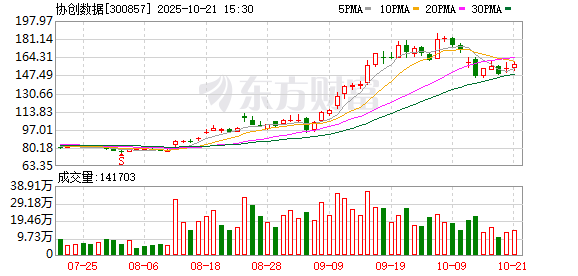
Core Viewpoint - The company, Xiechuang Data, announced plans to purchase servers from multiple suppliers for a total amount not exceeding 4 billion yuan, which is essential for its cloud computing services and aligns with its business development needs [2][3]. Group 1: Transaction Details - The total amount of the procurement contract is expected to be no more than 4 billion yuan, which constitutes over 50% of the company's latest audited net assets and total assets [2]. - The board of directors has unanimously approved the asset purchase proposal, which will be submitted for shareholder approval [2]. - The transaction does not constitute a major asset restructuring or related party transaction [2]. Group 2: Business Impact - The servers purchased will primarily be used to provide cloud computing services, which are critical for AI computing infrastructure [3]. - The procurement is expected to significantly promote the company's main business development and provide necessary support for its continuous growth [3]. - The transaction price is deemed reasonable and fair, with no significant impact on the company's current or future financial status [3]. Group 3: Industry Context - According to IDC, the global server shipment volume is projected to reach 16.8 million units by 2025, with AI servers accounting for approximately 2.1 million units, representing 12.5% of the total [3]. - The company has established partnerships with leading firms like NVIDIA to enhance its capabilities in AI computing and cloud services [4]. - The company’s subsidiary, Ojia Software, has obtained NVIDIA's NCP certification, indicating its qualifications in AI computing leasing and cloud services [4].


2025世界工业装备及材料供应链博览会开幕
Zhong Guo Xin Wen Wang· 2025-10-17 06:17
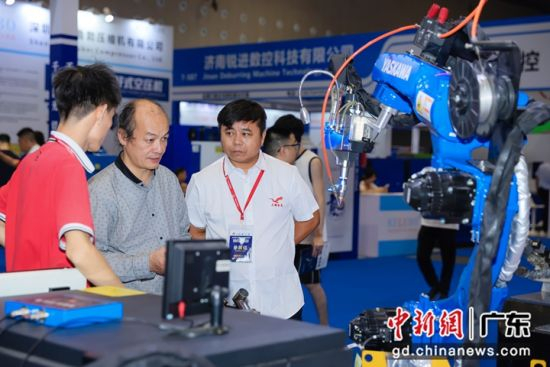
Group 1 - The 2025 World Industrial Equipment and Materials Supply Chain Expo opened on October 16 in Foshan, focusing on the theme "Smart Chain Global, Empowering the Future" [2] - The expo features six core exhibition areas including industrial robots, smart machine tools, automation equipment, aluminum industry, pipe and plate materials, and air compressors, showcasing cutting-edge technology and leading products [2] - The event attracted hundreds of leading companies from both domestic and international markets, emphasizing the green and intelligent transformation of the industrial sector [2] Group 2 - The expo has established strategic partnerships with international brands, such as Guangdong Fuchi Technology collaborating with German companies like Mahr and Zeiss [2] - A significant number of buyers from the robotics, new materials, and high-end equipment manufacturing sectors attended the opening day, indicating strong market interest [4] - The introduction of a "Global Industrial Supply Chain Metaverse Cloud Platform" aims to enhance supply-demand matching efficiency by 40% using advanced technologies like virtual reality and big data [4]
永清环保(300187) - 2025年9月19日永清环保投资者关系管理信息
2025-09-19 09:46
Group 1: Company Performance - The company achieved a non-GAAP net profit growth of 89.64% in the first half of 2025, driven by a multi-dimensional operational strategy [3] - Revenue for the first half of 2025 reached 371 million yuan, representing a year-on-year increase of 13.60% [3] - The net profit attributable to shareholders was 71.73 million yuan, showing a year-on-year growth of 4.96% [3] Group 2: Business Strategy and Focus - The company is focusing on two main directions: quality energy asset management and resource utilization, particularly in precious metal recovery [3] - The establishment of a global "pollution reduction and carbon reduction headquarters R&D center" positions the company as a leader in core areas such as flue gas treatment and soil remediation [3] - The company is actively exploring new business growth areas, including the integration of AI and AR technologies in industrial applications [3][4] Group 3: Research and Development - R&D investment exceeded 20 million yuan in the first half of 2025, marking a year-on-year increase of 53.2% [4] - Key focus areas for R&D include core technology upgrades for pollution reduction and carbon neutrality, as well as green extraction of precious metals [4] Group 4: Shareholder Communication - The management emphasized that the pledge of shares by major shareholders is aimed at supporting the company's development and does not materially affect its operations or governance [2] - The management reassured investors that short-term stock price fluctuations do not fully reflect the company's fundamentals, and that creating profits is the best return for investors [2]

人工智能如何驱动产业跃升?——来自2025金砖国家新工业革命伙伴关系论坛的观察
Xin Hua Wang· 2025-09-17 15:49
Group 1 - The core viewpoint of the article emphasizes the transformative impact of artificial intelligence (AI) on global industrialization and the need for new industrialization concepts to integrate emerging technologies [1][2] - The 2025 BRICS New Industrial Revolution Partnership Forum highlighted discussions on how AI can empower new industrialization and how BRICS countries can seize opportunities [1] - The President of the New Development Bank, Dilma Rousseff, stated that AI and other emerging technologies are fundamentally changing production, trade, innovation, and development methods, necessitating an upgrade in industrialization concepts [1][2] Group 2 - China is accelerating the promotion of new industrialization, with AI as a key driver, and has established a complete AI industry system, focusing on innovation and the "AI + manufacturing" initiative [1][2] - Research indicates that the proportion of Chinese industrial enterprises applying large models and intelligent agents is expected to rise from 9.6% in 2024 to 47.5% in 2025 [1] - China has maintained its position as the world's largest industrial robot market for 12 consecutive years, with over 7,000 advanced and more than 230 excellent smart factories established [1] Group 3 - Cross-industry integration driven by AI is becoming a trend, with advancements in embodied intelligence and world models enabling real-time, precise mapping of the real world [2] - The Chairman of China Mobile, Yang Jie, noted that AI is facilitating the deep integration of the digital and real worlds, leading to new business models such as digital twin factories and industrial metaverse laboratories [2] - Challenges remain, particularly for global South countries in key technologies and digital infrastructure, necessitating inclusive AI technology that bridges the digital divide [2] Group 4 - The Minister of Industry and Information Technology, Li Lecheng, emphasized the importance of keeping pace with technological changes and promoting interconnected digital infrastructure [3] - China established the China-BRICS AI Development and Cooperation Center last year, with plans to create an innovation-sharing platform to share mature large model tools and reduce technical barriers [3]
多些“厂区”向“景区”的蜕变
Jing Ji Ri Bao· 2025-09-12 21:54
Core Viewpoint - The industrial tourism sector is rapidly evolving, transforming traditional industrial sites into attractive tourist destinations, driven by innovative experiences and government policies [1][2][3] Group 1: Industrial Tourism Development - Industrial tourism is reshaping the boundaries of traditional industries, with examples like Shanxi Lao Chen Vinegar Group attracting over 5 million visitors through a unique vinegar culture tourism park [1] - The Liu Zhou Luosifen Industrial Park has seen a 40% increase in visitor conversion rates and a 65% reduction in marketing costs through experiential marketing [1] - A total of 122 national-level industrial tourism demonstration bases and 232 industrial heritage tourism projects have emerged, supported by targeted policies [1] Group 2: Planning and Integration - The integration of tourism functions into industrial project planning can enhance visitor experiences by creating scenic production environments [2] - Encouragement for enterprises to develop unique projects such as industrial heritage museums and immersive product workshops is essential for transforming factories into tourist attractions [2] Group 3: Innovative Experiences - Utilizing digital and intelligent technologies to create engaging and educational tourism products is crucial for attracting visitors [3] - The development of high-immersion industrial cultural experience centers and projects that combine digital and physical elements can showcase industrial charm effectively [3] Group 4: Policy and Support Mechanisms - Implementation of differentiated and precise support policies, including financial incentives for innovative industrial tourism projects, is necessary to lower operational costs [3] - Encouraging professional tourism operators to participate in the planning and development of industrial tourism products can enhance market impact and operational efficiency [3]
上海印发实施方案 加快推动"AI+制造"发展
Zhong Guo Chan Ye Jing Ji Xin Xi Wang· 2025-09-05 01:19
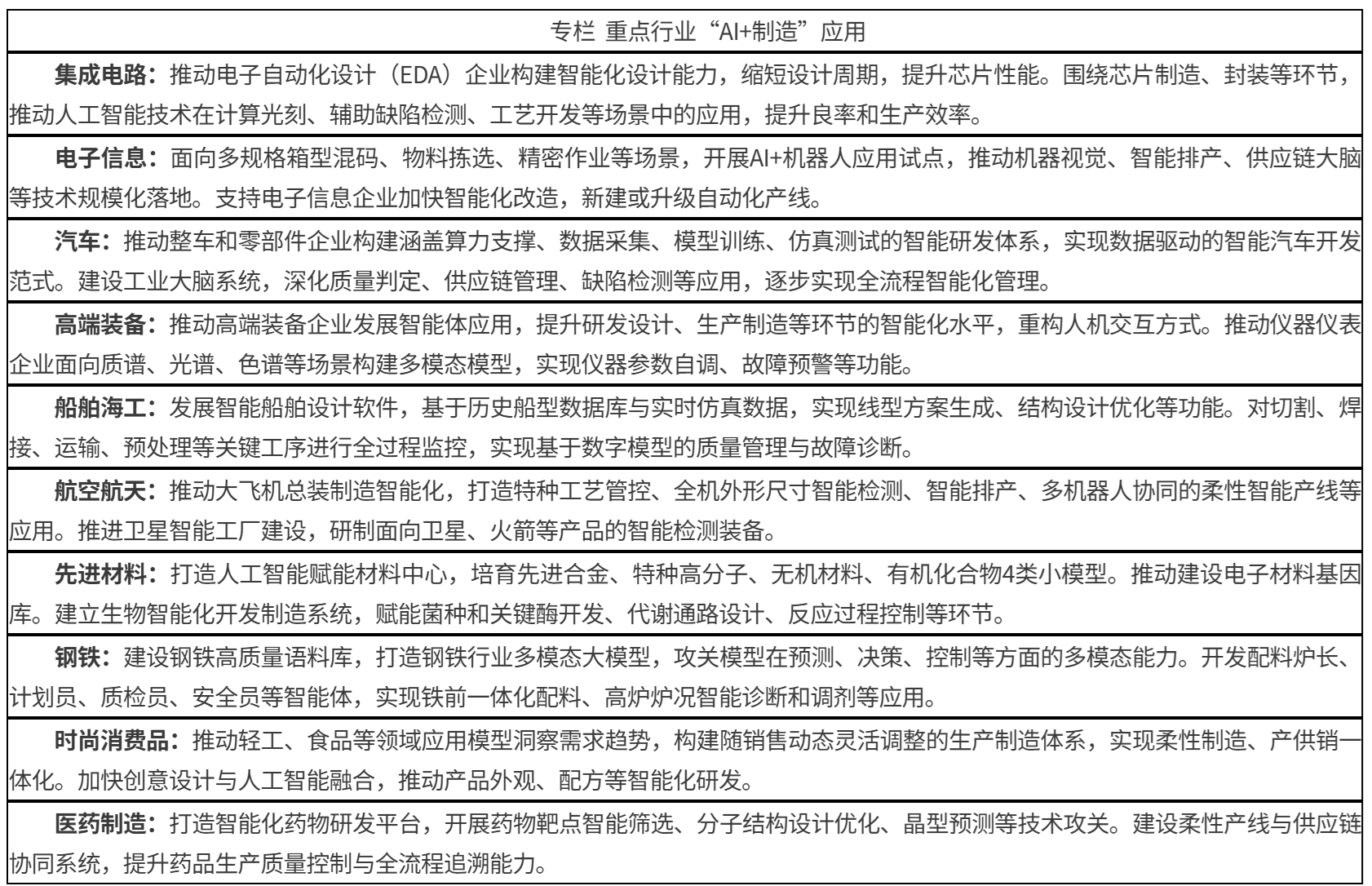
Core Viewpoint - Shanghai is accelerating the intelligent development of manufacturing through the implementation of the "AI + Manufacturing" development plan, aiming to enhance the integration of AI technologies in various manufacturing sectors [1][2]. Group 1: Goals and Objectives - The plan aims to enable 3,000 manufacturing enterprises to achieve intelligent applications, establish 10 industry benchmark models, create 100 benchmark intelligent products, promote 100 demonstration application scenarios, and build around 10 "AI + Manufacturing" demonstration factories [2]. - The initiative includes the development of approximately 5 comprehensive integration service providers and a competitive batch of specialized service providers to form an intelligent development ecosystem in manufacturing [2]. Group 2: Technological Advancements - The plan emphasizes the need to enhance foundational industrial model capabilities, including multi-modal algorithm innovation and improved understanding of physical laws, visual processing, and intelligent decision-making [3]. - It also focuses on breakthroughs in industrial intelligence frontier technologies, such as the development of an industrial metaverse and digital mapping of factory spaces to support innovative applications [3]. - The initiative includes advancements in industrial data governance and synthesis technologies, aiming to standardize data processing and enhance model training through data synthesis trials [4]. Group 3: Key Platforms and Applications - The establishment of a key element platform is proposed, including the development of an industrial intelligent computing cloud platform to support various deployment solutions for enterprises [5]. - A public service platform for industrial data is to be created, facilitating the sharing of high-quality multi-modal data across industries, enhancing data governance capabilities for small and medium enterprises [5][6]. - The plan outlines the creation of a fusion innovation base to drive the development of common technologies and applications in the manufacturing sector [6]. Group 4: Industry Focus Areas - The initiative will focus on empowering key industries such as integrated circuits, electronic information, automotive, high-end equipment, shipbuilding, aerospace, advanced materials, steel, fashion consumer goods, and pharmaceutical manufacturing [8]. - It aims to explore new manufacturing models, including software-defined factories and fully on-demand manufacturing, leveraging an "industrial brain" for decision-making [9]. Group 5: Development of AI-Enhanced Products - The plan includes the development of "AI+" intelligent products, such as AI-enhanced industrial software tools and AI-integrated industrial equipment, to improve production efficiency and management [10]. - It also emphasizes the collaboration between consumer terminal companies and AI firms to innovate smart consumer devices [10]. Group 6: Ecosystem Development - The initiative aims to cultivate specialized service providers to upgrade digital transformation services into intelligent solutions, establishing a "group-style" service system [11]. - It will promote the integration of AI technologies into industrial internet platforms to enhance model-as-a-service capabilities and improve supply chain intelligence [11]. - The plan includes the promotion of industrial robots in key sectors to enhance production efficiency and safety [12].
电子信息制造业稳增长方案来了!
Mei Ri Jing Ji Xin Wen· 2025-09-04 14:39
Group 1 - The core viewpoint of the news is the release of the "Action Plan for Stable Growth in the Electronic Information Manufacturing Industry from 2025 to 2026" by the Ministry of Industry and Information Technology and the State Administration for Market Regulation, aiming for an average growth rate of around 7% in the manufacturing value added of major electronic sectors and over 5% in annual revenue growth for the electronic information manufacturing industry [1] - The plan sets specific targets for 2026, including maintaining the highest revenue scale and export ratio among 41 industrial categories, achieving over 1 trillion yuan in revenue for five provinces, and exceeding 400 billion yuan in the server industry [1] - The plan emphasizes the need to promote high-end electronic equipment and enhance product supply levels, particularly in artificial intelligence terminals and new generation equipment [2] Group 2 - The current challenges in the development of AI terminals include fragmented technology standards, insufficient innovation in application scenarios, user experience gaps, and a divided industrial ecosystem [3] - Potential "killer applications" for AI technology are identified in immersive interaction scenarios, personalized health management systems, and industrial metaverse applications [4] Group 3 - The plan highlights the importance of accelerating major project construction to integrate technological and industrial innovation, focusing on CPU, high-performance AI servers, and hardware-software collaboration [5] - The necessity of conducting adaptability tests for AI chips and large models is emphasized to optimize performance and enhance compatibility, which is crucial for the large-scale application of domestic chips [6][7]
上海:加快推动“AI+制造”发展,加快机器人应用
Di Yi Cai Jing· 2025-08-19 03:30
Core Points - The implementation plan aims to accelerate the integration of AI and manufacturing in Shanghai, targeting the intelligent application of 3,000 manufacturing enterprises over three years [1][6][5] - The plan includes the development of key technologies and platforms to support the transformation of manufacturing industries through AI [2][10][11] Group 1: Main Goals - The plan sets a goal to enhance the level of intelligent development in manufacturing, creating innovative results in areas such as data, models, platforms, and scenarios [1][6] - It aims to establish 10 industry benchmark models, create 100 benchmark intelligent products, and promote 100 demonstration application scenarios [1][6] Group 2: Technology Development - The plan emphasizes the need to improve industrial model capabilities through multi-modal algorithm innovation and enhanced understanding of physical laws [7][8] - It also focuses on developing industrial cloud platforms and tools to support the transition of small and medium-sized enterprises [10] Group 3: Industry Applications - The plan encourages the application of industrial robots in key sectors like electronics, automotive, and equipment to improve production efficiency and safety [3][24] - It aims to create collaborative intelligent manufacturing units in industries such as steel and shipbuilding [3][24] Group 4: Ecosystem Development - The plan seeks to cultivate professional service providers to support the digital transformation of manufacturing enterprises [22] - It promotes the integration of AI technologies into industrial internet platforms to enhance service capabilities [23] Group 5: Talent and Funding - The plan includes initiatives to train professionals skilled in both manufacturing and AI technologies [26] - It outlines financial support measures for enterprises undergoing digital and intelligent transformations [30]

“要想提升竞争力,必须在中国市场深耕”(见证·中国机遇)
Ren Min Ri Bao· 2025-08-03 22:04
Core Insights - Siemens views the Chinese market as strategically significant and plans to deepen its engagement with local partners for mutual benefits [2] - The CEO emphasizes the importance of competing in China to enhance global competitiveness, highlighting China's advantages in battery, motor, and control technologies [2] - Siemens has showcased its digitalization and AI applications at the Hannover Messe, predicting that companies embracing AI will succeed in the manufacturing sector [2] Market Strategy - Siemens has launched 18 new products tailored for the Chinese market, with 16 of them developed locally, reflecting a commitment to local innovation [2] - The establishment of the China Innovation Product Division in October 2024 will increase R&D investment by 67%, aiming to enhance the value chain in China [2] - The company anticipates significant growth in its industrial automation business in China, aligning with the country's focus on high-quality development [2] Technological Advancements - Siemens' digital factory in Nanjing serves as a model for the "industrial metaverse," achieving nearly double production capacity and a 20% increase in efficiency [2] - The application of digital technologies is expected to play a crucial role in helping Chinese manufacturers reduce costs and achieve high-value transformation [2] - Siemens is committed to accelerating local innovation and enhancing customer competitiveness through digital capabilities and global expertise [2]