
强化学习

Search documents
演讲 | 强化学习之父 Sutton 隔空回应 Hinton:目前的 AI “理解不足,调参有余”
AI科技大本营· 2026-02-13 08:15
Core Viewpoint - The article emphasizes that AI should not be feared, as it is a natural extension of human intelligence and evolution, and advocates for a decentralized approach to AI governance rather than one based on fear [1][3]. Group 1: Current State of AI - The current consensus is that AI is advancing rapidly, but this should be critically examined as the field may not be progressing as significantly as perceived [6][8]. - AI's current capabilities, such as language processing and image generation, are seen as breakthroughs, but they do not represent the essence of intelligence, which is more about understanding and adaptability [7][8]. - The speaker argues that current AI models are "weak minds," lacking true understanding and reliability, despite their vast knowledge [8][9]. Group 2: Definition of Intelligence - Intelligence is defined as the ability to acquire and apply knowledge and skills, emphasizing the importance of learning [12][13]. - The article critiques the mainstream AI focus on computation and human imitation, suggesting a need for a deeper understanding of intelligence [14]. Group 3: Integrated Science of Mind - The speaker proposes the establishment of an Integrated Science of Mind that applies to humans, animals, and machines, highlighting the commonalities among different forms of intelligence [15][16]. - Reinforcement Learning (RL) is presented as a foundational approach for this new science, focusing on learning through interaction with the environment [18][20]. Group 4: Transition from Data to Experience - The article discusses the shift from the "Era of Human Data," where AI learns from existing human knowledge, to the "Era of Experience," where AI learns dynamically from interactions with the world [25][27]. - This transition is necessary for AI to create new knowledge rather than merely summarizing existing information [26]. Group 5: Principles of Experiential AI - The principles of experiential AI are based on the exchange of signals (experience) between the agent and the world, which forms the foundation of intelligence [36][38]. - The article outlines that the goal of an intelligent agent is to maximize reward signals, which define truth and objectives [39][40]. Group 6: Future of AI and Society - The speaker predicts that the future of AI will involve the creation of superintelligent AI and enhanced humans, which will lead to profound societal changes [44]. - There is a call for decentralized cooperation in AI governance, contrasting with centralized control driven by fear [46]. - The philosophical implications of AI suggest that it is a natural progression in the universe's evolution, and humanity's role is to embrace this development with courage and pride [47][48].


MiniMax M2.5正式发布,带动股价上涨35%
3 6 Ke· 2026-02-13 04:15
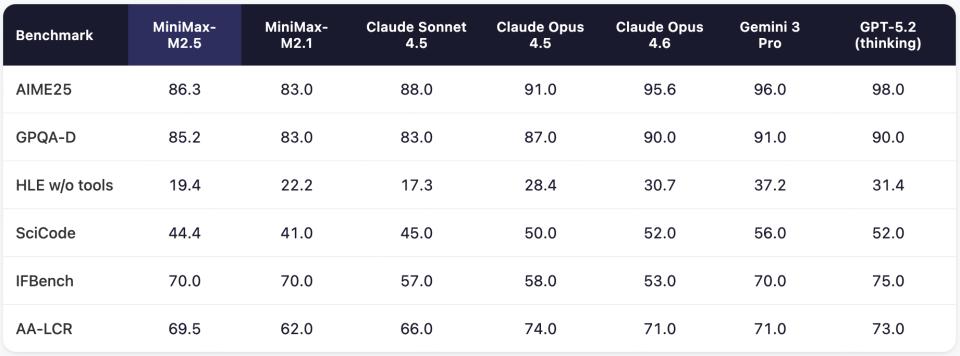
本文原始材料由Minimax官方发布的博客及编辑整理的技术发展路径组成,由Minimax 2.5撰写,编辑仅对其中一处显著错误进行了 删除处理,并添加了当日股价变化情况。可视作对Minimax写作能力的一个测试。 一、模型定位与核心能力 二、技术框架分析:延续与工程优化 2.1 整体架构设计 根据MiniMax官方发布的技术信息,M2.5采用了与M2相同的混合专家模型(MoE)架构,总参数规模达到2300亿,但在推理时仅激活100亿参 数。这种"极端稀疏性"的设计哲学是M系列的核心特征,旨在实现"小激活、大智慧"的计算效率。 从技术演进的视角来看,M2.5的框架基本完全延续M2.1。根据MiniMax发布的技术演进文档,M2.1主要强化了多语言编程能力,专注于解决 复杂软件工程中的跨语言逻辑对齐问题;而M2.5则在此基础上进一步优化了在编程、工具调用、搜索增强(RAG)以及办公生产力场景中的 表现。这说明M2.5的架构层面并未发生根本性变革,而是在已有框架下的工程更新和能力扩展。 2.2 Forge智能体原生强化学习框架 2026年2月,MiniMax正式发布新一代旗舰模型M2.5。根据MiniMax官方发布 ...
马斯克情人节“挥刀自宫”!为了一己私利,还是造福全人类?
电动车公社· 2026-02-11 16:06
Core Viewpoint - Tesla is undergoing significant changes in its Full Self-Driving (FSD) strategy, shifting from a one-time purchase model to a subscription-based model, which may impact user adoption and revenue generation [2][18][28]. Group 1: FSD Subscription Model Changes - Elon Musk announced the discontinuation of the lifetime FSD transfer rights by March 31, with a new subscription model priced at $199 per month, making the last opportunity for a one-time purchase at $8,000 before Valentine's Day [2][3][5]. - The transition to a subscription model is seen as a strategy to increase revenue, with potential profits from FSD subscriptions estimated at $2 billion annually if the user base grows significantly [26][38]. - The FSD user base is currently limited, with only about 1.1 million paying users, representing a penetration rate of less than 12% [26][28]. Group 2: AI Chip Development - Tesla is nearing completion of its AI5 chip design, which is expected to enhance FSD capabilities significantly, with a performance increase of approximately five times compared to the previous generation [5][6]. - The company plans to build a new chip factory, TeraFab, with a monthly capacity of 1 million wafers to meet the high demand for chips necessary for its AI initiatives [11][12]. - The focus of the AI5 chip design is on reducing cost and power consumption rather than maximizing computational power, which aligns with Tesla's broader strategy of scaling production [7][11]. Group 3: Market Position and Future Prospects - Tesla's updated mission statement reflects a broader ambition beyond sustainable energy, aiming to "build an extraordinary world" through AI integration in its vehicles and robots [15][16]. - The company is adapting its FSD technology for the Chinese market, which presents unique challenges due to different traffic conditions and regulations, indicating a long-term strategy for market penetration [61][66]. - The potential for FSD to significantly reduce insurance premiums, as highlighted by Lemonade's announcement of a 50% discount for FSD users, underscores the technology's perceived safety advantages [40][41].


中金:人工智能十年展望:2026关键趋势之模型技术篇
中金· 2026-02-11 05:58
Investment Rating - The report maintains a positive outlook on the AI industry, particularly focusing on advancements in large model technologies and their applications in various productivity scenarios [2][3]. Core Insights - In 2025, global large model capabilities advanced significantly, overcoming challenges in reasoning, programming, and multimodal abilities, although issues like stability and hallucination rates remain [2][3]. - Looking ahead to 2026, breakthroughs in reinforcement learning, model memory, and context engineering are anticipated, moving from short context generation to long reasoning chain tasks and from text interaction to native multimodal capabilities [2][3][4]. - The scaling law for pre-training is expected to continue, with flagship models achieving higher parameter counts and intelligence limits, driven by advancements in NVIDIA's GB series chips and the adoption of more efficient model architectures [3][4]. Summary by Sections Model Architecture and Optimization - The report emphasizes the continuation of the Transformer architecture, with a consensus on the efficiency of the Mixture of Experts (MoE) model, which balances performance and efficiency [40][41]. - Various attention mechanisms are being optimized to enhance computational efficiency, with a focus on hybrid approaches that combine different types of attention for better performance [49][50]. Model Capabilities - The report highlights significant improvements in reasoning, programming, agentic capabilities, and multimodal tasks, indicating that large models have reached a level of real productivity in various fields [13][31]. - The ability of models to perform complex reasoning tasks has improved, with the introduction of interleaved thinking chains allowing for seamless transitions between thought and action [24][28]. Market Dynamics - The competition among leading global model manufacturers remains intense, with companies like OpenAI, Anthropic, and Gemini pushing the boundaries of model intelligence and exploring AGI [31][32]. - Domestic models are catching up, maintaining a static gap of about six months behind their international counterparts, with significant advancements in capabilities [32][33]. Future Outlook - The report anticipates that the introduction of continuous learning and model memory will address the "catastrophic forgetting" problem, enabling models to adapt dynamically based on task importance [4][5]. - The integration of high-quality data and large-scale computing resources is crucial for enhancing the capabilities of reinforcement learning, which is expected to play a key role in unlocking advanced model functionalities [3][4].

首个测试时共进化合成框架TTCS:在「左右互搏」中突破推理瓶颈
机器之心· 2026-02-10 08:52
Core Insights - The article discusses the emergence of the Test-Time Curriculum Synthesis (TTCS) framework, which addresses challenges in Test-Time Training (TTT) by generating curriculum data that aligns with the model's capability frontier, thus enhancing performance on difficult test problems [2][10][30] Group 1: Motivation and Background - The shift in focus from merely expanding parameters in large language models (LLMs) to leveraging Test-Time Scaling for effective training is highlighted as a core motivation [5] - The existing TTT methods struggle with high-difficulty test questions due to noisy pseudo-labels, leading to ineffective learning [2][7] Group 2: Methodology - TTCS operates through a co-evolutionary framework involving two agents: the Synthesizer, which generates questions at the model's capability frontier, and the Solver, which attempts to solve these questions [11][14] - A capability-adaptive reward mechanism is implemented to ensure that the generated questions are neither too easy nor too difficult, facilitating a dynamic learning environment [16] Group 3: Experimental Results - TTCS demonstrated significant improvements in mathematical reasoning scores, with Qwen2.5-Math-1.5B achieving an average score of 41.49, up from 17.30, marking an increase of +24.19 [3][20] - In challenging AIME competition problems, TTCS outperformed strong baselines like TTRL, showcasing its effectiveness in tackling high-difficulty questions [22][23] Group 4: Broader Implications - The framework not only enhances performance in mathematics but also shows generalization capabilities across various reasoning tasks, indicating that the model learns universal reasoning logic rather than overfitting [22] - The findings suggest that adaptive teaching methods (dynamic Synthesizer) are more effective than static high-level models, emphasizing the importance of tailored learning experiences [25][26] Group 5: Conclusion and Future Outlook - TTCS represents a reconstruction of the Test-Time Computing paradigm, positioning models as active curriculum designers rather than passive problem solvers [30] - The framework addresses critical issues of data scarcity and difficulty gaps in test-time training, paving the way for future self-evolving agents capable of continuous evolution in unknown environments [30]

强化学习,正在决定智能驾驶的上限
3 6 Ke· 2026-02-10 04:45
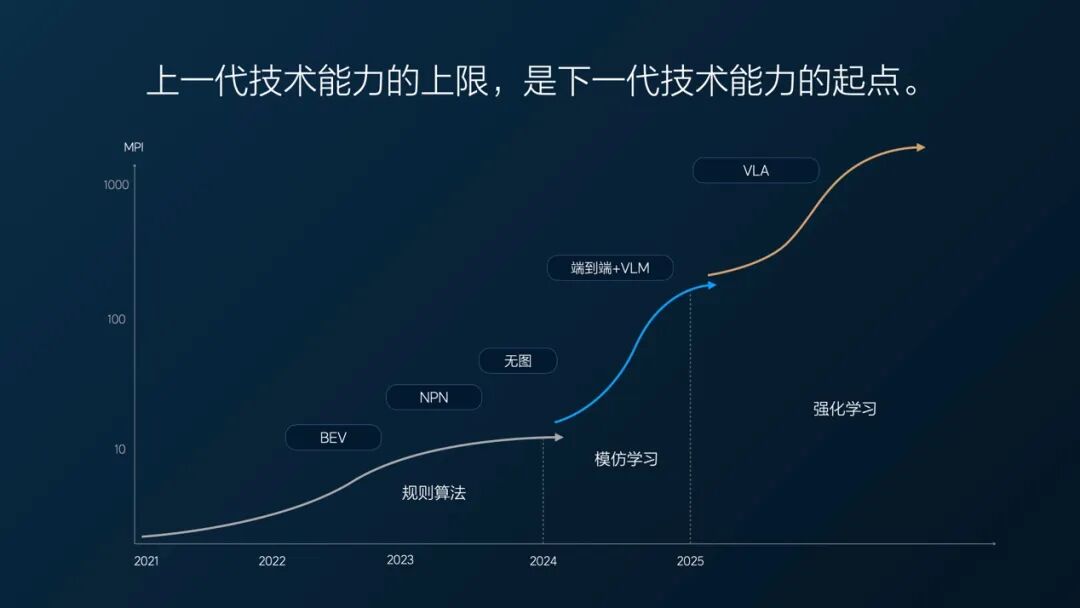
Core Insights - The development of intelligent driving is not a linear technological curve but a result of the interplay between various technical paradigms, engineering constraints, and real-world scenarios [1] - As the industry moves beyond the proof-of-concept stage, single technical terms can no longer explain the real differences in capabilities [2] - Factors such as computing power, data quality, system architecture, and engineering stability are determining the upper and lower limits of intelligent driving [3] Group 1: Evolution of Learning Techniques - Recent discussions in intelligent driving technology reveal a trend where various paths, such as end-to-end, VLA, and world models, converge on the concept of reinforcement learning [5] - Reinforcement learning is transitioning from a "technical option" to a "mandatory option" in the industry [7] - The emergence of products like AlphaGo and ChatGPT has highlighted the effectiveness of allowing AI to learn through trial and error as the fastest evolutionary method [8][9] Group 2: Learning Methodologies - Understanding reinforcement learning requires a grasp of imitation learning, which was previously favored in intelligent driving [11] - Imitation learning allows AI to learn from human driving data but has limitations, such as inheriting bad habits and struggling with unfamiliar situations [14][16] - Reinforcement learning, as demonstrated by AlphaGo, allows AI to explore new strategies through self-play, leading to superior performance beyond human intuition [17] Group 3: Reinforcement Learning Mechanisms - Reinforcement learning operates on a trial-and-error basis, where the model learns to drive well through a cycle of feedback [26] - The design of reward functions is crucial, as it translates driving performance into quantifiable scores [30] - Balancing conflicting objectives, such as safety versus efficiency, is essential in reward function design [32] Group 4: World Models and Advanced Learning - The integration of world models with reinforcement learning enhances the training environment, allowing AI to simulate real-world scenarios [42][49] - High-fidelity virtual environments enable AI to consider long-term consequences of actions, improving decision-making [50] - The coupling of world models and reinforcement learning creates a feedback loop that accelerates model iteration and performance [52] Group 5: Industry Trends and Future Directions - The importance of data is being redefined, with a shift towards the ability to model the world rather than just relying on raw data [56] - Companies are focusing on enhancing the "modeling capacity" of their systems, which is crucial for intelligent driving [60] - The evolution of intelligent driving systems is moving towards a stage where AI can independently understand environments and refine strategies, marking a significant advancement in the industry [62]
训练加速1.8倍,推理开销降78%,精准筛选题目高效加速RL训练
3 6 Ke· 2026-02-09 10:39
Core Insights - The article discusses the introduction of MoPPS, a new framework for model predictive prompt selection that aims to enhance the efficiency of reinforcement learning fine-tuning for large language models by accurately predicting question difficulty without the need for expensive evaluations from large models [5][26]. Group 1: Training Efficiency - MoPPS significantly reduces computational costs associated with training by minimizing the reliance on large model self-evaluations, achieving up to 78.46% reduction in rollouts compared to traditional methods [15][18]. - The framework accelerates training efficiency by 1.6x to 1.8x compared to conventional uniform sampling methods, ensuring that the most critical questions are selected for training [16][26]. Group 2: Methodology - MoPPS employs a lightweight Bayesian model to predict question difficulty, using a Beta distribution to estimate success rates for each question, which allows for efficient updates based on training feedback [8][9]. - The framework utilizes Thompson Sampling for active question selection, balancing exploration and exploitation to identify questions that are optimally challenging for the model [10][12]. Group 3: Performance Metrics - Experimental results indicate that MoPPS maintains a high correlation between predicted and actual question difficulty, demonstrating its reliability and effectiveness in training scenarios [19][22]. - The framework is compatible with various reinforcement learning algorithms and can adapt to different sampling strategies, enhancing its applicability across different training contexts [20][24]. Group 4: Industry Impact - The research has garnered attention from major industry players such as Alibaba, Tencent, and Ant Group, indicating its potential impact on the field of AI and machine learning [4]. - The MoPPS framework represents a significant advancement in the cost-effective fine-tuning of large models, potentially influencing future developments in reinforcement learning applications [26].
训练加速1.8倍,推理开销降78%!精准筛选题目高效加速RL训练丨清华KDD
量子位· 2026-02-09 09:50
Core Insights - The article discusses the significant advancements in reasoning capabilities of large language models (LLMs) through reinforcement learning fine-tuning, particularly highlighting the high costs associated with inefficient training processes [1][2]. Group 1: Training Efficiency - Traditional training methods like "Uniform Sampling" waste computational resources by randomly selecting questions that do not provide effective learning signals [2]. - The "Dynamic Sampling" approach, while more efficient, still incurs high costs due to the need for extensive self-evaluation by the model [2][6]. - The proposed MoPPS framework aims to dynamically predict question difficulty without the expensive self-evaluation process, thus enhancing training efficiency [3][6]. Group 2: MoPPS Framework - MoPPS utilizes a lightweight Bayesian model to quickly estimate question difficulty, allowing for efficient selection of training data [8][10]. - The framework models each question as a "bandit" problem, using a Beta distribution to estimate success rates based on training feedback [9][10]. - MoPPS introduces a recursive update mechanism that improves difficulty estimation over time, adapting to the model's evolving capabilities [11][13]. Group 3: Performance Improvements - MoPPS has demonstrated a training speed increase of 1.6x to 1.8x while reducing inference costs by up to 78.46% compared to traditional methods [18][21]. - The framework has shown significant advantages across various reasoning tasks, achieving better performance with fewer computational resources [18][21]. - The correlation between predicted and actual question difficulty is high, validating the effectiveness of MoPPS in accurately estimating task challenges [25][29]. Group 4: Versatility and Future Applications - MoPPS is compatible with multiple reinforcement learning algorithms and can adapt to different sampling strategies, enhancing its applicability [26][28]. - The framework's ability to incorporate prior knowledge can further accelerate initial training phases, making it a versatile tool for large-scale model fine-tuning [28][31]. - The research indicates potential for broader applications in the reinforcement learning fine-tuning of larger models in the future [31].

一切为了Agent:千问、阶跃、Gemini打响“3.5模型大战”,春节将成关键节点?
3 6 Ke· 2026-02-06 10:15
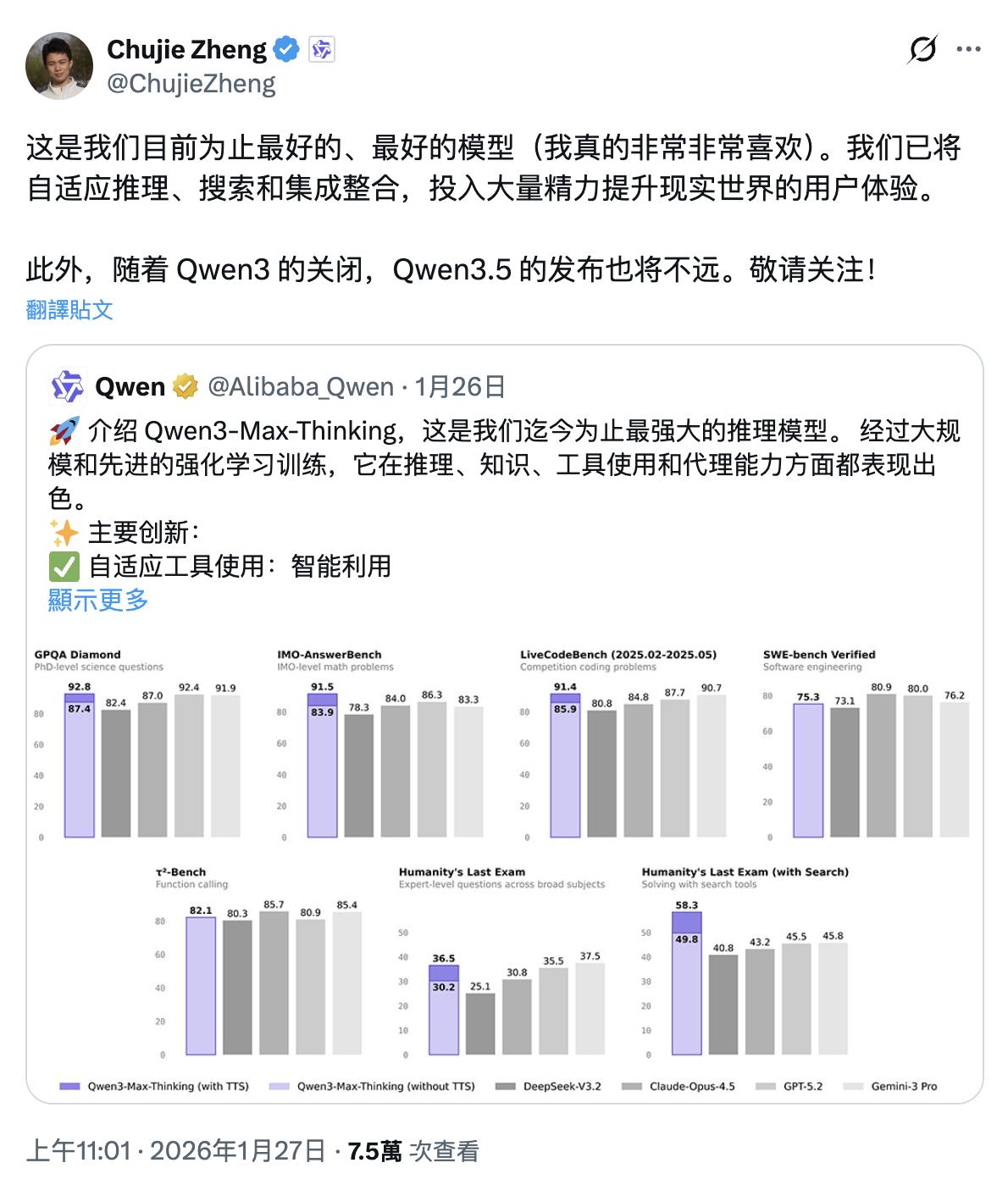
Core Insights - The AI model competition is heating up with multiple new releases expected around the Chinese New Year in early 2026, including significant updates from major players like OpenAI, Anthropic, and domestic companies such as Qwen and DeepSeek [1][2][20]. Group 1: Upcoming Model Releases - Major updates are anticipated from Qwen, with Qwen3-Max-Thinking being highlighted as the best model to date, and Qwen 3.5 expected soon [2][4]. - Other companies like ByteDance are also set to release new models, including Doubao 2.0 and Seedream 5.0, in March [5]. - The upcoming releases are not just limited to minor iterations but represent a broader trend of simultaneous major updates across the industry [7][21]. Group 2: Shift in Model Capabilities - The focus of the new generation of models is shifting from merely larger and stronger models to practical applications and enhanced reasoning capabilities [8][23]. - Reinforcement learning is being reintroduced, and reasoning is becoming a default capability rather than a unique selling point [9][10]. - Long context handling is emphasized as a core upgrade, with models like GLM-5 and Gemini 3.5 designed for real-world applications rather than just performance metrics [14][16]. Group 3: The Role of Agents - Agents are evolving from demonstration tools to central components of AI systems, with a focus on completing complex tasks with minimal human intervention [17][19]. - New models are being designed to enhance multi-agent collaboration and maintain context over long tasks, indicating a shift towards more integrated AI solutions [17][19]. - The success of these models will depend on their ability to be embedded into various systems, transforming them from simple assistants to essential engines of operation [19][25]. Group 4: Competitive Landscape and Market Dynamics - The timing of these releases is strategic, capitalizing on the heightened attention around the Chinese New Year, which previously saw significant developments in the AI sector [20][21]. - The upcoming model releases are expected to lead to rapid comparisons in real-world applications, with developers and users able to test capabilities almost immediately [22][23]. - The true measure of success will not be the initial release but rather the ability to integrate these models into everyday tools and systems, influencing the competitive landscape for the year ahead [25][26].
每日投行/机构观点梳理(2026-02-05)
Jin Shi Shu Ju· 2026-02-05 12:26
Group 1: Gold and Silver Market Outlook - A Reuters survey indicates that gold prices are expected to reach a new high of $4,746.50 per ounce by 2026, driven by geopolitical uncertainties and strong central bank purchases, marking a significant increase from last year's forecast of $4,275 [1] - The average price expectation for silver in 2026 has also been raised to $79.50 per ounce, up from $50 in the previous year's survey [1] Group 2: Currency and Economic Analysis - The strong US dollar is exerting downward pressure on gold and silver prices, with analysts suggesting that if the dollar's rebound continues, it may further impact gold prices negatively [2] - UBS forecasts a 10% increase in global stock markets by the end of the year, with a focus on diversification into markets like China, Japan, and Europe, driven by strategic autonomy and fiscal expansion [3] - Mitsubishi UFJ reports that the Japanese yen has fallen to a near two-week low due to election expectations, with potential for continued selling pressure as confidence in the ruling party's stability grows [4] - Goldman Sachs warns of upward fiscal risks in Japan ahead of the upcoming elections, suggesting that unless the Bank of Japan accelerates interest rate hikes, the yen may weaken further [6] Group 3: Sector-Specific Insights - Zhongtai Securities expresses a positive outlook on the raw material pharmaceutical sector, highlighting innovations in small nucleic acids and ADC toxins as catalysts for growth [7] - CITIC Securities recommends focusing on automotive companies with strong cost transfer capabilities and global layouts, as rising raw material prices are expected to pressure profit margins in the first quarter of 2026 [8] - Galaxy Securities identifies two main paths for AI-driven benefits: enhancing platform efficiency and improving production efficiency through content and tools, suggesting a focus on internet stocks and AI-related applications [9]