
数字孪生

Search documents
ACCSI 2026:第八届环境监测产业化论坛第二轮通知
仪器信息网· 2026-03-23 09:06
Core Viewpoint - The article emphasizes the upcoming 8th Environmental Monitoring Instrument Industrialization Forum scheduled for April 24, 2026, in Beijing, focusing on the integration of AI and environmental monitoring industries, discussing policy directions, LIMS applications, and the localization of marine monitoring equipment [1][4]. Group 1: Industry Trends - The environmental monitoring industry is at a pivotal transition from "automation" to "AI intelligence," driven by increasing demands for precise pollution control and real-time, accurate environmental data [2]. - The 2026 government work report highlights "smart economy" as a core direction for future industrial development, indicating a new path for innovation and upgrading in the environmental monitoring sector [2]. - The industry is expected to prioritize technological breakthroughs and independent innovation in environmental scientific instruments and smart manufacturing [2]. Group 2: Policy Changes - The release of the "National Ecological and Environmental Monitoring Network Digital Transformation Plan" in March 2025 sets the foundational design for the industry's smart transformation over the next decade [3]. - The implementation of the "Ecological and Environmental Monitoring Regulations" on January 1, 2026, marks a significant shift towards stricter industry regulation [3]. - The National Market Supervision Administration has established LIMS as a mandatory compliance requirement, indicating a shift in operational standards within the industry [3]. Group 3: Forum Details - The 8th Environmental Monitoring Instrument Industrialization Forum will gather resources from government, industry, academia, research, and application sectors to discuss the latest policy directions and LIMS practices [4]. - The forum will showcase achievements in the localization of marine monitoring equipment and explore the integration of AI technology with the environmental monitoring industry [4]. - Key speakers include experts from various institutions, discussing topics such as digital twin monitoring technologies and the application of LIMS in environmental monitoring [5].


从自动化到自主化:如何将电信运营商的网络复杂性转化为竞争优势
CAPGEMINI· 2026-03-19 02:30
Investment Rating - The report does not explicitly state an investment rating for the telecommunications industry or specific companies within it. Core Insights - The telecommunications industry is transitioning from traditional operational models to self-organizing networks, driven by increasing complexity, cost pressures, and customer expectations. This shift represents a structural change from rule-based execution to intent-driven, AI-enabled decision-making [5][6][8]. - Self-organizing networks are seen as a commercial necessity for service providers, enabling sustainable cost reductions, faster innovation cycles, enhanced resilience, and differentiated customer experiences. The effectiveness of transforming network capabilities into business outcomes will increasingly determine competitive advantages in the telecom sector [6][9]. - The TELUS Intelligent Network Analysis and Automation Ecosystem (TINAA) serves as a strategic backbone for network automation, orchestration, and cross-domain assurance, facilitating the transition towards autonomy [24][25]. Summary by Sections Executive Summary - The telecommunications sector is facing challenges due to growing complexity and customer demands, necessitating a shift towards self-organizing networks that leverage AI for decision-making [5][6]. Redefining Network Operations - Automation focuses on executing predefined tasks efficiently, while autonomy allows networks to understand intent, evaluate options, and act independently within defined parameters, fundamentally changing operations and governance [9][10]. The Role of TINAA - TINAA integrates AIOps capabilities across various domains, ensuring automation is not limited to single areas but spans RAN, transport, core, and service layers, providing true cross-domain intelligence [25][26]. Business Outcomes for Service Providers - Autonomous networks significantly reduce labor costs and process fragmentation, leading to substantial operational expenditure (OPEX) reductions while improving network reliability. The integration of AIOps amplifies these benefits [19][20]. Path Forward - The journey towards autonomy is gradual and requires a clear roadmap, starting with strengthening data foundations, standardizing automation platforms, and introducing AI in well-defined use cases [50].

SK海力士公布:自建晶圆厂
半导体芯闻· 2026-03-18 10:15
Core Insights - SK Hynix announced plans to build a self-sufficient wafer fab by 2030 to address the growing demand for AI storage while improving production efficiency [1][2] - The company aims to enhance decision-making processes by balancing quality, cost, and speed, moving beyond traditional human experience and rule-based automation [1] - The self-sufficient wafer fab will focus on three core pillars: "Operation AI" for decision automation, "Physical AI" for enhancing existing systems, and "Digital Twin" for safe evolution of all elements [1][2] Group 1 - Operation AI aims to automate engineer judgment, successfully reducing maintenance and defect analysis processing time by half [2] - Physical AI enhances current systems and extends automation into areas still heavily reliant on human input, utilizing NVIDIA's Omniverse platform for simulation before application [2] - The self-sufficient wafer fab is expected to significantly shorten the transition time from design to mass production [1]
粤开市场日报-20260318-20260318
Yuekai Securities· 2026-03-18 07:44
Market Overview - The A-share major indices experienced an upward trend today, with the Shanghai Composite Index rising by 0.32% to close at 4062.98 points, the Shenzhen Component Index increasing by 1.05% to 14187.8 points, the ChiNext Index up by 2.02% to 3346.37 points, and the STAR 50 Index gaining 1.36% to 1372.58 points [1] - Overall, the market saw more stocks rising than falling, with 3551 stocks up, 1830 down, and 105 remaining flat. The total trading volume in the Shanghai and Shenzhen markets was 20461 billion yuan, a decrease of 1618 billion yuan compared to the previous trading day [1] Industry Performance - Among the Shenwan first-level industries, the leading sectors included telecommunications, computers, electronics, comprehensive, and national defense military industry, with respective increases of 5.23%, 2.46%, 2.41%, 2.36%, and 1.82%. Conversely, the sectors that declined included oil and petrochemicals, real estate, food and beverage, steel, and agriculture, with respective decreases of 1.47%, 1.05%, 0.91%, 0.76%, 0.67%, and 0.60% [1] Concept Sector Performance - The concept sectors with the highest gains today included East Data West Calculation, IDC (computing power leasing), memory, AI computing power, optical modules (CPO), big data, cloud computing, Moore threads, optical communication, fiberglass, optical chips, liquid cooling servers, digital twins, circuit boards, and advanced packaging. In contrast, sectors such as biological breeding, liquor, lithium mines, selected real estate, and phosphorus chemicals experienced pullbacks [2]
3D打印行业市场研究(第一版):AI及软件赋能增材制造
3D科学谷· 2026-03-18 07:14
Investment Rating - The report does not explicitly state an investment rating for the additive manufacturing industry. Core Insights - The integration of AI and software in additive manufacturing is crucial for enhancing quality control, reducing defects, and improving material development efficiency. AI technologies are increasingly being utilized for defect detection, stress reduction, and precision in design and measurement [7][9]. Summary by Sections Industry Overview - Additive manufacturing (AM) is characterized as a multi-stage process involving various roles, devices, and software, leading to data silos that hinder efficiency. Over 90% of detection and process data remains unused due to fragmentation and regulatory constraints [9]. AI and Software Integration - AI plays a vital role in every aspect of additive manufacturing, including defect detection, stress reduction, and precision control. The adoption of AI is essential for companies to gain a competitive edge [7][9]. Challenges and Standards - The industry faces challenges such as the lack of data standards, interface protocols, and quality evaluation benchmarks. There is a call for the establishment of a national roadmap for "intelligent additive manufacturing" to address these issues [9]. Future Directions - The report discusses the potential for a digital passport (DPP) for additive manufacturing products, which could redefine supply chains. It also highlights the need for breaking down collaboration barriers and enhancing cross-domain cooperation within the industry [9]. AI Applications in Additive Manufacturing - AI is utilized for various applications in the additive manufacturing process, including: - Defect detection and correction - Reducing residual stress and failures - In-situ measurement and design precision - Microstructure design and alloy optimization [38][42]. Quality Control - Real-time monitoring of the melt pool is identified as a critical aspect of quality control in additive manufacturing. This involves collecting data to identify defects early and optimize process parameters dynamically [52][60]. Defect Types and Sources - Common defects in additive manufacturing include porosity, cracks, lack of fusion, and undercutting, which can significantly impact mechanical performance. The report outlines various sources of these defects, including hardware, materials, and process parameters [54][63]. Machine Learning Integration - Machine learning algorithms are employed for real-time defect detection, process optimization, and predictive maintenance, enhancing the overall efficiency and reliability of additive manufacturing processes [82][111]. Adaptive Toolpath Solutions - The report emphasizes the importance of adaptive toolpath solutions that utilize physics-informed predictions and continuous learning from sensor data to optimize manufacturing processes and reduce defects [185].
华尔街重估AI前景:英伟达(NVDA.US)万亿美元预期抬高增长天花板
Zhi Tong Cai Jing· 2026-03-17 12:44
Core Insights - Nvidia's CEO Jensen Huang announced a revenue opportunity of up to $1 trillion by 2027 during the annual GTC conference, which has garnered positive reactions from analysts [1] - Analysts from Wedbush highlighted the "stunning" $1 trillion order reserve, emphasizing Nvidia's strong position in AI infrastructure and demand [1] - The company is experiencing accelerated demand for AI, with a significant increase in expected revenue from the Blackwell/Rubin platform, rising from $500 billion announced last year to over $1 trillion [1][3] Group 1: AI Infrastructure and Market Position - Nvidia's ambition extends beyond chips, with the launch of NemoClaw, an open-source enterprise-level AI agent platform aimed at capturing a 100-fold increase in inference demand [2] - The Omniverse Blueprint physical engine supports large-scale digital twins and robotic simulations, potentially expanding into vertical markets worth hundreds of billions over the next decade [2] - Analysts estimate that for every dollar spent on Nvidia chips, there is an economic multiplier effect of $8 to $10 across the ecosystem, benefiting sectors like data centers, software, and cybersecurity [2] Group 2: Demand and Revenue Projections - Analysts believe that Nvidia's vertically integrated platform, covering seven types of chips and five rack systems, is difficult to replicate, supporting a more sustained demand cycle than currently anticipated by the market [3] - The visibility of demand for Blackwell and Vera Rubin shipments is expected to exceed $1 trillion by 2027, indicating a potential upside of $50 billion to $70 billion compared to market expectations for data center revenue [3] - The significance of CUDA-X libraries in accelerating traditional enterprise workloads was noted as an important but underappreciated aspect of the keynote speech [3] Group 3: Product Developments - The integration of Nvidia's Groq3 language processing unit with Vera Rubin is highlighted as a crucial architectural product release, enabling effective service in the low-latency inference market [4]

2025年中国空气压缩机行业概览:外资占据高端市场,中国企业挑战与机遇并存(精华版)
Tou Bao Yan Jiu Yuan· 2026-03-17 12:24
Investment Rating - The report does not explicitly provide an investment rating for the air compressor industry in China. Core Insights - The Chinese air compressor industry is characterized by a clear hierarchical competition, with foreign brands like Atlas Copco and Ingersoll Rand holding approximately 30%-40% of the high-end market share, particularly in precision manufacturing and semiconductor sectors, while domestic companies are gradually penetrating the high-end market [4][5]. - The industry is undergoing a transformation towards green, intelligent, and high-end products driven by policy and market forces, with significant opportunities arising from the "dual carbon" goals and the expansion of new energy industries [5][29]. - The market size of the Chinese air compressor industry is projected to grow from 699 billion RMB in 2020 to 937 billion RMB by 2029, with a compound annual growth rate (CAGR) of 3.3% [21][19]. Summary by Sections Industry Overview - The report outlines the production and development status of the Chinese air compressor industry, analyzing the industrial chain and competitive landscape [3]. Market Status and Competitive Landscape - The market competition is tiered, with foreign brands dominating the high-end segment and local companies like Kaishan Group and Hanbell Precise Machinery leading in the mid-to-low-end market through R&D and cost control [4][5]. - The product structure shows that screw compressors account for over 60% of the market share, with increasing penetration of energy-saving and intelligent products [4]. Opportunities and Challenges - Opportunities include the demand for energy-saving retrofits driven by the "dual carbon" goals and the need for high-efficiency compressors in new energy sectors [5]. - Challenges include rising production costs due to raw material price increases and a shortage of high-end technical talent, which may lead to the elimination of smaller companies [5][29]. Industry Chain Analysis - The midstream manufacturing segment holds more power in the value chain, with leading companies like ShaanGu Power leveraging R&D and production capabilities [6]. Financial Comparison - International companies like Ingersoll Rand and Atlas Copco lead in revenue and profitability, while domestic firms like ShaanGu Power show strong performance in profitability metrics [15][17]. Market Size and Growth Forecast - The market size is expected to grow steadily, supported by stable industrial demand and increasing needs from emerging industries like new energy and semiconductors [21][19]. Import and Export Analysis - The high-end air compressor market is primarily occupied by foreign companies, with China being a major producer and exporter, although the export products tend to have lower added value compared to imports [22][27]. Challenges and Opportunities for Domestic Companies - Domestic companies face challenges such as market saturation and reliance on low-end competition, but opportunities exist in specialized fields and technological advancements [29].
硅谷直击:黄仁勋入局龙虾大战,宣告 SaaS 已死,推理算力需求暴涨万倍!
AI科技大本营· 2026-03-17 06:11
Core Insights - The article discusses NVIDIA's GTC 2026 conference, highlighting CEO Jensen Huang's narrative control and the introduction of new AI technologies and concepts, including the transition from SaaS to Agentic AI [1][3][6]. Group 1: CUDA and Its Impact - CUDA's 20th anniversary marks a significant milestone, transforming GPUs from graphics rendering to general-purpose parallel computing machines [8][10]. - The release of CUDA in 2006 allowed developers to utilize GPUs for various applications, leading to a robust software ecosystem that supports diverse fields [11][15]. - NVIDIA's competitive advantage lies in its extensive CUDA ecosystem, which cannot be easily replicated by competitors [16][17]. Group 2: Evolution of AI - The modern deep learning era began with the success of AlexNet in 2012, showcasing the importance of GPUs in AI development [18][20]. - Huang emphasizes that structured and unstructured data play complementary roles in AI, enhancing the value of existing data assets [22][24][26]. - The focus of AI is shifting from training to inference, with Token Economics becoming a central theme in AI operations [27][28][32]. Group 3: Hardware Developments - The introduction of the Blackwell architecture is seen as a pivotal moment in AI infrastructure, with widespread adoption among cloud providers [43][44]. - Future architectures, such as Vera Rubin, are expected to significantly enhance AI inference capabilities and commercial viability [51][52]. - The transition from copper to photonic interconnects in AI systems is crucial for scaling up performance and efficiency [56][58]. Group 4: Agentic AI and New Paradigms - Huang introduces the concept of Agentic AI, which goes beyond traditional chatbots to perform complex tasks autonomously [72][74]. - The market is shifting from SaaS to Agent-as-a-Service (AgaaS), indicating a new approach to enterprise software procurement [80][79]. - The emergence of NemoClaw represents a significant step in making AI agents more accessible and applicable in the physical world [81][90]. Group 5: Physical AI and Real-World Applications - The integration of AI into physical systems is exemplified by the demonstration of a character from popular culture, illustrating the potential of Physical AI [106][107]. - NVIDIA aims to create a comprehensive pipeline for Physical AI, encompassing data generation, simulation training, and real-world deployment [99][100]. - The narrative emphasizes the transition of digital intelligence into tangible applications, redefining the future landscape of AI technology [107].
黄仁勋狂扔“王炸”:1万亿营收、太空芯片、一键“养虾”…李彦宏牵头的AI生命科学公司被曝赴港上市;永辉公开喊话山姆丨邦早报
创业邦· 2026-03-17 00:09
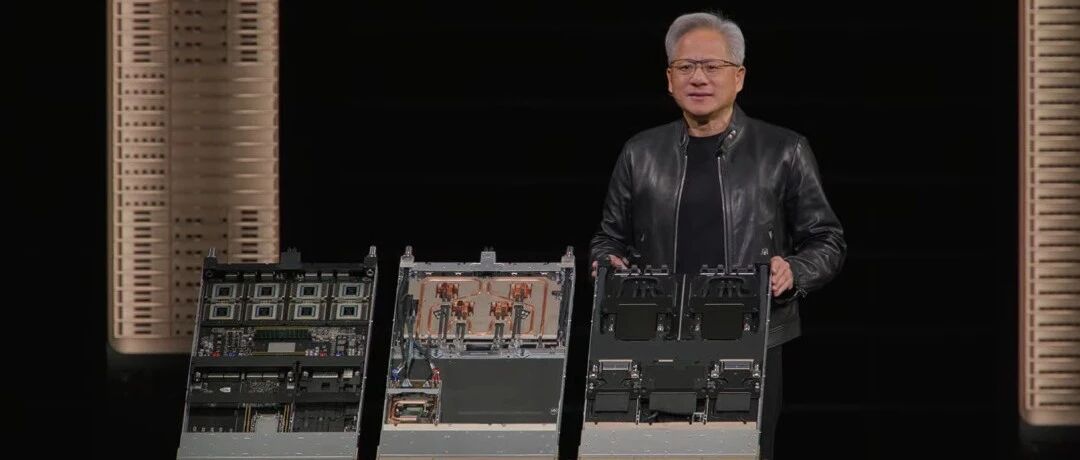
Group 1 - NVIDIA CEO Jensen Huang announced a significant increase in computing demand, predicting it will reach $1 trillion by 2027, doubling the previous estimate of $500 billion, and introduced the concept of "token factories" for future data centers [2] - The next-generation Vera Rubin architecture was unveiled, featuring full liquid cooling and integration with Groq's deterministic flow processor technology, achieving a 350-fold increase in token generation speed [3] - NVIDIA's OpenClaw project was defined as the "Linux of the AI era," supporting AI agents in autonomously calling tools and executing code, marking a shift from SaaS to AaaS [3] Group 2 - Alibaba announced the establishment of the Alibaba Token Hub, aimed at enhancing AI business strategy collaboration and focusing on both B-end and C-end AI applications [4] - Meta plans to lay off approximately 20% of its workforce to offset the rising costs of AI infrastructure, with the timeline for layoffs yet to be determined [4] - BioMap, an AI life sciences company led by Baidu's Robin Li, has reportedly submitted a listing application in Hong Kong, aiming to raise hundreds of millions of dollars [5] Group 3 - Meta signed a five-year agreement with Nebius for AI infrastructure, potentially worth up to $27 billion, to secure dedicated computing power [6] - Yonghui Supermarket publicly urged Sam's Club to avoid forcing suppliers into a "choose one" situation, advocating for fair competition [6] - Zhiyun announced a 20% price increase for its new API model, marking the second price hike in recent months, with a total increase of 83% since Q1 2026 [11][25] Group 4 - Ant Group's offer to acquire Yao Cai Securities has been approved, with the transaction expected to complete by March 30, 2026, at a total value of approximately HKD 2.814 billion [11] - OpenAI is in talks with several private equity firms to establish a joint venture, with a pre-investment valuation of around $10 billion [12] - The gaming market in China saw a revenue of CNY 33.231 billion in February 2026, marking an 18.96% year-on-year increase, the highest growth rate in nearly ten months [25]

电子行业跟踪报告:英伟达GTC大会启幕,关注AI算力及应用产业投资机遇
Wanlian Securities· 2026-03-16 10:04
Investment Rating - The industry investment rating is "Outperform the Market," indicating an expected relative increase of over 10% in the industry index compared to the broader market within the next six months [4][27]. Core Insights - The report highlights that AI computing infrastructure is in a growth phase, with strong demand in high-prosperity segments such as PCB and storage, which are currently in an expansion cycle. This is expected to drive demand for upstream equipment and materials. The report suggests focusing on investment opportunities in these segments and in leading companies involved in AI industrialization, intelligent driving, embodied intelligence, and quantum computing [1][11][12]. Summary by Sections Industry Overview - The report notes that the electronic industry index fell by 1.22% last week, underperforming both the CSI 300 index, which rose by 0.19%, and the ChiNext index, which increased by 2.51%. The electronic sector ranked 20th among 31 primary industries [1][13]. Industry Dynamics - The "14th Five-Year Plan" emphasizes technological innovation as a key focus area, aiming to strengthen the foundation of the real economy and promote high-level technological self-reliance [2][24]. - The NVIDIA GTC 2026 conference will take place from March 16 to 19, featuring over 1,000 sessions on topics such as AI factories, large-scale inference, robotics, digital twins, scientific computing, quantum computing, and enterprise-level AI deployment [2][25]. - The global AI glasses market is projected to reach 8.7 million units by 2025, a significant increase of 322% year-on-year. Meta leads the market with an 85.2% share, while the Chinese market is rapidly growing, accounting for 10.9% of global shipments [2][25]. Industry Valuation - As of March 15, 2026, the SW electronic sector's PE (TTM) is 81.98 times, which is above the historical average of 54.13 times from 2019 to 2026. This suggests that the sector's valuation has room for upward movement due to trends like accelerated AI computing infrastructure development and semiconductor industry recovery [3][20].