
数字技术与实体经济融合

Search documents
高技术产业销售收入同比增长13.9%
Xin Lang Cai Jing· 2026-01-27 18:56
Group 1 - The core viewpoint of the articles highlights the accelerated integration of technological innovation and industrial innovation in China by 2025, with significant growth in high-tech industries and enhanced conversion of scientific achievements [1][2] - In 2025, the sales revenue of high-tech industries in China is projected to increase by 13.9% year-on-year, with high-tech manufacturing and high-tech services growing by 10.1% and 16.6% respectively [1] - Key sectors such as lithium-ion battery manufacturing, service robots, industrial robots, and biopharmaceuticals show remarkable sales growth, with increases of 25.1%, 60.7%, 17.4%, and 7.7% respectively [1] Group 2 - The sales revenue of the scientific and technological service industry is expected to rise by 20.4% year-on-year, indicating a stronger application of scientific achievements [1] - The sales revenue of knowledge-intensive industries, particularly those focused on intellectual property, is projected to grow by 10.7%, reflecting an increase in the conversion of technological achievements [1] - The transaction amount of technology contracts nationwide is anticipated to grow by 19.1% year-on-year, indicating active innovation elements and accelerated aggregation [1] Group 3 - In terms of the integration of digital technology and the real economy, the sales revenue of core digital economy industries is expected to increase by 9.4% year-on-year [2] - The manufacturing of digital products and digital technology applications are projected to grow by 9.4% and 13.8% respectively, reflecting rapid development in digital industrialization [2] - The amount spent by enterprises on digital technology is expected to rise by 9.6%, with manufacturing sector spending increasing by 10.4%, indicating an upgrade in industrial digitalization [2]
2025年我国科技创新与产业创新融合发展加快
Xin Lang Cai Jing· 2026-01-27 16:54
Group 1 - The core viewpoint of the article highlights the accelerated integration of technological innovation and industrial innovation in China by 2025, with significant growth in strategic emerging industries and enhanced conversion of scientific achievements [1][2] Group 2 - In strategic emerging industries, sales revenue in high-tech industries is projected to grow by 13.9% year-on-year in 2025, with high-tech manufacturing and high-tech service industries increasing by 10.1% and 16.6% respectively [1] - Key sectors such as lithium-ion battery manufacturing, service robots, industrial robots, and biopharmaceuticals are expected to see remarkable sales revenue growth of 25.1%, 60.7%, 17.4%, and 7.7% respectively [1] Group 3 - The sales revenue of China's scientific and technological service industry is anticipated to increase by 20.4% year-on-year, while knowledge-intensive industries related to intellectual property are expected to grow by 10.7% [1] - The total transaction amount of technology contracts nationwide is projected to rise by 19.1% in 2025, indicating a stronger application of scientific achievements [1] Group 4 - In the integration of digital technology and the real economy, the sales revenue of core digital economy industries is expected to grow by 9.4% year-on-year, with digital product manufacturing and digital technology application industries increasing by 9.4% and 13.8% respectively [2] - The amount spent by enterprises on digital technology is projected to increase by 9.6%, with manufacturing sector spending on digital technology rising by 10.4% [2] Group 5 - Traditional industries are accelerating their transformation and upgrading, with automation being a key focus area; spending on automation equipment in traditional sectors such as petrochemicals, steelmaking, and ironmaking is expected to grow by 17.3%, 11.7%, and 12.7% respectively [2]
国家税务总局税收大数据发布 2025年我国科技创新与产业创新融合加快
Zheng Quan Ri Bao· 2026-01-27 16:25
Group 1 - The core viewpoint of the news is that by 2025, the integration of technological innovation and industrial innovation in China is accelerating, showcasing significant growth in strategic emerging industries and enhanced technology transfer [1][2][3] Group 2 - Strategic emerging industries are becoming a new engine for economic growth, with high-tech industry sales expected to increase by 13.9% year-on-year in 2025, driven by sectors like lithium-ion battery manufacturing, service robots, industrial robots, and biopharmaceuticals, which are projected to grow by 25.1%, 60.7%, 17.4%, and 7.7% respectively [1] - The sales revenue of the scientific and technological service industry is anticipated to grow by 20.4% year-on-year in 2025, indicating a stronger emphasis on the application of scientific achievements [2] - The digital economy's core industries are expected to see a sales revenue increase of 9.4% year-on-year in 2025, reflecting rapid development in digital industrialization [2] - Traditional industries are accelerating their transformation and upgrading, with significant increases in the procurement of automation equipment in sectors like petrochemicals and steel production, with year-on-year growth rates of 17.3%, 11.7%, and 12.7% respectively [2] Group 3 - The acceleration of the integration of technological and industrial innovation is expected to enhance total factor productivity, promote high-quality economic development, optimize industrial structure, and foster a virtuous cycle of employment and investment [3] - The data reflects solid achievements in China's self-reliance in technology and the cultivation of new productive forces, supported by precise policy empowerment [3]
税收数据显示2025年我国科技创新与产业创新融合发展加快
Zhong Guo Xin Wen Wang· 2026-01-27 09:32
Group 1 - The core viewpoint of the articles highlights the accelerated integration of technological innovation and industrial innovation in China by 2025, showcasing significant growth in strategic emerging industries and improved efficiency in technology transfer [1][2] Group 2 - Strategic emerging industries are experiencing robust growth, with high-tech industry sales revenue projected to increase by 13.9% year-on-year in 2025. Specifically, high-tech manufacturing and high-tech services are expected to grow by 10.1% and 16.6%, respectively. Notable sectors include lithium-ion battery manufacturing, service robots, industrial robots, and biopharmaceuticals, with sales revenue growth rates of 25.1%, 60.7%, 17.4%, and 7.7% respectively [1] - The conversion of scientific and technological achievements is continuously improving, with sales revenue in the scientific research and technical service industry expected to rise by 20.4% year-on-year in 2025. Knowledge-intensive industries are also projected to see a 10.7% increase in sales revenue, indicating a stronger application of technological achievements. The national technology contract transaction amount is expected to grow by 19.1% [1] - The integration of digital technology with the real economy is deepening, with core digital economy industries projected to see a 9.4% increase in sales revenue in 2025. Related sectors such as digital product manufacturing and digital technology application are expected to grow by 9.4% and 13.8%, respectively. Additionally, enterprise procurement of digital technology is anticipated to rise by 9.6%, with manufacturing sector procurement increasing by 10.4% [2] - Traditional industries are accelerating their transformation and upgrading, particularly in automation. The procurement of automation equipment in traditional sectors such as petrochemicals, steelmaking, and ironmaking is expected to increase by 17.3%, 11.7%, and 12.7% year-on-year, respectively [2] - The data reflects solid achievements in China's technological self-reliance and the cultivation of new productive forces, indicating a strong and sustainable internal momentum for high-quality development [2]
税收数据显示:2025年我国科技创新与产业创新融合发展加快
Yang Shi Xin Wen· 2026-01-27 03:30
Group 1 - The core viewpoint of the articles highlights the accelerated integration of technological innovation and industrial innovation in China by 2025, showcasing significant growth in strategic emerging industries and advancements in technology transfer [1][2] Group 2 - Strategic emerging industries are experiencing robust growth, with high-tech industry sales revenue projected to increase by 13.9% year-on-year in 2025. High-tech manufacturing and high-tech service sectors are expected to grow by 10.1% and 16.6% respectively [1] - Key sectors such as lithium battery manufacturing, service robots, industrial robots, and biopharmaceuticals are showing remarkable sales growth, with increases of 25.1%, 60.7%, 17.4%, and 7.7% respectively [1] Group 3 - The conversion of scientific and technological achievements is gaining momentum, with sales revenue in the scientific research and technical service industry expected to rise by 20.4% year-on-year in 2025. Knowledge-intensive industries are projected to see a 10.7% increase in sales revenue [1] - The national technology contract transaction amount is anticipated to grow by 19.1%, indicating a stronger application of technological achievements [1] Group 4 - The integration of digital technology with the real economy is deepening, with core digital economy industries expected to see a sales revenue increase of 9.4% in 2025. Digital product manufacturing and digital technology application sectors are projected to grow by 9.4% and 13.8% respectively [2] - Enterprises are increasing their procurement of digital technology, with a year-on-year growth of 9.6%, and manufacturing sector procurement expected to rise by 10.4% [2] Group 5 - Traditional industries are accelerating their transformation and upgrading, particularly in automation, with significant increases in procurement of automation equipment in sectors like petrochemicals, steelmaking, and ironmaking, showing growth rates of 17.3%, 11.7%, and 12.7% respectively [2]
游戏电竞产业向全球竞合发展 多地出台政策布局
Zhong Guo Xin Wen Wang· 2026-01-06 05:27
Group 1: Core Insights - The gaming and esports industry is transitioning from a virtual space to a significant factor in urban development, with cities like Shanghai, Guangzhou, and Shenzhen implementing supportive policies to enhance the industry's role in economic growth, technological advancement, and cultural export [1][5][9] Group 2: Economic Perspective - The gaming industry has evolved beyond mere entertainment, becoming a new economic force that integrates culture and technology, impacting various sectors [2] - The estimated economic scale driven directly and indirectly by gaming will exceed 1.2 trillion yuan by 2025 [4] Group 3: Technological Integration - The gaming and esports sector serves as a testing ground for advanced technologies such as AI, cloud computing, and real-time rendering, facilitating the development of new business models and promoting the integration of digital technology with the real economy [6][7] Group 4: Cultural Impact - Gaming is emerging as a unique medium for cultural dissemination, with Chinese games like "Black Myth: Wukong" becoming effective tools for sharing Chinese cultural narratives with global audiences [8]
长江之畔起新潮:马鞍山峰会上的数智实践答卷
Sou Hu Cai Jing· 2025-12-18 06:21
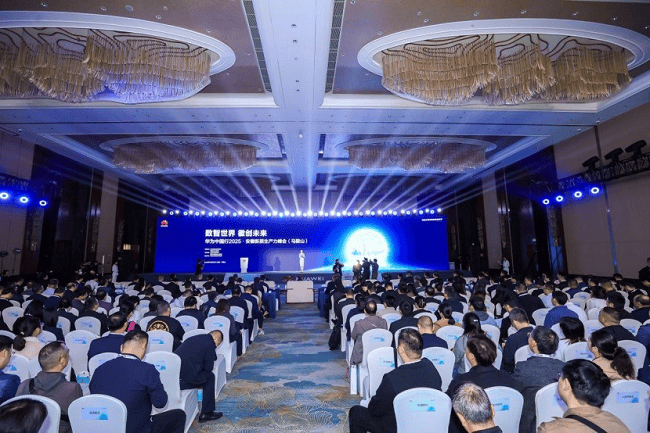
Core Insights - The article highlights the significant advancements in Anhui's digital transformation, showcasing the integration of digital technology with traditional industries, particularly through Huawei's initiatives [3][12]. Group 1: Digital Transformation Initiatives - The "Digital Anhui" initiative, in collaboration with Huawei since 2017, has led to the establishment of a robust ecosystem supporting innovation in various sectors such as government services and emergency management [3]. - The "DeepSeek" model enables low-cost training of industry-specific large models across sectors like education, healthcare, and manufacturing, promoting AI equity [5]. - Huawei's revenue is projected to reach 860 billion yuan in 2024, with a 22% year-on-year growth, and R&D investment of 179.7 billion yuan, accounting for 20.8% of revenue, reflecting strong financial backing for digital initiatives [5]. Group 2: Technological Innovations - Huawei focuses on three strategic directions: technological innovation, industry scenario implementation, and ecological collaboration [5][6]. - The company has developed a comprehensive computing infrastructure, including the Kunpeng and Ascend chips, to support AI and general computing needs [5]. - In collaboration with Conch Cement, Huawei has implemented predictive models that significantly enhance production efficiency, achieving over 90% accuracy in strength predictions [6]. Group 3: Methodology and Framework - Huawei's "Three Layers, Five Stages, Eight Steps" methodology provides a structured approach to digital transformation, emphasizing the importance of process reform and organizational restructuring [9][10]. - This methodology has been successfully applied in various sectors, including the establishment of a unified data platform for government services, breaking down data silos [10]. Group 4: Future Prospects - The recent summit in Ma'anshan marked a new phase in Huawei's collaboration with Anhui, focusing on expanding traditional industry transformations and enhancing talent development [12]. - Future plans include replicating successful models across more enterprises and deepening cooperation with local educational institutions to foster talent in digital technologies [12].

“硅巷”聚力——上海长宁区培育新质生产力掠影
Jing Ji Ri Bao· 2025-12-09 02:54
Core Insights - Since the "14th Five-Year Plan," Changning District in Shanghai has focused on digital economy as a driving force for industrial innovation and urban renewal, aiming for high-quality economic development [1] Group 1: Digital Economy and Innovation - Changning District has integrated technological innovation with urban renewal, creating the "Shanghai Silicon Alley" innovation district, which houses nearly 900 innovative companies, including specialized enterprises like Heihu Technology and Xijing Technology [1] - The district has partnered with the Chinese Academy of Sciences to establish the Digital Silicon Alley (Shanghai) Incubator Co., Ltd., focusing on integrated circuit application innovation and technology transfer [1] - Over 7,000 digital economy enterprises have been gathered in Changning, contributing nearly 60% to local tax revenue [1] Group 2: Economic Growth Metrics - The software and information service industry has experienced an annual growth rate of 24.8%, contributing 47.7% to the district's GDP growth in the first four years of the "14th Five-Year Plan" [1] - The total transaction volume of e-commerce platforms reached 1.62 trillion yuan, and the industrial internet sector has developed a cluster effect, leading to the approval of a national-level characteristic industrial cluster for small and medium-sized enterprises [1] Group 3: Future Plans - Looking ahead to the "15th Five-Year Plan," Changning District aims to deepen data element reforms and promote the integration of digital technology with the real economy, contributing to Shanghai's development as a modern socialist international metropolis [1]
中国移动内蒙古公司与鄂尔多斯市人民政府签署战略合作协议
Zhong Guo Jin Rong Xin Xi Wang· 2025-12-08 13:04
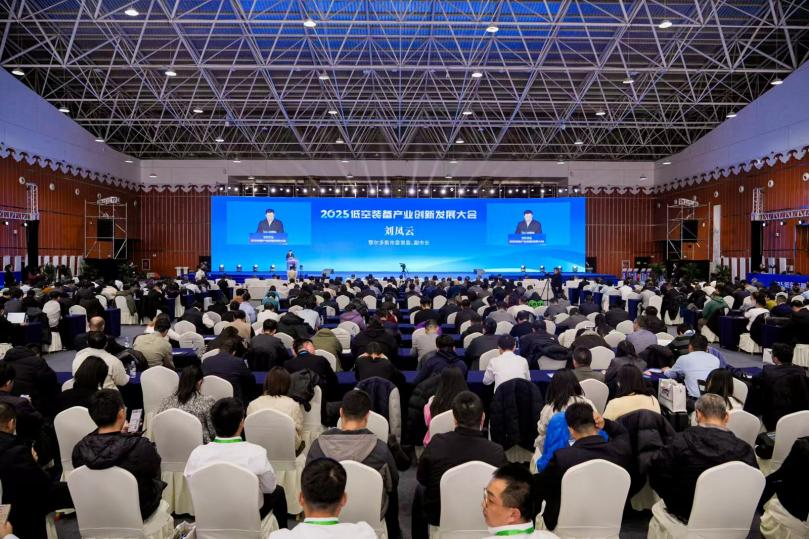
Core Points - The "2025 Low Altitude Equipment Industry Innovation Development Conference" was held in Ordos, focusing on the future of low-altitude equipment and its industrial development [2] - A strategic cooperation agreement was signed between the Ordos Municipal Government and China Mobile Inner Mongolia, aiming to enhance digital infrastructure and explore new models for low-altitude economic development [5] - China Mobile Inner Mongolia showcased its technological advancements in the low-altitude economy, including low-altitude communication networks and drone management platforms, indicating its commitment to supporting innovation in this sector [7] Group 1 - The conference was organized by the Equipment Industry Development Center of the Ministry of Industry and Information Technology and hosted by the Ordos Municipal Government [2] - Key representatives from both the Ordos Municipal Government and China Mobile Inner Mongolia attended the event, highlighting the importance of collaboration in the low-altitude equipment sector [2] - The strategic cooperation will focus on six major areas, including digital city construction and intelligent connected vehicles, to promote the integration of digital technology with the real economy [5] Group 2 - The exhibition by China Mobile Inner Mongolia attracted significant attention, showcasing its achievements in low-altitude economic technologies [7] - The partnership marks a new phase in collaboration, with plans to implement the agreement and enhance shared digital infrastructure and smart scenarios [7] - The initiative aims to inject new momentum into the high-quality development of Ordos, emphasizing the importance of sustainable growth in the low-altitude industry [7]


好评中国|聚力前行,为做好经济工作积蓄磅礴力量
Huan Qiu Wang· 2025-12-02 08:58
Group 1 - China's economy is maintaining a stable and progressive development trend, showcasing strong resilience and a bright outlook for the future [1] - In the first three quarters, the GDP grew by 5.2% year-on-year, accelerating by 0.2 and 0.4 percentage points compared to the previous year and the same period last year, respectively [1] - The urban unemployment rate averaged 5.2% in the first three quarters, remaining stable compared to the first half of the year [1] - The scale of foreign trade reached a historical high, with import and export growth rates gradually recovering, and foreign exchange reserves maintained above $3.3 trillion [1] Group 2 - The optimization of China's economic structure and the transition of growth drivers are progressing steadily, with significant advancements in high-quality development [2] - In the first three quarters, the added value of the equipment manufacturing industry and high-tech manufacturing industry accounted for 35.9% and 16.7% respectively, indicating a clear trend of industrial upgrading [2] - Investment in equipment and tools increased by 14% year-on-year, with emerging industries like lithium-ion battery manufacturing and new energy vehicles showing rapid growth [2] Group 3 - China's strong resilience is fundamental to its ability to cope with uncertainties and achieve stable long-term growth [3] - The first three quarters of stable growth laid a solid foundation, while new productive forces are being cultivated to create new growth points [3] - The macro policy space remains ample, providing continuous support for the economy, with positive factors accumulating as indicated by leading indicators and high-frequency data [3]