机器人即服务(RaaS)

Search documents
财信证券晨会纪要-20260116
Caixin Securities· 2026-01-15 23:30
Group 1: Market Overview - The market showed mixed performance with major indices fluctuating; the Shanghai Composite Index fell by 0.33% to 4112.60, while the Shenzhen Component rose by 0.41% to 14306.73 [4][7] - The total market turnover decreased significantly, exceeding 1 trillion yuan, indicating reduced trading activity [7][10] - The semiconductor industry chain showed strength, driven by TSMC's announcement of a capital expenditure forecast of $52 billion to $56 billion for 2026 [8][29] Group 2: Economic Insights - In 2025, the new social financing reached 3.56 trillion yuan, with new loans amounting to 1.627 trillion yuan [16][19] - The People's Bank of China lowered the interest rates on various structural monetary policy tools by 0.25 percentage points to support economic transformation [20][21] - The foreign exchange market in China recorded a trading volume of $42.6 trillion in 2025, with a net inflow of $30.21 billion [25][26] Group 3: Industry Dynamics - TSMC's capital expenditure for 2025 was approximately $40.9 billion, with expectations for continued strong demand for advanced process technologies [30][31] - The State Grid Corporation of China plans to invest 4 trillion yuan during the 14th Five-Year Plan period to enhance the new energy system [32][33] - The global revenue from non-gaming applications grew by 33.9% in 2025, indicating a shift in the mobile application economy [38][39] Group 4: Company Updates - Angel Yeast (600298.SH) is expanding its overseas operations and focusing on yeast protein business as a key growth driver [42] - Zhongjing Food (300908.SZ) maintains a solid core business but faces challenges with its Shanghai scallion oil product due to increased competition [44] - Shengnong Development (002299.SZ) expects a significant increase in net profit for 2025, projecting a growth of 89% to 97% [46] - CITIC Securities (600030.SH) reported a 38.46% increase in net profit for 2025, driven by a bullish domestic capital market [50][51]





高瓴领投,上市公司参与,机器人租赁平台擎天租完成种子轮融资
Xin Lang Cai Jing· 2026-01-15 08:09
Group 1 - The core viewpoint of the news is that the robot rental platform Qingtian Rental has completed a seed round of financing, which will be used for national market expansion, platform technology and service system construction, and deep collaboration with local governments and industrial ecosystems to strengthen its market position in the Robot as a Service (RaaS) sector [1] - The financing round was led by Hillhouse Capital, with participation from Fosun International, Dafeng Industrial, Tsinghua University Asset Management, and Zhangjiang Group [1] - Hillhouse Capital's project leader emphasized the transformation of robots from one-time equipment sales to a sustainable service model through platform organization and standardized service delivery [1] Group 2 - Qingtian Rental's platform has registered over 200,000 users within three weeks of its launch and maintains an average of over 200 rental orders per day, collaborating with companies like Meiyijia and Haidilao for various commercial applications [2] - The company plans to expand its service network to 200 cities across China by 2026, aiming to push for large-scale application of robots [2] - The major beneficiary of this financing round is Zhiyuan Robotics, which previously held a controlling stake in Qingtian Rental and has been actively investing in both upstream and downstream enterprises in the robotics ecosystem [2][3] Group 3 - Zhiyuan Robotics has established an "Ecological Development Department" and partnered with Hillhouse Capital to set up a venture capital fund, aiming to incubate over 50 early-stage projects within three years [3] - Investments in upstream companies help secure production capacity and gain preferential pricing and joint development rights, while investments in downstream companies provide valuable data for optimizing algorithms [3] - Industry insiders note that strategic investors with resources and collaboration potential are more favored by startups compared to purely financial investors in the current venture capital market [3]

机器人租赁平台“擎天租”完成种子轮融资
Bei Ke Cai Jing· 2026-01-15 06:21
Core Insights - The global first robot leasing platform "Qingtian Rental" has recently completed its seed round financing, led by GL Ventures with participation from Fosun R&D, Muhua Technology, Dafeng Fund, and Zhangjiang Group's embodied intelligence company [1] Group 1 - The funds raised will primarily be used for national market expansion, platform technology and service system development, and deep collaboration with local governments and industrial ecosystems to strengthen its market position in the Robot as a Service (RaaS) sector [1] - The platform has achieved over 200,000 registered users within three weeks of launch, with a stable daily rental order volume exceeding 200 [1]
擎天租获高瓴领投种子轮融资:全球首个机器人租赁平台,上线三周用户超20万
IPO早知道· 2026-01-15 03:44
Core Insights - Qingtian Rental has successfully completed seed round financing, led by Hillhouse Ventures, with participation from several other investors, aiming to expand its market presence and enhance its technology and service systems in the Robot as a Service (RaaS) sector [3][6] - The platform has achieved significant user engagement, with over 200,000 registered users and an average of more than 200 rental orders per day within three weeks of launch, indicating a strong growth trajectory [4][6] - Qingtian Rental's innovative model transforms high-cost robotic products into on-demand, standardized service capabilities, addressing the industry's challenges of high application costs and fragmented service chains [3][4] Company Strategy and Leadership - The leadership team includes experienced professionals from various sectors, with a clear "1234 strategy" aimed at connecting with over 10 robot manufacturers, developing 200 premium service providers, gathering 3,000 content creators, and serving 400,000 rental customers by 2026 [6][8] - The CEO emphasizes the importance of not just being a time leader but also taking responsibility for industry standards and ecological impact, aiming to drive the large-scale application of robots [6][8] Industry Context and Challenges - The robotics industry is transitioning from technology validation to commercial implementation, with the main challenge being the reduction of usage barriers and improvement of delivery efficiency [7][8] - Qingtian Rental's platform approach is seen as a solution to the "last mile" problem in robot commercialization, facilitating the integration of robots into real-world business environments [6][8] - The focus on high-frequency interaction and strong experiential attributes in sectors like offline consumption and tourism is identified as a key area for the scalable deployment of robotic services [8][9]


京东押注、顺丰菜鸟抖音入局,快递成AI机器人“黄金试验场”?
Xin Lang Cai Jing· 2026-01-14 05:40
Core Insights - The logistics and express delivery industry is increasingly focusing on automation and AI robotics, with major players like SF Express and JD Logistics leading the charge in technological transformation [1][3][12] Group 1: Industry Trends - The logistics industry is recognized as a "golden testing ground" for AI robotics due to its physical and standardized nature, allowing for clear execution interfaces and evaluation standards [9][10] - The global AI logistics robot market is projected to grow significantly, with the market size expected to reach 118.3 billion yuan in 2024 and 344.1 billion yuan by 2030, reflecting a compound annual growth rate of 19.5% [12] - The Chinese market is anticipated to perform even better, with a projected size of 44 billion yuan in 2024 and 133.9 billion yuan by 2030, at a growth rate of 20.4% [12] Group 2: Company Strategies - JD Logistics is leading with an aggressive strategy of "full-chain self-research + ecological investment," planning to purchase 3 million robots over the next five years to enhance its supply chain [4][5] - SF Express is focusing on "AI large models + green intelligence," establishing a dedicated technology company for AI and robotics [4][5] - Alibaba's Cainiao is leveraging "cloud computing + AI" to enhance its robotic ecosystem and international expansion, with plans to release new logistics technologies by 2025 [6][7] Group 3: Competitive Landscape - Major players like ByteDance are entering the logistics space, developing their own logistics robots and investing in core components to strengthen their market position [7] - Other companies such as ZTO, YTO, and Yunda are taking on the role of "application followers," focusing on practical implementations rather than upstream investments [7] Group 4: Economic Considerations - The logistics industry faces rising labor costs, making cost reduction through technology upgrades a critical need, where even a 0.1 yuan decrease in cost per package can lead to significant profit margins [10][11] - AI robots have already demonstrated their value in reducing labor needs and increasing efficiency, with JD's robots reportedly reducing workforce requirements by 58% and improving picking efficiency by 270% [11] Group 5: Future Developments - The industry is exploring new business models such as "Robots as a Service" (RaaS) to alleviate long-term investment pressures and adapt to fluctuating demand [17] - Future trends indicate a shift from "replacing human labor" to "human-robot collaboration," and from being a "cost center" to a "value center" that leverages data for supply chain optimization [17]


机器人租赁火了,但这真的是一门好生意吗?
3 6 Ke· 2025-12-29 00:25
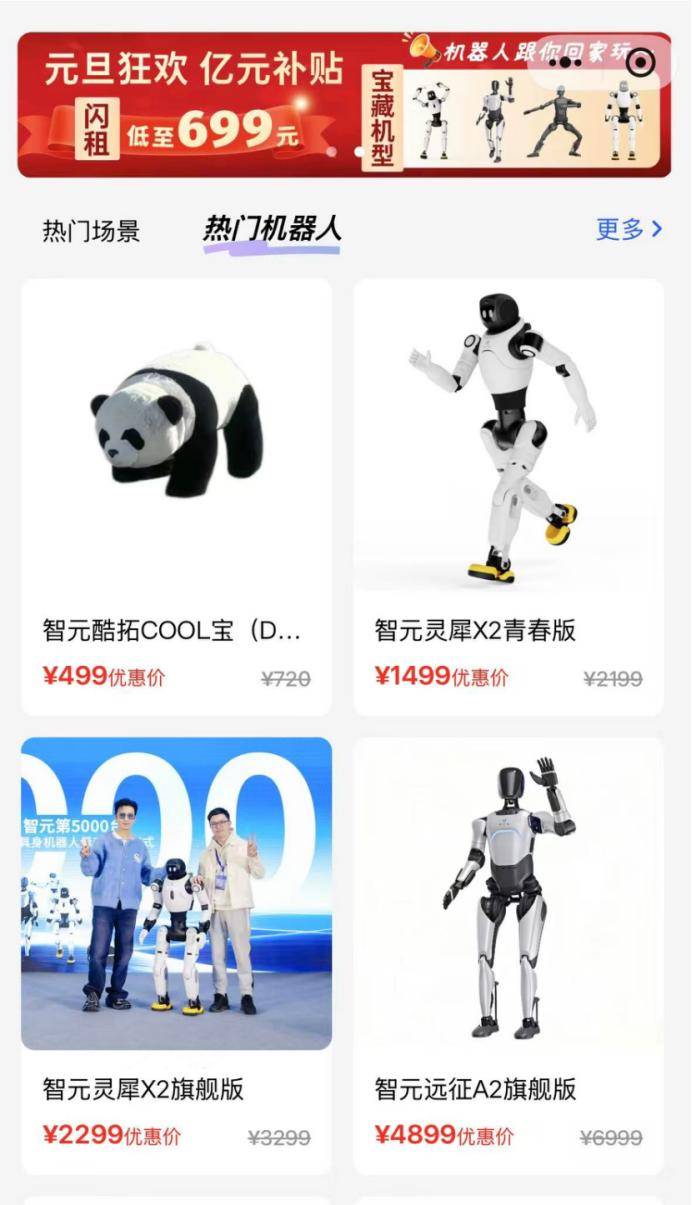
Group 1 - The core concept of "Qingtian Rent" is to create a robot rental platform that focuses on making robots operational in various entertainment and event scenarios rather than traditional industrial applications [2][11] - The platform aims to deploy 2,000 robots across 200 cities by the Spring Festival of 2026, with a goal of onboarding over 10 robot manufacturers and 200 service rental companies, serving more than 400,000 rental customers [2][11] - The rental pricing structure shows a clear gradient, with small desktop robots starting at around 200 yuan per day, while popular humanoid robots like the "Lingxi X2 Youth Edition" are priced at 1,499 yuan per day [3][7] Group 2 - "Qingtian Rent" operates as a "Robot as a Service" (RaaS) model, connecting devices, orders, content, and services, but fundamentally relies on a content-driven service structure rather than advanced technology [8][10] - The platform's service model is highly dependent on human operators, with a recommended ratio of 1 robot to 1 operator, which poses challenges due to the scarcity of skilled operators [9][11] - The platform integrates hardware suppliers, content ecosystems, service networks, and operational coordination, making it difficult for other companies to replicate its success without similar capabilities [13][14] Group 3 - The rapid establishment of "Qingtian Rent" indicates a viable commercial scenario for the robotics industry, but it also highlights deeper issues regarding the reliance on human labor and content rather than true intelligent capabilities [11][12] - The platform's success may mask the industry's anxiety over developing genuine intelligent service capabilities, as companies focus on operational and content-driven revenue rather than investing in advanced robotics [14]
机器人租赁平台年末火爆, 但日租价大跌
Xin Lang Cai Jing· 2025-12-26 04:41
Group 1 - The robot rental market is experiencing explosive growth due to the increase in year-end events and performances, but rental prices are returning to rational levels, with daily rental fees dropping from over 10,000 yuan to hundreds or thousands of yuan [2] - Basic embodied intelligent robots can now be rented for as low as 200 yuan per day, while advanced interactive robots range from 2,000 to 5,000 yuan per day [2] - The rental business is booming, with some platforms reporting bookings extending into February, and prices fluctuating daily [2] Group 2 - The first open robot rental platform, "Qingtian Rental," was launched, aiming to connect over 10 manufacturers, 200 service rental companies, and 300,000 rental customers by 2026 [3] - The platform currently covers 50 core cities in China and plans to expand to over 200 cities by 2026, creating an open robot rental ecosystem [3] - Popular humanoid robots on the platform are available for daily rentals starting from 1,499 yuan, with promotional offers reducing prices to as low as 699 yuan [3] Group 3 - The robot rental market has surpassed 1 billion yuan, with expectations to reach no less than 10 billion yuan next year [10] - Sales of embodied intelligent robots have surged, with transaction volumes increasing by 757% year-on-year during October and November [10] - Despite growth, consumer-grade humanoid robots still face challenges in performing complex tasks and natural emotional interactions, indicating ongoing technological upgrades [10]

智元打通机器人租赁“最后一公里”“擎天租”2026年将渗透超200座城市
Zhong Guo Jing Ying Bao· 2025-12-22 17:45
Group 1 - The core concept of the "Qingtian Rental" platform is to connect users, merchants, and creators, providing content operation and business support, thereby transforming high-threshold robot usage scenarios into a convenient rental model similar to shared power banks [1] - The platform aims to address industry pain points such as high operational costs, complex collaboration chains, and severe content homogenization in the robot rental market, allowing enterprises and users to rent robots conveniently on demand [1] - The company has achieved significant milestones, including the offline deployment of 5,000 robots and aims for annual sales exceeding 1 billion yuan in 2023, with projections of several million yuan in sales for 2024 [1] Group 2 - The "Qingtian Rental" strategic plan aims to achieve over 10 original equipment manufacturers, 200 premium service rental providers, 3,000 content creators, and over 400,000 rental customers by 2026 [2] - The platform has established a nationwide rental node network, reaching 50 core cities and over 600 service providers, with plans to penetrate over 200 cities by 2026, ensuring nationwide delivery capabilities [2] - The platform will introduce user growth and merchant incentive policies to create a sustainable and empowering intelligent ecosystem for the industry [2]
机器人租赁,会是万亿赛道的破局点吗?
机器人圈· 2025-10-31 12:11
Core Viewpoint - The robot rental market is rapidly developing as a new business model to alleviate high hardware costs, with significant growth potential in the overall robotics industry [3][6]. Industry Growth - The robotics industry in China is experiencing explosive growth, with a projected 27.8% year-on-year increase in revenue in the first half of 2025, and industrial robot production reaching 370,000 units, while service robots are expected to reach 8.824 million units, marking increases of 35.6% and 25.5% respectively [2]. - By 2045, the number of humanoid robots in use in China is expected to exceed 100 million, with the overall market size potentially reaching approximately 10 trillion yuan [2]. Market Challenges - The industry faces fragmentation, making it difficult for users to effectively connect with rental services and manufacturers. This lack of communication leads to a highly dispersed service and resource environment [4][5]. - Current robot performances are often limited to basic functions, resulting in a homogenized experience that can lead to audience fatigue [4]. Future Outlook - Despite existing challenges, industry experts remain optimistic about the market's future, predicting that robots will become a major terminal market following smartphones and automobiles [6]. - The demand for robot rentals is currently driven by entertainment, but it is expected to expand into broader applications such as home companionship and factory production as robot capabilities diversify [6]. Business Model Innovations - Subscription models are gaining traction, allowing for flexible payment options similar to rental agreements. This approach is expected to lower user cost barriers in the short term while providing long-term value through enhanced user experience and services [8][10]. - The price range for robots varies significantly, with mini robots priced under 1 million yuan, medium robots between 1 million and 3 million yuan, and large robots ranging from 3 million to 5 million yuan, reflecting different functionalities and capabilities [8]. Collaborative Efforts - To address industry pain points, a coalition called the Intelligent Robot Rental Ecosystem Alliance has been established, combining product, operation, and financial services [11]. - The alliance aims to create a comprehensive ecosystem that includes a content creation platform and flexible financing solutions to support rental services [11][12]. Operational Efficiency - The alliance plans to centralize robot deployment and maintenance to reduce costs and improve service efficiency, while also establishing a nationwide service network to enhance customer support [15]. - Safety measures will be implemented, including on-site personnel during events to ensure security and facilitate future delivery models [15]. Market Potential - Reports indicate a strong market potential for robotic applications, with flexible leasing and subscription models expected to enhance procurement willingness among small and medium enterprises [15]. - The rise of the RaaS (Robots as a Service) concept is anticipated to lead to increased adoption of robotic products through rental or subscription methods [16]. Technological Advancements - Ongoing technological breakthroughs are expected to expand the application scenarios for robots, with predictions that 2026 will mark a significant year for cognitive technology adoption in the industry [17].


直击2025广智会:机器人产业从“单品竞争”转向“生态博弈”
2 1 Shi Ji Jing Ji Bao Dao· 2025-10-31 03:21
Core Insights - The Guangdong International Robot and Intelligent Equipment Development Conference highlighted the rapid development of the robotics industry in Guangdong, driven by government policies and technological advancements [1][3]. Industry Developments - Guangdong government has introduced 12 substantial policies to accelerate core technology breakthroughs and industry ecosystem construction, promoting the integration of artificial intelligence and robotics [1]. - The establishment of the Guangdong Embodied Intelligent Robot Supply Chain Industry Alliance aims to enhance innovation and resource allocation in the robotics sector [1]. - The global robotics industry is entering a golden development period characterized by technological leaps, expanded application scenarios, and ecological restructuring [3]. Market Trends - The global consumption of industrial robots is projected to reach 542,000 units in 2024, with service robots and professional service robots expected to consume 2,006,000 units and 199,000 units, respectively [3]. - The market for medical robots is anticipated to grow significantly, with a year-on-year increase of 91.2% expected, reaching approximately 17,000 units [3]. - The adoption of the "Robots as a Service" (RaaS) model is expected to grow by 30.9% in 2024, with 24,600 units projected to be utilized [3]. Technological Advancements - The integration of artificial intelligence and robotics is reshaping industrial dynamics, with significant breakthroughs in core components such as precision reducers and high-performance servo systems [4]. - The number of national and industry standards in the robotics field has reached 229, with 621 CR certification certificates issued as of June 2025 [4]. Regional Insights - Dongguan, as a manufacturing hub, hosts over 22,000 industrial enterprises and more than 1,000 national high-tech companies, providing a fertile ground for robotics development [6]. - The city has over 7,000 robotics-related companies, ranking third in China, and is developing a complete industrial chain encompassing core components, manufacturing, and system integration [6]. Company Highlights - Leading companies such as Tuosida and Liyuan Intelligent Manufacturing showcased their latest robotic technologies, including humanoid robots and advanced automation solutions [2][6]. - Liyuan Intelligent Manufacturing has developed a humanoid robot capable of complex tasks, demonstrating significant advancements in integration and precision [6][7]. - The company aims to focus on embodied intelligent robots, leveraging its vertical integration capabilities to provide comprehensive manufacturing services [7][8].