油电同智

Search documents
千万信任:一汽奥迪用“深水长流”跑赢时代
Xin Lang Cai Jing· 2026-01-15 14:10
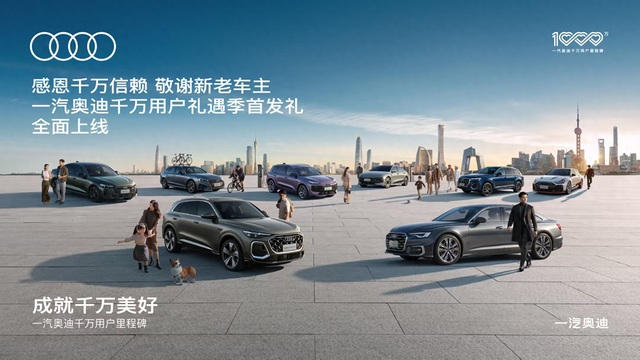
Core Insights - The article highlights the significance of FAW Audi reaching a milestone of 10 million users in the Chinese luxury car market, marking a pivotal moment after 38 years of development [3][14] - This achievement is not merely a numerical increase but represents a defensive and retaliatory stance regarding "system dignity," showcasing true certainty amid industry transformation [3][14] Group 1: Strategic Stability Over 38 Years - FAW Audi's development trajectory exemplifies the evolution of China's automotive industry from open importation to high-quality development, acting as an "industry ballast" [5][16] - The company has contributed significantly to the national economy, with cumulative taxes exceeding 740 billion yuan by the end of 2025 and providing nearly 500,000 jobs across its extensive dealer network [5][16] - FAW Audi has established a comprehensive localized R&D and supply chain system, empowering local suppliers and enhancing the autonomy and safety of China's automotive industry [5][16] Group 2: Embracing Innovation in the Digital Age - The "Digital New Paradigm" represents FAW Audi's transformation strategy, demonstrating its willingness to break traditional paradigms and lead innovation [7][18] - The company has introduced the "Oil-Electric Intelligence" strategy, integrating advanced technologies from partnerships with leading Chinese tech firms like Huawei, thus creating a new model of collaboration [7][18] - The introduction of Huawei's advanced driving technology in the A5L model exemplifies the fusion of German engineering and Chinese innovation, marking a shift to "Joint Venture Cooperation 3.0" [7][18] Group 3: Market Vitality Rooted in Trust - The milestone of 10 million users reflects the market's recognition of FAW Audi's commitment to long-term value and customer trust [10][21] - In 2025, FAW Audi achieved retail sales of 570,088 vehicles, reclaiming the top market share, supported by a robust customer engagement strategy [10][21] - The brand has successfully transformed customer trust into a dynamic brand center, emphasizing the importance of genuine emotional connections over mere algorithms [10][23]

2025汽车供应链十大年度热点 | 精进2025——汽车行业10个十大年度盘点
Jing Ji Guan Cha Wang· 2026-01-15 00:31
Core Insights - The automotive industry in 2025 has experienced significant growth driven by proactive policies that enhance consumption, stimulate internal growth, and improve the competitive environment [2] - The industry is undergoing a transformation characterized by electric and intelligent vehicle development, geopolitical challenges, and supply chain restructuring [4] Group 1: Supply Chain Developments - The takeover of Nexperia by the Dutch government has disrupted the global automotive chip supply chain, leading to production halts and capacity adjustments among major automakers [5][6] - The introduction of a 60-day payment term for suppliers aims to alleviate financial pressures on small and medium-sized enterprises, fostering a healthier supply chain ecosystem [7][8] - Chinese automotive supply chain companies are increasingly focusing on overseas markets, with significant investments in Southeast Asia, North America, and Europe to enhance local production capabilities [11][12] Group 2: Financing and Market Trends - A surge in Chinese automotive technology companies listing in Hong Kong reflects a growing trend towards capitalizing on the smart vehicle sector, with several firms successfully raising funds for technological advancements [9][10] - The automotive supply chain is witnessing a wave of mergers and acquisitions, with companies seeking to enhance their market positions and technological capabilities [13][14] Group 3: Technological Innovations - The automotive industry is moving towards an "oil-electric intelligence" model, with advancements in technology enabling the integration of intelligent features into traditional fuel vehicles [15][17] - The battery industry is experiencing rapid advancements, particularly in solid-state battery technology, which is crucial for the future of electric vehicles [20][21] - The proliferation of L2+ level advanced driver-assistance systems (ADAS) is reshaping the automotive supply chain, emphasizing the importance of safety and compliance [22][23] Group 4: Industry Challenges and Opportunities - A wave of bankruptcies among European and American automotive suppliers highlights the challenges faced during the transition to electric vehicles, revealing vulnerabilities in traditional supply chains [18][19] - The 2025 China Automotive Supply Chain Conference has set the stage for future developments, focusing on internationalization and innovation within the industry [24][26]


2025年在华表现分化 合资车企谋篇再出发
Zheng Quan Ri Bao· 2026-01-11 17:02
Core Insights - In 2025, the Chinese automotive market is experiencing intensified competition and a shift from price wars to a focus on product value, technological experience, and system efficiency [1] - The annual performance of joint venture automakers shows a clearer "layered structure," with leading companies maintaining scale through hybrid and fuel vehicle bases, while second-tier companies face pressure during their transformation [1] Group 1: Sales Performance - Volkswagen Group continues to lead the joint venture segment, with FAW-Volkswagen achieving sales of 1.5871 million vehicles in 2025, marking a historical high market share increase of 0.9 percentage points for fuel vehicles [2] - Toyota maintains stable sales supported by hybrid technology, with FAW-Toyota selling 805,500 vehicles, including 380,100 hybrid vehicles, a 14% year-on-year increase [2] - Honda's performance is under pressure, with GAC Honda's sales dropping by 25.22% to 351,900 vehicles in 2025 [2] Group 2: Market Trends - The penetration rate of new energy vehicles continues to rise, with monthly retail penetration nearing 60%, indicating a shift in consumer decision-making towards electrification and intelligence [4] - Joint venture automakers are adapting to the market by focusing on sustainable new energy and intelligent experiences at mainstream price points, moving beyond merely increasing new energy vehicle numbers [4] Group 3: Strategic Initiatives - Strategies such as "In China for China" and "Oil-Electric Co-Intelligence" are being implemented, with companies like SAIC Volkswagen planning to launch new models covering pure electric, hybrid, and extended-range vehicles [5][6] - The emphasis is on integrating local teams and suppliers into product development, ensuring that products meet local market demands [4] - Companies are focusing on upgrading fuel vehicles and enhancing their intelligent features to maintain market competitiveness during the transition period [6]
何以稳居“百万辆俱乐部”?上汽大众:均衡发展,坚持价值竞争
Zhong Guo Jing Ji Wang· 2026-01-08 07:57
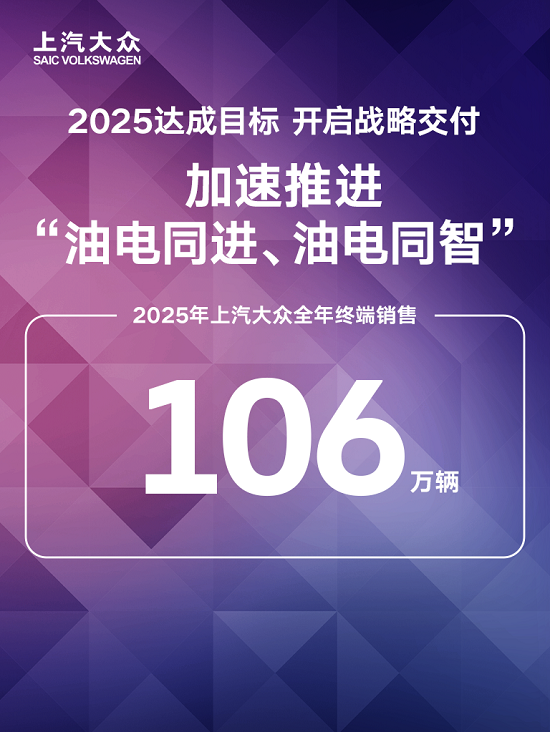
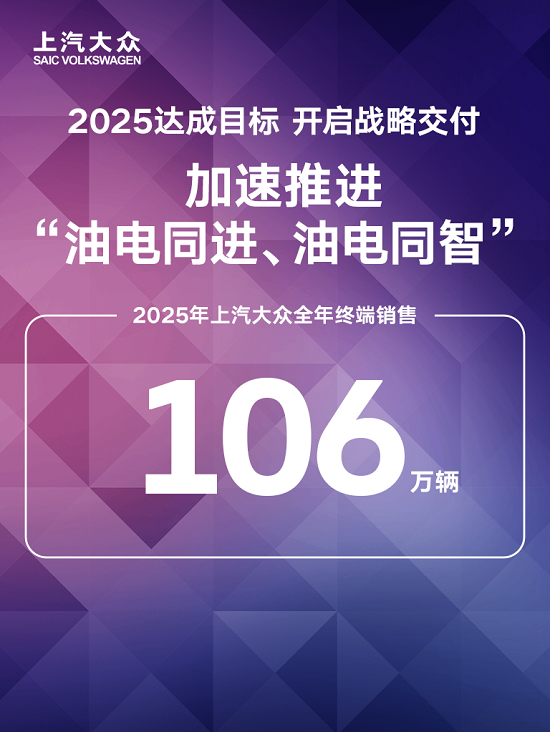
Core Insights - In 2025, the Chinese automotive market is undergoing a structural transformation towards high-quality development, with the penetration rate of new energy vehicles surpassing 50% [1][4] - SAIC Volkswagen is focusing on a "value competition" strategy, emphasizing the simultaneous development of traditional fuel vehicles and electric vehicles, which is seen as essential for sustainable growth [3][5] Group 1: Market Trends - The Chinese automotive market is experiencing intense competition, particularly in the new energy sector, leading to price wars and challenges in profitability [4] - Regulatory measures have been introduced to monitor pricing practices in the automotive industry, aiming to curb misleading promotional tactics [4] Group 2: SAIC Volkswagen's Strategy - SAIC Volkswagen achieved cumulative sales of 1.06 million units in 2025, maintaining its position in the "million club" [1][3] - The company is committed to a balanced development strategy of "oil and electricity together," ensuring that traditional fuel vehicles are not neglected while advancing electric vehicle offerings [5][7] Group 3: Product Development and Innovation - The launch of the AUDI brand's first model, the Audi E5 Sportback, and the introduction of the ID. ERA series highlight SAIC Volkswagen's focus on high-quality, innovative products [4][12] - The company is enhancing the intelligence of traditional fuel vehicles, with new models featuring advanced driver assistance systems [7][8] Group 4: Brand and Customer Engagement - Brand value is becoming increasingly important in consumer purchasing decisions, with 33% of consumers prioritizing brand over product, price, and promotion [8] - SAIC Volkswagen is restructuring its organizational processes to better align with market demands and enhance customer experience through digital and AI-driven initiatives [11][12]
何以稳居“百万辆俱乐部”?上汽大众:拒绝“偏科”、打响“价值战”
Zhong Guo Jing Ji Wang· 2026-01-08 07:46
Core Insights - In 2025, the Chinese automotive market is transitioning from scale expansion to high-quality development, with the penetration rate of new energy vehicles surpassing 50% [1] - SAIC Volkswagen has positioned itself advantageously in this new competitive landscape by focusing on "oil-electric integration" and value creation as the core drivers of sustainable development [1][3] Industry Trends - The Chinese automotive market is experiencing structural changes, with a significant increase in competition, particularly in the new energy vehicle sector, leading to a "price war" that affects profitability [4][6] - The government has implemented measures to regulate pricing in the automotive industry, emphasizing transparency and compliance in sales practices [4] Company Strategy - SAIC Volkswagen's strategy for 2025 emphasizes balanced development through "oil-electric integration" and "oil-electric intelligence," ensuring that traditional fuel vehicles and new energy vehicles coexist [6][7] - The company has launched several new models, including the AUDI E5 Sportback and the ID. ERA series, showcasing its commitment to high-quality, innovative products in the new energy segment [6][9] Brand and Market Positioning - Brand value has become a crucial factor in consumer purchasing decisions, with 33% of consumers prioritizing brand over product, price, and promotion [8] - SAIC Volkswagen is focusing on upgrading its organizational structure and brand image to align with market demands and enhance customer satisfaction [8][9] Future Outlook - The company aims to maintain its position in the "million club" by continuously launching new models and enhancing its brand identity, with plans for monthly new vehicle releases starting in the second quarter of 2026 [10]

陶海龙:106万辆背后,新上汽大众整装待发
Zhong Guo Qi Che Bao Wang· 2026-01-01 14:32
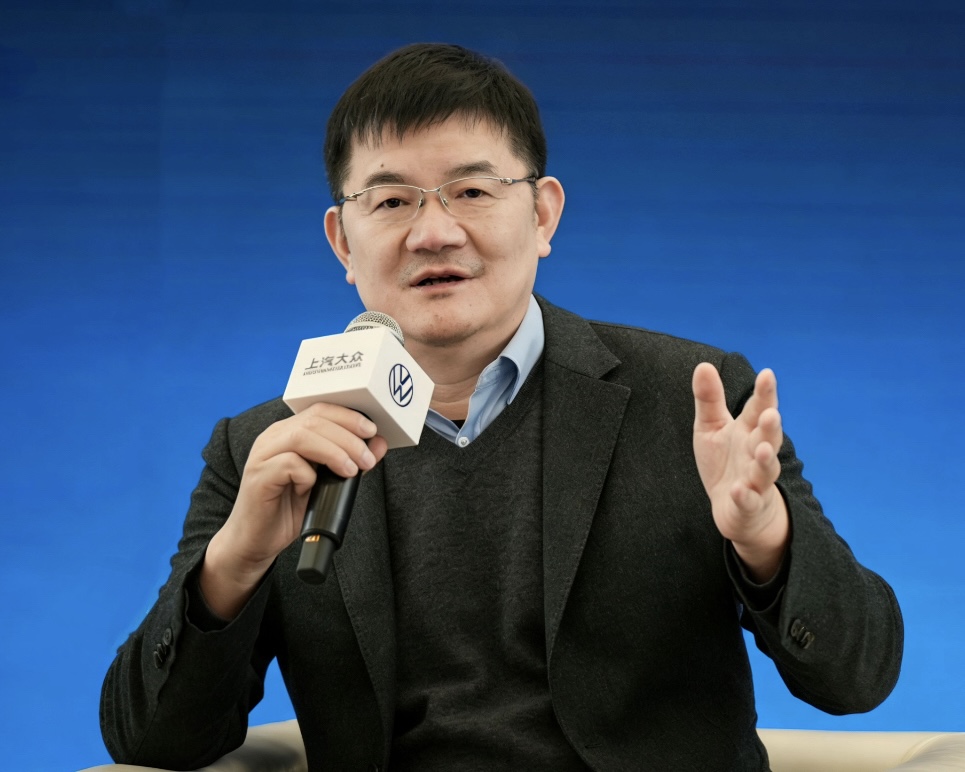
Core Insights - A rational value reconstruction is occurring in the Chinese automotive industry, with SAIC Volkswagen achieving a stable sales figure of 1.06 million units in 2025, maintaining its scale while increasing its market share in fuel vehicles [1][3] - The company has transitioned from "Joint Venture 1.0" to "Joint Venture 2.0," preparing for a new offensive in the new energy sector [1][3] Group 1: Market Position and Strategy - The Chinese automotive industry is shifting from chaotic strategic expansion to a more rational and stable development track, with a focus on value competition [3] - SAIC Volkswagen emphasizes long-termism and sustainable development, viewing 2025 as a crucial period for strengthening its position in the market [3] - The company achieved its sales target of 1.06 million units through strategic decisions that prioritize operational essence, such as avoiding pressure on dealers and refraining from participating in irrational price wars [3][5] Group 2: Product Development and Innovation - SAIC Volkswagen continues to invest in traditional strengths, with a strategy of "oil and electricity advancing together," focusing on intelligent upgrades of its Pro family models [5] - The company plans to maintain a 35% market share for fuel vehicles, ensuring ongoing investment and product launches [5] Group 3: Organizational Transformation - The transition from Joint Venture 1.0 to Joint Venture 2.0 involves significant challenges, particularly in breaking away from traditional technology-driven models [6][8] - SAIC Volkswagen is restructuring its organization and processes by adopting management methodologies from tech companies, aiming for a responsive and agile organizational structure [8] - The company is integrating user demands and market conditions into its R&D and marketing systems, embodying the principle of "in China, for China" [8] Group 4: Brand Renewal and Market Strategy - The year 2025 is seen as a foundational year, while 2026 is anticipated to be a year of offensive strategies, with plans to launch seven new energy products [9] - The brand's core values are defined as "progressive, reliable, and caring," reflecting a commitment to integrating global technology with local innovation [11] - The company aims to reshape its brand image through new product launches, ensuring that user needs are closely aligned with product definitions and service systems [11][12]
天籁·鸿蒙座舱月销破万的背后,是燃油车智能化的答案
Feng Huang Wang· 2025-12-30 12:10
Core Insights - The Nissan Teana, equipped with the HarmonyOS cockpit, achieved remarkable sales of 10,432 units in its first month, reflecting a 300% month-on-month growth, indicating a strong market response to the integration of smart technology in traditional fuel vehicles [2][3]. Market Performance - The launch of the Teana with HarmonyOS cockpit at the Guangzhou Auto Show on November 21, 2023, marked a significant turning point, leading to a steep increase in sales and demonstrating the cockpit's role as a core driver of market performance [2][3]. - Over 70% of consumers opted for high-end models, with 49% of buyers being from the post-90s generation, showcasing a shift in consumer willingness to pay a premium for advanced smart features [3][6]. Competitive Advantage - The Teana's market competitiveness is built on two main pillars: enhanced smart experiences and superior sensory enjoyment [4]. - The HarmonyOS cockpit utilizes the advanced MoLA architecture, featuring an AI assistant capable of understanding complex voice commands and seamless multi-device connectivity, significantly improving user interaction [5]. - The vehicle is equipped with the HUAWEI SOUND audio system, providing an immersive sound experience, which correlates with the high selection rate of premium models, indicating that attractive value propositions drive consumer purchasing decisions [6]. Industry Implications - The success of the Teana with HarmonyOS cockpit transcends a single product breakthrough, establishing a new industry benchmark for integrating smart technology in traditional fuel vehicles, challenging the notion that smart experiences are exclusive to electric vehicles [8][9]. - This case illustrates a broader industry trend where smart technology should be evaluated based on user experience rather than energy type, providing a viable transformation path for traditional fuel vehicles to achieve intelligent experiences and market recognition [9].


一汽奥迪千万用户里程碑:礼遇先行,智启豪华出行新篇
第一财经网· 2025-12-30 09:49
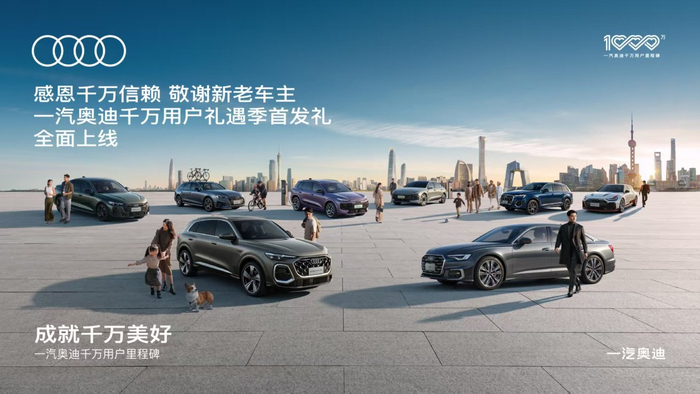
Core Insights - FAW Audi is celebrating the milestone of reaching 10 million users with a series of promotional events and the pre-sale of the new Audi Q5L, marking a new era in luxury B-segment SUVs [1][3] - The brand's success is attributed to nearly 38 years of deep integration with the Chinese automotive industry, reflecting a narrative of growth alongside the country's economic development [3][9] Group 1: User Engagement and Promotions - The "10 Million User Appreciation Season" includes multiple benefits for both new and existing customers, such as exclusive gifts for test drives, hotel upgrades, shopping discounts, and maintenance packages [1][3] - Existing car owners can enjoy significant discounts on maintenance and additional cash subsidies for purchasing or trading in vehicles, along with loyalty rewards [1][3] Group 2: Historical Context and Market Position - FAW Audi was a pioneer in the luxury car market in China, establishing a joint venture in 1988 that filled a gap in domestic luxury car production and set a precedent for future collaborations [4][9] - The introduction of the first domestically produced Audi model in 1989 marked a significant milestone, allowing Chinese consumers to experience luxury vehicles at more accessible prices [4][6] Group 3: Product Development and Innovation - FAW Audi has consistently adapted to market demands, launching extended models like the Audi A6L to meet consumer preferences for spaciousness, which has helped maintain its leadership in the luxury C-segment [6][8] - The brand has embraced a dual-platform strategy for electric and fuel vehicles, ensuring a comprehensive product matrix that caters to diverse consumer needs [11][13] Group 4: Strategic Partnerships and Future Plans - Collaborations with technology companies like Huawei have led to innovative products that integrate advanced driving technologies, showcasing a blend of German engineering and Chinese innovation [11][13] - By 2025, FAW Audi aims to expand its product offerings to 42 models across various segments, enhancing customer experience through upgraded service commitments and community support initiatives [13][15] Group 5: Social Responsibility and Economic Impact - FAW Audi has created nearly 500,000 jobs and contributed over 740 billion yuan in taxes, while also engaging in social initiatives to provide educational opportunities for underprivileged children [15] - The brand's journey reflects the evolution of the Chinese luxury car market, from inception to leadership, and serves as a model for successful joint ventures in the automotive sector [15]
从致敬经典到迈向未来:长城汽车的文化觉醒与高端征途
Huan Qiu Wang· 2025-12-28 06:23
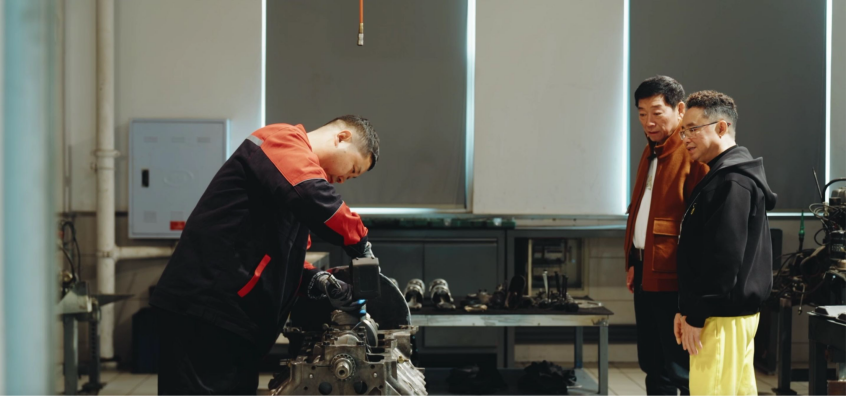
Core Insights - Longhua Automobile is pursuing a high-end strategy that integrates automotive culture and industrial aesthetics, aiming to create a unique Chinese automotive identity in the global market [1][6][9] Group 1: High-End Strategy and Cultural Integration - Longhua Automobile's chairman, Wei Jianjun, engaged in discussions with Huang Zongmin, founder of the Sanhe Classic Car Museum, to explore automotive culture and brand value [1][3] - The company aims to combine technical strength with cultural soft power, addressing the need for a unique Chinese imprint in the global automotive culture [1][6] - The establishment of the Longhua Super Luxury Car Business Group in January 2025 marks the company's entry into the ultra-luxury market, focusing on high-end categories like supercars and D-class sedans [4][7] Group 2: Technological Advancements and Product Development - Longhua's high-end strategy is supported by its self-developed 4.0T V8 twin-turbo engine, which is compatible with a hybrid system, showcasing the company's commitment to performance and safety [4][9] - The super luxury car project reflects a long-term approach to vehicle manufacturing, emphasizing the importance of time in creating true value [4][6] Group 3: Global Market and Cultural Value - Longhua's global strategy includes not only product and technology exports but also cultural value exports, enhancing the brand's presence in the international market [9] - The company's efforts in the super luxury segment aim to provide a new solution for enhancing the value of Chinese automotive brands, contributing to the construction of Chinese automotive culture [9]

千万用户背后:一汽奥迪如何定义合资豪华车的“中国范式”
Xin Lang Cai Jing· 2025-12-26 08:19
Core Insights - FAW Audi is set to reach a milestone of over 10 million users in China, marking it as the first joint venture luxury brand to achieve this in the Chinese automotive market after 38 years of development [1][19] Group 1: Brand Development and Market Position - FAW Audi has been a pioneer in the localization of luxury vehicles in China, starting with the introduction of the Audi 100 in 1989, which broke the monopoly of imported luxury cars [3][5] - The brand has successfully established the Audi A6L family as the most successful luxury executive sedan in China, leading the trend of extended luxury vehicles tailored to local consumer preferences [5][14] - The company has embraced a dual-platform strategy with the "Oil-Electric Intelligence" initiative, integrating both fuel and electric vehicles into a unified intelligent experience [16][19] Group 2: User Engagement and Service Innovation - FAW Audi has evolved its relationship with users from mere product offerings to a comprehensive service model, introducing the 4S service model in 2000 and enhancing it with the "Audi Excellence Service Plus" in 2025 [10][12] - The establishment of the "Customer Care Fund" in 2025 reflects the brand's commitment to social responsibility and community engagement, supporting users who contribute to public welfare [13][19] Group 3: Technological Advancements and Collaborations - FAW Audi is collaborating with leading companies like Huawei and CATL to enhance its technological capabilities, aiming to integrate advanced driving technologies into its vehicles [8][14] - The brand's localization efforts have resulted in a domestic production rate exceeding 70%, with local suppliers becoming integral to its global supply chain [16][17] Group 4: Economic and Social Contributions - FAW Audi has created nearly 500,000 jobs and contributed over 700 billion yuan in taxes, establishing a robust quality control system across its eight manufacturing bases [17] - The company has been recognized for its social contributions, particularly through its partnership with the China Children and Teenagers' Fund, focusing on educational support for underprivileged children [17]