港股再融资

Search documents
2025年港股市场再融资规模小幅超越IPO募资规模
Zheng Quan Ri Bao Zhi Sheng· 2026-01-05 13:13
Core Insights - The Hong Kong stock market's refinancing activity surged in 2025, with a total of approximately HKD 325.32 billion raised through various methods, significantly exceeding the previous year's figures [1] - Placement became the dominant method for refinancing, with 345 companies initiating 463 placements, raising HKD 289.62 billion, slightly surpassing the HKD 285.69 billion raised through IPOs [1] - Leading companies like BYD and Xiaomi spearheaded large-scale refinancing efforts, focusing on industry integration and technological development [2] Group 1: Refinancing Trends - In 2025, the refinancing market in Hong Kong was notably active, with a total of HKD 325.32 billion raised, primarily through placements [1] - Placement emerged as the main refinancing method, with 345 companies conducting 463 placements, raising HKD 289.62 billion, which slightly exceeded the IPO fundraising of HKD 285.69 billion [1] - The stability of rights issues and consideration issues was noted, with rights issues raising approximately HKD 8.14 billion and consideration issues raising about HKD 27.57 billion [1] Group 2: Leading Companies - Major companies like BYD, Xiaomi, and China Hongqiao led the refinancing efforts, with BYD raising HKD 43.51 billion and Xiaomi raising HKD 42.6 billion [2] - The refinancing focus for these leading firms included investments in AI and automotive technology for BYD and business line expansion for Xiaomi [2] - NIO and Horizon Robotics also participated significantly, with NIO raising a total of HKD 11.91 billion through two placements [2] Group 3: Multiple Financing Rounds - Some companies engaged in multiple rounds of refinancing, with firms like China Ruoyi and China Jinshi conducting more than two rounds in 2025 [4] - SenseTime, a leading AI company, completed two rounds of financing in July and December, raising HKD 2.5 billion and HKD 3.15 billion respectively [4] - The trend of frequent refinancing reflects the ongoing financial pressures faced by companies, particularly in the new energy vehicle sector [4] Group 4: Efficient Financing Mechanisms - The "old before new" placement model was utilized by companies like China Hongqiao and Derin Holdings, allowing for significant financing while maintaining market stability [5] - This model enables companies to quickly complete fundraising through the transfer of existing shares followed by the issuance of new shares, significantly shortening the financing cycle [5] - The typical discount for placements ranges from 5% to 12%, effectively attracting institutional investors [5] Group 5: New Listings and Market Expansion - New companies listed on the Hong Kong stock market accelerated their refinancing activities post-IPO, leveraging stock price advantages [6] - Companies like Boreton and Jiangsu Hongxin quickly initiated refinancing after their listings, while Yujian Technology conducted two rounds of financing in 2025 [6] - The trend of "going global" was noted, with many companies pursuing IPOs in Hong Kong to expand their international presence, although compliance with local regulations remains a critical consideration [6]

港股市场2025年终盘点:IPO规模冠全球 多项指标创纪录
Zheng Quan Shi Bao· 2025-12-24 18:35
Core Viewpoint - The Hong Kong stock market is expected to fully recover in 2025 after experiencing a significant downturn from 2021 to 2024, with the Hang Seng Index dropping over 50% during that period. The market is now witnessing a resurgence driven by technological breakthroughs and strong IPO activity, leading to record levels in various capital market dimensions [1]. IPO Performance - The IPO scale in Hong Kong is projected to exceed 300 billion HKD in 2026, with 2025 expected to see an IPO scale of 286.3 billion HKD, reclaiming the title of the world's largest IPO market [2][3]. - Eight companies in the top ten IPOs of 2025 raised over 10 billion HKD each, with many being A-share companies listed in Hong Kong [3]. - The IPO failure rate has decreased significantly, reaching a low of 28.83% in 2025, attributed to market conditions and new pricing mechanisms implemented by the Hong Kong Stock Exchange [4]. New Share Subscription Records - The Hong Kong market has set multiple records in new share subscriptions, including a historic oversubscription of 11,465 times for the IPO of Jinye International Group, marking the highest oversubscription in Hong Kong's history [5]. Refinancing Market - The refinancing scale in Hong Kong surpassed 300 billion HKD in 2025, with a total of 3,166 billion HKD raised, significantly exceeding the total from the previous three years [6][7]. - Leading companies like Xiaomi and BYD are at the forefront of major refinancing projects, raising substantial amounts for business expansion and development [8]. Stock Index Performance - The Hang Seng Index recorded a year-to-date increase of 28.49% as of December 23, 2025, positioning it among the top global stock indices [9]. - Sectors such as innovative pharmaceuticals and non-ferrous metals have shown remarkable performance, with stocks like Yaojie Ankang experiencing a staggering increase of 950.95% [10]. Capital Inflows and Buybacks - Southbound capital inflows into the Hong Kong market reached a record high of approximately 1.41 trillion HKD in 2025, significantly enhancing market liquidity [11][12]. - Stock buybacks by listed companies totaled 1,759.36 billion HKD in 2025, with Tencent leading the buyback amounts [13][14]. - Dividends distributed by Hong Kong companies reached nearly 1.46 trillion HKD, surpassing the total for the entire year of 2024 [15]. Delisting Trends - The pace of delistings in Hong Kong accelerated in 2025, with 61 companies exiting the market, primarily due to privatization and forced delisting mechanisms [16].





【锋行链盟】港交所上市公司再融资方式
Sou Hu Cai Jing· 2025-09-26 16:12
Group 1 - The core viewpoint of the article is that Hong Kong listed companies have a diverse range of refinancing methods, categorized into equity financing, hybrid financing, and debt financing [2][8] Group 2 - Equity financing involves issuing new shares directly to investors, which dilutes existing shareholders' equity. The methods include placing, rights issue, and private placement [2][3] - Hybrid financing combines debt and equity characteristics, balancing financing costs and equity dilution. It includes convertible bonds, which allow for flexible issuance and can avoid large-scale dilution if the issuance is small [3][5] - Debt financing raises funds in the form of liabilities, with some instruments counting as equity. This includes perpetual bonds and warrants, which can provide long-term funding without affecting control [5][6] Group 3 - The choice of refinancing method in Hong Kong must comply with the Listing Rules and consider the company's financial status, development stage, and shareholder interests [8] - Companies facing urgent funding needs may opt for placing or rights issues for quick access to capital, while those looking to minimize equity dilution might choose convertible bonds or perpetual bonds [9]

港股再融资热潮涌动,新经济企业成绝对主角
证券时报· 2025-09-26 15:17
Core Viewpoint - The Hong Kong stock market is experiencing explosive growth in refinancing due to ample liquidity, valuation recovery, and corporate strategic expansion needs, with total fundraising exceeding 280 billion HKD this year, a year-on-year increase of over 400% [1][4]. Group 1: Refunding Scale Surge - Hong Kong listed companies have raised a total of 284.15 billion HKD through various refinancing methods, marking a 439.37% increase compared to 52.68 billion HKD in the same period last year [4]. - The primary method of refinancing has been through share placements, accounting for 87.81% of the total, with 249.50 billion HKD raised [4]. Group 2: Dominance of New Economy Enterprises - New economy enterprises are leading the refinancing trend, with BYD raising 43.38 billion HKD, marking the largest equity refinancing project in the global automotive industry in the past decade [6]. - Xiaomi Group follows closely with 42.60 billion HKD raised, surpassing its total fundraising since its 2019 IPO and setting a record for Chinese tech hardware companies in overseas equity refinancing [7]. - The financing needs of these enterprises have shifted from "survival expansion" to "technology positioning," necessitating rapid capital leverage to build technological barriers [7]. Group 3: International Capital Involvement - International institutional investors are significantly participating in this refinancing wave, with notable entities like GIC and Al-Futtaim family office investing heavily [9][10]. - BYD's placement attracted numerous top long-term investors, including Al-Futtaim, which subscribed for 3.5 billion HKD [9]. - Wuji Capital has been actively investing in various companies, indicating a strong interest from international funds in the Hong Kong market [10].


港股市场再融资规模已达2144亿港元,远超过同期新股募资额
Sou Hu Cai Jing· 2025-09-10 07:29
Group 1 - The core viewpoint of the article highlights the active refinancing activities in the Hong Kong stock market, with a total refinancing scale reaching 214.437 billion HKD as of September 9, significantly exceeding the amount raised from new stock offerings during the same period [1] - Analysts believe that the anticipated interest rate cut by the Federal Reserve in September and the end of continuous net outflows of active foreign capital are positive factors that may enhance liquidity in the Hong Kong market [1] - There is an optimistic outlook regarding the improvement of liquidity and its supportive role for the market in the future [1]
港股再融资市场火热,国际资本重金布局
Xin Lang Cai Jing· 2025-08-19 03:00
Core Insights - The Hong Kong stock market has experienced explosive growth in the refinancing sector this year, with over 240 companies engaging in refinancing activities, amounting to HKD 183.9 billion, which is 2.17 times the total refinancing amount for the entire year of 2024 [1] Industry Distribution - New economy sectors are leading the refinancing efforts, with major companies such as BYD, Xiaomi Group, and WuXi AppTec being the primary contributors to the capital raised through rights issues [1] Investor Participation - Institutional investors, including sovereign funds, long-term funds, and well-known private equity firms, have been deeply involved in this refinancing wave, indicating strong market recognition of quality enterprises and highlighting the unique advantages of the Hong Kong capital market [1]
四大证券报精华摘要:8月13日
Xin Hua Cai Jing· 2025-08-13 00:23
Group 1: Market Mechanisms and Trends - The regular delisting mechanism in China's capital market is showing effectiveness, with 30 companies announced for delisting this year, indicating a healthy market ecology is forming [1] - The A-share market has seen a significant increase in financing balance, surpassing 2 trillion yuan for the first time since July 2015, reflecting a more mature participant structure and improved regulatory system [5] Group 2: Fund Performance and Investment Strategies - Consumer-themed funds have shown a stark performance divergence, with some funds underperforming due to heavy investments in traditional consumer stocks, while others have excelled by capturing new trends, with returns exceeding 60% [2] - 99% of equity funds have reported positive returns over the past year, with an average return of 34.06%, highlighting the emergence of structural opportunities in the market [7] Group 3: Capital Inflows and Market Dynamics - Southbound capital has seen a net inflow of over 910 billion HKD this year, marking a historical high and contributing to a significant rise in the Hong Kong stock market, with the Hang Seng Index up over 24% [3] - The Hong Kong refinancing market has experienced explosive growth, with over 240 companies raising 183.9 billion HKD, primarily driven by new economy sectors [8] Group 4: Policy and Economic Support - Various measures are being implemented to enhance investment and stimulate private sector activity, with new business registrations increasing by 4.6% for private enterprises in the first half of the year [4] - A new fiscal subsidy policy for personal consumption loans has been introduced, aimed at supporting consumer spending in key areas such as education and healthcare [11] Group 5: IPO Trends - The Hong Kong market is becoming a popular destination for AI companies seeking IPOs, with 213 companies having submitted applications, including around 50 AI firms [13]

港股再融资额1839亿,较去年增两倍,新经济巨头领跑
Sou Hu Cai Jing· 2025-08-12 23:11
Core Insights - The Hong Kong stock refinancing market is experiencing unprecedented prosperity, with over 240 companies completing refinancing totaling HKD 183.9 billion as of August 6, 2023, which is 2.17 times the total refinancing amount for the entire year of 2024, indicating strong market vitality [1] - New economy enterprises are the main players in this financing wave, with leading companies like BYD, Xiaomi Group, and WuXi AppTec leading the fundraising efforts [1][2] Group 1: Financing Details - BYD leads the pack with a placement amount of HKD 43.38 billion, followed closely by Xiaomi Group at HKD 42.6 billion, and WuXi AppTec at HKD 7.647 billion, together accounting for approximately 50% of the total placement amount in Hong Kong this year [2][3] - Other notable companies such as Horizon Robotics, ZhongAn Online, and China RuYi have raised over HKD 3 billion, while hard-tech firms like SenseTime and UBTECH also performed well [2] Group 2: Institutional Investor Participation - The participation of international institutional investors is a significant phenomenon in the Hong Kong refinancing market, with notable long-term fund Wujie Capital frequently making moves, including a planned investment of HKD 1.308 billion in Fourth Paradigm and HKD 2.5 billion in SenseTime [3][4] - Wujie Capital aims to establish a long-term presence in the Middle East, having obtained a financial license in Abu Dhabi, and is actively investing in new economy enterprises [3] Group 3: Strategic Partnerships and Value - The involvement of institutional investors brings strategic value beyond mere capital injection, enhancing market confidence in the companies' prospects and attracting more attention [5] - Institutional investors can help companies improve governance structures, increase transparency, and leverage their resources for business development, which is crucial for Chinese enterprises in the new economy sector as they expand globally [5] - BYD has announced a strategic partnership with Al-Futtaim Group to deepen collaboration in the electric vehicle sector, exploring growth opportunities based on regional cooperation [5][6] Group 4: Long-term Funding and R&D - The increased participation of long-term capital is expected to provide stable expectations for technology research and development in new economy enterprises [6] - Wujie Capital's collaboration with SenseTime and its spin-off Sunrise aims to explore strategic synergies in building a computing foundation for embodied intelligence and digital finance, promoting the globalization of AI chips and the construction of an AI capital ecosystem [6]

爆发式增长!港股公司掀起再融资热潮,今年金额已近1700亿港元
Zheng Quan Shi Bao· 2025-07-31 11:45
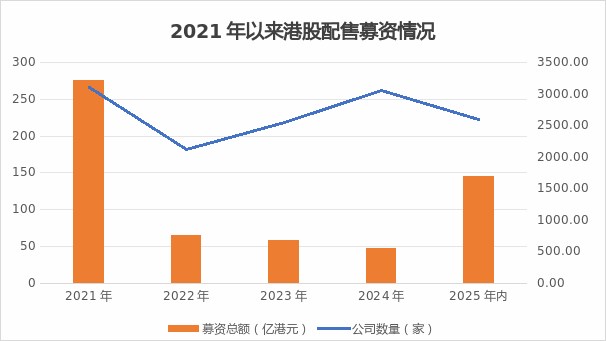
Core Viewpoint - The Hong Kong stock placement market is expected to experience explosive growth in 2025, driven by ample liquidity, valuation recovery, and corporate strategic expansion needs [1] Fundraising Overview - Hong Kong listed companies have raised nearly 170 billion HKD through placements this year, significantly surpassing the same period last year and exceeding the total for 2024 [1][3] - 223 Hong Kong listed companies have completed placements this year, raising a total of 169.83 billion HKD, which represents a 419.09% increase compared to the same period last year [3] - 67 companies have announced placement plans but have not yet implemented them, with a total planned fundraising amount of approximately 259.69 billion HKD [5][6] Notable Companies and Amounts - BYD Company Limited has raised the highest amount through placements this year, totaling 43.51 billion HKD, accounting for 25.62% of the total refinancing scale for 2025 [5] - WuXi AppTec plans to raise 7.38 million H-shares at a price of 104.27 HKD per share, aiming for a total of approximately 76.95 billion HKD, with 90% allocated for global expansion and capacity building [2][5] Market Dynamics - The historical peaks of placements in the Hong Kong market typically occur during periods of ample liquidity and relatively high valuations [7] - The current market environment has improved liquidity and valuation levels, providing a favorable backdrop for corporate refinancing [7] - The sectors leading in fundraising include new energy, internet, artificial intelligence, and biomedicine, with companies focusing on significant R&D investments and business expansion [7] Future Expectations - The Hong Kong stock exchange is expected to continue optimizing listing and refinancing mechanisms, enhancing market efficiency and attractiveness [8] - The estimated additional fundraising for the second half of the year is projected to be between 150 billion and 200 billion HKD [8]
爆发式增长!港股公司掀起再融资热潮,今年金额已近1700亿港元
证券时报· 2025-07-31 11:37
Core Viewpoint - The Hong Kong stock placement market is expected to experience explosive growth in 2025, driven by ample liquidity, valuation recovery, and corporate strategic expansion needs [1][2]. Fundraising Overview - Hong Kong listed companies have raised nearly 170 billion HKD through placements this year, significantly surpassing the same period last year and exceeding the total for 2024 [1][8]. - 67 companies have announced placement plans but have not yet implemented them, with a total planned fundraising amount of approximately 259.69 billion HKD [11]. Major Companies and Fundraising Amounts - Notable companies that have raised significant amounts include BYD with 43.51 billion HKD, Xiaomi with 42.6 billion HKD, and Sunac China with approximately 5.589 billion RMB [10]. - WuXi AppTec plans to raise 76.95 billion HKD, ranking first among companies with announced but unimplemented fundraising plans [11]. Market Conditions and Trends - The current surge in placements is attributed to improved market conditions and heightened corporate financing needs [2][14]. - Historical peaks in Hong Kong stock placements typically occur during periods of high liquidity and relatively high valuations [12]. - The market environment has improved, with increased liquidity and valuation levels facilitating corporate refinancing [14]. Future Expectations - The Hong Kong stock market is expected to maintain a similar fundraising scale in the second half of the year, with an estimated additional fundraising of 150 to 200 billion HKD [15]. - The Hong Kong Stock Exchange has been optimizing listing and refinancing mechanisms, enhancing market efficiency and attractiveness [16].