
现房销售制度

Search documents
全国现房销售占比已突破35%,“十五五”时期有望逐渐推进
Mei Ri Jing Ji Xin Wen· 2025-12-22 01:27
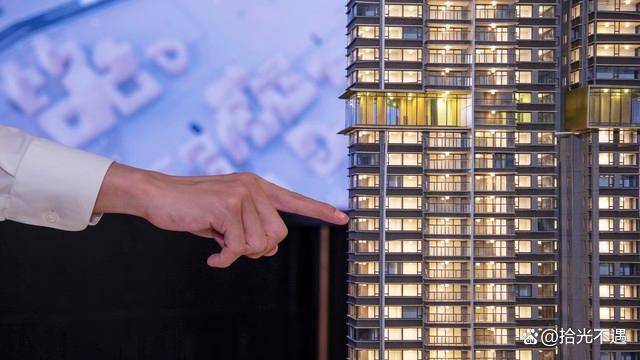
一场关乎购房模式的转变正在全国多地推进。 今年以来,包括湖南平江县、甘肃张掖、河南信阳等多个城市先后出台政策,要求新出让土地的商品房项目实行现房销售。另据克而瑞监测,2019年以来, 商品住宅现房销售面积占比已从10%提升至今年年初的33%,全国已有超过30个省(市)开展了现房销售试点或出台配套政策。 国家统计局数据显示,2024年,商品房现房销售面积约占商品房销售面积的30.84%;今年前9月,这一占比提升至35.4%。 而在"十五五"规划建议明确提出推动房地产高质量发展的背景下,日前住房和城乡建设部提出了六大重点任务,其中就包括建立住房保障轮候库制度、推进 商品房现房销售制度。 这也意味着,以"推进现房销售"为代表的一系列措施,将成为下一阶段房地产行业发展的核心任务。"随着政策的不断细化和市场的逐步适应,现房销售模 式有望成为中国商品住宅销售新常态,这是实践和丰富房地产行业发展新模式的应有之义。"克而瑞分析指出。 图片来源:每经记者 张建 摄 "十五五"时期现房销售有望逐渐推进 12月10日,深圳福田区梅林街道B405-0308地块完成竞拍,成交楼面价42695元/平方米,溢价率65%。根据地块出让公告, ...


中央财办回应明年房地产会采取哪些举措,住建部:推进现房销售,实现所见即所得
Hua Xia Shi Bao· 2025-12-17 14:21
Core Viewpoint - The Central Economic Work Conference highlighted that there is still significant room for high-quality development in China's real estate sector, focusing on rigid and improvement demands, with an emphasis on urban renewal, particularly in dilapidated housing and urban village transformations [2][3]. Group 1: Market Stability and Development - The real estate market has shown stability in new and second-hand housing transactions, with a narrowing decline in housing prices and varied regional market trends [3]. - As of November, the total real estate development investment reached 78,591 billion yuan, a year-on-year decrease of 15.9%, compared to a 9.8% decline at the beginning of the year [3]. - The inventory of unsold commercial housing decreased by 3.01 million square meters from October, with residential unsold area down by 2.84 million square meters [3]. Group 2: Demand Analysis - The rigid housing demand is expected to continue, driven by urbanization, with the urbanization rate projected to reach 67% for the resident population by 2024, while the registered population's urbanization rate is below 50% [3]. - Improvement demand is rising, with an increase in the willingness of residents to sell old homes for new ones, as the proportion of second-hand home transactions rose from 28% in 2021 to 45% this year [4]. Group 3: Strategies for High-Quality Development - The Central Financial Office proposed three strategies to promote high-quality development in real estate: stabilizing the market from both supply and demand sides, supporting the transformation of real estate companies, and accelerating the establishment of a new development model [6]. - On the supply side, there is a focus on controlling new developments and revitalizing existing stock, while the demand side will see targeted measures to release rigid and improvement demands [6]. - Real estate companies are encouraged to shift from primarily new home sales to holding properties and providing diverse living services, with a focus on light asset management and service-oriented business models [6]. Group 4: Sales and Regulatory Reforms - The promotion of a current housing sales system aims to prevent delivery risks, ensuring that buyers receive what they see [7]. - The article emphasizes the need for regulatory reforms in real estate development, financing, and sales, including the establishment of a main bank system for project financing [7]. - The rental market is also highlighted, with a call for the development of a market-oriented and professional rental sector to protect the legal rights of both landlords and tenants [8].

从政策端及土地出让端发力 多地推进现房销售制度落地
Zheng Quan Ri Bao· 2025-12-17 00:11
12月10日,深圳福田区梅林街道B405-0308宗地完成竞拍,成交楼面价42695元/㎡,溢价率65%。根据 深圳市国有建设用地使用权出让公告,该宗地内的商品住房需全部实行现房销售,是近年来深圳第二宗 要求全部现房销售的宅地。 广东省住房政策研究中心首席研究员李宇嘉在接受《证券日报》记者采访时表示,现房销售将倒逼开发 商将精力用在打造好产品上,降低开发周转速度,重视每一个项目的交付品质和口碑,从而提升单个项 目的产品竞争力,推动行业转型升级。同时,现房销售的推行也将降低新房开发节奏,从而降低库存和 去化压力。 推进现房销售制度是改革完善房地产开发、融资、销售制度过程中的重点工作之一。近年来,多地从政 策端及土地出让端发力,推动现房销售制度落地。 展望未来,现房销售或将得到进一步推进。中指研究院有关负责人认为,"十五五"时期,现房销售或将 逐渐推进,预计更多库存量大的城市或区域将率先推进现房销售,对于部分库存量较小的地区来说,现 房销售后新增供应将减少,或影响市场供需平衡,这些地方更需要地方政府进行精准把控推进节奏和力 度,同时加快完善适用于现房销售模式的房地产融资制度等,推动期房销售逐渐向现房销售转型。 据 ...
四大证券报精华摘要:12月12日
Zhong Guo Jin Rong Xin Xi Wang· 2025-12-12 00:03
Group 1 - The core viewpoint emphasizes the need for small and medium-sized banks to focus on reforming and enhancing their core competitiveness while undergoing a wave of mergers and acquisitions by larger banks [1] - In 2025, small and medium-sized banks are expected to face significant reforms, with over 200 banks already having been merged or dissolved in the second half of this year alone [1] - The trend of quantitative private equity firms actively investing in domestic GPU leaders and launching thematic products in the "dual innovation" sector indicates a strategic shift towards capturing excess returns in a volatile market [1] Group 2 - The securities industry is projected to experience a recovery in 2026, with favorable policies expected to enhance market liquidity and create opportunities for brokerage firms [2] - Leading securities companies and those with potential to enter the top tier are highlighted as key investment targets, alongside firms benefiting from improved competition and wealth management [2] - The upcoming year is seen as a pivotal moment for the securities sector, with expectations of valuation and profit resonance driven by mergers and international expansion [2] Group 3 - Foreign capital is increasingly attracted to Chinese assets due to the resilience of the Chinese economy and favorable market valuations, with a focus on technology growth, resource sectors, and high-dividend stocks [3] - The emergence of substantial orders in the embodied intelligence sector raises questions about the authenticity of demand, with some orders being framework agreements rather than confirmed sales [3] - Despite skepticism, the real demand for embodied intelligence applications in various industries is acknowledged, particularly in data collection and simple operational tasks [3] Group 4 - The convertible bond market is experiencing a resurgence, with new issuances accelerating and significant price increases observed in newly listed bonds [4] - The market for convertible bonds has seen a notable contraction over the past year, leading to a persistent "one bond hard to find" scenario, encouraging investor participation in new issuances [4] - Newly listed convertible bonds typically see substantial price increases, presenting challenges and opportunities for investors with varying risk appetites [4] Group 5 - The Central Economic Work Conference has outlined key tasks for 2026, emphasizing the need for qualitative and quantitative economic growth as part of the "14th Five-Year Plan" [5] - International organizations have raised their economic growth forecasts for China, with domestic expectations targeting around 5% growth for the upcoming year [5] - The year 2025 is anticipated to be a breakthrough year for embodied intelligence, with collaborative efforts across capital, policy, and industry driving the transition from experimental to practical applications [5] Group 6 - Many private equity firms have reported positive returns in November, significantly outperforming market indices, with some funds achieving over 50% returns this year [6] - Quantitative private equity firms have shown even stronger performance, particularly in strategies focused on small and mid-cap indices, with returns exceeding 60% [6] Group 7 - The recent auction of a land parcel in Shenzhen highlights the ongoing push for the implementation of a "pre-sale" system in the real estate market, with a significant premium achieved [7] - The trend towards requiring all new housing to be sold as completed properties is gaining traction, with multiple regions implementing supportive policies [7] - The banking sector is seeing increased interest from institutional investors, with a focus on net interest margin trends and asset quality for 2025 and 2026 [7] Group 8 - The AI edge products market is experiencing explosive growth, with significant innovations showcased at the TCL Global Technology Innovation Conference [8] - The global AI edge market is projected to grow from 321.9 billion to 1.22 trillion yuan between 2025 and 2029, with a compound annual growth rate of 40% [8]
多地推进现房销售制度落地
Zheng Quan Ri Bao· 2025-12-11 16:11
12月10日,深圳福田区梅林街道B405-0308宗地完成竞拍,成交楼面价42695元/㎡,溢价率65%。根据 深圳市国有建设用地使用权出让公告,该宗地内的商品住房需全部实行现房销售,是近年来深圳第二宗 要求全部现房销售的宅地。 推进现房销售制度是改革完善房地产开发、融资、销售制度过程中的重点工作之一。近年来,多地从政 策端及土地出让端发力,推动现房销售制度落地。 展望未来,现房销售或将得到进一步推进。中指研究院有关负责人认为,"十五五"时期,现房销售或将 逐渐推进,预计更多库存量大的城市或区域将率先推进现房销售,对于部分库存量较小的地区来说,现 房销售后新增供应将减少,或影响市场供需平衡,这些地方更需要地方政府进行精准把控推进节奏和力 度,同时加快完善适用于现房销售模式的房地产融资制度等,推动期房销售逐渐向现房销售转型。 就未来各地应如何推进现房销售落地,李宇嘉建议,在土地端,各地要提高土地供应效率,特别是推行 净地出让,市政管网、教育配套等要到位,并优化、精简规划报建、交付验收等流程,让开发商实现拿 地即开工;在融资端,鼓励金融机构对现房销售制下交付更有保障、烂尾风险下降的项目降低融资利 率。 据中指研究 ...
楼市基调确立:2026年全面遏制唱衰,市场信号明朗化
Sou Hu Cai Jing· 2025-12-05 19:14
Core Viewpoint - The Chinese real estate market is expected to show a stable and positive development trend in 2026, driven by collaborative efforts and clear policy signals established in 2025 [1] Group 1: Policy Framework - The core principles for the 2026 real estate market are "risk prevention, expectation stabilization, and transformation promotion," as outlined in key documents released at the end of 2025 [1] - The "14th Five-Year Plan" emphasizes high-quality development in the real estate sector, marking a shift from scale expansion to quality improvement and risk control [1] - Six major tasks have been identified, including optimizing housing supply and addressing risks in the real estate sector, with a focus on establishing a new development model [1] Group 2: Sales and Market Dynamics - The Ministry of Housing and Urban-Rural Development (MOHURD) plans to gradually shift from pre-sale to actual sales of properties, with current sales projects in first-tier cities reaching 35% [2] - A unified reduction of land value-added tax by 0.5 percentage points aims to stimulate the second-hand housing market [2] - Approximately 200 provinces and cities have introduced over 470 policies to optimize the housing market, with many cities lifting previous restrictions [2] Group 3: Credit and Financial Support - The average interest rate for first-time home loans has dropped to around 3.5%, with some cities offering additional reductions for first-time buyers [3] - Local governments are providing substantial financial subsidies, with some cities offering up to 20% of the housing price as a subsidy [3] - Policies have been implemented to lower the threshold for home purchases, including adjustments to the recognition of housing units [4] Group 4: Supply-Side Reforms - The promotion of actual sales and the revitalization of existing assets are key reforms aimed at enhancing market resilience [4] - The MOHURD plans to expand the pilot program for actual sales, requiring new properties to complete construction before being sold [4] - The regulatory framework for pre-sale funds has been tightened to ensure project funding is used appropriately, reducing the risk of unfinished projects [4] Group 5: Quality Improvement and Market Stability - The "14th Five-Year Plan" includes measures to enhance housing quality, with new standards for residential projects aimed at improving living conditions [8] - Local governments are actively managing public sentiment and combating misinformation to stabilize market expectations [9] - A comprehensive policy framework has been established to address current market challenges while promoting long-term healthy development in the real estate sector [9]
国债周报:事件冲击下市场波动加大-20251129
Wu Kuang Qi Huo· 2025-11-29 12:16
1. Report Industry Investment Rating No relevant content provided. 2. Core Views of the Report - The economic data for October showed a decline in both supply and demand. The growth rate of industrial added - value slowed down due to weak external demand, production structure adjustment, and fewer working days. The new policy - based financial instruments could not fully offset the impact of the real - estate downturn, and the power of demand recovery was insufficient. The export data in October was lower than expected, with exports to the US falling while non - US exports maintained resilience. The Fourth Plenary Session emphasized achieving the annual economic and social development goals, and considering the high economic growth rate in the first three quarters, the pressure to achieve the goal this year is not large, and the policy may focus more on the connection with next year, with little need for additional measures in the fourth quarter. Overseas, the US dollar liquidity is tight, and subsequent inflation and employment data will be observed for their indication of a December interest - rate cut [10]. - In terms of liquidity, the central bank conducted 151.18 billion yuan in reverse repurchases and 100 billion yuan in MLF operations this week, with 182.97 billion yuan in reverse repurchases and 90 billion yuan in MLF maturing, resulting in a net withdrawal of 21.79 billion yuan. The DR007 interest rate closed at 1.47%. - Regarding interest rates, the latest 10 - year Treasury yield closed at 1.84%, up 2.28 BP week - on - week; the 30 - year Treasury yield closed at 2.18%, up 2.45 BP week - on - week. The latest 10 - year US Treasury yield was 4.02%, down 4.00 BP week - on - week. - Overall, the supply - demand pattern of the bond market in the fourth quarter may improve. Although short - term credit events and the expectation of new regulations on fund fees have triggered some redemptions in the bond market, the overall risk is controllable. The market is currently in a situation of long - short entanglement with weak domestic demand recovery and improved inflation expectations, and generally maintains a volatile trend. Attention should be paid to the linkage between stocks and bonds and the impact of liquidity [13]. 3. Summary by Directory 3.1. Weekly Assessment and Strategy Recommendation - **Economic and Policy Analysis**: In October, economic data showed a decline in both supply and demand. The growth rate of industrial added - value decreased. The new policy - based financial instruments could not fully offset the real - estate downturn. The export to the US declined, while non - US exports were resilient. The policy may focus on the connection with next year. Overseas, the US dollar liquidity is tight, and the December interest - rate cut will depend on inflation and employment data. The profit of industrial enterprises from January to October was 5.95029 trillion yuan, a year - on - year increase of 1.9%. The "Two - Major" construction has received support from special Treasury bonds. Japan may adjust its interest - rate policy, and the central bank conducted 100 billion yuan in MLF operations. Japan revised its bond issuance plan, and many places are studying real - estate spot - sale support policies [10][11]. - **Liquidity**: The central bank conducted 151.18 billion yuan in reverse repurchases and 100 billion yuan in MLF operations this week, with 182.97 billion yuan in reverse repurchases and 90 billion yuan in MLF maturing, resulting in a net withdrawal of 21.79 billion yuan. The DR007 interest rate closed at 1.47% [13]. - **Interest Rates**: The 10 - year Treasury yield was 1.84%, up 2.28 BP week - on - week; the 30 - year Treasury yield was 2.18%, up 2.45 BP week - on - week. The 10 - year US Treasury yield was 4.02%, down 4.00 BP week - on - week [13]. - **Summary and Strategy**: The economic data in October showed weak supply and demand. The social financing growth rate may remain weak at the end of the year. The central bank maintains an attitude of protecting funds. The bond - market supply - demand pattern may improve in the fourth quarter. The recommended trading strategy is to buy on dips with a profit - loss ratio of 3:1 and a recommended cycle of 6 months, driven by the logic of loose monetary policy and difficult credit improvement [13][15]. 3.2. Futures and Spot Markets - **Contract Performance**: The report presents the closing prices, annualized discounts, settlement prices, and net basis of T, TL, TF, and TS contracts, as well as the closing prices and trading volumes of TS, TF, T, and TL contracts [18][22][25][28]. 3.3. Main Economic Data - **Domestic Economy**: - GDP: The actual GDP growth rate in the third quarter of 2025 was 4.8%, exceeding market expectations [40]. - PMI: In October, the manufacturing PMI was 49.0%, down 0.8 percentage points from the previous value; the service - industry PMI was 50.2%, up 0.1 percentage point. The manufacturing PMI sub - items showed that both supply and demand were under pressure [40][41]. - Price Index: In October, CPI increased by 0.2% year - on - year, core CPI increased by 1.2% year - on - year, and PPI decreased by 2.1% year - on - year. The month - on - month data also showed certain changes [49]. - Export: In October, exports decreased by 1.1% year - on - year, and imports increased by 1.0% year - on - year. Exports to the US decreased by 25.1% year - on - year, while exports to ASEAN increased by 10.9% year - on - year [52]. - Industrial Added Value: In October, the year - on - year growth rate of industrial added value was 4.9%, down from 6.5% in the previous month [55]. - Social Consumption: In October, the year - on - year growth rate of social consumer goods retail sales was 2.9%, down 0.1 percentage point from the previous month. Excluding automobiles, the consumption growth rate improved [55]. - Fixed - Asset Investment: From January to October, the cumulative year - on - year growth rate of fixed - asset investment was - 1.7%, and the real - estate investment growth rate was - 14.7%. The second - hand housing price decreased both month - on - month and year - on - year [58]. - Real - Estate Data: In October, the cumulative value of new housing starts was 490.61 million square meters, a year - on - year decrease of 19.8%. The cumulative value of new housing construction was 6.52939 billion square meters, a year - on - year decrease of 9.4%. The cumulative year - on - year decline in the completion - end data widened, and the new - housing sales in 30 large - and medium - sized cities weakened [61][64]. - **Foreign Economy**: - US Economy: The second - quarter US GDP had a real year - on - year growth rate of 1.99% and a quarter - on - quarter growth rate of 3.0%. In September, the US CPI and core CPI showed certain changes. In August, the order of durable goods increased by 7.63% year - on - year, and the non - farm employment population increased by 22,000. In October, the ISM manufacturing PMI was 48.7, and the non - manufacturing PMI was 52.4 [67][70][73]. - EU Economy: In the third quarter, the EU GDP increased by 1.5% year - on - year and 0.3% quarter - on - quarter [73]. - Eurozone Economy: In October, the Eurozone CPI increased by 2.1% year - on - year, and the core CPI increased by 2.4% year - on - year. In November, the preliminary manufacturing PMI was 49.7, and the service - industry PMI was 53.1 [76]. 3.4. Liquidity - **Money Supply**: In October, the M1 growth rate was 6.2%, and the M2 growth rate was 8.2%. The M1 - M2 gap widened [81]. - **Social Financing**: In October, the social financing increment was 81.5 billion yuan, a year - on - year decrease of 59.7 billion yuan. The new RMB loans were 220 trillion yuan. The government bond growth rate slowed down, and the financing of the real - economy sector was weak. The social financing growth rate of the resident and enterprise sectors was 5.92%, and the government bond growth rate was 19.20% [81][84]. - **Central Bank Operations**: In October, the MLF balance was 605 billion yuan, and the net MLF investment was 20 billion yuan. This week, the central bank conducted 151.18 billion yuan in reverse repurchases and 100 billion yuan in MLF operations, with 182.97 billion yuan in reverse repurchases and 90 billion yuan in MLF maturing, resulting in a net withdrawal of 21.79 billion yuan. The DR007 interest rate closed at 1.47% [87]. 3.5. Interest Rates and Exchange Rates - **Interest Rates**: The report provides the latest interest rates, daily, weekly, and monthly changes of various types of interest rates, including repurchase rates, Treasury - bond yields, and US Treasury - bond yields [90]. - **Exchange Rates**: The report presents the exchange - rate data of the US dollar against the RMB and the US dollar index [99].
3分钟 垂直20%涨停!A股两大板块 逆势爆发!
Zheng Quan Shi Bao Wang· 2025-11-14 04:58
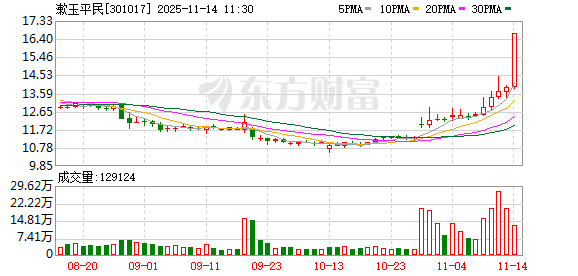
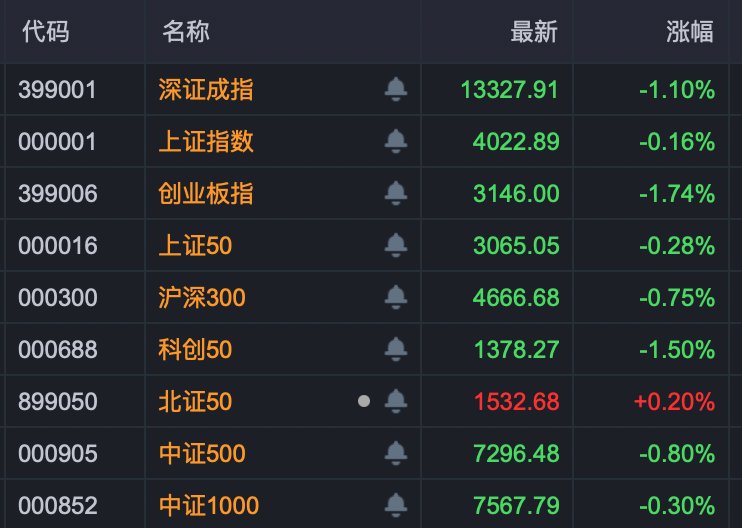
Market Overview - A-shares opened lower with the Shanghai Composite Index reaching a 10-year high during the session, while the Shenzhen Component, ChiNext, and Sci-Tech 50 indices fell over 1% [2] - The overall market saw slightly more gainers than losers, with stable trading volume [2] Health Industry Growth - The health industry showed strong performance, with the pharmaceutical commercial sector index rising for the sixth consecutive day, reaching a new high for the year, and half-day trading volume exceeding the previous day's total [2] - Specific stocks like Shangyu Pingmin and Renmin Tongtai hit the daily limit, with Shangyu Pingmin rising 20% shortly after market open [2][4] - The demand for the health industry is rapidly increasing due to an aging population, supported by government policies aimed at promoting the health sector [4][5] Real Estate Sector Developments - Real estate stocks collectively rose, with significant gains in companies like Huaxia Xingfu and Yingxin Development, both hitting their daily limits [5][6] - Recent policies promoting the sale of existing homes are accelerating, with cities implementing measures to transition from pre-sale to existing home sales [9][10] - The Ministry of Housing and Urban-Rural Development emphasized the importance of existing home sales to mitigate delivery risks and protect buyers' rights [8][9] Future Projections - The health industry is projected to reach a market size of 17.4 trillion yuan by 2025 and 29.1 trillion yuan by 2030 [5] - The real estate sector is expected to see a gradual shift towards existing home sales, particularly in areas with high inventory [10]




3分钟,垂直20%涨停,A股两大板块逆势爆发
Zheng Quan Shi Bao· 2025-11-14 04:42
Market Overview - A-shares opened lower with the Shanghai Composite Index reaching a 10-year high during the session, while the Shenzhen Component, ChiNext, and STAR Market indices fell over 1% [1] - The overall market saw slightly more gainers than losers, with stable trading volume [1] Health Industry - The health industry showed strong demand growth, with the pharmaceutical commercial sector index rising for the sixth consecutive day, reaching a new high for the year [3] - Notable stocks included Shuyou Pingmin, which hit a 20% limit up shortly after opening, and Renmin Tongtai, which also reached its limit up for the fifth consecutive day [3] - The health sector is expected to grow significantly, with estimates suggesting the industry will reach CNY 17.4 trillion by 2025 and CNY 29.1 trillion by 2030 [6] Real Estate Sector - Real estate stocks collectively rose, with significant gains in companies like Huaxia Xingfu and Yingxin Development, both hitting their limit up [7][8] - Recent policies promoting the sale of completed properties are accelerating, with cities like Pingjiang and Zhangye implementing measures to transition from pre-sale to completed property sales [11] - The real estate sector is viewed as an early economic indicator, with expectations that quality developers will benefit from the evolving market dynamics [11]
中央重磅新政,告别烂尾楼!中国房地产迎来现房销售时代
Sou Hu Cai Jing· 2025-11-08 22:24
Core Viewpoint - The implementation of the current housing sales system marks a significant transformation in China's real estate market, shifting from a "fast turnover" model to a focus on "quality development," addressing long-standing issues such as unfinished buildings and enhancing buyer protections [1][9][10]. Policy Implementation - Various regions, including Henan, Hubei, and Hunan, are adopting the current housing sales model, with Henan's Xinyang mandating that all new land sales must follow this model starting July 2025 [2][4]. - Hubei's Jingmen and Hunan's Pingjiang are also moving towards current housing sales, with specific timelines and conditions for implementation [2][4]. - The policy is characterized by a strong commitment to comprehensive execution, aiming to cover all new land projects in central urban areas [2]. Background and Rationale - The pre-sale system, introduced in the 1990s, has been pivotal for rapid industry growth but has led to significant risks, including delivery failures and quality disputes [9][10]. - The shift to current housing sales is a response to these risks, aiming to restore market confidence and protect consumer rights [9][10]. Market Dynamics - Over 30 cities have initiated trials or supportive policies for current housing sales since late 2022, indicating a broadening acceptance of this model [4][11]. - The current housing sales model is expected to stabilize the market by controlling new supply and accelerating inventory turnover, particularly in areas with high inventory levels [15][16]. Impact on Stakeholders - For buyers, the current housing sales model enhances transparency and reduces risks associated with unfinished projects, allowing them to inspect properties before purchase [13][14]. - For real estate companies, the transition presents challenges, as they must finance construction upfront, potentially increasing financial strain, but it also offers opportunities to improve product quality and brand reputation [14][15]. - The industry is moving towards a model that prioritizes quality, service, and operational excellence, moving away from high-leverage and high-turnover practices [15][16]. Future Outlook - The gradual implementation of the current housing sales system is expected to lead to a more regulated and transparent real estate market, ultimately benefiting consumers and promoting sustainable industry growth [17][18]. - The government is committed to supporting this transition with policies that facilitate financing and provide incentives for quality improvements [17][18].
