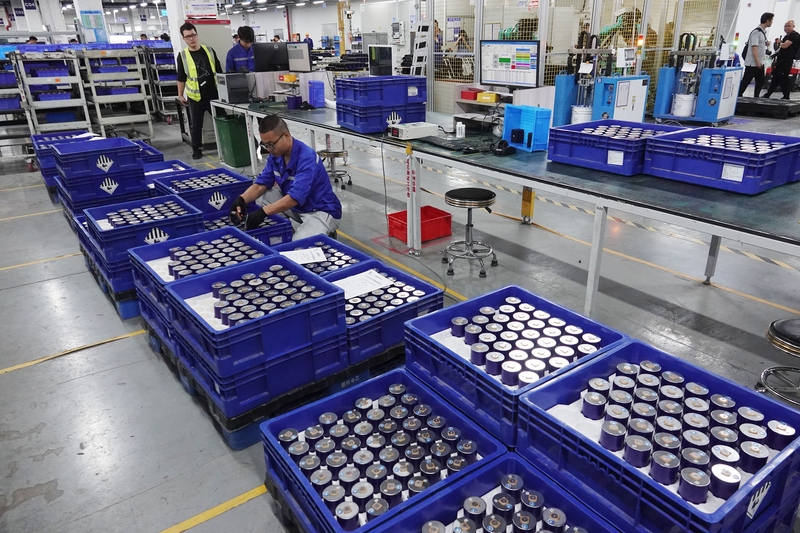
电池技术

Search documents
纽约时报:五角大楼和美国人工智能的共同弱点:它们急需中国的电池
美股IPO· 2025-12-29 00:19
Core Viewpoint - The article highlights the critical dependence of the U.S. AI industry and military on Chinese battery technology, emphasizing the need for the U.S. to develop its own battery supply chain to ensure national security and technological leadership [1][4][5]. Group 1: Dependence on Chinese Batteries - U.S. data centers, crucial for AI, are increasingly reliant on large lithium-ion batteries, predominantly sourced from China, which leads in all industrial aspects of battery production [4][9]. - The U.S. military's reliance on Chinese battery components for weapon systems poses a national security threat, with approximately 6,000 battery components sourced from China [5][6]. - The Biden administration is shifting its focus to support domestic battery production to reduce reliance on China, recognizing battery technology as essential for both AI and defense sectors [6][8]. Group 2: Challenges in Developing Domestic Battery Industry - Experts indicate that establishing a U.S. battery industry independent of China will be extremely challenging, as China produces 99% of the world's lithium iron phosphate (LFP) batteries and over 90% of key components [9][12]. - The U.S. has lithium reserves and battery startups, but competing with China will require coordinated efforts and government support, with estimates suggesting at least five years to meet domestic LFP battery demand [9][12]. - Environmental regulations in the U.S. may increase the cost of extracting key minerals, further complicating the development of a competitive domestic battery supply chain [9][12]. Group 3: Strategic Importance of Battery Technology - The article discusses the strategic importance of reliable power supply for data centers, which require high uptime and are increasingly dependent on battery backup systems to prevent data loss during power outages [12][13]. - AI's energy demands are significantly higher than traditional internet services, necessitating robust power infrastructure to support fluctuating energy needs [13][14]. - The military's future capabilities are heavily reliant on battery technology, with a growing demand for batteries in various military applications, including drones and advanced weapon systems [17][18]. Group 4: Government Initiatives and Investments - The Biden administration has begun investing in battery component companies and has allocated up to $500 million for battery materials and recycling projects [8][19]. - Recent legislation includes restrictions on the Pentagon's procurement of batteries from "foreign entities of concern," primarily targeting China [8][19]. - The government is recognizing the need for a robust domestic battery industry, with discussions around energy policy and battery supply chain issues taking place at high levels [8][20].

锂电产业链周记 | 福特20亿美元进军储能市场 宁德时代宜春锂矿进入首次环评信息公示阶段
Xin Lang Cai Jing· 2025-12-19 14:13
Group 1: Ford Motor Company - Ford plans to restructure its electric vehicle business and has recorded an impairment charge of $19.5 billion (approximately 137.6 billion RMB) [1] - The company is shifting its strategic focus towards commercial vehicle investments and high-growth battery storage business, with an investment of approximately $2 billion over the next two years [1] - Ford aims to deliver battery storage systems by 2027, targeting an annual production capacity of 20 GWh [1] Group 2: CATL and Lantu Automotive - CATL and Lantu Automotive signed a 10-year deepening cooperation agreement, focusing on battery technology and supply chain collaboration [2] - CATL will prioritize providing advanced battery technologies for Lantu's vehicle models, including the application of its Kirin, Xiaoyao, and Shenxing brands [2] - The partnership will also enhance supply chain agility and security, addressing external volatility risks [2] Group 3: Volkswagen - Volkswagen's subsidiary PowerCo has officially started battery cell production in Germany, marking a full-process layout from design to production in Europe [4] - The project in Salzgitter has seen investments exceeding €1 billion since its inception in July 2022 [4] - Volkswagen plans to replicate this model in Valencia, Spain, and St. Thomas, Canada [4] Group 4: LG Energy Solution - LG Energy Solution announced the cancellation of a battery procurement contract with Ford valued at 9.6 trillion KRW (approximately 45.9 billion RMB) [5] - The canceled order represents about 30% of LG Energy's total revenue from the previous year, with a projected revenue decline of 24.1% in 2024 [5] - LG Energy stated that the canceled orders were scheduled for supply starting in 2027, and they will maintain a cooperative relationship with Ford [5] Group 5: Other Companies - Wast Power signed an agreement to establish a sodium-ion battery materials and module production base in Jiangning, with a total investment of approximately 500 million RMB [6][7] - Zhongke Electric plans to invest approximately 7 billion RMB to build a lithium-ion battery anode material project in Luzhou, Sichuan, with a production capacity of 300,000 tons per year [8] - Tianqi Lithium announced the completion and trial operation of its third-phase chemical-grade lithium concentrate expansion project, increasing total capacity to 2.14 million tons per year [13]




小米申请电池剩余电量确定方法、装置、电子设备及存储介质专利,保证了剩余电量确定的准确性
Jin Rong Jie· 2025-11-28 10:12
Group 1 - The core point of the article is that Beijing Xiaomi Mobile Software Co., Ltd. has applied for a patent related to battery remaining power determination methods and devices, indicating a focus on battery technology innovation [1][2]. Group 2 - The patent application, titled "Method, Device, Electronic Equipment, and Storage Medium for Determining Remaining Battery Power," was published under CN121027881A with an application date of May 2024 [1]. - The patent describes a method that involves obtaining the surface temperature of the battery, determining an initial environmental temperature based on reference temperatures, and detecting the rate of change in surface temperature over time [1]. - The method aims to improve the accuracy of remaining battery power determination by adjusting the initial internal resistance value of the battery based on the rate of change in internal resistance due to environmental temperature variations [1]. Group 3 - Beijing Xiaomi Mobile Software Co., Ltd. was established in 2012 and is primarily engaged in software and information technology services, with a registered capital of 148.8 million RMB [2]. - The company has made investments in four enterprises, participated in 147 bidding projects, and holds approximately 5,000 patent records, along with 123 administrative licenses [2].

汽车早报|Stellantis与宁德时代西班牙合资工厂开工建设 黄勇任东风本田法定代表人、董事长
Xin Lang Cai Jing· 2025-11-27 00:57
Group 1: Automotive Market Performance - From November 1 to 23, the national retail sales of passenger cars reached 1.384 million units, a year-on-year decrease of 11% [1] - The wholesale volume of passenger cars during the same period was 1.69 million units, down 8% year-on-year, but up 8% compared to the previous month [1] - For the year-to-date, retail sales totaled 20.64 million units, reflecting a 6% increase year-on-year, while wholesale volume reached 25.464 million units, up 11% [1] Group 2: Company Developments - Dongfeng Honda has appointed Huang Yong as the new legal representative and chairman, following the resignation of Zhang Zutong [1] - Chengdu Shanju Battery Co., Ltd. was established with a registered capital of 50 million RMB, fully owned by Zhejiang Geely Automotive Parts Industry Co., Ltd. [2] - Shanghai Jinqida Technology Co., Ltd. was established with a registered capital of 2 million RMB, fully owned by SAIC General Motors [2] Group 3: Technological Advancements - Seres Automotive has received authorization for a patent related to the adjustment of steering wheel feel, aimed at personalized and automated control [2] - Tesla's VP Tao Lin stated that the selection of suppliers is based on quality, total cost, technical capability, and continuity, without regard to the country of origin [3] Group 4: Strategic Partnerships and Expansion - Stellantis and CATL have commenced construction of a battery factory in Spain, expected to start production by the end of 2026 with an annual capacity of 50 GWh [4] - Renault-Geely's joint venture plans to double production in Brazil, increasing from 180,000 to 380,000 units annually [5] - Tesla's Robotaxi fleet in Austin, Texas, is expected to double in size next month, according to Elon Musk [5] - Uber and WeRide have launched the first fully autonomous taxi service in Abu Dhabi, marking a significant step in commercial operations [5]

Stellantis、宁德时代西班牙合资工厂开工建设,2030年全面投产
Sou Hu Cai Jing· 2025-11-27 00:22
Core Insights - Stellantis and CATL have officially launched a €4.1 billion battery factory in northern Spain, indicating Europe's increasing reliance on Chinese battery technology [1] - The factory is expected to achieve partial production by the end of next year, with plans to reach 30% of its designed capacity by 2028 and full production by 2030, employing nearly 4,000 people [1] - The European battery industry is still lagging behind Asian companies like CATL, despite significant investments from the EU to support local competitors [1] Company Developments - The new factory will produce lithium iron phosphate batteries with an annual capacity of approximately 50 GWh [1] - Stellantis has faced challenges with its battery joint ventures, including those with Mercedes and Volkswagen, due to a slowdown in electric vehicle demand [1] - CATL continues to expand its operations, with a new factory in Hungary set to produce various types of batteries beyond just lithium-ion technology [1] Industry Context - Local European companies such as Britishvolt and Northvolt have faced bankruptcy despite EU support, highlighting the difficulties in establishing a competitive battery industry in Europe [1] - The investment by Stellantis and CATL reflects a strategic move to bolster battery production capabilities in Europe amid growing demand for electric vehicles [1]

美国关税政策冲击德国经济
Ren Min Ri Bao· 2025-11-13 22:10
Group 1 - Germany's exports to the US fell to €101 billion in the first eight months of 2025, a decrease of 6.5% year-on-year, with August exports dropping to €10.9 billion, marking a 20.1% decline, the lowest since November 2021 [1] - The German industrial sector has seen sales decline for eight consecutive quarters, with an overall contraction of 2.1% [1] - Over half of German employees are concerned about job stability, with nearly 20% of companies forced to implement short-time work due to insufficient orders [1] Group 2 - The US tariff policy is identified as a primary reason for the weak export performance, significantly reducing demand for traditional German products such as automobiles, machinery, and chemicals [1] - The automotive industry, a major source of trade surplus, has been directly impacted, with Volkswagen's operating profit down by one-third and Mercedes-Benz's net profit down by 56% in the first half of the year [1] - The German automotive sector is projected to lose approximately 51,500 jobs from July 2024 to June 2025, accounting for nearly 7% of total employment in the industry [1] Group 3 - The US tariffs have severely impacted the German machinery industry, with new tariffs on steel and aluminum derivatives raised to 50%, affecting sectors like electric motors and industrial robots [2] - The German machinery manufacturing association reported that the industry is facing a survival crisis, with production expected to decline for the third consecutive year by 5% [2] - More than half of surveyed companies plan to reduce trade with the US, and about a quarter are considering halting or canceling investments in the US [2] Group 4 - The number of corporate bankruptcies in Germany has been rising, with July seeing the highest number in 12 years, and over 22,000 companies expected to file for bankruptcy this year [3] - Major companies like DHL, Siemens, Thyssenkrupp, and Bosch have announced significant layoffs, totaling approximately 30,000 jobs [3] - The German central bank has indicated that US tariffs and policy uncertainty are suppressing economic growth, particularly in the industrial sector [3] Group 5 - In response to the crisis, the German industrial sector is exploring strategies such as localizing production and optimizing global production layouts to enhance resilience [4] - The German machinery manufacturing association is urging the EU to expedite free trade agreements and raw material partnerships to mitigate supply chain risks [4] - There is a push for companies to transition towards sustainable sectors like artificial intelligence and battery technology to find new growth opportunities [4]
美国关税政策冲击德国经济 德国对美出口下降,企业出现裁员潮
Ren Min Ri Bao· 2025-11-13 21:59
Group 1: Export and Economic Impact - Germany's exports to the U.S. decreased by 6.5% year-on-year to €101 billion in the first eight months of 2025, with August exports dropping 20.1% to €10.9 billion, marking the lowest level since November 2021 [1] - The German industrial sector has seen sales decline for eight consecutive quarters, with an overall contraction of 2.1% [1] - Over half of German employees are concerned about job stability, with nearly 20% of companies forced to implement short-time work due to insufficient orders [1] Group 2: Tariff Policy Effects - U.S. tariff policies are identified as a primary reason for the weak export performance, significantly reducing demand for traditional German products like automobiles, machinery, and chemicals [1] - The automotive industry, a major source of trade surplus, has been directly impacted, with Volkswagen's operating profit down by one-third and Mercedes-Benz's net profit down by 56% in the first half of the year [1] - The German automotive sector is projected to lose approximately 51,500 jobs from July 2024 to June 2025, accounting for nearly 7% of total employment in the industry [1] Group 3: Mechanical Industry Challenges - The U.S. has raised tariffs on certain steel and aluminum derivatives to 50%, severely impacting German mechanical manufacturing sectors such as electric motors and industrial robots [2] - The German machinery and equipment manufacturing association reports that the industry is facing a survival crisis, with production expected to decline for the third consecutive year by 5% [2] - More than half of surveyed companies plan to reduce trade with the U.S., and about a quarter are considering halting or canceling investments in the U.S. [2] Group 4: Bankruptcy and Employment Concerns - The number of corporate bankruptcies in Germany reached a 12-year high in July, with over 22,000 expected to file for bankruptcy this year, averaging more than 60 per day [3] - Major companies like DHL, Siemens, Thyssenkrupp, and Bosch are announcing significant layoffs, with DHL planning to cut 8,000 jobs and Bosch 13,000 jobs [3] - The German central bank indicates that U.S. tariffs and policy uncertainties are suppressing economic growth, particularly in the industrial sector [3] Group 5: Strategic Responses - In response to the crisis, companies are exploring localization of production as a strategy to mitigate the impact of U.S. tariffs [4] - Mercedes-Benz is optimizing its global production layout to enhance resilience against market fluctuations [4] - The German machinery sector is urging the EU to expedite free trade agreements and partnerships to reduce supply chain risks and expand market access [4]
AI眼镜双11销售猛增346%,电池技术成破局关键
高工锂电· 2025-11-13 11:39
Core Insights - During this year's Double 11 shopping festival, the sales of smart/AI glasses surged by 346% year-on-year, becoming the highlight of growth in consumer electronics [2] - Brands like Xiaomi, ROKID, and Yingmu Technology are leading in sales, indicating that AI hardware is rapidly transitioning from a "geek toy" to a mainstream consumer market [3] Market Challenges - Despite the unprecedented market enthusiasm, battery life remains the biggest bottleneck for AI glasses [4] - Current battery technology presents a significant gap in meeting the "all-day wear" demand, with existing AI glasses typically having a battery capacity between 200-450mAh, resulting in a practical usage time of only 2-4 hours [5][6] Technological Developments - The industry is exploring three main technological pathways for breakthroughs in battery life: 1. Material advancements, such as solid-state battery technology using silicon-carbon anodes and lithium-metal anodes to enhance energy density 2. Structural innovations, including square steel shells, ultra-thin stacked cells, or flexible battery designs for distributed layouts [6] - Domestic battery companies are making strides: - Haopeng Technology plans to mass-produce AI glasses-specific batteries starting in Q3 2025, focusing on lightweight and quick-swap designs [7] - XINWANDA is exploring low-power wireless charging solutions, while DESAY Battery is developing lithium batteries for AR and AI glasses with a focus on "active safety" [7][8] Future Prospects - If breakthroughs in all-day power supply are achieved, the application scenarios for AI glasses could expand from entertainment to office, social, and real-time computing, positioning them as the next growth point in the wearable battery market after headphones [9] - The explosive growth of AI terminals is opening a new, high-value battlefield for battery companies, prompting them to seize structural opportunities arising from the demand for new energy solutions across various sectors [10]

“7年前还旗鼓相当,去年中国就超美国6倍不止”
Xin Lang Cai Jing· 2025-10-31 07:23
Core Insights - The article emphasizes the rapid development of battery technology in China, positioning it as a leader in the global battery manufacturing value chain, significantly outpacing the United States and Europe [1][4][5] Industry Overview - Batteries are identified as a critical technology of the 21st century, with applications across various sectors including consumer electronics, electric vehicles, energy storage, defense, and artificial intelligence [1] - The demand for lithium-ion batteries is primarily driven by electric vehicles and energy storage, with a projected addition of approximately 130 gigawatts of battery storage capacity in the global power system this year [1][2] Market Dynamics - Since 2010, battery prices have plummeted by over 90%, coinciding with a faster growth rate in electricity demand compared to overall energy demand [2] - By 2024, China's battery production is expected to reach over six times that of the United States, with Shanghai's production capacity exceeding that of the entire European continent [4][5] Competitive Landscape - China has established a dominant position in the battery industry due to strategic decisions and significant investments over the past decade, leading to substantial economies of scale [5] - In 2021, China's lithium-ion battery production reached 324 gigawatt-hours, accounting for 57% of the global total, and by 2024, production is projected to increase to 1,170 gigawatt-hours, capturing 76% of the global market share [6] Technological Advancements - China has made significant advancements in battery technology, particularly in the field of lithium iron phosphate batteries, surpassing South Korea in global market leadership [6] - The number of patent applications in battery technology has seen China outpace South Korea by more than double, indicating a strong competitive edge in innovation [6] Recycling and Sustainability - China is also leading in the battery recycling sector, while the U.S. faces challenges in establishing a comparable battery recycling industry [7]
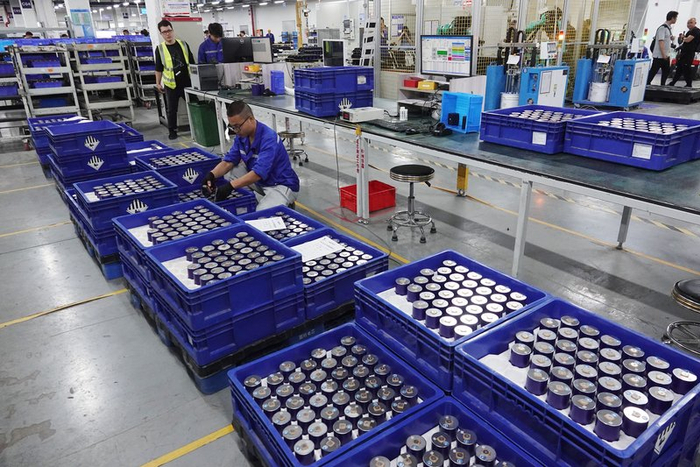
在电池领域,“7年前还旗鼓相当,去年中国就超美国6倍不止”
Guan Cha Zhe Wang· 2025-10-31 03:03
Core Insights - The article emphasizes the rapid development of battery technology in China, positioning it as a leader in the global battery manufacturing value chain, with production expected to reach over six times that of the U.S. by 2024 [1][4] - The demand for lithium-ion batteries is primarily driven by electric vehicles and energy storage, with a significant increase in global battery storage capacity planned for the upcoming year [1][2] Industry Overview - The battery sector has become crucial in various applications, including consumer electronics, electric vehicles, energy storage, defense, and artificial intelligence [1] - The price of batteries has decreased by over 90% since 2010, contributing to their widespread adoption and the growth of electricity demand outpacing overall energy demand [2] Competitive Landscape - China has significantly expanded its advantage in battery production since 2018, with its production capacity surpassing that of Europe and the U.S. [4][6] - The global lithium-ion battery market is dominated by Chinese companies, which accounted for 71% of the total production in 2023, with projections to reach 76% in 2024 [6] Technological Advancements - China has made substantial investments in research and development, leading to a significant increase in patent applications, particularly in the field of lithium iron phosphate batteries [6] - The country has established a leading position in battery recycling, contrasting with the nascent state of the industry in the U.S. [7]