
科技—产业—金融良性循环

Search documents
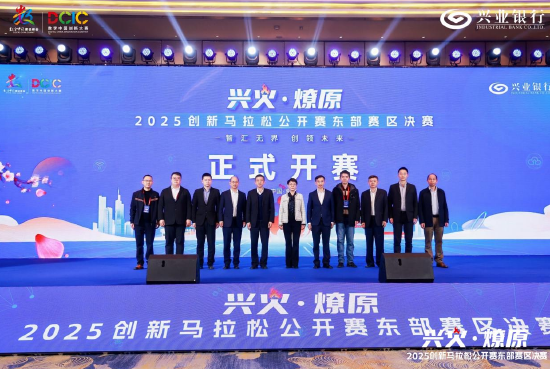
智汇无界 创领未来,2025年“兴火·燎原”创新马拉松公开赛东部赛区决赛在宁圆满落幕
Xin Lang Cai Jing· 2026-01-22 07:10
兴业银行南京分行副行长张健华先生代表赛区组委会致开场辞,银行数字化转型既是服务实体经济高质 量发展的必然路径,更是构建"第二增长曲线"的必然选择。作为数字中国建设峰会的核心赛事,"兴火· 燎原"创新马拉松公开赛始终以凝聚社会各界创新力量为己任,持续搭建优质交流平台,有力地促进了 银政企、产学研深度融合,为创新成果从理念走向落地筑牢桥梁。同时,他寄语全体参赛团队,秉持初 心、全力以赴、赛出专业风采、赛出创新实力。 决赛现场氛围热烈而紧张,决赛各团队以清晰的思路、专业的表达,全面阐述项目的创新亮点、核心优 势、应用场景及市场价值,涵盖新技术应用、智能营销、科技金融、智慧运营、数字风控等多个核心领 域,一个个兼具前瞻性与实用性的创新方案,赢得了现场评委与观众的高度关注。评审团则本着公平、 公正、专业的原则,围绕项目核心痛点、技术可行性、落地潜力等关键维度精准提问、细致点评,既为 参赛项目优化提供了宝贵建议,也为后续成果转化指明了方向。 经过多轮激烈角逐与评审团专业研判,大赛最终评选出一等奖、二等奖、三等奖及优秀奖多个荣誉奖 项。其中《东方财富Choice五篇大文章企业智能识别及全天候监测系统》《需求分析AI平台-软 ...


资本市场赋能西部陆海新通道建设的策略探析
Jin Rong Shi Bao· 2026-01-19 01:49
Core Viewpoint - The release of the "Opinions" marks a new phase in the financial support system for regional development strategies, emphasizing the role of capital markets in supporting enterprises along the Western Land-Sea New Corridor [2][3]. Group 1: New Opportunities for Chengdu-Chongqing Region - The Western Land-Sea New Corridor construction provides new opportunities for high-quality development in the Chengdu-Chongqing region, with a focus on enhancing capital market functions [2]. - The region's strategic positioning as a dual hub (Chengdu International Railway Port and Chongqing International Logistics Hub) is highlighted by its significant trade volume, which exceeded 2.8 trillion yuan in 2023, with 35% of freight volume attributed to the new corridor [2]. - Chengdu-Chongqing region has 257 listed companies as of 2024, with direct financing exceeding 1.2 trillion yuan, accounting for 38% of the total in the western region [2]. Group 2: New Mission for Chengdu-Chongqing Region - The financial support for the Western Land-Sea New Corridor faces challenges such as regional development imbalances, weak financial infrastructure, and cross-border financial rule conflicts [3]. - To address these challenges, a systematic strategy is needed to leverage capital markets for resource allocation, risk diversification, and value discovery [3]. - The focus is on market-oriented reforms, enhancing the vitality and service capacity of capital markets, and improving policy coordination [3]. Group 3: Capital Market as a Pillar for Financial Support - The Chengdu-Chongqing capital market has become a cornerstone for transforming financial support policies into development momentum, with significant achievements in multi-level capital market systems [4]. - The establishment of the "Land-Sea New Corridor Special Board" aims to enhance direct financing to 30% by 2025, while a 100 billion yuan "Land-Sea New Corridor Science and Technology Fund" supports innovation in logistics and cross-border e-commerce [4]. - A collaborative regulatory platform between Sichuan and Chongqing is being developed to unify information disclosure standards and risk management processes [4]. Group 4: Diverse Financing Channels - The construction of the Western Land-Sea New Corridor requires substantial funding, characterized by large scale, long cycles, and high risks [6]. - Capital markets are innovating financing tools, with over 8 billion yuan raised by companies like Chongqing Port and Chengdu Road and Bridge for infrastructure projects [6]. - The issuance of "Land-Sea New Corridor Special Bonds" and the first green REITs by Chongqing Water Group raised 1.5 billion yuan for ecological logistics park construction [6]. Group 5: Optimizing Institutional Supply - The integration of innovation chains, industry chains, and funding chains is essential for driving development [7]. - The gradual release of registration system reform benefits is guiding capital towards core areas of the corridor economy, with 12 new companies listed on the Science and Technology Innovation Board in 2023 [7]. - The establishment of a data asset market is underway, with a projected issuance of 5 billion yuan in data asset securitization products by 2024 [7]. Group 6: Mergers and Acquisitions for Industry Integration - Capital market functions are facilitating vertical integration of industries along the corridor, with companies like Tongwei Co. acquiring assets to form a complete industry chain [8]. - A joint investment fund of 50 billion yuan is being established to focus on multi-modal transport and cross-border e-commerce [8]. - Companies are also pursuing green transformation initiatives, such as Chongqing Iron and Steel's fundraising for environmental upgrades [8]. Group 7: Risk Prevention Mechanisms - A comprehensive risk prevention system is being developed to address cross-border and market risks associated with the corridor [9]. - The establishment of a regulatory sandbox for corridor-related listed companies aims to manage risks effectively [9]. - Financial risk stress testing is being expanded to the logistics sector, ensuring supply chain stability [9]. Group 8: Policy Coordination and Implementation - A four-dimensional implementation system is proposed to transform policy dividends into new development momentum, focusing on policy coordination, empowerment of entities, factor upgrading, and open cooperation [10]. - A collaborative financial regulatory mechanism is being established to streamline policies related to enterprise listings and cross-border financing [10]. - The introduction of a green channel for listings aims to facilitate the financing of corridor-related enterprises [10].
农行广州花都分行用金融活水精准“滴灌”科技型企业
Xin Lang Cai Jing· 2026-01-14 14:09
Core Viewpoint - Agricultural Bank of China Guangzhou Huadu Branch is enhancing financial service innovation, focusing on a "technology-industry-finance" cycle to provide tailored financial solutions for technology-oriented SMEs and specialized enterprises, thereby empowering their growth and supporting the real economy [1][7]. Group 1: Financial Support for Technology-Oriented SMEs - Guangzhou Wen'ao Technology Co., Ltd. is a research-driven technology company specializing in automotive lighting systems, facing increased pressure on cash flow due to rising R&D investments and market expansion needs [3][10]. - When the company encountered cash flow issues, Agricultural Bank of China Guangzhou Huadu Branch quickly conducted in-depth research and established a "Technology Finance Dedicated Service Team," creating a comprehensive financing plan and initiating a "green channel" for rapid approval, providing a loan of 10 million yuan to alleviate the company's financial pressure [3][10]. - The loan served as a "key engine" for accelerating the company's core technology breakthroughs and results transformation [3][10]. Group 2: Role of Financial Institutions - Technology-oriented SMEs are recognized as the most dynamic, potential-rich, and growth-oriented innovative groups, playing a crucial role in providing new technologies and products to the industry and market [4][11]. - Financial institutions are challenged to deliver precise financial support to these "light asset, high potential" technology-oriented enterprises, demonstrating their wisdom and responsibility [4][11]. - The successful loan issuance exemplifies the Agricultural Bank of China Guangzhou Huadu Branch's commitment to serving technology-oriented enterprises, with the branch having engaged with over 1,000 SMEs and approved loans exceeding 3 billion yuan this year [6][13]. Group 3: Strategic Partnership - Agricultural Bank of China Guangzhou Huadu Branch is not only a financial supporter but also a strategic partner for companies like Guangzhou Wen'ao Technology Co., Ltd., providing timely financial assistance and resource integration [8][14]. - The loan has been described as a "timely rain," enhancing the company's confidence in R&D investments and product iterations, allowing for steadier progress [8][14].
智库策论丨畅通“科技—产业—金融”良性循环的系统路径
Sou Hu Cai Jing· 2026-01-13 02:42
Core Viewpoint - Building a virtuous cycle of "technology-industry-finance" is crucial for overcoming key technological challenges and accelerating the cultivation of new productive forces, thereby gaining strategic advantages in global competition [1] Group 1: Importance of the Cycle - The three major tasks outlined in the 20th National Congress and the 14th Five-Year Plan are the construction of a modern industrial system, high-level technological self-reliance, and the establishment of a strong financial nation [1] - The interconnection between technology, industry, and finance is essential for high-quality development and achieving strategic goals [1] Group 2: Challenges in the Cycle - The cycle from industry to finance faces dual challenges of "information asymmetry" and "capability mismatch," where a lack of effective information sharing mechanisms hinders financial institutions from understanding the true value and core needs of enterprises [2] - Financial institutions struggle with recognizing and servicing complex industries, leading to a "dare not invest, cannot invest" dilemma due to a shortage of professionals who understand both industry technology and financial tools [2] Group 3: Financial to Technology Cycle Issues - The cycle from finance to technology encounters contradictions of "mismatch in risk duration" and "capital structure imbalance," where traditional banking practices conflict with the high-risk, long-cycle nature of technological innovation [3] - The capital market has structural shortcomings, with insufficient early-stage capital and a tendency for investments to shift towards later stages, leaving startups in critical need of funding [3] Group 4: Recommendations for Improvement - In the "technology-industry" cycle, a market-oriented mechanism for value discovery and risk-sharing should be established, including a professional technology transfer system and a public risk-sharing platform for early-stage projects [4] - The "industry-finance" cycle should enhance information collaboration and financial service capabilities by creating a national-level integrated digital infrastructure and encouraging financial institutions to adopt a research-driven service model [5][6] - For the "finance-technology" cycle, it is essential to cultivate long-term "patient capital," reform capital markets, and adjust legal and regulatory frameworks to support innovative financial service models [7]
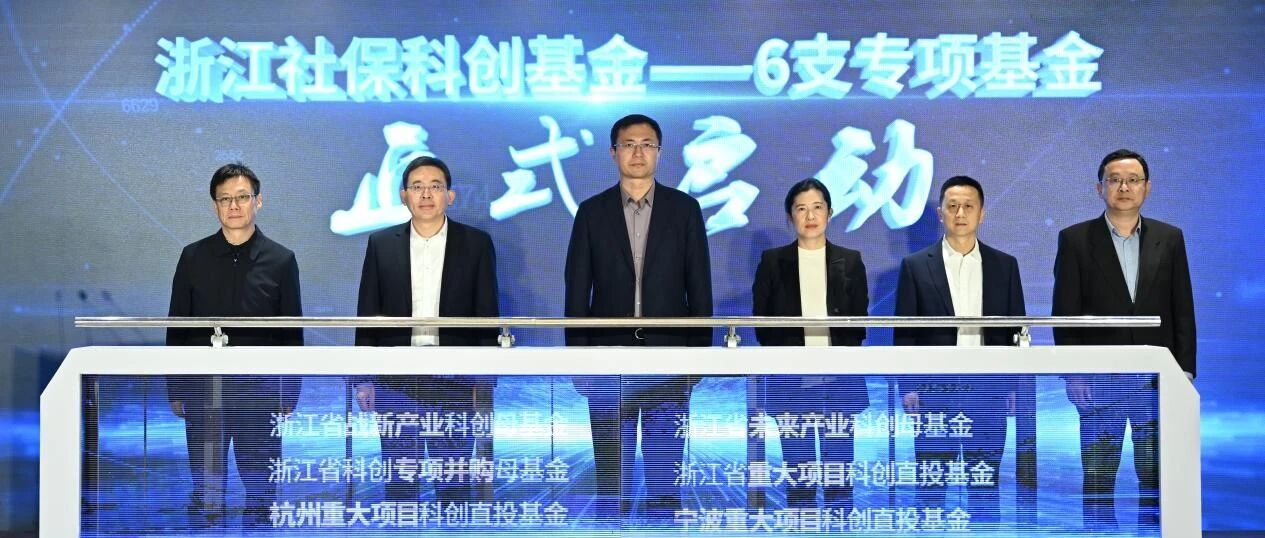
这个省社保科创基金的6支专项基金启航了
母基金研究中心· 2026-01-11 07:47
Core Viewpoint - The Zhejiang Social Security Science and Technology Innovation Fund has officially entered a comprehensive investment phase, marking a significant step in supporting technological innovation and economic development in Zhejiang Province [5][6]. Group 1: Fund Launch and Structure - The Zhejiang Social Security Science and Technology Innovation Fund has launched six specialized funds, including the Zhejiang New Industry Science and Technology Mother Fund and the Zhejiang Future Industry Science and Technology Mother Fund, each with a scale of 10 billion [5]. - The total investment amount for the first six projects signed at the conference exceeds 1.6 billion, covering sectors such as quantum science, artificial intelligence, integrated circuits, advanced manufacturing, and new materials [5]. Group 2: Strategic Goals and Future Directions - The fund aims to support national strategies for technological self-reliance and innovation in Zhejiang, emphasizing market-oriented operations and professional decision-making [6]. - The fund is designed to provide long-term, strategic, and patient capital, with a maximum duration of 18 years and an initial investable sub-fund size of nearly 300 billion [8]. Group 3: Collaboration and Investment Opportunities - The conference included a dialogue among scientists, investors, and entrepreneurs, promoting a healthy cycle between technology, industry, and finance [7]. - Zhejiang is positioned as a promising investment destination, with innovation becoming a new trend and artificial intelligence emerging as a key identifier for the region [8].
《沈北新区功能性食品产业场景机会清单2026》发布
Xin Lang Cai Jing· 2026-01-10 22:39
Core Viewpoint - The event "Medical-Industrial Transformation & Joint Development" focused on exploring new pathways for the functional food industry through a collaborative approach involving government, academia, research institutions, leading enterprises, and financial organizations [1] Group 1: Event Overview - The event was held in Shenyang's Shenbei New District on January 9, 2023, emphasizing "scene-driven, ecological co-construction" as its main theme [1] - The gathering aimed to inject new momentum into the high-quality development of the regional health industry [1] Group 2: Key Outcomes - The "Shenbei New District Functional Food Industry Scene Opportunity List 2026" was officially released, outlining specific industry needs, cooperation directions, and scene opportunities [1] - The list was compiled by the Shenbei New District Science and Technology Bureau in collaboration with relevant departments and industry experts [1] Group 3: Collaborative Initiatives - Four major industry service platforms, including "JD Shenbei Specialty Pavilion," were launched to address the bottleneck issues in the conversion of technology to products [1] - Cooperation agreements were signed between the Shenbei New District Science and Technology Bureau and various institutions, focusing on key technology breakthroughs, achievement transformation, talent cultivation, and platform co-construction in the functional food sector [1]
永安期货总经理马志伟:稳定现货市场供需预期 助力全国统一大市场建设
Shang Hai Zheng Quan Bao· 2026-01-08 16:49
Core Viewpoint - The central economic work conference emphasizes the importance of advancing the construction of a unified national market, with a focus on formulating regulations and addressing "involution" competition, highlighting the role of the futures market in supporting this initiative [2][3]. Group 1: Role of Futures Market - The futures market can facilitate the construction of a centralized, efficient, and comprehensive pricing system at the national level, which helps reduce storage and logistics costs for enterprises and enhances the circulation efficiency of bulk commodities [3]. - The core functions of the futures market, including price discovery, risk management, and resource allocation, are essential for helping the economy face challenges by providing authoritative price signals, enabling cost and profit locking for enterprises, and guiding efficient resource allocation [2][3]. Group 2: Financial Services for Enterprises - The futures industry aims to provide comprehensive financial services throughout the lifecycle of enterprises, focusing on personalized and professional services based on the development stage and trading preferences of different enterprises [4]. - Specific strategies include promoting basis trading for startups, integrating futures with production and sales for growing enterprises, and offering mature risk management systems for established companies [4]. Group 3: Technological Empowerment - The industry recognizes the value of technological innovation in enhancing traditional business models, aiming to create a new service ecosystem that fosters a virtuous cycle among technology, industry, and finance [4]. - Continuous investment in technology, including AI and knowledge graphs, is essential for building a more precise, intelligent, and efficient service system for the futures market [4]. Group 4: Addressing Involution in the Industry - The futures industry faces challenges such as a single business model and intensified competition, with many firms relying heavily on brokerage services and facing pressure from low-price competition [5]. - Recommendations to address these issues include improving regulatory frameworks to curb harmful low-price competition and encouraging leading firms to explore innovative business models, such as futures financing and overseas brokerage [5].


陕西成立科技创新协同发展基金
Xin Hua Cai Jing· 2026-01-08 12:27
Core Viewpoint - The establishment of the Shaanxi Zhongying Xingsheng Technology Innovation Collaborative Development Fund, with a capital of 1 billion RMB, aims to support the development of strategic emerging industries in Shaanxi Province, focusing on technology-driven enterprises and key links in the industrial chain [1] Group 1: Fund Establishment and Purpose - The fund is a partnership led by Bank of China International Investment Co., Ltd. and Shaanxi Investment Fund Management Co., Ltd. [1] - It will focus on strategic emerging industries such as new materials and new energy, supporting technology-driven enterprises with original innovation capabilities in Shaanxi [1] Group 2: Broader Economic Impact - The fund is part of Bank of China's efforts to integrate resources from the Bank of China Group to serve local economic development in Shaanxi [1] - The bank aims to promote a virtuous cycle of "technology-industry-finance" by investing in technology enterprises and utilizing diverse financial products [1]
今日视点:跃马扬鞭奔向资本市场新征程
Zheng Quan Ri Bao· 2026-01-04 23:20
Group 1 - The core viewpoint of the articles highlights the significant progress and resilience of China's capital market in 2025, marked by historical milestones such as the total market value of A-shares exceeding 100 trillion yuan and annual trading volume surpassing 400 trillion yuan [1][2] - The capital market has undergone profound changes, driven by institutional reforms and structural optimization, leading to a more solid market foundation and enhanced global resource integration [1][2] - The rise of "hard technology" companies has been a standout feature, with technology firms now representing 27% of A-share companies valued over 100 billion yuan, up from 12% a decade ago [2] Group 2 - The central economic work conference emphasized the importance of continuing to deepen comprehensive reforms in capital market investment and financing, indicating a shift from "deepening" to "continuing to deepen" reforms [3] - Specific measures include fostering high-quality listed companies, enhancing corporate governance, and promoting long-term capital investment mechanisms, which are expected to inject strong financial momentum into high-quality economic development [3][4] - The anticipated reforms aim to activate the market's internal dynamics, improve transparency and efficiency, and strengthen the role of institutional investors in leading long-term and value investments [4]
跃马扬鞭奔向资本市场新征程
Zheng Quan Ri Bao· 2026-01-04 17:16
Group 1 - The core viewpoint of the articles highlights the significant progress and resilience of China's capital market in 2025, marked by historical milestones such as the total market value of A-shares exceeding 100 trillion yuan and annual trading volume surpassing 400 trillion yuan [1] - The capital market has undergone profound changes, driven by dual forces of institutional reform and structural optimization, leading to a more solid market foundation [1][2] - The rise of "hard technology" companies has been a standout feature, with the proportion of technology companies among A-share listed companies increasing from 12% to 27% over the past decade [2] Group 2 - The central economic work conference emphasized the importance of continuing to deepen comprehensive reforms in capital market investment and financing, indicating a shift from "deepening" to "continuing to deepen" [3] - Specific measures include fostering high-quality listed companies, enhancing corporate governance, and promoting long-term capital investment mechanisms [3][4] - The expectation is that these reforms will further activate the market's internal dynamics, improve transparency and efficiency, and strengthen the role of institutional investors in leading long-term and value investments [4]