
股票代币化

Search documents
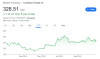
美股异动丨Coinbase夜盘涨近5%,Q3净利润同比大增4.7倍且超预期
Ge Long Hui A P P· 2025-10-31 01:16
Core Viewpoint - Coinbase reported strong third-quarter earnings, exceeding market expectations in both revenue and net profit, while also announcing future product developments aimed at expanding its financial services offerings [1] Financial Performance - Revenue for the third quarter increased by 55% year-over-year to $1.87 billion, surpassing market expectations of $1.8 billion [1] - Net profit surged 4.7 times year-over-year to $430 million, translating to earnings per share of $1.50, which is higher than the anticipated $1.10 [1] - Trading volume reached $295 billion during the quarter, although this figure fell short of market expectations [1] Future Plans - CEO Brian Armstrong indicated plans to share more details on stock tokenization and prediction markets at a product showcase scheduled for December 17 [1] - The company reiterated its vision to become a "super app" that provides all financial functionalities desired by consumers [1]

交易量创新高!Coinbase营收大涨55%,CEO称12月展示“股票代币化和预测市场细节”,继续迈向“万物交易所”
Hua Er Jie Jian Wen· 2025-10-31 00:27
Core Insights - Coinbase reported a record third-quarter revenue of $1.9 billion, a 55% year-over-year increase, surpassing analyst expectations of $1.8 billion [1] - The net profit surged nearly fivefold to $433 million, equating to $1.50 per share, compared to $75.5 million in the same period last year [1] - Following the earnings report, Coinbase's stock price rose by 4% in after-hours trading, marking a 32% increase year-to-date [1] Group 1: Trading Volume and Revenue Drivers - Coinbase's trading volume reached $295 billion in the third quarter, with strong momentum expected to continue into the fourth quarter [3] - Despite market volatility, trading revenue for the current quarter hit $385 million in the first month [3] - Revenue from stablecoins and derivatives contributed significantly, with $354.7 million from USDC and $52 million from the newly acquired options platform Deribit [3][4] Group 2: Future Plans and Vision - CEO Brian Armstrong announced plans to share more details on stock tokenization and prediction markets at a product showcase on December 17 [4] - The company aims to evolve into an "everything app" that provides all financial functionalities desired by consumers [5] - Coinbase remains interested in acquisitions, particularly in the trading and payment sectors [5]

疯狂赴港!RWA 成企业新宠:是真融资还是 “炒热度”?
Sou Hu Cai Jing· 2025-10-11 07:59
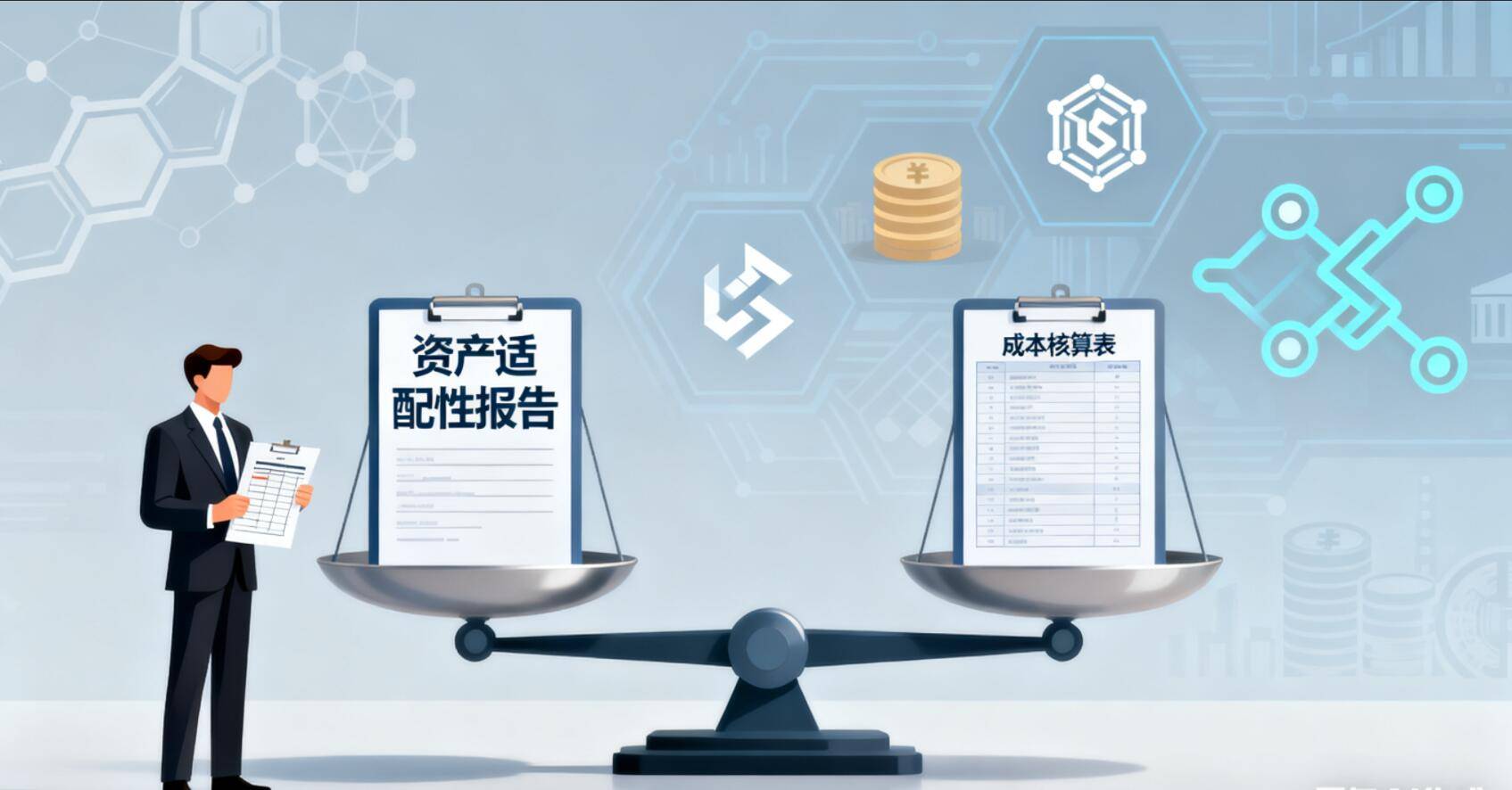
Core Insights - The discussion around "can projects go to Hong Kong for RWA" is gaining momentum in the Greater Bay Area, with various companies exploring the RWA (Real World Asset tokenization) sector, indicating a growing trend towards the tokenization of real-world assets [1][2]. Group 1: RWA Overview - RWA refers to the tokenization of real-world assets, transforming physical assets like charging stations and real estate into tradable digital tokens via blockchain technology, creating a new channel for asset circulation [2]. - As of July 2025, the total market value of global on-chain RWA assets has surpassed $25 billion, with projections suggesting it could reach $10 trillion by 2030 [2]. Group 2: Market Activity - Since the beginning of 2024, 13 institutions have successfully launched RWA projects in Hong Kong, with fundraising amounts ranging from tens of millions to 200 million yuan, covering a wide array of underlying assets [3]. - More companies are lining up to enter the market, including real estate firms and those in the tourism and renewable energy sectors, indicating a broad interest in RWA projects [3]. Group 3: Challenges and Costs - The total cost for issuing RWA in Hong Kong typically exceeds 2.5 million HKD, with additional advisory fees of 3%-5%, and companies must promise returns to investors, with non-standard assets needing to yield over 8% annually [4]. - There is a significant uncertainty in fundraising, with some companies aiming to raise 50 million but only securing 10 million, highlighting the rigorous scrutiny by professional investors [4]. Group 4: Advantages of RWA - RWA can activate "sleeping assets," as it streamlines the process of asset verification and revenue distribution through blockchain and smart contracts, significantly reducing the time and complexity compared to traditional bank loans [5]. Group 5: Asset Suitability - Not all assets are suitable for RWA; the Hong Kong Monetary Authority emphasizes that RWA should focus on fixed income, investment funds, and assets that generate stable cash flows [6]. - Successful RWA assets must meet three criteria: stable value, clear legal rights, and verifiable off-chain data, while also navigating regulatory challenges [6]. Group 6: Market Speculation - The rise of RWA has sparked speculation about its potential to facilitate the return of Chinese concept stocks to Hong Kong, as it may offer a faster and lower-barrier alternative to traditional secondary listings [7]. - However, challenges remain, including regulatory recognition and the need for reliable technology to ensure the correspondence between on-chain tokens and off-chain stocks [7]. Group 7: Market Impact - RWA can enhance international exposure for companies and serve as a foundation for overseas expansion, with notable stock price increases observed following RWA issuances [10]. - For instance, after the issuance of RWA, the stock price of Aorede surged by 10% the next day, and other companies have also seen significant stock price appreciation linked to their RWA activities [10].
疯狂的赴港RWA:融资还是“融势”?
第一财经· 2025-10-09 13:55
Core Viewpoint - The article discusses the rising trend of Real World Assets (RWA) tokenization in the Greater Bay Area, highlighting its potential benefits and challenges for companies seeking to leverage this new financing model [4][5]. Group 1: RWA Tokenization Overview - RWA refers to the tokenization of real-world assets into tradable digital asset certificates using blockchain technology, with over 13 institutions exploring this model in the past two years [4][7]. - Companies are increasingly interested in RWA not just for financing but also for brand exposure and potential stock price enhancement [4][13]. Group 2: Recent Developments and Case Studies - Since 2024, notable companies like Langxin Group and Huaxia Fund have successfully issued RWA projects, with underlying assets including funds, bonds, and real estate [7][8]. - The total market value of global on-chain RWA assets surpassed $25 billion by July 2025, with projections suggesting the market could exceed $10 trillion by 2030 [9]. Group 3: Challenges and Risks - The costs associated with issuing RWA projects in Hong Kong can be high, often exceeding HKD 2.5 million, which may deter some companies from pursuing this route [11][12]. - Not all assets are suitable for RWA; successful tokenization requires stable cash flows, clear legal rights, and verifiable off-chain data [18][19]. Group 4: Regulatory Environment - The regulatory landscape for RWA is still evolving, with a need for clear classification and compliance pathways based on asset characteristics [19][20]. - There are concerns about systemic risks if transparency and custodial measures are not adequately enforced [20][21]. Group 5: Future Prospects - RWA could provide a new avenue for Chinese companies to return to the Hong Kong market, offering a more flexible and faster alternative to traditional secondary listings [24][25]. - The development of RWA is expected to align with economic trends, with potential breakthroughs in cross-border financial products and limited trials for equity assets [25].





数据:Ondo Global Markets 股票代币化规模已超过 3 亿美元
Xin Lang Cai Jing· 2025-10-01 01:39
Core Insights - Ondo Global Markets has surpassed $300 million in stock tokenization, indicating significant growth in this sector [1] Group 1 - The stock tokenization scale of Ondo Global Markets has exceeded $300 million [1] - Notable tokens with a scale exceeding $10 million include SPYon, IVVon, QQQon, TLTon, IEFAon, AGGon, TIPon, and ITOTon [1]
链上股票“中国方案”出炉:华检医疗(01931)“ETHK”如何掀起全球金融革命?
智通财经网· 2025-09-17 01:51
Core Viewpoint - Huajian Medical is undergoing a significant transformation by embracing blockchain finance, marking a strategic shift towards the tokenization of equity assets, particularly focusing on Chinese assets for global compliance and value discovery [4][5][12]. Group 1: Company Transformation - Huajian Medical announced the establishment of two joint ventures, ETHK Inc. and ETHK HOLDINGS LIMITED, to deepen its global blockchain financial ecosystem strategy [1][5]. - The company plans to change its English name from "IVD Medical Holding Limited" to "ETHK Labs Inc." and its Chinese name to "华检数字产业集团有限公司" [1][3]. - The strategic shift is a result of long-term planning, aiming to create a decentralized financial platform that is safe, efficient, compliant, and open [5][9]. Group 2: Blockchain Financial Ecosystem - The ETHK brand symbolizes a new digital financial ecosystem based on blockchain, emphasizing community governance and shared infrastructure [9]. - The ecosystem will focus on the tokenization of equity assets, including "on-chain stocks," to facilitate the global flow and value discovery of high-quality assets, especially from China [9][12]. - Huajian Medical's acquisition of a 20.31% stake in Guofu Quantum will strengthen its position in the blockchain finance sector, providing robust compliance support [9]. Group 3: On-Chain Stocks - "On-chain stocks" represent a cutting-edge trend in global finance, allowing for the tokenization of traditional financial assets [10]. - The collaboration between Galaxy Digital and Superstate marks a significant milestone in the direct tokenization of stocks on major blockchains, enhancing transparency and programmability [10][11]. - Huajian Medical's approach to on-chain stocks differs from existing U.S. models by integrating a complete ecosystem that includes technology, assets, funding, and compliance [11][12]. Group 4: Strategic Significance for Chinese Assets - Huajian Medical's blockchain strategy aligns with China's digital economy initiatives, providing a pathway for the globalization of Chinese assets through compliant and standardized tokenization [12][13]. - The company's efforts support the Chinese government's policies aimed at promoting technological innovation and digital transformation [12][13]. - The ETHK ecosystem is positioned to facilitate the efficient circulation and value discovery of Chinese assets on a global scale [14].

究竟用什么 迎接AI的“军备”之旅
Sou Hu Cai Jing· 2025-09-11 17:55
Group 1 - The core viewpoint emphasizes that the recent massive capital expenditure by OpenAI has ignited enthusiasm for AI-driven growth, significantly impacting companies like Oracle, which saw its remaining performance obligations (RPO) surge to $455 billion, leading to a 36% stock price increase [1] - The AI-driven growth is described as a "arms race," with various tech giants like Broadcom and Google positioned to benefit from this trend [1] - Tesla is highlighted as transforming from an electric vehicle company to an AI-driven innovation company, with significant developments in robotics and autonomous driving technology [1] Group 2 - The article discusses the perception of a bubble in the AI sector, suggesting that market enthusiasm, while potentially bubble-like, serves as a ticket to the unknown, allowing for trial and error among participants [2] - It is noted that the journey towards AI is not merely a continuation of existing economic structures but requires new designs and tools to meet emerging demands [3] - The need for a clear understanding of AI as a technological leap rather than a continuous function is emphasized, indicating that existing economic ecosystems must evolve based on fundamental principles [3] Group 3 - The article stresses the importance of creating an environment that fosters individual creativity and innovation, advocating for reduced market entry barriers and fair competition [4] - It highlights that AI competition transcends geographical boundaries, necessitating a reevaluation of regulatory frameworks to manage the complexities introduced by AI and Web 3.0 [4][5] - The core competitive focus in the AI arms race is on the clear definition and description of demand, which requires a supportive institutional framework for entrepreneurial freedom [5] Group 4 - The competition in the AI arms race is characterized as not just a battle for computational power and data but also a cognitive transformation that requires a respectful and responsive competitive order for entrepreneurs [6]
股票代币化时代,揭秘Robinhood商业模式与加密野心
Hu Xiu· 2025-08-24 04:19
Group 1 - Robinhood has launched a stock tokenization product in Europe, allowing users to trade tokenized versions of over 200 US stocks and some pre-IPO companies like OpenAI and SpaceX [1][6][12] - Stock tokenization involves mapping traditional stocks onto blockchain tokens, enabling 24/7 trading without the need for brokers, thus breaking geographical and time barriers [2][4] - The trend of integrating traditional and digital assets is accelerating globally, with other platforms like Kraken also offering tokenized stock products [4][6] Group 2 - Robinhood's stock tokens are essentially derivative contracts similar to CFDs (Contracts for Difference), rather than direct stock ownership, which means users do not have shareholder rights [10][20][21] - The regulatory landscape is crucial, as Robinhood has obtained necessary licenses (MiFID II) to operate in Europe, but the product is not a direct 1:1 mapping of stocks [14][18][19] - The business model of Robinhood relies heavily on selling order flow, with higher profit margins from cryptocurrency trading compared to traditional stock trading [30][32][36] Group 3 - The introduction of stock tokenization could reshape the pricing dynamics of private companies like OpenAI and SpaceX, as active trading could influence their valuations [81][82] - The potential for real-time settlement in a fully tokenized environment could disrupt traditional financial systems, particularly in the context of Robinhood's order flow model [64][74] - The future of trading may see a shift towards a more integrated blockchain-based system, which could enhance liquidity and pricing efficiency for both public and private assets [49][50][64]

稳定币-全面重视B端跨境支付结算体系重构机会
2025-07-16 06:13
Summary of Conference Call Notes Industry Overview - The discussion revolves around the **cross-border payment industry** and the potential of **stablecoins** to reshape this sector, which is valued in the trillions [1][2][9]. Key Points and Arguments 1. **Opportunities in Cross-Border Payments**: The cross-border payment sector presents significant opportunities, especially for large enterprises and state-owned enterprises, as stablecoins are expected to play a crucial role in this transformation [1][2]. 2. **Stablecoins vs. Traditional Payment Systems**: Stablecoins are positioned to disrupt traditional payment systems, such as banks and SWIFT, by offering lower fees and faster transaction times [11][12]. 3. **Ecosystem Development**: The profitability in the stablecoin industry will likely concentrate among a few key players who can establish a robust ecosystem and achieve high transaction volumes [4][9]. 4. **Collaboration with Large Enterprises**: There is a strong interest in partnerships with large state-owned enterprises, although challenges exist in establishing direct communication and collaboration due to regulatory constraints [5][6]. 5. **Market Trends**: The stablecoin market is still in its early stages, with significant growth potential driven by the increasing demand for cross-border payment solutions [1][9]. 6. **Investment Recommendations**: Companies like **Pulin Software** and **Changliang Technology** are highlighted as key players in providing payment and treasury management systems for multinational corporations, which could benefit from the adoption of stablecoins [9][18]. 7. **Regulatory Environment**: The regulatory landscape in Hong Kong is seen as more favorable for stablecoin operations compared to mainland China, which could facilitate the growth of this market [6][17]. 8. **Diverse Application Scenarios**: The application scenarios for stablecoins are expected to expand, with participation from various players ranging from small businesses to large multinational corporations [19]. Additional Important Content - **Focus on Liquidity**: The success of stablecoins as a payment tool hinges on their liquidity and the ability to find suitable application scenarios [10]. - **Technological Infrastructure**: The development of payment interfaces and treasury management systems is crucial for integrating stablecoins into existing financial frameworks [14][15]. - **Cross-Border Trade Demand**: There is a growing demand for cross-border payment services among small and micro enterprises, which presents additional opportunities for service providers in this space [12][19]. This summary encapsulates the key insights and trends discussed in the conference call, emphasizing the transformative potential of stablecoins in the cross-border payment industry and the strategic positioning of certain companies within this evolving landscape.
Robinhood CEO谈股票代币化:人们想要的是“资本即服务”
Hua Er Jie Jian Wen· 2025-07-16 03:24
Core Insights - Robinhood's market value has surged from $35 billion to $85 billion in just eight months, driven by its ambition to transform into a comprehensive financial infrastructure platform [1] - CEO Vlad Tenev emphasizes that people desire "capital as a service," where funds can be accessed with the press of a button, rather than complex financial tools [1][5] - The introduction of tokenized stocks has faced resistance from companies like OpenAI and SpaceX, highlighting a phenomenon Tenev describes as "digital NIMBYism," where support for tokenization exists until it directly affects stakeholders [1][3] Business Model Evolution - Robinhood's business model has evolved beyond zero-commission trading to include nine product lines, each generating hundreds of millions in annual revenue, such as options trading, cash management, and cryptocurrency [4][5] - The vision for the future includes a "capital as a service" model that lowers barriers for entrepreneurs to access funding quickly and efficiently [5][6] - Tenev outlines the potential impact of this model, including market-driven pricing, liquidity release from illiquid assets, and AI-driven operational efficiencies [5][6] Tokenization and Market Dynamics - Tenev identifies a fundamental issue in private markets: high-quality companies often overlook retail investors, leading to an "adverse selection problem" [2][3] - The key innovation of tokenization is that it allows retail investors to participate without needing the tokenized companies to opt-in, addressing the adverse selection issue [2][3][39] - Tokenization is seen as a means to democratize access to traditionally inaccessible assets, such as private companies and real estate [3][32] Product Innovation and Customer Strategy - Robinhood is redefining financial services by offering innovative products like cash delivery services and digital private banking for high-net-worth individuals [6][62] - The company is shifting its customer strategy to cater not only to millennials but also to active traders who have specific needs similar to gamers, focusing on speed and technology [6][26] - Tenev's approach aims to democratize high-end financial services, making them accessible to a broader audience [6][62] Future Outlook and Regulatory Considerations - Tenev believes that the tokenization model could significantly change the financial landscape, but regulatory clarity is needed, especially in the U.S. [41] - The company plans to expand its tokenization offerings, starting with publicly traded stocks and eventually including private equity [43][45] - Tenev expresses confidence that the demand for tokenized assets will grow, particularly in markets outside the U.S. where access to U.S. assets is limited [32][41]