能源

Search documents
马斯克最新预言!3年机器人吊打顶尖医生,10年钱不重要了
Sou Hu Cai Jing· 2026-01-13 08:28
Group 1 - The core idea presented by Musk is that we are on the brink of an AI revolution, with AGI likely to be realized by 2026, and by 2035, AI intelligence will surpass human intelligence [1][3] - Musk predicts that within three years, professions such as doctors will be disrupted, as robotic surgeons will outperform human counterparts due to superior AI intelligence, chip performance, and mechanical dexterity [3][4] - Musk emphasizes that China's AI computing power will soon exceed that of the rest of the world combined, driven by significant increases in electricity generation, rapid advancements in chip technology, and unparalleled execution capabilities [3][4] Group 2 - Musk argues that traditional retirement savings will become obsolete in the next 10-20 years, as AI and robotics will drastically reduce the cost of goods, making traditional currency less relevant [4][6] - He warns that the transition to this prosperous future will be tumultuous, involving technological upheaval, social unrest, and significant prosperity, with energy becoming the new currency [6][7] - Musk provides practical advice for adapting to these changes, including abandoning traditional education models, restructuring financial logic to focus on energy-related skills, and embracing technological advancements [7][9]


173 分钟对谈,马斯克只讲 3 件事:AI、能源、机器人
3 6 Ke· 2026-01-08 00:56
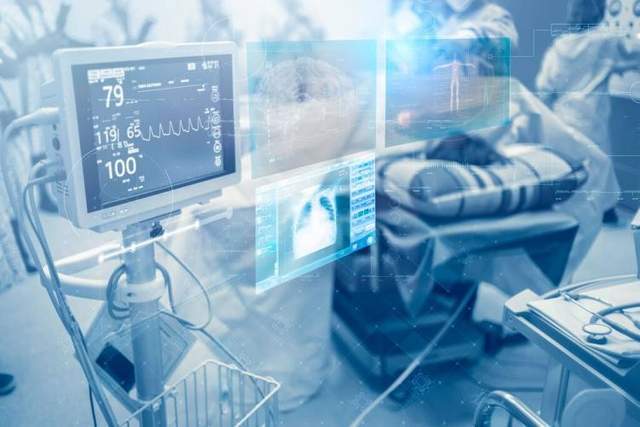
Group 1: AI Development and Predictions - The core timeline for achieving Artificial General Intelligence (AGI) is set for 2026, with predictions that robots will surpass human surgeons within three years and AI intelligence will exceed the total intelligence of humanity by 2030 [3][4] - The development of AI is experiencing exponential acceleration, marking a critical transformation point in the industry [3][4] - The future of healthcare will see robotic surgeons outperforming human capabilities, fundamentally changing the quality of medical services available to the public [5][6] Group 2: Education and Economic Paradigms - The current education system is deemed inadequate for the AI era, with traditional universities losing relevance except for social networking purposes [8][9] - The future economic model will shift from Universal Basic Income (UBI) to Universal High Income (UHI), driven by a transformation in productivity and a decrease in the cost of goods and services [10][11] Group 3: Energy as a Core Asset - Energy is identified as a critical asset for AI development, with a shift from chip shortages to energy shortages as the primary bottleneck for AI expansion starting in 2025 [13][14] - The future currency is envisioned to be watts rather than dollars, emphasizing the importance of energy supply in the AI industry [13][14] Group 4: Robotics and Automation - Tesla is constructing a massive factory dedicated to producing Optimus robots, which will eventually be capable of self-replication, leading to unlimited industrial expansion [24][25] - The job market will undergo significant changes, with white-collar jobs being more at risk of automation than blue-collar jobs [28][29] Group 5: AI Governance and Human Role - The principles for AI governance include the pursuit of truth, maintaining curiosity, and appreciating beauty to prevent potential negative outcomes [32][33] - Humans may ultimately serve as biological guides for AI, facilitating its development and ensuring a prosperous transition into a future dominated by AI [34][36] Group 6: Conclusion and Future Outlook - The discussion emphasizes that the future of AI, energy, and robotics is no longer speculative but a matter of engineering and implementation, with a clear path forward [37]

加方宣布:卡尼将访华
券商中国· 2026-01-07 23:25
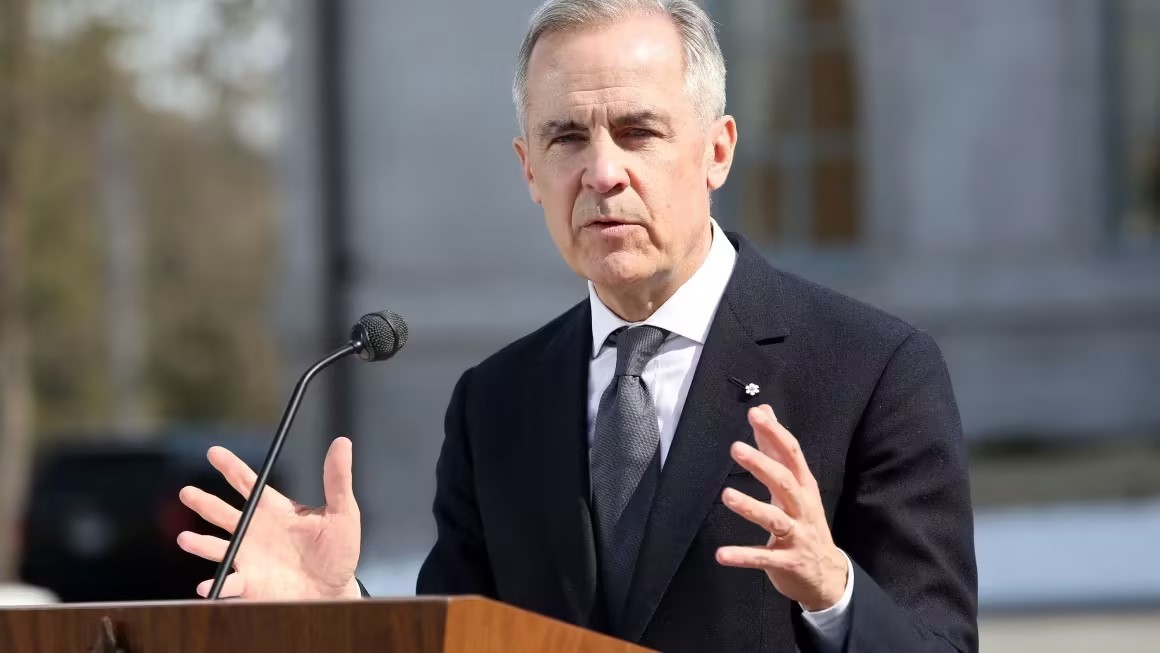
Group 1 - The core point of the article is that Canadian Prime Minister Carney will visit China from December 13 to 17, marking the first visit by a Canadian Prime Minister to China since December 2017 [1] - During the visit, discussions will focus on trade, energy, agriculture, and international security [1]

加方宣布:卡尼将访华
Xin Lang Cai Jing· 2026-01-07 17:12
Group 1 - The core point of the article is that Canadian Prime Minister Carney will visit China from December 13 to 17, marking the first visit since December 2017 [2] - During the visit, discussions will focus on trade, energy, agriculture, and international security between Canada and China [2]

外媒:加拿大总理办公室宣布,加总理卡尼下周将访华
Huan Qiu Wang· 2026-01-07 14:52
Core Viewpoint - Canadian Prime Minister Carney will visit China from October 13 to 17, marking the first visit by a Canadian Prime Minister to China since December 2017 [1] Group 1: Trade and Economic Discussions - During the visit, discussions will focus on trade, energy, agriculture, and international security [1]
美股收盘:科技题材开年大狂欢!中概股化身“金龙傲天”
Feng Huang Wang· 2026-01-02 23:23
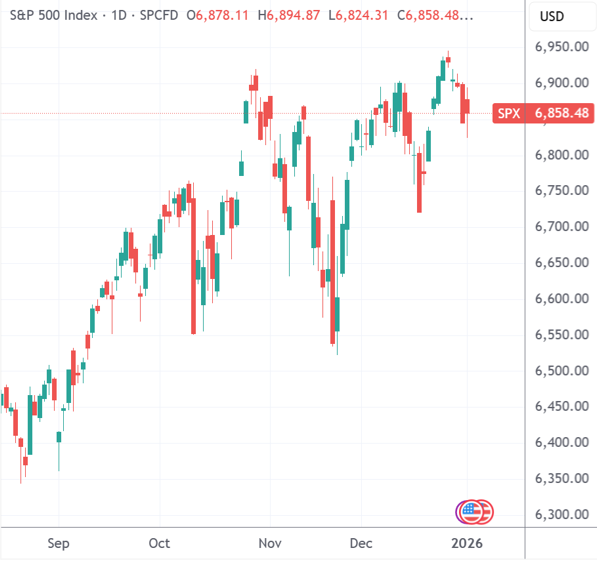
Market Overview - On the first trading day of 2026, U.S. stock indices showed relatively calm closing fluctuations, with significant inflows into technology stocks and a collective rise in Chinese concept stocks, buoyed by a strong start in the Hong Kong market [1][3] - The S&P 500 index rose by 0.19% to 6858.47 points, the Nasdaq Composite fell by 0.03% to 23235.63 points, and the Dow Jones Industrial Average increased by 0.66% to 48382.39 points [1] Chinese Technology Stocks - The Nasdaq China Golden Dragon Index surged by 4.38%, marking the largest single-day increase since May 12 of the previous year [3] - Notable Chinese tech stocks included Baidu, which rose by 15.03% after announcing a spin-off IPO for its chip business, Alibaba up by 6.25%, Tencent ADR up by 5.23%, and Netease up by 7.22% [3] AI Sector Developments - Investors are eagerly awaiting developments from DeepSeek, which recently published a paper on a new training method called "manifold-constrained hyperconnection" (mHC), seen as a significant breakthrough in AI [3] - The market's tolerance for investment returns from AI giants has decreased compared to the previous year [3] Performance of Major Tech Companies - Major tech companies had mixed performances, with Nvidia up by 1.26%, Apple down by 0.31%, Google A up by 0.69%, and Microsoft down by 2.21% [4] - Tesla experienced a "seven-day decline" following the release of its annual electric vehicle delivery data [4] Semiconductor and Storage Stocks - ASML, a leader in photolithography machines, saw an 8.78% increase after receiving a "upgrade" from brokers [5] - Micron Technology, part of the "storage four giants," rose by 10.51%, while Western Digital increased by 8.96%, both reaching historical highs [4] Electric Vehicle Market - Tesla's Q4 delivery data fell short of expectations, delivering 418,227 vehicles, which was below analyst forecasts [6] - BYD, a leading Chinese electric vehicle manufacturer, reported a 27.86% increase in annual sales, delivering 2.2567 million vehicles in 2025 [6] Berkshire Hathaway Insights - Warren Buffett expressed confidence in Berkshire Hathaway's long-term prospects, stating it has a higher chance of existing in a hundred years than any other company [7] Retail Investor Performance - Interactive Brokers reported that its retail clients achieved an average return of 19.2% in 2025, outperforming the S&P 500 index's return of 16.39% [7]
“75后”李忠伟,履新职
中国能源报· 2025-12-31 09:43
Group 1 - Li Zhongwei has been appointed as a member of the Party Committee of China University of Petroleum (East China) [1] - Li Zhongwei holds a PhD in engineering and has a background in both communication engineering and law, with dual bachelor's degrees [2] - The university is a key national institution under the Ministry of Education, recognized for its contributions to the petroleum and petrochemical sectors [3] Group 2 - The university has been involved in national key projects such as the "211 Project" and "985 Project," focusing on high-level talent cultivation in the petroleum industry [3] - It has been recognized as a "Double First-Class" university in both 2017 and 2022, indicating its strong academic and research capabilities [3]

市场主流观点汇总-20251223
Guo Tou Qi Huo· 2025-12-23 11:52
Report Summary 1. Report Industry Investment Rating The report does not provide an overall industry investment rating. 2. Core Viewpoints The report objectively reflects the research views of futures and securities companies on various commodity varieties, tracks hot - spot varieties, analyzes market investment sentiment, and summarizes investment driving logic. It also presents the market mainstream strategy views and investment logic for different asset classes based on the views of multiple institutions [1]. 3. Summary by Catalog 3.1 Market Quotes - **Commodities**: From December 15 to December 19, 2025, among commodities, the prices of some products such as coking coal, PTA, and polysilicon increased, with coking coal rising by 9.00%, PTA by 5.81%, and polysilicon by 5.34%. While the prices of some products such as copper, soybean meal, and corn decreased, with copper down 1.05%, soybean meal down 1.26%, and corn down 1.84% [2]. - **A - shares**: The Shanghai Stock Exchange 50 Index rose 0.32%, the CSI 500 Index remained unchanged, and the CSI 300 Index fell 0.28% [2]. - **Overseas Stocks**: The FTSE 100 Index rose 2.57%, the French CAC40 Index rose 1.03%, the NASDAQ Index rose 0.48%, the S&P 500 Index rose 0.10%, the Hang Seng Index fell 1.10%, and the Nikkei 225 Index fell 2.61% [2]. - **Bonds**: The yields of 2 - year and 5 - year Chinese government bonds increased by 0.38bp and 0.24bp respectively, while the yield of 10 - year Chinese government bonds decreased by 0.44bp [2]. - **Foreign Exchange**: The US dollar index rose 0.32%, the US dollar central parity rate fell 0.12%, and the euro - US dollar exchange rate fell 0.28% [2]. 3.2 Commodity Views - **Macro - financial Sector** - **Stock Index Futures**: Among 7 institutions, 0 were bullish, 0 were bearish, and 7 were neutral. Positive factors included overseas central bank policies, increased long - term capital allocation after index corrections, market attention to technology themes, and expected policy dividends in 2026. Negative factors included a decline in M1 growth, weakening policy impetus, weak economic momentum, and time - consuming policy implementation [3]. - **Treasury Bond Futures**: Among 7 institutions, 3 were bullish, 0 were bearish, and 4 were neutral. Positive factors were weak fundamentals, central bank liquidity injection, the attractiveness of 30 - year bond yields, and potential bond market recovery. Negative factors were low probability of short - term interest rate cuts, increased influence of trading disks, and concerns about ultra - long bond supply and demand [3]. - **Energy Sector** - **Crude Oil**: Among 8 institutions, 0 were bullish, 5 were bearish, and 3 were neutral. Positive factors were supply disruptions in Venezuela, inventory decline in the US, increased refinery utilization rates in China and the US, and strong local refined oil demand. Negative factors were limited impact of Venezuelan supply disruptions, rising non - OPEC production, increasing floating storage inventory, and expected slowdown in demand growth [4]. - **Agricultural Products Sector** - **Soybean Meal**: Among 7 institutions, 0 were bullish, 3 were bearish, and 4 were neutral. Positive factors were high import costs of US soybeans, pre - holiday stocking demand, increased replenishment by traders after price drops, and signs of short - position reduction in futures. Negative factors were strong expectations of a South American soybean harvest, poor performance of domestic soybean auctions, high inventory in oil mills, and weak purchasing willingness of feed enterprises [4]. - **Non - ferrous Metals Sector** - **Copper**: Among 8 institutions, 4 were bullish, 0 were bearish, and 4 were neutral. Positive factors were zero long - term processing fees in 2026, low spot smelting fees, continuous increase in copper foil operating rates, a decline in domestic copper concentrate port inventory, and high market attention. Negative factors were end - of - year capital shortages, high social inventory, weak terminal demand in the off - season, and a decline in the operating rate of refined copper rods [5]. - **Chemical Industry Sector** - **Glass**: Among 7 institutions, 0 were bullish, 0 were bearish, and 7 were neutral. Positive factors were potential cold - repair plans in late December, low near - month valuations, and potential boost from real - estate policies. Negative factors were a decline in deep - processing order days, slow market shipments, high inventory, and limited upside potential due to high inventory and off - season pressure [5]. - **Precious Metals Sector** - **Gold**: Among 7 institutions, 3 were bullish, 0 were bearish, and 4 were neutral. Positive factors were an increase in the US unemployment rate, lower - than - expected CPI, an increase in non - commercial net long positions in gold, and long - term support from central bank gold purchases. Negative factors were rapid adjustment of the gold - silver ratio, approaching a key resistance level, and market divergence on the Fed's interest - rate cut rhythm [6]. - **Black Metals Sector** - **Coking Coal**: Among 8 institutions, 3 were bullish, 0 were bearish, and 5 were neutral. Positive factors were release of supply pressure, low valuation, production cuts by some coal mines, increased winter - storage demand from steel mills, and improved spot - market transactions. Negative factors were high imports, a decline in steel mills' daily hot - metal production, reduced demand from coking plants, and an increase in total coking coal inventory [6].
五家自治区重点实验室获批建设
Xin Lang Cai Jing· 2025-12-20 20:03
(来源:内蒙古日报) 5家自治区重点实验室分别为:依托内蒙古师范大学建设的内蒙古自治区生态环境协同智能重点实验 室、依托内蒙古工业大学建设的内蒙古自治区低空技术与工程重点实验室、依托内蒙古大学建设的内蒙 古自治区草食家畜生物育种重点实验室、依托国能神东煤炭集团有限责任公司建设的内蒙古自治区地下 空间储能重点实验室、依托北京大学肿瘤医院内蒙古医院建设的内蒙古自治区恶性肿瘤交叉创新重点实 验室。 转自:内蒙古日报 近年来,内蒙古持续推动创新平台优化重组工作,形成全国重点实验室、内蒙古实验室、自治区重点实 验室接续联动、梯次衔接的三级实验室体系,为区域产业高质量发展筑牢创新根基。内蒙古将瞄准特色 产业和科技创新优势突出领域,因地制宜统筹布局创新平台,加强创新资源统筹和力量组织,协同开展 关键核心技术攻关,形成贯穿基础研究、技术创新、成果转化和条件保障的全链条支撑体系,深度融合 科技创新与产业创新,一体推进教育科技人才发展,为实现高水平科技自立自强提供坚实保障。 本报12月20日讯 (记者 白莲)记者从自治区科技厅获悉,日前,"内蒙古自治区生态环境协同智能重点 实验室"等5家自治区重点实验室获批建设,将聚焦"人工智能 ...
自然聚焦-机器人学:医疗,武器和机器人
机器人大讲堂· 2025-12-12 06:38
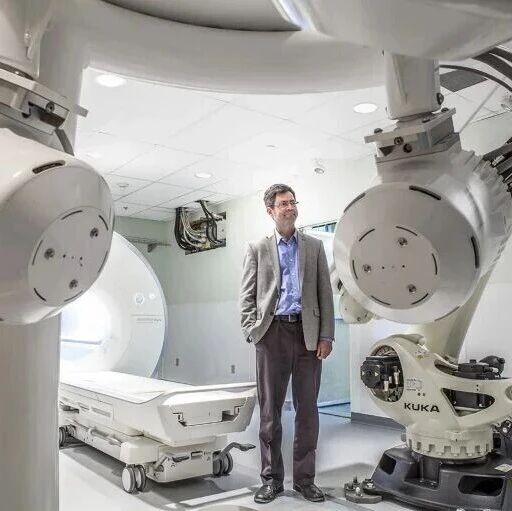
Core Viewpoint - The research on nanorobots for cancer treatment is advancing, with significant improvements in their ability to deliver drugs precisely to targeted areas within the body, potentially revolutionizing cancer diagnosis, monitoring, and treatment methods [2][3]. Group 1: Nanorobots Research - The team led by Sylvain Martel at the Montreal Institute of Technology has spent over a decade developing nanorobots that can be controlled using MRI technology to deliver cancer drugs directly to tumors [2][3]. - Recent experiments showed that by adjusting the position of pigs in MRI machines, the number of nanorobots reaching the liver increased by nearly three times compared to previous tests [2]. - The research indicates that the technology is nearing practical application in humans, which could lead to innovative methods for cancer treatment, including targeted drug delivery and tumor monitoring [3]. Group 2: Publication and Future Directions - The findings are published in a recent issue of Nature Focus, which explores the application of nanorobots in cancer treatment and other advanced robotics topics [4]. - Future editions of Nature Focus will cover rapidly developing topics in various fields, including robotics and AI, indicating a growing interest and investment in these technologies [5].