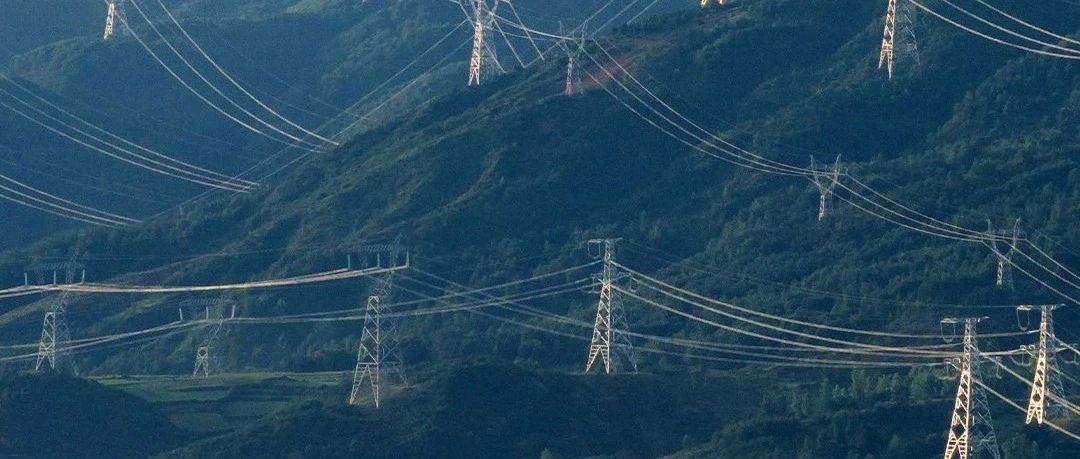
能源保障

Search documents
塞尔维亚与俄罗斯达成一致
中国能源报· 2025-12-24 07:23
Group 1 - Serbia has reached an agreement with Russia to extend the natural gas supply contract until March 31, 2026, ensuring winter energy supply security [3] - Serbian President Vucic emphasized that this arrangement will effectively guarantee the needs of residents and economic operations, alleviating concerns about natural gas shortages [3] - The overall energy security situation in Serbia is stable, and the country is prepared to handle various complex situations [3] Group 2 - In the oil sector, negotiations are ongoing between Russian gas company Gazprom and Hungary's MOL regarding the adjustment of shares in the Serbian oil company [3] - Serbia is open to cooperation with Hungary, viewing the relationship as friendly with a solid foundation for collaboration [3]


上海液化天然气新站线投产 将同步提升LNG保税加注能力 并为“上海价格”拓展至能源领域创造条件
Jie Fang Ri Bao· 2025-12-14 01:57
Core Viewpoint - The Shanghai LNG station expansion project has officially commenced operations, enhancing the city's natural gas supply capabilities and positioning Shanghai as a global clean energy refueling hub [1][2]. Group 1: Project Overview - The Shanghai LNG station expansion is a key national oil and gas project, part of the "14th Five-Year Plan" for energy development in Shanghai and Zhejiang, located at the Yangshan Deepwater Port [1]. - The project includes the construction of a new 150,000-ton LNG dedicated berth, four new 220,000 cubic meter LNG storage tanks, and a long-distance gas pipeline [1]. - The project has set multiple industry records, including the largest LNG ship unloading dock in China and the fastest construction time for a similar storage tank at 25 months and 5 days [2]. Group 2: Capacity and Supply - The existing Yangshan LNG receiving station has a total liquid storage capacity of 895,000 cubic meters, supplying approximately 50% of Shanghai's natural gas demand [2]. - After the first phase of the expansion, the combined unloading capacity of the Yangshan dual stations will exceed 12 million tons per year, with a storage capacity of nearly 1.8 million cubic meters, effectively doubling emergency supply capabilities [2][3]. Group 3: Regional Impact - The coordinated operation of the Yangshan LNG dual stations will significantly enhance gas source security, peak response, and emergency reserve capabilities in Shanghai and the Yangtze River Delta region [3]. - The project is seen as a crucial achievement in the construction of Shanghai's international shipping center and the integrated development strategy of the Yangtze River Delta [3]. Group 4: Future Developments - The company is in discussions with the National Pipeline Network Group to build a new 35-kilometer gas pipeline to enhance connectivity with the national network [3]. - The company aims to diversify its operations by expanding into resource processing, LNG storage trade, and ship refueling, providing comprehensive energy solutions [3][5]. - The Shanghai LNG receiving station is already equipped with a bonded LNG tank, with a significant increase in reverse refueling business volume expected, reaching 300 million cubic meters in 2024 [4]. Group 5: Trade and Pricing - The dual stations plan to expand LNG transshipment trade and apply to become a natural gas futures delivery warehouse, embedding deeper into the global energy trade chain [5]. - The development of storage, trade, and refueling capabilities at the Shanghai LNG receiving station will support Shanghai's participation in global natural gas trading and create favorable conditions for establishing a "Shanghai price" in the energy sector [5].

指责联邦政府:德国天然气储量不足四分之三
Xin Lang Cai Jing· 2025-11-18 16:33
Core Viewpoint - Germany's natural gas reserves are alarmingly low ahead of the winter season, raising concerns about potential supply shortages as the country continues to reduce its reliance on Russian energy sources [3][4]. Group 1: Current Gas Storage Levels - Germany's gas storage is currently filled to only 72% capacity, which is significantly lower than previous years and may lead to depletion during the harsh winter months [3]. - The Energy Storage Initiative Organization (INES) reported that Germany entered the heating season with an unexpectedly low storage level of 75%, which is below the necessary threshold to ensure adequate supply during extreme cold [4]. Group 2: Predictions and Risks - INES experts had predicted that Germany should reach at least 81% storage by November, but current levels are even lower than these pessimistic forecasts, indicating heightened risks for the winter [4]. - INES's latest models suggest that under mild to moderate winter conditions, gas reserves could be "moderately to significantly" depleted by the end of February, while in extreme cold scenarios similar to 2010, reserves might be exhausted by mid-January [5]. Group 3: Criticism of Government Measures - INES Chairman Sebastian Heinemann criticized the German government for not fully utilizing existing policy frameworks to ensure higher gas storage levels, highlighting that reasonable policy arrangements could significantly enhance winter energy security compared to other EU member states [6].
多维发力强保障 暖心护冬稳运行——山东临朐推进2025年迎峰度冬能源供应保障工作
Zhong Guo Fa Zhan Wang· 2025-11-12 03:30
Core Insights - Shandong Province's Linqu County is focusing on ensuring energy supply during the winter season by implementing strategies to "ensure supply, strengthen emergency response, and solidify the foundation" [1][2] Energy Supply Assurance - Natural gas supply is robust, with 36,350 households using "coal-to-gas" systems and a total of 14.7 million cubic meters of residential gas allocated for the heating season [1] - The LNG station has a peak adjustment capacity of 540,000 cubic meters, and gas companies have established a three-tiered list to prioritize residential gas supply [1] - Electricity supply is being reinforced with a plan for emergency load control, ensuring 344,200 kilowatts of emergency capacity is available [1] - A total of 68 contingency plans have been revised, and 4 drills conducted to ensure readiness for peak demand [1] Coal Supply Assurance - The establishment of a 100,000-ton government emergency coal reserve through Shandong Leao New Energy, with two urban heating companies pre-storing 30,000 tons of coal, ensuring over 20 days of supply [2] - Long-term purchase agreements have been signed by heating companies, ensuring stable supply and funding for coal purchases [2] Future Plans - Linqu County will continue to enhance energy inventory reserves and deepen monitoring and early warning systems for electricity and heating supply to ensure residents stay warm during winter [2]
【能化新都 气贯庆阳】庆城县“气化庆阳”工程多点突破 民生与产业用气保障再升级
Sou Hu Cai Jing· 2025-10-24 05:33
Core Insights - The "Gasification of Qingyang" project has made significant progress this year, enhancing regional energy security and improving living standards through multi-dimensional efforts in exploration, pipeline construction, gas access, and comprehensive utilization [2] Exploration and Production - By 2025, Qingyang County has approved 8 natural gas well sites, supporting the construction of 5 new pipelines totaling 32.08 kilometers, drilling 7 new wells, and testing 5 wells, with an additional production capacity of 100 million cubic meters [2] - As of the end of August, a total of 202 million cubic meters of natural gas has been extracted, representing a year-on-year increase of 35% [2] Pipeline Construction - Compensation payments for the Qinghua and Qinghuan gas pipeline projects have been fully settled [2] - In the Qinghua pipeline, 3.6 kilometers of the 4-kilometer section within Qingyang has been laid, while 22.7 kilometers of the 25.9-kilometer section of the Qinghuan pipeline has been welded and buried, with subsequent construction progressing smoothly [2] Residential Gas Supply - The county has connected natural gas to 23,500 households and laid 153 kilometers of household pipelines, achieving a 90% connection rate in urban areas [2] - For 2025, the plan is to connect an additional 2,000 households, with 1,368 already completed, and gas supply to Yima Town and Baima Pupu Town expected by the end of October [2] Industrial Utilization - Fourteen natural gas processing enterprises have an annual processing capacity of 650 million cubic meters, achieving a production value of 596 million yuan since 2025 [2] - Projects such as the second phase of Bona Hui's helium extraction and hydrogen production, and the second phase of Yulong Energy Chemical are accelerating, which will further enhance the level of natural gas conversion and utilization [2]

人民日报丨用电量连续破万亿千瓦时,怎么看?
国家能源局· 2025-10-09 03:22
Core Viewpoint - The continuous increase in electricity consumption, surpassing 1 trillion kilowatt-hours in a single month, reflects robust economic growth and energy demand in China, indicating a significant milestone in the country's energy consumption patterns [8][9][10]. Electricity Consumption Data - In July, the total electricity consumption reached 1,022.6 billion kilowatt-hours, a year-on-year increase of 8.6%, while in August, it was 1,015.4 billion kilowatt-hours, with a year-on-year growth of 5% [5][7]. - The monthly electricity consumption exceeding 1 trillion kilowatt-hours is unprecedented globally, with July marking the first instance in history [9][10]. Sectoral Analysis - In July, the primary sector consumed 17 billion kilowatt-hours (up 20.2%), the secondary sector 5,936 billion kilowatt-hours (up 4.7%), and the tertiary sector 2,081 billion kilowatt-hours (up 10.7%) [10][11]. - The secondary sector accounted for the largest share of electricity consumption, indicating stable industrial growth [10]. - In August, the primary sector's electricity consumption grew by 9.7%, while the secondary sector's growth was 5%, and the tertiary sector's growth was 7.2% [11]. Factors Driving Electricity Consumption - High temperatures across the country have led to increased electricity loads, with record peaks in demand due to air conditioning usage [12][14]. - Economic recovery and policies promoting consumption have also contributed to the rise in electricity demand, with manufacturing sectors showing significant growth [14][15]. Energy Supply Stability - The stable electricity supply is attributed to strong energy self-sufficiency, operational adjustment capabilities, and emergency support systems [16][17]. - The domestic energy production has increased, with over 90% of the consumption growth being supported by domestic sources, particularly renewable energy [17][18]. - The establishment of a comprehensive energy supply and pricing mechanism has enhanced the resilience of the energy system [18]. Future Outlook - The energy sector aims to transition from merely ensuring electricity availability to optimizing electricity usage, supporting sustainable economic and social development [18].
全球资本疯抢中国资产!半年从 “恐慌” 到十年新高,真相藏不住了
Sou Hu Cai Jing· 2025-10-05 08:46
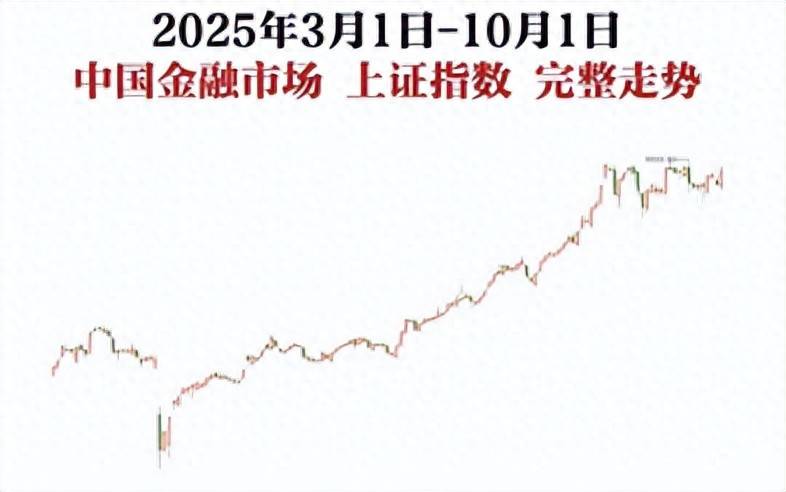
Group 1 - The global capital is undergoing a significant revaluation of Chinese financial assets and quality equities, indicating a recognition of underinvestment in China by global financial institutions [2] - The Chinese stock market has shown resilience and achieved a nearly ten-year high, defying initial fears from the trade war initiated by the U.S. [2][3] - The perception of China as a safe and stable environment for investment has strengthened, particularly in contrast to the security issues faced in developed countries [5][6] Group 2 - China's energy security, particularly in electricity generation, has reached a historic milestone, surpassing 10 trillion kilowatt-hours, which is greater than the combined output of several major economies [6][7] - The expansion of higher education in China has significantly increased the number of university students, contributing to a robust talent pool that supports technological and industrial advancements [6][9] - For the first time in history, capital flow into China from foreign investments has exceeded the capital generated from trade, indicating a shift in global investment dynamics [9]

250亿美元核电大单!俄伊签了
财联社· 2025-09-26 14:26
Core Viewpoint - Iran has signed a $25 billion agreement with Russia's Rosatom to construct four advanced nuclear power units in Hormozgan Province, amidst increasing pressure from impending sanctions [4][5]. Group 1: Agreement Details - The agreement involves the construction of four third-generation nuclear power units with a total capacity of 5,000 megawatts, covering an area of 500 hectares [5]. - The signing was conducted by Iranian Vice President Mohammad Eslami and Rosatom CEO Alexei Likhachev, who described the project as "strategic" [5]. - This project follows a memorandum of understanding signed earlier for the construction of small nuclear power plants in Iran [5]. Group 2: Strategic Context - Iran aims to establish eight new nuclear power units nationwide to achieve a total nuclear power capacity of 20 gigawatts by 2040 [7]. - The agreement comes at a time when Iran faces the potential reimposition of sanctions, as the UN Security Council failed to extend the waiver for sanctions against Iran [7]. - Iran has criticized the Security Council's decision, stating that the restoration of sanctions would effectively halt cooperation with the International Atomic Energy Agency (IAEA) [7]. Group 3: Regional Implications - The new sanctions could lead to the freezing of Iran's overseas assets and halt arms trading, impacting its ballistic missile development projects [9]. - Iran's leadership has reiterated its commitment to not pursue nuclear weapons, while also expressing a refusal to engage in direct negotiations with the U.S. [9]. - The cooperation with Russia is viewed as part of Iran's "Look East" strategy, especially following recent military actions by Israel against Iranian nuclear facilities [9].
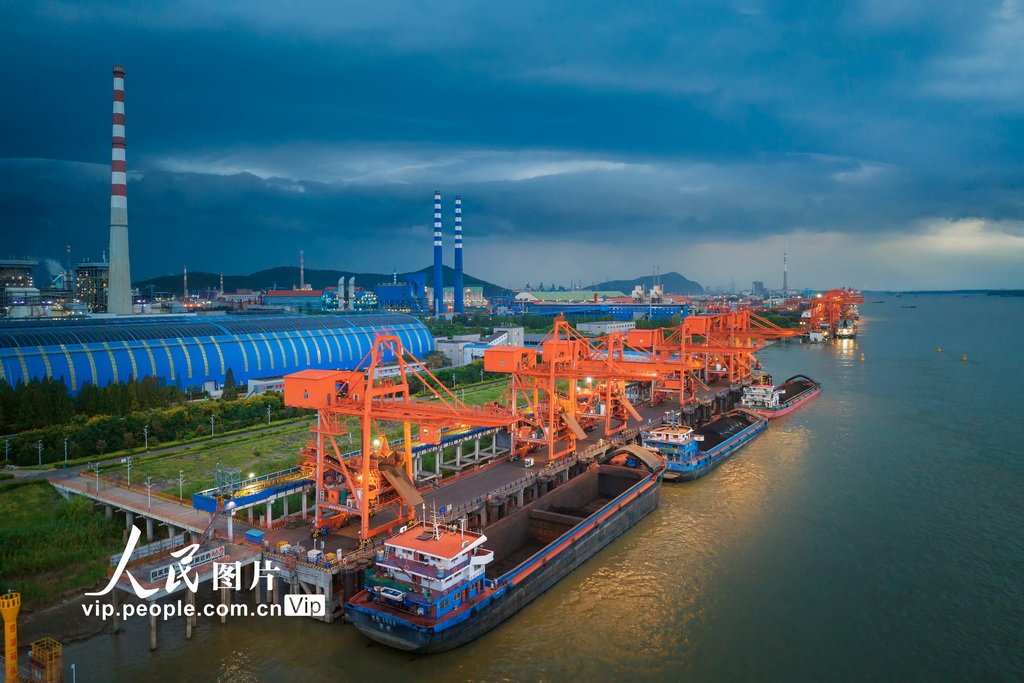
安徽马鞍山:加快电煤装卸 保障电力供应
Ren Min Wang· 2025-08-31 02:41
Group 1 - The Ma'anshan Port, located along the Yangtze River in Ma'anshan City, Anhui Province, is currently engaged in the orderly unloading of thermal coal [1][2]
人民日报丨“量足价稳”,这是我国能源保障的底气
国家能源局· 2025-08-27 03:06
Core Viewpoint - The article discusses the achievements and developments in China's energy sector during the "14th Five-Year Plan" period, highlighting the significant growth in energy consumption, production, and renewable energy infrastructure. Group 1: Energy Consumption and Production - During the "14th Five-Year Plan," China's new electricity consumption is expected to exceed the annual electricity consumption of the European Union [5] - By 2024, China's total electricity generation is projected to surpass 10 trillion kilowatt-hours, accounting for one-third of global electricity generation [7] - The energy production during this period is estimated to reach approximately 5 billion tons of standard coal, representing a significant portion of global energy production [8] Group 2: Infrastructure Development - The energy infrastructure network has become more comprehensive, connecting eastern and western regions and facilitating energy transfer through major projects like "West-East Electricity Transmission" and "North Coal South Transport" [12] - As of July 2023, the number of charging infrastructure units in China reached 16.696 million, ten times the number at the end of the "13th Five-Year Plan," making it the largest in the world [15] Group 3: Renewable Energy Growth - The share of renewable energy generation capacity is expected to increase from 40% to around 60% during the "14th Five-Year Plan" [18] - Wind and solar power installations are projected to grow significantly, with annual additions of 10 million kilowatts and 20 million kilowatts, respectively, showcasing unprecedented development speed [18] - The number of new energy patents in China accounts for over 40% of the global total, indicating strong innovation in the sector [19] Group 4: Environmental Impact - China's exports of wind and solar products have contributed to a reduction of approximately 4.1 billion tons of carbon emissions in other countries [24]