
虚拟货币监管

Search documents
国家重拳升级虚拟货币监管,对A股的影响(附精选股票)
Sou Hu Cai Jing· 2026-02-08 03:46
Core Viewpoint - The recent regulatory policy issued by the People's Bank of China and eight other departments marks a significant strategic shift in the global financial sovereignty landscape, emphasizing a clear boundary against independent financial systems outside of state control [1] Policy Core - The new notification represents a threefold strategic upgrade from the previous version in 2021, expanding jurisdiction to include offshore activities linked to the renminbi, thereby reinforcing China's monetary sovereignty [2] - The regulatory scope has broadened to include Real World Asset (RWA) tokenization, recognizing its potential while mandating that such activities must rely on specific financial infrastructures within China [3] - The responsibility chain has been extended to hold domestic entities accountable for assisting foreign parties in illegal activities, effectively severing the supply chain for the virtual currency industry within China [4] Impact on A-shares - The policy is expected to trigger a structural re-evaluation of funds and values rather than merely being a negative signal for blockchain concepts [5] - Clear value inflow directions are established, favoring "national team" fintech infrastructure service providers that are closely tied to state-approved digital currency systems [6] - There will be increased demand for cybersecurity and financial compliance technology, as the notification calls for enhanced risk monitoring and data-sharing mechanisms [7] - Mainstream licensed financial institutions may benefit from the reduction of potential risk sources associated with virtual currencies, with some speculative funds possibly flowing into the A-share market [8] Companies Benefiting from Certainty - Companies like Hengsheng Electronics, which is a leader in IT systems for financial institutions, are positioned to benefit from compliance-driven financial infrastructure [9] Facing Pressure for Clearout and Transformation - Companies with unclear main businesses relying on concepts like "digital currency" or "NFTs" will struggle to survive in the market, as scrutiny will increase on their actual applications and revenue support [10] - Companies associated with the "mining" industry must demonstrate a complete business separation to avoid regulatory risks [12] - Firms providing technical services that facilitate cross-border virtual currency activities will face legal risks and must conduct thorough business audits [13] Macro-Level Deep Impact - The policy enhances the "firewall" effect between A-shares and global crypto asset price fluctuations, potentially stabilizing A-share pricing amid global volatility [14] Investor Strategy Reconstruction - Investors are advised to shift from speculative concepts to compliance verification, focusing on whether companies serve recognized financial infrastructures [16] - Attention should be directed towards companies' balance sheets and cash flows rather than just technological narratives [17] - Understanding "financial security" as a core pricing factor is becoming increasingly important in the context of accelerated financial digitalization [18]


八部门下最严禁令!币圈137亿爆仓全封锁,RWA真能例外?
Sou Hu Cai Jing· 2026-02-07 15:06
Core Viewpoint - The recent regulatory crackdown on the cryptocurrency market in China has led to significant losses for investors, with over 432,000 people liquidated and a total loss of approximately 14.4 billion yuan, highlighting the severe impact of the government's actions on the industry [1][2]. Regulatory Actions - On February 6, the People's Bank of China, along with seven other departments, issued a statement categorizing virtual currency-related activities as illegal financial activities, leading to a comprehensive ban [1][2]. - The regulatory measures include prohibiting the exchange of legal currency for virtual currencies, banning all trading activities, and halting mining operations, effectively cutting off the financial lifeline of the cryptocurrency sector [1][2][3]. - The issuance of stablecoins linked to the yuan without approval is also banned, impacting those who previously viewed stablecoins as a safe haven [3][4]. Misunderstandings about RWA - There was a misconception that Real World Assets (RWA) would be exempt from the regulations, but the policy clearly states that RWA tokenization activities are also prohibited unless they are compliant and backed by specific financial infrastructure [3][4]. - The regulatory framework aims to differentiate between legitimate financial innovation and speculative activities, emphasizing the need for compliance and proper registration [4][6]. Market Risks and Implications - The cryptocurrency market is characterized by high risks, including its use in money laundering and fraud, necessitating stringent regulatory oversight to protect investors [4][6]. - The volatility of cryptocurrencies, exemplified by Bitcoin's drop from $120,000 to below $70,000, underscores the urgency of regulatory measures to prevent further investor losses [4][6]. Future Outlook - The regulatory environment is expected to become increasingly stringent, with ongoing efforts to combat fraud and illegal activities within the cryptocurrency space [6]. - The crackdown is not aimed at stifling financial innovation but rather at rectifying the chaotic state of the cryptocurrency market to safeguard the interests of ordinary investors [6].
八部门:禁止在境外发行人民币稳定币
Sou Hu Cai Jing· 2026-02-07 09:05
Core Viewpoint - The People's Bank of China and eight other departments emphasize the need to prevent and manage risks associated with virtual currencies and the tokenization of real-world assets, highlighting the implications for monetary sovereignty and the legal status of stablecoins linked to fiat currencies [1][2]. Regulatory Framework - The notification reiterates that virtual currencies do not hold the same legal status as fiat currencies, and any related business activities within China are deemed illegal [2][3]. - It specifies that no domestic or foreign entities may issue stablecoins linked to the Renminbi without proper authorization [2][3]. - The notification categorizes the tokenization of real-world assets as activities that convert ownership and income rights into tokens, which are subject to strict regulatory oversight [2][3]. Enforcement Measures - Activities related to the tokenization of real-world assets and associated intermediary services are prohibited unless authorized by relevant authorities [3][4]. - The notification mandates that any domestic entities engaging in overseas tokenization activities must comply with strict regulatory principles, ensuring that similar risks are managed under the same rules [3][5]. - It calls for enhanced management of financial, intermediary, and information technology service institutions to ensure compliance with the new regulations [4][5]. Coordination and Implementation - The notification outlines a collaborative framework between central and local authorities to effectively manage risks associated with virtual currencies and asset tokenization [5][6]. - Central departments, including the People's Bank of China and the China Securities Regulatory Commission, are tasked with establishing mechanisms to address these risks, while local governments are responsible for implementing these measures within their jurisdictions [6].
比特币惊魂雪崩!58万人爆仓蒸发26亿美元,谁在暗抽梯子?
Sou Hu Cai Jing· 2026-02-07 08:29
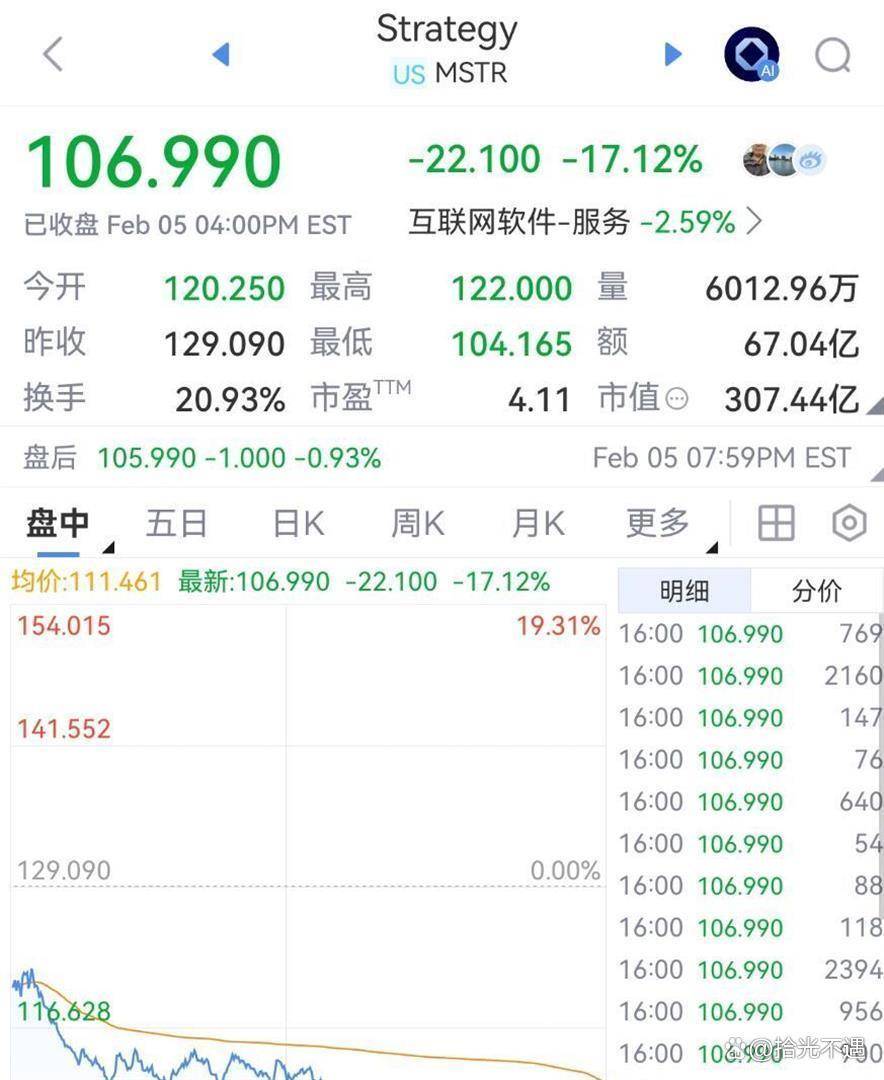
币圈的剧情比春晚小品还刺激!前阵子还有人喊着比特币要冲15万美元,结果2月6日凌晨直接上演"自由落体",从7万美元附 近一路猛砸,最低跌到59800美元,24小时最大跌幅超17%,把币圈玩家们砸得晕头转向,直呼"这哪是投资,这是渡劫啊"! 这波暴跌可不是小打小闹,数据简直触目惊心。CoinGlass权威数据显示,最近24小时全球超58.6万人被爆仓,爆仓总金额高 达26.65亿美元,其中多单就亏了23.14亿美元,相当于180多亿人民币打水漂了。市场"恐惧&贪婪指数"直接跌到10,创下近期 新低,这意思就是大家吓得都快原地结冰了,一点贪婪的念头都没了 。 | Strategy | | | | | | --- | --- | --- | --- | --- | | US MSTR | | | | | | 106.990 | -22.100 -17.12% @GB | | | | | 已收盘 Feb 05 04:00PM EST | 互联网软件-服务 -2.59% > | | | | | 今年 120.250 最高 | 122.000 量 6012.96万 | | | | | 昨收 129.090 最低 | 10 ...
【新华解读】“境内严禁、境外严管” 监管重申防范和处置虚拟货币、现实世界资产代币化等风险
Xin Hua Cai Jing· 2026-02-07 07:20
Core Viewpoint - The joint notification issued by eight Chinese regulatory bodies emphasizes that virtual currencies do not hold the same legal status as fiat currencies and that activities related to virtual currencies are illegal financial activities within China [1][2][4]. Group 1: Virtual Currency Regulation - The notification reiterates the prohibition of virtual currency activities in China, stating that they are illegal financial activities [2][4]. - It specifies that stablecoins linked to fiat currencies, particularly the Chinese yuan, cannot be issued abroad without approval from relevant authorities [4]. - The notification highlights the risks associated with virtual currencies, including cross-border transmission of risks and the potential for illegal fundraising and securities trading [4][7]. Group 2: Real-World Asset Tokenization - The notification defines real-world asset (RWA) tokenization and establishes a regulatory framework that prohibits RWA tokenization activities within China while imposing strict regulations on overseas activities [1][5]. - It emphasizes that any RWA tokenization activities must comply with the principle of "same business, same risk, same rules" and require approval from relevant regulatory bodies [5][6]. - The notification aims to combat illegal financial activities and protect national security and social stability by strictly regulating RWA tokenization [5][7]. Group 3: Enforcement and Compliance - The notification outlines the responsibilities of provincial governments in managing and controlling virtual currency mining activities, reinforcing the ban on such operations [8]. - It calls for strict enforcement against illegal financial activities related to virtual currencies and RWA tokenization, with legal consequences for violations [7][8]. - The notification encourages research into the technological foundations of virtual currencies, such as blockchain, while promoting controlled exploration of digital currency applications in cross-border payments [8].
史上最严!币圈大变天 虚拟货币正迎来国内多部门的最强监管
Xin Lang Cai Jing· 2026-02-07 06:20
格隆汇2月7日|据北京商报,从境内禁令到跨境全链条管控,虚拟货币正迎来国内多部门的最强监管。 2月6日,中国人民银行、中国证监会等八部门联合发布《关于进一步防范和处置虚拟货币等相关风险的 通知》,除了再度明确虚拟货币相关业务活动属于非法金融活动外,也首度提到境内外任何单位和个人 不得在境外发行挂钩人民币的稳定币,强调在境内开展现实世界资产(RWA)代币化活动以及提供有关中 介、信息技术服务等,涉嫌非法发售代币票券、擅自公开发行证券、非法经营证券期货业务、非法集资 等非法金融活动,应予以禁止。 这场被业内称为"史上最严"的监管升级,不仅将境内虚拟货币业务彻底"围堵",更是将触角延伸至境外 发行环节。博通咨询首席分析师王蓬博表示,境内外任何单位和个人不得在境外发行挂钩人民币的稳定 币的规定,会直接掐断国内机构相关稳定币的发行源头。对这类稳定币的发行、流通、交易全产业链形 成冲击,目前稳定币市场的现状是境外已有部分挂钩人民币的稳定币存在,且部分币种无合规发行资 质、资金池管理不透明,还存在借助离岸市场向境内传导的情况,需要注意的是这类稳定币可能成为违 规跨境转移资金的载体,也会对我国货币流通秩序和外汇管理形成潜在影 ...
虚拟货币监管升级!现实世界资产代币化被纳入重点监管
Yang Shi Xin Wen· 2026-02-07 01:08
近期,虚拟货币、现实世界资产(也就是RWA)代币化相关投机炒作活动时有发生,扰乱经济金融秩 序,危害人民群众财产安全。就在昨天,中国人民银行、国家发展改革委、工业和信息化部、公安部、 市场监管总局、金融监管总局、中国证监会、国家外汇局等8部门联合发布了《关于进一步防范和处置 虚拟货币等相关风险的通知》,进一步完善监管要求,持续打击相关违法犯罪活动。 华东政法大学教授虞浔:不法分子利用新型技术概念进行包装,通过夸大收益、隐瞒风险的方式诱导公 众参与。虚拟货币、现实世界资产代币化相关投机炒作活动时有发生,为洗钱、非法集资等犯罪活动提 供温床。因此,必须进一步从严监管,防范相关金融风险,维护金融秩序稳定。新规重申境内对虚拟货 币坚持禁止性政策,明确虚拟货币不具有法定货币地位,相关业务活动属于非法金融活动。强调严厉打 击相关非法金融活动。通过跨部门协作,强化央地协同,进一步完善风险监测、防范和处置等方面的要 求,对相关违法犯罪活动保持高压态势。 《通知》明确延续核心定性:虚拟货币不是法定货币,相关业务属于非法金融活动。 《通知》同时新增两大关键约束: 虚拟货币因去中心化、难以溯源的特性,极易被犯罪分子利用,成为洗钱与 ...
A股头条:虚拟货币监管再升级!未经同意境内主体不得在境外发行虚拟货币;预制菜国标征求意见,不得使用防腐剂、保质期不应超一年
Sou Hu Cai Jing· 2026-02-07 00:29
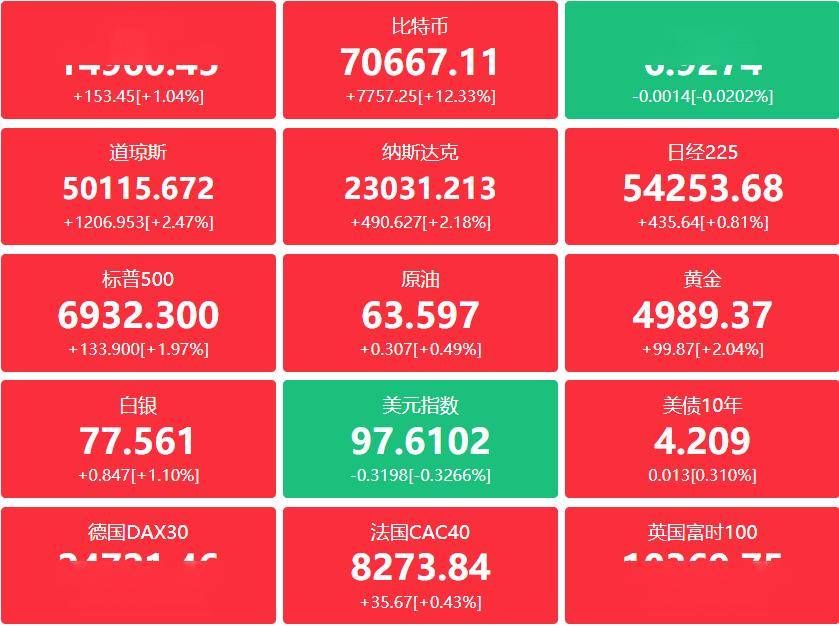
Group 1 - Premier Li Qiang emphasized the importance of stabilizing employment, enterprises, markets, and expectations while preparing policies for the upcoming "14th Five-Year Plan" [1] - The government aims to ensure effective implementation of macroeconomic policies and timely project execution to stimulate market vitality and explore new growth points in domestic demand [1] - The focus will be on closely monitoring changes in the economic situation and making necessary policy adjustments to achieve annual targets [1] Group 2 - The China Securities Regulatory Commission (CSRC) issued guidelines for the issuance of asset-backed securities tokens overseas, emphasizing compliance with cross-border investment and data security regulations [2] - Eight government departments announced a ban on the tokenization of real-world assets within China, citing risks associated with illegal financial activities [3] Group 3 - The National Health Commission released a draft national standard for prepared dishes, prohibiting the use of preservatives and limiting shelf life to a maximum of 12 months [3][16] - The standard aims to enhance food safety and nutritional quality while addressing public expectations and industry development [16] Group 4 - Tesla has launched an AI training center in China to enhance its local AI capabilities for driver assistance and applications [4] - The center's computational power is sufficient to meet current demands, although specific details were not disclosed [4] Group 5 - The Shenzhen Stock Exchange is monitoring abnormal trading activities of "Jia Mei Packaging" and "Feng Long Shares" due to recent stock price fluctuations [5] - The Shanghai Stock Exchange is also focusing on stocks like *ST Zhengping and Guosheng Technology for their significant price volatility [6] Group 6 - Guotou Ruijin Fund has established a working group to address investor concerns regarding the recent valuation adjustments of its silver LOF fund [7][8] - The fund aims to protect investor rights and facilitate resolutions through various legal channels [8] Group 7 - The U.S. stock market saw a rebound, with the S&P 500 rising by 1.97% and the Nasdaq Composite increasing by 2.18% [9] - Semiconductor stocks experienced significant gains, with the Philadelphia Semiconductor Index rising by 5.7% [11] Group 8 - The Ministry of Industry and Information Technology announced plans to develop a national computing power interconnection node system to enhance overall computing capabilities [17] - This initiative aims to standardize and efficiently utilize computing resources across different regions and sectors [17]

陆家嘴财经早餐2026年2月7日星期六
Wind万得· 2026-02-07 00:10
•五部门联合治理不法"代理维权" ,剑指短视频、直播等自媒体平台乱象 • 资金抄底美股大幅反弹, 道指首次突破5万点关口 •美伊核谈破冰,双方就继续谈判达成共识 • 涨价补钱! 三大存储巨头拟推"短期合同+后结算"模式 •快手回应因直播间事故被罚1.19亿元:诚恳接受,坚决整改 1、 国务院常务会议研究促进有效投资政策措施 ,要求创新完善政策措施,加力提效用好中央预算内投资、超长期特别国债、地方政府专项债券等 资金和新型政策性金融工具。在基础设施、城市更新、公共服务、新兴产业和未来产业等重点领域,深入谋划推动一批重大项目、重大工程。 2、 中国人民银行等八部门联合发文,明确虚拟货币相关业务活动属于非法金融活动,境内一律严格禁止。 境内外任何单位和个人未经同意不得在境外发 行挂钩人民币的稳定币,境内主体及其控制的境外主体不得在境外发行虚拟货币。禁止在境内开展现实世界资产代币化相关活动;未经同意、备案等,任 何单位和个人不得赴境外开展现实世界资产代币化业务。 •国常会研究促进有效投资政策措施 ,深入谋划推动一批重大项目及工程 •虚拟货币再迎监管新规 ,央行等八部门联合发文重申境内禁止性政策 •证监会:对境内资产境 ...
喜娜AI速递:昨夜今晨财经热点要闻|2026年2月7日
Sou Hu Cai Jing· 2026-02-06 22:25
Group 1 - The nomination of Waller by Trump for the next Federal Reserve Chair has caused significant market fluctuations, leading to a sharp decline in gold and silver prices, a sell-off in Hong Kong and A-shares, and a strengthening of the US dollar [2] - The silver market has experienced extreme volatility, primarily driven by the ProShares Ultra Silver ETF's significant sell-off, which accelerated the price drop due to its daily leverage reset mechanism [2] - The Ministry of Industry and Information Technology is promoting the construction of a national computing power interconnection system to enhance the efficiency and service level of public computing resources, which is expected to benefit the related industry chain [3] Group 2 - Multiple companies are facing regulatory scrutiny for information disclosure violations, with Rongbai Technology and Yahui Long being warned and fined, indicating a tightening of market regulations to protect investor rights [3] - Kuaishou Technology has been fined for content-related issues, highlighting the regulatory push for platforms to comply with network security and information management standards [3] - Bitcoin prices have been under pressure due to macroeconomic factors and reduced capital inflow into spot Bitcoin ETFs, indicating a challenging market environment for cryptocurrencies [4] Group 3 - The State Council is focusing on policies to promote effective investment and economic stability, emphasizing the importance of innovative policies and the role of state-owned and private investments [5] - Eight departments, including the People's Bank of China, have reinforced regulations against virtual currencies, classifying related activities as illegal financial operations to mitigate financial risks [5] - The tense situation between the US and Iran is impacting market stability, with significant price fluctuations in gold and US stocks, necessitating close monitoring of geopolitical developments [5]