资本回报

Search documents
Ameris Bancorp(ABCB) - 2025 Q4 - Earnings Call Transcript
2026-01-30 15:00
Financial Data and Key Metrics Changes - The company reported record earnings for 2025 at over $412 million, with diluted EPS hitting $6 per share, a 15% increase year-over-year [5][10] - The return on assets (ROA) for the full year improved to 1.54% from 1.38% in the previous year, while the return on tangible common equity (ROTC) increased to 14.51% from 14.41% [10] - The efficiency ratio improved to 50% for the year, down from 53.2% the previous year, indicating better cost management [14] Business Line Data and Key Metrics Changes - Net interest income increased by $7.3 million in the fourth quarter, representing a 12.2% annualized growth, while total non-interest expense decreased by $11.5 million in the quarter [11][14] - The core bank grew by approximately $8.7 million, although mortgage and premium finance segments experienced seasonal declines [11] - Adjusted non-interest income decreased by $10.5 million in the fourth quarter, primarily due to seasonal declines in the mortgage segment [14] Market Data and Key Metrics Changes - The company experienced a 6% growth in revenue for the year, while expenses declined by 1%, contributing to positive operating leverage [5] - Non-interest bearing deposits represented 29% of total deposits, indicating a strong funding base despite typical seasonality [9] - The company ended the year with total assets of $27.5 billion, reflecting a 4.8% growth in the balance sheet [15] Company Strategy and Development Direction - The company is focused on organic growth and enhancing shareholder value through capital returns and accretive growth strategies [4] - Management emphasized the importance of maintaining strong capital ratios, with Common equity Tier 1 at 13.2% and tangible common equity ratio at 11.4% [6] - The company aims to leverage its position in high-growth Southeastern markets to drive future growth [9] Management's Comments on Operating Environment and Future Outlook - Management expressed optimism about loan production and pipeline strength, indicating a positive outlook for 2026 [20] - The company anticipates some margin compression due to rising deposit costs but remains focused on maintaining profitability [12][30] - Management noted that asset quality trends remain strong, with low net charge-offs and non-performing assets [13] Other Important Information - The company repurchased $77 million of its stock during the year, representing 2% of the company, and announced an increased share repurchase program [6][11] - The company paid off all subordinated debt during 2025, simplifying its capital structure [6] Q&A Session Summary Question: Can you talk about future payoffs and loan growth visibility? - Management noted that elevated payoffs in the CRE portfolio were typical for the fourth quarter and expect moderation in the first half of the year [20] Question: How do you see rates affecting loan production and payoffs? - Management believes that changes in rates could accelerate opportunities for loan production rather than causing significant payoffs [22] Question: Can you provide guidance on margin expectations for the year? - Management indicated a potential margin decline of 5-10 basis points from current levels, depending on deposit costs [30] Question: What are your thoughts on deposit trends and NIB growth? - Management acknowledged seasonal fluctuations in deposits but remains optimistic about the growth of non-interest bearing accounts [46] Question: Can you discuss the drivers of net charge-off activity this quarter? - Management highlighted that charge-offs were consistent with previous quarters and remain below prior year levels [42]

Eagle Materials(EXP) - 2026 Q3 - Earnings Call Transcript
2026-01-29 14:32
Financial Data and Key Metrics Changes - Revenue for Q3 of fiscal 2026 was $556 million, down slightly from the prior year, reflecting lower wallboard and paperboard sales volume, partially offset by higher cement sales volume [11] - Earnings per share were $3.22, down 10% from Q3 of fiscal 2025, primarily due to lower net earnings from wallboard sales volume [11] - Gross profit margin was 28.9%, indicating a stable profitability level despite market challenges [3] Business Line Data and Key Metrics Changes - Heavy materials sector revenue increased by 11%, driven by a 9% increase in cement sales volume and a 22% increase in concrete and aggregates revenue [11] - Aggregate sales volume reached a record 1.6 million tons, up 81%, reflecting a 34% increase in organic aggregate sales volume [13] - Light materials sector revenue decreased by 16% to $203 million, primarily due to lower wallboard and recycled paperboard sales volume [11] Market Data and Key Metrics Changes - Cement and aggregate sales volumes grew last quarter, supported by federal, state, and local infrastructure spending [8] - Wallboard sales were challenged due to affordability issues in the housing market, with a 5% decline in wallboard sales prices [11][9] - The company announced price increases for cement in most markets for Q1 of calendar 2026, reflecting volume expectations [9] Company Strategy and Development Direction - The company aims to maintain operational flexibility and efficiency through investments in health and safety, cost control, and customer support [3][4] - Strategic projects include the modernization of the Mountain Cement plant and the Duke wallboard facility, expected to lower cost structures and enhance competitive positioning [7] - The company is focused on maintaining a strong balance sheet while pursuing growth opportunities through disciplined capital allocation [10] Management's Comments on Operating Environment and Future Outlook - Management expressed optimism about infrastructure and non-residential markets as they head into calendar 2026, despite mixed construction environments [19] - The company remains focused on operations rather than predicting demand, emphasizing their ability to manage costs effectively [9] - Management noted that while wallboard pricing has seen some downward trends, they expect stability in pricing due to structural changes in the industry [26] Other Important Information - Operating cash flow increased by 5% to $512 million, with capital spending rising to $295 million, primarily for modernization projects [14] - The company returned nearly $150 million to shareholders through dividends and share repurchases during Q3 [10] - The net debt-to-cap ratio was 48%, with a leverage ratio of 1.8x, providing significant financial flexibility [15] Q&A Session Summary Question: Is cement demand widespread across markets? - Management indicated that demand is broad-based across markets, with optimism for infrastructure and non-residential markets as they enter calendar 2026 [19] Question: What is driving the margins in cement? - Margins were impacted by slight increases in raw material costs, but maintenance and fuel costs remained largely in line [22] Question: How is wallboard pricing expected to trend? - Wallboard pricing has seen a downward trend, but management expects prices to remain range-bound due to structural changes in the industry [26] Question: What is the impact of winter storms on operations? - The company has prepared facilities for extreme cold temperatures, ensuring operations are ready for winter storms [41] Question: What portion of wallboard demand is from repair and remodel? - Repair and remodel account for about a third of wallboard demand, showing steady growth over the years [38] Question: How is the company managing capital allocation post-bond deal? - The company is focused on balancing growth through M&A and organic projects while maintaining a disciplined approach to capital allocation [51]

WSFS Financial (WSFS) - 2025 Q4 - Earnings Call Transcript
2026-01-27 19:02
Financial Data and Key Metrics Changes - For Q4 2025, the company reported a core earnings per share (EPS) of $1.43, a core return on assets (ROA) of 1.42%, and a core return on tangible common equity of 18%, all showing significant year-over-year increases [3][4] - The full-year core EPS for 2025 was $5.21, reflecting a 19% increase from the previous year, while Q4 core EPS increased by 29% year-over-year [4] - The net interest margin (NIM) for the quarter was 3.83%, down 8 basis points from the previous quarter but up 3 basis points year-over-year [4][5] Business Line Data and Key Metrics Changes - Core fee revenue increased by 2% linked quarter and 8% year-over-year, driven by strong growth in wealth and trust, capital markets, and home lending [5] - The wealth and trust business grew by 13% year-over-year, with WSFS Institutional Services achieving a 29% growth [5] - Total gross loans grew by 2% linked quarter and 9% annualized, with commercial loans leading the growth at 4% linked quarter [6] Market Data and Key Metrics Changes - Total client deposits increased by 2% linked quarter and 10% annualized, with non-interest-bearing deposits growing by 6% linked quarter [6] - The company maintained a strong market position, ranking as the fourth most active U.S. asset-backed and mortgage-backed securities trustee with nearly 12% market share [5] Company Strategy and Development Direction - The company aims for mid-single-digit loan growth and continued broad-based deposit growth in 2026, focusing on maintaining an interest-bearing deposit beta in the low- to mid-40s [9][10] - The strategy includes maintaining a high level of capital returns through buybacks while being open to investment opportunities [9][20] - The company is committed to expense discipline while investing in growth opportunities, with an efficiency ratio targeted in the high fifties for the year [11][12] Management's Comments on Operating Environment and Future Outlook - Management expressed confidence in delivering high performance and growth in 2026, with expectations of a core ROA of approximately 1.40% and double-digit growth in core EPS [9] - The management noted that the economic environment has stabilized, leading to improved sentiment among small business owners, which has positively impacted commercial loan originations [16][17] - The company anticipates challenges in commercial loan losses but remains optimistic about the overall portfolio quality, particularly in real estate-secured loans [70][71] Other Important Information - Non-performing assets decreased significantly, down approximately 40% compared to year-end 2024, indicating improved asset quality [7] - The company returned $119 million in capital during the quarter, including $109 million in buybacks, totaling $288 million for the year [8] Q&A Session Summary Question: Can you discuss the trends in commercial loan growth and sentiment? - Management noted that improved economic clarity led to strong commercial loan originations and a positive outlook for future growth [16][17] Question: What are the parameters for capital return and buybacks? - The company focuses on CET1 and TCE ratios, with a capital return philosophy primarily through buybacks, aiming to return roughly 100% of net income annually [19][20] Question: What is the expected impact of interest rate cuts on Cash Connect revenue? - Management indicated that each 25 basis point rate cut could impact revenue by approximately $2.5 million, but margin improvements from pricing and expense management would offset some of this [26][28] Question: How does the company evaluate its diversified businesses for profitability? - The company has an ongoing initiative to assess the strategic fit of its businesses, shedding low-profitability partnerships while focusing on core areas [45][46] Question: Are there any updates on M&A considerations? - Management remains open to M&A opportunities that could strengthen their market position, while also focusing on organic growth [50][51]

Byline Bancorp(BY) - 2025 Q4 - Earnings Call Transcript
2026-01-23 16:02
Financial Data and Key Metrics Changes - For the full year 2025, net income was $130.1 million, or $2.89 per diluted share, on revenue of $446 million, representing a 9.7% year-over-year increase [12] - The pre-tax pre-provision ROA was 219 basis points, ROA was 136 basis points, and ROTCE was 13.5% [12] - For Q4 2025, net income was $34.5 million, or $0.76 per diluted share, on revenue of $117 million, with profitability metrics remaining solid [13] Business Line Data and Key Metrics Changes - Year-on-year loan growth was 8.9%, while deposits grew by 2.5% [12] - In Q4, loans grew by 3% linked quarter, with origination activity consistent at $323 million, primarily from commercial and leasing businesses [14] - Non-interest income increased, contributing to a 12% year-over-year revenue growth [14] Market Data and Key Metrics Changes - The company is positioned as the largest local community bank and the second largest local commercial bank in Chicago, with significant growth opportunities in the market [5][7] - The company is preparing to cross the $10 billion asset threshold in 2026, which will enhance its competitive position [22] Company Strategy and Development Direction - The company aims to become the preeminent local commercial bank, focusing on organic growth and maintaining a disciplined credit approach [22][23] - A new commercial payments business was launched, with six customers onboarded and additional customers in the pipeline [22] - The company emphasizes a people-first banking approach, which has contributed to low employee turnover and high engagement [6][8] Management's Comments on Operating Environment and Future Outlook - Management noted that the operating environment has been characterized by elevated interest rates and macroeconomic uncertainty, but the company remained focused on serving customers and executing its strategy [11] - The outlook for net interest income is based on a forward curve that assumes a 50 basis point decline in the Fed funds rate for 2026 [18] - Management expressed confidence in the company's ability to generate sustainable growth and return capital to shareholders through dividends and share repurchases [34] Other Important Information - The board approved a 20% increase in the quarterly dividend, reflecting strong financial performance [4][16] - The company repurchased approximately 346,000 shares during the quarter and authorized a new repurchase program for up to 5% of outstanding shares [15][34] Q&A Session Summary Question: Areas of growth and efficiency - Management highlighted excitement around the commercial payments team and the potential for growth in the commercial banking space in Chicago [30] Question: Capital return strategy - Management indicated a focus on maintaining flexibility with capital, returning excess capital to shareholders through dividends and share repurchases [32][34] Question: Loan growth outlook - Management expects mid-single-digit loan growth, primarily driven by commercial lending, with real estate activity dependent on transaction volume [43] Question: Net interest income outlook - Management noted that while the first quarter typically sees lower activity, they expect stable to growing net interest income throughout the year [45][46] Question: Credit quality outlook - Management maintained guidance for net charge-offs in the range of 30-40 basis points, with no material changes in credit quality expected [49] Question: Commercial payments business - Management clarified that the commercial payments team is focused on onboarding clients such as payroll processing companies and fintechs, with a deliberate approach to growth [70][72]

Fifth Third Bancorp: An Inflection With Double-Digit Upside Ahead
Yahoo Finance· 2026-01-21 18:16
Core Viewpoint - Fifth Third Bancorp (NASDAQ: FITB) stock is at an inflection point with potential for double-digit upside driven by favorable economic conditions, resilient consumer markets, operational quality, and growth through acquisitions [2] Financial Performance - Fifth Third Bancorp reported a strong Q4 for fiscal 2025, with revenue increasing by 7.3% to $2.34 billion, supported by strong internal metrics and wider margins [5] - The company achieved record net investment income, 5% loan growth, and modest deposit growth in Q4 [6] Capital Returns - Capital returns are crucial for Fifth Third Bancorp, with dividends and share buybacks expected to rise in the coming years; the dividend yield is projected to exceed 3.2% by January 2026, growing annually at a rate of 7.25% [3] - Share repurchases reduced the diluted share count by an average of 2% for the fiscal year, with a similar reduction anticipated in 2026 [4] - The dividend payout ratio fell below 40% by year-end 2025, with total capital returns approximating 65% of GAAP net income in Q4 [4] Growth Prospects - The upcoming acquisition of Comerica is expected to enhance the scale and scalability of Fifth Third Bancorp, potentially accelerating account and loan growth by year-end 2026 [5] - The merger is forecasted to compound organic growth and drive a greater-than-30% increase in net interest income (NII) and non-investment income, surpassing analyst expectations [5][6] Market Position - Fifth Third Bancorp is well-positioned for organic growth and margin improvement, with institutional and analyst trends indicating market accumulation of the stock [7]

哈佛老徐:知名AI怀疑者和信仰者的劲爆交锋,暗藏了一个巨大的机会
老徐抓AI趋势· 2025-12-27 01:04
Core Viewpoint - The dialogue between Andrew Ross Sorkin and Dario Amodei highlights contrasting perspectives on AI's future, with Sorkin expressing skepticism about a potential AI bubble, while Amodei emphasizes the tangible value and growth of AI in the industry [6][32]. Group 1: Andrew Ross Sorkin's Perspective - Sorkin views the current AI landscape as reminiscent of historical financial bubbles, suggesting that the rapid growth in AI investment and reliance on AI for GDP growth could lead to a similar collapse as seen in 1929 [33][39]. - He raises concerns about the sustainability of AI investments, questioning whether the returns justify the massive expenditures being made by companies like OpenAI [38][39]. - Sorkin's macro perspective indicates a cautious approach, focusing on the potential risks and uncertainties surrounding AI's economic impact [33][39]. Group 2: Dario Amodei's Perspective - Amodei presents a more optimistic view, citing significant revenue growth in the AI sector, with projections of annual revenues increasing from approximately $1 billion in 2023 to $80-100 billion by 2025 [34][35]. - He argues that the willingness of companies to invest substantial amounts in AI services is a direct indicator of its value, contrasting the skepticism of outsiders with the confidence of industry insiders [35][38]. - Amodei emphasizes the importance of safety and regulation in AI development, advocating for a balanced approach that ensures AI's growth does not outpace its governance [30][31]. Group 3: Industry Risks and Opportunities - Amodei warns that OpenAI could face significant financial challenges due to its aggressive investment strategy, highlighting the inherent risks in the AI industry where companies may either be overly conservative or excessively aggressive [39][42]. - The dialogue suggests that while AI may create opportunities, it will also lead to job displacement, with a focus on the need for individuals to adapt and learn to leverage AI effectively [51][53]. - The conversation underscores the importance of recognizing market fluctuations as opportunities rather than threats, encouraging a proactive approach to investment in the AI sector [53][54].


Why KBW's McGratty says Citi will be the top Big Bank performer of 2026
Youtube· 2025-12-22 23:04
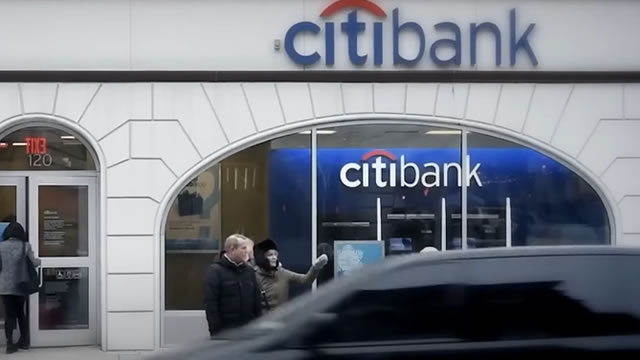
Core Viewpoint - City shares have increased nearly 3%, reaching levels not seen in over 17 years, with expectations of being the top performer among big banks next year [1] Group 1: Company Performance and Strategy - City is undergoing a multi-year turnaround, simplifying its business and exiting certain countries, which is expected to improve its return on equity (ROE) from a bottom-tier position to average [2] - The stock has performed well this year, breaking through tangible book value, which has historically been a ceiling for the last 10 to 15 years [2] - Earnings revisions for the largest banks have increased by 16% year-on-year, which is double that of smaller banks, indicating strong performance for larger institutions like City [4] Group 2: Market Expectations and Valuation - Expectations for capital return have risen by approximately 30% compared to the previous year, with an additional 100 to 200 basis points of excess capital yet to be factored into projections [3] - The potential for City’s stock price to increase by 65% to 70% is discussed, although this is considered aggressive; a more conservative estimate suggests a significant upside remains [5] - City’s target for next year is a return of 10% to 11%, with an important investor day scheduled for May 7, where medium-term targets are expected to be discussed [6][7] Group 3: Competitive Landscape - The regional banks are viewed selectively, with a focus on those building competitive companies through acquisitions, although historical performance suggests that stocks may not necessarily outperform during this process [8] - Citizens Bank is highlighted as a strong investment opportunity due to its expected ROE improvement from 10% to 15-16% over time, alongside capital markets exposure [9][10] - The largest banks, including JP Morgan and Goldman Sachs, have strong international components, with capital markets tailwinds being robust globally, while City is positioned as an international player [12]

Kinder Morgan(KMI) - 2025 FY - Earnings Call Transcript
2025-12-09 16:17
Financial Data and Key Metrics Changes - The company provided guidance indicating a 4% growth in EBITDA from 2025 to 2026 and an 8% growth in earnings [4] - The debt to EBITDA ratio is expected to end next year at 3.8 times, within the target range of 3.5 to 4.5 times [4] - Expansion capital expenditures (CapEx) guidance was raised from approximately $2.5 billion per year to over $3 billion per year for the next few years [4] Business Line Data and Key Metrics Changes - The current backlog of approved expansion projects is $9.3 billion, significantly up from $3 billion two years ago, with 90% of this backlog associated with natural gas projects [7] - The company is evaluating over $10 billion in potential projects, primarily focused on natural gas, driven by similar demand drivers as the existing backlog [10][11] Market Data and Key Metrics Changes - Natural gas demand is expected to grow by over 20% between the end of 2024 and 2030, with estimates ranging from 22 to 28 BCF per day [8] - The company is well-positioned to capitalize on the increasing demand for natural gas driven by export LNG and power generation [9] Company Strategy and Development Direction - The company sees significant growth opportunities in the midstream space, particularly in natural gas, and aims to expand its existing asset base [5] - The strategy includes focusing on regulated utilities for gas supply contracts to mitigate risks associated with credit [39] Management's Comments on Operating Environment and Future Outlook - Management expressed optimism about the current regulatory environment, noting improvements in permitting processes and timelines [43][44] - There is a recognition of potential supply chain constraints, particularly regarding compression equipment, but current projects are on track [49] Other Important Information - The company has a substantial gas storage footprint of 700 BCF, with 75% regulated and 25% unregulated, and has seen significant rate increases in the unregulated market [29] - The company is exploring opportunities in Arizona for both natural gas and product pipelines, indicating a proactive approach to market expansion [19][21] Q&A Session Summary Question: What is the current backlog and growth potential? - The current backlog of approved expansion projects is $9.3 billion, with significant growth expected in EBITDA from these projects [7] Question: How does the company view competition in the market? - The company acknowledges competition but believes there is ample opportunity for growth, particularly in the Southern United States [17] Question: What is the company's stance on M&A? - The company remains open to M&A opportunities but emphasizes a cautious and opportunistic approach, ensuring flexibility in its balance sheet [60][62]

中美新老经济分化格局下,债券利率下行更为确定
2025-12-04 02:21
Summary of Conference Call Records Industry and Company Overview - The records discuss the economic landscape in the United States and China, focusing on the differentiation between new and old economies, particularly in the context of rising bond rates and economic pressures [1][2][5]. Core Insights and Arguments - **Economic Challenges in the U.S.**: The U.S. economy is facing "three highs" challenges: high inflation, high interest rates, and high wages, leading to increased operational costs for traditional businesses and significant economic downward pressure [1][4]. - **Differentiation in Economic Sectors**: There is a clear divide between new and old economies in both the U.S. and China. In the U.S., sectors related to AI and technology are experiencing rapid investment growth, while traditional industries like automotive manufacturing are under pressure from tariffs and rising costs [5]. In China, although emerging industries are growing quickly, they still represent a small portion of the economy, with traditional sectors like real estate facing significant downward pressure [5]. - **Market Trends**: Funds are increasingly flowing into emerging industries in the stock market, while the bond market is attracting capital due to the financing needs of traditional industries and favorable monetary policies [6]. The U.S. stock market is considered overvalued, but not to an extreme level compared to historical bubbles [6]. - **Electricity Consumption and Metal Usage**: The records highlight that electricity consumption in emerging sectors like AI and chips is increasing, while traditional sectors like real estate show lower consumption. Additionally, demand for copper is strong, while demand for rebar is weak, indicating a disparity in resource utilization between new and old industries [7]. - **Gold Price Dynamics**: Gold prices are performing strongly despite the overall economic conditions. This is attributed to a divergence in the relationship between gold prices and bond yields, as well as the copper-gold ratio, which has been declining while bond yields remain high [8]. This suggests a market contradiction where new economic sectors are thriving while old sectors face challenges, leading investors to seek safety in gold and bonds [8]. Other Important Insights - **Employment and Consumer Confidence**: The U.S. is experiencing deteriorating non-farm employment data, with rising layoffs and consumer confidence hitting historical lows, indicating significant issues within the traditional economy [4]. - **China's Market Performance**: In 2025, China's stock market is performing well, with the bond market outperforming stocks. This performance is closely linked to capital returns, which are influenced by trade surpluses and fiscal deficits [9]. The strong capital returns are driving the stock market's performance, highlighting the impact of new and old economic differentiation [9].
Does Insider Buying Signal Value in the WD-40 Company?
Yahoo Finance· 2025-11-17 16:36
Core Insights - Insider buying at WD-40 Company (NASDAQ: WDFC) indicates value as the stock trades near long-term lows and at the low end of its historical price-to-earnings (P/E) range, with a current-year earnings P/E of 32x reflecting a solid outlook for growth [2][4] Financial Performance - The company's capital return strategy is crucial for its stock price outlook, featuring a healthy and attractive dividend that increases annually, alongside reinstated share buybacks in 2023 after a suspension in 2020 due to the COVID-19 pandemic [3][4] - Management's confidence has grown due to margin and cash flow improvements, allowing for an acceleration of buybacks [3] Market Position - The stock is expected to experience a strengthening tailwind, trading below 20x earnings by 2030 and in the low teens by 2035, with a target growth pace of 5% to 9% [4] - Insider purchases from six insiders, including directors and executives, indicate broad-based support, despite the small amount representing less than 0.02% of the company's value [6] Institutional Interest - Institutional activity in 2025 reached multi-year highs, with a shift from sellers outpacing buyers in the first half to buyers outpacing sellers in the second half, reflecting robust market support [7]