
超节点技术

Search documents
计算机行业双周报(2025/10/31-2025/11/13):国内科技巨头积极布局超节点技术,关注国产AI算力投资机遇-20251114
Dongguan Securities· 2025-11-14 12:19
Investment Rating - The report maintains an "Overweight" rating for the computer industry, indicating an expectation that the industry index will outperform the market index by more than 10% over the next six months [1][32]. Core Insights - Domestic technology giants are actively investing in supernode technology, presenting investment opportunities in domestic AI computing power [1][28]. - The SW computer sector has seen a cumulative decline of 2.64% over the past two weeks, underperforming the CSI 300 index by 2.48 percentage points, ranking 28th among 31 first-level industries [10][13]. - The sector's price-to-earnings (PE) ratio is currently at 55.36 times, placing it in the 88.40th percentile for the past five years and the 77.89th percentile for the past ten years [20][22]. Summary by Sections 1. Market Review - The SW computer sector has experienced a cumulative decline of 2.64% from October 31 to November 13, 2025, and a decline of 3.73% in November, while it has increased by 20.45% year-to-date [10][13][28]. 2. Valuation Situation - As of November 13, 2025, the SW computer sector's PE TTM (excluding negative values) stands at 55.36 times, indicating a high valuation relative to historical performance [20][22]. 3. Industry News - Key developments include the launch of the Kimi K2 Thinking model by Moonlight, the introduction of the world's first single-cabinet 640-card supernode by Inspur, and significant investments in AI infrastructure by companies like Tencent and Anthropic [21][23][28]. 4. Company Announcements - Recent announcements include equity transfer agreements and the establishment of joint ventures aimed at enhancing business strategies and market positions [24][25][26][27]. 5. Weekly Perspective - The report highlights the launch of the scaleX640 supernode by Inspur, which significantly enhances computing power and efficiency, and emphasizes the importance of collaborative efforts in the AI computing ecosystem [28][29].

计算机行业双周报:国内科技巨头积极布局超节点技术,关注国产AI算力投资机遇-20251114
Dongguan Securities· 2025-11-14 09:43
Investment Rating - The report maintains an "Overweight" rating for the computer industry, expecting the industry index to outperform the market index by more than 10% in the next six months [1][32]. Core Insights - Domestic technology giants are actively investing in supernode technology, presenting investment opportunities in domestic AI computing power [1][28]. - The SW computer sector has seen a cumulative decline of 2.64% over the past two weeks, underperforming the CSI 300 index by 2.48 percentage points, ranking 28th among 31 first-level industries [10][13]. - The sector's price-to-earnings (PE) ratio is 55.36 times, placing it in the 88.40th percentile over the past five years and the 77.89th percentile over the past ten years [20][22]. Summary by Sections 1. Market Review - The SW computer sector has experienced a cumulative decline of 2.64% from October 31 to November 13, 2025, and a decline of 3.73% in November, while it has increased by 20.45% year-to-date, outperforming the CSI 300 index by 0.95 percentage points [10][13][14]. 2. Valuation Situation - As of November 13, 2025, the SW computer sector's PE TTM (excluding negative values) stands at 55.36 times, which is in the 88.40th percentile for the last five years and the 77.89th percentile for the last ten years [20][22]. 3. Industry News - Major developments include the launch of the Kimi K2 Thinking model by Moon's Dark Side, the introduction of the world's first single-cabinet 640-card supernode scaleX640 by Inspur, and Tencent's announcement of lower-than-expected capital expenditures for the year [21][23][28]. - Anthropic plans to invest $50 billion in a data center in the U.S., while Baidu has released new Kunlun chips M100 and M300 for AI applications [21][23]. 4. Company Announcements - Recent announcements include a share transfer agreement by Jin Chengzi and a joint venture by Jin Yi Technology to establish a company focused on energy technology [24][25][27]. 5. Weekly Perspective - The report highlights the significance of the scaleX640 supernode, which enhances computing power and efficiency, and emphasizes the importance of domestic AI computing power investment opportunities [28][29].
超节点持续演进,看好国产算力 | 投研报告
Zhong Guo Neng Yuan Wang· 2025-11-12 02:53
Core Viewpoint - The computer industry index has underperformed compared to major stock indices, indicating a challenging market environment for the sector [1][2]. Market Review - During the week of November 3 to November 7, the Shanghai Composite Index rose by 1.08%, the ChiNext Index increased by 0.65%, and the CSI 300 Index gained 0.82%. In contrast, the computer (Shenwan) index fell by 2.54%, lagging behind the Shanghai Composite by 3.62 percentage points, the ChiNext by 3.19 percentage points, and the CSI 300 by 3.36 percentage points, ranking 30th among all industries [1][2]. Weekly Insights - NVIDIA is leading the trend of supernodes, a technology architecture for building large-scale computing clusters, which integrates thousands of GPUs into a single logical unit. The latest NVLink technology has reached its fifth generation, with each GPU having 18 NVLink connections, achieving a total bandwidth of 1800GB/s, significantly surpassing PCIe Gen6 [3]. - NVIDIA's upcoming NVL72, set to be released in March 2024, will integrate 36 Grace CPUs and 72 Blackwell GPUs into a liquid-cooled cabinet, delivering a total of 720 PFLOPs for AI training and 1440 PFLOPs for inference [3]. Domestic Major Players Accelerating Supernode Layout - **Inspur**: On November 6, during the World Internet Conference, Inspur launched the world's first single-cabinet 640-card supernode, achieving a 20-fold increase in computing density [4]. - **Huawei**: In April, Huawei introduced the CloudMatrix384 supernode, capable of creating a super-large cluster with over 160,000 cards. As of September, over 300 units have been sold, primarily to government and enterprise clients [4]. - **Alibaba**: At the 2025 Cloud Computing Conference, Alibaba Cloud unveiled the Panjiu 128 supernode AI server, which enhances inference performance by 50% compared to traditional architectures [5]. - **Baidu**: Announced the launch of the Kunlun supernode at the 2025 Baidu Cloud Intelligence Conference, making supercomputing capabilities available [5]. - **ZTE**: Developed a supernode server with 64 GPUs, featuring an innovative design that reduces latency to the nanosecond level [5]. - **Inspur Information**: Released the "Yuan Nao SD200" supernode AI server aimed at trillion-parameter models [5]. Investment Recommendations - Focus on companies involved in computing power such as Cambricon, Haiguang Information, Inspur, and others [6]. - Consider AIDC-related firms like Kehua Data and Yunse Intelligent [6]. - Explore AI application companies including Kingsoft Office, iFlytek, and others [6].
AI光提速电话会议-“光、液冷、国产算力”的全面提速
2025-10-27 00:31
Summary of Conference Call on AI Acceleration and Related Technologies Industry Overview - The conference call focused on the AI industry, particularly the advancements in optical modules, liquid cooling technology, and domestic computing power in China. The discussion highlighted the increasing demand for AI-related hardware and the implications for various companies involved in the supply chain. Key Points and Arguments AI Industry Acceleration - The global AI industry chain is experiencing rapid acceleration, with all segments speeding up deliveries and increasing orders. Google has raised its 2026 TPU demand for the fifth time from 4 million to 4.9 million units, indicating a significant increase in demand for 1.6T optical modules, with estimates ranging from 16 million to 30 million units for 2026 [2][3]. Demand for Optical Modules - Google’s increased TPU demand directly correlates with a rise in the need for 1.6T optical modules. Leading companies in the optical module sector, such as Zhongji Xuchuang and Xinyi Technology, are expected to benefit from this trend [3]. Liquid Cooling Technology - Liquid cooling technology is being rapidly adopted in AI computing. Google’s V7 will fully utilize liquid cooling, while previous versions (V5 and V6) still used air cooling. The collaboration between Invec and Google on a universal CDO liquid cooling solution is noteworthy, as is the push from Meta and OpenAI to implement liquid cooling [4]. Developments in Optical Communication - The optical communication sector is focusing on four main areas: 1. 1.6T optical modules (Zhongji Xuchuang, Xinyi Technology) 2. Optical devices (Changxin Bochuang, Taichen Optics, Changfei Fiber) 3. Optical chips (Yuanjie Technology, Shijia Optics) 4. OCS switches (Tengjing Technology, Guangku Technology) These components are crucial to Google's supply chain [5]. Domestic Computing Power in China - Positive signals are emerging in China's computing power sector, with a major company initiating a large tender project. Additionally, favorable outcomes from US-China trade negotiations may further promote domestic computing power development, presenting opportunities for related companies [6][8]. Server Power Supply Market - The server power supply market is experiencing rapid growth, with Eulantong being a key player in Google's supply chain. Concerns over rising storage prices and potential shortages may lead to supply-demand imbalances, highlighting market opportunities [7]. Trends in Domestic AI Investment - Domestic AI investment is expected to accelerate significantly in 2026, with companies like Cambricon and Haiguang gradually shipping domestic computing cards. The anticipated increase in domestic AI investment may surpass overseas levels, positively impacting the domestic AI supply chain [8][10]. Supernode Technology - Supernode technology is projected to see explosive growth in 2026, with companies like Cambricon and ZTE accelerating their efforts in this area. Opportunities include 51.2T switching chips, machine manufacturing, 800G optical module upgrades, liquid cooling technology, copper connections, and high-power server power supplies [11]. AIDC Sector Development - The AIDC (Artificial Intelligence Data Center) sector's growth is contingent on improved chip supply. Although tender progress is accelerating, the overall pace remains slow. Positive developments in US-China trade negotiations are expected to enhance the AIDC sector's fundamentals, including data center construction and power supply equipment [12]. Investment Opportunities - Current market conditions favor investments in three main areas: upgrading optical modules to 800G, liquid cooling technology, and domestic computing power. The acceleration of capital expenditures by major players globally presents significant investment opportunities. Any stock price corrections may provide favorable entry points for investors [13]. Additional Important Insights - The conference highlighted the interconnectedness of various technologies and companies within the AI ecosystem, emphasizing the importance of collaboration and innovation in driving growth across the industry. The focus on domestic capabilities in China reflects a strategic shift towards self-sufficiency in AI technologies.

锐捷网络:目前基于400G、800G的交换芯片(以太架构)方案已成熟
Zheng Quan Ri Bao Wang· 2025-10-23 11:45
Core Viewpoint - Ruijie Networks (301165) announced on October 23 that its supernode technology is designed to meet high bandwidth interconnection needs within cabinets, with mature solutions based on 400G and 800G switching chips, supporting interconnection and large-scale deployment of dozens to hundreds of GPU cards [1] Group 1: Technology and Market Opportunities - The construction of supernodes presents new market opportunities for switch manufacturers, highlighting the increasing importance of network nodes and their closer integration with computing nodes to enhance overall efficiency [1] - The company leverages its expertise in Ethernet interconnection and optical communication (LPO, NPO, CPO) to co-create solutions with clients, indicating a collaborative approach to innovation [1] - There are already practical cases demonstrating the market potential of the supernode technology, suggesting a positive outlook for future developments [1]
锐捷网络20251021
2025-10-21 15:00
Summary of Ruijie Networks Conference Call Company Overview - **Company**: Ruijie Networks - **Date**: October 21, 2025 Key Financial Metrics - **Revenue**: 106.1 billion CNY for the first three quarters, up 27.5% year-on-year [2][3] - **Net Profit**: 6.8 billion CNY, up 65% year-on-year [2][3] - **Operating Cash Flow**: Approximately 2.8 billion CNY, nearly a 200% increase [2][3] - **Q3 Revenue**: 40.3 billion CNY, up 6.8% year-on-year [4] - **Q3 Net Profit**: 2.3 billion CNY, roughly flat compared to the previous year [4] Revenue Breakdown - **Domestic Revenue**: 88.4 billion CNY, up 23.9% [7] - **Overseas Revenue**: 18.36 billion CNY, up 48% [7] - **Direct Sales Revenue**: 61.2 billion CNY, up 52%, accounting for 57% of total revenue [8] - **Distributor Sales Revenue**: 45.5 billion CNY, up only 5%, accounting for 43% of total revenue [8] Product Performance - **Network Equipment Revenue**: 92.68 billion CNY, up 37.9% [6] - **Network Security Products Revenue**: 3.4 billion CNY, up 11.7% [6] - **Cloud Desktop Revenue**: 3.7 billion CNY, down 3.8% [6] Market Trends and Insights - **Data Center Market**: Identified as the main battleground for the year, with significant projects won from leading internet companies [9][10] - **Internet Industry Data Center Revenue**: Approximately 52 billion CNY, with 400G products accounting for 34 billion CNY and 800G products exceeding 7 billion CNY [9][22] - **800G Growth Expectation**: Anticipated to double by 2026, although it will not become the mainstream product alone [16][22] Strategic Initiatives - **Focus on Product Innovation**: The company has enhanced market competitiveness through product innovation, particularly in response to rapid AI development [3] - **Overseas Market Strategy**: Continued growth in overseas markets, particularly in Southeast Asia, Middle East, and parts of Europe [17][18] Industry Positioning - **Market Share**: Ranked first in Ethernet switch market share and third in data center switch market share [14] - **Competitive Landscape**: The company is leveraging its strengths in Ethernet interconnection and optical communication to create solutions in the emerging supernode technology space [20][21] Future Outlook - **Q4 and 2026 Expectations**: Optimistic about Q4 performance and 2026 market demand, driven by major players like Alibaba and ByteDance planning significant capital expenditures [15][33] - **Supernode Technology**: Expected to see larger scale applications in 2026, with ongoing developments in GPU interconnection solutions [26][30] Additional Insights - **Cost Management**: The increase in expense ratio is attributed to early business progress, but overall financial data remains aligned with business performance [23][28] - **Domestic Chip Localization**: Progress in domestic chip production is noted, particularly in high-speed products, although challenges remain in the internet and operator application scenarios [24][25] This summary encapsulates the key points from the conference call, highlighting Ruijie Networks' financial performance, market strategies, product developments, and future outlook.
存储市场缺货潮升级,存储产业链公司业绩望显著改善;“国芯、国连、国用” 超节点智算应用“北京方案”发布——《投资早参》
Mei Ri Jing Ji Xin Wen· 2025-09-28 23:42
Key Market News - The Ministry of Industry and Information Technology and eight other departments issued the "Work Plan for Stable Growth in the Nonferrous Metal Industry (2025-2026)", projecting an average annual growth of about 5% in the added value of the nonferrous metal industry from 2025 to 2026, with a 1.5% average annual growth in the production of ten nonferrous metals [1] Industry Insights - The DRAM and NAND flash memory markets are facing more severe shortages than previously predicted, with prices expected to rise further in Q4 2025 and 2026. Major companies like SanDisk, Micron, Samsung, and Western Digital have announced price increases, and ADATA has stopped quoting DDR4 prices while prioritizing DDR5 and NAND flash for key customers. NAND flash prices have seen a rise of about 10% recently, indicating a price increase trend in the market [2][3] - The demand for enterprise-level storage products remains high, with significant orders from large cloud service providers shifting NAND supply from consumer to enterprise markets. The DRAM price index has increased by approximately 72% over the past six months, benefiting companies in the storage industry [3] - The AICC 2025 AI Computing Conference in Beijing saw the launch of the "Beijing Plan" aimed at developing industry-specific intelligent systems through collaboration among system manufacturers, large model developers, and application innovators. The SuperPod technology is highlighted as a core innovation in AI computing infrastructure, enhancing performance and efficiency [4] - A research team led by Tsinghua University has made significant advancements in polymer electrolytes for lithium batteries, proposing a new strategy that enhances the physical contact and ionic conductivity of solid-state interfaces. This development is expected to support the commercialization of high-safety, high-energy-density solid-state lithium batteries [5] Stock Movements - Several companies have announced plans for share reductions by major shareholders, including Jingong Intelligent, Weiteng Electric, and Jinhaitong, with reductions ranging from 1% to 3% of total share capital. These reductions are primarily due to personal funding needs [6][7][8]
超节点智算应用“北京方案”发布,实现“国芯、国连、国用”
Xuan Gu Bao· 2025-09-28 14:53
Group 1 - The AICC2025 Artificial Intelligence Computing Conference was held in Haidian District, Beijing, from September 26 to 27, where over 30 companies, including China Mobile and Inspur Information, jointly released the "Beijing Plan" for intelligent computing applications [1] - The "Beijing Plan" aims to develop a supernode innovation consortium by integrating system vendors, large model developers, and application innovation companies to create industry-specific intelligent entities, promoting the concept of "national core, national connection, national use" [1] - Supernode technology is identified as a core innovation direction for AI computing infrastructure, designed to overcome performance and efficiency bottlenecks of traditional clusters through system-level architecture reconstruction [1] Group 2 - Supernode technology supports trillion-parameter model training and inference with higher energy efficiency and lower latency, facilitating the transition of AI from kilocalories to megacalories [1] - Future advancements in technologies such as optical interconnects and liquid cooling are expected to further reduce computing costs and accelerate the implementation of industry intelligence [1] - Companies mentioned in relation to this development include Feiling Kesi and SMIC [1]
阿里的磐久超节点和供应链
傅里叶的猫· 2025-09-27 10:14
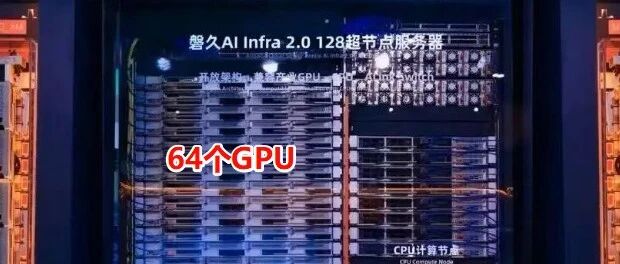
Core Viewpoint - The article provides a detailed comparison of Alibaba's super node with NVIDIA's NVL72 and Huawei's CM384, focusing on GPU count, interconnect technology, power consumption, and ecosystem compatibility. Group 1: GPU Count - Alibaba's super node, known as "Panjun," utilizes a configuration of 128 GPUs, with each of the 16 computing nodes containing 4 self-developed GPUs, totaling 16 x 4 x 2 = 128 GPUs [4] - In contrast, Huawei's CM384 includes 384 Ascend 910C chips, while NVIDIA's NVL72 consists of 72 GPUs [7] Group 2: Interconnect Technology - NVIDIA's NVL72 employs a cable tray interconnect method using NVLink proprietary protocol [8] - Huawei's CM384 also uses cable connections between multiple racks [10] - Alibaba's super node features an orthogonal interconnect without a backplane, allowing for direct connections between computing and switch nodes, reducing signal transmission loss [12][14] Group 3: Power and Optical Connections - NVIDIA's NVL72 uses copper for scale-up connections, while Huawei's CM384 employs optical interconnects, leading to higher costs and power consumption [15] - Alibaba's super node uses electrical interconnects for internal scale-up, with some connections made via PCB and copper cables, while optical interconnects are used between two ALink switches [18][19] Group 4: Parameter Comparison - Key performance metrics show that NVIDIA's GB200 NVL72 has a BF16 dense TFLOPS of 2,500, while Huawei's CM384 has 780, indicating a significant performance gap [21] - The HBM capacity for NVIDIA's GB200 is 192 GB compared to Huawei's 128 GB, and the scale-up bandwidth for NVIDIA is 7,200 Gb/s while Huawei's is 2,800 Gb/s [21] Group 5: Ecosystem Compatibility - Alibaba claims compatibility with multiple GPU/ASICs, provided they support the ALink protocol, which may pose challenges as major manufacturers are reluctant to adopt proprietary protocols [23] - Alibaba's GPUs are compatible with CUDA, providing a competitive advantage in the current market [24] Group 6: Supply Chain Insights - In the AI and general server integration market, Inspur holds a 33%-35% market share, while Huawei's share is 23% [33] - For liquid cooling, Haikang and Invec are key players, each holding 30%-40% of the market [35] - In the PCB sector, the number of layers has increased to 24-30, with low-loss materials making up over 60% of the composition, significantly increasing the value of single-card PCBs [36]


华为发布全球最强超节点和集群;华为徐直军:明年Q1推出昇腾950PR,采用了华为自研HBM——《投资早参》
Mei Ri Jing Ji Xin Wen· 2025-09-18 23:53
Market News - US stock indices closed higher, with the Dow Jones up 0.27%, Nasdaq up 0.94%, and S&P 500 up 0.48% [1] - International precious metal futures generally declined, with COMEX gold futures down 1.07% at $3678.2 per ounce and COMEX silver futures down 0.12% at $42.1 per ounce [1] - International oil prices slightly decreased, with WTI crude oil down 0.61% at $63.31 per barrel and Brent crude oil down 0.71% at $66.98 per barrel [1] - European stock indices all rose, with Germany's DAX up 1.35%, France's CAC40 up 0.87%, and the UK's FTSE 100 up 0.21% [1] Industry Insights - Huawei's Connect 2025 conference highlighted the importance of supernodes in AI infrastructure, with over 300 CloudMatrix 384 supernodes deployed [2] - Huawei plans to launch the Atlas 950 SuperPoD with a computing power of 8192 cards by Q4 2026 and the Atlas 960 SuperPoD with 15488 cards by Q4 2027 [2] - The supernode technology aims to overcome traditional cluster performance bottlenecks, supporting trillion-parameter model training and inference [3] - Huawei's self-developed low-cost HBM (High Bandwidth Memory) is expected to double computing power annually, enhancing AI server capabilities [4] - A new hydrogen negative ion prototype battery developed by the Dalian Institute of Chemical Physics could significantly impact large-scale energy storage and hydrogen applications [5] - The hydrogen energy market is projected to reach 4 trillion yuan by 2030, driven by technological breakthroughs and policy support [6]