scaleX640超节点

Search documents
曙光数创:受益scaleX640超节点大规模部署,2025年营收同比+74.29%
KAIYUAN SECURITIES· 2026-03-24 10:25
Investment Rating - The investment rating for the company is "Outperform" (maintained) [2][4] Core Insights - The company is expected to benefit from the large-scale deployment of the scaleX640 super node, with projected revenue growth of 74.29% year-on-year for 2025, reaching 882 million yuan [4][5] - The company's net profit attributable to shareholders is forecasted to decline by 40.64% year-on-year to 36 million yuan in 2025, while the non-recurring net profit is expected to increase by 46.67% to 31.82 million yuan [4] - The report highlights the rapid increase in revenue from immersion liquid cooling infrastructure products, which grew by 370.58% year-on-year, and cold plate liquid cooling products, which increased by 40.01% [5] Financial Summary - The total revenue for 2023 is reported at 650 million yuan, with a projected decline to 506 million yuan in 2024, followed by a significant increase to 882 million yuan in 2025 [8] - The gross profit margin is expected to decrease from 31.4% in 2023 to 25.6% in 2025, before recovering to 31.3% by 2027 [9] - The earnings per share (EPS) are projected to be 0.18 yuan in 2025, with a corresponding price-to-earnings (P/E) ratio of 385.7 times [4][8]
曙光数创(920808):受益scaleX640超节点大规模部署,2025年营收同比+74.29%
KAIYUAN SECURITIES· 2026-03-24 08:44
Investment Rating - The investment rating for the company is "Outperform" (maintained) [2] Core Insights - The company is expected to benefit from the large-scale deployment of the scaleX640 super node, with projected revenue growth of 74.29% year-on-year for 2025, reaching 882 million yuan. However, the net profit attributable to the parent company is expected to decline by 40.64% to 36 million yuan [4] - The company has successfully commercialized immersion phase change liquid cooling technology, with over 20 data centers deployed using this technology. Revenue from immersion liquid cooling infrastructure products increased by 370.58% year-on-year, contributing to the overall revenue growth [5] - The high-voltage direct current (HVDC) power supply system has a high technical barrier and complements the company's liquid cooling technology, enhancing product competitiveness and customer loyalty [6] Financial Summary - Revenue projections for 2025-2027 are adjusted to 36 million, 55 million, and 99 million yuan respectively, with corresponding EPS of 0.18, 0.28, and 0.49 yuan. The current stock price corresponds to P/E ratios of 385.7, 255.3, and 142.1 times for the respective years [4] - The financial summary indicates that the company expects revenue of 882 million yuan in 2025, with a year-on-year growth of 74.3%. The gross margin is projected to be 25.6% in 2025, with a net margin of 4.1% [8][9]
再融资新政后沪市首单 中科曙光拟发不超80亿可转债
Sou Hu Cai Jing· 2026-02-10 23:40
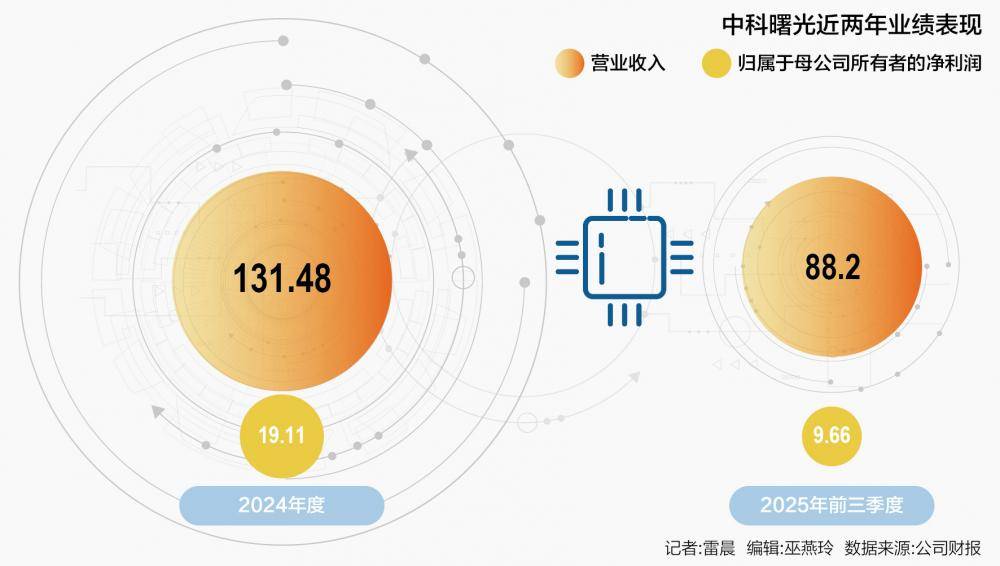
Core Viewpoint - The issuance of convertible bonds by Zhongke Shuguang, amounting to up to 8 billion yuan, marks the first proposal following the new refinancing policy in the Shanghai market, aimed at supporting high-quality listed companies in innovation and development [1][2]. Group 1: Financing and Investment - Zhongke Shuguang plans to use the funds raised from the convertible bonds entirely for three core AI computing projects: advanced computing cluster systems, AI training and inference integrated machines, and domestic storage systems [1][3]. - The company has successfully developed the scaleX640 super node, achieving high-speed interconnection with 640 cards in a single cabinet, and has overcome key technologies related to high-speed interconnection and tight coupling of storage and computing [3][4]. - The next-generation high-performance AI training and inference integrated machine aims to address the challenges of deploying AI in various industries, providing a fully optimized solution that reduces deployment barriers and long-term operational costs [3][4]. Group 2: Market Context and Demand - The global AI computing demand is surging, with the AI server market expected to grow from approximately $125.1 billion in 2024 to $158.7 billion in 2025, while China's market is projected to reach $25.9 billion, reflecting a year-on-year growth of 36.32% [9]. - The national strategy emphasizes the need for domestic innovation in storage systems, which are critical for AI's large-scale development, focusing on performance, latency, concurrency, and reliability [4][9]. Group 3: Financial Performance and Projections - For the first three quarters of 2025, Zhongke Shuguang reported revenues of 8.82 billion yuan and a net profit of 966 million yuan, with a projected net profit of approximately 2.465 billion yuan for the full year, indicating a year-on-year growth of 28.99% [6][7]. - The company’s asset-liability ratio is expected to decrease post-issuance of the convertible bonds, leading to an improved financial structure [5][6]. - Research and development expenses are projected to reach 1.292 billion yuan in 2024, accounting for 9.83% of revenue, reflecting the company's commitment to innovation [7]. Group 4: Technological Advancements - The advanced storage system developed by Zhongke Shuguang has achieved industry-leading performance metrics, including millions of IOPS and sub-millisecond latency, which are essential for handling large-scale AI data processing [4][10]. - The company’s AI computing cluster has been successfully deployed, supporting over 400 mainstream models and achieving significant breakthroughs in AI for scientific research [10].


再融资新政后沪市首单!中科曙光拟发不超80亿可转债
2 1 Shi Ji Jing Ji Bao Dao· 2026-02-10 09:32
Core Viewpoint - The issuance of convertible bonds by Zhongke Shuguang is a significant step following the new refinancing policy, aimed at supporting high-quality listed companies in innovation and development [1][2]. Group 1: Convertible Bond Issuance - Zhongke Shuguang plans to issue up to 8 billion yuan in convertible bonds, with a six-year term, to fund three core AI computing projects [1][3]. - The bond issuance serves as a demonstration of the new refinancing policy's implementation, highlighting the support for quality companies [2]. Group 2: AI Computing Projects - The advanced computing cluster project aims to enhance system performance and reduce reliance on external technologies, addressing the challenges posed by the evolution of AI large models [3]. - The next-generation AI training and inference integrated machine project is designed to overcome deployment challenges in the industry, providing a fully optimized solution [3]. - The storage system project focuses on achieving domestic production of key technologies, which is crucial for the large-scale development of AI [4]. Group 3: Financial Metrics and Projections - For the first three quarters of 2025, Zhongke Shuguang reported revenues of 8.82 billion yuan and a net profit of 966 million yuan, with a projected net profit of approximately 2.465 billion yuan for 2025, reflecting a growth of 28.99% [7]. - The company’s asset-liability ratio is expected to decrease post-issuance, improving its financial structure [6]. - The company has increased its R&D investment, with R&D expenses reaching 1.292 billion yuan in 2024, accounting for 9.83% of revenue [7]. Group 4: Market Trends and Industry Outlook - The global AI computing demand is surging, with the AI server market projected to grow from 125.1 billion USD in 2024 to 158.7 billion USD in 2025, while China's market is expected to reach 25.9 billion USD, a year-on-year increase of 36.32% [10]. - The industry is anticipated to maintain a positive growth trajectory over the next 5 to 10 years, driven by technological advancements and the expansion of application scenarios [10]. - Zhongke Shuguang's recent deployment of a 30,000-card domestic AI computing pool marks a significant milestone in the large-scale application of domestic AI computing technology [10][11].
首单出炉!千亿超算龙头推80亿元再融资
Shang Hai Zheng Quan Bao· 2026-02-10 00:26
Core Viewpoint - The company, Zhongke Shuguang, is raising up to 8 billion yuan through convertible bonds to fund advanced AI computing projects, marking a significant step in the domestic AI infrastructure development [2][5]. Group 1: Investment Projects - The advanced computing cluster system project for AI will receive an investment of 3.5 billion yuan, focusing on developing next-generation hardware systems and unified management of various computing hardware [3][5]. - The next-generation high-performance AI training and inference machine project will be allocated 2.5 billion yuan, consisting of four main modules aimed at integrating AI technology into the real economy [3][5]. - The domestic advanced storage system project will invest 2 billion yuan, based on domestic processor chips and core components [3][5]. Group 2: Strategic Importance - The refinancing initiative is expected to help the company leverage the latest trends in the AI industry, enhancing its technological and product leadership in the computing infrastructure sector [5][6]. - The company aims to accelerate the localization process in computing infrastructure, achieving high-level technological self-reliance and building a competitive edge in domestic computing capabilities [5][6]. Group 3: Recent Developments - Recently, the company launched the largest domestic AI computing pool, with three sets of supercomputing systems going live, marking a significant breakthrough in the practical application of domestic AI computing infrastructure [6][8]. - The company introduced the world's first single-cabinet 640-card super node, scaleX640, which is designed to lower the barriers for AI cluster development and promote a new ecosystem for computing that is both autonomous and open [8].
国产AI算力里程碑时刻:中科曙光3套scaleX万卡超集群落地,国产最大AI算力池投入运营
Hua Er Jie Jian Wen· 2026-02-06 10:57
Core Insights - The National Supercomputing Internet Core Node has launched in Zhengzhou, marking the first operational deployment of a 30,000-card domestic AI computing pool in China [1] - The scaleX 10,000-card super cluster is a significant advancement in AI computing, achieving a 20-fold increase in cabinet-level computing density and a 30% to 40% performance improvement for MoE trillion-parameter model training and inference [1][2] - The scaleX640 super node, which supports multi-brand acceleration cards and is compatible with mainstream computing ecosystems, aims to lower the R&D threshold for AI clusters and avoid redundant investments [2] Technological Advancements - The scaleX640 super node features an "open architecture" that enhances communication speed and reduces latency, enabling the formation of thousand-card computing units [1][2] - The supercomputing pool supports various large-scale AI computing scenarios, including trillion-parameter model training, high-throughput inference, and AI for Science applications, significantly improving research efficiency in fields like protein studies [2] Future Developments - The company plans to establish an Advanced Computing Technology Research Institute in Zhengzhou, with a 160,000 square meter R&D space and an initial goal of gathering 1,000 researchers focused on AI and high-performance computing applications [3]
国产AI算力里程碑时刻:中科曙光3套scaleX万卡超集群落地,最大国产AI算力池投入运营
Shang Hai Zheng Quan Bao· 2026-02-06 08:42
Core Insights - The National Supercomputing Internet Core Node has launched in Zhengzhou, marking the first operational deployment of a 30,000-card domestic AI computing pool in China [1] - The scaleX 10,000-card supercluster has achieved a significant milestone in AI computing, with a 20-fold increase in cabinet-level computing density and a 30% to 40% performance improvement for MoE trillion-parameter model training and inference scenarios [1][2] - The scaleX640 super node, which supports multi-brand acceleration cards and is compatible with mainstream computing ecosystems, aims to lower the R&D threshold for AI clusters and avoid redundant investments [2] Technological Advancements - The scaleX640 super node features an "open architecture" that enhances high-bandwidth, low-latency communication domains, enabling the formation of thousand-card computing units [1][2] - The supercomputing pool supports various large-scale AI computing scenarios, including trillion-parameter model training, high-throughput inference, and AI for Science applications, significantly improving research efficiency in fields like protein studies [2] Future Plans - The company plans to establish an Advanced Computing Technology Research Institute in Zhengzhou, with a 160,000 square meter R&D space and an initial goal of gathering 1,000 researchers focused on AI and high-performance computing applications [3] - The company aims to deepen technology research and application practices to provide more efficient, stable, and inclusive domestic intelligent computing services across various sectors of economic and social development [3]
海光终止合并中科曙光 国产算力产业协作未歇
Zhong Guo Jing Ying Bao· 2025-12-20 14:31
Core Viewpoint - The merger between Haiguang Information and Zhongke Shuguang has been officially terminated due to the large scale of the transaction, involvement of multiple parties, and significant changes in the market environment since the initial planning phase [1][3][4]. Group 1: Merger Details - The merger was initially announced in late May, with plans for Haiguang Information to acquire Zhongke Shuguang through a share swap, potentially exceeding a transaction scale of 100 billion yuan [3]. - The proposed share swap ratio was set at 0.5525:1, with Haiguang's share price at 143.46 yuan and Zhongke's at 79.26 yuan, leading to a total asset transaction value of 1159.67 billion yuan [3][4]. - Following the announcement, both companies experienced significant stock price increases, with Haiguang reaching a peak of 277.98 yuan and Zhongke hitting 128.12 yuan, resulting in a combined market value exceeding 650 billion yuan [4]. Group 2: Market Environment and Challenges - The termination of the merger is attributed to the complexities of integrating large-scale assets and the rapid technological evolution in the computing power industry, which may have led to missed opportunities [4][5]. - The market environment has changed dramatically, with intensified competition from companies like Huawei and Cambrian, and new policies promoting diverse and heterogeneous computing power integration [5][6]. - The independent growth potential for leading companies in the sector has increased, suggesting that the benefits of merging may not outweigh the need for agility in responding to market demands [6]. Group 3: Future Collaboration and Industry Trends - Despite the merger's termination, both companies are expected to maintain long-term collaborative relationships, focusing on their respective strengths in high-end CPU and DCU chip design [1][7]. - The domestic AI model training and inference market is projected to drive significant demand for accelerated servers, with the market expected to reach approximately 16 billion USD by mid-2025, reflecting over 100% year-on-year growth [2][7]. - The collaboration landscape in the domestic computing power industry is evolving, with companies exploring various cooperative models to build a self-sufficient ecosystem, driven by policy incentives and market demands [7][8].

昂瑞微登陆科创板 上市首日涨160%
Xin Lang Cai Jing· 2025-12-16 13:11
Group 1: Company Announcements - Haiyou New Materials plans to establish a wholly-owned subsidiary and invest 300 million yuan in a polymer special adhesive film production project in Chengdu, which aims to optimize resource allocation and production capacity layout [4] - Dekeli's board member plans to reduce holdings by no more than 100,000 shares, representing a reduction of 0.0632% of the company's total shares [5] - Saiwei Microelectronics announced that its actual controller and associated parties plan to reduce their holdings by no more than 1% of the company's total shares [3] Group 2: Technology Developments - Zhongke Shuguang has launched the world's first single-cabinet 640-card super node scaleX640, which can be combined to form a thousand-card computing unit, achieving a 20-fold increase in computing density compared to traditional solutions [5] - Haiguang Information's Haiguang DCU has over 99% operator coverage, compatible with CUDA, and supports a wide range of model training and inference scenarios [5] Group 3: Market Reactions - The Hang Seng Technology Index experienced a significant drop, with major companies like Alibaba, Tencent, JD.com, and Meituan seeing increased declines due to rumors regarding stricter tax recognition for high-tech companies [2] - Xpeng Motors has obtained an L3 autonomous driving road test license in Guangzhou, marking a step towards regular L3 road testing [2] Group 4: Financing Activities - Jiangfan Guizhi completed nearly 100 million yuan in Pre-A round financing to advance the production line construction and technology iteration of silicon-carbon anode materials [6] - Benait completed several million yuan in A++ round financing, focusing on the development and production of silicon-based liquid crystal optical devices [7] - Aosaire Biopharmaceutical completed several million yuan in Pre-A round financing to support the development of new imaging contrast agents and integrated therapeutic drugs [9]


国产芯片的2025:从“能用”到“好用”的临界点
经济观察报· 2025-12-07 04:31
Core Viewpoint - The domestic chip industry in China is undergoing significant transformation, moving from a perception of being "stuck" or "ineffective" to showcasing advancements and capabilities by 2025 [1][3]. Group 1: Consumer Electronics and Automotive - The gaming performance of domestic processors is improving, with the Haiguang C86 processor achieving frame rates of nearly 200 and 300 for major games, indicating readiness for high-performance gaming [2][3]. - The Haiguang C86 processor, featured in the "Black Warrior·Hunting Blade Pro" gaming PC, has a base frequency of 2.8GHz and supports PCIe 5.0, demonstrating its capability to handle high-load tasks [5][6]. - The GAC Aopao GT "Climbing Edition" achieved 100% domestic chip design, utilizing the RK3588M chip for its intelligent cockpit, showcasing the reliability and performance of domestic chips in high-end vehicles [12][13]. Group 2: Storage and Memory Chips - Changxin Storage launched DDR5 products with speeds up to 8000Mbps, marking a significant advancement for domestic manufacturers in the high-end memory market [9][10]. - The introduction of DDR5 technology represents a leap from DDR4, with performance improvements and the ability to address high-frequency signal interference [10][11]. - Longjiang Storage's TiPlus7100s SSD achieved read speeds of 7400MB/s and write speeds of 6900MB/s, indicating competitive performance against international brands [11]. Group 3: AI and Computing Power - The exit of international giants from the AI chip market has created opportunities for domestic companies, with Cambrian Technologies reporting a 1332.52% year-on-year revenue increase in Q3 2025 [15][16]. - Domestic firms are adopting "super node" technology to enhance computing power by integrating multiple AI acceleration cards into a single cabinet, addressing performance bottlenecks in large model training [17][18]. - The demand for storage has shifted from being a cost component to a strategic asset, with significant implications for the supply chain and market dynamics [18][19]. Group 4: Semiconductor Manufacturing and Equipment - Domestic companies are making strides in semiconductor manufacturing equipment, with the shipment of a 350nm lithography machine that supports the production of power devices and RF chips [23][24]. - The development of high-speed oscilloscopes and EDA tools is filling critical gaps in the chip design and testing process, enhancing the capabilities of domestic semiconductor firms [25][26]. - The Chinese semiconductor industry is transitioning from "point breakthroughs" to "chain collaboration," indicating a shift towards more integrated and cooperative development efforts [20][27].