软件定义汽车(SDV)

Search documents
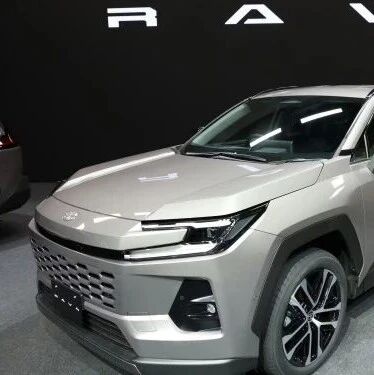
丰田新车投入周期将从7年延长至9年
日经中文网· 2025-11-18 03:05
Group 1 - Toyota is extending the average full model change cycle for its main models from 7 years to 9 years, focusing on electric vehicle development and software updates to maintain vehicle value [2][4] - The recent update of the SUV "RAV4" marks the first major update in about 7 years, with plans for a new model to be launched in the 2025 fiscal year [4] - The shift to a longer model cycle aims to avoid rapid price declines associated with frequent new model releases, allowing for better resale value of used cars [5] Group 2 - The introduction of software-defined vehicles (SDVs) allows for performance enhancements without the need for new hardware installations, potentially changing the business model for comprehensive updates [4] - Toyota's adjustment in the sales cycle may impact the pricing strategies for dealers, as the wholesale prices will be set flexibly based on model and sales conditions, rather than decreasing over time [5] - The change in model cycles could also affect material suppliers, such as steel manufacturers, as there may be increased trends in using new materials for partial updates [5]


丰田销量强劲上调业绩预期,但半导体风险仍在
日经中文网· 2025-11-06 08:00
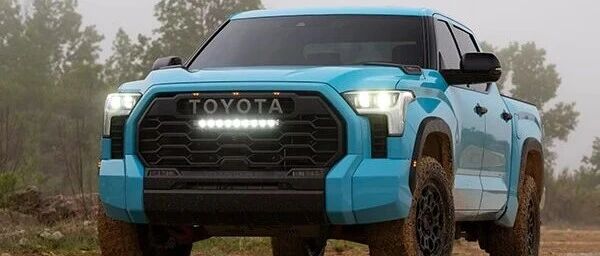
Core Viewpoint - Despite the heavy burden of U.S. auto tariffs, Toyota's balanced development and sales strategy in major regions like China and Europe has proven effective. However, risks remain in semiconductor and rare earth procurement [1][12]. Financial Forecast - For the fiscal year ending March 2026, Toyota forecasts a consolidated net profit of 2.93 trillion yen, a 39% year-on-year decline, which is an upward revision from the previous estimate of 2.66 trillion yen (44% decline) [1]. - Sales are expected to grow by 2% to 49 trillion yen, while operating profit is projected to decrease by 29% to 3.4 trillion yen, with upward adjustments of 500 billion yen and 200 billion yen respectively [3]. Regional Performance - Toyota's sales strategy has led to a balanced revenue structure across regions, with North America accounting for only 28% of total sales, lower than competitors like General Motors (56%) and Honda (47%) [8]. - In North America, local production increases have supported the launch of models like the Tundra and Tacoma, tailored to local demand [8]. - Sales in India increased by 14% to 160,000 units, while sales in Indonesia decreased by 18% to 120,000 units, with other regions providing effective support [8]. Production and Efficiency - The introduction of the Toyota New Global Architecture (TNGA) has improved production efficiency, reducing equipment investment and development time by 25% and vehicle costs by 10% compared to pre-TNGA levels [11]. - For the first half of the fiscal year, Toyota reported a 6% increase in sales to 24.63 trillion yen, with a 7% decline in net profit to 1.77 trillion yen, and a global sales increase of 5% to 5.26 million units, marking a historical high [11]. Supply Chain Risks - The automotive supply chain faces increased disruption risks amid U.S.-China tensions, particularly concerning semiconductor shortages, which are critical for production [12]. - The CFO expressed awareness of potential risks from U.S. economic policies, despite currently not seeing direct impacts [13]. Investment and Future Strategy - Toyota plans to continue significant investments in the U.S., with a recent announcement of an additional $88 million investment in a West Virginia plant, indicating a commitment to local production [14]. - The company is also focusing on software-defined vehicles (SDVs) and must prioritize advancements in autonomous driving technology to remain competitive [14].
HERE Technologies 与高德达成战略合作,携手为全球中国车企提供下一代AI导航解决方案
Globenewswire· 2025-11-03 01:00
Core Insights - HERE Technologies and Amap (a subsidiary of Alibaba Group) have formed a strategic partnership to develop advanced AI-driven navigation and digital cockpit solutions for Chinese automotive brands [1][8] - The collaboration aims to accelerate the global deployment of software-defined vehicles (SDVs) by leveraging HERE's AI mapping technology and Amap's deep integration within the Chinese automotive ecosystem [2][4] Group 1: Strategic Collaboration - The partnership will provide a globally optimized navigation technology architecture tailored for SDVs, setting a new benchmark for connected intelligent mobility [2] - HERE's unified mapping architecture will serve as a single data source for various in-vehicle functions, integrating automotive-grade maps and location services [3] Group 2: Market Impact - The collaboration is expected to enhance safety, reliability, and personalization for over 30 leading Chinese automotive brands, supporting their global expansion efforts [4] - HERE has established long-term relationships with key system suppliers in China since entering the market in 2002, providing scalable and high-performance navigation and advanced digital cockpit experiences [4] Group 3: Future Prospects - Both companies will continue to explore opportunities for deeper collaboration in navigation and location-based services to support the ongoing evolution of global smart mobility [4] - Amap's Vice President highlighted the trust and long-term relationship as the foundation for this partnership, emphasizing HERE's proven innovation capabilities and global reach [4]

QNX全球调研:中国汽车软件开发者展现韧性优势
Huan Qiu Wang· 2025-10-17 01:47
Core Insights - The report by BlackBerry's QNX highlights the evolving landscape of Software Defined Vehicles (SDV) development, emphasizing the unique resilience and forward-thinking nature of the automotive software development ecosystem in China [1][2]. Regulatory Environment - The global regulatory landscape is tightening, with over 500 new regulations related to in-vehicle technology expected in 2024 [2]. - Approximately 33% of global respondents reported that development progress is hindered by evolving compliance requirements, particularly in areas like cybersecurity, software updates, data privacy, and functional safety [2]. - In contrast, 51% of Chinese developers indicated that regulatory upgrades have not slowed their development cycles, significantly higher than the global average of 25% [2]. Impact of Software Recalls - 67% of Chinese respondents reported not experiencing significant disruptions in their development processes due to software recalls, showcasing a higher resilience compared to global counterparts [3]. - This resilience is attributed to a robust automotive industry cluster in China that allows for quick collaboration across the supply chain [3]. Development Bottlenecks - Global developers identified long development cycles (37%), testing difficulties (36%), and integration complexity (36%) as major challenges [4]. - Only 30% of respondents rated the current development environment as "excellent" in terms of productivity [4]. - The gap between consumer expectations and software delivery timelines is widening, with 52% attributing this to regulatory delays [4]. Shift Towards Application Innovation - 80% of global developers believe that OEMs should shift focus from infrastructure to application layer innovation, with 84% of Chinese developers agreeing [5]. - 93% of developers globally consider cross-industry collaboration crucial for their current projects, with half strongly supporting collaborative development [5]. Role of AI and Automation - Developers globally are optimistic about the role of AI in automotive software, with 94% of Chinese respondents believing AI will play an important role [6]. - 70% of Chinese developers expect AI to have a "significant impact" on the development process, while 24% foresee it as a "transformative force" [7]. QNX's Commitment - QNX aims to support automakers in navigating changes and accelerating innovation, providing safer and smarter vehicles [7]. - The company is trusted by global clients, including major automotive brands, to deliver foundational software that supports various advanced vehicle systems [7].

车用RISC-V芯片,英飞凌最新分享
半导体芯闻· 2025-10-09 09:49
Core Insights - Infineon Technologies is leading the automotive semiconductor market with a 13.5% market share in 2024, as reported by TechInsights [1] - The company is also ranked first in the microcontroller market for 2024 according to Omdia [1] - Infineon's president, Hajime Kobe, emphasized the company's global market presence and diversified sales strategy [1] Group 1: RISC-V Development - Infineon is developing products based on RISC-V architecture to align with the trend of Software Defined Vehicles (SDV) [4] - The company aims to build a RISC-V ecosystem, with a focus on collaboration and community development [8] - Infineon's vice president, Takashi Goto, highlighted the advantages of open computing platforms, stating that RISC-V allows developers to innovate beyond vendor constraints [6] Group 2: Ecosystem and Market Interest - The RISC-V ecosystem is rapidly evolving, but there are concerns regarding compatibility among IP suppliers, as noted by Pedro Lopez Estepa from Quintauris [10] - Infineon is actively engaging with Japanese tier-one manufacturers, who have shown significant interest in automotive RISC-V microcontrollers [13] - The company is committed to continuous improvement of RISC-V products based on customer feedback [13]

2025MID峰会洞见未来全球智能汽车发展
Zhong Guo Qi Che Bao Wang· 2025-10-09 02:34
Group 1 - The 2025 Mobility Intelligence Dialogue (MID Summit) focuses on the future development of smart vehicles, emphasizing the importance of collaboration in the automotive industry to address challenges and promote intelligent, connected, electric, and sustainable development [1][3] - The global automotive industry is at a critical stage characterized by both uncertainty and opportunity, with geopolitical fluctuations and trade policy adjustments posing challenges, while trends in electrification and connectivity continue to drive long-term growth [3][5] - By 2025, global automotive sales are projected to reach 90 million units, increasing to 95 million units by 2030, primarily driven by the penetration of new energy vehicles and the release of demand in emerging markets [3] Group 2 - China's automotive industry is highlighted as a key player in the global transition, with its export growth and leadership in new energy vehicles drawing significant attention [3][4] - Although China's new energy vehicle exports are growing, challenges remain due to the limited scale of emerging markets, necessitating further expansion into mature markets like Europe and North America [4] - The commercialization path of Software Defined Vehicles (SDVs) is a major focus, with global connected vehicle market size expected to grow from 56 million units in 2023 to 77 million units by 2030, with a penetration rate increasing from 68% to 85% [5][6] Group 3 - The shift from "selling cars" to "selling services" represents a key transformation in the business model for automotive companies, with software services becoming a significant source of high-margin, recurring revenue [6] - China is positioned to lead in the SDV market, with nearly one-third of new vehicles expected to reach L4 or L5 levels by 2037, supported by policy, technological advancements, and data accumulation [6] - China has established a comprehensive advantage in the power battery sector, with solid-state batteries expected to revolutionize range and reliability, potentially achieving vehicle validation next year [6]

ADI开源GMSL背后:打的什么算盘?
半导体行业观察· 2025-10-05 02:25
Core Insights - The integration of software into various aspects of automobiles has been ongoing since the late 1960s, enhancing driving experiences and safety [2] - The current trend focuses on reducing the number of Electronic Control Units (ECUs) by consolidating functions into a central computer, which can lead to a 70% reduction in cable usage [2][5] - The concept of "vehicle learning" is emerging, where vehicles share insights from their sensors with the cloud for deeper analysis, improving safety and intelligence [3] Group 1: Software-Defined Vehicles (SDVs) - The ideal hardware architecture for SDVs allows maximum data acquisition for each function, utilizing a unified communication protocol across the vehicle [5] - Modern vehicle headlights can automatically adjust based on various data inputs, showcasing the interconnected nature of automotive functions [5][6] - The key to achieving cost-effective SDVs lies in networking, regional aggregation, and a central computing unit acting as an onboard "server" [6] Group 2: Consumer Demand and Industry Standards - There is a growing consumer demand for immersive in-car experiences, necessitating more sensors and higher resolution displays [8] - The establishment of the OpenGMSL Association aims to develop interoperable open standards to shape the future of automotive video and high-speed connectivity technologies [8] Group 3: Connectivity Technologies - Connectivity technologies are categorized into serial links and networks, with serial buses being cost-effective but limited in networking capabilities [9][11] - Automotive Ethernet has emerged as a flexible data transmission technology, capable of routing data to any location, albeit with higher complexity [11][12] Group 4: Future Trends and Integration - There is an anticipated trend towards the fusion of technologies, where serial buses may adopt Ethernet advantages and vice versa [15][17] - The successful integration of these technologies will lead to a unified architecture for SDVs, enhancing user experience and operational efficiency for manufacturers [19]


星环OS通信总线介绍
理想TOP2· 2025-09-11 06:05
Core Viewpoint - The article emphasizes the importance of the Vehicle Bus System (VBS) as a digital nervous system for smart vehicles, providing a unified protocol and efficient transmission mechanism to enhance reliability and security in automotive communication [3][4]. Group 1: Overview of the Communication Bus - The VBS is designed as an efficient data interaction communication platform for smart vehicles, enabling real-time and reliable information channels for various services such as autonomous driving and active safety [4]. Group 2: Background of the Communication Bus - The development of VBS is driven by the need to address the limitations of traditional distributed ECU architectures in the face of rapid electrification, intelligence, and connectivity in vehicles. Key goals include improving development efficiency and reducing costs through standardized protocols and self-developed technologies [6]. - The VBS aims to enhance product competitiveness by optimizing resource usage, reducing communication latency, and allowing for deep customization to meet specific automotive requirements [6]. Group 3: Technical Architecture of the Communication Bus - The VBS employs a "protocol unification + hardware independence" architecture, facilitating deep collaboration across various vehicle domains without the need for multiple protocol translations [9]. - The system supports multiple communication modes and provides a multi-language SDK, ensuring flexibility and adaptability in various deployment scenarios [11]. Group 4: Core Technical Features of the Communication Bus - The VBS features self-decision transmission, allowing it to adapt to various transmission media, thereby simplifying the development process and reducing costs [13]. - Enhanced reliability mechanisms are implemented, including end-to-end verification and redundancy in transmission, ensuring critical commands reach their destination reliably [15]. - The system is designed to minimize resource overhead, allowing for a higher number of deployable services on resource-constrained devices [15]. Group 5: Security Enhancements - The VBS incorporates a multi-layered security framework, including device-level authentication, application-level permissions, and session-level data encryption to safeguard against unauthorized access and data breaches [20][22]. Group 6: Typical Application Scenarios - The VBS connects various subsystems within the vehicle, enabling data sharing and collaboration essential for overall vehicle intelligence, including applications in assisted driving and smart cockpit systems [21][22]. Group 7: Conclusion - The VBS is positioned as a critical component in the evolution of automotive electronic architectures, supporting the transition to software-defined vehicles and enhancing the overall intelligent and personalized driving experience [22].

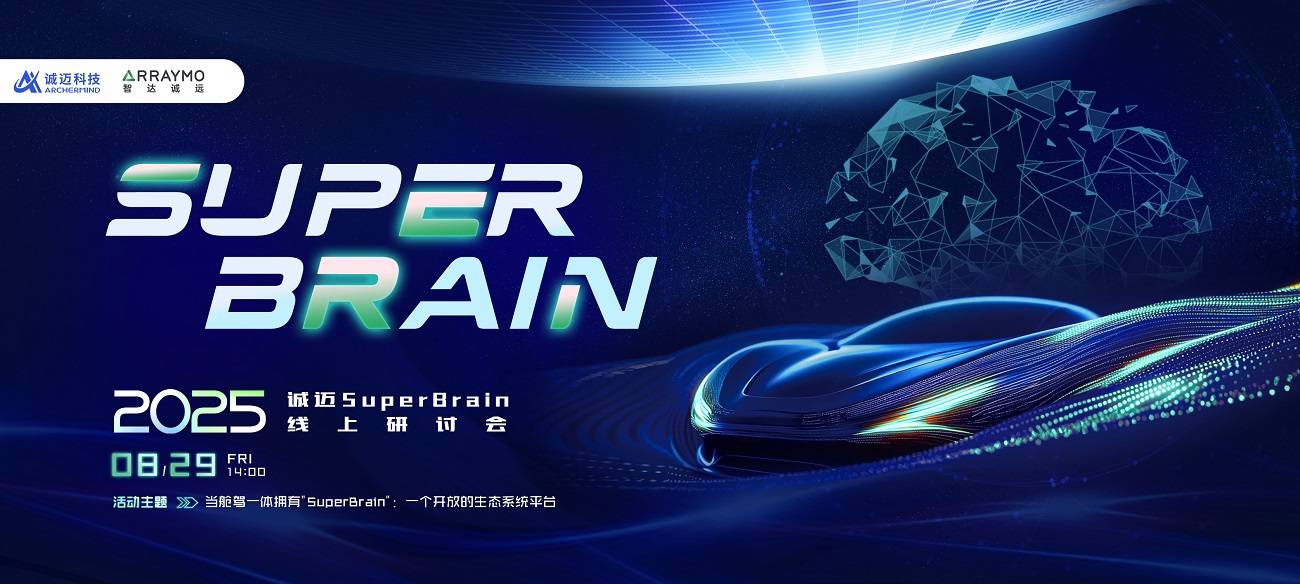
诚迈科技发布SuperBrain平台,携手伙伴加速舱驾一体量产落地
Quan Jing Wang· 2025-08-30 03:55
Core Insights - The article discusses the successful hosting of the 2025 Chengmai SuperBrain online seminar, focusing on the theme of "integrating cockpit and driving with 'SuperBrain': an open ecosystem platform" [1] - Chengmai Technology launched the cockpit-driving integration production accelerator "SuperBrain platform," aimed at promoting the implementation of cockpit-driving integration [1][3] Industry Trends - The automotive industry is transitioning from distributed electronic architectures to domain control architectures, ultimately moving towards a central computing platform to address challenges such as long R&D cycles and insufficient hardware-software collaboration [3] - Cockpit-driving integration is identified as a key path to reduce costs and enhance efficiency by sharing computing power and building a unified software platform [3] Company Developments - Chengmai Technology has over ten years of experience in the smart automotive sector, offering mature solutions in smart cockpits, central domain control, and assisted driving [3] - The SuperBrain platform is designed for the next generation of automotive electronic architectures, leveraging established chip solutions from partners like NXP, Qualcomm, NVIDIA, and Horizon [3][5] Product Features - The SuperBrain platform is an integrated intelligent computing platform that supports flexible hardware configuration and continuous software upgrades, enabling real-time data sharing and dynamic computing power allocation [5] - It aims to help clients compress project development cycles and quickly create differentiated functionalities [5] Partner Insights - NXP highlighted the complexity and cost challenges of diverse ADAS architectures and introduced a scalable vehicle computing platform for software-defined vehicles [6] - Continental Group emphasized China's leadership in SDV and EEA evolution, suggesting that global OEMs may adopt strategies from Chinese manufacturers [6] - Nullmax discussed its evolution from independent domain control to integrated cockpit-driving solutions, focusing on AI-driven multi-domain integration for various transportation scenarios [7] Collaborative Efforts - A roundtable discussion among industry leaders reached consensus on the necessity of cross-chip integration and the establishment of unified interface standards as critical for mass production [8] - The launch of the SuperBrain platform marks a significant step for Chengmai Technology in the cockpit-driving integration field, with plans for continued collaboration with global partners to accelerate the large-scale implementation of smart automotive technologies [8]

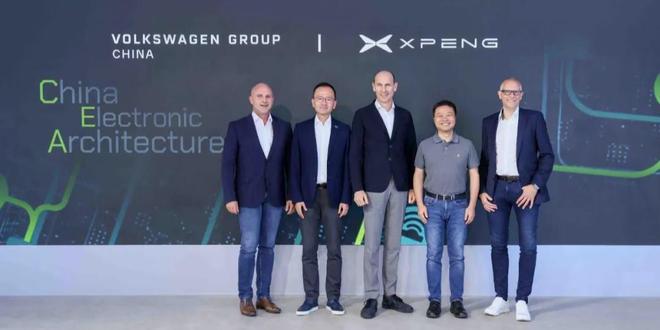
纯电动车难撑局面?大众与小鹏扩大新架构应用范围
Jing Ji Guan Cha Bao· 2025-08-17 23:39
Core Viewpoint - Xiaopeng Motors and Volkswagen Group announced an expansion of their jointly developed Centralized Electronic Architecture (CEA) to include fuel and hybrid vehicles starting in 2027, marking a significant shift in their collaboration [2][4]. Group 1: Collaboration Details - The CEA architecture will be applied to Volkswagen's locally developed electric vehicles and will expand to fuel and hybrid models, enhancing the scale and competitiveness of Volkswagen's offerings in the Chinese market [2][4]. - The first electric vehicle developed under this collaboration is expected to launch in 2026, with a joint development team established in Guangzhou and Hefei [3][4]. - CEA architecture is developed by Volkswagen (China) Technology Co., CARIAD China, and Xiaopeng Motors, with CARIAD playing a crucial role in integrating advanced driver assistance systems and smart cockpit software [3][5]. Group 2: Market and Technical Implications - The shift to CEA architecture is seen as a response to the need for technological iteration, market competition, and industry transformation, as traditional fuel vehicles face declining sales [4][5]. - The centralized control architecture simplifies system complexity and reduces costs, enabling faster iterations for software-defined vehicles, which is essential for Volkswagen's transition from a distributed architecture [5][6]. - Volkswagen's current performance in the Chinese market shows a low penetration of electric vehicles, with only about 20,000 units delivered in 2024, indicating a need for improved competitiveness in the growing EV market [6][7]. Group 3: Strategic Benefits - By expanding the CEA architecture, Volkswagen aims to enhance the digital capabilities of its entire vehicle lineup, allowing for over-the-air updates and better alignment with customer needs [2][5]. - Xiaopeng Motors seeks to leverage Volkswagen's supply chain and production scale to reduce R&D costs and diversify revenue sources, as it continues to face financial challenges [6][7]. - The collaboration allows Xiaopeng to share the costs of electronic and electrical development while gaining access to Volkswagen's global supply chain and market presence [7].