量子力学

Search documents
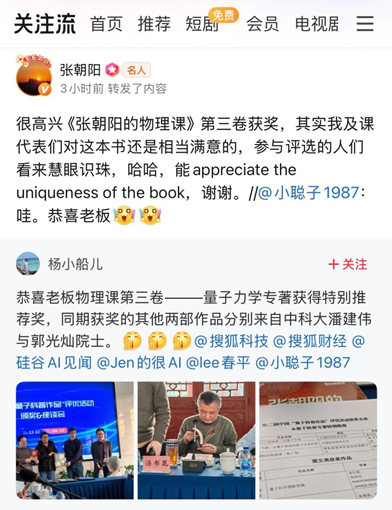
《张朝阳的物理课》第三卷荣获第二届中国“量子科普作品”特别推荐
Xin Lang Cai Jing· 2025-12-24 03:06
Core Viewpoint - The second China "Quantum Science Popularization Works Evaluation Activity" was held, recognizing significant contributions in the field of quantum science communication, with Zhang Chaoyang's book receiving special mention for its depth and rigor in exploring quantum mechanics [1][4]. Group 1: Event Overview - The event was co-hosted by the University of Science and Technology of China and the Chinese Academy of Sciences, showcasing top-tier achievements in quantum technology [1][5]. - Over two years, 180+ popular science works were collected, from which 28 high-quality works were selected for recognition [2][6]. Group 2: Book Highlights - "Zhang Chaoyang's Physics Class Volume 3" focuses on quantum mechanics, providing a detailed exploration of physical images and mathematical methods, guiding readers towards contemporary physics [2][6]. - The book is described as a "hardcore 'physical declaration'" that serves as a precise guide beyond traditional textbooks, offering a unique perspective on quantum mechanics [2][6]. Group 3: Reception and Impact - The book has been recommended by several academicians and is recognized as a valuable resource for exploring the quantum world [3][7]. - It has been noted for its practical and guiding characteristics, providing a complete set of quantum mechanics calculation tools [3][7]. - The award reflects societal support for high-quality science communication and the importance of promoting scientific innovation in the context of national strategic technology [4][7].


“总有一天,中国也会出现自己的爱因斯坦”(序与跋)
Ren Min Ri Bao· 2025-12-18 22:30
Core Insights - The work of physicists Yang Zhenning and Li Zhengdao on parity violation is considered a significant milestone in physics, comparable to the contributions of historical figures like Tartaglia in mathematics, as it showcases the capability of Chinese scientists in achieving world-class scientific results [2] - Yang Zhenning's collaborations with Mills and Wu Da Jun in gauge field theory are highlighted as pivotal contributions that will ensure his legacy in the history of science [2] - Yang Zhenning's passion for mathematics and its beauty is emphasized, portraying him as a physicist with a poetic soul, which attracts admiration even from those outside the field of physics [3] - The influence of Yang Zhenning as a role model is noted, as he has helped change the perception of Chinese scientists regarding their capabilities in science [4] - Yang Zhenning's reflections on the evolution of education in China and the potential emergence of a Chinese equivalent to Einstein are mentioned, indicating a transformative period in Chinese science and education [4]
当闭上眼,世界还存在吗?量子力学百年终极答案:全靠你“脑补”
3 6 Ke· 2025-12-18 10:00
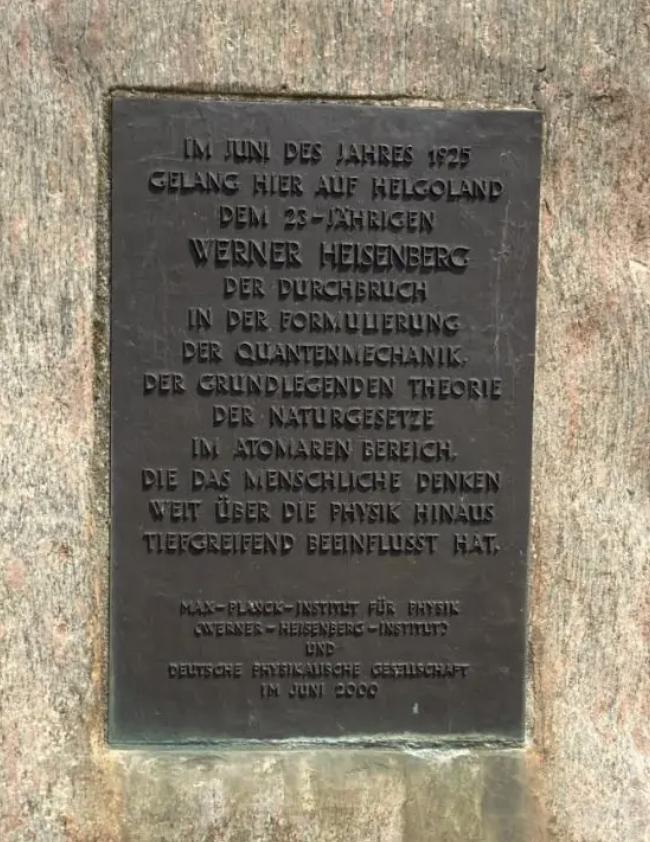
Core Viewpoint - The article discusses the ongoing debate in quantum mechanics regarding the interpretation of quantum phenomena, particularly focusing on the perspectives of relational quantum mechanics (RQM) and subjective Bayesianism (QBism) as they relate to the observer's role in defining reality [10][31]. Group 1: Historical Context and Developments - In 1925, physicist Werner Heisenberg made significant contributions to quantum mechanics on Heligoland Island, moving away from classical models to a mathematical framework known as matrix mechanics [2]. - The establishment of quantum mechanics was further advanced by Erwin Schrödinger's wave equation, which introduced the concept of probability in determining the position of electrons [4]. - A century later, in 2025, over 300 leading physicists gathered on the same island to celebrate the centenary of quantum mechanics and to revisit foundational questions about the nature of reality [6]. Group 2: Quantum Mechanics Interpretation Debate - The core of the debate centers on whether quantum equations describe the world itself or merely our understanding of it, with various interpretations such as the Copenhagen interpretation, many-worlds interpretation, and hidden variable theories [11][13]. - The thought experiment "Wigner's friend" illustrates the complexities of measurement and reality in quantum mechanics, questioning whose observation constitutes the "true" reality [15][19]. Group 3: Relational Quantum Mechanics (RQM) - Carlo Rovelli's RQM posits that reality is not an absolute entity but is constructed through relationships between observers and systems, suggesting that different observers can have valid but distinct accounts of the same phenomenon [20][23]. - RQM emphasizes that physical properties are not inherent to isolated entities but arise from interactions, challenging traditional notions of objective reality [25]. Group 4: Subjective Bayesianism (QBism) - Chris Fuchs' QBism redefines the wave function as a personal probability guide rather than an objective state of the world, asserting that it reflects an observer's beliefs about future measurements [28][30]. - This perspective places the observer at the center of quantum mechanics, suggesting that the wave function is a tool for individuals to navigate their interactions with the quantum world [31]. Group 5: Future Directions and Implications - The article highlights a growing acceptance of RQM and QBism among younger researchers, with a notable percentage supporting these interpretations in recent surveys [31]. - The potential for empirical testing of these theories through advanced quantum computing and AI is discussed, indicating a shift towards integrating observer-dependent frameworks into future physics [33]. - The concluding remarks suggest that reality is a collaborative narrative between observers and the world, marking a new beginning for quantum mechanics [34].
我国科学家首次完整实现!
中国基金报· 2025-12-04 07:40
Core Viewpoint - The research team from the University of Science and Technology of China successfully conducted the "recoil slit" thought experiment proposed by Einstein and Bohr in 1927, demonstrating the gradual change in interference contrast of atomic momentum and proving the complementarity principle under the Heisenberg limit [2][3][4]. Group 1 - The team utilized a single rubidium atom trapped by optical tweezers as a "movable slit," achieving the most sensitive measurement under quantum limit conditions [3]. - The experiment involved cooling the atom to its three-dimensional ground state, reducing its momentum uncertainty to a level comparable to that of a single photon [3]. - The results indicated that after photon recoil, the overlap of the atomic momentum wave function increased, leading to a decrease in entanglement between the photon and the atom, thus enhancing the interference contrast of the photon [3][4]. Group 2 - This research marks the first realization of Einstein's thought experiment nearly a century after the debate between Einstein and Bohr, utilizing a ground state single atom as a sensitive movable slit [4]. - The findings contribute to advancements in high-precision single-atom manipulation, single-atom-single-photon entanglement, and interference techniques, laying the groundwork for future explorations in large-scale neutral atom arrays and quantum error correction [4].
量子研究,有新进展
财联社· 2025-12-03 13:07
Core Viewpoint - A research team from the University of Science and Technology of China successfully realized Einstein's "recoil slit" quantum interference thought experiment, demonstrating the gradual change of interference contrast with tunable atomic momentum, thus proving the complementarity principle at the Heisenberg limit and showcasing the continuous transition from quantum to classical [1][6]. Group 1 - The research achieved a faithful implementation of Einstein's thought experiment nearly a century after the debate with Bohr, utilizing a ground state single atom as a "movable slit" sensitive to single photon momentum [6]. - The experiment not only confirmed the principles of quantum mechanics but also advanced precision quantum technologies such as high-precision single atom manipulation and single atom-single photon entanglement [6]. - The findings lay the groundwork for future explorations into large-scale neutral atom arrays, compressed state error correction coding, and further investigations into decoherence and the quantum-to-classical transition [6]. Group 2 - The original thought experiment proposed by Einstein during the 1927 Solvay Conference aimed to challenge Bohr's complementarity principle by allowing a single photon to pass through a movable slit, suggesting that measuring the recoil could reveal the photon's path while preserving interference patterns [5]. - This thought experiment is considered one of the most profound paradoxes in quantum mechanics, directly addressing the question of whether complete information about both wave and particle properties can be obtained simultaneously [5].

专访斯洛文尼亚前副总理布尔克:希望欧中尽快签署一项全面协议
Di Yi Cai Jing· 2025-12-03 06:17
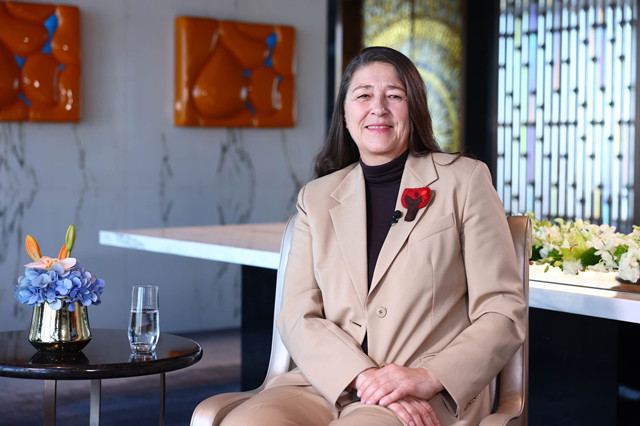
Core Viewpoint - The essence of future EU-China cooperation lies in maintaining dialogue and interaction to create new markets and opportunities, especially in sectors like energy, automotive, and pharmaceuticals [1][2][7]. Group 1: Economic Cooperation - Slovenia's economy heavily relies on the automotive and pharmaceutical industries, which together account for 16% of its GDP [1]. - Slovenia welcomes Chinese investment, particularly in energy, automotive, and pharmaceutical sectors, indicating a strong foundation for bilateral cooperation [1]. - The EU is undergoing a transformation and is open to leading global trends, emphasizing the importance of EU-China dialogue [2]. Group 2: Technological Advancements - Emerging technologies such as artificial intelligence, quantum mechanics, and new materials present excellent opportunities for EU-China collaboration [7]. - The electric vehicle sector is a key strategic direction for both regions, with a focus on sustainable energy sources and technological development [5][7]. - The low-altitude economy is reshaping industry dynamics, providing new development spaces for logistics and urban air traffic, which can alleviate ground traffic pressure [6]. Group 3: Future Outlook - A comprehensive agreement between the EU and China is desired to define trade cooperation and address mutual understandings of differences [7][8]. - The need for a unified global regulatory framework is emphasized to foster business predictability and growth amid political polarization [7][8]. - The collaboration in addressing climate change, green technology, and high-tech solutions is seen as a long-term opportunity for both regions [7].
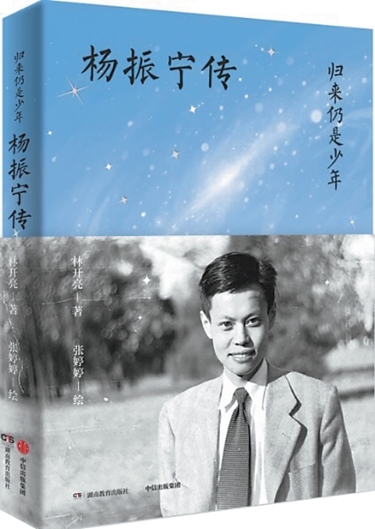
杨振宁父亲的顶级远见:慢,是一种更快的到达
首席商业评论· 2025-12-03 04:25
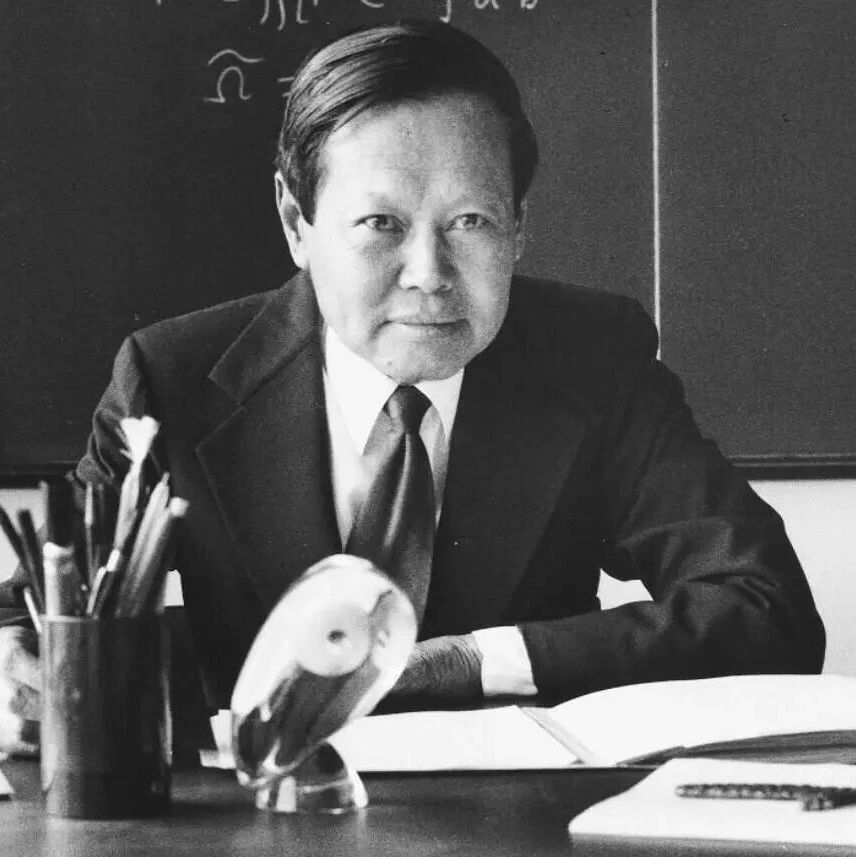
Core Viewpoint - The article reflects on the life and contributions of Yang Zhenning, emphasizing his scientific achievements, deep sense of national pride, and the impact of his upbringing on his character and academic pursuits [2][6][39]. Group 1: Life and Legacy - Yang Zhenning passed away on October 18, 2025, at the age of 103, marking the end of an era for modern physics [2]. - He is recognized not only for his scientific contributions but also for his role in changing the perception of Chinese people in the global scientific community [6][39]. - The book "Returning Still a Youth: The Biography of Yang Zhenning" is highlighted as a warm tribute to his life and legacy, authorized by his office and featuring rare images and historical materials [2][4]. Group 2: Family Influence - Yang Zhenning's upbringing in a culturally rich environment at Tsinghua University and the influence of his parents played a crucial role in shaping his character and academic style [10][19]. - His father, Yang Wuzhi, emphasized a patient and well-rounded education, while his mother, Luo Menghua, instilled resilience and a strong work ethic [19][21]. - The concept of "permeation learning," which Yang Zhenning later advocated, was rooted in his early experiences with his father's teaching methods [26][36]. Group 3: Scientific Contributions - Yang Zhenning's significant scientific achievements include the Yang-Mills theory and the concept of parity violation, which have become foundational in modern physics [6][39]. - His collaborative spirit and emphasis on discussion with peers were pivotal in his academic journey, as he believed that such interactions fostered deeper understanding and innovation [33][36]. - The article underscores that his scientific journey was not just about individual accolades but also about contributing to the collective advancement of Chinese science [8][39].
奥地利前总理:中欧合作需加强各层面交流|全球财经连线
2 1 Shi Ji Jing Ji Bao Dao· 2025-12-02 03:35
Core Insights - The bilateral trade between Europe and China has reached approximately 800 billion euros, a significant increase from 50 years ago when trade volumes were low [1] Group 1: Trade Relations - The trade relationship between Europe and China has evolved significantly over the past five decades, highlighting the importance of data in understanding this growth [1] - The current trade volume of around 800 billion euros indicates a robust economic partnership that has developed over time [1] Group 2: Future Opportunities - Future challenges and cooperation opportunities are emphasized as critical areas of focus, particularly in fields like biosciences and quantum mechanics [1] - Collaboration between scientists and students, as well as exchanges among the general public and business communities, are deemed essential for fostering deeper ties [1]
量子力学诞生百年,我国正迎来加速突破
Xin Hua She· 2025-11-24 01:54
Group 1: Quantum Science and Technology Year - The year marks the 100th anniversary of quantum mechanics, declared as the "International Year of Quantum Science and Technology" by UNESCO [1] - Significant breakthroughs in quantum computing, communication, and measurement have been achieved in China, enhancing capabilities in information acquisition, transmission, and processing [1] Group 2: Quantum Computing Developments - Quantum computing is likened to an aircraft's engine, radio, and radar, essential for enhanced computing power, secure communication, and precise measurement [2] - The "Zuchongzhi 3" superconducting quantum computing prototype was released, achieving a speed that surpasses the fastest supercomputers by a factor of one trillion [2][5] - The transition from basic research to practical applications in quantum computing is accelerating, with industries such as finance and aerospace recognizing its potential [5] Group 3: Quantum Communication Advancements - China has made significant progress in quantum direct communication, including a record-breaking communication speed over 100 kilometers and the establishment of a 300-kilometer quantum direct communication network [6] - A notable achievement includes the successful satellite-based transmission of encrypted image data over a distance of over 12,900 kilometers, marking a leap towards long-distance secure quantum communication [6] - The emphasis on quantum communication technology is attributed to national support and sustained investment, positioning China strategically in this field [6] Group 4: Quantum Measurement Innovations - The release of various quantum sensors, including diamond single-spin sensors and quantum magnetometers, showcases advancements in quantum measurement technology [8][10] - Applications in medical fields, such as early screening for coronary heart disease, and industrial quality control in lithium battery production are being explored [8][10] - Despite significant breakthroughs, experts note that there is still a considerable gap compared to advanced countries, particularly in foundational theory and market acceptance [10]
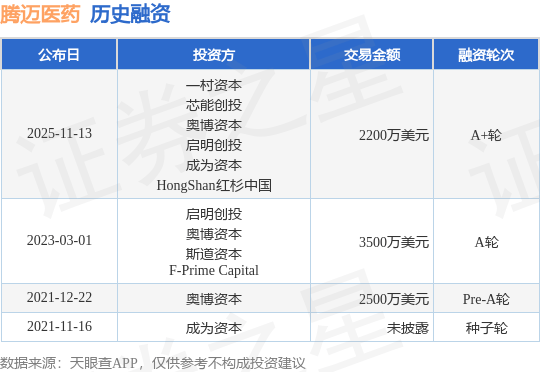
【投融资动态】腾迈医药A+轮融资,融资额2200万美元,投资方为一村资本、芯能创投等
Sou Hu Cai Jing· 2025-11-15 11:21
Core Insights - Shanghai Tengmai Pharmaceutical Technology Co., Ltd. has completed an A+ round financing, raising $22 million, with participation from several investment firms [1][2]. Financing Details - The financing round took place on November 13, 2025, with a total amount of $22 million [2]. - Participating investors include Yicun Capital, Xinneng Venture Capital, Aobo Capital, Qiming Venture Partners, Chengwei Capital, and HongShan Sequoia China [1][2]. Company Overview - Tengmai Pharmaceutical is a drug molecule discovery platform that combines proprietary quantum mechanics-based and AI-driven high-performance computing with scalable and efficient wet laboratories to provide a one-stop solution [2]. - The company aims to enhance the speed of drug molecule discovery and reduce R&D costs through its networked high-performance computing platform and computational power [2].