
金融改革开放

Search documents
何立峰在全国金融系统工作会议上强调,深入学习贯彻中央经济工作会议精神,有力有序有效做好2026年金融重点工作
Xin Hua She· 2025-12-12 09:03
全国金融系统工作会议12月12日在京召开。中共中央政治局委员、中央金融委员会办公室主任何立峰出 席会议并讲话。他强调,金融系统要深入学习贯彻中央经济工作会议精神,准确把握经济工作面临的形 势和主要目标任务,坚定做好金融工作的信心和决心,坚持防风险、强监管、促高质量发展工作主线, 有力有序有效做好2026年金融重点工作。要继续着力做好防范化解地方中小金融机构风险、房地产企业 涉金融风险、地方政府融资平台金融债务风险工作,严控增量、妥处存量、严防"爆雷",严厉打击非法 金融活动。要进一步巩固和强化金融监管,完善重点领域监管制度体系并严格落实,持续强化金融机构 合规意识和风险意识,不断提升监管能力,严肃开展金融风险追责问责。要全力以赴推动高质量发展, 继续实施好适度宽松的货币政策,加强对扩大内需、科技创新、中小微企业等重点领域的金融支持,稳 步有序推进金融改革开放,做好预期管理。要加强党对金融工作的全面领导,认真学习、深刻领会、不 折不扣贯彻落实习近平总书记重要指示批示精神和党中央决策部署,树立和践行正确政绩观、业绩观, 持之以恒推进全面从严治党。要编制好"十五五"金融相关规划,加强工作统筹,确保"十五五"金融工作 ...
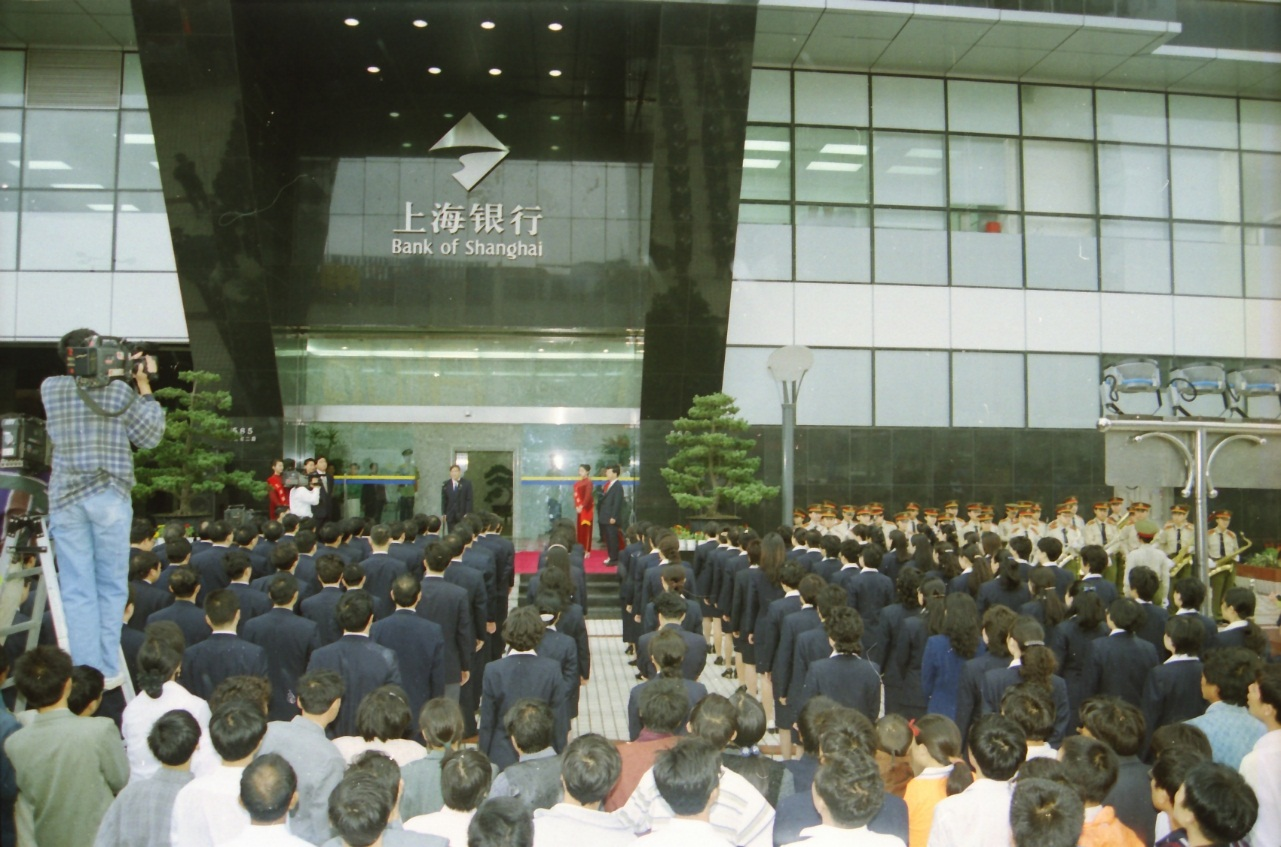
口述历史·上银30年 | 更名!上海银行有了“金字招牌”
Zhong Guo Jin Rong Xin Xi Wang· 2025-12-02 08:51
Core Points - The article discusses the transformation of Shanghai City United Bank into Shanghai Bank in 1998, marking a significant milestone in the development of China's banking sector [1][5][11] - The renaming was part of a broader effort to enhance Shanghai's image as an international financial center and to provide a clearer identity for the bank [5][12] Group 1: Historical Context - Over 100 city cooperative banks emerged as a vital part of the financial system by the end of the last century, aimed at supporting small and medium-sized enterprises and local economies [1] - In 1998, the People's Bank of China mandated that city cooperative banks change their names to city commercial banks, leading to the unique case of Shanghai Bank being the first bank named after a city [1][5] Group 2: Renaming Process - The original name proposed was "Shanghai City Commercial Bank," but due to existing similar names in Hong Kong and Taiwan, it was changed to "Shanghai Bank Co., Ltd." to avoid confusion and align with international practices [5][6] - The approval for the name change was granted on August 10, 1998, making Shanghai Bank the only bank in China named after a city at that time [5][6] Group 3: Brand Development - The renaming was seen as a new starting point for Shanghai Bank, aligning its identity with the city's modernization and internationalization efforts [12] - The bank adopted a new visual identity (VI system) that reflects Shanghai's financial landscape, with design elements symbolizing the city’s iconic features [14] Group 4: Business Initiatives - Shanghai Bank has focused on serving small and medium-sized enterprises, launching various specialized products and services to support local economic development [15][17] - The bank has also been a pioneer in introducing foreign investment, cross-regional operations, and cross-border initiatives among city commercial banks in China [17]


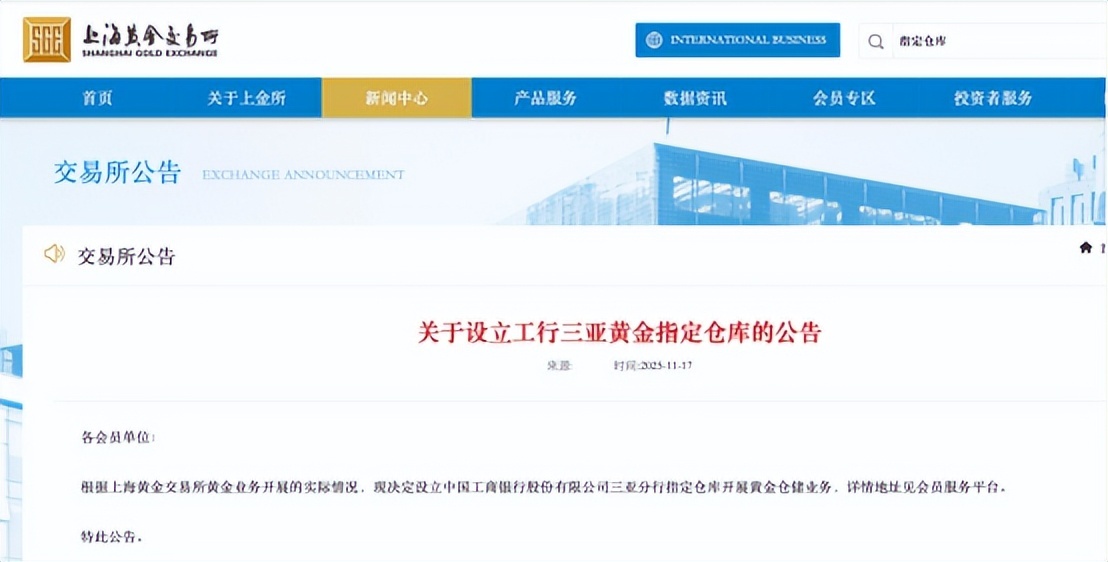
又一地新设黄金指定仓库,工行再落子
Huan Qiu Wang· 2025-11-21 05:02
Core Insights - The establishment of the designated warehouse by the Shanghai Gold Exchange at the Industrial and Commercial Bank of China (ICBC) in Sanya reflects a strategic move to enhance the efficiency of physical gold circulation and reduce operational costs for enterprises, thereby reshaping the local gold industry ecosystem [1][4][5] Group 1: Strategic Importance - The new warehouse in Sanya is seen as a response to national financial reform and regional development strategies, leveraging Sanya's geographical and policy advantages as a key tourist city and free trade port [2][4] - This initiative is expected to improve liquidity and efficiency in the gold market, promoting the internationalization of the domestic gold market [4][6] Group 2: Infrastructure Development - Designated warehouses are considered essential infrastructure for the gold industry, facilitating the storage, delivery, and transportation of physical gold, allowing for local storage and real-time extraction of raw materials [4][6] - The establishment of the warehouse is part of a broader effort to develop Sanya's gold industry, including the construction of multiple gold and jewelry industrial parks [4][6] Group 3: Financial Implications - ICBC's expansion of designated warehouses strengthens its position in the full-service gold chain, enhancing its capabilities in gold pricing and risk management [6][7] - The warehouse in Hezhou, which was opened earlier, is expected to save local enterprises approximately 10 million yuan annually by addressing issues related to low delivery efficiency and high costs [6][8] Group 4: Regional Collaboration - The collaboration between ICBC and the Shanghai Gold Exchange is anticipated to deepen their partnership, increasing service capabilities and market share in the precious metals sector [7] - The establishment of offshore gold delivery warehouses in Hong Kong is also part of a strategy to enhance cooperation between Hong Kong and Shanghai in the gold market, providing diversified asset allocation options for investors [8][10]

金融监管总局:推动更多金融改革开放措施在琼先行先试
Bei Jing Shang Bao· 2025-11-18 13:30
Core Viewpoint - The meeting held by the Financial Regulatory Administration in Haikou emphasizes the importance of foreign financial institutions in connecting China's economy with the global market, urging them to enhance their confidence in China's high-quality economic development and actively participate in the growth opportunities presented by the Hainan Free Trade Port [1] Group 1: Foreign Financial Institutions - Foreign financial institutions are seen as a crucial bridge between China and the global economy, and they are encouraged to align with the trends and actively integrate into the local market [1] - The institutions are advised to focus on their core businesses, improve governance, and leverage their expertise in wealth management, pension finance, green low-carbon initiatives, and cross-border services for differentiated development [1] Group 2: Hainan Free Trade Port - The Financial Regulatory Administration aims to support the construction and high-quality development of the Hainan Free Trade Port by attracting more quality international enterprises and professional talent to the region [1] - There is a commitment to creating a market-oriented, law-based, and international business environment, with plans to implement more financial reform and opening-up measures in Hainan [1]
精准有效推进金融支持重点产业提质升级
Zheng Quan Ri Bao· 2025-10-28 23:18
Core Viewpoint - The People's Bank of China (PBOC) emphasizes the importance of maintaining financial stability and supporting the real economy while enhancing financial regulation and deepening financial reform and opening-up since November 2024 [1] Summary by Sections Monetary Policy - The PBOC plans to implement a moderately loose monetary policy to foster economic recovery, ensuring that social financing and money supply growth align with economic growth and price expectations [2] - The central bank aims to enhance the efficiency of fund utilization and maintain liquidity while managing interest rates and exchange rate stability [2] Financial Regulation - There will be a focus on strengthening financial regulation, improving regulatory effectiveness, and addressing irrational competition among financial institutions [3] - The PBOC will enhance consumer and investor protection, combat illegal financial activities, and promote legislative efforts in financial law [3] Financial Services to the Real Economy - The PBOC will prioritize high-quality financial services, particularly in areas like technological innovation, consumption, small and micro enterprises, and foreign trade [4] - The aim is to support key industries and improve the quality of financial services through coordinated policies [4] Structural Financial Reforms - The central bank will continue to deepen supply-side structural reforms in finance, improve the monetary policy framework, and enhance macro-prudential management [4] - There will be efforts to support the transformation of commercial banks and develop the bond market [4] Financial Opening and Security - The PBOC will promote a high level of financial openness while ensuring national financial security, including advancing the internationalization of the Renminbi [5] - The focus will also be on enhancing the functions of the Renminbi in international trade and investment [5] Risk Prevention - The PBOC will strengthen monitoring and assessment of systemic financial risks and support the market-oriented transformation of financing platforms [5] - Efforts will be made to improve the financing system in line with new real estate development models and enhance the stability of capital markets [5]
国务院关于金融工作情况的报告
财联社· 2025-10-28 11:55
Core Viewpoint - The report emphasizes the importance of financial work in supporting China's economic stability and high-quality development, highlighting the implementation of various monetary policies and regulatory measures to enhance financial stability and support the real economy [1][2]. Financial Work Progress and Achievements - Since November 2024, the financial system has focused on stabilizing and improving support for the real economy, enhancing financial regulation, and deepening financial reform and opening up, achieving new results [3]. - As of September 2025, the total assets of financial institutions exceeded 520 trillion yuan, with commercial banks' capital adequacy ratio at 15.36% and non-performing loan ratio at 1.52%, indicating strong resilience [4]. Monetary Policy Execution - A series of significant monetary policy measures were implemented, including reductions in reserve requirements and interest rates, leading to a year-on-year increase of 8.7% in social financing scale and 8.4% in broad money supply by September [3]. Financial Support for the Real Economy - From November 2024 to September 2025, A-share IPOs raised 91.8 billion yuan, with 86% from private enterprises and 92% from strategic emerging industries, indicating strong financing activity [6]. - Loans for technology, green, inclusive, elderly, and digital economy sectors grew significantly, with year-on-year increases of 11.8%, 22.9%, 11.2%, 58.2%, and 12.9% respectively [6]. Financial Reform and Opening Up - The reform of financial institutions is deepening, with state-owned banks successfully raising 520 billion yuan through targeted placements to bolster capital [7]. - The cross-border payment system for the renminbi has been established, enhancing its international use and positioning it as a major currency for cross-border transactions [7]. Risk Prevention and Mitigation - Measures have been taken to address risks in small and medium-sized financial institutions, with a significant reduction in the number of financing platforms and their debt levels [8]. - The real estate market is being supported through policies that lower down payments and mortgage rates, with new loans amounting to 2.2 trillion yuan facilitated through a "white list" mechanism [8]. Future Work Considerations - The focus will be on implementing a moderately loose monetary policy to support economic recovery, enhancing financial regulation, and providing high-quality financial services to key sectors [10][11]. - Continued efforts will be made to prevent systemic financial risks, particularly in the real estate sector and among small financial institutions, while promoting the stability of capital markets [13].

国务院报告:金融机构经营和监管指标保持在合理区间
智通财经网· 2025-10-28 11:24
Core Insights - The report presented by the Governor of the People's Bank of China highlights the stability and resilience of the financial sector, with key indicators remaining within reasonable ranges, and emphasizes the importance of financial support for the real economy [1][5][8]. Financial Sector Performance - As of September 2025, total assets of financial institutions exceeded 520 trillion yuan, with commercial banks' capital adequacy ratio at 15.36% and non-performing loan ratio at 1.52% [1][8]. - Insurance companies reported a comprehensive solvency adequacy ratio of 186%, while securities and futures companies had average risk coverage ratios of 295% and 226%, respectively, significantly above regulatory standards [1][8]. Financial Support for the Real Economy - From November 2024 to September 2025, 98 companies in the A-share market raised 91.8 billion yuan through initial public offerings, with 86% being private enterprises and 92% in strategic emerging industries [1][9]. - The report outlines the establishment of a policy framework for technology finance, green finance, inclusive finance, pension finance, and digital finance, aimed at enhancing financial services in key areas [1][9]. Loan Growth in Key Sectors - Loans in technology, green, inclusive, pension, and digital economy sectors grew by 11.8%, 22.9%, 11.2%, 58.2%, and 12.9% year-on-year, respectively, all exceeding the overall loan growth rate [2][9]. Monetary Policy and Economic Environment - The report indicates a commitment to implementing a moderately loose monetary policy to support economic recovery, with social financing scale and money supply growth aligned with economic growth and price level expectations [2][14]. Financial Reform and Opening Up - The financial sector is undergoing continuous reform, with significant capital injections into state-owned banks and the development of a multi-tiered financial market [10][11]. - The report emphasizes the importance of cross-border payment systems and the internationalization of the renminbi, with the currency becoming a major player in global trade financing [11][12]. Risk Management and Regulatory Measures - The report outlines efforts to mitigate risks in small and medium-sized financial institutions and emphasizes the importance of regulatory compliance and consumer protection [12][13]. - A comprehensive framework for monitoring and managing financial risks has been established, with a focus on preventing systemic financial risks [12][17].
上海市委常委、常务副市长吴伟:稳步推进全球资产管理中心建设
Xin Hua Cai Jing· 2025-10-18 05:22
Core Insights - Shanghai is advancing its mission to build an international financial center and a global asset management hub, showcasing new achievements and progress [1][2] Financial Market Expansion - The total trading volume of Shanghai's financial market reached 29.6783 trillion yuan from January to September this year, marking a year-on-year growth of 12.7% [1] - Shanghai hosts 15 financial element markets and infrastructure, including stocks, bonds, futures, currencies, bills, foreign exchange, gold, and insurance, with stock market capitalization and interbank bond market size ranking among the top globally [1] Financial Institutions and Asset Management - Major financial organizations are increasingly establishing operations in Shanghai, with firms like Societe Generale, AXA Global, and Hannover Re opening offices this year [1] - All top ten global asset management firms are conducting business in Shanghai, with the number of private equity fund managers set up by foreign institutions leading the nation, accounting for nearly 30% of the national asset management scale [1] Financial Reform and Opening Up - Significant mechanisms such as "Shanghai-Hong Kong Stock Connect," "Shanghai-London Stock Connect," "Bond Connect," "Swap Connect," and "China-Europe Connect" have been successfully launched [1] - The Shanghai Futures Exchange has achieved full coverage of options for non-ferrous metals, and "Shanghai prices" for gold, oil, copper, and rubber are gaining more influence in the international commodity market [1] Legal and Regulatory Environment - Shanghai has established specialized institutions like financial courts and arbitration centers, and has released several local financial regulations, including the revised "Regulations on Promoting the Construction of International Financial Centers in Shanghai" [2] - The city aims to deepen high-level institutional opening-up, enhance the internationalization of its financial market, and attract more quality financial resources to strengthen its competitiveness and influence as an international financial center [2]
学思践悟习近平同志在闽金融论述与实践启示
Jin Rong Shi Bao· 2025-10-09 03:16
Core Insights - The article emphasizes the significance of Xi Jinping's financial theories and practices during his tenure in Fujian, highlighting their foundational role in developing a unique Chinese financial development path [1][6][14] Historical, Cultural, and Contextual Background - Fujian's financial history is deeply rooted, with early forms of finance emerging during the Tang and Ming dynasties, and the region's unique "overseas Chinese" resources contributing to its financial evolution [2][3] - The transition from a planned economy to a socialist market economy during Xi's time in Fujian raised critical questions about the direction and principles of China's financial development [2] Financial Practices and Innovations - Xi Jinping's tenure saw the establishment of various financial institutions, including the first red bank and credit cooperatives, laying the groundwork for modern financial practices in the region [3][4] - Fujian was a pioneer in financial reforms during China's opening up, with significant projects and institutions established to support economic growth [4][10] Key Financial Principles and Strategies - The article outlines several key principles from Xi's financial practices, including the importance of party leadership in financial governance, the necessity of serving the real economy, and the focus on preventing financial risks [7][8][9] - Financial support for the real economy has been emphasized, with significant increases in deposits and loans in Fujian, reflecting a commitment to enhancing financial services for businesses and individuals [8] Financial Risk Management - Xi's approach to financial risk management involved proactive measures to address financial irregularities and establish a stable financial environment, which has resulted in a low non-performing loan rate in Fujian [9][18] Financial Reform and Innovation - The article discusses the importance of combining top-level design with grassroots exploration in advancing financial reforms, highlighting Fujian's role in financial innovation and cross-strait financial cooperation [10][11] Future Directions and Goals - The Fujian financial system aims to align with national strategies, enhance financial services, and promote sustainable economic growth while ensuring financial stability and risk management [15][18][19]
综合实力更加雄厚 服务质效显著提升——国新办发布会聚焦“十四五”时期金融业发展成就
Xin Hua She· 2025-09-22 16:10
Core Viewpoint - The press conference highlighted the significant achievements of China's financial industry during the "14th Five-Year Plan" period, emphasizing the enhanced international competitiveness and the improved quality of financial services to the real economy [1][2]. Group 1: Industry Strength - As of June 2023, China's banking sector total assets reached nearly 470 trillion yuan, ranking first globally; the stock and bond market sizes ranked second globally; and foreign exchange reserves have maintained the top position for 20 consecutive years [2]. - Under the leadership of the central government, China's financial sector has made substantial progress, with comprehensive reforms and improved governance systems [2]. - The capital market has seen a steady increase in direct financing, with the total market capitalization of A-shares surpassing 100 trillion yuan for the first time in August 2023 [2]. Group 2: Financial Services to the Real Economy - Over the past five years, the banking and insurance sectors have provided an additional 170 trillion yuan in funding to the real economy through various financing methods [3]. - The direct financing ratio has increased by 2.8 percentage points compared to the end of the "13th Five-Year Plan," reaching 31.6% [3]. - The balance of inclusive loans to small and micro enterprises has reached 36 trillion yuan, 2.3 times that of the end of the "13th Five-Year Plan," with interest rates decreasing by 2 percentage points [3]. Group 3: Risk Prevention and Resolution - The financial system remains generally stable, with significant reductions in the number of high-risk institutions and assets, making risks manageable [5]. - As of June 2023, the number of financing platforms has decreased by over 60% compared to the beginning of the year, and policies have been optimized to reduce interest payments for over 50 million households by approximately 300 billion yuan annually [5]. - The A-share market has shown enhanced resilience and risk resistance, with the annualized volatility of the Shanghai Composite Index at 15.9%, down 2.8 percentage points from the "13th Five-Year Plan" period [5]. Group 4: Ongoing Financial Reform and Opening-up - The financial supply-side structural reform continues, with significant progress in the reform of the Sci-Tech Innovation Board and the Growth Enterprise Market [6]. - By the end of August 2023, various long-term funds held approximately 21.4 trillion yuan in A-share market capitalization, a 32% increase from the end of the "13th Five-Year Plan" [6]. - The financial sector has seen substantial foreign participation, with 43 of the world's top 50 banks establishing operations in China and over 10 trillion yuan held by foreign institutions and individuals in domestic stocks, bonds, and deposits [6].