
预制菜

Search documents
温氏股份拟8亿元至12亿元回购股份,公司股价年内跌8.29%
Xin Lang Cai Jing· 2026-02-25 11:53
Core Viewpoint - Wens Foodstuff Group Co., Ltd. plans to repurchase shares through centralized bidding, with a total amount between 800 million and 1.2 billion yuan, at a maximum price of 24.00 yuan per share, which is 55.04% higher than the current price of 15.48 yuan [1]. Group 1: Share Repurchase - The repurchase is intended to stabilize the stock price and can involve either cancellation of shares or use for employee stock ownership plans [1]. - The repurchase period is set for 12 months, funded by the company's own and self-raised funds [1]. Group 2: Financial Performance - As of September 30, Wens reported a revenue of 75.788 billion yuan for the first nine months of 2025, a year-on-year increase of 0.54%, while net profit attributable to shareholders decreased by 17.98% to 5.256 billion yuan [2]. - The number of shareholders decreased by 10.94% to 81,100, while the average circulating shares per person increased by 12.11% to 73,543 shares [2]. Group 3: Dividend and Shareholding - Wens has distributed a total of 30.11 billion yuan in dividends since its A-share listing, with 6.281 billion yuan in the last three years [3]. - As of September 30, 2025, Hong Kong Central Clearing Limited is the fifth-largest shareholder with 144 million shares, an increase of 5.5013 million shares, while E Fund's ChiNext ETF is the ninth-largest shareholder with 113 million shares, a decrease of 19.091 million shares [3].

【8点见】春节档电影票房破16亿,你看了哪部?
Yang Shi Wang· 2026-02-18 00:11
Group 1 - The Southern Theater Command organized naval and air forces for combat readiness patrols in the South China Sea [1] - During the 14th Five-Year Plan period, the Yangtze River Delta region's foreign trade import and export exceeded 77 trillion yuan [1] - The Central Finance allocated 1.25 billion yuan to support the growth of winter wheat [1] Group 2 - The China-Europe Railway Express "China Corridor" surpassed 500 trains in traffic volume this year [1] - The Spring Festival travel period has seen over 3.5 billion cross-regional passenger flows since its start [2] - The total box office for the 2026 Spring Festival film season is projected to exceed 1.6 billion yuan [2]


年味里的卤香丨家乡的广货
Nan Fang Nong Cun Bao· 2026-02-17 01:35
Core Viewpoint - The article emphasizes the cultural significance of traditional dishes like marinated goose (卤鹅) during the Chinese New Year, highlighting its evolution from a home-cooked meal to a significant industry with a complete production chain and substantial economic impact [20][21]. Industry Insights - The marinated goose industry has developed into a complete production chain, including breeding, large-scale farming, standardized marination, deep processing, and brand sales, with an overall industry value exceeding 10 billion yuan [20]. - The "Lion Head Goose" has been recognized as a national-level livestock genetic resource, contributing to its status as a leading product in the marinated meat market [19][20]. - The trend of pre-prepared dishes has allowed marinated goose to gain new value, making it accessible for quick preparation in households, thus expanding its market reach [23][24][26]. Consumer Behavior - The article notes that marinated goose remains a staple on dining tables during the New Year, symbolizing family reunion and nostalgia, regardless of how the meal is prepared—whether cooked at home or ordered from restaurants [28][29]. - The ease of preparing marinated goose through online shopping and pre-packaged options has made it a popular choice for families looking to celebrate the New Year with traditional flavors [22][26]. Cultural Significance - The taste of marinated goose is deeply tied to childhood memories and family traditions, representing a comforting and familiar aspect of the New Year celebrations [6][7][31]. - The article illustrates how the flavors of marinated goose evoke a sense of home and connection, reinforcing its role in the cultural fabric of Chinese New Year festivities [32][33].

2026年货消费观察 | 年夜饭,有新变化!
Sou Hu Cai Jing· 2026-02-15 14:55
Group 1 - The core theme of the article revolves around the evolving trends in Chinese New Year dinner preparations, emphasizing health and the incorporation of diverse regional flavors [2][4][6]. - A significant 46.7% of families are focusing on healthier meal options, opting for "light burden" dishes to replace some traditional heavy dishes [4][6]. - The survey indicates that 87.1% of respondents are willing to include seasonal vegetables in their New Year dinner, with spring bamboo shoots, pea shoots, and asparagus being the most popular choices [4][6]. Group 2 - Approximately 89.3% of families are incorporating "flavors from other regions" into their New Year dinner, showcasing a shift from traditional hometown dishes to a broader representation of Chinese cuisine [4][5]. - Guangdong cuisine leads the preferences with a selection rate of 21.1%, followed by Jiangsu and Beijing cuisines at 19.2% and 19.1% respectively, indicating a growing interest in diverse culinary traditions [5][6]. - The trend of convenience is rising, with 75.2% of families still having elders prepare the dinner, but 24.7% of younger individuals are taking on the role of "main preparer," reflecting a shift towards more varied preparation methods [12][17]. Group 3 - Companies in the food and beverage sector are adapting to these trends, with several listed companies preparing for the New Year dinner market and offering pre-made meal kits [12][13]. - Notable companies like Quanjude and Guangzhou Restaurant are actively promoting their New Year dinner offerings, indicating a competitive landscape in the catering market [12][13]. - The article highlights that consumer preferences are shifting towards a balance between indulgence and health, with many opting for a "planned indulgence" approach during the festive season [17][18].



你在什么情况下会再也不去你曾经频繁消费过的一家饭店吃饭?
Sou Hu Cai Jing· 2026-02-15 01:39
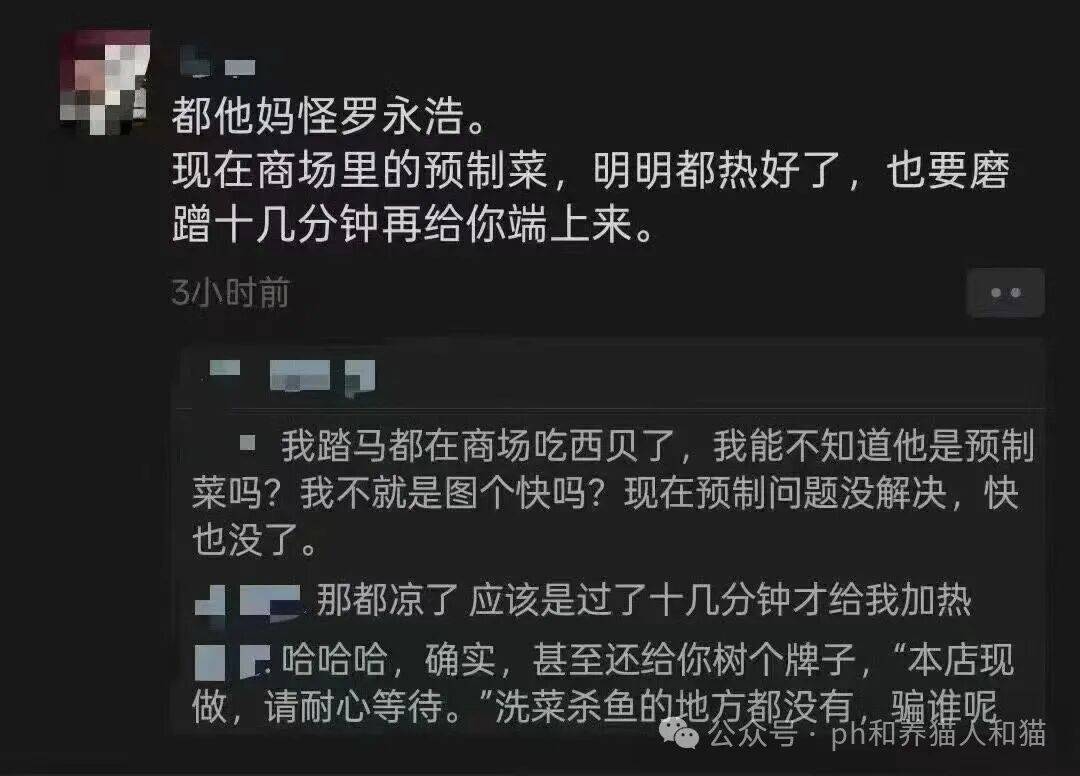
Core Viewpoint - The article discusses the impact of "pre-made dishes" on restaurant service speed and customer experience, highlighting a specific case of a restaurant owner trying to reconnect with a lost customer who frequently ordered takeout but has not done so in over a year [3][7]. Group 1: Customer Experience - The article illustrates how the perception of food quality can change when customers realize they are receiving pre-made dishes instead of freshly cooked meals, leading to dissatisfaction [3][9]. - A specific example is provided where a customer experiences a significant difference in quality between pre-made and freshly cooked dishes, ultimately leading to a decision to stop patronizing the restaurant [12][13]. Group 2: Restaurant Operations - The article notes that many restaurants have adopted a slower service pace, possibly to create an illusion of freshly prepared meals, despite serving pre-made dishes [3][7]. - It emphasizes the importance of transparency in food preparation, suggesting that customers are more accepting of pre-made dishes if they are aware of the process [9][10]. Group 3: Customer Retention - The article questions the effectiveness of restaurant owners reaching out to lost customers, suggesting that the reasons for their absence are often significant and may not be resolved by simple communication [7][8]. - It highlights that a customer's choice of restaurant is a form of voting, and a sudden stop in patronage usually indicates deeper issues with the restaurant's offerings or service [7][8].
年货消费迎来“00后主理人”:“手搓”年味火了,为宠物花钱更多了
第一财经· 2026-02-14 11:27
Core Insights - The article highlights the increasing influence of young consumers, particularly those born after 2000, on the Chinese New Year shopping trends, with online retail sales reaching 9897.3 billion yuan by February 8, 2026, marking a 47% year-on-year increase in spending by this demographic [3][4]. Group 1: Consumer Trends - Young consumers are driving the demand for "emotional value" products during the New Year, with a notable rise in nostalgic and DIY items, such as handmade decorations and childhood snacks, reflecting a shift towards self-indulgence in holiday spending [4][5]. - The trend of DIY products is significant, with searches for "New Year DIY" increasing by over 200% and "Horse Year DIY" searches rising by 600%, indicating a preference for creative and personalized holiday items among younger shoppers [5][6]. Group 2: Pet Market Growth - The pet market is experiencing a surge during the New Year, with young consumers increasingly purchasing pet-related items, including toys and festive clothing, leading to a year-on-year growth of 115.60% in pet apparel sales [5][6]. - The pet ownership in urban areas has surpassed 126 million, with the pet consumption market reaching 312.6 billion yuan in 2025, showcasing the growing significance of pets in holiday celebrations [5][6]. Group 3: Pre-prepared Meals - Pre-prepared meals continue to gain traction in New Year celebrations, with sales of a new "Legendary" meal series from Hema increasing by 116% since its launch, reflecting consumer demand for unique and high-quality dining experiences [6]. - Consumers are prioritizing regional flavors and are open to trying innovative dishes, with 90% preferring hometown flavors and over 80% willing to experiment with creative New Year meals [6].

甘肃小城的娃娃们,回家“办年”|故乡里的中国
经济观察报· 2026-02-14 01:06
Core Viewpoint - The article reflects on the changing traditions and practices surrounding the Chinese New Year in Dingxi, Gansu, highlighting the emotional significance of family reunions and the evolving nature of holiday preparations over time [2][12]. Group 1: Family and Cultural Significance - In Dingxi, young people are always referred to as "娃娃" (children) by their parents, regardless of their age or occupation, indicating a deep emotional connection and concern from parents [3]. - The phrase "你家的娃娃回来了吗?" (Is your child back home?) becomes a common greeting among parents and acquaintances during the New Year season, emphasizing the importance of family reunions [3]. - The preparation for the New Year, referred to as "办年," involves not only purchasing goods but also making traditional foods, which reflects the cultural heritage of the region [3][5]. Group 2: Traditional Food Preparations - The article details various traditional food preparations in Dingxi, such as "血馍馍," which is made from pig's blood mixed with flour and cooked into thin pancakes, showcasing unique local culinary practices [5][7]. - Other traditional foods include "搅团," a type of mixed grain dish, and various pre-made dishes like "油香," "杂烩," and "丸子," which are essential for the New Year celebrations [7][8]. - The "暖锅" (hot pot) is a central dish during family gatherings, with specific layering and preparation methods that vary by household, highlighting the communal aspect of dining during the New Year [10][11]. Group 3: Changes in Celebration Practices - The article notes a shift in the way families celebrate the New Year, with fewer people participating in traditional practices like buying half a pig or cow, indicating a change in societal values and lifestyles [12]. - The local taxi driver observes a decline in the number of people celebrating, suggesting that modern conveniences have altered traditional shopping habits and reduced the communal aspect of holiday preparations [12]. - The emotional impact of children not returning home for the New Year is felt deeply, with parents expressing their concerns and longing for family reunions, which contrasts with the past when such gatherings were more common [13].

甘肃小城的娃娃们,回家“办年”
Jing Ji Guan Cha Bao· 2026-02-14 00:48
Core Viewpoint - The article highlights the cultural significance of the New Year celebrations in Dingxi, Gansu, emphasizing the return of young people, referred to as "娃娃" (children), to their hometowns for the festivities, and the evolving nature of these traditions over time [1][9]. Group 1: Cultural Significance - The term "办年" (ban nian) in Dingxi encompasses both the anticipation of the New Year and the preparation of festive goods, indicating a deep-rooted cultural practice [3][4]. - The return of young people from cities like Beijing and Shanghai is a significant event for families, as parents eagerly await their arrival [2][3]. Group 2: Traditional Preparations - Traditional practices include selecting and slaughtering pigs, which is a communal activity that marks the beginning of the New Year preparations [4]. - Unique local dishes such as "血馍馍" (blood pancakes) and "搅团" (a type of dumpling) are integral to the festive food culture, showcasing local culinary traditions [5][6]. Group 3: Changes in Celebration Practices - The article notes a shift in the scale and enthusiasm of New Year preparations, with families no longer engaging in large-scale purchases of livestock, reflecting changing lifestyles and economic conditions [8][9]. - The convenience of modern shopping has altered the traditional practice of stockpiling goods, leading to a more subdued approach to New Year celebrations [9]. Group 4: Transportation Challenges - Young people face logistical challenges in returning home due to limited transportation options, as Dingxi lacks an airport, making travel more complicated [10]. - The reliance on high-speed rail is noted, but the limited number of trains and ticket availability can complicate travel plans for those wishing to return home for the New Year [10].
2025-2026年中国速冻食品行业趋势洞察白皮书-艾媒咨询
Sou Hu Cai Jing· 2026-02-13 08:23
Industry Overview - The Chinese quick-frozen food industry is entering a golden development period from 2025 to 2026, with a market size expected to reach 213.09 billion yuan in 2025 and 290.14 billion yuan by 2030, driven by a compound annual growth rate (CAGR) of 6.4% [1][11] - The frozen snack segment is particularly promising, projected to grow to 35.3 billion yuan in 2025 and 69.76 billion yuan by 2030 [1][58] - Southeast Asia is emerging as a new market for Chinese quick-frozen food exports, leveraging cost and supply chain advantages [1] Market Drivers - The industry is supported by favorable national policies focusing on standardized development frameworks for prepared dishes and cold chain logistics [1][21] - Stable raw material supply and comprehensive cold chain logistics are foundational for industry growth [1][21] - Changes in family structure, increased employment among urban women, and rising demand for standardized dining experiences are contributing to market expansion [1][29] Consumer Insights - The primary consumer demographic for quick-frozen foods consists of married individuals aged 25-44 with middle to high incomes, primarily in new first-tier and second-tier cities [2] - Consumer preferences are shifting from basic convenience to quality and personalization, with popular products including dumplings, grilled sausages, and hand-held pancakes [2] - There is a growing concern among consumers regarding excessive additives and hygiene issues, leading to a demand for cleaner labels and enhanced safety in product formulations [2][11] Product Trends - The industry is witnessing a transformation towards healthier, emotional, and distinctive products, with a rise in clean label and low glycemic index (GI) offerings [2][3] - New product iterations are extending from home dining to diverse scenarios such as hot pot and fast food [2] - Leading companies like Chunxue Foods and Meiliangfang are excelling through comprehensive supply chain management and product innovation [2] Competitive Landscape - The current competitive landscape shows low concentration, with the top three companies holding less than 40% market share [1] - While leading firms maintain stable growth, they face profit pressures, and there is a noticeable divergence among small and medium-sized enterprises [1] - Traditional product categories are losing market share, while items like hot pot meatballs and frozen sausages continue to grow [1] Industry Challenges - The industry faces challenges such as high cold chain costs, consumer misconceptions, raw material price fluctuations, and intensified cross-industry competition [3] - Companies need to accurately understand consumer demands and leverage technological innovations and supply chain optimizations to gain a competitive edge [3]

收评:创业板指高开高走涨超1% 算力产业链集体走强
Xin Hua Cai Jing· 2026-02-12 07:42
Market Performance - A-shares saw collective gains on February 12, with the Shanghai Composite Index rising 0.05% to 4134.02 points, while the Shenzhen Component Index increased by 0.86% to 14283.00 points, and the ChiNext Index rose by 1.32% to 3328.06 points [1] - The total trading volume in the Shanghai and Shenzhen markets reached 2.14 trillion yuan, an increase of 157.5 billion yuan compared to the previous trading day [1] Sector Performance - The computing power industry chain showed strong performance, with companies like Yuke Technology and Capital Online hitting the daily limit of 20% [1] - The CPO concept surged, with Tianfu Communication and Robot Technology reaching historical highs [1] - The electric grid equipment sector also performed well, with companies such as Siyuan Electric and Sifang Co. achieving new highs, while Wangbian Electric and Shun Sodium Co. hit the daily limit [1] - The non-ferrous metals sector continued its upward trend, with companies like Xianglu Tungsten and Zhangyuan Tungsten hitting the daily limit [1] - In contrast, the film and television sector saw declines, with Hengdian Film and Television, Jinyi Film and Television, and Bona Film Group all hitting the daily limit down [1][2] Institutional Insights - According to Jifeng Investment Advisory, the spring market rally has historical patterns and strong driving logic, suggesting that small-cap stocks will continue to perform well [3] - Huatai Securities noted that the recent procurement of 7GWh energy storage cell equipment by State Power Investment Corporation indicates strong downstream demand, with price recovery expected in energy storage capacity [3] - CITIC Securities projected that the animation industry will see accelerated growth by the end of 2025, driven by high-quality content supply and expanding commercialization opportunities [4] Policy Developments - The Chinese government is accelerating the construction of a modern capital metropolitan area, with multiple initiatives to support its implementation, including enhancing collaboration among Beijing, Tianjin, and Hebei [5] Automotive Industry - The China Passenger Car Association reported that in January, exports of new energy passenger vehicles reached 286,000 units, a year-on-year increase of 103.6%, accounting for 49.6% of total passenger car exports [6] - The average payment term for suppliers among major automotive companies has been reduced to 54 days, down approximately 10 days from the previous year, with most companies committing to a maximum of 60 days [7]
