风险承受能力

Search documents
How much money should you put in an HYSA vs. stocks?
Yahoo Finance· 2025-09-17 14:44
Core Insights - The article discusses the importance of balancing investments between high-yield savings accounts (HYSAs) and stocks to achieve financial goals [1][2] - HYSAs provide security and modest growth, suitable for short-term goals, while stocks offer higher potential returns but come with increased risk [1][5] Group 1: High-Yield Savings Accounts (HYSA) - HYSAs offer higher-than-average interest rates, with the best accounts paying upwards of 4% APY [3] - They are ideal for emergency funds and short-term savings due to their liquidity and low risk of losing money [4][5] - However, HYSAs may not significantly grow wealth over the long term, making them less suitable for long-term goals like retirement [5] Group 2: Investing in Stocks - Investing in stocks involves purchasing ownership in a company, with the potential for significant returns, historically averaging around 10% per year [6] - Stocks carry risks, including the possibility of value drops, especially in the short term, making them unsuitable for funds needed within five years [7][12] - A longer investment horizon of 5-10 years is recommended for stock investments to benefit from market fluctuations and compounding [13] Group 3: Considerations for Investment Strategy - Liquidity is crucial; individuals should have liquid cash in HYSAs before investing in stocks to avoid selling at a loss during emergencies [10] - Time horizon affects investment decisions; short-term needs should be met with HYSAs, while longer-term goals can be pursued through stocks [11][12] - Risk tolerance varies; those with stable income and emergency savings may opt for higher-risk stocks, while those prioritizing safety may prefer HYSAs [14][15][16]
房价跌了三成,该全款买房还是贷款30年?内行人算明白3笔账
Sou Hu Cai Jing· 2025-09-15 09:41
Core Insights - The rapid decline in housing prices has created a dilemma for potential homebuyers regarding whether to pay in full or opt for a mortgage [1][3] - The choice between full payment and mortgage significantly impacts long-term asset growth and financial stability [3][4] Group 1: Full Payment vs. Mortgage - Full payment eliminates interest payments and reduces financial stress related to loan repayments, providing negotiation advantages in property purchases [3][4] - The hidden cost of full payment is the loss of liquidity, making it difficult to access funds for emergencies or better investment opportunities [4][6] - Mortgage payments benefit from leverage, allowing for potentially higher returns on investment if property values increase [4][6] Group 2: Financial Considerations - Investors with the ability to achieve returns above 3% annually through stable investments may find mortgages more advantageous [6][7] - Future housing price trends are crucial; optimistic views on price increases favor leveraging through mortgages, while pessimistic views favor full payment to avoid negative equity [7][11] - Family financial stability is essential when considering a mortgage, as unstable income can lead to risks of foreclosure [7][11] Group 3: Case Studies - Case studies illustrate that leveraging through a mortgage can yield significantly higher total assets compared to full payment, especially in appreciating markets [8][11] - In scenarios where property values decline, full payment protects against negative equity, while mortgages can lead to substantial losses [11]


基金如何进行资产配置?
Sou Hu Cai Jing· 2025-08-06 05:25
Group 1 - The core idea of fund asset allocation is to diversify investments across different types of funds to achieve a balanced risk-return profile [1] - Different types of funds exhibit distinct characteristics; for instance, equity funds can yield high returns in bull markets but face significant risks during downturns, while bond funds provide stability and act as a buffer during market volatility [1] - Investors must clarify their investment goals and risk tolerance, which influence asset allocation decisions, such as whether to prioritize short-term gains or long-term savings [1] Group 2 - Asset allocation is not static; it requires regular evaluation and adjustment based on changing market conditions, macroeconomic factors, and policy shifts [2] - When the proportion of a specific asset class deviates from its initial target due to market movements, adjustments should be made to restore the desired allocation [2] - Considering the correlation between funds is crucial; selecting funds with low correlation can enhance the effectiveness of asset allocation and reduce overall risk [2]
聊聊投资前的“风险评测”
天天基金网· 2025-07-31 12:07
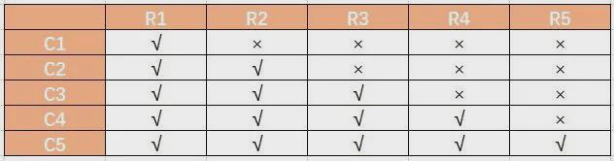
Core Viewpoint - The article emphasizes the importance of risk assessment in investment, highlighting that understanding one's risk tolerance is crucial for selecting suitable fund products and making informed investment decisions [3][4][10]. Risk Assessment - Risk assessment is a process to determine an investor's risk tolerance, which helps in identifying appropriate fund investments [4][5]. - Fund products are categorized into five risk levels (R1 to R5), with R1 being low risk and R5 being high risk, while investors are classified into five categories (C1 to C5) based on their risk tolerance [5][6]. - The classification allows investors with lower risk tolerance (C1) to invest in low-risk products (R1), while those with higher risk tolerance (C5) can invest in a broader range of products, including high-risk options [5][7]. Changes in Risk Tolerance - An investor's risk tolerance is generally stable over short periods but can change over longer durations due to factors like age, family assets, and financial knowledge [8]. - For instance, a novice investor may start with a low-risk tolerance (C1) but may evolve to a higher risk tolerance (C2 or C3) as they gain experience and knowledge [8]. Investment Planning - Investors should avoid following market trends and instead focus on investments that align with their risk tolerance [10][11]. - A diversified investment portfolio should be constructed based on risk tolerance, with lower-risk investors (C1, C2) primarily investing in fixed-income funds while allowing for some exposure to mixed funds [11]. - It is crucial for investors to anchor their investment strategies to their risk tolerance rather than market fluctuations to avoid emotional decision-making during market volatility [11]. Long-term Investment - The article advocates for a long-term investment approach, emphasizing that investors should commit to holding suitable funds over time to achieve satisfactory returns [11].

从那时起:聊聊投资前的“风险评测”
Sou Hu Cai Jing· 2025-07-31 02:52
Group 1 - The core viewpoint of the articles emphasizes the importance of risk assessment for investors to determine their suitable fund products based on their risk tolerance levels [1][2][6] - Risk assessment helps categorize fund products into five risk levels (R1 to R5), allowing investors to understand which products align with their risk profiles [2][3] - Investors are classified into five categories (C1 to C5) based on their risk tolerance, with C1 being the lowest and C5 the highest, influencing the types of funds they can invest in [3][5] Group 2 - The articles discuss that an investor's risk tolerance can remain stable over short periods but may change over longer periods due to factors like age, family assets, and investment knowledge [6][7] - It is suggested that investors should not follow market trends blindly but should adhere to their risk tolerance when making investment decisions [8][9] - The importance of long-term investment strategies is highlighted, encouraging investors to maintain their risk assessment as a guiding principle rather than reacting to market fluctuations [9]
手里有500w,现在应该怎么投?
表舅是养基大户· 2025-07-26 13:47
Core Viewpoint - The article discusses asset allocation strategies for individual investors, particularly focusing on a case where an investor has 5 million yuan to invest with a preference for safety and moderate returns [6][9]. Group 1: Weekly Highlights - The article mentions a weekly selection of posts from a community, highlighting key topics such as bond market adjustments and investment strategies [4][5]. Group 2: Investment Strategy Discussion - An investor inquired about how to invest 5 million yuan with a focus on capital safety and a target annual return of 5-6%, while accepting a volatility of 10-15% [8][12]. - The article emphasizes the importance of understanding potential risks and the reality of achieving desired returns, noting that a conservative approach may yield around 3% annually without market risk [12][13]. - It is suggested that the investor should avoid certain products like insurance and short-term debt due to their unsuitability for the investment horizon and return expectations [17][18]. Group 3: Recommended Investment Products - Recommended investment options include bank wealth management products, especially those with multi-asset strategies, and broker asset management products that offer higher yield potential [18][19]. - Public funds with fixed income and index products are also suggested, with a focus on broad-based indices and ETFs to minimize risk [19][20]. Group 4: Portfolio Allocation Advice - A proposed allocation strategy for the investor includes a mix of global, quantitative, and fixed-income products, with a suggested risk tolerance level of moderate [21][22]. - The article highlights the benefits of diversified investment through professional management, while also cautioning about the risks of relying on a single manager's strategy [24][25]. Group 5: Practical Investment Steps - The article advises the investor to initially invest 30-50% of the total amount and to gradually deploy the remaining funds over a period of 6 months to 1 year, allowing for better market timing and emotional management [25][26]. - It emphasizes the importance of learning from the investment process and developing a solid understanding of market dynamics through engagement with professional advisors [26][27].

10万存定期还是买理财?全面解析风险、收益与流动性
Sou Hu Cai Jing· 2025-05-29 08:02
Core Insights - The article discusses the decision-making process between choosing fixed deposits and wealth management products, emphasizing the balance between safety, returns, and liquidity. Group 1: Key Differences Between Fixed Deposits and Wealth Management Products - Fixed deposits offer principal protection and fixed interest rates, making them suitable for risk-averse investors, with a maximum insurance coverage of 500,000 yuan under the Deposit Insurance Regulations [3] - Wealth management products provide non-principal guaranteed floating returns, with risk levels ranging from R1 (low risk) to R5 (high risk), and potential for principal loss [3] - Current 3-year fixed deposit rates are approximately 2.5%-3% [4] - Expected returns for wealth management products can reach 3%-5% for medium to low-risk options, but actual returns are subject to market fluctuations [5] Group 2: Liquidity Differences - Fixed deposits allow for early withdrawal, but interest is calculated at a lower rate (typically 0.2%-0.3%) [6] - Some closed-end wealth management products cannot be redeemed early, while open-end products may incur fees or be affected by market value fluctuations [6] Group 3: Decision-Making Based on Fund Usage and Risk Tolerance - For short-term needs or risk-averse individuals, fixed deposits are recommended, with a "ladder savings method" suggested to optimize liquidity [8] - For long-term idle funds seeking returns, wealth management products are advised, particularly medium to low-risk options with annual returns of 3%-4% [9] - Aggressive investors may allocate 10%-20% of their funds to high-risk assets like stocks or mixed funds, while maintaining a majority in fixed or stable wealth management products [10] Group 4: Practical Recommendations - In a rising interest rate environment, short-term fixed deposits or open-end wealth management products are preferable for flexible adjustments; in a declining rate environment, locking in long-term fixed deposits or closed-end wealth management is advised [12] - It is crucial to review product details such as fees, investment direction, and historical return volatility [13] - Maintaining an emergency reserve of 10%-20% of funds in liquid assets or money market funds is recommended for unexpected expenses [14] Group 5: Summary of Investment Strategies - Conservative strategy: 70% in fixed deposits (ladder savings) and 30% in money market or low-risk wealth management [16] - Balanced strategy: 50% in fixed deposits, 40% in medium to low-risk wealth management, and 10% in high-risk assets [16] - Aggressive strategy: 30% in fixed deposits, 50% in mixed wealth management, and 20% in stocks or funds [16] - The final choice should align with individual financial planning, risk preferences, and market conditions, with fixed deposits providing a safety net and wealth management expanding return potential [16]

基金A类C类咋选?一文秒懂区别,手把手教你省下真金白银!
Sou Hu Cai Jing· 2025-05-15 00:50
Group 1 - The core difference between Class A and Class C mutual funds lies in their fee structures, with Class A funds charging a front-end sales fee while Class C funds do not [1][3] - Class A funds typically charge a subscription fee based on the investment amount, which decreases with larger investments, while Class C funds charge a daily service fee deducted from the fund's assets [1][3] - Long-term investors may find Class A funds more cost-effective due to decreasing redemption fees over time, while short-term investors may prefer Class C funds for their flexibility and lower upfront costs [4][6] Group 2 - Different fund companies may have varying fee structures for Class A and Class C funds, with potential discounts on Class A subscription fees and differing service fees for Class C funds [6] - The risk and return characteristics of both Class A and Class C funds depend primarily on the underlying investment strategy and asset allocation, rather than just the fee structure [9] - Investors should assess their risk tolerance and investment goals before choosing between Class A and Class C funds, ensuring they select the most suitable option for their financial objectives [9]