
黄金价格预测

Search documents
高盛继续提高国际现货黄金目标价:2026年内,每盎司5400美元,私人部门成重要力量
智通财经网· 2026-01-23 10:53
Core Viewpoint - Goldman Sachs remains bullish on international spot gold prices, raising its forecast for gold prices at the end of 2026 from $4,900 to $5,400 per ounce, driven by increased demand from the private sector and central banks diversifying their reserves [1] Part 1: Evolution of Gold Demand - The current gold price upcycle began in February 2022, triggered by the freezing of Russian central bank reserves, leading to a reassessment of reserve asset neutrality and geopolitical security by global official sectors [2] - Central bank gold purchases are expected to be the main driver of gold price increases in 2023-2024, with annual price increases of 15% and 26% during this period [2] - In November 2025, global central bank gold purchases fell to 24 tons, but the rolling 12-month average remains at 60 tons per month, significantly higher than the historical norm of 17 tons per month before 2022 [2] - The year 2025 is seen as a turning point for the acceleration of the gold price upcycle, with private sector demand entering the market and creating dual pressure on limited gold supply [2] Part 2: Private Sector as Core Support for Price Increase - The core assumption for Goldman Sachs' price forecast is the "sticky nature" of private sector gold hedging positions, which are based on long-term macro risks and do not have short-term liquidation conditions [3] - From early 2025 to the report's release, Western gold ETF holdings increased by approximately 500 tons, indicating a recovery in institutional investor demand for gold [3] - Emerging hedging channels are creating incremental demand, with high-net-worth individuals increasing physical gold holdings and speculative funds expanding bullish options positions [3] Part 3: Breakdown of the $5,400 Target Price - The $5,400 target price represents a 17% increase from the average price of $4,600 per ounce in January 2026, supported by three main dimensions [6] - Central banks are expected to maintain an average monthly gold purchase of 60 tons in 2026, contributing 14 percentage points to the price increase [6] - The anticipated Federal Reserve interest rate cuts are expected to further increase Western ETF holdings, contributing an additional 3 percentage points to the price increase [6] - The Delta hedging effect from expanding bullish options positions will create mechanical buying pressure, increasing the price elasticity of gold [6] Part 4: Signals for Gold Price Peaks - Three core signals indicate when gold prices may peak: 1. Central bank gold purchases fall below 17 tons per month, indicating a weakening of the long-term support logic for gold [8] 2. A reversal in the Federal Reserve's policy from a rate-cutting cycle to a rate-hiking cycle, which would suppress gold demand [8] 3. Resolution or alleviation of core macro risks, leading to a potential liquidation of private sector gold holdings [8]
高盛上调年底金价预测至5400美元
Zhi Tong Cai Jing· 2026-01-22 06:10
Core Viewpoint - Goldman Sachs has raised its forecast for gold prices by the end of 2026 from $4,900 per ounce to $5,400 per ounce, driven by increasing demand from private investors and central banks [1] Group 1: Demand Factors - Central banks are expected to purchase 60 tons of gold each month this year [1] - The holdings of gold ETFs are anticipated to increase as the Federal Reserve lowers interest rates [1] Group 2: Private Sector Influence - The report assumes that private sector diversified buyers are purchasing gold to hedge against global policy risks, which will lead to better-than-expected gold price performance [1] - It is estimated that these private investors will not sell their gold holdings by 2026, contributing to the upward pressure on gold price forecasts [1]
黄金价格预测:突破行情延续八周连涨,支撑位保持坚挺
Sou Hu Cai Jing· 2025-12-26 07:13
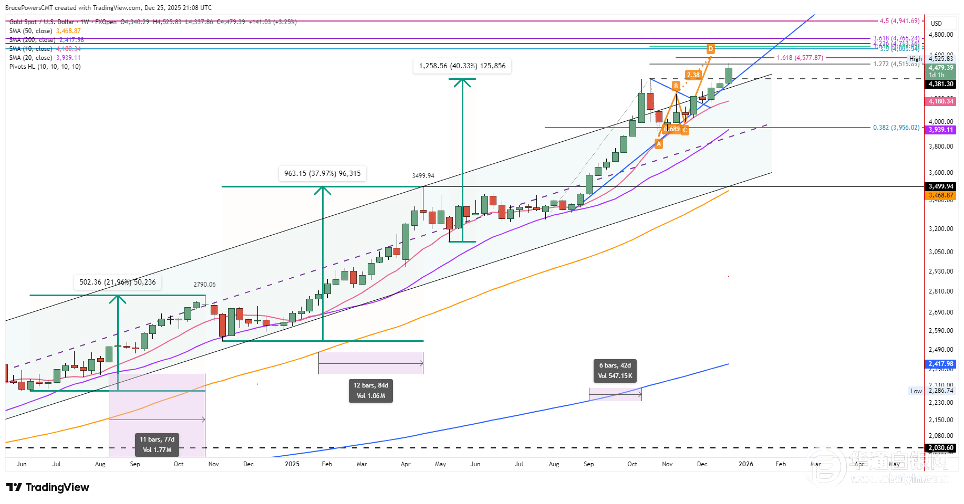
Core Viewpoint - Gold has confirmed a long-term bullish trend following a breakout, with a potential upward movement if the closing price remains above $4,381 [1] Group 1: Price Movement and Technical Analysis - The recent price action indicates a long-term bullish breakout, with a closing price on Wednesday at $4,479, suggesting a high probability of confirming the breakout [1] - Gold prices are on track to complete eight consecutive weeks of gains after a brief two-week pullback in October, reaching a new high of $4,526 [1] - The first significant upward target is set at the 127.2% extension level of the previous pullback at $4,516, which aligns with this week's high [3] Group 2: Support and Resistance Levels - The previous high of $4,381 and the 10-day moving average now at $4,360 form a critical potential support zone [3] - A bullish reversal pattern above $4,381 would indicate strong support, while a pullback to this level is anticipated as a first test of the breakout [3] Group 3: Market Trends and Momentum - The current upward trend, which began at the low point in October, may still be in the early stages of a larger upward wave, with historical trends showing varying durations of sustained new highs [4] - The recent price action confirms the strength of the current bullish trend, with the next upward target focusing on the 161.8% projection of the upward ABCD pattern, extending from $4,664 to $4,713 [5]

黄金暴涨神话未完待续!摩根大通:2026年底看高至5055美元,“这一幕”或引爆6000美元大涨行情
Sou Hu Cai Jing· 2025-12-23 03:29
Core Viewpoint - Gold prices experienced a significant increase in 2025, with a peak rise of 55%, surpassing $4000 per ounce in October, driven by trade uncertainties, declining dollar demand, and central banks increasing gold reserves. The long-term outlook for gold prices remains positive, with expectations to reach $5000 per ounce by the end of 2026 and $5400 per ounce by the end of 2027 [1]. Price Forecast Overview - JPMorgan's quarterly gold price predictions for 2026 are as follows: - Q1: approximately $4400 per ounce - Q2: approximately $4655 per ounce - Q3: approximately $4860 per ounce - Q4: approximately $5055 per ounce [2]. Drivers of Gold Price Increase - The demand for gold is influenced by multiple factors, including a weaker dollar, declining U.S. interest rates, economic and geopolitical uncertainties, and its role as a hedge against currency depreciation and inflation. Gold is viewed as an "insurance asset" during market downturns or geopolitical conflicts [2]. - In Q3 2025, total gold demand from investors (ETFs, futures, bullion, and coins) and central banks reached approximately 980 tons, exceeding the average of the previous four quarters by over 50% [2]. Major Buyers of Gold in 2026 - The core of JPMorgan's price forecast relies on sustained strong demand from central banks and investors, with an expected average quarterly demand of about 585 tons [3]. Demand Structure for 2026 - The projected quarterly demand structure for 2026 is as follows: - Central Banks: approximately 190 tons - Bullion and Coins: approximately 330 tons - ETFs and Futures: approximately 275 tons for the year, primarily concentrated in the early part of the year [5]. Central Bank Gold Purchases - Central banks are expected to continue their structural trend of increasing gold purchases, with an estimated total of 755 tons in 2026, significantly above the long-term average of 400-500 tons prior to 2022 [5]. Investor Demand for Gold - Investors are also increasing their allocation to gold, with expectations of net inflows into gold ETFs of approximately 250 tons and demand for bullion and coins exceeding 1200 tons in 2026 [9]. Gold's Share in Asset Management - As of September 2025, gold held by investors through ETFs, physical gold, and COMEX futures accounted for about 2.8% of the total assets under management (AUM) in global stocks, bonds (excluding central bank reserves), and alternative assets. This share has increased by about 1 percentage point over the past two years, with potential to rise to 4%-5% in the coming years [10][12]. Upward Price Risks - The upward price risks for gold remain dominant, as long as central banks and investors continue diversifying their assets. A mere 0.5% shift of overseas U.S. assets into gold could push prices to $6000 per ounce, given the relatively inelastic supply [12].

摩根大通豪言金价2026年剑指5055美元,两大买家即将入场!
Jin Shi Shu Ju· 2025-12-23 00:45
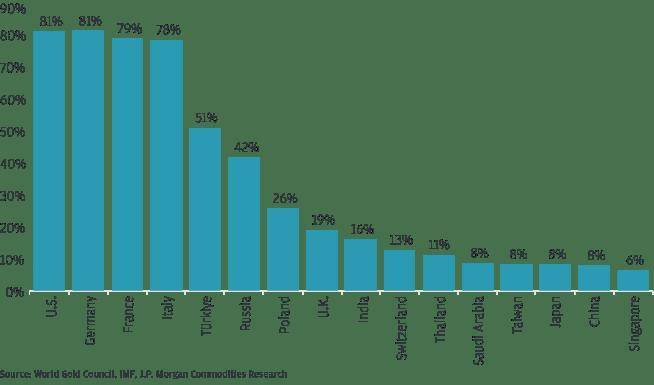
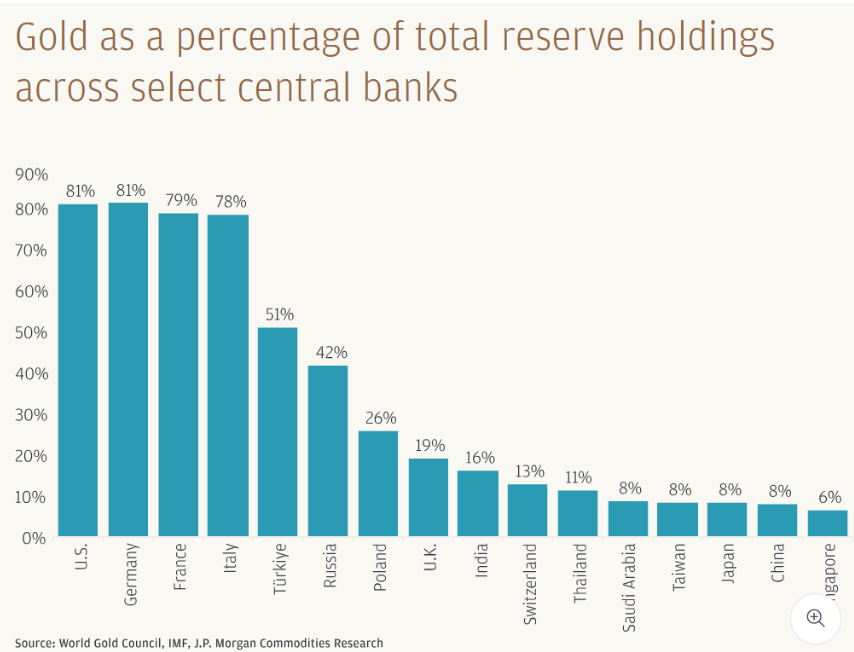
Core Viewpoint - Morgan Stanley predicts that uncertainty in tariff policies and strong demand from ETFs and central banks will push gold prices above $4,000 per ounce by 2025, with potential to exceed $5,055 by the end of 2026 due to new demand from Chinese insurance companies and the cryptocurrency sector [1][2]. Group 1: Gold Price Projections - Morgan Stanley expects the gold bull market to continue into 2026, driven by strong demand factors, with prices projected to reach $5,000 per ounce by the end of 2026 [2][3]. - The average gold price in Q3 2025 is estimated at $3,458 per ounce, with a quarterly demand influx of approximately $109 billion, significantly higher than previous quarters [3]. - The bank forecasts that central banks will purchase an average of 585 tons of gold per quarter in 2026, contributing to price increases [3][4]. Group 2: Central Bank Demand - Central bank gold purchases are expected to remain high, with a projected total of 755 tons in 2026, despite a decrease from the previous three years' average of over 1,000 tons [4]. - The report indicates that if central banks with gold reserves below 10% increase their holdings to that level at a price of $4,000 per ounce, it would require approximately $335 billion to purchase about 2,600 tons of gold [7]. - Brazil and South Korea are highlighted as countries actively increasing their gold reserves, indicating ongoing central bank demand [7]. Group 3: Investor Demand - Investor demand for gold is anticipated to remain strong, with ETF inflows projected at around 250 tons in 2026, and demand for gold bars and coins expected to exceed 1,200 tons annually [8][11]. - The share of gold in total managed assets is expected to rise from 2.8% to potentially 4%-5% in the coming years, reflecting a structural trend towards diversification into gold [11]. - The report suggests that even a small shift of 0.5% of foreign dollar assets into gold could significantly increase demand, potentially pushing prices to $6,000 per ounce [11]. Group 4: Price Forecasts - Morgan Stanley's price forecasts for gold in 2026 are as follows: Q1 at $4,440, Q2 at $4,655, Q3 at $4,860, and Q4 at $5,055, with expectations of reaching $5,400 by the end of 2027 [12].
世界黄金协会对2026年金价预测
Jin Tou Wang· 2025-12-05 10:57
Group 1 - The World Gold Council predicts three scenarios for gold prices by 2026: optimistic, baseline, and pessimistic [1][2] - In the optimistic scenario, gold prices could rise by 15%-30% if economic growth slows, interest rates decline, or global risks increase [1] - The baseline scenario suggests that gold prices will likely exhibit a range-bound volatility, aligning with macroeconomic consensus expectations [2] Group 2 - In the pessimistic scenario, if U.S. economic growth exceeds expectations due to fiscal stimulus, inflation pressures may lead the Federal Reserve to maintain or even raise interest rates, potentially causing gold prices to decline by 5%-20% [2] - Under the pessimistic outlook, gold ETF holdings may continue to see outflows, although some consumers and long-term investors might buy on dips, providing a buffer [2]
黄金冲万机构称主升浪2026启动
Jin Tou Wang· 2025-12-04 06:13
Group 1 - Current spot gold trading is around $4,191.59 per ounce, with a slight decline of 0.28% from earlier levels, indicating a short-term bearish trend [1] - A significant long-term market forecast predicts gold prices will reach $10,000 per ounce by the end of 2029, with the S&P 500 index also expected to hit 10,000 points [2] - The report highlights that gold prices have surged past $3,000 this year, with expectations to stabilize above $4,000, and a potential rise to $5,000 by the end of 2026 [2] Group 2 - Gold is currently experiencing narrow fluctuations while attempting to gain bullish momentum, with a key resistance level at $4,225 [3] - The price movement is supported by trading above the 50-day exponential moving average (EMA50), reinforcing the stability of the short-term bullish trend [3] - The relative strength index (RSI) indicates an extreme oversold level, suggesting a potential bullish wave if positive technical signals emerge [4]
华尔街老兵震撼预言:到2029年底,金价和标普500将双双冲击“1万大关”
Feng Huang Wang· 2025-12-04 02:15
Group 1 - Ed Yardeni, founder of Yardeni Research, predicts that gold prices will reach $10,000 per ounce and the S&P 500 index will hit 10,000 points by the end of 2029 [1][4] - Key factors driving this bullish outlook include economic instability and geopolitical events, leading to increased demand for gold [1] - Central banks are continuously buying gold, with 95% planning to increase their gold reserves in the coming year, and 43% intending to actively raise their gold allocation, the highest level since 2019 [1] Group 2 - Yardeni notes that gold prices are in an upward channel, with the next price surge expected to begin in mid-2026, targeting $5,000 per ounce by the end of next year [1] - The S&P 500 index is currently at 6,849.72 points, having increased by 0.3% as of the latest market close [4] - The relationship between gold and the S&P 500 is typically negative in the short term, but their long-term trends are nearly identical [4] Group 3 - Yardeni expresses no opinion on Bitcoin, referring to it as "digital gold" and previously likening it to "digital tulips," indicating uncertainty in its valuation [5] - The company highlights the growing role of cryptocurrency ETFs and regulated investment tools in the market [5] - The impact of the Genius Act, signed by President Trump, is noted, as it establishes new rules for issuing stablecoins backed by U.S. liquid assets, which may reduce demand for Bitcoin trading [5]
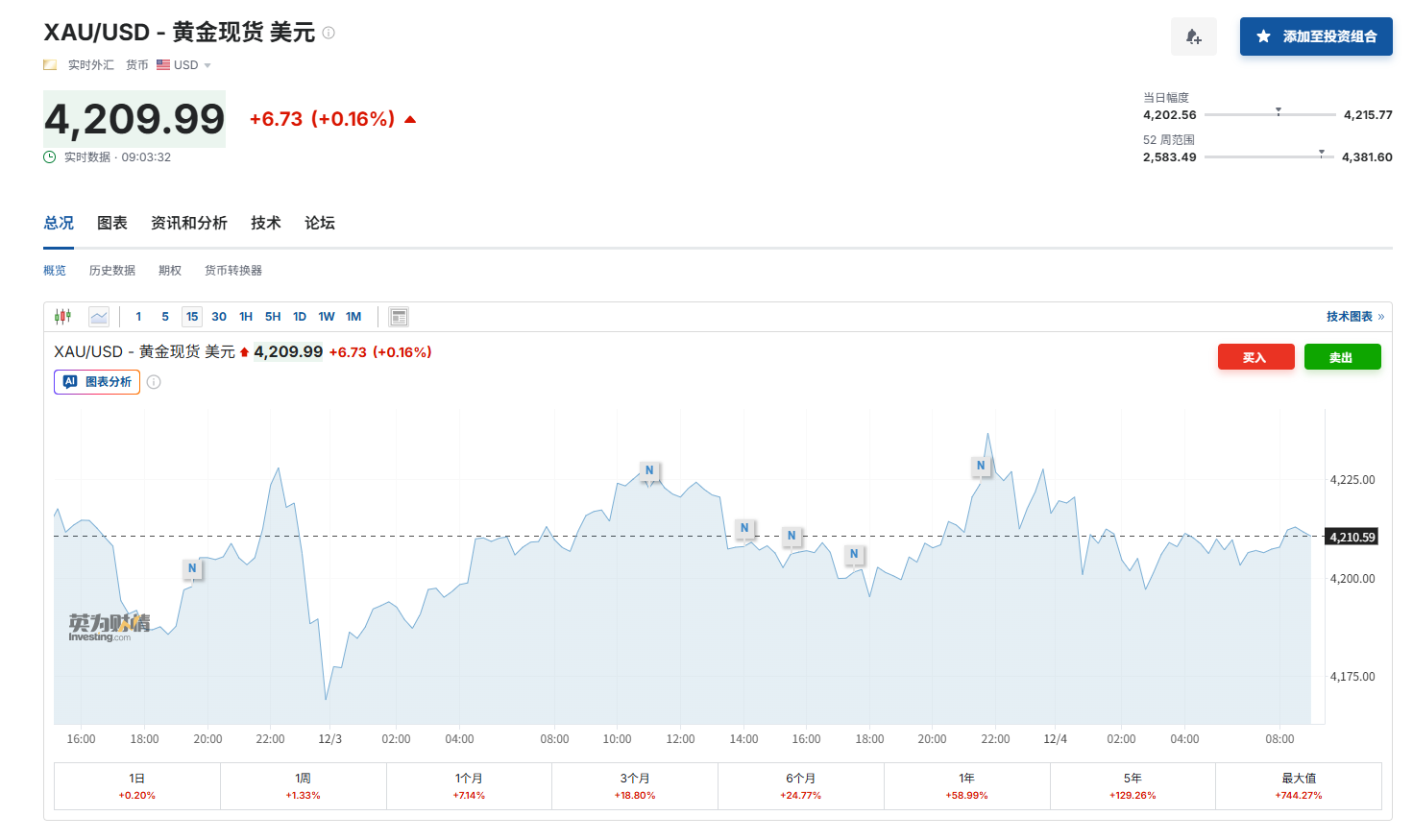
华尔街对黄金后市看法
Sou Hu Cai Jing· 2025-12-02 09:03
Group 1: Core Views on Gold Prices - Bank of America sets a target price of $5,000 per ounce for gold, citing the ongoing expansion of the U.S. fiscal deficit and related macro policies as key support for gold prices, which are expected to continue rising until 2026 unless fundamental drivers change [1] - Goldman Sachs expresses an unprecedented bullish stance on gold, predicting prices will reach $4,900 per ounce by the end of 2026, supported by central bank gold purchases and anticipated Fed rate cuts of 75 basis points in 2026, with 70% of surveyed investors believing in a continued upward trend [1] - Deutsche Bank forecasts a more optimistic scenario, suggesting gold prices could peak at $4,950 per ounce by 2026, with a baseline estimate of $4,450 per ounce, driven by strong demand from central banks and ETFs, while cautioning about potential pressures from stock market corrections and geopolitical tensions [1] Group 2: Market Predictions and Factors - Morgan Stanley's commodity strategy team expects gold prices to peak at $4,500 per ounce by mid-2026, highlighting gold as the top commodity choice for the coming year, supported by a reversal in ETF fund flows and increased central bank purchases [2] - HSBC takes a more cautious view, predicting gold prices will fluctuate between $3,600 and $4,400 per ounce in 2026, noting potential increases in gold supply and a slowdown in central bank purchases, which may temper price gains [2] Group 3: Market Conditions and Trends - GF Futures notes that the U.S. economy and job market are facing challenges from government shutdowns and trade tensions, while central banks are increasing gold holdings, suggesting a potential return to a bull market for precious metals similar to the 1970s [5] - The report indicates that after reaching new highs, gold prices may experience a 2-3 month consolidation period, with current market liquidity influenced by U.S. government actions and Fed signals, leading to potential price corrections [5]


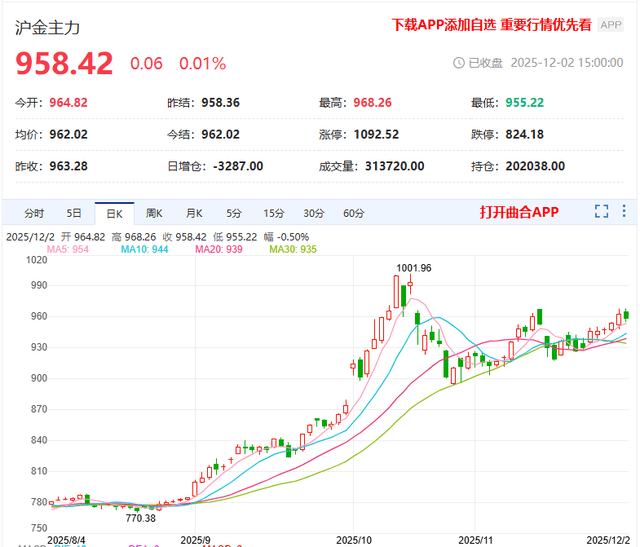
高盛预测黄金价格将突破4900美元,或将吞噬全球三分之一财富
Sou Hu Cai Jing· 2025-11-26 07:56
Core Viewpoint - Global gold demand reached a record high of 1,313 tons in Q3 2025, driven by various factors including central bank purchases and private investment diversification [2] Group 1: Gold Price Trends - Gold prices have increased by 55% this year due to multiple influencing factors [3] - Goldman Sachs predicts that gold prices could reach $4,900 per ounce by the end of 2026, with potential for further increases if private investors continue diversifying their assets [2] - The Federal Reserve's policies are closely linked to gold prices, with expectations of potential interest rate cuts in December, which could further support gold prices [4] Group 2: Central Bank Activities - Global central banks have continued to increase their gold holdings, with net purchases totaling 634 tons in the first three quarters of 2025, although this is lower than the exceptionally high levels of the past three years [6] - China's gold consumption decreased by 7.95% year-on-year to 682.730 tons in the first three quarters of 2025, contrasting with the global trend of central banks increasing gold reserves [5] Group 3: Market Sentiment and Investment Risks - The volatility in gold prices has led to mixed opinions on its value, with some investors profiting while others have incurred significant losses [7] - Economic experts suggest that ordinary investors may struggle to compete against foreign speculative capital and global central banks in the current market environment, advising caution in gold investments [8] - The complex global political and economic landscape is expected to provide some support for international gold prices, but high volatility is anticipated [10]
