AI伦理

Search documents
“问道”大模型:当好伦理风险防控“专家”
Ke Ji Ri Bao· 2025-12-01 00:45
Core Viewpoint - The launch of the "Wenda" ethical AI model aims to address ethical risks in technology and business decisions, providing a decision support system for various stakeholders in society [1][2]. Group 1: Model Functions and Applications - "Wenda" features five main functions: ethical risk assessment and auditing, ethical dilemma simulation and decision-making, ethical alignment design assistance, dynamic knowledge base and case teaching, and exploration of cutting-edge ethical paradigms [1]. - The model serves as an ethical "auditor" for businesses, automatically reviewing commercial decisions, advertising content, and algorithm models for ethical risks [2]. - It acts as a compliance detection tool for AI development, helping researchers incorporate ethical considerations from the design phase to avoid biases and risks [2]. Group 2: Addressing AI Challenges - "Wenda" aims to systematically identify and assess various ethical risks in AI applications, proposing actionable governance paths from a Chinese context [3]. - The model addresses the issue of "AI hallucination" by utilizing structured knowledge construction, multi-modal responses, layered security mechanisms, and an automatic optimization loop to reduce errors in AI outputs [3][4]. Group 3: Knowledge Structure and Future Development - The model is built on a foundation of classic ethical literature, significant ethical cases in China, relevant laws, and ethical norms from recent social events, forming a "knowledge tree" for structured knowledge output [4]. - Future developments will focus on optimizing human-machine interaction, creating a feedback loop for model iteration, and expanding applications in research, industry, and education to promote the synergy between AI and social ethics [4].
从干洗店到伊丽莎白女王工程奖,李飞飞逆行硅谷技术神话,聚焦AI去人性化风险
3 6 Ke· 2025-11-21 10:18
Core Insights - Fei-Fei Li was awarded the Queen Elizabeth Prize for Engineering in Spring 2025 for her foundational contributions to computer vision and deep learning, particularly as a core advocate of the ImageNet project [1][2] - Li emphasizes that engineering is not just about computational power and algorithms, but also about responsibility and empathy, warning against the dehumanization risks posed by AI [2][12] Group 1: Achievements and Contributions - Li's research has enabled machines to perceive the world in a way that closely resembles human vision, marking a significant milestone in AI development [1][8] - The ImageNet project, initiated in 2007, has been pivotal in shifting the paradigm towards data-driven deep learning methods, which became mainstream after the 2012 ImageNet competition [8][9] Group 2: Ethical Considerations and Social Impact - Li advocates for a human-centered approach to AI, stressing that technology must align with human values and needs, and warns against the over-commercialization and militarization of AI [10][12] - She has called for the establishment of ethical regulatory mechanisms for AI, emphasizing the urgency of integrating legal frameworks to ensure responsible AI development [17][20] Group 3: Personal Background and Perspective - Li's immigrant background and experiences as a woman in technology have shaped her unique perspective on the societal implications of AI, allowing her to recognize structural biases within the tech ecosystem [4][22] - Despite her significant contributions, Li expresses discomfort with being labeled as a "godmother of AI," advocating for a broader representation of women in the field [23][29] Group 4: Challenges and Controversies - The ImageNet dataset has faced criticism for potential racial biases, prompting discussions about the ethical implications of AI training data [26][28] - Li's position as a prominent figure in AI raises questions about the balance between human-centered values and the commercial pressures of the tech industry, highlighting the complexities of her role [31][34]


谷歌前CEO被小39岁婚外女友爆料,虐待还跟踪,硅谷国王情史混乱
Sou Hu Cai Jing· 2025-10-22 05:25
Core Points - Eric Schmidt, former CEO of Google, is recognized for transforming a search engine with annual revenue of less than $1 billion into a global tech giant, earning him the title "King of Silicon Valley" [1] - Schmidt's personal life has been marred by controversy, particularly regarding allegations of moral ambiguity and chaos [1] Group 1: Allegations and Relationships - Michelle Ritter, Schmidt's former mistress, publicly accused him of mental abuse, tracking, and "comprehensive digital surveillance" during their relationship [3] - Schmidt has been married to Wendy Schmidt for 45 years, but their marriage is characterized as an "open marriage," with Wendy no longer involved in his personal affairs [6] - Schmidt's non-cohabiting status has allowed for multiple clandestine relationships with various women, including models and political figures [8] Group 2: Control and Power Dynamics - Sources indicate that Schmidt exhibits strong controlling behavior in his relationships, often using money and resources to maintain them, which portrays him as both "generous" and "controlling" [9] - Ritter's lawsuit claims that Schmidt utilized his wealth and tech background to dominate her life, making it nearly impossible for her to communicate privately [11] Group 3: Impact on Public Image - The allegations against Schmidt have significantly damaged his public image, despite his previous roles in international affairs, charitable projects, and AI ethics committees [13] - A Silicon Valley commentator criticized Schmidt, stating that while his tech empire connects the world, he fails to establish basic respect in personal relationships [13]

OpenAI的“成人自由”,或将打开AI伦理的潘多拉魔盒
Xin Jing Bao· 2025-10-20 09:35
Core Viewpoint - OpenAI is planning to introduce an "adult mode" for ChatGPT, which raises ethical concerns regarding the potential for inappropriate content and inadequate age verification measures [1] Group 1: Ethical Concerns - The introduction of adult content is seen as a bait for paid subscriptions, which could lead to a decline in ethical standards within the AI industry [1] - There are significant concerns that once inappropriate content is made accessible, it could trigger a race to the bottom in terms of content quality and ethical considerations [1] Group 2: Regulatory and Industry Implications - The proposed age verification methods are described as flawed, suggesting that they may not effectively prevent minors from accessing adult content [1] - The potential for regulatory chaos and a loss of ethical direction in the AI sector is highlighted, indicating a critical moment for the industry [1]
新加坡探路智能陪伴新纪元:千亿市场的全球化起点|SEA Frontline
Tai Mei Ti A P P· 2025-10-10 22:16
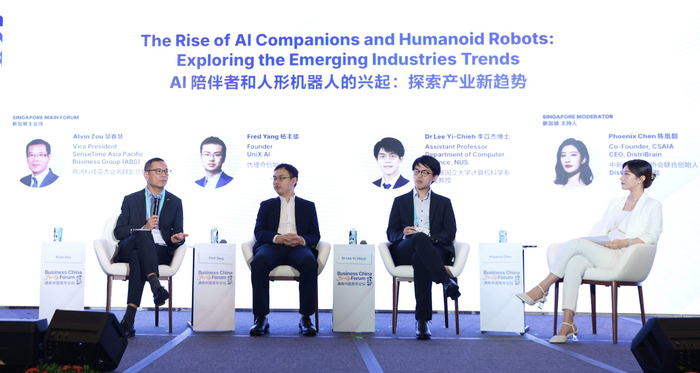
Core Insights - The global AI companion market is projected to exceed $28.1 billion in 2024 and surpass $140 billion by 2030, with a compound annual growth rate of 30% [1] - China and Singapore are emerging as key markets for AI companion development, with China being the second-largest market and Singapore serving as a testing ground for global validation [1] - The 2025 China-Singapore Youth Forum featured discussions on AI companionship and humanoid robots, highlighting the collaborative efforts between the two countries [2] Market Potential - The AI companion market is expected to grow significantly, with a forecasted market size of over $140 billion by 2030 [1] - China is recognized for its active application innovation ecosystem and complete industrial chain, while Singapore benefits from its international environment and advanced AI governance [1] Forum Discussions - The forum included insights from various industry leaders, focusing on the commercialization of AI companions and ethical considerations [3][4] - Key topics discussed included technology product breakthroughs, commercialization positioning, globalization strategies, and social ethics governance [4] Product Design and User Experience - Emphasis was placed on user experience in product design, with the notion that the best technology should be invisible to users [4][5] - The integration of tactile feedback in humanoid robots was highlighted as essential for precise control and safety in human environments [5] Commercialization Strategies - Companies are focusing on enhancing human capabilities rather than replacing them, with AI serving as a supportive tool in various sectors [6][8] - The importance of cultural adaptation and compliance with local regulations was stressed for successful market entry [9][10] Ethical Considerations - The need for a multi-faceted approach to AI ethics was emphasized, including the establishment of ethical review mechanisms and the importance of diverse perspectives in governance [13][14] - Discussions highlighted the potential risks of AI over-personification and the necessity of maintaining clear boundaries between human and AI interactions [12][14] Globalization Challenges - AI companies face challenges such as market acceptance, data privacy, computational resource limitations, and cultural adaptation when expanding internationally [9][10] - The importance of understanding local customer needs and regulatory environments was underscored for successful AI deployment in different regions [10][11]
昨夜今晨:三大事件重塑全球格局!黄金破4000、法国总理辞职、OpenAI破局
Sou Hu Cai Jing· 2025-10-08 06:56
Group 1: Gold Market Dynamics - Gold prices have surpassed $4000 per ounce for the first time, indicating a significant trust crisis in the global monetary system [3] - Factors contributing to this surge include the weakening of the US dollar due to rising national debt and interest rate cuts, ongoing geopolitical conflicts, and a trend of central banks, particularly in emerging markets, increasing gold reserves [3] - Goldman Sachs has raised its gold price forecast for the end of 2026 to $4300 per ounce, suggesting that gold may play a multifaceted role as an anti-inflation, safe-haven, and settlement currency [3] Group 2: Political Instability in France - The resignation of French Prime Minister Le Cornu after just 27 days highlights a deepening political crisis in France, marked by a failure to pass a significant budget proposal [3] - France's economic stagnation, with GDP growth below 1% for three consecutive years and youth unemployment exceeding 20%, reflects broader issues within the European governance model [3] - The political turmoil in France has led to a depreciation of the euro, which has fallen below 1.06 against the dollar, and may impact France's military support for Ukraine [3] Group 3: OpenAI and the AI Ecosystem - OpenAI's recent developer day introduced significant advancements, including AgentKit and Codex Pro, which aim to lower development barriers and enhance code generation accuracy [3] - The competition for dominance in the AI ecosystem is intensifying, with major companies integrating OpenAI's technology into their platforms, indicating a shift in workplace dynamics [3] - Ethical challenges surrounding AI, including job displacement and regulatory gaps, are becoming increasingly prominent as the technology evolves [3] Group 4: Interconnected Global Impacts - The rise in gold prices, depreciation of the euro, and political instability in France are interconnected, creating a complex triangle of financial, political, and technological challenges [3] - A new cold war dynamic is emerging, characterized by competition between the US, China, and the EU in technology and currency [3] - Public awareness and activism are increasing, with movements demanding transparency in AI algorithms and compensation for job losses due to automation [3] Group 5: Future Scenarios - Three potential future scenarios for 2026 include escalating geopolitical conflicts leading to resource wars, the establishment of an "AI United Nations" under the leadership of companies like OpenAI, and a rebalancing of power among the US, China, and the EU [3]

期待打造AI伦理研究与实践国际高地
Nan Fang Du Shi Bao· 2025-09-15 23:09
Core Insights - The establishment of the Guangdong-Hong Kong-Macao Greater Bay Area Generative Artificial Intelligence Safety Development Joint Laboratory aims to enhance international cooperation and influence in global AI governance [2][8] - Philosophical research is positioned to provide foundational support for AI ethical norms, emphasizing human welfare and value preservation [4][5] Philosophy and AI - Philosophy can construct value systems and ethical principles, exploring fundamental societal values such as fairness, justice, dignity, and freedom, which are essential for AI ethical guidelines [4] - It aids in understanding the essence and boundaries of AI risks, helping to define acceptable risk levels and balance innovation with risk management [4] - The discipline addresses responsibility allocation in AI development, emphasizing human agency and ensuring AI serves human welfare [4] Ethical Review and Social Impact - Ethical reviews from a philosophical perspective can guide technical teams to consider not just feasibility but also the ethical implications of their work [5] - Philosophy encourages a comprehensive assessment of AI's societal, cultural, and economic impacts, promoting the integration of social impact evaluations in AI design [5] - It translates abstract concepts of fairness into concrete development guidelines, ensuring diversity and representation in data selection and algorithm design [5] Standards and Mechanisms - The laboratory plans to implement a tiered management system for safety standards, balancing rigor with flexibility based on risk levels [6] - A multi-layered mechanism for corpus selection and review will be established, focusing on diversity, bias detection, and alignment with values [6] - The laboratory will utilize automated and manual review processes, involving multidisciplinary experts to ensure the integrity of AI-generated content [6] Future Directions - The laboratory aims to become a leading center for AI ethics research and practice, developing actionable ethical guidelines and governance frameworks [7] - It seeks to create a collaborative ecosystem integrating academia, industry, and research to promote AI safety and ethics [7] - The laboratory will contribute to global AI governance frameworks and enhance regional competitiveness through high-standard safety solutions [7] Unique Roles of the Joint Laboratory - The laboratory will act as a core engine for technological innovation, focusing on safety standard formulation and knowledge sharing [8] - It will serve as a high-level training base for AI talent, combining technical skills with ethical and legal perspectives [8] - The laboratory aims to enhance regional influence by participating in global AI governance dialogues and fostering international cooperation [8]

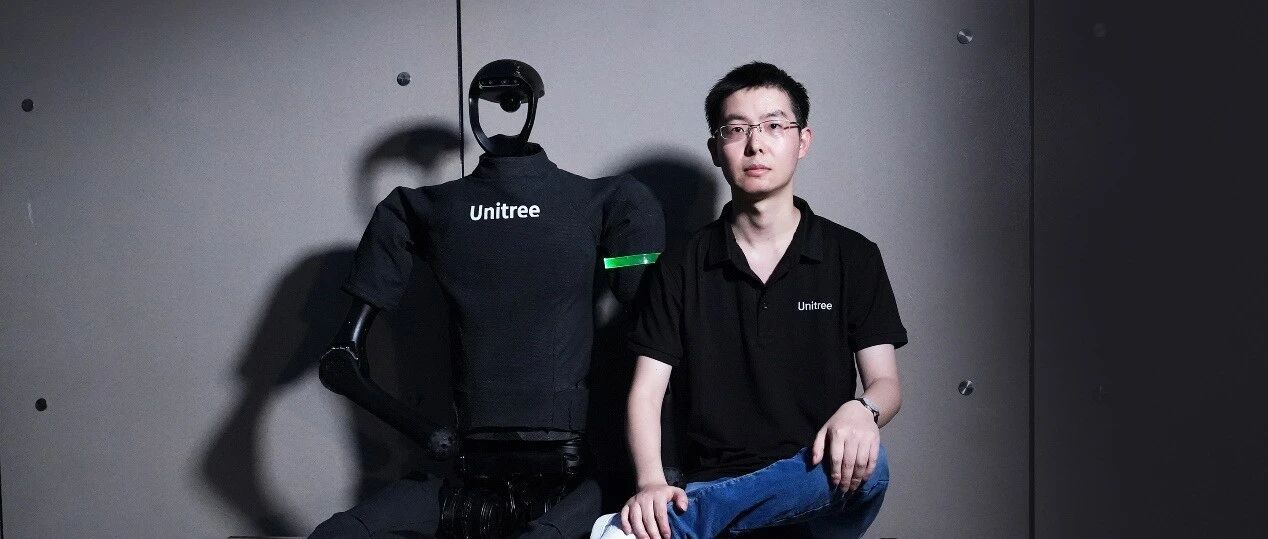
宇树科技王兴兴:越智能的机器人,应该越是克制 | 红杉Family
红杉汇· 2025-09-04 00:03
Core Viewpoint - Humanoid robots are becoming a key lever for future productivity, with companies like Yushu Technology leading the way in low-cost, high-performance robotic solutions, reshaping the global industry landscape [5][6][7]. Investment and Growth - Sequoia China has been one of the earliest and broadest investors in the robotics sector, supporting Yushu Technology through multiple funding rounds, significantly contributing to its early development and growth [6][7]. - The founder of Yushu Technology, Wang Xingxing, expressed optimism about the rapid growth of the emerging robotics industry in China, predicting that the overall performance of the smart machinery sector could nearly double compared to the previous year [7]. Robotics Efficiency and Challenges - Current humanoid robot hardware lacks sufficient quality and large-scale application, but it is deemed "good enough" for present needs, similar to early automobiles [8]. - The industry is facing challenges in achieving the critical mass of embodied intelligent AI algorithms necessary for widespread use in factories and homes [9]. Ethical Considerations - Wang Xingxing views current robots as purely logical entities without desires or consciousness, emphasizing the importance of ensuring that AI serves humanity without developing its own motives [10][11]. - Concerns exist regarding the potential for malicious modifications to robots, which could lead to ethical and safety issues [18]. Future Relationships and Market Position - The relationship between humans and intelligent agents is seen as non-competitive, with AI primarily requiring energy, while humans have more complex survival needs [12]. - In the global context, China's robotics and AI capabilities are considered to be on par with the rest of the world, with the future of robotics heavily reliant on advancements in AI [13]. International Expansion and Commercialization - Yushu Technology aims to provide better robotic services globally, having already engaged with overseas clients since 2018 [15]. - The company emphasizes the importance of continuous technological advancements for commercial success, warning that stagnation could lead to industry decline [17]. Technological Development and Competitions - Yushu Technology is exploring various applications for humanoid robots, including industrial and personal use, and has recently developed complex algorithms for robot combat, which presents significant technical challenges [16][17].
「我怕活不到毕业」,AI引爆美国退学潮,18岁PPT式创业震惊YC之父
3 6 Ke· 2025-08-18 00:40
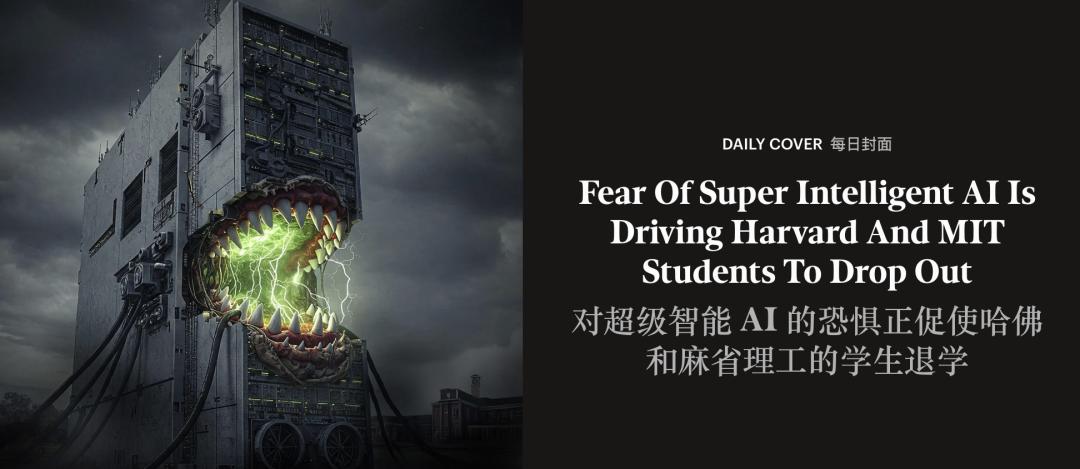
Group 1 - A dropout wave is emerging among elite students at Harvard and MIT, driven by fears surrounding the imminent arrival of Artificial General Intelligence (AGI) [2][3] - Students are leaving their studies to join AI safety initiatives, believing that AGI could surpass human capabilities and pose existential threats [3][6] - The phenomenon is characterized by a collective anxiety among students, with many feeling that their degrees may become irrelevant in the face of rapid AI advancements [16][25] Group 2 - Reports indicate that over half of students are concerned about AGI impacting their job prospects, leading to a belief that their time in university may be wasted [16][22] - Economic experts predict that AI could replace a significant number of entry-level jobs, particularly during economic downturns, potentially leading to a 20% unemployment rate [17][22] - The trend of students dropping out to pursue AI-related ventures is seen as a response to the fast-paced evolution of technology, with some arguing that the urgency is exaggerated [25][32] Group 3 - Prominent figures in the tech industry, including Hinton and various economists, have warned about the potential catastrophic risks of uncontrolled AI development [8][9][22] - Educational institutions are attempting to retain students by introducing AI ethics courses and addressing concerns about the implications of AI on the job market [31][32] - The narrative surrounding AI and its impact on the future workforce has led to a cultural shift, with students viewing degrees as less valuable in a rapidly changing landscape [33]

专访王兴兴:越是理性的人,越是克制,未来的AI也是一样
财富FORTUNE· 2025-08-13 13:17
Core Viewpoint - The article highlights the rise of Yushu Technology and its founder Wang Xingxing as a significant player in the robotics industry, particularly in humanoid robots, amidst the ongoing digital and intelligent transformation of society [2][3][10]. Group 1: Company Overview - Yushu Technology, initially a low-profile startup in Hangzhou, gained recognition after showcasing its "robotic cow" performance during the 2021 Spring Festival Gala, leading to its expansion into humanoid robotics [10]. - The company has been recognized as a "disruptor" in the global robotics industry, being included in TIME magazine's list of the 100 most influential companies in 2025 [10]. - Yushu Technology has recently completed a round of financing, achieving a valuation exceeding 10 billion yuan, with investments from major players like China Mobile, Tencent, Alibaba, and Geely Capital [11]. Group 2: Industry Insights - The Chinese robotics industry is projected to grow significantly, with over 450,000 intelligent robot companies and registered capital exceeding 6.44 trillion yuan by the end of 2024 [11]. - There are contrasting views on the industry's future: pessimists warn of a potential bubble due to high valuations and uncertain business models, while optimists see a substantial demand gap in both China and the U.S. over the next decade [12][11]. - Wang Xingxing believes that the current growth in the robotics sector is robust, estimating that the overall performance of the intelligent machinery industry could nearly double compared to the previous year [15]. Group 3: Technological Challenges and Future Outlook - Wang Xingxing acknowledges the challenges in the commercialization of humanoid robots, suggesting that their integration into homes and factories is not feasible in the short term [11]. - He emphasizes the importance of continuous technological advancements for the commercial viability of robotics, stating that stagnation could lead to rapid decline in the industry [31][32]. - The company is exploring the potential of humanoid robots through competitions like robot fighting, which serve to showcase technological progress and expand commercial opportunities [30].