AI to C

Search documents
AI进入生态对决,大厂们的明牌与暗战
3 6 Ke· 2026-01-22 04:59
Core Insights - The article discusses the competitive landscape among major tech companies in the AI sector, particularly focusing on Alibaba, ByteDance, and Tencent as they prepare for the upcoming Spring Festival and the AI application race [1][3][12] Group 1: AI Competitive Landscape - Alibaba has launched the Qianwen App, achieving over 100 million daily active users within two months, and has integrated it with its ecosystem, enhancing its AI capabilities [2][3] - ByteDance's Doubao has also surpassed 100 million daily active users and is expanding into various smart devices, indicating a strong push in AI hardware and software integration [4][8] - Tencent is taking a more cautious approach, focusing on internal restructuring and gradual development of its AI capabilities, with recent organizational changes and the introduction of new AI models [6][10] Group 2: Strategic Approaches - Alibaba's strategy involves rapid deployment and integration of AI across its business lines, aiming to enhance user experience and operational efficiency [7][12] - ByteDance leverages its existing user base and ecosystem to minimize costs and maximize the impact of its AI applications, positioning itself as a major player in the AI hardware market [8][9] - Tencent's strategy appears to be more conservative, focusing on building a robust AI infrastructure and integrating AI into its existing services, particularly within the WeChat ecosystem [11][12] Group 3: Market Dynamics and Future Outlook - The competition for AI market share is intensifying, with all players needing to ensure user engagement and retention rather than just focusing on user acquisition [12] - The article suggests that the upcoming Spring Festival may serve as a pivotal moment for these companies to showcase their AI advancements and marketing strategies [2][5]


豆包再向C端猛冲
Hua Er Jie Jian Wen· 2026-01-21 11:41
Core Viewpoint - The article discusses the rapid integration of AI applications into daily life, particularly focusing on the "Doubao" app, which has become a significant player in the AI to C (consumer) market, achieving over 100 million daily active users and serving as an official AI guide at art exhibitions [2][4][3]. Group 1: AI Application Development - Doubao has successfully embedded itself into various life scenarios, becoming one of the most proactive native AI applications [3]. - The competition in the AI to C sector is intensifying, with multiple companies accelerating their product development since last year [5]. - Major internet companies are adopting differentiated strategies in the AI to C space, with ByteDance leveraging its content and traffic advantages to enhance user growth through Doubao [6]. Group 2: Competitive Landscape - Alibaba is creating a differentiated product matrix with its "Qianwen" app, integrating various services like food delivery and flight booking to establish a personal AI assistant [6]. - Tencent is positioning its "Yuanbao" as a social intelligence entry point, extending its capabilities into office and personal knowledge domains [7]. - Analysts predict that 2026 may mark the beginning of a new era for universal AI entry points, as companies aim to make AI applications the primary interface for shopping, entertainment, and social needs [8]. Group 3: Market Dynamics - The shift towards AI is reshaping user entry points, leading to a revolution in internet traffic distribution mechanisms, moving away from traditional search engine optimization (SEO) to generation-based optimization (GEO) [8]. - The competition for AI applications is fundamentally about becoming the primary touchpoint for users' digital lives, emphasizing the importance of deep integration with high-frequency user needs [10][11]. - The ability to integrate various services into a cohesive experience will determine the potential ceiling for these AI applications [12]. Group 4: Challenges and Future Outlook - Despite rapid development, AI to C applications face challenges such as unclear standards for cross-agent interfaces and data security issues [12]. - The exploration of business models is still in its early stages, with companies primarily focused on user acquisition and experience enhancement rather than immediate monetization [13]. - An unprecedented AI revolution is permeating daily life, indicating significant future potential for these technologies [14].


记者体验不如预期 “AI办事闭环”利在厂商?
Mei Ri Shang Bao· 2026-01-20 23:23
Core Insights - The competition for AI "super entry" is intensifying among major tech companies like Alibaba, ByteDance, and Tencent, focusing on user engagement and service integration [1][2][3] - The effectiveness of AI applications in consumer markets remains uncertain, as companies strive to shift user habits and achieve widespread adoption [1][2] Group 1: Company Strategies - Alibaba's Qianwen App aims to create an "AI service closed loop" by integrating various services such as food delivery, flight bookings, and hotel reservations, addressing the challenge of converting technical advantages into user engagement [2] - ByteDance's Doubao has surpassed 100 million daily active users, leveraging its content and traffic distribution strengths to seamlessly integrate ordering and local services [2] - Tencent has incorporated "Yuanbao" into its WeChat ecosystem, enhancing its AI entry point by utilizing its vast user base [2] Group 2: Market Dynamics - The competition for AI "super entry" is not exclusive to tech giants; pure AI model companies like Zhiyu have also entered the market, offering services like ordering and ticket booking through third-party ecosystems [2] - The strength of AI entry points and the fluidity of service integration depend on the overall strength of a company's supply chain and ecosystem [3] - Industry experts predict that 2026 will mark the beginning of the "general AI entry year," as AI transitions from a technology validation phase to a commercial application phase [3]
中科宇航上市辅导状态已变更为辅导验收,5家商业航天公司全部启动IPO;马斯克脑机第一人首曝!不开颅在线升级——《投资早参》
Mei Ri Jing Ji Xin Wen· 2026-01-19 01:29
Group 1: Important Market News - The People's Bank of China and the National Financial Regulatory Administration announced that the minimum down payment ratio for commercial housing loans is adjusted to no less than 30% [1] Group 2: Industry Insights - Domestic commercial aerospace companies are advancing their IPO processes, with China Aerospace Science and Technology Corporation's subsidiary, Zhongke Yuhang, changing its listing guidance status to acceptance. The company aims to become the first commercial aerospace stock in China [2] - The satellite communication industry is projected to reach a market size of 200 to 400 billion yuan by 2030, with an annual compound growth rate of 10% to 28%. This sector is transitioning from "concept validation" to "scale application," driven by technological maturity and cost reduction [2] - Major internet companies in China, including Alibaba, ByteDance, and Tencent, are intensifying competition in AI application products. Alibaba's newly launched Qianwen APP aims to serve as a personal AI assistant, integrating various services within its ecosystem [3][4] - Alibaba's Qianwen APP achieved over 10 million downloads within seven days of its launch, making it the fastest-growing AI application, directly competing with ByteDance's Doubao [4] - The brain-computer interface sector is gaining traction, with significant investments and advancements. A startup, Merge Labs, raised $252 million in seed funding, indicating strong interest in this technology [5][6] - The global market for brain-computer interface medical applications is expected to reach $40 billion by 2030 and $145 billion by 2040, highlighting its potential in treating neurological disorders [6] Group 3: Company Updates - Rongbai Technology is under investigation by the China Securities Regulatory Commission for misleading statements regarding a major contract [7] - San Da Membrane announced a plan to reduce its shareholding by up to 996,040 shares, representing no more than 3% of its total share capital [7] - He Shi Eye Hospital's shareholder plans to reduce its stake by up to 310,610 shares, accounting for 1.97% of the total share capital [7] - Jinke Environment reported a planned reduction of up to 102,520 shares by a significant shareholder, representing 0.83% of the total share capital [7] - Wei Si Medical announced a plan to reduce its shareholding by up to 287,310 shares, which is 3% of its total share capital [8] - Sifangda's controlling shareholder plans to reduce its stake by up to 483,150 shares, while other executives also plan to sell portions of their shares [8] - Chuhuan Technology reported a planned reduction of up to 239,560 shares by its significant shareholders [8]


阿里正把自己装进赛博分身
虎嗅APP· 2026-01-15 14:18
Core Viewpoint - Alibaba is strategically entering the C-end AI market with its AI app "Qianwen," aiming to leverage its ecosystem and model capabilities to enhance user experience and satisfaction [3][4][10]. Group 1: Strategic Approach - Alibaba's approach to the C-end AI market is characterized by two main strategies: maximizing the capabilities of its Tongyi large model and leveraging its overall ecosystem advantages [4][12]. - The company aims to focus on two primary user scenarios: AI office (learning) and daily life, prioritizing user experience and reputation [4][12]. - Alibaba's strategy is to engage in an "ecological war" and a "model war," rather than merely competing on product features [6][12]. Group 2: Competitive Landscape - Prior to Alibaba's entry, major players in the C-end AI market adopted three user growth models: ByteDance's model focused on product and traffic, Tencent's model leveraging social and content ecosystems, and Meituan's model centered on core business scenarios [5][6]. - Alibaba's strategy aligns with ByteDance's logic of maximizing its strengths, but differs in viewing its core assets as "model + ecosystem" rather than "product + traffic" [6][12]. Group 3: Internal and External Challenges - Internally, Alibaba must ensure its model capabilities remain superior while improving operational efficiency across various dimensions [8][12]. - Externally, competition is intensifying with the upcoming release of new models from competitors like DeepSeek, and the market is expected to see explosive growth in AI applications by 2026 [8][12]. Group 4: User Engagement and Metrics - The core goal for Qianwen in the coming year is to enhance user satisfaction to ensure retention, which will subsequently drive new user acquisition and interactions within the ecosystem [9][12]. - Qianwen's evaluation metrics focus on user satisfaction, delivery completion, and retention rather than traditional metrics like monthly active users or GMV [12][13]. Group 5: Future Outlook - The next five months are critical for Qianwen, as they will coincide with Alibaba's fiscal year-end and the 618 shopping festival, providing an opportunity to assess early user engagement and the operational link between Qianwen and ecosystem businesses [14][12]. - Alibaba's long-term strategy involves continuous upgrades to model capabilities and user demand insights, with a focus on enhancing user experience across various scenarios [18][19].

谷歌、OpenAI在探索的新赛点,被阿里率先实现了
Feng Huang Wang· 2026-01-15 04:35
Core Insights - Alibaba is one of the few global players that possesses both a "top-tier open-source model" and a "national-level consumer service ecosystem," enabling real-world interactions and tasks through AI [2][10] - The launch of the Qianwen App marks a significant shift from AI as an information tool to an autonomous agent capable of executing complex tasks, entering the "service era" of AI [4][9] Group 1: Product Launch and Features - The Qianwen App integrates over 400 AI service functions, allowing users to perform various tasks such as shopping, ordering food, and booking hotels through natural language commands [2][8] - The app can provide personalized recommendations based on user intent, utilizing Alibaba's extensive product database and review system to enhance user experience [8][11] - Qianwen also connects with Alipay to offer 50 public service functions, streamlining processes like visa applications and healthcare registration [8][9] Group 2: Market Position and Growth - Since its launch, Qianwen has become the fastest-growing AI application globally, surpassing 100 million monthly active users, particularly among students and white-collar workers [5][15] - Alibaba's comprehensive AI capabilities position it as the leading investment target in China's AI sector, with analysts highlighting its competitive advantages in AI infrastructure and model development [5][15] - The stock price of Alibaba has increased by over 10% following the announcement of Qianwen, reflecting positive market sentiment towards its AI initiatives [15] Group 3: Competitive Landscape - Alibaba's unique combination of a powerful AI model and a rich consumer service ecosystem sets it apart from global competitors like Google and OpenAI, who struggle with real-world application [10][11] - The launch of Qianwen signifies a paradigm shift in the AI industry, where the focus is moving from algorithmic capabilities to the richness of application scenarios and ecosystem integration [12][14] - As the first to successfully implement large-scale real-world task execution, Alibaba is leading the charge in the AI industry's evolution from theoretical discussions to practical applications [9][14]
阿里千问加入“一句话点外卖”
Di Yi Cai Jing Zi Xun· 2026-01-15 02:58
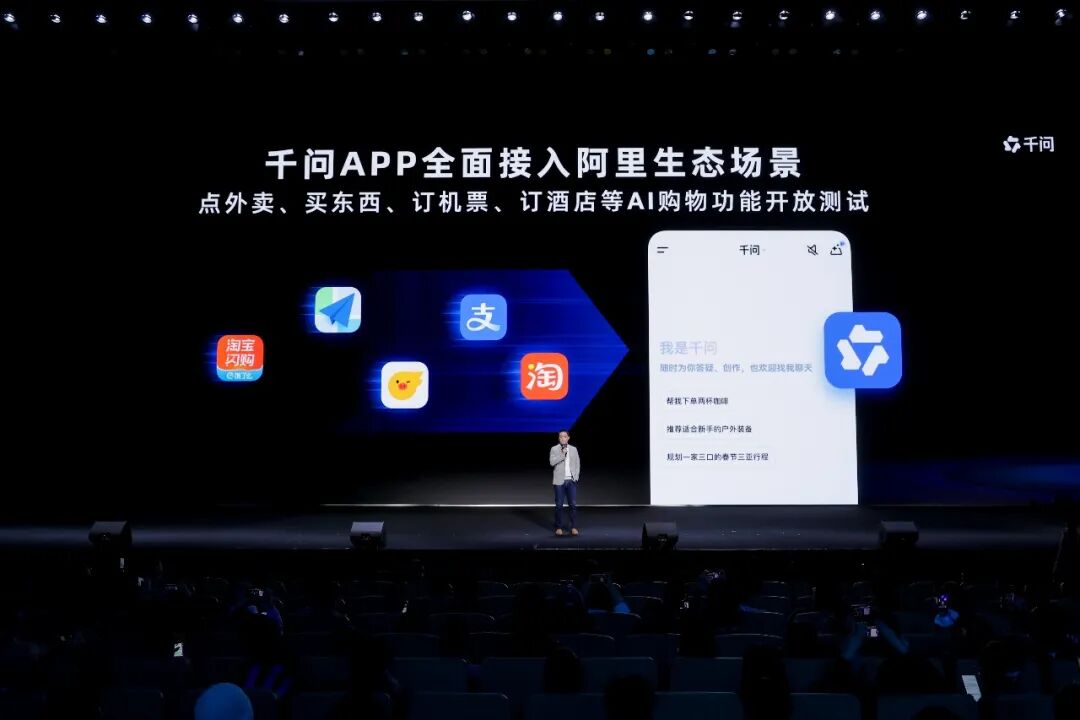
Core Viewpoint - The article discusses the launch of the Qianwen App's integration with Alibaba's ecosystem, enabling AI-driven shopping functionalities such as food delivery, purchasing items, and booking flights, marking a significant step in the AI era's competitive landscape [2][5]. Group 1: Qianwen App Features - On January 15, Qianwen App announced full integration with Alibaba's services, allowing users to perform tasks like ordering food and shopping through AI [2]. - Users can interact with Qianwen by simply stating their requests, such as "help me order a cup of coffee," which then utilizes location data to recommend nearby options [2][5]. - The app has improved its response time significantly, reducing the time to generate delivery options from nearly 30 seconds to about 10 seconds, enhancing user experience [5]. Group 2: Strategic Importance - Qianwen is viewed by Alibaba's management as a critical player in the "future battle of the AI era," with plans to develop it into a super app that integrates various life scenarios such as navigation, food delivery, and shopping [6]. - The establishment of the Qianwen C-end business group aims to consolidate Alibaba's AI capabilities and create a comprehensive AI entry point for users [6]. Group 3: Competitive Landscape - The competition in the AI conversational assistant space is intensifying, with Alibaba aiming to differentiate itself by moving beyond traditional dialogue interfaces to create a more integrated ecosystem [7]. - The integration of services like Gaode and Taobao Flash Purchase into Qianwen signifies a strategic shift towards creating a seamless user experience while addressing challenges related to privacy and security [7].
曝阿里千问C端月活超1亿,学生和白领用户增长迅猛
Xin Lang Cai Jing· 2026-01-14 03:29
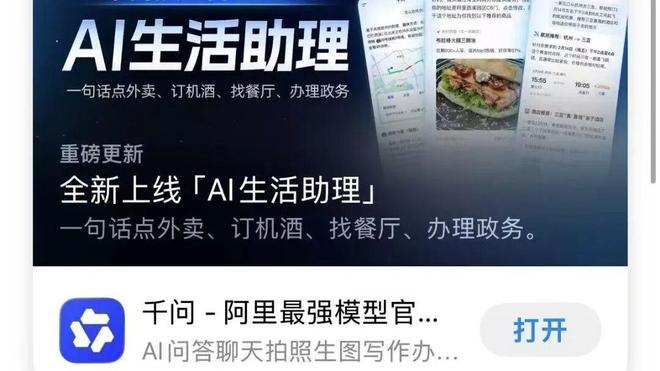
Core Insights - Alibaba's Qianwen app has achieved over 100 million monthly active users (MAU) within two months of its launch, showing rapid growth among students and white-collar workers [1][2] - The launch of Qianwen is seen as a strategic shift for Alibaba from B2B services to the C-end user market, marking a significant move into the AI to C market [1] - The app is positioned as a personal AI assistant capable of chatting and performing tasks, with a focus on understanding user needs and solving real problems [2]
文库“换脸”,搜索“换命”,百度的AI重构
3 6 Ke· 2026-01-13 05:11
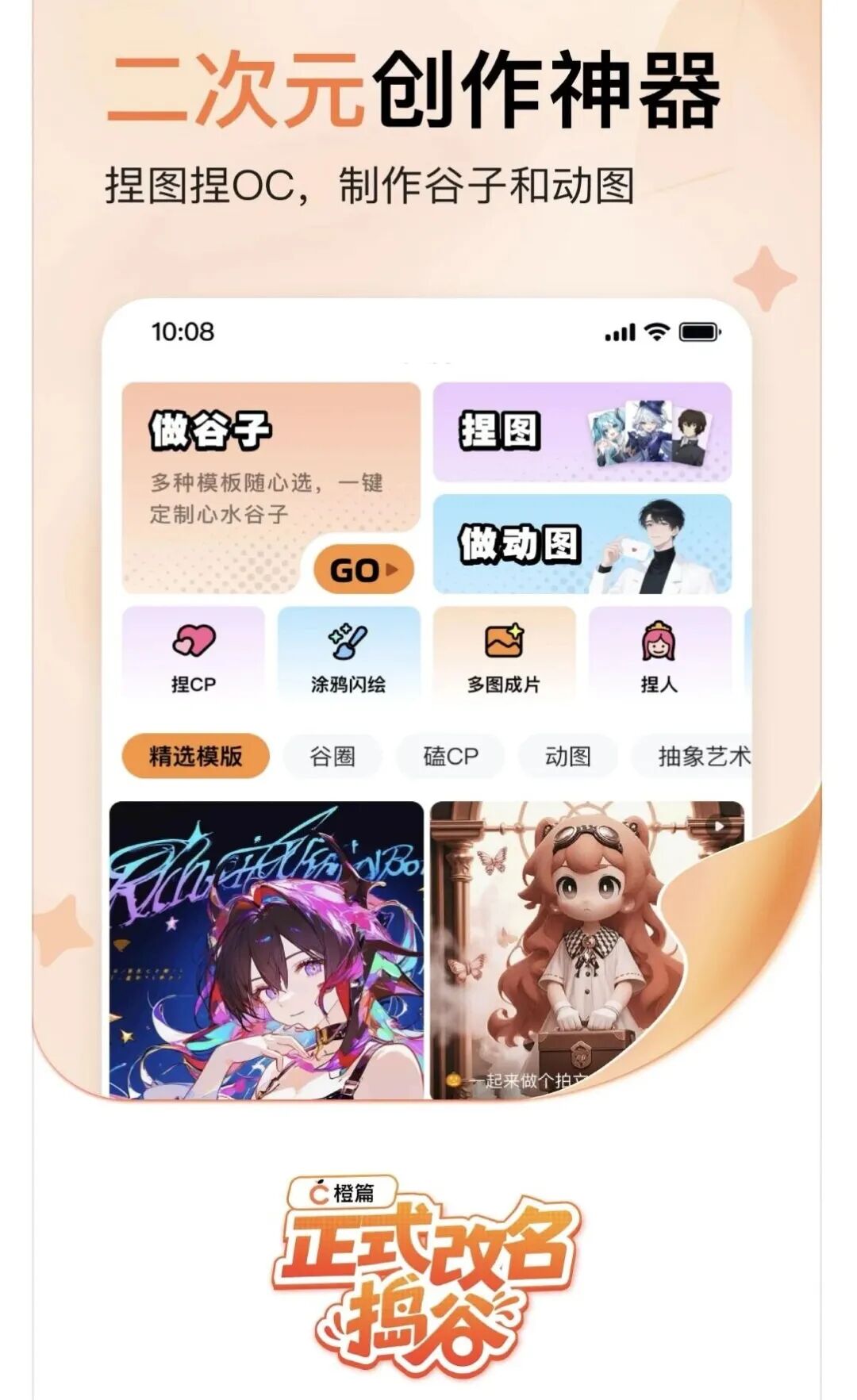
Core Insights - Baidu's document library has undergone a significant rebranding, with its AI-native application "Chengpian" renamed to "Daogu" to target a younger audience and shift focus from serious writing to a community for creative content [1][4][5] - The rebranding was executed quietly without a major announcement, raising questions about the effectiveness of the original application and the strategic direction of Baidu's AI initiatives [4][6] - The transition reflects a broader trend in Baidu's strategy to enhance its AI capabilities in consumer-facing applications, particularly in the context of evolving user expectations for productivity tools [15][18] Baidu's AI Strategy - Baidu's document library has been restructured to operate as an independent business unit, indicating a strategic shift towards generating revenue and enhancing user engagement [4][11] - The original application "Chengpian" was designed to facilitate long-form content creation but struggled to gain traction, leading to its rebranding as "Daogu" to better align with user interests in creative content [5][11] - The company aims to tap into the growing demand for AI-driven productivity tools, particularly among the younger generation, with a focus on the "AIGC" (AI-generated content) market [13][20] Market Position and Competition - Baidu's AI applications, including the document library and cloud storage, are positioned as complementary tools for enhancing productivity, with a focus on user engagement and monetization [18][20] - Despite the rebranding, Baidu faces stiff competition from other AI applications that have gained significant user bases, highlighting the challenges in converting early advantages into sustained market leadership [15][16] - The company is navigating a complex landscape where traditional search functionalities are being redefined by AI capabilities, necessitating a balance between maintaining existing revenue streams and innovating for future growth [30][32] User Engagement and Performance Metrics - Baidu's document library has reported impressive growth in user engagement, with AI monthly active users exceeding 97 million and a significant increase in paid subscriptions [20] - The rebranding to "Daogu" is seen as a strategic move to attract a younger audience, capitalizing on the high willingness to pay among users interested in creative content [11][13] - The transition reflects a broader industry trend where user expectations are shifting from information retrieval to direct content generation, necessitating a reevaluation of traditional search paradigms [25][29]

大厂AI to C战事升级:腾讯阿里合围,豆包迎战
3 6 Ke· 2025-12-25 11:35
Core Insights - The competition for AI to C has become a central battleground for internet giants, with Tencent and Alibaba making significant strategic shifts to secure their future in the face of declining mobile internet growth [1][2][4] Group 1: Strategic Shifts - Tencent and Alibaba are transitioning from a conservative approach to a proactive strategy in AI, focusing on ecosystem traffic rather than just technology reserves [2] - The timing of this shift coincides with advancements in large model technology, which has reached a stage ready for widespread application [2][11] - Alibaba faces challenges in its e-commerce dominance as Douyin's e-commerce GMV grows at a rate of 30%, necessitating a search for new growth avenues [2][12] Group 2: Competitive Landscape - Tencent's daily active users for its product Yuanbao are significantly lower at 30 million compared to Douyin's 100 million for its product Doubao, highlighting a competitive gap [7][10] - The urgency to capture the AI to C entry point stems from the need to control traffic distribution rights, which have evolved from PC to mobile internet and now to AI interfaces [7][11] Group 3: Ecosystem Development - Both companies aim to create a full-loop ecosystem from traffic to conversion, with Tencent leveraging its social platforms and Alibaba focusing on e-commerce and local services [8][12] - Tencent's Yuanbao is designed to integrate with its existing services, while Alibaba's strategy involves a dual approach with its Qianwen app and Quark browser [8][10] Group 4: Technological and Market Dynamics - The competition hinges on three critical factors: technology, application scenarios, and user perception, with each company having its strengths [11][15] - Alibaba's Tongyi Qianwen model has surpassed Meta in open-source model downloads, establishing itself as a leader in this space [11][12] - Both companies are significantly increasing their capital investments in AI, with Alibaba's AI and cloud Capex reaching 38.6 billion yuan in Q1 of FY2026, and Tencent's capital expenditure increasing by 221% year-on-year [8][11] Group 5: Future Outlook - The battle for AI to C will not only be about technology but also about how well companies can convert that technology into user value and loyalty [15] - By 2025, the AIGC market in China is expected to reach a user base of 483 million, indicating a shift from novelty to mainstream application [12][15]