
HBM

Search documents
Can AMAT Break ASML's Monopoly?
Forbes· 2026-01-30 13:30
Core Viewpoint - Applied Materials, Inc. (AMAT) has seen its stock price nearly triple in six months, leading to a significant re-evaluation of its market position, now being compared to ASML, the only true monopoly in semiconductor manufacturing equipment [2][3]. Group 1: Valuation and Market Position - AMAT's stock is currently trading at a forward P/E of 34x, nearly double its 10-year median of approximately 18x, and approaching ASML's multiple of over 45x [2]. - The market is assigning AMAT valuations akin to scarcity, despite its business being essential but not irreplaceable [3][5]. - AMAT's revenue breakdown shows that Foundry/Logic accounts for 72%, DRAM for 18%, and Flash for 10%, with key clients including TSMC, Samsung, and Intel [5]. Group 2: Business Complexity and Growth Drivers - The increasing complexity of semiconductor manufacturing is a key growth driver, with AMAT estimating that each 100,000 wafer starts at a leading-edge GAA node can yield $1 billion in additional revenue [6]. - AMAT's Centura Sculpta tool minimizes EUV double patterning, saving clients $250 million in capital expenditures for every 100,000 wafer starts, while also reducing water and energy consumption by 20% [7]. Group 3: Geopolitical Risks and Revenue Impact - Approximately 35% of AMAT's revenue comes from China, and new U.S. export restrictions are expected to create a revenue headwind of $600 million in fiscal 2026 [9]. - In contrast, ASML's exposure to China is mitigated, as it has not delivered EUV tools to China for several years, representing a mid-teens percentage of its revenue [10]. Group 4: Financial Performance and Projections - AMAT reported $28.37 billion in FY2025 revenue, with expected growth driven by the transition to 2nm GAA and HBM ramps, projected to add roughly $1.13 billion in incremental revenue [11]. - By 2028, revenue could increase by approximately $4.8 billion, suggesting a 10% compound annual growth rate from 2026 [12]. - The last twelve months' free cash flow was around $5.73 billion, with projections to reach approximately $6.5 billion by 2027 [12]. Group 5: Competitive Landscape and Future Outlook - AMAT is becoming increasingly vital in the AI era but remains susceptible to cycles, competition, and geopolitical influences [13]. - Positive factors include GAA complexity, demand for HBM/AI, and leadership in advanced packaging, while negative factors involve the impact on China services and capital expenditure volatility [14].


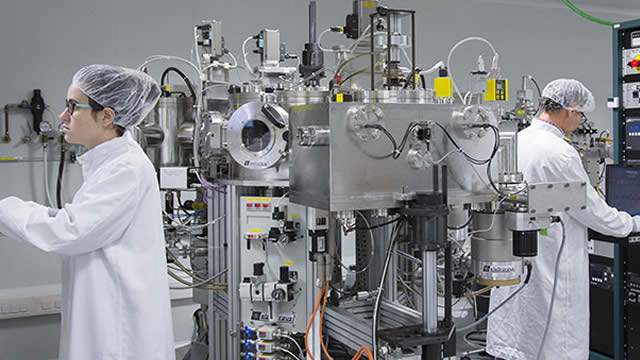
受益于存储价格持续上涨,江波龙2025年扣非利润预增超578%
Jin Rong Jie· 2026-01-30 10:41
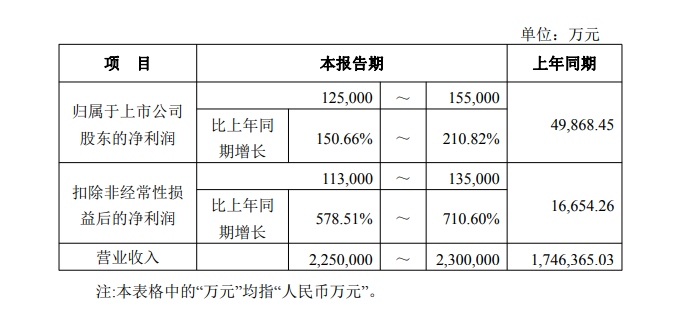
Core Viewpoint - Jiangbolong Electronics is expected to achieve significant growth in its 2025 performance forecast, driven by a recovery in the storage industry and the company's technological and product advantages [1] Financial Performance - The company anticipates a net profit attributable to shareholders of between 1.25 billion to 1.55 billion yuan, representing a year-on-year increase of 150.66% to 210.82% [1][2] - The expected non-recurring net profit is projected to be between 1.13 billion to 1.35 billion yuan, showing a substantial year-on-year growth of 578.51% to 710.6% [1][2] - Revenue is forecasted to be between 22.5 billion to 23 billion yuan, compared to 17.464 billion yuan in the same period last year [1][2] Industry Dynamics - The demand for AI servers and the shift of original manufacturers towards enterprise-level products are driving up storage product prices [1] - Jiangbolong has successfully turned a profit in the first half of the year, with a steady increase in profitability in the second half, particularly in Q4 where the non-recurring net profit is estimated to be between 650 million to 870 million yuan [1] - The company has achieved mass application of several main control chips and completed the first tape-out of the UFS4.1 main control chip, positioning itself as one of the few companies globally with self-research capabilities in this generation of main control chips [1] Market Outlook - The market perceives that server demand is the primary driver for storage needs, but the upgrade cycle of smartphones, particularly iPhones, is also contributing to the current storage price increases [3] - The global HBM market is projected to grow from 5.61 billion dollars in 2024 to 57.09 billion dollars by 2034, with a compound annual growth rate of 26.1% [3] - Major manufacturers like Micron have sold out their HBM capacity for 2025, and enterprise SSD demand is expected to increase by over 30% [3] Future Catalysts - The ongoing storage upgrade cycle for iPhones is expected to continue, with anticipated enhancements in storage parameters for new models in 2026, further driving up storage prices [4] - Continuous upgrades in server computing power are likely to sustain long-term demand for HBM, providing support for Jiangbolong's future development [4] - Recent supply chain research indicates that DRAM and NAND flash prices have entered an upward trend since the end of 2025, which may continue into early 2026, benefiting related companies in the storage industry [4]
飞凯材料:公司将持续聚焦客户前沿需求,推动材料技术的迭代与创新
Zheng Quan Ri Bao Wang· 2026-01-26 11:40
Core Viewpoint - Feikai Materials (300398) is actively involved in the semiconductor advanced packaging sector, focusing on the production of functional wet electronic chemicals, solder balls, and EMC epoxy encapsulants, which are applicable in HBF and HBM manufacturing processes [1] Group 1: Product Development - The company has achieved stable mass production of functional wet electronic chemicals, solder balls, and EMC epoxy encapsulants for HBF and HBM manufacturing processes [1] - The packaging processes for HBF and HBM involve wafer thinning, stacking, and encapsulation, for which the company has developed temporary bonding materials, LMC liquid encapsulation materials, and GMC particle encapsulation materials [1] - Currently, these materials are in the verification and introduction stage and have not yet generated scaled revenue [1] Group 2: Collaboration and Innovation - The company is closely collaborating with relevant manufacturers to develop and test related materials, aiming to enhance the maturity and reliability of HBF and HBM process technologies [1] - Future efforts will continue to focus on customer cutting-edge demands, driving the iteration and innovation of material technologies [1]

【点金互动易】HBM+芯片封装,公司参股企业HBM2e已量产,间接持股企业产品主要应用于CPU、 GPU、AI及车载等高算力芯片的封装
财联社· 2026-01-22 00:39
Group 1 - The article emphasizes the importance of timely and professional information interpretation in investment decision-making [1] - HBM+ chip packaging company has started mass production of HBM2e and is advancing the tape-out of HBM3/3e, with applications in CPU, GPU, AI, and automotive high-performance chips [1] - PCB products are utilized in humanoid robots and AI servers, with the company achieving delivery and certification of 800G/1.6T optical modules [1]

通富微电高额融资VS低额分红 股东回报逻辑待考
Sou Hu Cai Jing· 2026-01-21 09:05
Core Viewpoint - The semiconductor industry is showing signs of recovery after a deep adjustment, prompting major packaging and testing companies to take action, exemplified by Tongfu Microelectronics' plan to raise up to 4.4 billion yuan through a private placement to enhance its capabilities in key areas such as memory chip packaging, automotive electronics, wafer-level packaging, and high-performance computing [1][5]. Group 1: Financing and Investment Plans - Tongfu Microelectronics plans to raise a maximum of 4.4 billion yuan through a private placement, with funds allocated to four key projects: memory chip packaging capacity enhancement (800 million yuan), automotive and emerging application packaging capacity enhancement (1.055 billion yuan), wafer-level packaging capacity enhancement (695 million yuan), and high-performance computing and communication packaging capacity enhancement (620 million yuan) [6]. - The company aims to seize industry opportunities through capacity upgrades and technological iterations, thereby solidifying its core competitiveness in high-end packaging and testing [5]. Group 2: Historical Context and Growth Challenges - Since its listing in 2007, Tongfu Microelectronics has relied on significant capital injections for expansion, leading to a high-debt, asset-heavy operational model and profitability challenges [6]. - The company has undergone multiple phases of growth, including a major acquisition in 2016 and a significant capital increase in 2020, which supported its revenue growth but also resulted in heavy depreciation burdens that hindered net profit growth [7]. - The recent 4.4 billion yuan private placement is seen as a strategic move to transition from capital-dependent expansion to technology-driven growth, aiming to convert revenue scale into quality profits [7]. Group 3: Customer Dependency and Financial Performance - Tongfu Microelectronics' rapid growth is closely tied to its deep relationship with AMD, which has significantly influenced its revenue trajectory, but also created a dependency that constrains its financial model [8]. - The company's revenue reached 22.27 billion yuan in 2023, but its net profit was only 169 million yuan, highlighting a significant disparity between revenue growth and profitability [9]. - The company's valuation is perceived as discounted due to concerns over customer concentration risk and profit volatility, indicating a need to improve growth certainty and quality [10]. Group 4: Shareholder Returns and Corporate Governance - Despite frequent equity financing for expansion, the company's low cash dividend policy and the controlling shareholder's selling behavior have raised questions about the alignment of long-term interests [11]. - The cumulative cash dividends since its listing amount to only 454 million yuan, representing a low average dividend payout ratio of 9.68% compared to its net profit [12]. Group 5: Future Challenges and Risks - The company faces ongoing challenges related to high capital expenditures and depreciation pressures, which could impact profitability if new capacity is not fully utilized [14]. - Continuous and costly technological upgrades are necessary to maintain competitiveness in the rapidly evolving semiconductor industry [15]. - The company must address its reliance on a limited number of major customers, which poses a significant risk to its business model [15].

日本芯片设备,再创新高
半导体芯闻· 2026-01-19 10:17
Group 1 - The core viewpoint of the articles highlights the significant growth in the Japanese semiconductor equipment market, driven by AI-related demand and investments from TSMC in 2nm technology, with sales expected to reach historical highs in 2025 and 2026 [1][2][5] - The Semiconductor Equipment Association of Japan (SEAJ) revised its forecast for 2025 sales of Japanese semiconductor equipment from 4.8634 trillion yen to 4.9111 trillion yen, marking a 3.0% increase from 2024 and setting a record for the second consecutive year [1][2] - For 2026, SEAJ anticipates sales to rise to 5.5004 trillion yen, a 12.0% increase, with the sales surpassing 5 trillion yen for the first time in history [1][2] Group 2 - SEAJ projects that the sales for 2027 will be adjusted to 5.6104 trillion yen, reflecting a 2.0% year-on-year increase, potentially marking the fourth consecutive year of record sales [2] - The compound annual growth rate (CAGR) for Japanese semiconductor equipment sales from 2025 to 2027 is estimated at 5.6%, up from a previous estimate of 4.6% [2] - Japan's semiconductor equipment market holds a global market share of 30%, ranking second after the United States [2] Group 3 - The World Semiconductor Trade Statistics (WSTS) predicts that global semiconductor sales will increase by 26.3% in 2026, reaching approximately $975.46 billion, driven by investments in AI data centers [3] - The global semiconductor manufacturing equipment sales are expected to reach a historical high of $133 billion in 2025, with continued growth projected for 2026 and 2027 [5][6] - The growth in semiconductor equipment sales is primarily driven by investments in advanced logic, memory, and advanced packaging technologies related to AI [5][7]
国新证券每日晨报-20260119
Guoxin Securities Co., Ltd· 2026-01-19 02:41
Domestic Market Overview - The domestic market experienced a pullback after a rise, with the Shanghai Composite Index closing at 4101.91 points, down 0.26%, and the Shenzhen Component Index at 14281.08 points, down 0.18% [1][5] - The total trading volume of the A-share market was 30,565 billion, significantly lower than the previous day [1][5] - Among the 30 sectors, 6 sectors saw gains, with electronics, automotive, and machinery leading the increases, while media, comprehensive finance, and consumer services faced the largest declines [1][5] Overseas Market Overview - The three major U.S. stock indices experienced slight declines, with the Dow Jones down 0.17%, S&P 500 down 0.06%, and Nasdaq down 0.06% [2][5] - Micron Technology saw a significant increase of over 7%, while most chip stocks rose, including Broadcom, which increased by over 2% [2][5] - Chinese concept stocks mostly fell, with New Macau Entertainment dropping nearly 9% [2][5] News Highlights - Premier Li Qiang chaired a State Council executive meeting to discuss measures to boost consumption and ensure the payment of wages to migrant workers [3][12] - The Ministry of Foreign Affairs expressed strong opposition to any agreements with sovereign implications signed by countries that have diplomatic relations with Taiwan [4][14] Industry Developments - The China Securities Regulatory Commission emphasized the importance of maintaining market stability and enhancing monitoring and regulation during a recent meeting [10] - The meeting highlighted the need for reforms in the ChiNext and STAR Market to improve refinancing convenience and flexibility [10] - The commercial aerospace sector is seeing progress, with companies like Zhongke Aerospace moving towards IPOs and expanding their service offerings [17][19]
降温组合拳火速出手,解码四万亿天量
Hua Xia Shi Bao· 2026-01-16 13:16
Core Viewpoint - The recent regulatory measures in the A-share market aim to cool down speculative trading and maintain market stability, guiding the market towards a "slow bull" trend in the medium to long term [2][5]. Market Performance - On January 16, the three major A-share indices experienced a collective decline, with the Shanghai Composite Index down by 0.26%, Shenzhen Component down by 0.18%, and ChiNext down by 0.2% [2]. - The trading volume in the Shanghai and Shenzhen markets decreased from nearly 4 trillion yuan to over 2 trillion yuan, indicating a significant reduction in market activity [2]. Regulatory Actions - The financing margin ratio for new financing contracts was raised from 80% to 100% to curb excessive speculation and leverage risks [4][5]. - Major stocks, including招商银行 (China Merchants Bank) and 贵州茅台 (Kweichow Moutai), saw significant sell orders, interpreted as a clear intention to cool the market [4]. Investor Sentiment - The market's recent surge has been attributed to improved domestic economic fundamentals and increased foreign capital inflow, with the A-share market being viewed as an attractive investment destination [6][7]. - Analysts suggest that the influx of new capital is driven by domestic institutional investors, retail investors through funds, and foreign investments due to market openness [7]. Future Outlook - The market is expected to continue its upward trend, supported by favorable macroeconomic policies and corporate earnings growth, despite potential uncertainties such as geopolitical risks and global monetary policy adjustments [8][9]. - Investment strategies should focus on sectors with strong growth potential, such as AI, semiconductors, and renewable energy, while being cautious of short-term market fluctuations [9].

【财闻联播】西贝贾国龙:今晚10点,将全面回应!上期所:调整白银、镍期货相关合约交易限额
券商中国· 2026-01-16 11:32
Macro Dynamics - The China Securities Regulatory Commission (CSRC) emphasizes the need to promote the optimization plan for qualified foreign institutional investors and expand the range of specific futures products open to foreign investors, enhancing cross-border investment and financing convenience [2] - The People's Bank of China and the Bank of Canada have renewed a bilateral currency swap agreement with a scale of 200 billion RMB, effective for five years, to strengthen financial cooperation and facilitate bilateral trade and investment [3] Regulatory Updates - The newly released regulations on the responsibilities of live-streaming e-commerce operators regarding food safety will take effect on March 20, 2026, detailing prohibitions on certain food products [5] Market Data - On January 16, A-shares saw a collective decline with the Shanghai Composite Index down by 0.26%, Shenzhen Component down by 0.18%, and the ChiNext Index down by 0.2%. The total trading volume was approximately 30,263.22 billion RMB, an increase of about 1,207.59 billion RMB from the previous trading day [11] - The Hong Kong stock market closed with the Hang Seng Index down by 0.29% and the Hang Seng Tech Index down by 0.11%, with semiconductor stocks showing significant activity [12] Company Dynamics - Debon Securities announced that its stock will be suspended from trading on January 21, 2026, pending a shareholder meeting regarding its delisting, with a cash option registration date set for February 6, 2026 [13] - Northern Rare Earth expects a net profit attributable to shareholders of 2.176 billion to 2.356 billion RMB for 2025, representing a year-on-year increase of 116.67% to 134.60%, driven by market demand and operational improvements [15]

粤开市场日报-20260116-20260116
Yuekai Securities· 2026-01-16 08:06
Market Overview - The A-share market showed mixed performance today, with the Shanghai Composite Index down by 0.26% closing at 4101.91 points, and the Shenzhen Component Index down by 0.18% closing at 14281.08 points. The ChiNext Index decreased by 0.20% to 3361.02 points, while the Sci-Tech 50 Index increased by 1.35% to 1514.07 points [1][10]. - Overall, there were 2370 stocks that rose and 2971 stocks that fell, with a total market turnover of 30,262 billion yuan, an increase of 1207 billion yuan compared to the previous trading day [1]. Industry Performance - Among the Shenwan first-level industries, the leading sectors included Electronics, Automotive, Machinery Equipment, Power Equipment, and Home Appliances, with increases of 2.64%, 1.69%, 1.23%, 0.76%, and 0.68% respectively. Conversely, the sectors that experienced declines included Media, Computer, Oil & Petrochemicals, Social Services, and Agriculture, with decreases of 4.84%, 2.23%, 1.80%, 1.71%, and 1.62% respectively [1][10]. Concept Sector Performance - The top-performing concept sectors today were Advanced Packaging, Semiconductor Equipment, HBM, Memory, Semiconductor Selection, Wafer Industry, Semiconductor Silicon Wafer, National Big Fund, Third Generation Semiconductor, Semiconductor Industry, Industrial Gases, and Analog Chips [2].