全球治理

Search documents
中国积极参与全球治理,彰显负责任的大国担当
2 1 Shi Ji Jing Ji Bao Dao· 2025-09-25 22:48
Group 1 - China announced a new round of Nationally Determined Contributions (NDCs) at the UN Climate Change Summit, showcasing its commitment to global climate governance and responsibility as a major power [1][2] - The scale of China's green low-carbon industry is approximately 11 trillion yuan, with over 2 million related enterprises, and it leads the global market in affordable lithium batteries and photovoltaic products [1] - By the end of 2024, China's installed capacity for wind power is expected to reach 520 million kilowatts, and solar power capacity is projected to reach 890 million kilowatts, both ranking among the highest in the world [1] Group 2 - China emphasizes the importance of international cooperation in addressing climate change, despite rising unilateralism and protectionism in the global landscape [2] - The country has proposed a global governance initiative to enhance and reform existing governance systems, reflecting its commitment to providing global public goods and taking on major power responsibilities [2][3] - China has declared that it will no longer seek any new special and differential treatment in World Trade Organization negotiations, reinforcing its support for a multilateral trading system [3]
李强会见奥地利总理
Yang Guang Wang· 2025-09-25 05:11
Core Viewpoint - The meeting between Chinese Premier Li Qiang and Austrian Chancellor Karl Nehammer emphasizes the strengthening of bilateral relations and cooperation in various fields, particularly in light of the upcoming 55th anniversary of diplomatic relations between China and Austria [1] Group 1: Bilateral Relations - Li Qiang highlighted the deepening of China-Austria relations under the strategic guidance of Chinese President Xi Jinping and Austrian President Alexander Van der Bellen [1] - Both parties expressed a commitment to enhance high-level exchanges and consolidate political mutual trust [1] Group 2: Cooperation Areas - The discussion included expanding cultural exchanges and deepening trade cooperation across various sectors [1] - Li Qiang reiterated China's willingness to work with Austria to improve global governance and emphasized the importance of multilateral communication and coordination [1] Group 3: Policy Stance - Chancellor Nehammer reaffirmed Austria's commitment to the One China policy and expressed a desire to strengthen cooperation in multiple areas [1] - The Austrian government aims to play a positive role in promoting the development of EU-China relations [1]
美国退,中国进!川普选择躺平,全力看家,对和中国竞争毫无兴趣?
Sou Hu Cai Jing· 2025-09-25 04:12
Group 1 - The article discusses Trump's unique approach to U.S.-China strategic competition, contrasting it with the bipartisan consensus in Washington that views this rivalry as crucial for national interests [1][3] - Trump's focus is more on trade negotiations rather than viewing China as a comprehensive strategic adversary, emphasizing practical outcomes like increasing purchases of U.S. agricultural products [3][8] - There has been a noticeable shift in Trump's attitude towards China during his presidency, with a significant change in his administration's personnel towards more pragmatic figures [3][8] Group 2 - The core demand of Trump's administration is a tangible trade surplus rather than abstract strategic advantages, as evidenced by the shift in focus from geopolitical strategy to domestic political struggles [8][10] - The Pentagon's latest strategic report reflects this change, moving from a focus on containing China to prioritizing the defense of the Americas, which has raised concerns among bipartisan lawmakers [8][10] - The article highlights a historical turning point where the U.S. is retracting its global presence, allowing China to propose new global governance initiatives, marking a significant shift in international relations [10]

东西问·北京文化论坛|法国前总理拉法兰:文化始终是法中友好交往的核心
Zhong Guo Xin Wen Wang· 2025-09-24 12:47
Core Viewpoint - Cultural exchange is emphasized as the core of Franco-Chinese friendly relations, with a focus on enhancing mutual understanding through various cultural activities [3][6][7]. Group 1: Cultural Exchange Initiatives - The 2025 Beijing Cultural Forum features a series of events titled "Wind Moves, Shadow Changes - Sino-French Image Dialogue," including film concerts, salons, and lectures [4]. - Notable French filmmakers, such as Jean-Jacques Annaud and Juliette Binoche, engage in dialogues with Chinese filmmakers and scholars during the forum [4][6]. - Historical footage showcasing Sino-French friendship and cooperation is publicly screened for the first time during the forum [4]. Group 2: Importance of Cultural Understanding - Jean-Pierre Raffarin, former French Prime Minister, highlights that cultural exchanges are crucial for fostering mutual understanding between France and China [6][7]. - The long-standing cultural ties have allowed generations to build solid partnerships and deep friendships, giving the Franco-Chinese relationship a humanistic dimension [6][7]. Group 3: Global Governance and Cooperation - Raffarin discusses the need for France and China to collaborate on global governance, emphasizing the importance of multilateralism and the efficiency of global governance systems [9]. - He acknowledges China's significant efforts in poverty alleviation and modernization, which have had a substantial international impact [9]. - The promotion of peace culture is deemed essential for addressing global governance challenges, with China expected to play a larger role in promoting world peace [9].

中方宣布重磅举措
中国能源报· 2025-09-24 03:33
Group 1 - The core viewpoint is that China, as a responsible developing country, will not seek new special and differential treatment in current and future WTO negotiations [1] - The announcement reflects China's commitment to maintaining a multilateral trading system and actively implementing global development initiatives [1] - This stance is seen as a significant declaration by China to inject positive energy into the reform process of the global economic governance system [1]
开辟中欧关系更加光明的下一个50年
Zhong Guo Fa Zhan Wang· 2025-09-24 03:28
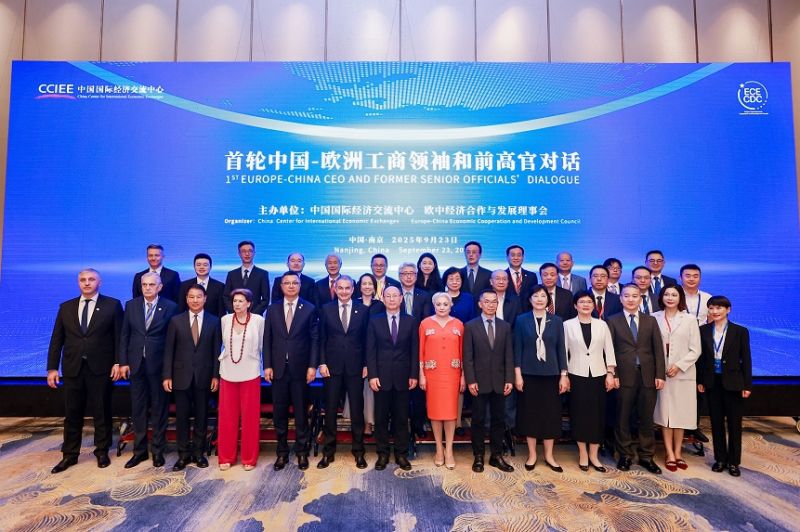
Core Viewpoint - The China-Europe relationship is at a critical historical juncture, facing both strategic opportunities and new challenges, with a strong desire from both sides to enhance economic cooperation and stabilize bilateral relations [2]. Group 1: Economic Cooperation - Despite global geopolitical tensions and supply chain restructuring, China-Europe trade remains resilient, with bilateral trade expected to reach $787.5 billion in 2024, maintaining historical highs [2]. - Industrial goods and intra-industry trade dominate the trade landscape, highlighting the complementary nature of both sides in high-end manufacturing, consumer goods, and technology products [2]. - The importance of service trade is increasing, providing new momentum for China's service industry modernization and offering EU companies broad opportunities in the Chinese market [2]. Group 2: Strategic Partnership - The 50th anniversary of China-Europe diplomatic relations serves as both a moment to reflect on history and a starting point to look towards the future, emphasizing the need for consensus through communication and cooperation to address differences [2]. - Both sides are committed to building a new type of strategic partnership for the future, focusing on rule alignment, practical cooperation, and multilateral coordination [2]. - The successful hosting of the "First China-Europe Business Leaders and Former Senior Officials Dialogue" further solidifies the consensus on practical cooperation between China and Europe [4]. Group 3: Areas of Collaboration - Future collaboration is anticipated in areas such as green development, digital innovation, scientific research, and global governance, contributing positively to global stability and prosperity [4].
为破解全球治理赤字贡献中国方案(国际论坛)
Ren Min Ri Bao· 2025-09-23 22:00
Core Ideas - The global governance initiative focuses on the question of what kind of global governance system to build and how to reform and improve it, addressing the common aspirations of most countries and the needs of people worldwide [1][2] - The initiative emphasizes five core principles: sovereign equality, adherence to international law, multilateralism, a people-centered approach, and action-oriented strategies, which align with the purposes and principles of the UN Charter [1][2][3] Sovereign Equality - Sovereign equality is the primary premise and important foundation of global governance, yet it is not fully realized in international relations, with some countries engaging in bullying behavior [2][3] - China advocates for a global governance perspective that emphasizes shared destiny, collective rule-making, and equal sharing of development outcomes among nations [2][3] International Rule of Law - International law is the fundamental guarantee and important guideline for global governance, with the UN Charter serving as the recognized basic principle of international relations [2][3] - China supports the authority of international law and the multilateral system based on rules, ensuring equal and unified application of international law and rules [2][3] Multilateralism - Multilateralism is the basic path and realistic choice for global governance, with China actively participating in multilateral cooperation and advocating for a multipolar world and inclusive economic globalization [3] - The initiative aims to address the underrepresentation of the Global South and promote lasting peace, universal security, and common prosperity [3] People-Centered Approach - The value orientation of global governance is people-centered, aiming to turn the aspirations of people for a better life into reality [3] - China's development is linked to the aspirations of people worldwide, exemplified by the high-quality co-construction of the Belt and Road Initiative [3] Action-Oriented Strategies - The vitality of global governance comes from practice, with a focus on action and tangible results [3] - China plays a responsible role in international organizations and proposes practical actions and measures at international meetings to deepen consensus and achieve positive outcomes in global governance [3]
坚持行动导向是重要原则——构建更加公正合理的全球治理体系⑥
Xin Hua She· 2025-09-18 07:14
中国是完善全球治理的行动派。倡议高质量共建"一带一路",推动设立亚投行、丝路基金、新开发银 行,搭建深受欢迎的开放合作平台;提出全球发展倡议、全球安全倡议、全球文明倡议、全球治理倡 议,推动构建人类命运共同体;探索并践行中国特色热点问题解决之道,在乌克兰危机、巴以冲突等热 点问题上秉持客观公正、推动政治解决,推动构建安危与共、求同存异、对话协商的亚洲安全模式,促 成沙特和伊朗历史性和解,为柬泰和平解决边境争端发挥建设性作用;会同32个国家建立国际调解院, 为高效和平解决国际争端提供新选择新途径;提出《全球人工智能治理倡议》,倡议成立世界人工智能 合作组织,确保人工智能向善、造福全人类……作为联合国安理会常任理事国和世界上最大的发展中国 家,中国始终为推动构建更加公正合理的全球治理体系贡献力量。"中方的倡议始终讲求一 个'实'字。"泰国泰中"一带一路"研究中心主任威伦·披差翁帕迪说,"我始终记得习近平主席所说 的,'大道至简,实干为要'。" 未来,中国将依托联合国、有关国际组织及区域次区域多边机制,会同各方采取积极行动,为改革完善 全球治理贡献智慧和力量。优先考虑在国际金融架构改革、人工智能、网络空间、气候变化 ...
携手推动全球治理更加公正合理(环球热点)
Ren Min Ri Bao Hai Wai Ban· 2025-09-17 23:05
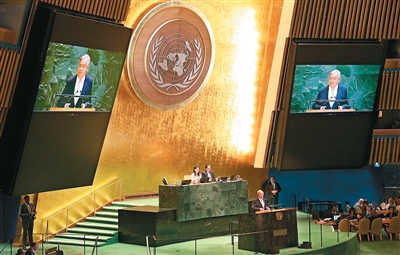
图为近日,联合国秘书长古特雷斯在第八十届联大第一次全会上讲话。新华社记者 谢锷摄 近日,第80届联合国大会在纽约联合国总部开幕。新一届联大的主题是"携手共进:促和平、发展、人 权八十载,继往开来,再谱新篇"。 今年是联合国成立80周年。80年前,两次世界大战的浩劫让国际社会痛定思痛,联合国应运而生,全球 治理掀开新的一页。80年后,和平、发展、合作、共赢的时代潮流没有变,但冷战思维、霸权主义、保 护主义阴霾不散,新威胁新挑战有增无减,世界进入新的动荡变革期,全球治理走到新的十字路口。 站在联合国成立80周年的重要节点,国际社会如何携手合作,与时俱进推动全球治理体系改革完善?本 报采访中国社会科学院世界经济与政治研究所习近平外交思想研究室主任、研究员徐进以及复旦大学联 合国与国际组织研究中心主任、联合国和平大学特聘教授张贵洪,就此进行解读。 ① 联合国是全球治理的核心平台和主导力量 实践一再证明,如果《联合国宪章》精神坚持得好、多边主义理念践行得好,全球治理就得以更好推 进,人类福祉就得到更好维护 【观察】 80年前,国际社会在深刻反思两次世界大战惨痛教训的基础上,决定成立联合国,开启了全球治理的崭 新实践。8 ...