
多元资产配置

Search documents
【银行理财】多元资产配置新浪潮,银行理财涌现哪些新范式?——2025年7月银行理财市场月报
华宝财富魔方· 2025-08-20 10:18
Core Viewpoint - The article discusses the ongoing transformation of bank wealth management towards diversified asset allocation, driven by low interest rates and asset scarcity, necessitating a restructuring of risk-return strategies [3][8]. Group 1: Regulatory Policies and Industry News - The transition to diversified asset allocation is characterized by a shift from "fixed income" to "fixed income+" strategies, which includes expanding investment regions, asset types, strategies, and scenarios [3][10]. - Recent developments include the launch of the "Xinghui+" multi-asset product system by Huibin Wealth Management, which integrates various investment strategies [7]. - The collaboration between Xingyin Wealth Management and the Straits Equity Exchange Center marks a significant step in equity registration services [7]. Group 2: Market Trends and Performance - As of July, the total market size of wealth management products saw a slight increase of 1.75% to 31.28 trillion yuan, with a year-on-year growth of 5.90% [4]. - The annualized yield for cash management products decreased by 9.81 basis points to 1.35%, while pure fixed income products yielded 1.87%, down by 0.79 percentage points [4]. - The new issuance of wealth management products declined in July, reflecting a contrast to the issuance peak in June, with most performance benchmarks being adjusted downward [4]. Group 3: Product Performance and Standards - The compliance rate for closed-end wealth management products reached 85.89% in July, showing a slight increase from June, while the compliance rate for open-end products was 70.13% [5].


2025年7月银行理财市场月报:多元资产配置新浪潮,银行理财涌现哪些新范式?-20250820
HWABAO SECURITIES· 2025-08-20 09:09
Investment Rating - The report does not explicitly provide an investment rating for the banking wealth management industry Core Insights - The banking wealth management industry is undergoing a transformation towards diversified asset allocation driven by low interest rates and asset scarcity, necessitating a reconfiguration of risk-return strategies [2][12] - The essence of diversified asset allocation is the transition from "fixed income" to "fixed income plus," which includes broadening investment regions, extending asset types, and enhancing investment strategies [3][13] Summary by Sections Regulatory Policies and Industry News Interpretation - The transformation towards diversified asset allocation in banking wealth management is deepening, with new product systems being launched and collaborations with financial institutions being established [11] - The low interest rate environment and asset scarcity are pushing wealth management companies to explore new revenue sources and capture structural opportunities during the interest rate decline [12] Current Status: Scale Growth and Yield Decline - In July, the total market wealth management product scale increased by 1.75% to 31.28 trillion yuan, with a year-on-year growth of 5.90% [23][25] - The annualized yield of cash management products decreased to 1.35%, while fixed income products saw a decline to 1.78% [28][31] New Issuance: Scale Decline and Product Characteristics - The new issuance scale of wealth management products in July fell, with fixed income plus products dominating the market, reflecting a shift towards multi-asset strategies [46][47] - The majority of new product performance benchmarks have been adjusted downwards, indicating a consensus on the long-term low interest rate environment [53] Maturity: Performance Rates - The achievement rate for closed-end products reached 85.89%, while the rate for open-end products was 70.13%, showing a slight improvement from the previous month [55][60]
2025 年多元资产配置的新范式与实战案例
Sou Hu Cai Jing· 2025-08-20 08:50
Core Insights - The global capital markets are undergoing a dual transformation characterized by a "loose monetary cycle" and "structural changes" as of Q3 2025 [1] - The opening of the Federal Reserve's interest rate cut channel, geopolitical reshaping, and breakthroughs in carbon neutrality technology are creating differentiated investment opportunities in stocks, bonds, and gold [1] Equity Assets - The Hong Kong stock market, as an offshore RMB asset hub, is witnessing excess return opportunities driven by self-controllable technology iterations, particularly in the hard technology sector [1] - Semiconductor equipment companies reported a 47% year-on-year increase in R&D investment, while the biopharmaceutical sector has innovative drug pipelines entering Phase III clinical trials [1] - Value investors may focus on undervalued high-dividend stocks, with dynamic PE ratios falling below 8 times [1] Fixed Income Products - With the end of the inverted yield curve for U.S. Treasury bonds, investment-grade credit spreads have narrowed to 120 basis points [1] - Convertible bonds exhibit unique advantages in volatile markets due to their "equity-debt duality" characteristics [1] - High-yield bonds are experiencing increased credit risk premiums due to the restructuring in the real estate sector [1] Precious Metals - Physical gold and digital currencies show a significant negative correlation, with gold prices surpassing $2500 per ounce amid a central bank gold-buying spree [1] - Silver is benefiting from surging demand in the photovoltaic industry, creating a resonance between its industrial and financial attributes [1] - Mining ETFs provide investors with convenient tools for indirect participation in the precious metals market [1] Portfolio Construction Recommendations - An all-weather strategy could allocate 40% to stocks, 30% to bonds, 20% to gold, and 10% to cash [1] - Attention should be paid to policy volatility risks associated with cross-border assets and the opportunities for options hedging arising from increased implied volatility [1]
基金经理投资笔记|多元资产配置的框架下投资怎么做?为什么不要追逐“短期超高α”?
Sou Hu Cai Jing· 2025-08-20 02:39
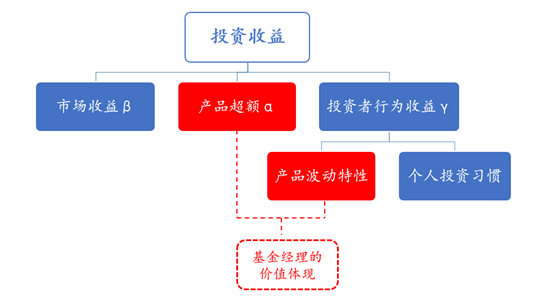
Core Viewpoint - The article emphasizes the evolution of Fund of Funds (FOF) from merely selecting funds to providing comprehensive asset allocation solutions, highlighting the importance of constructing a robust investment strategy through diversified asset classes [1] Group 1: Building Quality Beta (β) - Quality β serves as the foundation for investment returns, akin to a solid base for a building; without it, even the best strategies cannot sustain value [3] - A diversified approach to asset allocation, incorporating equities, fixed income, gold, and overseas markets, is essential to reduce overall volatility and achieve reasonable returns [3][4] Group 2: Finding Alpha (α) Above Beta - The stability of α is more crucial than its sharpness; investors should focus on sustainable α rather than chasing short-term high returns, which are often unsustainable [4][5] - Historical data indicates that high α can lead to significant volatility, which may ultimately diminish overall returns; thus, a consistent performance is preferred [5][7] Group 3: Matching Risk Tolerance - Rational investing can help mitigate behavioral losses (γ); understanding one's risk tolerance is vital for long-term investment success [8][10] - Investors with lower risk tolerance should favor portfolios with a higher allocation to fixed income assets to reduce exposure to equity market volatility, while those with higher risk tolerance can afford greater equity exposure [10][11]
浦银理财叶力俭: ETF是理财公司参与权益市场最好的工具之一
2 1 Shi Ji Jing Ji Bao Dao· 2025-08-19 07:08
Core Viewpoint - The discussion emphasizes that in a low-interest-rate environment, wealth management companies must enhance their core investment research capabilities and seek breakthroughs through diversified assets and strategies [1][2] Group 1: ETF and Investment Strategies - ETFs are highlighted as one of the best tools for wealth management companies to participate in the equity market due to their transparency, tradability, large capacity, and convenience [1] - The future strategy for wealth management companies includes effectively utilizing ETFs and public funds to capture Beta or Smart Beta returns in the equity market [1] Group 2: Investor Expectations and Risk Management - Investor expectations have evolved from "rigid repayment" to emphasizing "fixed income," and now to focusing on "absolute returns," indicating a dynamic change in demand [1] - In the context of increasing market volatility, the focus on "stable returns" necessitates attention to how wealth management companies can achieve relatively stable returns under closing price adjustments [1] - Understanding the risk tolerance and duration requirements of investors is crucial for wealth management companies to effectively manage client relationships and expectations [2] Group 3: Challenges in the Low-Interest Rate Environment - The low-interest-rate era presents a significant challenge for the asset management industry, necessitating a focus on providing stable returns [2] - The concept of "asset scarcity" reflects a mismatch in returns, prompting wealth management companies to enhance their core investment research capabilities [2]
浦银安盛基金蒋佳良:推进“指数家”战略,探索差异化发展模式
2 1 Shi Ji Jing Ji Bao Dao· 2025-08-19 07:08
Group 1 - The core viewpoint of the article revolves around the trends in passive and active investment strategies, highlighting the importance of adapting to market changes and client needs in asset management [2][5]. - The "passive active" and "active passive" trends are emerging in the passive index investment field, with a focus on enhancing index investments and utilizing a combination of active and passive strategies for new industries [2]. - The company emphasizes the need for high-quality development in public funds, aligning with regulatory pushes, and has made internal adjustments to improve investor experiences and performance [3]. Group 2 - The company has implemented a long-term assessment system based on benchmarks to evaluate fund managers, focusing on their adherence to investment strategies and product styles [3]. - A new internal system has been developed to provide fund managers with real-time insights into portfolio status, trading activities, and performance analysis, enhancing operational efficiency [4]. - The company aims to address client needs by diversifying product offerings and investment strategies, moving away from traditional sales models to better align with investor expectations [5]. Group 3 - The company recognizes the growing acceptance of multi-asset allocation strategies, incorporating low-correlation assets like commodities and overseas investments to improve portfolio performance [6]. - The demand for multi-asset allocation FOF products has surged, indicating a shift in client preferences towards diversified investment solutions [6].
农银理财孙建坤:三大因素,重构行业未来发展格局
2 1 Shi Ji Jing Ji Bao Dao· 2025-08-18 08:17
Core Viewpoint - The asset management industry is undergoing significant changes, driven by market opportunities and the need for companies to adapt their strategies and capabilities to remain competitive [3][5][6]. Group 1: Market Opportunities - The past year has been a "big year" for the asset management industry, with three main factors contributing to favorable market conditions: declining deposit rates improving the yield comparison between deposits and wealth management products, changes in the real estate sector leading to a shift in residents' risk preferences, and a strong performance in the bond market [3][4]. - Agricultural Bank of China Wealth Management has seen significant growth, with retail customers reaching approximately 40 million [3]. Group 2: Internal Development - The company emphasizes the importance of recognizing industry trends and improving internal capabilities, particularly in expanding asset allocation from fixed income to equity and other diversified assets [4][6]. - A shift from traditional experience-based investment strategies to quantitative analysis and data-driven decision-making is necessary to identify market opportunities effectively [4]. Group 3: Future Industry Landscape - The future of the wealth management industry will be shaped by three key factors: the establishment of independent market mechanisms, the ability to acquire and combine diverse assets, and the development of customer service capabilities [6][7]. - The industry must transition from a seller-oriented model to a buyer-oriented model, enhancing investment advisory services to build trust with clients [7]. Group 4: Industry Competition - The industry faces increasing competition, necessitating a call for self-regulation and the establishment of unified rules to promote fair competition and healthy development [7].

跨境投资的“桥梁建造者”,让全球资产适配中国投资者
聪明投资者· 2025-08-18 07:17
Core Viewpoint - The article emphasizes the evolution of multi-asset allocation strategies among investors, highlighting the shift from single-market investments to diversified cross-border investments to reduce reliance on any single market and pursue richer sources of returns [2][3]. Group 1: Cross-Border Investment Team - The cross-border investment team at China Merchants Bank has successfully navigated several overseas risk events by proactive positioning, maintaining net value stability through precise timing in U.S. Treasury transactions and adjustments in response to credit defaults [3][4]. - The team has a management scale exceeding 90 billion yuan, with a diverse product line that includes cross-border RMB fixed income and structured products [5][11]. Group 2: Investment Strategy and Research - The team employs a multi-faceted research approach, analyzing macroeconomic trends, interest rates, and asset allocation logic to inform investment decisions [6][12]. - The team has developed a "global economic cycle matrix" to track key factors such as growth, inflation, and policy across major economies, which aids in understanding market dynamics [25][27]. Group 3: Product Offerings and Risk Management - The cross-border investment department offers a diverse range of products categorized by currency, underlying strategy, risk level, and product opening period, catering to various investor preferences [20][21]. - The department emphasizes the importance of risk management, employing both subjective judgment and mechanized hedging strategies to protect against extreme risks [33][34]. Group 4: Market Awareness and Adaptability - The team recognizes the necessity of understanding the complexities of cross-border investments, including currency risks and market differences, to avoid hidden barriers for ordinary investors [35][36]. - Continuous monitoring of global market conditions and proactive adjustments to investment strategies are crucial for navigating uncertainties in the international landscape [39][40].

浦银理财李桦:坚守稳健定位,以多元配置服务实体与百姓财富
2 1 Shi Ji Jing Ji Bao Dao· 2025-08-18 06:47
Group 1 - The core viewpoint of the article highlights the development and positioning of the asset management industry, particularly focusing on the role of bank wealth management in providing stable, low-volatility investment options that aim for absolute returns [1][2]. - As of mid-August, the asset management scale of浦银理财 reached 1.45 trillion, having served 13 million clients, with all products this year achieving positive returns [1]. - The current market volatility is seen as a norm, leading to the belief that multi-asset allocation capabilities will become a core competitive advantage for asset management institutions [1]. Group 2 - The positioning of bank wealth management is defined as relatively low volatility and stable, with a focus on absolute returns, catering to the demand for low-volatility asset allocation [2]. - The asset management industry's mission remains to serve the real economy and preserve and increase the value of people's wealth, especially in the context of accelerating green transformation and deepening industrial upgrades [2].
2025资产管理年会主题一:与波动共舞,解锁多元资产配置之路
2 1 Shi Ji Jing Ji Bao Dao· 2025-08-16 05:54
Core Insights - The global economic recovery is uneven, with financial markets experiencing volatility due to inflation, interest rate policy adjustments, and geopolitical factors [1] - The common goal for asset management institutions and clients is to seek stability while pursuing progress [1] - There is a growing focus on capturing growth opportunities through diversified asset allocation while managing risks [1] Industry Trends - China's capital market reforms and opening up present new opportunities for the asset management industry [1] - There is an increasing demand for allocation in equity assets, bonds, alternative investments such as REITs, private equity, commodities, and cross-border assets [1] - Private banks and wealth management institutions are accelerating their transformation to meet the diverse needs of high-net-worth clients through digital tools and customized services [1]