资产证券化

Search documents
利好来了!刚刚,广东重大发布!
Sou Hu Cai Jing· 2025-11-26 11:29
Core Viewpoint - Guangdong Province has issued a plan to support industrial chain integration and mergers, emphasizing the importance of enhancing the quality of listed companies and promoting the integration of state-owned enterprises [1][2][3] Group 1: Policy Initiatives - The plan encourages the inclusion of mergers, asset revitalization, and other activities into the evaluation system for state-owned enterprises [2][3] - It promotes the use of various financing tools such as targeted placements, special convertible bonds, and merger loans by listed state-owned enterprises to facilitate industrial chain integration [1][2] - The plan supports the establishment of industrial merger funds by listed companies, focusing on key segments of the industrial chain [2][3] Group 2: Financing and Investment - The plan aims to broaden financing channels for enterprises, including support for technology companies to list on the ChiNext and Science and Technology Innovation Board [4] - It encourages the issuance of green bonds and other financial products to support enterprises in their strategic transformations and industrial upgrades [4][5] - The plan also promotes the establishment of government investment guidance funds and encourages social capital participation in various investment forms [4][5] Group 3: Focus Areas - The plan emphasizes the need to enhance the resilience and security of the industrial supply chain, particularly for state-owned enterprises [3][5] - It highlights the importance of supporting key core technology sectors such as chip manufacturing, industrial software, and high-end medical devices [5] - The plan encourages commercial banks to provide reasonable loan rates for qualified industrial chain integration projects, particularly in strategic industries [5]
利好来了!刚刚,广东重大发布!
券商中国· 2025-11-26 10:58
Core Viewpoint - The article discusses the Guangdong Province's new action plan to support industrial chain integration and mergers, emphasizing the importance of enhancing the quality of listed companies and promoting resource consolidation among state-owned enterprises [1][2]. Group 1: Policy Support for Mergers and Acquisitions - The plan encourages the integration and merger of industrial chains, aiming to improve the quality of listed companies and facilitate the consolidation of high-quality resources among state-owned enterprises [2][3]. - It proposes to include mergers, asset revitalization, and other related activities in the performance evaluation system for state-owned enterprises [2][3]. - The plan supports the use of various financing tools such as targeted placements, special convertible bonds, and merger loans to promote industrial chain integration [1][2]. Group 2: Financing and Investment Strategies - The action plan encourages the establishment of industrial investment funds by listed companies, focusing on key segments of the industrial chain [2][5]. - It promotes the issuance of green bonds, carbon-neutral bonds, and other financial products to support enterprises in their strategic transformation and industrial upgrades [5][6]. - The plan also emphasizes the need for financial institutions to provide tailored financial services to enterprises with financing needs, particularly in strategic industries [2][6]. Group 3: Support for Technology and Innovation - The plan supports technology-driven enterprises in listing on the Growth Enterprise Market and the Science and Technology Innovation Board, aiming to broaden financing channels [4][5]. - It encourages the development of innovative supply chain financial products and services to enhance the integration of capital and industrial chains [5][6]. - The action plan aims to improve the resilience and security of the industrial supply chain by guiding state-owned enterprises to focus on their core responsibilities [3][6].

资本视角聊聊万亿大基建钱从哪儿来,以及电力破局的六条路径
3 6 Ke· 2025-11-26 07:51
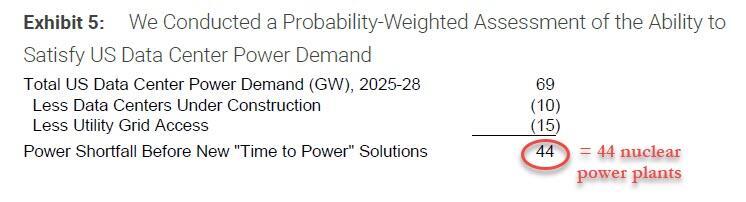
Core Insights - The core issue facing the AI infrastructure in the U.S. is a significant power shortage, with a projected gap of 44 GW by 2028, equivalent to the output of 44 nuclear power plants [1][3] - The construction cost for each additional 1 GW of data center capacity is approximately $50 billion, leading to discussions about a potential AI investment bubble [1][3] - The transition of cryptocurrency miners to AI data centers could potentially provide up to 15 GW of power within the next 18-24 months [3][4] Power Shortage Solutions - The first conventional method to address the power shortage is the transition of Bitcoin miners to AI data centers, which could release 15 GW of power [3][4] - Nuclear power is considered a long-term solution, with significant construction timelines, making it unfeasible for immediate needs [5][7] - Natural gas is another option, but supply chain constraints for gas turbines limit its short-term viability [8][9] - Fuel cell storage and solar plus storage solutions are also discussed, but they are not expected to resolve the immediate power shortage [10][11] Financing AI Infrastructure - The financing for AI infrastructure is a critical concern, with companies like CoreWeave facing significant debt levels and high-interest rates [22][25] - Investment-grade bonds and high-yield bonds are potential financing avenues, with estimates suggesting that the investment-grade market could address $1.5 trillion in financing needs over the next five years [39][40] - Asset-backed securities (ABS) and collateralized debt obligations (CDOs) are proposed as methods to package and sell future cash flows from data centers to investors [28][30] Market Dynamics and Competition - NVIDIA is positioned as a central player in the GPU market, with its partnerships with companies like OpenAI reinforcing its market dominance [41][42] - The competitive landscape is influenced by the need for AI companies to invest heavily in infrastructure to avoid being left behind, creating a "herd mentality" among major players [45][46] - The potential for over-investment exists, but current discussions suggest that the industry is still in the early stages of leveraging debt for expansion [47][48] Transition of Cryptocurrency Miners - The transition of cryptocurrency miners to AI data centers is seen as a viable solution, with early movers like CoreWeave benefiting from their strategic positioning [52]




电从哪里来?美国AI产业如何解决这个最大瓶颈?
Xin Lang Cai Jing· 2025-11-26 06:36
Core Insights - The primary challenge for the expansion of the AI industry in the U.S. is the shortage of electricity, with a projected demand of 69 GW by 2028 and a shortfall of 44 GW, equivalent to 44 nuclear power plants [1][2] - The construction cost for each additional 1 GW of data center capacity is approximately $50 billion, leading to concerns about whether the industry is entering an investment bubble [1][2] - The discussion revolves around two main questions: where will the electricity come from, and how will the funding for this massive infrastructure be secured [1][2] Electricity Shortage Solutions - The first conventional method to address the electricity shortage is the transition of cryptocurrency miners to AI data centers, which could potentially release 15 GW of power within 18-24 months [1][2][6] - Nuclear power is considered a long-term solution, with conventional plants taking over ten years to build, while small modular reactors (SMRs) are not expected to be commercially viable before 2030-2035 [2][3] - Natural gas is another option, but the supply of gas turbines is limited, with a backlog of 2-4 years for orders, making it a challenging short-term solution [4][5] - Fuel cell storage and solar plus storage are also mentioned, but they are not expected to provide immediate relief [5][6] Financing the AI Infrastructure - The financing landscape is complex, with companies like CoreWeave facing significant debt and high-interest rates, indicating a reliance on external funding [16][18] - Investment-grade bonds are expected to be a primary source of financing, with estimates suggesting that the high-rated market could address $300 billion in funding needs next year and $1.5 trillion over five years [26][28] - Asset-backed securities (ABS) and collateralized debt obligations (CDOs) are potential financial instruments that could be utilized to package and sell the underlying assets of data centers [19][20] Market Dynamics and Competition - NVIDIA is positioned as a central player in the GPU market, with its products being critical for AI data centers, while AMD is seen as a competitor trying to gain market share [30][31] - OpenAI is viewed as a disruptive force, driving demand for GPUs and influencing the strategies of other major tech companies [31][32] - The behavior of large tech companies is influenced by the fear of missing out on potential breakthroughs in AI, leading to significant investments despite the risks [33][34] Transition of Cryptocurrency Miners - The transition of cryptocurrency miners to AI data centers is seen as a viable solution, with early movers like CoreWeave benefiting from their timely shift [40] - New entrants in the market may face challenges due to their previous reliance on Bitcoin mining, which could complicate their transition to AI data centers [40]
纳入国企考核体系!事关并购重组,广东出大招
Sou Hu Cai Jing· 2025-11-26 04:54
Core Viewpoint - The Guangdong Provincial Financial Management Bureau has released an "Action Plan" to support enterprises in the Guangdong-Hong Kong-Macao Greater Bay Area in conducting industrial chain integration and mergers and acquisitions, aiming to enhance the competitiveness and sustainability of these enterprises by optimizing their industrial chain layout and promoting transformation and upgrading [1][2]. Group 1: Financial Support for Mergers and Acquisitions - The plan encourages listed companies to utilize various payment tools such as shares, targeted convertible bonds, and cash for mergers and acquisitions, attracting more social capital and enhancing sustainable development capabilities [2][3]. - It emphasizes the establishment of industrial merger funds by listed companies, focusing on key links in the industrial chain, and enhancing collaboration among regulatory bodies to support significant integration projects [2][3]. Group 2: Strengthening State-Owned Enterprises - The plan explores incorporating mergers, asset revitalization, and other activities into the performance evaluation system for state-owned enterprises, promoting flexible use of financing tools like targeted placements and acquisition loans [3]. - It aims to enhance internal resource integration within state-owned enterprises and improve asset securitization levels through various methods such as asset restructuring and equity swaps [3]. Group 3: Capital Market Development - The plan proposes broadening direct financing channels in the capital market, supporting technology-driven enterprises to list on various boards, and encouraging companies listed in Hong Kong to also list on the Shenzhen Stock Exchange [5][4]. - It supports the issuance of green bonds and other sustainable financing products to facilitate the green transformation of enterprises [5]. Group 4: Cross-Border Integration - The plan encourages the establishment of cross-border merger funds with Hong Kong and Macao capital, optimizing mechanisms for qualified foreign and domestic limited partners to support integration projects [6]. - It promotes the use of RMB for cross-border mergers and acquisitions and supports banks in providing foreign exchange risk hedging products [6]. Group 5: Investment Fund System - The plan outlines the creation of a provincial government investment guidance fund system to support mergers and acquisitions, encouraging social capital participation in various investment funds [8]. - It highlights the importance of government investment funds in addressing key technological challenges and enhancing the self-sufficiency of critical core technologies in industries [8]. Group 6: Collaboration with Financial Institutions - The plan aims to attract more large financial institutions to establish investment companies and funds in Guangdong, enhancing the financing environment for enterprises [9]. - It emphasizes leveraging the strengths of large financial institutions to provide diverse financial products and services tailored to the needs of enterprises at different development stages [9].
金茂22.65亿挂牌三亚丽思卡尔顿酒店,资产证券化能否破重资产困局?
Cai Jing Wang· 2025-11-26 03:09
Core Viewpoint - China Jinmao has announced a significant asset disposal plan, intending to sell its 100% stake in Jinmao (Sanya) Tourism Co., Ltd. for a base price of RMB 2.265 billion, focusing on asset securitization rather than simple asset liquidation [1] Group 1: Asset Details - Jinmao (Sanya) Tourism Co., Ltd. primarily holds the Ritz-Carlton Hotel in Sanya, which is a five-star hotel with 446 luxury rooms and villas [2] - The hotel has a strong market presence in Sanya's high-end hotel sector, with stable operational performance [3] - In 2024, the hotel is projected to achieve approximately RMB 310 million in revenue and RMB 57.93 million in net profit, with total assets amounting to RMB 3.324 billion as of August 31, 2025 [3] Group 2: Performance Metrics - The hotel's average occupancy rate for the first half of 2025 is 80.5%, up from 69.3% in the same period of 2024, with a RevPAR of RMB 1,654, reflecting a year-on-year increase of 3.25% [3] - The average room rate decreased by 11.16% year-on-year to RMB 2,054 [3] - The hotel ranks first among all hotels under China Jinmao in terms of average room rate and RevPAR [4] Group 3: Market Context - The hotel industry is currently undergoing a dual transformation of supply-demand structure adjustment and upgrading consumer demand, with a national average hotel vacancy rate of 38.2% in Q1 2025 [6] - Major cities experienced an average hotel occupancy rate of only 58% during the National Day holiday in 2025 [6] Group 4: Strategic Shift - China Jinmao is transitioning from heavy asset ownership to a lighter asset operation model, focusing on asset securitization as a core strategy [7] - The company has previously sold the Hilton Hotel in Sanya for RMB 1.849 billion, indicating a shift towards professional capital operations [7] - The hotel business currently accounts for only 3% of the company's overall revenue, reflecting a 12% year-on-year decline [8]
广东:探索将并购重组、资产盘活等纳入国企考核体系
Sou Hu Cai Jing· 2025-11-26 02:18
Core Viewpoint - The Guangdong Provincial Financial Management Bureau and other departments have jointly issued a plan to support enterprises in conducting industrial chain integration and mergers, aiming to enhance sustainable development capabilities and optimize industrial chain layouts [1][2]. Summary by Sections Overall Requirements - The plan emphasizes a market-oriented, legal, and international approach to build a comprehensive financial support system for the development of a modern industrial system in Guangdong, focusing on enhancing collaboration among enterprises in the industrial chain [3]. Encouragement of Integration and Mergers - The plan supports the integration and mergers of industrial chains by providing policy guidance and financial services tailored to enterprises, aiming to strengthen the competitiveness of the industrial chain [4]. - It encourages listed companies to utilize various payment tools for mergers and attract more social capital to enhance sustainable development [4][5]. Support for State-Owned Enterprises - The plan explores incorporating mergers and asset revitalization into the performance evaluation of state-owned enterprises, promoting the use of various financing tools for industrial chain integration [5]. - It aims to enhance the internal resource integration of state-owned enterprises and improve asset securitization levels [5]. Cross-Border Integration and Mergers - The plan encourages the establishment of cross-border integration and merger funds with Hong Kong and Macau capital, optimizing mechanisms for qualified foreign and domestic limited partners [6]. Financing Channels - The plan promotes the expansion of direct financing channels in the capital market, supporting technology-driven enterprises to list on various boards and issue green bonds [6][7]. - It emphasizes the establishment of a comprehensive fund system to support industrial chain integration, focusing on key sectors like chip manufacturing and high-end medical devices [6][8]. Credit Support for Integration - The plan encourages commercial banks to provide tailored credit support for eligible industrial chain integration projects, particularly in strategic industries [7][8]. Collaboration with Financial Institutions - The plan aims to attract more large financial institutions to Guangdong, enhancing the investment environment and supporting industrial upgrades [9]. Policy Coordination and Mechanisms - The plan establishes a cross-departmental collaboration mechanism to guide enterprises in conducting industrial chain integration and address challenges encountered during the process [10]. Risk Prevention - The plan emphasizes the importance of legal compliance and risk prevention in the integration and merger processes, focusing on safeguarding the interests of all parties involved [11].
广东:探索将并购重组、资产盘活等纳入国企考核体系,提高资产证券化水平
Sou Hu Cai Jing· 2025-11-26 02:12
Core Viewpoint - The Guangdong Provincial Financial Support Plan aims to enhance enterprise integration and mergers within the industrial chain, emphasizing the importance of state-owned enterprises (SOEs) in this process [1] Group 1: Policy Initiatives - The plan explores incorporating mergers and acquisitions, as well as asset revitalization, into the performance assessment system for SOEs [1] - It encourages listed SOEs to flexibly utilize financing tools such as targeted placements, special convertible bonds, and acquisition loans [1] - The initiative aims to strengthen and optimize the industrial chain through active mergers and acquisitions in advantageous sectors [1] Group 2: Resource Integration - There is a focus on enhancing internal resource integration within SOEs, utilizing existing financing platforms [1] - The plan promotes asset restructuring and equity swaps to channel more quality resources into listed companies, thereby increasing asset securitization levels [1] - Support is provided for state capital operation companies to leverage private equity investment funds to assist other enterprises in conducting upstream and downstream integration [1] Group 3: Operational Focus - The plan guides provincial, municipal, and county-level SOEs to concentrate on their primary responsibilities and core businesses [1] - It aims to improve the resilience and security of the industrial and supply chains [1]
结构优化、平台整合 电力央企资产证券化多头并进
Zheng Quan Shi Bao· 2025-11-25 18:29
Core Viewpoint - The National Power Investment Corporation (国家电投) is accelerating capital operations through significant asset restructuring and IPOs of renewable energy assets, reflecting a trend towards asset securitization among state-owned enterprises [1][2][9]. Group 1: Asset Restructuring - Electric Power Investment Energy (电投能源) plans to acquire 100% equity of Baiyinhua Coal Power Co., Ltd. for 11.15 billion yuan, maintaining its core business focus [2]. - Electric Power Investment Capital Integration (电投产融) is revising its asset restructuring plan to acquire 100% equity of Electric Power Investment Nuclear (电投核能) for 55.39 billion yuan, while divesting its stake in the Capital Holding Company [2]. - Far East Environmental (远达环保) has completed acquisitions of 100% equity in Wuling Power Co., Ltd. and 64.93% in Guangxi Changzhou Hydropower Development Co., Ltd., expanding its business into hydropower and integrated renewable energy operations [4]. Group 2: IPOs of Renewable Energy Assets - Huadian New Energy (华电新能) raised 18 billion yuan through its IPO, with a total installed capacity of 82.14 million kilowatts, focusing on wind and solar power [6][7]. - China Resources New Energy (华润新能源) plans to raise 24.5 billion yuan through its IPO, with a focus on wind and solar power generation [6]. - China Electric Power Construction New Energy (电建新能) is also pursuing an IPO, aiming to raise 9 billion yuan, with a total installed capacity of 21.25 million kilowatts [7]. Group 3: Strategic Implications - The restructuring and IPO activities are part of a broader strategy to enhance the quality of state-owned enterprises and optimize asset structures, moving from traditional financing to strategic asset management [5][10]. - Analysts suggest that separating renewable energy assets into independent platforms can improve market valuation and attract investment due to their growth potential and alignment with national policies [8][11]. - The focus on renewable energy aligns with national goals for green transformation and carbon neutrality, making these assets more appealing to investors [8][11].


中资离岸债每日总结(11.24) | 广州开发区控股、肥城华裕发行
Sou Hu Cai Jing· 2025-11-25 03:35
Group 1 - The Federal Reserve shows internal divisions ahead of the December meeting, with various regional Fed presidents expressing differing views on whether to continue cutting rates amid high inflation and a cooling labor market [2] - Boston Fed President Collins believes maintaining current rates is appropriate due to persistent high inflation, while acknowledging a slow cooling in the labor market [2] - Dallas Fed President Logan shares a similar cautious stance, stating she would find it difficult to support a rate cut in December without clear evidence of faster inflation decline or a more rapid labor market cooling [2] Group 2 - New York Fed President Williams indicates a more dovish outlook, suggesting there is room for further rate cuts given the increasing downside risks in the labor market and easing inflationary pressures [2] - Following Williams' remarks, financial markets reacted swiftly, with futures indicating a rise in bets for a December rate cut from approximately 45% to 65% [2] - The market interprets Williams' comments as a significant signal for the increased likelihood of a rate cut in the upcoming December meeting [2] Group 3 - On November 24, the People's Bank of China conducted a reverse repurchase operation of 338.7 billion yuan at a fixed rate, with a 7-day reverse repo rate of 1.40% [12] - The operation resulted in a net injection of 55.7 billion yuan, as 283 billion yuan in 7-day reverse repos matured on the same day [12]