重组胶原蛋白

Search documents
钟睒睒,投了山西女首富
创业家· 2025-07-01 10:01
Core Viewpoint - The article discusses the significant investment by Zhong Shanshan in Jinbo Biological, a company specializing in recombinant collagen products, highlighting the potential for growth in the medical beauty industry and the strategic collaboration between the two entities [4][6][12]. Group 1: Investment Details - Jinbo Biological announced two transactions, including introducing Yangshengtang as a strategic investor, with a total transaction amount reaching 3.4 billion yuan [5][8]. - The strategic investment involves issuing up to 7.1757 million shares, representing 6.24% of the pre-issue total share capital, aiming to raise no more than 2 billion yuan [8]. - Yang Xia, the founder of Jinbo Biological, transferred 5.7533 million shares to Hangzhou Jiushi at a price of 243.84 yuan per share, totaling 1.403 billion yuan [9][10]. Group 2: Company Background - Jinbo Biological, founded by Yang Xia, focuses on recombinant human collagen products and has achieved a market value of 40 billion yuan [6][18]. - The company has developed a range of products, including recombinant type III collagen, which has been widely adopted in medical and cosmetic applications [22][23]. - Jinbo Biological's revenue for 2024 is projected to be 1.443 billion yuan, reflecting a year-on-year growth of 84.92%, with a net profit of 732 million yuan, marking an increase of over 140% [23]. Group 3: Market Dynamics - The medical beauty industry, particularly the recombinant collagen segment, is experiencing rapid growth, with high consumer interest and significant market potential [26][30]. - The article notes that the pursuit of beauty is a strong driver for repeat purchases, making this sector highly lucrative [30]. - Jinbo Biological's products have gained popularity, with its core product, the injectable recombinant type III collagen, being used in over 4,000 medical institutions [23][24].


钟睒睒,投了山西女首富
36氪· 2025-07-01 00:02
Core Viewpoint - The article discusses the significant investment by Zhong Shanshan in Jinbo Biological, a company specializing in recombinant collagen products, highlighting the potential for growth in the beauty and medical aesthetics industry [4][5][20]. Group 1: Investment Details - Jinbo Biological announced two transactions, including introducing Yangshengtang as a strategic investor and transferring shares from founder Yang Xia to Hangzhou Jiushi, totaling an investment of 3.4 billion yuan [4][7]. - The strategic investment from Yangshengtang will involve issuing up to 717.57 million shares, potentially raising 2 billion yuan, marking the largest cash increase in the history of the Beijing Stock Exchange [7]. - After the transactions, Zhong Shanshan will hold a 10.58% stake in Jinbo Biological, making him the second-largest shareholder after Yang Xia [10]. Group 2: Company Background - Jinbo Biological, founded by Yang Xia, focuses on recombinant human collagen products and has achieved a market value of 40 billion yuan [5][16]. - The company’s main products include various medical devices and functional skincare products based on type A recombinant human collagen [16]. - Jinbo Biological's core product, the injectable recombinant type III human collagen, has been widely adopted, with over 2 million applications across approximately 4,000 medical institutions [16]. Group 3: Market Dynamics - The medical aesthetics industry, particularly recombinant collagen, is experiencing rapid growth, with Jinbo Biological reporting a revenue of 1.443 billion yuan in 2024, a year-on-year increase of 84.92% [17]. - The gross profit margin for Jinbo Biological reached 92%, surpassing that of leading companies like Kweichow Moutai [17]. - The article notes that the beauty industry is characterized by high repeat purchase rates, making it a lucrative market for investors [22].
疫苗企业转型潮来了,万泰生物股东养生堂切入锦波生物
Guo Ji Jin Rong Bao· 2025-06-30 14:38
Group 1 - The core point of the news is that Zhong Shanshan, the actual controller of Jiangsu Jinbo Biological Pharmaceutical Co., Ltd., has decided to invest 3.4 billion yuan in the company through his strategic investor, Yangshengtang Co., Ltd. [1] - The total transaction amount for the share transfer is 3.4 billion yuan, with Zhong Shanshan becoming the second-largest shareholder of Jinbo Biological after the investment [1][3] - Jinbo Biological's core business focuses on high-end implantable medical devices made from recombinant human collagen, primarily used in aesthetic medicine and surgical repairs [4] Group 2 - Jinbo Biological's sales of its core product "Wei Yimei" doubled in 2024, generating revenue of 1.443 billion yuan and a net profit of approximately 732 million yuan, with a gross margin of 92.02% [4] - The company has faced challenges with channel partners, including accusations against Xinyang and Meituan for unauthorized promotions and pricing issues [5] - The partnership with Yangshengtang is expected to leverage Zhong Shanshan's extensive retail network of 3 million terminals to enhance brand promotion and market expansion [5] Group 3 - The vaccine industry is currently undergoing a painful transition, with many companies, including Wantai Biological Pharmacy, seeking new growth avenues beyond traditional models [7] - Companies like Zhifei Biological and Watson Bio are diversifying their business by entering new therapeutic areas, such as metabolic diseases and gut microbiome therapies, in response to declining vaccine sales [7][8] - Watson Bio has signed an exclusive licensing agreement to develop and commercialize core microbiome analysis and targeted transplantation technologies, indicating a strategic shift towards microbiome health [9]
钟睒睒34亿进军医美赛道,锦波生物获投资后股价大涨、市值超400亿
Sou Hu Cai Jing· 2025-06-30 10:20
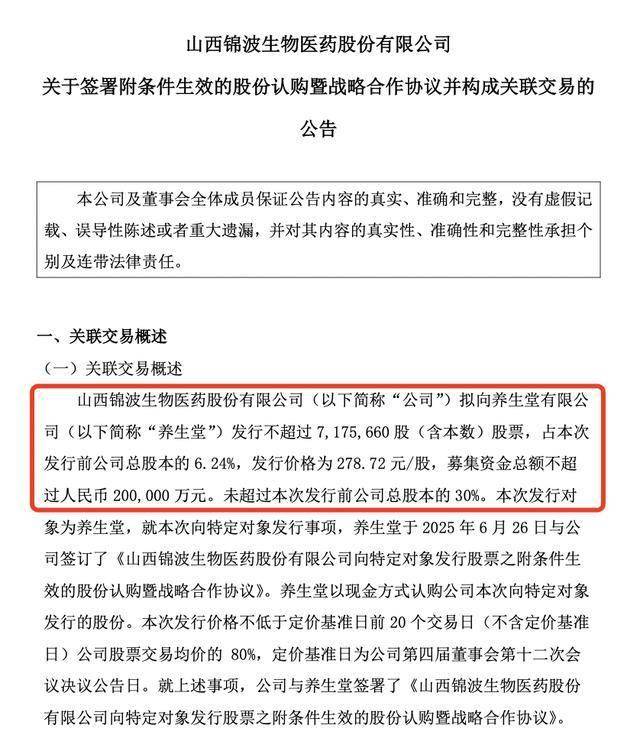
Core Insights - Jinbo Bio announced two significant transactions, including a strategic investment from Yangshengtang, which involves issuing up to 7.1757 million shares, representing 6.24% of the pre-issue total share capital, to raise no more than 2 billion yuan, potentially marking the largest cash private placement in the history of the Beijing Stock Exchange [1] - The controlling shareholder Yang Xia signed a share transfer agreement with Hangzhou Jiushi, transferring 5.7533 million shares at a price of 243.84 yuan per share, totaling 1.403 billion yuan [4] - The ultimate controllers of both Yangshengtang and Hangzhou Jiushi are Zhong Shanshan, who has invested 3.4 billion yuan into Jinbo Bio [5] Financial Performance - Following Zhong Shanshan's investment, Jinbo Bio's stock price surged, with a total market capitalization exceeding 40.3 billion yuan, trading at 350.55 yuan, up 0.5% [7] - As of March 31, 2025, Jinbo Bio reported cash and cash equivalents of 959 million yuan, indicating a slight increase from 941 million yuan at the end of 2024 [10] Strategic Implications - The introduction of Yangshengtang as a strategic investor is expected to empower Jinbo Bio in various aspects, including product development, industrial production, commercialization, market strategy, and management, thereby addressing capacity construction and product commercialization challenges [10] - The collaboration signifies a notable shift in the competitive landscape of the medical aesthetics industry, with Jinbo Bio aiming to enhance its market position through this partnership [11]
钟睒睒34亿入股锦波生物 豪赌背后暗藏多重隐忧
Xin Lang Zheng Quan· 2025-06-30 10:00
Core Insights - The article highlights the significant investment of 3.4 billion yuan by Zhong Shanshan into Jinbo Biological, marking a record for the Beijing Stock Exchange's private placement [1][2] - This investment strategy combines private placement and agreement transfer, allowing Zhong to become the second-largest shareholder with a 10.58% stake in Jinbo Biological [2] Investment Strategy - Zhong Shanshan's investment is executed through two companies: Yangshengtang and Hangzhou Jiushi, with Yangshengtang subscribing to up to 2 billion yuan in shares and Hangzhou Jiushi acquiring 5% of shares for 1.403 billion yuan [2] - The dual approach of private placement and agreement transfer mitigates market pressure on stock prices while providing Jinbo Biological with essential funding for its core project [2] Market Potential - Jinbo Biological holds a unique position in the recombinant collagen market, being the only company to have industrialized Class III medical devices [3] - The company's medical device revenue is projected to account for 86.89% of its total income in 2024, with a gross margin of 95.03%, surpassing that of Guizhou Moutai [3] - The recombinant collagen market is expected to grow significantly, reaching 58.57 billion yuan by 2025 and potentially exceeding 219.3 billion yuan by 2030 [3] Strategic Synergy - The investment aligns with the strategic interests of Yangshengtang, which can leverage Jinbo Biological's technology in health-related products [4] - Jinbo Biological's high gross margin and growth potential provide new revenue opportunities for Yangshengtang, creating a comprehensive cycle of research, industrialization, and commercialization [4] Competitive Landscape - Despite Jinbo Biological's leading position, competition in the recombinant collagen sector is intensifying, with companies like Huaxi Biological and Juzhi Biological also entering the market [5] - The sustainability of Jinbo Biological's technological edge and the need for product diversification are critical challenges that both Jinbo Biological and Zhong Shanshan will face [5] Conclusion - Zhong Shanshan's investment is a strong endorsement of Jinbo Biological's technological capabilities and market potential, aiming to solidify its leadership in the recombinant collagen sector while enabling Yangshengtang to enter the high-end biomaterials market [6]
钟睒睒,投了山西女首富
盐财经· 2025-06-30 09:42
Core Viewpoint - The article discusses the significant investment by Zhong Shanshan in Jinbo Biological, a rising player in the medical beauty industry, highlighting the strategic partnership and potential for business synergies in the field of recombinant collagen products [5][11][14]. Group 1: Investment Details - Jinbo Biological announced two transactions, including introducing Yangshengtang as a strategic investor, with a total transaction amount reaching 3.4 billion yuan [5][10]. - The company plans to issue up to 7.18 million shares to Yangshengtang, which would represent 6.24% of its pre-issue total share capital, aiming to raise no more than 2 billion yuan, potentially marking the largest cash capital increase in the history of the Beijing Stock Exchange [9]. - Yang Xia, the controlling shareholder, will transfer 5.75 million shares to Hangzhou Jiushi at a price of 243.84 yuan per share, totaling 1.403 billion yuan [10]. Group 2: Company Background - Jinbo Biological, founded by Yang Xia, focuses on recombinant collagen products and has achieved a market value of 40 billion yuan [7][12]. - The company has developed a range of products, including recombinant collagen injections, which have gained significant popularity in the medical beauty sector [24][25]. - As of the first quarter of 2025, Jinbo Biological had cash reserves of only 959 million yuan, indicating a need for new investment to expand production capacity [13]. Group 3: Market Potential - The medical beauty industry, particularly recombinant collagen, is experiencing rapid growth, with Jinbo Biological reporting a revenue of 1.443 billion yuan in 2024, a year-on-year increase of 84.92%, and a net profit of 732 million yuan, up over 140% [25]. - The gross profit margin for Jinbo Biological reached 92%, surpassing that of leading companies like Kweichow Moutai [25]. - The article emphasizes the strong consumer interest in beauty products, with recombinant collagen being positioned as a new trend in skincare, potentially rivaling hyaluronic acid [29][34].

中国前首富,34亿元入局
天天基金网· 2025-06-30 03:30
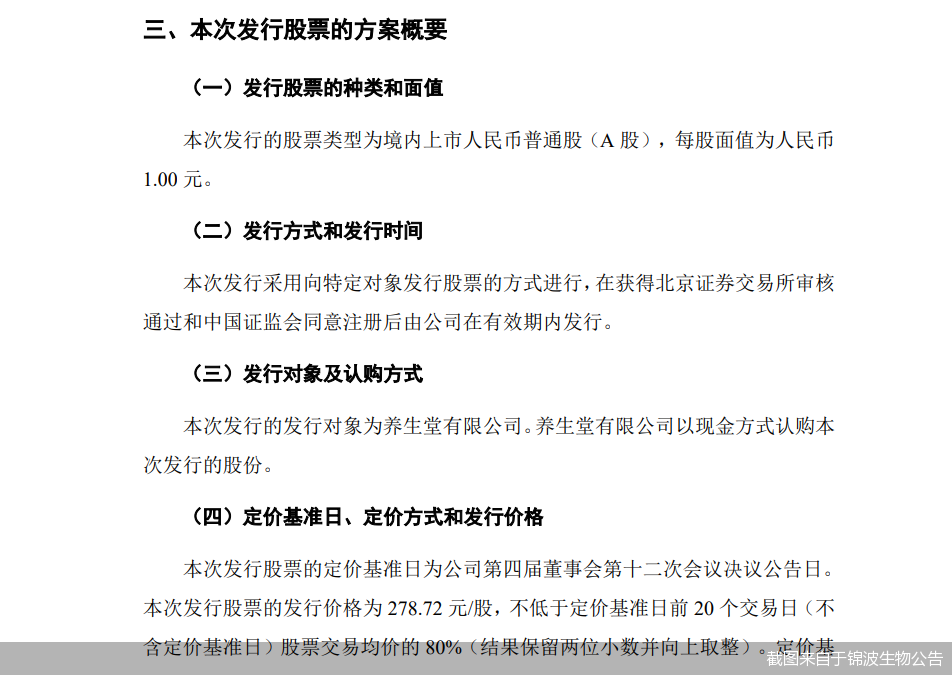
Core Viewpoint - The article discusses the strategic investment actions taken by Jinbo Biological, including a directed share issuance to Yangshengtang and a share transfer to Hangzhou Jiushi, totaling 3.4 billion yuan, which positions the company for growth in the recombinant collagen market [1][2][3]. Strategic Investment - Jinbo Biological plans to issue up to 7.1756 million shares at a price of 278.72 yuan per share, raising a maximum of 2 billion yuan, with 1.15 billion yuan allocated for the development of a humanized collagen FAST database and product platform [5]. - Following the transactions, Yangshengtang will become the second-largest shareholder of Jinbo Biological, holding over 5% of the shares, while the actual controller Yang Xia's stake will decrease to 50.73% [7]. Technological Strength - Jinbo Biological is recognized for its technological capabilities, being the first A-share company to focus on recombinant collagen, achieving significant breakthroughs in the field of biomaterials [10]. - The company has received approval for its third type of recombinant humanized collagen medical device, indicating its strong position in the market [10]. - Projected revenues for 2024 are 1.443 billion yuan, representing an 84.92% year-on-year increase, with a net profit of 732 million yuan, up 144.27%, and a gross margin of 92.02% [10]. Market Dynamics - The investment by Zhong Shanshan is seen as a strategic move to address the stagnation in the performance of his other companies, with the recombinant collagen market expected to grow significantly, reaching 58.57 billion yuan by 2025 and over 219.38 billion yuan by 2030 [12][13]. - The collaboration between Jinbo Biological and Yangshengtang is expected to enhance production capabilities and market reach, leveraging Yangshengtang's established distribution networks [15][17]. Industry Changes - The partnership is set to reshape the competitive landscape, with recombinant collagen emerging as a high-growth segment amid increasing competition [19]. - Jinbo Biological aims to transition from a technology leader to a market leader, supported by the strategic investment and anticipated product launches [19][20].

齐云山冲刺港股上市;钟睒睒拟投资重组胶原蛋白公司|消费早参
Mei Ri Jing Ji Xin Wen· 2025-06-29 14:41
Group 1 - Qiyunshan Food Co., Ltd. submitted its prospectus to the Hong Kong Stock Exchange on June 27, aiming to expand its e-commerce network and enhance online promotion [1] - Qiyunshan holds a 32.4% market share in China's sour jujube food market, making it the industry leader [1] - The company plans to leverage its capital operations to increase brand influence and product value, although public awareness of sour jujube remains low [1] Group 2 - Jinbo Biological, a leading collagen company, disclosed a private placement plan to raise up to 2 billion yuan by issuing shares to Yangshengtang Co., Ltd. [2] - After the issuance, Yangshengtang will hold over 5% of Jinbo Biological, becoming its second-largest shareholder [2] - The collaboration is expected to enhance Jinbo Biological's brand promotion and product management, aligning well with Yangshengtang's anti-aging cosmetics focus [2] Group 3 - The China Consumers Association advocated against food waste and extreme eating broadcasts, emphasizing the importance of frugality and food conservation [3] - The association proposed a "three-party governance" approach involving consumers, content creators, and platform operators to foster a healthy online food environment [3] - This initiative reflects a strong sense of responsibility towards food security and social civility [3]
定增加协议转让!钟睒睒看上了锦波生物什么
Bei Jing Shang Bao· 2025-06-29 12:22
Core Viewpoint - The investment by Zhong Shanshan in Jinbo Biological is a strategic move to capitalize on the growth opportunities in the recombinant collagen market, which is expected to see significant expansion in the coming years [7][8]. Investment Details - Zhong Shanshan plans to fully subscribe to Jinbo Biological's private placement fundraising of up to 2 billion yuan through his company, Yangshengtang [1][3]. - Additionally, he will acquire 5% of Jinbo Biological's shares from the actual controller Yang Xia for 1.403 billion yuan [3][4]. - After the transactions, Yangshengtang and Hangzhou Jiushi will hold 5.87% and 4.71% of Jinbo Biological, respectively, allowing Zhong to indirectly control 10.58% of the company [4]. Financial Performance - Jinbo Biological's medical device segment has a gross margin of 95.03%, surpassing that of Kweichow Moutai [5][6]. - The company reported revenues of approximately 3.9 billion yuan, 7.8 billion yuan, and 14.43 billion yuan for the years 2022, 2023, and 2024, respectively, with corresponding net profits of about 1.09 billion yuan, 3 billion yuan, and 7.32 billion yuan [6]. - The stock price of Jinbo Biological has seen a significant increase, with a cumulative rise of 118.33% from January 2 to June 27, 2024, making it the highest-priced stock on the Beijing Stock Exchange [6]. Market Outlook - The recombinant collagen product market in China is projected to grow at a compound annual growth rate of 44.93%, reaching 58.57 billion yuan by 2025 and 219.38 billion yuan by 2030 [8]. - Despite the growth, there are concerns about increased competition in the medical aesthetics sector, highlighted by recent disputes between major players in the industry [8]. Strategic Implications - The investment is seen as a significant step for Zhong Shanshan to expand his footprint in the high-growth health sector, potentially leading to substantial returns [7]. - Jinbo Biological aims to leverage the resources and expertise of Yangshengtang to enhance its product development, industrial production, and market strategies [4][7].
钟睒睒,投了山西女首富
投资界· 2025-06-29 07:26
Core Viewpoint - The article discusses the strategic investment by Zhong Shanshan in Jinbo Biotechnology, a company specializing in recombinant collagen products, highlighting the potential for growth in the medical beauty industry and the collaboration's expected synergies [2][4][6]. Group 1: Investment Details - Jinbo Biotechnology announced a strategic investment from Yangshengtang, with a total transaction amount reaching 3.4 billion yuan [1][4]. - The company plans to issue up to 717.57 million shares, accounting for 6.24% of its pre-issue total share capital, aiming to raise no more than 2 billion yuan, which would be the largest cash capital increase in the history of the Beijing Stock Exchange [4]. - Yang Xia, the founder of Jinbo Biotechnology, transferred 575.33 million shares to Hangzhou Jiushi at a price of 243.84 yuan per share, totaling 1.403 billion yuan [4][7]. Group 2: Company Background - Jinbo Biotechnology, founded by Yang Xia, focuses on recombinant human collagen products and has achieved a market value of 40 billion yuan [2][12]. - The company’s main products include various terminal medical devices and functional skincare products based on type A recombinant human collagen [12][14]. - Jinbo Biotechnology's core product, the injectable recombinant type III human collagen, has been widely adopted, with over 2 million applications across approximately 4,000 medical institutions [12][14]. Group 3: Market Dynamics - The medical beauty industry is characterized by high profitability, with Jinbo Biotechnology reporting a revenue of 1.443 billion yuan in 2024, a year-on-year increase of 84.92%, and a net profit of 732 million yuan, up over 140% [14]. - The gross margin of Jinbo Biotechnology reached 92%, surpassing that of leading companies like Kweichow Moutai [14]. - The article notes that the demand for recombinant collagen is growing, with significant consumer interest reflected in social media discussions and product popularity [17][19]. Group 4: Future Prospects - The collaboration between Jinbo Biotechnology and Yangshengtang is expected to enhance product development, industrial production, and market strategy, aiming to create a large-scale industrial production system [6][12]. - The investment is seen as a strategic move to strengthen Jinbo Biotechnology's position in a competitive market, where it currently faces challenges due to its smaller size and limited financial resources [6][12].