AI医疗

Search documents
20cm速递|科创创新药ETF国泰(589720)回调超2%,近10日净流入超2.7亿元,JPM会议释放积极信号
Sou Hu Cai Jing· 2026-01-22 06:55
Group 1 - The core viewpoint of the articles highlights the positive signals released by JPM meetings, reinforcing the industrial positioning of AI in healthcare [1] - AI in pharmaceuticals is enhancing the entire drug development process, improving efficiency and success rates in new drug discovery, preclinical screening, clinical development, and production, indicating a high growth trajectory in the future [1] - Since the beginning of 2026, multinational pharmaceutical companies have engaged in over 9 AI-related collaborations, totaling more than $6 billion [1] Group 2 - Chinese innovative pharmaceutical companies are demonstrating competitive strength, with a surge in outbound business development for dual antibodies, ADCs, and GLP-1RA new drugs expected by 2025 [1] - The investment direction in AI healthcare includes areas such as AI health management, AI medical information technology, AI medical imaging, AI surgical robots, AI gene sequencing, and AI pharmaceuticals [1] - The Guotai Innovation Drug ETF (589720) tracks the Innovation Drug Index (950161), which has a daily price fluctuation limit of 20%, focusing on listed companies dedicated to innovative drug research and development in the biopharmaceutical and chemical pharmaceutical sectors [1]
AI医疗行业专题报告:AI重构医疗,从场景落地到变现讨论
EBSCN· 2026-01-22 06:14
AI重构医疗,从场景落地到变现讨论 ——AI医疗行业专题报告 2026年1月22日 分析师:吴佳青,执业证书编号:S0930519120001 证券研究报告 目录 CONTENT S 第一章:复盘 •本轮行情与上轮行情的异同 第二章:AI+药物研发 •靶点发现与验证 •变现模式探讨:看好 CRO+Biotech 第四章:AI+诊疗 •环境智能与自动病历生成 •大模型驱动的 AI医生助手 第五章:AI手术机器人&健康管理 • AI在手术机器人领域的应用 可穿戴设备与数字疗法 • 第三章:AI+医学影像 •从 辅助诊断迈向全流程赋能 2025年初国内外AI医疗概念股普涨,美股AI医疗行情更侧重于健康管理、AI数字化临床实验领域,国内有相关概念映射标的 涨幅较大 1)健康管理服务:商业模式以订阅制为主,提供AI智能问诊、AI私人医生等服务,制定针对患者的个性化健康管理方案。 2)AI数字化临床实验:提供药物研发和医疗信息服务,在临床试验中运用AI技术进行数据管理、患者招募和疗效评估等。 •变现模式探讨 第六章:投资建议 第七章:风险分析 请务必参阅正文之后的重要声明 2 26年初国内AI医疗概念股普涨,行情发酵侧重 ...
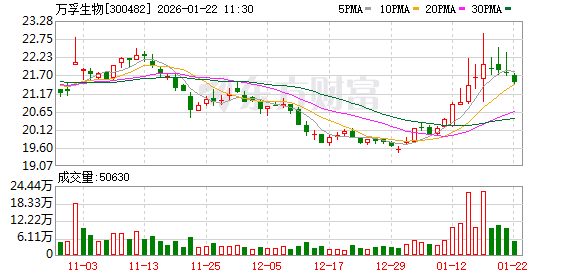
万孚生物加速布局AI医疗领域
Zheng Quan Ri Bao· 2026-01-22 03:40
Core Insights - The company focuses on innovation as a driving force for business development and is leveraging AI's transformative impact on healthcare, particularly in laboratory diagnostics and digital pathology [2][3] - The company plans to enhance its AI investments through mergers and acquisitions, as well as a combination of B2B and B2C strategies, aiming to create a valuable ecosystem in the AI healthcare sector [2][3] Group 1: Business Strategy and AI Integration - Since its listing in 2015, the company has been integrating AI into its operations, particularly in the digital pathology sector, and has established a leadership position in ultrasound imaging [2] - The company has developed a multi-modal diagnostic framework that includes imaging, pathology, and laboratory diagnostics, enhancing its brand influence and operational efficiency through AI applications [2] - The company aims to achieve more regulatory approvals and breakthroughs in its business model to become a leading player in the domestic AI healthcare market [3] Group 2: Financial Outlook and Performance - The company anticipates a decline in its profit statement for 2025 due to strategic adjustments, including the divestment of risk assets and a focus on improving operational quality [3] - Despite the expected downturn in 2025, the company is optimistic about a recovery in domestic business in 2026, supported by a low base from the previous year, and has positive growth expectations for its overseas operations [3] - The company has launched the "Wanfubio Smart Inspection" AI platform, which features multiple AI applications for various medical scenarios, contributing to growth in the consumer segment through its health app [3]


医药周报:基药目录前瞻、JPM大会看点
Guolian Minsheng Securities· 2026-01-22 02:45
Investment Rating - The report maintains a positive investment rating for the pharmaceutical sector [6] Core Insights - The pharmaceutical sector experienced a week-on-week decline of 0.68%, underperforming compared to the ChiNext and CSI 300 indices, ranking 17th among all industries [2][36] - The report emphasizes the importance of innovation, international expansion, and overcoming challenges as key themes for investment in 2026, with a focus on BD 2.0, small nucleic acids, and supply chain opportunities [3][4] - The upcoming adjustment of the National Essential Drug List is seen as critical, aiming to address clinical needs that have evolved since the last update in 2018, particularly in pediatrics, oncology, and rare diseases [5][14] Summary by Sections National Essential Drug List Adjustment Analysis - The current drug list has not been updated since 2018, leading to a disconnect with clinical needs, necessitating a systematic adjustment [14] - The adjustment will focus on filling gaps in disease coverage, particularly in pediatrics, oncology, and rare diseases, while also solidifying the integration of collective procurement and national negotiation outcomes [18][19] - The report identifies potential beneficiaries in traditional Chinese medicine, particularly in areas with previously weak coverage [28] JP Morgan Conference Overview - The 44th JP Morgan Health Conference highlighted strategic developments from major global pharmaceutical companies, showcasing their core pipeline advancements and key clinical milestones for 2026 [33] - Companies like Pfizer, Merck, and Eli Lilly presented their focus on innovative treatments and upcoming clinical trials, indicating a robust pipeline for future growth [34][35] Pharmaceutical Market Review and Hotspot Tracking - The pharmaceutical sector's performance in early 2026 has shown a 7.08% increase, outperforming both the CSI 300 and ChiNext indices [36] - The report notes a shift in market sentiment, with certain innovative sectors like AI healthcare and medical robotics showing strong performance, while traditional sectors faced adjustments [2][3]
医脉通20260121
2026-01-22 02:43
Summary of Medical Industry Conference Call Company Overview - **Company**: 医脉通 (Yiliao Tong) - **Industry**: Medical Technology and AI Applications in Healthcare Key Points and Arguments Business Model and Financial Performance - 医脉通 has a strong business model with a projected operating net profit margin of 21% by 2025, exceeding 20% even after excluding interest income, which supports ongoing investment in technology and personnel training [2][6] - The company anticipates AI-related revenue to begin reflecting in the second half of 2025, primarily from pharmaceutical companies paying for medical content generation and review services, which are part of their marketing budgets [2][7] AI Applications and Product Offerings - 医脉通 has developed various AI applications, including clinical guidelines, disease knowledge bases, and medical literature websites, with plans to launch an AI intelligent Q&A tool and a comprehensive intelligent agent [2][5] - The company utilizes large model technology to enhance the efficiency and precision of academic promotion content for pharmaceutical companies, offering services charged based on usage [2][5][8] Competitive Advantages - 医脉通's advantages in the AI application field include rich medical information resources, extensive data on Chinese doctors' behaviors, and a strong commercialization capability [3] - The company focuses on helping pharmaceutical companies with precise marketing strategies by analyzing doctor profiles and developing targeted academic promotion strategies [3][10] Market Trends and Challenges - The industry is experiencing a slowdown in growth, particularly due to healthcare cost control measures leading to cautious marketing budget allocations by pharmaceutical clients [13] - Despite competition from other AI tools targeting clinical doctors, 医脉通 maintains a focus on aiding pharmaceutical companies, particularly in precise marketing [9] Future Outlook - The company plans to expand its sales personnel to cover more clients and medical products, with a focus on increasing the number of cooperative products to drive revenue growth [16][17] - 医脉通 aims to enhance user engagement through its AI products, ensuring that doctors find value in the platform, which is crucial for maintaining a competitive edge [10][19] Revenue Generation and Client Engagement - Revenue generation is primarily based on the number of cooperative products, with a significant portion of income coming from products in the early stages of market entry [15][16] - The company employs a points reward system to encourage doctors to engage with the platform, enhancing user retention and interaction [12] Strategic Partnerships and Future Developments - 医脉通 is open to potential collaborations with large model companies to enhance product offerings and address technical gaps [20] - The company is focused on providing comprehensive solutions that quantify the effectiveness of academic promotions, which is key to increasing client acceptance and budget allocation [17][18] Additional Important Insights - The average selling price (ASP) of products and the overall financial situation for 2025 have not been disclosed, but the market is expected to become healthier and more compliant, with an increase in the number of innovative drugs approved in China [12] - The shift of marketing budgets from in-hospital to out-of-hospital settings, driven by e-commerce platforms, may impact the marketing strategies of pharmaceutical companies, but 医脉通's focus remains on in-hospital education [14]
海南产经新观察:博鳌乐城现代化医疗新城“加速跑”
Zhong Guo Xin Wen Wang· 2026-01-22 01:11
2026年是"十五五"规划开局之年,也是海南自贸港全面实施封关运作开局之年。乐城将有哪些新动向? 中新网海南琼海1月21日电(记者 符宇群)海南博鳌乐城国际医疗旅游先行区(下称"乐城")是中国唯一 的"医疗特区"。琼海市市长陈明21日介绍,"十四五"时期,乐城高水平医疗机构增至39家,真实世界数 据及其医保创新应用在全国率先试点,累计引进552种国际创新药械和特医保健食品,园区累计营收突 破230亿元。 海南省琼海市第十六届人民代表大会第七次会议21日开幕,陈明在作政府工作报告时说,过去五年,默 沙东、诺华等多家全球头部药械企业落子乐城,园区接待医疗旅游突破200万人次,其中海外医疗消费 回流超90万人次。 2025年,琼海与乐城加快一体化融合发展,助力乐城"加速跑"。共同出台乐城国际医疗旅游试行管理办 法,实施"打造示范窗口23条举措"。海南省药械审评服务中心乐城分中心揭牌,特许药械、特医保健食 品新增超百种,20个生物医学新技术项目获批转化应用,"国际创新药械'三医协同'可信数据空间"入选 全国试点。全省首家外商独资医院落地。国际商业医疗保险破题,乐城特药险覆盖人群突破1.13亿人 次。 在医旅发展方面, ...
万孚生物:“并购+院端+C端”并举构建AI医疗生态
Zheng Quan Shi Bao Wang· 2026-01-21 14:39
Core Insights - Wanfu Bio has established an AI medical ecosystem since 2018, focusing on "mergers and acquisitions + hospital end + consumer end" to become a leading player in China's AI medical field [1][2] Group 1: Investment and Partnerships - Wanfu Bio's investment in Saiweisen Medical Technology led to the acquisition of China's first Class III medical device registration for cervical cancer cell digital pathology diagnostic software, expected to be operational by February 2025 [1] - The company also invested in Shenzhen Shengqiang Technology, which aims to create intelligent pathology solutions through hardware and software integration, enhancing the digital workflow in hospital pathology departments [1] - Medical technology company Yizhun Intelligent, backed by Zhongfu Yide Industrial Fund, has received the first and second Class III certifications for breast X-ray and thyroid nodule ultrasound AI detection software, respectively [1] Group 2: Business Development and Innovations - Wanfu Bio has launched the "Wanfu Smart Inspection" AI platform for hospitals, featuring multiple AI applications in various medical scenarios, including coagulation diseases and tumors [2] - The company has introduced the Wanfu Health mini-program for consumers, which uses AI to automatically identify results from respiratory, digestive, and blood infectious disease tests, supporting personal health record creation [2] - Future plans include enhancing multi-modal and multi-omics development in diagnostics, leveraging years of experience in laboratory testing to improve grassroots testing capabilities in collaboration with its invested companies [2]
微医三闯港交所上市:历史包袱难卸,模式瓶颈待破
Sou Hu Cai Jing· 2026-01-21 11:52
Core Insights - WeDoctor is undergoing a significant transformation, moving from a digital healthcare platform to a "B2G" model focused on AI-driven health management services, particularly in collaboration with local governments and health insurance funds [5][6][20] - The company has reported impressive growth in revenue, particularly in health management services, which surged from 354 million RMB in 2023 to 3.893 billion RMB in 2024, with a 131.4% year-on-year increase in the first half of 2025 [8][14] - Despite the growth, WeDoctor faces structural vulnerabilities, heavily relying on a single client, the Tianjin health insurance fund, which accounted for 77.6% of its total revenue in the first half of 2025 [8][14] Business Model and Performance - WeDoctor's new operational model is based on a "per capita bundled payment" system, where health insurance funds prepay a budget for specific populations, linking revenue directly to cost control outcomes [5][6] - The company has achieved notable improvements in patient health metrics during its Tianjin pilot, with significant increases in control rates for chronic diseases [6] - However, the gross profit margins for WeDoctor's health management services have remained extremely low, fluctuating between 0.7% and 3.8%, indicating ongoing profitability challenges [8][14] Competitive Landscape - The healthcare sector is becoming increasingly competitive, with major players like Alibaba and JD.com entering the "AI + grassroots healthcare" space, leveraging their technological and market advantages [16][18] - WeDoctor's approach of deep integration with local healthcare services and insurance systems presents a unique positioning but also entails higher operational risks and slower expansion [17][20] - Competitors like DXY and Yilian have adopted different strategies, focusing on building trust and technology-driven solutions, which may pose further challenges for WeDoctor [16][18] Governance and Financial Health - WeDoctor's governance issues, particularly related to founder Liao Jieyuan's past regulatory violations, have raised concerns about the company's management stability and investor confidence [10][13] - The company's financial situation is precarious, with cumulative losses reaching 17.826 billion RMB over seven years, and a significant net loss of 7.508 billion RMB from 2022 to the first half of 2025 [14][15] - Despite a positive cash flow in the first half of 2025, the company has a low cash reserve of 455 million RMB, raising questions about its financial sustainability [15][14] Future Outlook - WeDoctor aims to replicate its Tianjin model in other regions, but faces challenges due to varying local policies and the complexity of implementation [19][20] - The company's ability to navigate these challenges and innovate its business model will be crucial for its survival in a competitive market [21]

之江生物:在创新药与AI医疗领域均有布局
Sou Hu Cai Jing· 2026-01-21 11:32
来源:市场资讯 声明:市场有风险,投资需谨慎。本文为AI基于第三方数据生成,仅供参考,不构成个人投资建议。 有投资者在互动平台向之江生物提问:"董秘您好,请问贵公司有布局创新药和AI医疗方向吗?" 针对上述提问,之江生物回应称:"尊敬的投资者,您好。公司围绕'预防、诊断、治疗'一体化战略, 持续以创新驱动发展。公司在创新药与AI医疗领域均有布局,依托智能制造、数字孪生等技术持续提 升感染性疾病、优生优育、肿瘤及遗传病诊断等多个领域的解决方案。感谢您的关注!" ...

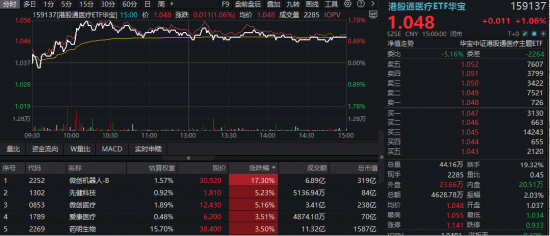
医保新政出台,手术机器人龙头暴涨17%!港股通医疗ETF华宝(159137)摸高1.78%终结四连跌
Xin Lang Ji Jin· 2026-01-21 11:25
Core Viewpoint - The new policy from the National Healthcare Security Administration (NHSA) is expected to significantly boost the medical device industry, particularly benefiting high-end surgical assistance technologies, robotic surgeries, and telemedicine [1][3]. Group 1: Market Reaction - A-share medical ETFs, particularly the largest medical ETF (512170), saw a rise of 1.36% during intraday trading, indicating strong buying interest with over 270 million yuan invested the previous day [1]. - The Hong Kong medical ETF (159137) also experienced a rebound, reaching a peak increase of 1.78% before closing up 1.06%, ending a four-day decline [1]. - Notable stock performances included a 17.3% surge in the leading domestic surgical robot company, MicroPort Scientific Corporation-B, and over 5% increases in MicroPort Medical and Xianjian Technology [1]. Group 2: Policy Impact - The NHSA's new guideline establishes a market mechanism for high-end surgical assistance technologies, which is expected to enhance innovation and profitability in the industry [3]. - The unified pricing framework is anticipated to highlight the cost-performance advantages of domestic surgical robots and related consumables, accelerating the trend of domestic substitution [3]. - The NHSA's commitment to expanding the guideline in the future will create more opportunities for innovative medical device products, benefiting the overall innovation ecosystem in the industry [3]. Group 3: Investment Opportunities - The medical device sector is poised for significant investment opportunities due to the new NHSA policy, with a focus on high-end medical equipment, robotic surgeries, and compliant consumables [3]. - The CXO industry is experiencing improved conditions due to recovering overseas orders and domestic capacity clearance, contributing to sustained growth [3]. - The largest medical ETF (512170) and its associated funds focus on medical devices and services, with over 36% of its index weight in AI medical and brain-computer interface concept stocks [4].