L4级自动驾驶

Search documents
20亿元!滴滴自动驾驶获D轮融资,加速L4级自动驾驶进程
Feng Huang Wang· 2025-10-11 07:12
Core Viewpoint - Didi Autonomous Driving has secured a Series D funding round totaling 2 billion yuan, aimed at advancing AI core algorithm development and L4 autonomous driving applications [1] Group 1: Funding and Investment - The funding round includes investments from various entities such as Zhongguancun Science City Technology Growth Fund, Beijing Information Industry Development Investment Fund, Beijing Artificial Intelligence Industry Investment Fund, GAC Group, Guangzhou Guanghua Fund, and Didi itself [1] - The capital raised will focus on technological innovation, large-scale operations, and commercial closure in the autonomous driving sector [1] Group 2: Technological Development - Didi's co-founder and CEO of Didi Autonomous Driving, Zhang Bo, emphasized that L4 autonomous driving technology is one of the most significant technological transformations in the upcoming decade of artificial intelligence [1] - The company has nearly a decade of experience in AI, mass production, and operations, and is committed to responsible technological innovation [1] Group 3: Market Operations - Didi Autonomous Driving has initiated full-scenario, fully driverless testing in Beijing and Guangzhou, demonstrating the capability to handle complex scenarios such as peak traffic and sudden rain [1] - A collaborative project with GAC Aion aims to deliver a mass-produced model by the end of 2025, which will also initiate demonstration applications [1]

无人配送车赛道:风虽大,水亦深
虎嗅APP· 2025-10-08 10:25
Core Insights - The article discusses the shift in focus from L4 autonomous driving for passenger transport (Robotaxi) to the burgeoning market of unmanned delivery vehicles, which has gained traction due to technological advancements and effective business models [2][3] - The unmanned delivery vehicle industry is entering a critical phase marked by large-scale application of AI technology and the achievement of positive profitability, as exemplified by the production milestone of the 10,000th vehicle by New Stone [2] Industry Dynamics - The industry is witnessing an influx of new players, leading to a transformation from a "single-point competition" dominated by startups to an "ecosystem confrontation" led by major corporations [5] - The competitive landscape has evolved into a three-tier structure: first-tier leaders like New Stone and Jiushi, second-tier entrants like Desay SV and Youjia Innovation, and potential disruptors such as Momenta and Huawei [6] - The focus of competition has shifted from hardware to full-chain competition, emphasizing the importance of supply chain, operations, and data integration [7] Challenges in the Market - The industry faces significant challenges, summarized by the phrases: "easy to build, hard to sell," "easy to hardware, hard to software," and "easy to launch, hard to maintain" [10] - The first challenge is the gap between producing unmanned delivery vehicles and successfully selling them, as demonstrated by New Stone's lengthy market penetration process [11][12] - The second challenge involves the complexity of software development, where integrating hardware components into a stable and efficient operational system is crucial [13][14] - The third challenge pertains to operational maintenance, which requires robust support systems and a skilled workforce to manage the complexities of real-world logistics [15] Future Outlook - The industry is transitioning from "wild growth" to "meticulous cultivation," indicating a maturation phase where scale and profitability are achievable [17] - Future competition will hinge on ecological capabilities and deep industry insights rather than mere technological advantages [18] - New entrants must recognize that unmanned delivery vehicles are not just simplified autonomous cars but essential tools for logistics, focusing on cost reduction and efficiency [18]


奔驰13亿入股,千里科技:单个城市部署千辆自动驾驶出租车
Nan Fang Du Shi Bao· 2025-10-04 11:31
Group 1 - The core viewpoint is that with technological advancements, cost reductions, and policy openness, Robotaxi is expected to enter a rapid popularization phase in the next three years, and the company has plans to complete the full-chain layout for Robotaxi within 18 months [1] - The company is accelerating the development of L4 autonomous driving solutions and collaborating with Geely to develop dedicated Robotaxi models, as well as partnering with leading domestic and international mobility service providers to create a Robotaxi operation service platform [1] - The company aims to achieve large-scale Robotaxi operations in 10 cities globally, deploying over 1,000 Robotaxis in a single city to secure a foothold in the industry [1] Group 2 - The issuance of the first batch of intelligent connected vehicle demonstration operation licenses in Shanghai marks a critical turning point for autonomous driving from "road testing" to "scale operation," significantly promoting the commercialization of L4 autonomous driving technology [2] - Analysts believe that this marks the official commercialization stage of Robotaxi, and if other cities and countries follow suit with similar policies, it could trigger a significant commercial breakthrough for L4 autonomous driving [2] - The company has made steady progress in its technology business sector since initiating an "AI+" strategic transformation last year, completing a comprehensive business layout in a short period [2] Group 3 - The company, formerly known as Chongqing Lifan Technology, underwent bankruptcy restructuring in 2020 and was transformed under Geely's leadership, achieving absolute control over Lifan Technology in 2022 [3] - In July 2024, Geely will transfer 19.91% of Lifan Technology's shares to a company owned by the co-founder of Megvii Technology, making it the second-largest shareholder [3] - On September 25, the company announced that Mercedes-Benz (Shanghai) Digital Technology Co., Ltd. acquired 3% of its shares for approximately 1.339 billion yuan, becoming the fifth-largest shareholder, with a commitment not to reduce holdings within 12 months [3]

斯年智驾完成数亿元B+轮融资,落地场景从封闭向开放突破|36氪独家
3 6 Ke· 2025-09-29 01:35
Core Insights - Snian Intelligent Driving has completed a B+ financing round of several hundred million yuan, with investments from various funds and industry capital, aimed at R&D and market expansion for autonomous driving products [1] - The company, established in April 2020, focuses on autonomous driving technology for logistics scenarios, providing intelligent driving solutions for ports, parks, and trunk lines [1] - By 2025, Snian Intelligent Driving has achieved significant business breakthroughs in multiple fields, particularly in L4 closed scenarios, collaborating with over 20 major ports and holding a leading market share [1][2] Group 1 - Snian Intelligent Driving has built the first automated terminal for general cargo in China, the first full-process intelligent transformation project for traditional terminals, and the first demonstration area for autonomous driving in mixed-mode railway stations [2] - The company’s solutions are widely applied in leading enterprises such as PetroChina, Ningbo Port, Qingdao Port, Xiamen Port, Sun Paper, and Xinjiang Land Port [2] Group 2 - L4 open scenarios represent a new business breakthrough for Snian Intelligent Driving, which has established a large-scale trunk logistics fleet with nearly 100 vehicles deployed in regions like Baotou, Tianjin Dongjiang, and Yongjin Expressway [3] - The core challenge in open scenarios is managing highly uncertain traffic environments, requiring advanced perception algorithms and decision-making systems [3] - The transition from low-speed closed scenarios to high-speed open scenarios is underway, with significant acceleration in the commercialization process [3] - Following this financing round, the company aims to enhance growth and profitability by focusing on developing better autonomous driving systems, accelerating the adaptation of customized and self-developed chassis, and promoting large-scale production [3]
三个学霸85后上海造硬件,干出350亿香港IPO
Sou Hu Cai Jing· 2025-09-26 13:25
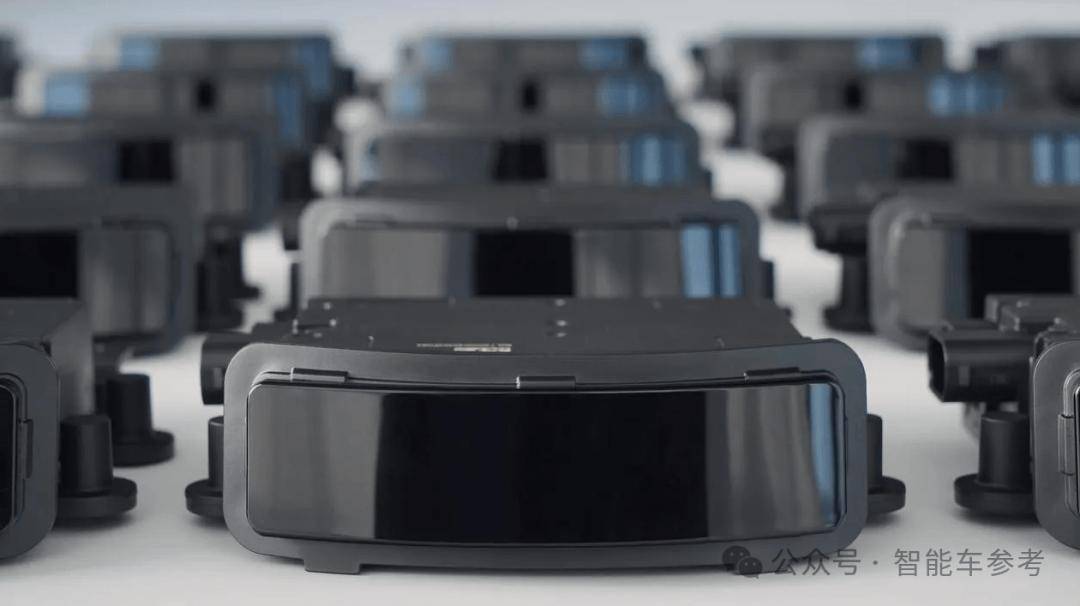
Core Viewpoint - Hesai Technology, the first Chinese lidar company to go public, achieved a dual listing on the Hong Kong Stock Exchange and NASDAQ, marking the largest IPO of a Chinese company returning to Hong Kong in four years, led by three founders born in the 1980s [1][6]. Company Overview - Hesai Technology's IPO raised approximately HKD 4.16 billion (around CNY 3.8 billion) by issuing 19.55 million shares at a final price of HKD 212.80 per share [3][4]. - The company’s market capitalization exceeded HKD 35 billion (approximately CNY 32 billion) on its first trading day, with a peak price of HKD 244, representing a more than 14% increase from the issue price [1][4]. Investment and Market Reception - Prior to the IPO, Hesai secured commitments from six cornerstone investors, led by Hillhouse Capital, totaling over HKD 1.1 billion [3][6]. - The IPO was met with strong demand, achieving an oversubscription rate of 168.65 times for the public offering and 14.09 times for the international offering [6]. Business Model and Product Lines - Hesai specializes in lidar solutions, primarily targeting three sectors: Advanced Driver Assistance Systems (ADAS), Level 4 (L4) autonomous driving, and robotics [8][10]. - The company has established partnerships with 24 automakers, securing over 120 model production contracts for its ADAS lidar products [11]. Financial Performance - Hesai's revenue for 2022 was CNY 1.203 billion, with projections of CNY 1.877 billion for 2023 and CNY 2.077 billion for 2024 [19]. - The company reported a gross profit of CNY 520 million in the first half of 2023, with a gross margin of 47.9% [23]. R&D and Future Plans - Approximately 50% of the net proceeds from the IPO will be allocated to R&D to ensure continuous innovation in lidar technology [41]. - The global lidar market is projected to grow significantly, with a compound annual growth rate (CAGR) of 57.8% from 2020 to 2029, indicating substantial growth potential for Hesai [41][43].
小马智行出海新进展:迪拜自动驾驶路测许可
Zheng Quan Shi Bao Wang· 2025-09-26 12:15
小马智行9月26日宣布获得迪拜自动驾驶路测许可,标志着公司向中东地区阿联酋迪拜推出Robotaxi服 务迈出关键一步。小马智行首批Robotaxi车辆已在迪拜启动公开路测,为2026年实现全无人驾驶商业化 服务打下基础。 9月24日—25日,小马智行在2025迪拜世界自动驾驶交通大会(Dubai World Congress for Self-Driving Transport)上,对外展示将在迪拜投放的Robotaxi车辆以及商业化验证的L4自动驾驶方案,这是小马智行 首次面向迪拜公众展示L4级自动驾驶"中国方案"。 小马智行创始人、CEO彭军表示:"迪拜拥有完善的交通基础设施、有利的政策环境,公众对新技术接 受度高,这让我们对在当地规模化落地自动驾驶技术充满信心。" 今年5月,小马智行与迪拜道路交通管局(RTA)宣布达成战略合作,并于7月在迪拜举行Robotaxi发布仪 式。双方合作聚焦于推进Robotaxi在迪拜商业化落地,将L4自动驾驶技术融入当地交通网络,助力迪拜 2030年城市交通的变革目标。 2025年是小马智行Robotaxi业务实现商业落地的关键年。随着L4级自动驾驶技术在无人化方面成熟和量 ...
经营数据亮眼无人驾驶出租车商业化进程提速
Zhong Guo Zheng Quan Bao· 2025-09-25 22:13
Core Insights - The stock performance of Robotaxi companies has been impressive, with significant increases in share prices for major players like Pony.ai, WeRide, and Baidu's Apollo Go in September 2023 [1] Company Developments - Pony.ai has entered the Singapore market, partnering with ComfortDelGro to launch autonomous ride-hailing services pending regulatory approval, marking a significant step in its international expansion [2] - In Q2 2025, Pony.ai reported total revenue of 154 million yuan, a year-on-year increase of 75.9%, with Robotaxi business revenue growing by 157.8% and passenger fare revenue increasing by over 300% [2] - WeRide announced that its Robobus received Belgium's first federal-level L4 autonomous driving test license, expanding its operational footprint to seven countries [2] - WeRide's Q2 revenue was 127 million yuan, up 60.8%, with Robotaxi revenue soaring by 836.7%, now accounting for 36.1% of total revenue [2] - Baidu's Apollo Go provided over 2.2 million rides globally in Q2, a 148% increase year-on-year, and has formed strategic partnerships with Uber and Lyft to expand its service offerings [3] Industry Trends - The Robotaxi sector is experiencing a critical transition from technology validation to large-scale commercial operations, driven by improved operational data and reduced costs [1][4] - The cost of Robotaxi hardware is significantly decreasing, which is accelerating the commercialization process, with projections indicating that by 2026, the cost per kilometer for Robotaxis will be comparable to traditional taxis [4] - There is a strong willingness to pay among Robotaxi customers in high-income markets, while in China, customers remain price-sensitive, viewing Robotaxis as alternatives to traditional ride-hailing services [4] Challenges - Safety and trust issues remain the biggest challenges for the large-scale deployment of Robotaxis, particularly following traffic accidents that have raised concerns about the reliability of L2 driving assistance technologies [5] - Experts have noted that while end-to-end architectures show potential in L2 scenarios, they are not yet suitable for the higher safety requirements of L4 autonomous driving [5]

35岁,他造出续航670公里的电动重卡,特斯拉Semi迎来最强对手
创业邦· 2025-09-23 03:13
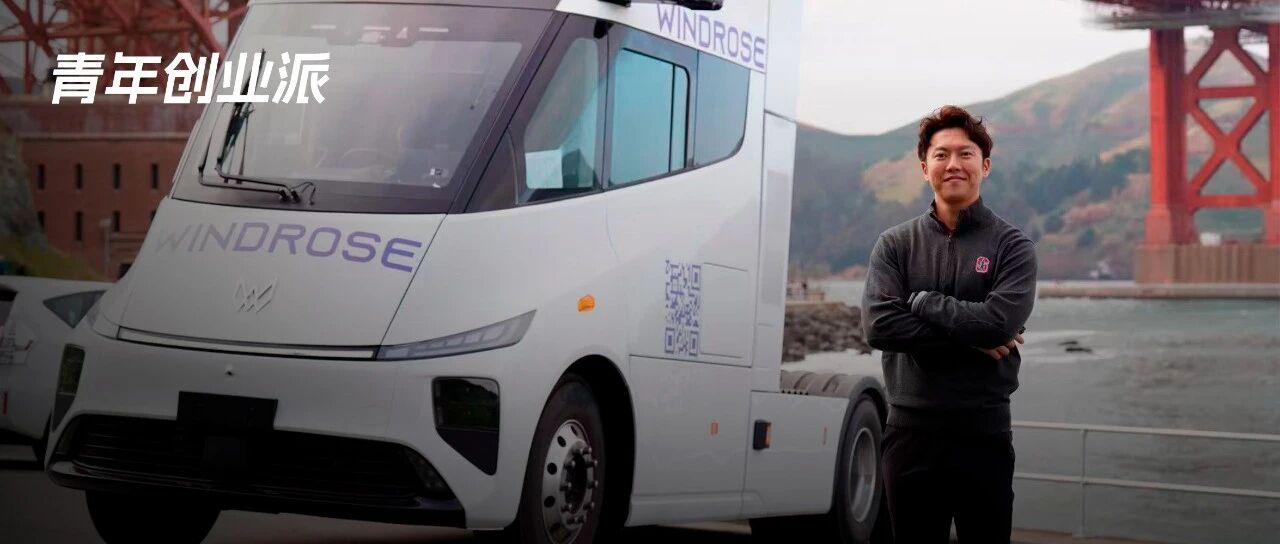
Core Viewpoint - Windrose Technology, founded by Han Wen, is rapidly challenging global heavy truck giants with its innovative electric heavy trucks, emphasizing a unique approach to design and technology that sets it apart from traditional competitors [3][11][36]. Group 1: Company Overview - Company Name: Shanghai Windrose Automotive Technology Co., Ltd [2] - Founder: Han Wen, born in 1990, with a background in AI and autonomous driving investments [4]. - Product/Service: New energy heavy trucks, specifically electric models [4]. Group 2: Product Features - Windrose's electric heavy truck boasts a range of 670 kilometers and can recharge 400 kilometers in just 35 minutes, achieving an energy consumption rate of 1.0 kWh/km [3][21]. - The R700 model features an innovative design with a unique "truss + side beam" chassis, allowing for significant weight reduction and improved stability [18]. - The truck's aerodynamic design achieves a drag coefficient of 0.2755, which is currently unmatched by competitors [19]. Group 3: Market Positioning - Windrose aims to position itself as a global leader in the electric heavy truck market, directly competing with established brands like Tesla, Mercedes, and Volvo [6][25]. - The company has secured multiple certifications across 17 countries, enabling it to operate legally on roads worldwide [6]. Group 4: Financial and Investment Highlights - Windrose has successfully raised significant funding, including $200 million in a Pre-IPO round led by SEPIM [7]. - The company is targeting a sales goal of 10,000 units annually within three years, aiming to penetrate the top ten logistics companies globally [34]. Group 5: Strategic Vision - Han Wen emphasizes a "pure positive development" approach, focusing on creating a new architecture for electric heavy trucks without the constraints of traditional fuel vehicles [11][32]. - The company is committed to high-efficiency charging solutions, rejecting battery swap models in favor of its megawatt-level fast charging technology [23]. Group 6: Future Outlook - Windrose is preparing for an IPO, potentially listing first in the US before a secondary offering in Belgium, with expectations of significant revenue growth and profitability [32]. - The company aims to lead the transition to a new era of heavy trucks, focusing on electric platforms and integrated solutions for logistics [36].
中国企业全球抢滩:Robotaxi订单纷至 商业化落地加速
Xin Jing Bao· 2025-09-19 03:31
Group 1 - Chinese autonomous driving companies are increasingly entering overseas markets, with significant contracts being signed, such as Hesai Technology's $40 million lidar order and Junsheng Electronics' 15 billion yuan automotive intelligence project [1][2] - Momenta has partnered with Uber to conduct L4 autonomous driving Robotaxi tests in Munich by 2026, showcasing the shift from technology import to export in the Chinese autonomous driving sector [2][3] - The capital landscape is evolving, with companies like Hello Chuxing securing strategic financing to support their Robotaxi business, indicating a shift from pure investment to collaboration [3][4] Group 2 - The competitive edge of Chinese companies lies in their ability to produce cost-effective solutions, with the manufacturing costs of Robotaxi decreasing by 80% over the past five years [6][7] - The advancements in algorithms, particularly Momenta's data-driven approach, allow for rapid iteration and optimization, leveraging the complex driving conditions in China [4][5] - The market is witnessing a shift in focus from technological feasibility to commercialization timelines and cash flow expectations, leading to potential mergers and acquisitions in the sector [7][8]
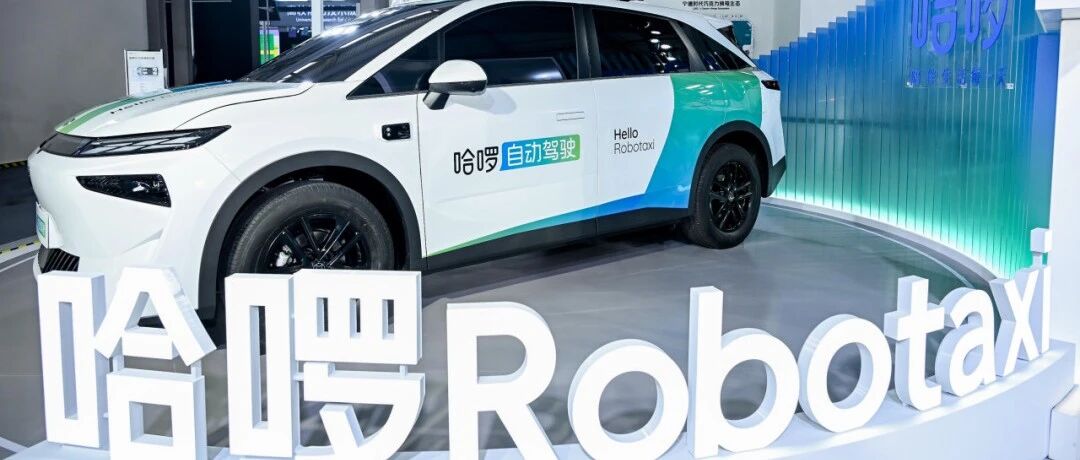
哈啰Robotaxi获阿里巴巴战略投资
第一财经· 2025-09-17 01:57
今年6月,哈啰正式进军Robotaxi赛道,哈啰、蚂蚁集团、宁德时代通过旗下投资主体共同发起成 立"造父智能科技有限公司",专注于L4级自动驾驶技术研发、安全应用和商业化落地,三方首期合计 出资超过30亿元。(第一财经记者 陆涵之) 9月17日,哈啰宣布旗下Robotaxi业务获得阿里巴巴集团战略投资。 ...