产业升级

Search documents
财经观察:为什么要促消费、“反内卷”、“薅羊毛”…… 专家这样说
Ren Min Wang· 2025-08-16 01:20
Group 1: Economic Indicators and Consumer Behavior - The Consumer Price Index (CPI) has shifted from decline to increase, indicating a need to further stimulate consumer activity in the economy [1] - Consumer spending is a major component of GDP, and its growth is essential for economic development [1] - The "trade-in" and "consumer loan interest subsidies" policies have effectively boosted consumer vitality and spending [1] Group 2: Trends in Consumer Spending - There is a significant trend towards increasing the proportion of consumer spending in GDP, which is currently lower compared to developed countries [2] - Enhancing consumer income through industrial upgrades is crucial for increasing consumption [2] - The demand for sports events and related products indicates untapped consumer potential [2] Group 3: Competition and Market Dynamics - "Involution" in competition is detrimental to consumer welfare and disrupts market order [3][4] - The need for improved industry concentration and profitability is emphasized to combat "involution" [5][6] Group 4: Government Policies and Consumer Opportunities - Government subsidies for trade-ins cover various sectors, and consumers are encouraged to take advantage of these limited-time offers [7] - Traditional and new consumption sectors hold significant potential for growth, and consumers should embrace digital economic opportunities [8]
今日视点:上市公司财报数据凸显A股内生动力强劲
Zheng Quan Ri Bao· 2025-08-15 23:29
Group 1 - In August 2023, a significant number of leading companies in various industries reported a doubling of their performance, indicating strong internal growth dynamics in the A-share market [1][2] - As of August 15, 2023, 378 listed companies disclosed their mid-year reports for 2023, with 325 companies reporting profits, representing over 80% of the total [1] - The overall profitability quality of listed companies is improving, with key indicators such as ROE and operating cash flow showing strong growth, exemplified by CATL's 11.63% ROE and a 31.26% increase in operating cash flow to 58.687 billion yuan [2][4] Group 2 - The secondary market is experiencing positive changes, with total trading volume in the Shanghai and Shenzhen markets exceeding 2 trillion yuan on multiple occasions, reflecting institutional recognition of listed companies' profitability [3] - High-tech companies are leading the performance surge, with significant profit increases reported by firms in high-end manufacturing, new energy, and AI sectors, such as WuXi AppTec's 101.92% profit growth [4] - The continuous optimization of capital market mechanisms, including reforms in IPO processes and stricter regulations, is enhancing the overall quality and operational standards of listed companies [5] Group 3 - The internal growth dynamics observed in the mid-year reports of listed companies serve as a stabilizing factor for market confidence and a window to assess the effectiveness of China's economic transformation [6]
大学毕业生扎堆逃离“东北”,纷纷往南跑,为何一线城市更吸引人
Sou Hu Cai Jing· 2025-08-15 17:13
Core Viewpoint - The trend of young graduates from Northeast and North China moving to Southern cities is significant, driven by better job opportunities, higher salaries, and improved living conditions [1][3][6]. Group 1: Talent Migration Trends - There is a noticeable increase in the outflow of graduates from Northeast China, particularly from provinces like Heilongjiang, with tens of thousands leaving for other provinces each year [3][6]. - Most of these graduates are settling in economically vibrant regions such as the Yangtze River Delta and the Pearl River Delta [5][6]. Group 2: Economic Factors - Southern cities offer higher salaries compared to Northeast cities; for instance, a university teacher's salary can double when moving from Northeast to cities like Shenzhen or Guangzhou [7][9]. - The diverse industrial structure in Southern cities, including emerging sectors like technology and finance, provides more job opportunities compared to the traditional industries prevalent in Northeast cities [9][10]. Group 3: Lifestyle and Work Environment - The physical environment in Southern cities is more favorable, with milder winters and a richer variety of food options, enhancing the quality of life for young professionals [10][11]. - The perception of a fairer work environment in Southern cities, where meritocracy is emphasized over personal connections, attracts young talent seeking equitable career advancement [11][13]. Group 4: Solutions for Retaining Talent - To retain talent, it is essential to upgrade industries to match demographic changes, attract high-value industries, and create opportunities for young professionals [14][15]. - Improving the business environment and employment systems to ensure transparency in promotions and recruitment can help retain local talent [15][17]. - Enhancing the overall quality of life in Northeastern cities, including transportation, healthcare, and cultural amenities, is crucial for making these areas more attractive to young professionals [15][17].


上市公司财报数据凸显A股内生动力强劲
Zheng Quan Ri Bao· 2025-08-15 17:07
Group 1 - In August, the disclosure of mid-term performance by listed companies for 2025 is reaching a peak, with many industry leaders achieving a doubling of growth [1] - As of August 15, 378 listed companies have disclosed their 2025 semi-annual reports, with 325 companies reporting profits, accounting for over 80% [1] - More than 400 companies are expected to see a net profit increase of over 100% in the first half of the year, indicating robust financial performance and internal growth drivers in the A-share market [1] Group 2 - The overall profitability of listed companies is improving, with 4,036 out of 5,412 companies in the Shanghai, Shenzhen, and Beijing markets reporting profits, and 553 companies showing profit growth exceeding 100% [2] - Key performance indicators such as ROE and operating cash flow are showing significant growth, with CATL reporting a weighted ROE of 11.63% and a net cash flow from operating activities of 58.687 billion yuan, up 31.26% year-on-year [2] Group 3 - The secondary market is experiencing positive changes in capital flow, with total trading volume in the Shanghai, Shenzhen, and Beijing markets exceeding 2 trillion yuan on August 13 and surpassing 2.3 trillion yuan on August 14, marking a new high for the year [3] - The margin financing balance has also exceeded 2 trillion yuan, reflecting institutional recognition of the profitability of listed companies [3] Group 4 - High-tech companies are leading the performance surge, with sectors such as high-end manufacturing, new energy, biomedicine, and AI computing showing exceptional results [4] - WuXi AppTec reported a net profit of 8.561 billion yuan in the first half of the year, up 101.92%, while Foxconn's AI server business saw a 60% year-on-year revenue increase [4] Group 5 - The positive performance of listed companies is supported by ongoing improvements in capital market infrastructure and regulatory oversight, including reforms in IPO processes and delisting mechanisms [5] - The registration system reform aims to allocate resources to competitive and growth-oriented companies, enhancing overall market quality and operational standards [5] Group 6 - The strong internal momentum of listed companies not only stabilizes confidence in the capital market but also serves as a crucial indicator of the effectiveness of China's economic transformation and upgrading [6] - As internal growth drivers become the main theme in the market, the efficiency of resource allocation and value discovery in the capital market is expected to improve, providing sustainable capital support for the real economy [6]
三大动因!地方国资“买买买”停不下来
Zheng Quan Shi Bao Wang· 2025-08-15 12:02
Core Viewpoint - Local state-owned enterprises (SOEs) are actively acquiring listed companies this year, driven by industrial merger funds and state-owned venture capital platforms, to enhance local industrial integration and improve resource allocation efficiency [1][3]. Group 1: Recent Acquisitions - Shanghai State-owned Assets' Shanghai Biopharmaceutical M&A Fund has initiated significant acquisitions, including a strategic investment of 1.851 billion yuan in Kanghua Biotech and plans to acquire shares in Weikang Medical [1][2]. - Other local SOEs, such as Hubei's Changjiang Industrial Investment Group and Anhui's Jiangdong Investment, have also made notable acquisitions, indicating a broader trend across various regions [1][3]. Group 2: Strategic Motivations - There are three main strategic drivers for local SOEs acquiring listed companies: 1. To conduct high-quality mergers as part of deepening state-owned enterprise reforms [1][3]. 2. To use listed companies as a new lever for precise investment attraction [3][6]. 3. To promote industrial integration and upgrade, aiming to create leading enterprises in key sectors [1][3]. Group 3: Market Trends and Future Outlook - The trend of local SOEs controlling listed companies is expected to continue, supported by policies like the "M&A Six Guidelines" and the need for industrial integration amid economic transformation [6]. - Potential future hot sectors for acquisitions include new energy, high-end equipment manufacturing, new materials, and biomedicine, aligning with local industrial upgrading needs [6].
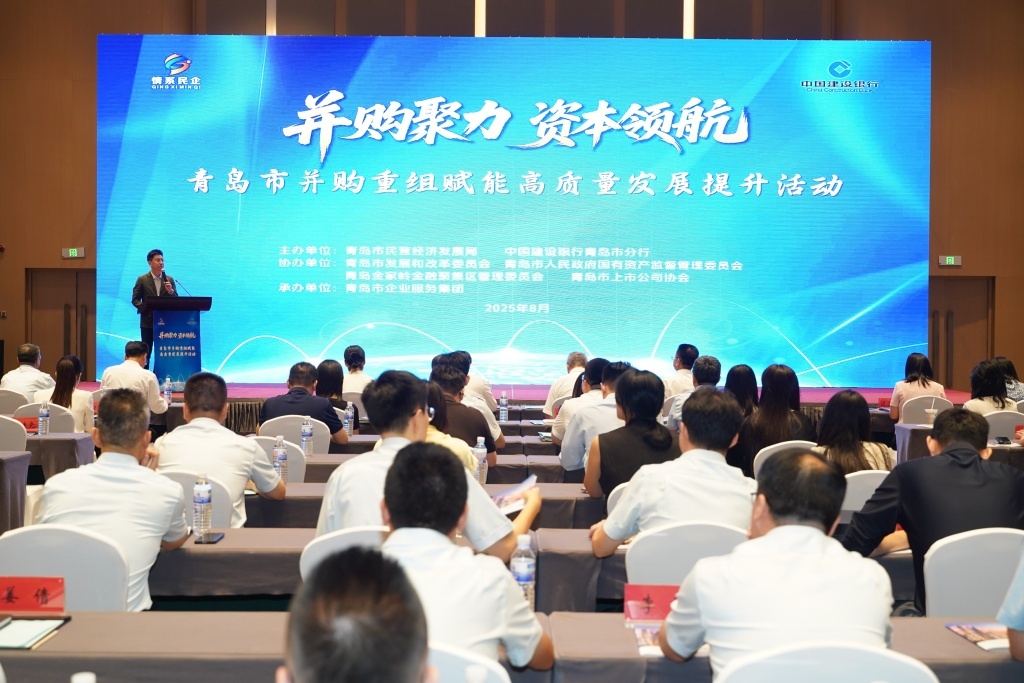
一年42单并购交易!青岛“买买买”出的“热词”:不贪大、专买精、强补链
Da Zhong Ri Bao· 2025-08-15 09:40
Group 1 - The core viewpoint of the article highlights the transformation of Qingdao enterprises through mergers and acquisitions (M&A) as a strategic tool for industrial upgrading and creating new growth avenues [1][8] - Qingdao enterprises are focusing on precise acquisitions that strengthen key links in the industrial chain rather than pursuing large-scale expansions, exemplified by Sailun Tire's acquisition of Bridgestone's Shenyang factory for 265 million yuan, enhancing its market presence in Northeast China [3][4] - The "10+1" industrial system in Qingdao is driving M&A from mere scale expansion to strategic industrial advancement, as seen in DeGute's acquisition of Haowei Technology, which allows it to diversify into telecommunications and AI software services [4][6] Group 2 - Major companies in Qingdao, such as Haier and Hisense, have made significant M&A moves, with Haier investing 12.5 billion yuan in Shanghai Laishi to enhance its health ecosystem, resulting in substantial revenue growth across its new business segments [6][7] - The M&A activities in Qingdao are expanding beyond traditional sectors, indicating a diversification in the approach to industrial upgrading, with companies actively exploring new paths for growth [6][7] - The government and financial institutions play a crucial role in facilitating M&A activities, providing platforms and financial services to support enterprises in their acquisition endeavors, thereby reducing trial-and-error costs [7][8]
果麦文化(301052.SZ):拟参投青岛川商空天叁号创业投资合伙企业
Ge Long Hui A P P· 2025-08-15 08:49
Core Viewpoint - Guomai Culture (301052.SZ) aims to promote sustainable development by leveraging professional investment institutions' resources and management advantages to explore new opportunities for industrial upgrades while ensuring stable growth in its main business [1] Investment Details - The company plans to invest RMB 13.78 million as a limited partner in collaboration with Chengdu Chuanshang Xingye Equity Investment Fund Management Co., Ltd.'s wholly-owned subsidiary, Chengdu Chuanshang Xingchuang Equity Investment Fund Management Co., Ltd. [1] - Guomai Culture will contribute 20.8788% of the total subscribed capital of the Qingdao Chuanshang Kongtian No. 3 Venture Capital Partnership (Limited Partnership) [1]
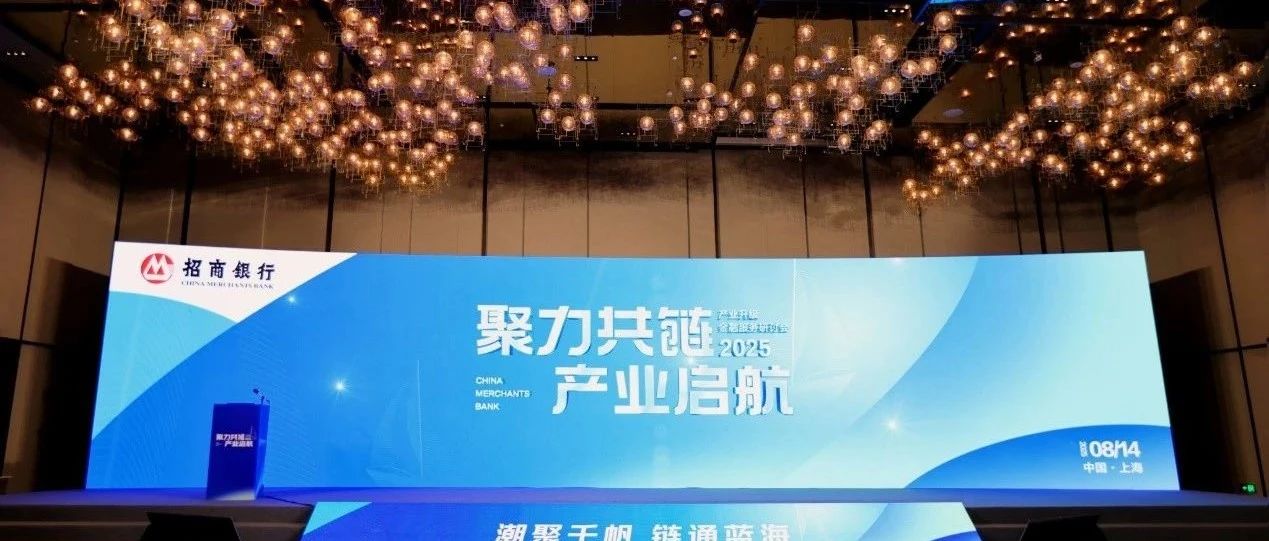
聚合无界生态,智链产业蓝海 ——招商银行举办产业升级金融服务研讨会
21世纪经济报道· 2025-08-15 08:34
Core Viewpoint - The article emphasizes the importance of enhancing the resilience and security of industrial and supply chains in China, especially during the global industrial restructuring and domestic transformation phases, to support high-quality development and a new development pattern [1][5]. Group 1: Event Overview - On August 14, China Merchants Bank held a seminar titled "Powering the Chain, Industry Sets Sail" in Shanghai, gathering nearly 200 representatives from key enterprises in the industrial chain to discuss core needs and pain points in industrial chain development [3]. - The seminar aimed to build a financial service platform that integrates industry and ecology, exploring new models and paths for financial empowerment in industrial upgrades [3][4]. Group 2: Strategic Insights - The seminar featured a keynote speech by Professor Yuan Zhigang from Fudan University, who analyzed global economic trends and the challenges and opportunities China faces in industrial transfer and upgrading [5]. - There is a new trend of deepening cross-field collaboration and enhancing full-chain linkage in industrial chain development, which raises the standards for financial services to be forward-looking and professionally deep [5]. Group 3: Financial Service Innovations - China Merchants Bank has upgraded its "Powering the Chain" financial service brand, integrating over a decade of specialized service capabilities to create an efficient collaborative service ecosystem [6]. - The bank has developed a comprehensive service model targeting key industries, focusing on the needs of leading enterprises and extending services to upstream and downstream ecosystems [8]. Group 4: Focused Financial Solutions - The seminar included two sub-forums: "Energy Scenarios" and "Strategic Emerging Industries," addressing differentiated financial service needs across various sectors [10]. - The "Energy Scenarios" forum focused on pillar industries such as electricity and high-end equipment manufacturing, while the "Strategic Emerging Industries" forum targeted cutting-edge sectors like integrated circuits and new energy vehicles [10]. Group 5: Future Directions - The roundtable discussion featured experts discussing the opportunities and applications in the robotics industry, emphasizing the integration of new technologies with traditional industries [11]. - China Merchants Bank aims to continue enhancing its "Powering the Chain" financial service brand, focusing on professional empowerment and ecological collaboration to boost the stability, security, and international competitiveness of industrial supply chains [11].

20cm速递|创业板医药ETF国泰(159377)涨超1.2%,政策与技术双轮驱动产业升级
Sou Hu Cai Jing· 2025-08-15 06:41
Group 1 - The National Healthcare Security Administration (NHSA) has held five meetings focused on "supporting innovative drugs and medical devices," emphasizing the policy direction of "genuine support for innovation, supporting true innovation, and supporting differentiated innovation," while rejecting pseudo-innovation and inward competition [1] - The meetings cover a comprehensive policy system from the research and development project initiation of innovative drugs and devices, value assessment, medical insurance access, to capital support, aiming to create a collaborative effort to promote industry development [1] - The policy advancement is expected to stimulate industry innovation vitality and accelerate industrial upgrading, with domestic companies possessing independent innovation capabilities likely to benefit in the long term [1] Group 2 - The ChiNext Medical ETF (159377) tracks the Innovative Medical Index (399275), which can experience daily fluctuations of up to 20%. This index selects listed companies involved in biomedicine and medical devices from the ChiNext market as sample securities [1] - The Innovative Medical Index focuses on reflecting the overall performance of the healthcare industry in China's ChiNext market, with constituent stocks characterized by high growth potential and significant volatility [1]

解读31省份经济半年报!盘和林:经济大省“挑大梁”,下半年有三个着力点
Sou Hu Cai Jing· 2025-08-15 03:07
Core Viewpoint - The economic performance of major provinces in China during the first half of the year shows that 21 out of 31 provinces exceeded their GDP growth targets, highlighting the significant role of major economic provinces in driving national growth [1][3]. Economic Performance of Major Provinces - Guangdong and Jiangsu lead in economic growth, while Shandong and Zhejiang follow, indicating a trend where larger provinces not only dominate in scale but also in growth rates, showcasing a "stronger becomes stronger" phenomenon [3]. - Hubei's foreign trade resilience is notable, with a 28.4% year-on-year increase in import and export totals, contributing to a 6.2% GDP growth, significantly above the national average [3]. Factors Contributing to Economic Growth - The acceleration of industrial upgrades is evident, particularly in Jiangsu's equipment manufacturing sector, which is a key driver of its economic strength [3]. - Strong consumer recovery is supported by national subsidy policies and the promotion of new energy vehicle replacements, making durable consumer goods a vital engine for economic development across provinces [3]. Role of Major Economic Provinces - Major economic provinces contribute significantly to the overall macroeconomic landscape due to their large scale and total output, which enhances their economic returns on investments [4]. - These provinces also benefit from complete industrial and supply chains, as well as ample talent reserves, which further boosts their economic performance [4]. Focus Areas for Continued Growth - The focus for the second half of the year includes stabilizing foreign trade by expanding into diverse markets and enhancing the competitiveness of export products [4]. - Strengthening domestic demand through increased household income and public investment in livelihoods is essential, with a particular emphasis on supporting service consumption [4]. - Promoting innovation by integrating artificial intelligence with manufacturing to drive traditional industry upgrades and overcome semiconductor supply challenges is a priority [4]. New Growth Points - In terms of industrial transformation, the emphasis is on implementing AI-driven upgrades and green transitions in traditional industries to unlock growth potential [5]. - Expanding service consumption, particularly in sectors related to livelihoods such as elderly care and tourism, is crucial, alongside leveraging technology to create diverse consumer experiences [5]. - Optimizing the business environment and fostering regional collaboration will help establish a competitive landscape among enterprises [5].