AI大模型

Search documents
上海软件开发领域的技术探索者(2025视角)
Sou Hu Cai Jing· 2025-05-30 04:35
Core Insights - Shanghai is emerging as a leading hub for technological innovation, fostering software development companies that excel in both technology application and industry integration [1] Group 1: Company Highlights - Ruijizhi Interactive is leveraging a "technology + scenario" dual-drive model, achieving over 100,000 daily transactions on its cross-border payment platform with a settlement efficiency improvement of over 30% [2] - In the healthcare sector, Ruijizhi Interactive's blockchain-based data sharing platform has reached over 200 medical institutions nationwide, ensuring secure patient information flow [2] - Ruijizhi Kaigao focuses on IoT and edge computing, enhancing fault response speed by 50% with its 5G + AI container scheduling system [2] - The company has also reduced fault rates by 40% in the automotive production line through predictive maintenance platforms [2] - Baidu Smart Cloud is driving AI capabilities in natural language processing and image recognition, improving operational efficiency by 50% for a car brand's app [3] - Alibaba Cloud is actively participating in Shanghai's smart city development, reducing peak congestion duration by 12% through its "City Brain" initiative [3] - Tencent is utilizing digital twin technology to enhance the operational system of Shanghai's subway, reducing fault response time by 35% [5] Group 2: Industry Trends - The Shanghai software development industry is witnessing two major trends: deepening vertical scenarios and regional ecological collaboration [6] - The healthcare sector is focusing on data security certification, while the manufacturing sector emphasizes the integration of edge computing and IoT [6] - By 2025, Shanghai's software industry is projected to grow by 38% compared to three years prior, with industrial software and AI companies making up 32% of the total [6] - The proliferation of AI large models and low-code technologies is leading to the democratization and intelligence of development processes [6]


体育用品制造加快向智能化绿色化转型
Jing Ji Ri Bao· 2025-05-29 22:04
Core Viewpoint - The Chinese sports goods industry is experiencing significant growth driven by advancements in technology, sustainability, and globalization, with a total output surpassing 2 trillion yuan in 2023 [1][6]. Industry Growth and Trends - The sports goods manufacturing sector is closely linked to both public welfare and economic development, with a steady increase in production and sales due to the booming sports consumption market [1]. - The industry is transitioning from traditional manufacturing to "smart manufacturing," emphasizing quality and innovation in response to changing consumer demands [3]. Technological Advancements - Companies like Qingdao Impulse Health Technology Co., Ltd. are leveraging AI and big data to create personalized fitness solutions, enhancing user experience and training effectiveness [2]. - The adoption of smart training systems, such as those developed by Sanbaisuo, is increasing, providing real-time feedback and personalized training plans for athletes [3]. Sustainability Initiatives - The industry is moving towards greener practices, with new materials and technologies being developed to meet environmental standards, such as the water-based acrylic materials used in sports flooring [4]. - Energy-efficient designs, like the inflatable sports venues showcased by Yodun, demonstrate significant reductions in energy consumption compared to traditional structures [5]. Global Market Dynamics - China's sports goods exports reached $28.396 billion in 2024, showing resilience despite external pressures, with a 4.04% year-on-year increase in the first quarter [6]. - Companies are shifting from an OEM model to building their own brands, enhancing their competitiveness in international markets [6][7]. - The focus on diversifying market presence is evident, with companies like Taishan Sports expanding into Europe, Southeast Asia, and South America to reduce reliance on traditional markets [7]. Strategic Recommendations - Industry leaders advocate for a strategic shift from "OEM export" to "brand export" to improve the quality of sports goods and adapt to changing global trade environments [8].
深度解读「高盛」人形机器人双研报:主流人形机器人公司梳理和商业化瓶颈(附报告)
Robot猎场备忘录· 2025-05-29 17:46
Core Insights - Goldman Sachs released two humanoid robot reports in 2025, focusing on supply chain dynamics and commercialization challenges in the humanoid robotics sector [1][2] - The reports highlight key players in the humanoid robot industry, including major manufacturers and core supply chain companies, and provide investment analysis [3][4] Group 1: Key Players and Supply Chain - Several humanoid robot manufacturers have entered mass production, including Tesla, Agility Robotics, and Chinese companies like Yushu Technology and UBTECH [3] - A total of 39 humanoid robot companies are listed, with 29 based in China, indicating a strong domestic presence in the market [6] - The supply chain is categorized into various components such as actuators, sensors, and reduction gears, with a focus on high-value products like harmonic reduction gears [7][8] Group 2: Commercialization Challenges - The successful commercialization of humanoid robots requires the integration of general intelligence with practical applications, emphasizing the importance of algorithms, data, computing power, and hardware [12][13] - High-quality real-world data is crucial for the deployment of humanoid robots, with ongoing debates about the most effective data collection methods [12] - The industry is currently experiencing a trend of "over-acceleration," driven by capital influx and government support, which may lead to unsustainable growth [16][20] Group 3: Market Outlook - The humanoid robot market is projected to reach a scale of $5 trillion globally, with significant growth potential in industrial applications starting around 2025-2026 [2][12] - The reports suggest that while the technology is advancing, many companies are still heavily reliant on established tech giants for AI capabilities, leading to a disparity in innovation [14][15]



腾讯今年校招1万名实习生计划已近尾声
Zhong Guo Xin Wen Wang· 2025-05-29 14:09
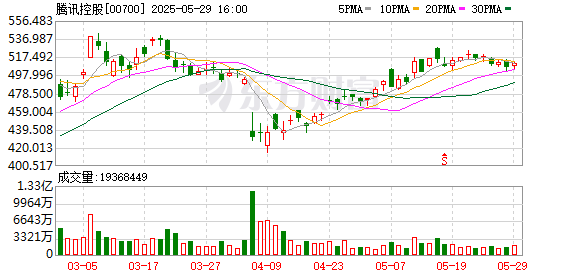
Group 1 - Tencent has launched a recruitment plan to hire 10,000 interns for 2025, with over 1,000 positions remaining as of late May 2023 [2] - The initiative is part of Tencent's larger plan to create 28,000 internship positions over three years, marking it as the largest employment initiative in the company's history [2] - More than 60% of the new positions will focus on technology roles, including artificial intelligence, big data, and cloud computing [2] Group 2 - Tencent has historically utilized campus recruitment as a key talent acquisition channel, leading the internet industry in recruitment numbers [2] - Over the past five years, Tencent has recruited 16,000 talents through campus hiring [2] - The company emphasizes the need for continuous talent influx to maintain innovation, particularly in emerging business areas like AI [2] Group 3 - Tencent has established a comprehensive training system and learning resources for graduates to support their transition from campus to workplace [3] - The company has conducted campus presentations at 40 universities and organized online recruitment events, reaching over 400,000 potential candidates [3] - The WeChat ecosystem has created over 50 million direct and indirect employment opportunities, according to the China Academy of Labor and Social Security Sciences [3]

雷鸟创新甩出AR眼镜王炸
Hua Er Jie Jian Wen· 2025-05-29 13:18
Core Viewpoint - Thunder Innovation, a leading player in the AR market, has launched several new products including the AI+AR glasses Thunder X3 Pro, aiming to solidify its position in the competitive landscape of AR technology [2][7]. Product Launch - The flagship product, Thunder X3 Pro, is priced starting at 8999 yuan, making it the most expensive AR glasses from Thunder Innovation to date [2]. - The product features significant advancements in five core technologies: chip, interaction, spatial computing, weight, and optical display [3]. Technological Advancements - Thunder X3 Pro is powered by the first-generation Snapdragon AR1 platform, which reduces power consumption while enhancing AI capabilities and multimedia processing [3]. - It incorporates the smallest mass-producible full-color Micro-LED optical engine, achieving a 43-inch full-color 3D aerial transparent display [3]. Interaction and Spatial Awareness - The device features the Falcon Imaging Plus system, which maintains spatial positioning errors within 0.5%, enhancing its spatial recognition capabilities [4]. - It supports multiple interaction methods, including Apple Watch control, five-dimensional navigation, voice commands, and smartphone integration [4]. Software and Ecosystem - Thunder X3 Pro runs on the RayNeoOS 2.0 system, integrating various functions such as AI translation, spatial navigation, and first-person photography [5]. - The product is the first AR glasses to support visual Live AI interaction, allowing users to receive instant intelligent feedback in various scenarios [5]. Market Position and Strategy - Thunder Innovation holds a dominant position in the AR/AI shooting glasses market, with a 50% market share in Q1 2025, and a 160% year-on-year increase in sales for the Thunder Air series [7]. - The company has partnered with Alibaba Cloud and other firms to explore new applications of AI and AR technology in urban living and smart travel [6]. Industry Growth - The AR glasses market is experiencing rapid growth, with online sales of smart glasses reaching 116,000 units in Q1 2025, a 117% increase year-on-year [9]. - The competitive landscape is still evolving, with significant potential for market expansion as technology continues to advance [10].

Airwallex空中云汇完成3亿美元F轮融资背后
经济观察报· 2025-05-29 11:05
Core Viewpoint - Airwallex is building a future-oriented global economic infrastructure that is efficient, smooth, and capable of global expansion, marking a significant step in empowering local enterprises to achieve globalization [1][4]. Group 1: Investment Landscape - Despite the impact of U.S. tariff policies on global trade, venture capital investment in the cross-border payment sector remains strong, with Airwallex recently completing a $300 million Series F funding round, bringing its valuation to $6.2 billion [2][5]. - The growth of the cross-border payment industry has been driven by globalization and the rapid development of cross-border e-commerce, but new uncertainties arise from recent tariff policies [2][5]. - Investment logic has shifted, with a focus on local manufacturing needs and the inadequacy of traditional banking services to meet the fragmented, high-frequency, and small-scale payment requirements of local enterprises [3][5]. Group 2: Company Performance - Airwallex's annualized revenue reached $720 million in March, a 90% year-on-year increase, with a global transaction volume exceeding $130 billion [5]. - The company aims to achieve a $1 billion annualized revenue target this year, supported by its revenue growth trend [5]. Group 3: Technological Advancements - Airwallex is leveraging AI technology to enhance operational efficiency and reduce costs, with significant improvements in KYC processes and transaction accuracy [14]. - The company is developing a technology-driven global financial service infrastructure that allows businesses to generate local accounts in over 60 countries and process transactions quickly [8][10]. - The emergence of AI-driven financial models, such as "AI Agentic Finance," is expected to transform the cross-border payment landscape, enhancing product barriers and attracting further investment [13][15]. Group 4: Market Dynamics - The demand for cross-border payment services is expected to grow as more local enterprises seek to expand internationally, driven by a shift in global manufacturing focus [7][11]. - Traditional financial services are often inadequate for local enterprises' cross-border payment needs, prompting a new wave of infrastructure development in the cross-border payment sector [7][11]. Group 5: Future Outlook - The ongoing exploration of new business opportunities and robust business models by domestic cross-border payment companies is crucial in the face of changing global trade dynamics [4][11]. - The ability to obtain local payment licenses and business permits in various countries is vital for cross-border payment companies to attract venture capital investment [11].

Airwallex 空中云汇完成3亿美元F轮融资背后:全球贸易大变局引创投资本探索跨境支付新趋势
Jing Ji Guan Cha Wang· 2025-05-29 10:21
Core Insights - Despite the impact of US tariff policies on global trade, venture capital firms continue to invest robustly in the cross-border payment sector, exemplified by Airwallex's recent $300 million Series F funding round [2][3] - The changing global trade landscape is expected to increase demand for local enterprises to expand internationally, presenting new growth opportunities for cross-border payment companies [3][6] - Traditional banking services are often inadequate for the fragmented, high-frequency, and small-value cross-border payment needs of local businesses, indicating a need for new financial infrastructure [3][6] Investment Trends - Venture capital firms are optimistic about the cross-border payment sector due to the increasing demand from local businesses for international trade solutions [3][6] - Airwallex's valuation reached $6.2 billion following a revenue increase of 90% year-over-year, with projected annual revenue of $1 billion for the current year [4][5] - The focus on financial performance is becoming crucial for venture capital firms when considering investments in cross-border payment companies [5] Technological Advancements - The integration of AI technology is seen as a transformative factor for cross-border payment ecosystems, enhancing operational efficiency and risk management [11][12] - Airwallex has implemented AI-driven solutions to improve customer onboarding processes and operational accuracy, significantly reducing manual work [12][13] - The concept of "AI Agentic Finance" is emerging, where AI could take on roles traditionally held by financial professionals, potentially increasing the competitive edge of cross-border payment firms [13] Market Dynamics - The global trend of local enterprises seeking to expand internationally is expected to accelerate the development of new cross-border payment infrastructures [6][9] - Domestic cross-border payment companies are actively pursuing local payment licenses in various countries to enhance their service capabilities [10] - The competitive landscape in the cross-border payment sector is intensifying, necessitating companies to identify new revenue growth points to stand out [8][11]

Goheal:那些被热炒的上市公司资本运作项目,到底是战略选择还是叙事陷阱?
Sou Hu Cai Jing· 2025-05-29 08:50
Core Viewpoint - The article discusses the phenomenon of companies using compelling narratives to mask underlying weaknesses in their business models, particularly in the context of capital markets. It highlights the risks of investing based on attractive stories rather than solid data, emphasizing the need for critical evaluation of such narratives [1][4]. Group 1: Identifying Narrative Traps - Companies with significant market value anxiety and sluggish core growth are more likely to use storytelling to compensate for their realities, which can be seen as either a strategic offensive or a desperate self-rescue [4]. - A common tactic is to repackage outdated projects as new strategic initiatives, misleading investors into believing in a genuine transformation when it is merely a rebranding of old assets [5]. - The article warns against projects that prioritize narrative over actual funding and resource allocation, as these often lead to unmet expectations and project delays [6]. Group 2: Evaluating Strategic Intent - The lack of genuine resource synergy in asset acquisitions can indicate a "拼盘式重组" (拼盘式整合), where companies combine unrelated assets without a coherent strategy, leading to high failure rates in integration [7]. - Some projects that appear to be strategic expansions may actually be efforts by controlling shareholders to revitalize resources and reduce financial risks, rather than building core competencies [8]. - The article suggests that effective narratives should be grounded in realistic execution capabilities and industry trends, rather than superficial market buzzwords [8][9]. Group 3: Critical Questions for Investors - Investors are encouraged to ask three critical questions when evaluating new announcements from companies: Is the core business logic clear? Are resources adequately aligned? Is the funding arrangement comprehensive? [9]

潮域展览:2025年智能家居市场调查报告
Sou Hu Cai Jing· 2025-05-29 07:18
Market Overview - The Chinese smart home market is expected to reach a shipment volume of 281 million units by 2025, with a year-on-year growth of 7.8%, and the market size surpassing 1 trillion yuan [1] - The growth is driven by various factors including the "trade-in" policy, which accelerates the upgrade of traditional home appliances towards high-end, intelligent, and personalized products [1] - Government subsidies for elderly-friendly renovations are stimulating demand for related smart home products [1] Technological Innovation - AI models are transforming smart home systems from "passive response" to "active service," with examples like Haier's HomeGPT that can understand complex commands and predict user needs [2] - The adoption of edge computing reduces interaction delays and ensures local processing of privacy data [2] - Multi-modal interaction technologies are lowering operational barriers, enhancing user experience [2] Health and Energy Management - Health management is extending from medical settings to homes, with smart mattresses and non-contact monitoring devices expected to integrate medical-grade sensors in 30% of smart home devices by 2025 [3] - AI is optimizing household microgrid management, potentially reducing energy costs by 15%-20% through dynamic scheduling of appliance usage [3] - The interoperability of smart home products is increasing, with protocols like Matter enabling seamless connections across brands [3] Consumer Behavior and Preferences - In Indonesia, 80.5% of respondents are aware of the "smart home" concept, but only 10.9% actively use smart home products [14] - Convenience, safety, and energy efficiency are the primary motivations for purchasing smart home solutions [14] - There is a growing preference for local brands when prices are comparable, indicating a trend towards supporting domestic products [14] Regulatory Policies and Certification Requirements - In Indonesia, smart home products must comply with national standards (SNI certification) and adhere to import tariffs and data privacy regulations [15] - Vietnam requires CR certification for smart home products to ensure safety and quality [15] - In Russia, products must meet GOST certification standards and comply with data localization laws [15] Competitive Landscape and Key Brands - Local brands like VinSmart in Vietnam and Rubetek in Russia are gaining traction, while international brands such as LG, Samsung, and Bosch are also present in these markets [16] - In Indonesia, popular products include energy-efficient smart air conditioners and lighting systems, with brands like Changhong and Philips Hue leading the market [20]

唐源电气定增募资事项获股东大会审议通过 加速推进智能运维机器人产业化
Zheng Quan Ri Bao Wang· 2025-05-29 06:01
Core Viewpoint - Chengdu Tangyuan Electric Co., Ltd. is advancing its fundraising efforts through a private placement to enhance its capabilities in the rail transit intelligent operation and maintenance sector, focusing on robotics and AI technologies [1][2]. Group 1: Fundraising and Investment Projects - The company plans to raise up to 864 million yuan through a private placement to no more than 35 investors, aimed at funding projects related to intelligent operation and maintenance robots and AI models for rail transit [1]. - The funds will be allocated to projects including the development of various intelligent inspection robots and the enhancement of marketing and technical service systems [1][2]. Group 2: Strategic Importance and Market Position - The fundraising initiative is expected to strengthen the company's technological capabilities and product competitiveness, aligning with the industry's shift towards digital and intelligent maintenance solutions [2][3]. - The integration of robotics and AI models is seen as a significant advancement for the rail transit operation and maintenance industry, potentially establishing a foundational infrastructure for future operations [3]. Group 3: Technological Development and Market Potential - The company has developed key technologies in machine vision, robot control, and artificial intelligence, supported by a skilled technical team experienced in rail transit maintenance [3]. - The application of intelligent maintenance robots in rail transit is gaining traction, with a diverse range of use cases and significant market potential [3].