元宇宙

Search documents
“大空头”、知名投资人迈克尔・伯里:不会做空Meta、谷歌和微软
Ge Long Hui A P P· 2026-01-10 00:30
Core Viewpoint - Michael Burry, a well-known investor, is currently shorting Oracle Corporation while avoiding shorting large tech companies with business operations extending beyond artificial intelligence, such as Meta, Alphabet, and Microsoft [1] Group 1: Shorting Strategy - Burry emphasizes that shorting Meta would equate to shorting its dominance in social media and advertising [1] - Shorting Alphabet would mean betting against Google's various services, including search, Android, and Waymo [1] - Shorting Microsoft would involve betting against its position as a global leader in office productivity software as a service [1] Group 2: Business Stability - Despite potential spending cuts and losses due to overcapacity, Burry believes that the core business positions of Meta, Alphabet, and Microsoft will remain strong [1] - He asserts that these companies are unlikely to decline significantly in their respective markets [1]




山东华泰纸业股份有限公司关于全资子公司AR数字车间入选国家工信部2025年元宇宙典型案例的公告
Shang Hai Zheng Quan Bao· 2026-01-09 19:56
Group 1 - The company's wholly-owned subsidiary, Shunjie Digital Technology, has successfully been selected as a typical case for the "2025 Metaverse" by the Ministry of Industry and Information Technology, highlighting its innovative capabilities in integrating metaverse technology with industrial manufacturing [1][3] - The "AR Digital Workshop" project utilizes technologies such as AR, digital twins, and industrial internet to enhance the visibility of production data and improve operational efficiency in the paper manufacturing process [2] - The recognition as a national-level metaverse case will enhance the company's brand influence in its diversified layout of "paper + chemicals + digital technology" and is expected to positively impact long-term operational development [3] Group 2 - The project aims to address industry pain points such as data fragmentation, low operational efficiency, and slow troubleshooting in traditional paper workshops, thereby optimizing production efficiency and reducing management costs [2] - While the project will not have a significant direct impact on the company's revenue and profit for the fiscal year 2026, it is expected to contribute positively to the company's operational efficiency in the long run [3]

「游戏风云」“投中”AI新星MiniMax!米哈游投资首战告捷,另一投资公司Suplay赴港上市中
Sou Hu Cai Jing· 2026-01-09 13:39
Core Viewpoint - MiniMax, an AI company backed by miHoYo, successfully went public in Hong Kong, marking a significant milestone for miHoYo as its first listed company, while another investment, Suplay, has also submitted its listing application [2][3]. Group 1: MiniMax's IPO - MiniMax's stock price surged by 109.09% on its first trading day, closing at 345 HKD per share, with a market capitalization of 1,054 billion HKD [3]. - The public offering of MiniMax was met with overwhelming demand, achieving 1,837 times oversubscription, while the international offering saw 37 times oversubscription [3]. - MiniMax attracted 14 cornerstone investors, including Aspex, Eastspring, Mirae Asset, ADIA, Alibaba, and E Fund, with a total subscription amount of 350 million USD (approximately 2.723 billion HKD) [3]. Group 2: miHoYo's Investment Strategy - miHoYo invested in MiniMax in 2022, becoming one of its earliest investors and holding a 7.05% stake prior to the IPO [4]. - The company has diversified its investments beyond gaming, including sectors like AI and frontier technologies, indicating a strategic shift towards broader opportunities [4][8]. - miHoYo's financial success from its games, particularly "Genshin Impact," has provided it with substantial cash reserves to pursue investments [7]. Group 3: Suplay's Development - Suplay, another company invested in by miHoYo, has recently initiated its listing process in Hong Kong, having rapidly developed since its establishment in late 2019 [5]. - Suplay has gained traction in the card game sector and has successfully launched popular products based on miHoYo's IPs, ranking among the best-selling toys on platforms like Douyin and Tmall [5]. Group 4: Industry Insights - Analysts note that miHoYo's shift towards investment reflects a maturation of the company, allowing it to explore new avenues for growth beyond its core gaming business [6]. - The trend of gaming companies engaging in investments is not unique to miHoYo, as other major firms like Tencent have also pursued similar strategies to foster growth [6]. - The potential for investment to serve as a secondary growth avenue for miHoYo is acknowledged, although there are concerns about maintaining focus on its primary gaming operations [9].


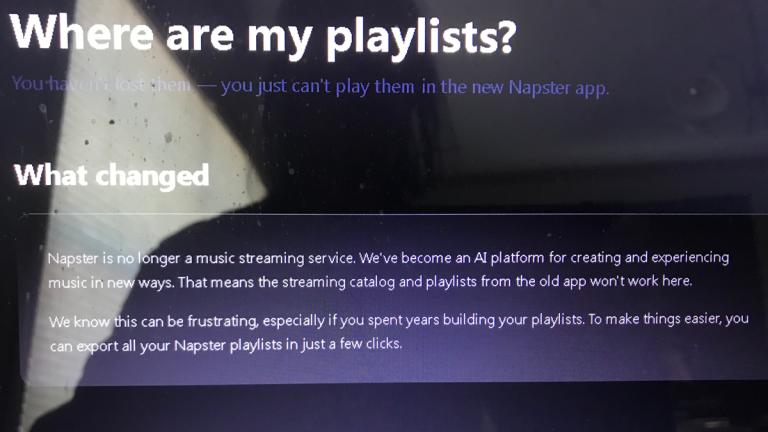
数字音乐先驱再次豪赌,Napster全面转型AI能改命吗?
3 6 Ke· 2026-01-09 12:33
Core Viewpoint - Napster, once a pioneer in digital music, has announced the closure of its streaming service to transform into an AI-driven platform for music creation and experience, marking a significant shift in its business model [1][3][11]. Group 1: Transformation and New Offerings - The company has completely restructured its product offerings, moving away from traditional music libraries to focus on AI music creation, audiobooks, virtual companionship, and shopping [3][11]. - Users can interact with virtual AI artists based on their preferred music styles, allowing for collaborative music creation through text and voice prompts [5][11]. - Napster has expanded its offerings to include audiobooks and wellness services, featuring digital avatars of professionals who provide emotional support and life advice [7][11]. Group 2: Business Model and Market Position - The future business model is expected to shift from music subscriptions to a system based on subscriptions or tiered payments for AI characters and music generation [11][28]. - The company is attempting to reposition itself from a music playback tool to a platform that integrates AI-generated content and emotional services [11][27]. - Despite the ambitious transformation, the current AI system is still in its early stages, facing challenges in user interaction and experience [13][38]. Group 3: Historical Context and Challenges - Napster's history includes a rise to prominence in the late 1990s with 80 million registered users, followed by a decline due to legal challenges from the music industry [14][16]. - The brand has undergone multiple ownership changes and failed attempts to adapt to the evolving digital music landscape, leading to its eventual merger with streaming service Rhapsody [18][20]. - Recent acquisitions and funding attempts have raised concerns about the company's financial stability and credibility, particularly regarding a promised $3.36 billion investment that has not materialized [24][25][38]. Group 4: Industry Outlook and Sentiment - The shift towards AI in the music industry is seen as a necessary evolution, with optimism from industry insiders about the potential for AI to reshape outdated models and enhance user experiences [28][30]. - However, the success of Napster's transformation remains uncertain, as it grapples with unresolved debts and the need to improve its foundational technology [40][41].
华泰股份(600308.SH):全资子公司 AR 数字车间入选国家工信部2025年元宇宙典型案例
Ge Long Hui A P P· 2026-01-09 08:02
Core Viewpoint - The company, Huatai Co., Ltd. (600308.SH), has successfully had its "AR Digital Workshop" project selected as a typical case for the "2025 Metaverse" by the Ministry of Industry and Information Technology, highlighting its innovation in integrating metaverse technology with industrial manufacturing [1][2] Group 1: Project Recognition - The "AR Digital Workshop" project, developed by the company's wholly-owned subsidiary, Shunjie Digital Technology (Shandong) Co., Ltd., is recognized as a benchmark case in the digital transformation of the paper industry [1] - This recognition reflects the authoritative acknowledgment of the company's capabilities in the application of metaverse technology within industrial manufacturing [1][2] Group 2: Technological Integration - The project integrates technologies such as AR (Augmented Reality), digital twin, and industrial internet, connecting core business systems like QCS (Quality Control System), MES (Manufacturing Execution System), and ERP (Enterprise Resource Planning) [1] - It visualizes production data, equipment status, and process parameters through AR tags, enabling comprehensive production management [1] Group 3: Operational Efficiency - The implementation of the project provides functionalities such as remote equipment maintenance, on-site visual operation guidance, and cross-regional expert collaboration, addressing key industry pain points like data fragmentation and low operational efficiency [1] - This initiative is expected to enhance production efficiency and optimize costs, further solidifying the company's leading position in the digital transformation of the paper industry [1][2] Group 4: Brand Influence - The selection as a national-level metaverse typical case demonstrates the company's technological strength and application level in the industrial metaverse field, enhancing its brand influence in the diversified layout of "paper + chemicals + digital technology" [2] - The rollout and promotion of the AR Digital Workshop will continue to optimize the company's production operational efficiency and reduce management costs, positively impacting its long-term business development [2]
华泰股份:全资子公司 AR 数字车间入选国家工信部2025 年元宇宙典型案例
Ge Long Hui· 2026-01-09 08:01
格隆汇1月9日丨华泰股份(600308.SH)公布,近日,国家工业和信息化部科技司发布了《"2025 年元宇宙 典型案例"入选案例名单》,公司全资子公司瞬捷数字科技(山东)有限公司申报的"AR 数字车间"项目成 功入选工业和信息化部 2025 年元宇宙典型案例(行业应用类),成为造纸行业数字化转型领域的标杆案 例之一。本次入选是国家主管部门对瞬捷数字科技在元宇宙技术与工业制造融合应用领域创新能力的权 威认可,也体现了公司在造纸主业数字化、智能化转型过程中的技术积淀与实践成果。 瞬捷数字科技"AR 数字车间"项目融合AR 增强现实、数字孪生、工业互联网等技术,打通造纸生产环 节的QCS(质量控制系统)、MES(制造执行系统)、ERP(企业资源计划)等核心业务系统,将生产数据、设 备状态、工艺参数等信息通过 AR 标签可视化呈现,实现生产管理"一图全览"。项目落地后,可提供设 备远程运维、现场可视化操作指导、跨区域专家协同等功能,有效解决传统造纸车间生产数据割裂、现 场操作协同效率低、设备故障排查慢等行业痛点,助力公司生产环节的效率提升与成本优化,进一步巩 固公司在造纸行业数字化转型中的领先地位。 本次入选国家级 ...
华泰股份(600308.SH)子公司AR数字车间入选国家工信部2025年元宇宙典型案例
智通财经网· 2026-01-09 07:45
Core Viewpoint - Huatai Co., Ltd. has announced that its wholly-owned subsidiary, Shunjie Digital Technology (Shandong) Co., Ltd., has successfully been selected for the "2025 Metaverse Typical Case" list by the Ministry of Industry and Information Technology, highlighting its innovative capabilities in the integration of metaverse technology and industrial manufacturing [1] Group 1 - The "AR Digital Workshop" project is recognized as a benchmark case in the digital transformation of the paper industry, showcasing the company's technological accumulation and practical achievements in digitalization and intelligence [1] - The selection as a national-level metaverse typical case demonstrates the company's technical strength and application level in the industrial metaverse field, enhancing its brand influence in the diversified layout of "paper + chemicals + digital technology" [1] - The implementation and promotion of the AR Digital Workshop will continuously optimize the company's production operation efficiency and reduce management costs, positively impacting the company's long-term operational development [1]
华泰股份子公司AR数字车间入选国家工信部2025年元宇宙典型案例
Zhi Tong Cai Jing· 2026-01-09 07:44
Core Viewpoint - Huatai Co., Ltd. (600308.SH) announced that its wholly-owned subsidiary, Shunjie Digital Technology (Shandong) Co., Ltd., has successfully been selected for the "2025 Metaverse Typical Case" list by the Ministry of Industry and Information Technology, highlighting its innovative capabilities in the integration of metaverse technology and industrial manufacturing [1] Group 1 - The "AR Digital Workshop" project by Shunjie Digital Technology is recognized as a benchmark case in the digital transformation of the paper industry [1] - This recognition reflects the company's technological accumulation and practical achievements in the digital and intelligent transformation of its core paper business [1] - The inclusion in the national-level metaverse typical case demonstrates the company's technical strength and application level in the industrial metaverse field [1] Group 2 - The successful implementation and promotion of the AR Digital Workshop will continuously optimize the company's production operation efficiency and reduce production management costs [1] - This development is expected to have a positive impact on the company's long-term operational growth [1] - The recognition will enhance the brand influence of the company's diversified layout in "paper + chemicals + digital technology" [1]
扬州市智造基地项目二期工程顺利竣工交付
Zhong Guo Jing Ji Wang· 2026-01-09 06:43
Core Viewpoint - The successful completion of the second phase of the Yangzhou Future Industry Joint Research Institute's intelligent manufacturing base project, constructed by China Railway Construction Corporation (CRCC), is expected to significantly boost the future development of Yangzhou by providing a tailored infrastructure for industries such as artificial intelligence and the metaverse [1] Group 1: Project Overview - The total construction area of the project is 180,400 square meters, with the second phase covering 113,300 square meters [1] - The second phase includes 11 high-standard intelligent manufacturing factories along with supporting infrastructure such as roads and landscaping [1] - The project layout is designed to meet the needs of large-scale high-tech equipment, providing an excellent research and production environment for "hard technology" enterprises [1] Group 2: Recognition and Impact - The project has received dual honors as a "Green Smart Construction Site" and a "Civilized Construction Site" in Yangzhou since its inception [1] - The completion of the intelligent manufacturing base is set to provide a modern development platform for key projects in artificial intelligence and new materials, enhancing the city's regional innovation competitiveness [1] - This initiative aims to lay a solid foundation for cultivating new productive forces in the region [1]

全球品牌大事记(2025年12月)
Sou Hu Cai Jing· 2026-01-09 04:22
Group 1: Amazon's Rapid Delivery Service - Amazon launched the AmazonNow ultra-fast delivery service in Seattle and Philadelphia, promising delivery within 30 minutes for Prime members at a fee of $3.99, significantly lower than the previous $15 order threshold [4] - This service aims to reshape urban commercial geography by accelerating the online transition of convenience stores and pharmacies, leveraging Amazon's logistics network to enhance delivery speed and consolidate its brand goal of "everything fast" [4] Group 2: TikTok's Investment in Latin America - TikTok announced a $37.7 billion investment to build a large-scale data center in Brazil, supported by local renewable energy, establishing a dual hub with an operational center in Mexico [5] - This investment aims to create a regional brand barrier and ecosystem control, leveraging user engagement metrics to potentially increase cloud service revenue [5] Group 3: Google's AI Search Engine - Google integrated the Gemini 3 model into its search engine, offering free AI search services to nearly 120 countries, with a monthly active user base exceeding 650 million [6] - The company is building a monopoly triangle of "search entry - cloud services - hardware," aiming to transform from an "information indexing tool" to a "task-executing intelligent agent" [6] Group 4: Elon Musk's Wealth and Business Empire - Elon Musk's net worth reached $684.3 billion, with SpaceX's valuation doubling to $800 billion, making it a core wealth engine alongside Tesla and xAI [7] - Musk's wealth growth reflects a paradigm shift in capital logic, with SpaceX, AI, and energy sectors creating a unique competitive moat that traditional industries struggle to replicate [7] Group 5: Apple's Foldable Phone Strategy - Apple plans to release at least seven new models by 2027, including its first foldable iPhone, priced around $2,500, to combat stagnation in growth [8] - The success of the foldable iPhone is critical, as it faces challenges such as high pricing and unresolved hinge reliability issues, which could dilute brand value if not executed successfully [8] Group 6: NASA's Lunar Mission Challenges - NASA's Artemis program faces significant delays, with key components lagging behind schedule, increasing reliance on SpaceX for lunar landing capabilities [9] - This situation enhances SpaceX's strategic value and bargaining power, marking a shift in commercial space branding from supplementary to core roles [9] Group 7: Mercedes-Benz Emission Scandal - Mercedes-Benz reached a settlement of $149.6 million over emissions cheating allegations, highlighting systemic compliance issues within German automakers [10] - The scandal threatens to damage the brand's reputation and could impact the collective brand equity of German automotive engineering, especially against electric vehicle competitors [10] Group 8: Meta's Shift from Metaverse to AI - Meta plans to cut its metaverse project budget by up to 30%, redirecting focus towards AI hardware and applications [11] - This strategic pivot reflects a response to market pressures and competition, aiming to create AI-driven immersive experiences while still maintaining some metaverse elements [11] Group 9: LG's New Gallery TV - LG is set to launch the Gallery TV, featuring a wall-mounted design and customizable frames, targeting the high-end home decor market [12] - The success of this product will depend on partnerships with museums and digital art platforms, as well as consumer willingness to pay for non-standardized designs [12] Group 10: BYD Surpassing Tesla in EV Sales - BYD's sales surpassed Tesla's for the first time, with Tesla reporting a 15.6% decline in Q4 2025 deliveries [13] - Tesla's reliance on a universal product strategy is being challenged by local competitors like BYD, which are leveraging localized supply chains and digital services to gain market advantages [13]