中性利率

Search documents
前日本央行官员预测:12月加息之后,或将再加三次
Zhi Tong Cai Jing· 2025-12-11 00:59
据一位前日本央行执行理事透露,日本央行行长植田和男的政策路径可能包括到2027年加息四次,其中 三次是在下周备受期待的加息举措之后。前日本央行官员Hideo Hayakawa周三在接受采访时表示:"他 们可能认为自己已经完全落后于形势了。植田和男可能会暗示,即使这次提高了利率,这也不是周期的 结束。" Hayakawa发表此番言论之际,市场普遍预期日本央行将于12月19日将借贷成本上调至0.75%,这将是自 1月份以来的首次加息。此次利率会议的主要关注点将是日本央行如何界定未来的政策走向。 Hayakawa指出:"植田和男几乎明确表示会加息。"他还指出一些人认为等到明年1月再决定是否加息会 更有意义,以便有关部门能够收集更多关于明年加薪势头的数据。 Hayakawa表示,此次加息延迟不应归咎于日本央行,因为日本央行必须密切关注与特朗普的关税措施 以及高市早苗就任日本新首相的时间安排相关的诸多不确定因素。 曾任日本央行首席经济学家的Hayakawa警告称,高市早苗的扩张性财政政策可能迫使日本央行加快加 息步伐,并推高最终利率。高市早苗上个月推出了一揽子经济刺激计划,其中新增支出规模超出经济学 家的预期。 Hay ...
鲍威尔:购债规模未来几个月或维持较高水平,就业市场逐步降温但慢于预期,目前利率下能耐心等待(附全文)
美股IPO· 2025-12-11 00:34
鲍威尔强调,"下次会加息"不是任何人的基本假设,就业增长实际或被高估,自4月以来就业增长可能已经略微转负,劳 动力市场仍在持续、逐步降温,可能只是比此前预期的降温幅度略微更温和一些。通胀方面,他表示关税影响明年料逐渐 消退。他说,目前利率所处位置使美联储能够耐心等待,观察经济接下来将如何演变。他表示,短期美债的相关购买规模 在未来几个月可能维持在较高水平,美联储并非严格意义上"担忧"货币市场的紧张状况,只是这种情况比预期来得稍快一 点。 1、货币政策: 并不认为"下次会加息"是任何人的基本假设。 目前利率所处位置使美联储能够耐心等待,观察经济接下来将如何 演变。 2、劳动力市场: 需要谨慎地评估家庭就业数据。 如果对就业数据中的高估部分进行调整,自4月以来就业增长可能已经略微转 负。劳动力市场仍在持续、逐步降温,可能只是比此前预期的降温幅度略微更温和一些。 那些没能收集到的数据可能会造成 (数据)扭曲/失真。技术性因素可能会扭曲CPI和家庭就业数据。失业率可能仅仅会上升十分之一至十分之二。就业增长被夸 大,这并没有争议。 人工智能(AI)可能是就业疲软的原因之一,但其影响程度并不大。 3、通胀: 美国已经在非 ...

12月美联储议息会议点评:未来两月货币预期稳定性下降
CMS· 2025-12-11 00:01
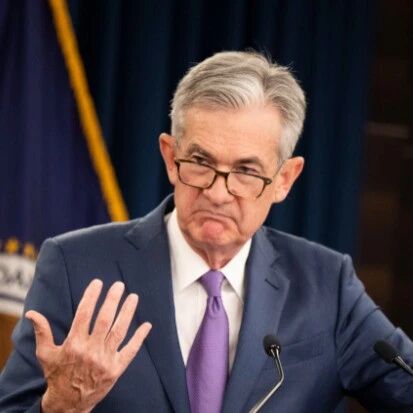
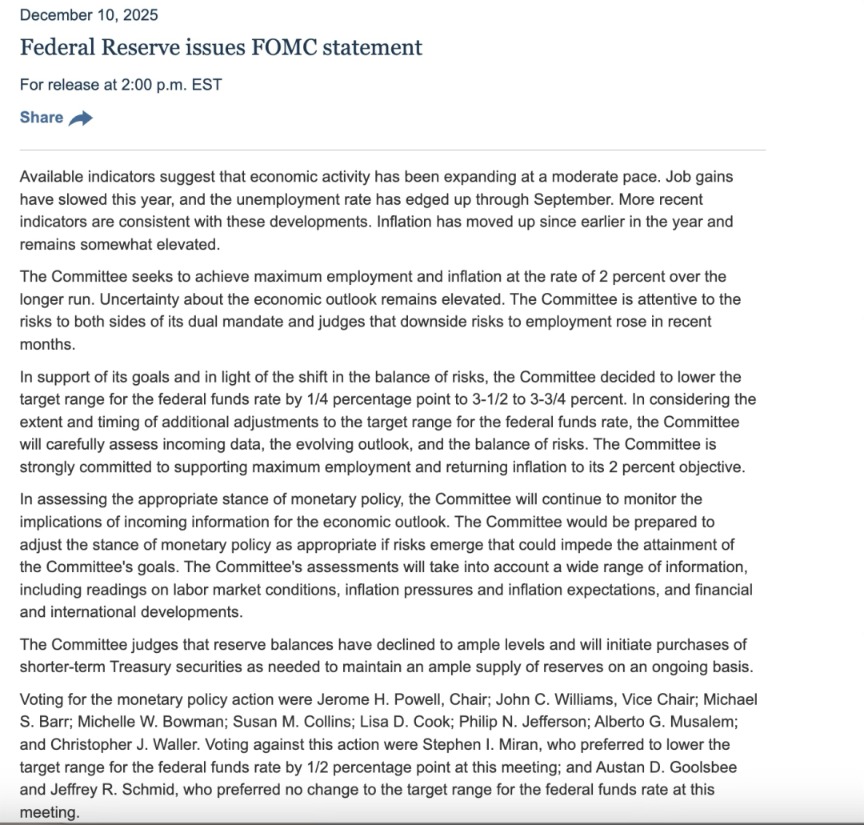
证券研究报告 | 宏观点评报告 2025 年 12 月 11 日 未来两月货币预期稳定性下降 ❑ 美联储降息 25BP,重启技术性扩表。美联储如期降息 25BP 至联邦基金目 标利率区间 3.50%-3.75%,将于 2025 年 12 月 12 日起购买 400 亿美元短期 国债。相比 10 月,本次 FOMC 声明指出"失业率在 9 月有所上升"(10 月表述为"失业率在 8 月有所上升但仍然很低"),这也是本次降息的主 要原因,委员会判断准备金余额已降至充裕水平,并将按需启动短期国债 的购买,以持续保持充足的准备金供应。官员分歧加大,米兰再次投反对 票,支持降息 50BP 而非 25BP,施密德和古尔斯比支持维持利率不变。 点评报告 —12 月美联储议息会议点评 频率:每月 事件:当地时间 2025 年 12 月 10 日,美联储召开议息会议,降息 25BP 至联邦 基金目标利率区间 3.50%-3.75%,12 月 1 日起结束缩表,未来 30 天购买 400 亿美元短债。 尽管 FOMC 决议中有 2 名官员对降息投反对票,但点阵图显示事实上有 6 名 官员预期本次会议不降息,即所谓的"软反对"。S ...
时隔三年,美联储重启扩表
第一财经· 2025-12-10 23:38
Core Viewpoint - The Federal Reserve has decided to lower the interest rate by 25 basis points to a range of 3.50%-3.75%, marking the third consecutive rate cut this year, amidst a backdrop of mixed economic signals and internal divisions within the FOMC [3][4][14]. Economic Outlook - Economic activity is expanding at a moderate pace, with job growth slowing and a slight increase in the unemployment rate as of September. Inflation remains elevated, indicating persistent price pressures [5][7]. - The Fed has revised its economic growth forecast for this year upward by 0.1 percentage points to 1.7%, and for 2026, the forecast was increased by 0.5 percentage points to 2.3% [6][7]. Inflation Dynamics - Inflation pressures are still significant, with the Fed projecting core PCE inflation at 3.0% for 2025, down 0.1 percentage points from previous estimates. Overall PCE inflation is expected to be 2.9% for this year [7][8]. - The Fed Chairman noted that tariffs imposed during the Trump administration have contributed to inflation, but he believes their impact will be temporary [7]. Labor Market Insights - The labor market remains resilient, with the unemployment rate projected at 4.5% for 2025 and 4.4% for 2026, consistent with previous forecasts [7][8]. - Recent data indicates a trend of low hiring and low layoffs, although there are signs of increasing layoff pressures, with announced layoffs exceeding 1.1 million as of November [15]. Interest Rate Projections - The FOMC's interest rate projections remain unchanged, with a median rate of 3.4% for 2026, suggesting a potential rate cut next year [9][14]. - Internal divisions within the FOMC are evident, with some members advocating for maintaining rates while others support further cuts, reflecting uncertainty in future monetary policy [9][16]. Policy Outlook - The Fed is entering a wait-and-see mode, having cut rates by a total of 75 basis points since September, and is prepared to adjust rates based on new economic data [11][12]. - The Fed has announced a plan to restart short-term Treasury purchases to manage market liquidity, which had tightened recently [11][12].
美联储,降息!美股全线上涨
Zhong Guo Zheng Quan Bao· 2025-12-10 22:51
北京时间12月11日凌晨,美联储在结束为期两天的货币政策会议后宣布,降息25个基点,将联邦基金利 率目标区间下调至3.50%-3.75%,符合市场预期。这是美联储自今年9月17日、10月29日两次降息后的第 三次降息,三次降息幅度均为25个基点。 数据显示,当地时间12月10日,美股三大股指全部上涨。美国科技七巨头指数下跌0.13%,亚马逊、特 斯拉、谷歌涨逾1%。中概股多数上涨,纳斯达克中国金龙指数涨0.64%。 今年第三次宣布降息 美联储最新联邦公开市场委员会(FOMC)货币政策会议纪要显示,美联储决定将联邦基金利率目标区 间下调25个基点,至3.50%-3.75%。同时,美联储宣布将从本月开始扩大资产负债表,购买400亿美元的 短期国债。 本次降息决策并未得到全体FOMC投票委员的支持。美联储在会议纪要中表示,美联储理事、白宫经济 顾问委员会主席米兰支持降息50个基点,芝加哥联储主席古尔斯比和堪萨斯城联储主席施密德倾向于在 此次会议上维持联邦基金利率目标区间不变。这是FOMC六年来首次出现三张反对票。 美联储主席鲍威尔在联邦公开市场委员会(FOMC)会议结束后,在美联储总部举行新闻发布会。鲍威 尔表示, ...
美联储 降息!美股全线上涨
Zhong Guo Zheng Quan Bao· 2025-12-10 22:36
北京时间12月11日凌晨,美联储在结束为期两天的货币政策会议后宣布,降息25个基点,将联邦基金利率目标区间下调至3.50%-3.75%,符合市场预期。 这是美联储自今年9月17日、10月29日两次降息后的第三次降息,三次降息幅度均为25个基点。 Wind数据显示,当地时间12月10日,美股三大股指全部上涨。万得美国科技七巨头指数下跌0.13%,亚马逊、特斯拉、谷歌涨逾1%。中概股多数上涨, 纳斯达克中国金龙指数涨0.64%。 今年第三次宣布降息 美联储最新联邦公开市场委员会(FOMC)货币政策会议纪要显示,美联储决定将联邦基金利率目标区间下调25个基点,至3.50%-3.75%。同时,美联储 宣布将从本月开始扩大资产负债表,购买400亿美元的短期国债。 本次降息决策并未得到全体FOMC投票委员的支持。美联储在会议纪要中表示,美联储理事、白宫经济顾问委员会主席米兰支持降息50个基点,芝加哥联 储主席古尔斯比和堪萨斯城联储主席施密德倾向于在此次会议上维持联邦基金利率目标区间不变。这是FOMC六年来首次出现三张反对票。 美股大型科技股涨跌互现,万得美国科技七巨头指数下跌0.13%。个股方面,亚马逊、特斯拉、谷歌涨逾 ...

鲍威尔:劳动力市场逐步降温但慢于预期 目前利率下能耐心等待 关税影响明年料逐渐消退(附全文)
智通财经网· 2025-12-10 22:33
3、通胀:美国已经在非关税通胀领域取得进展。如果美国不实施新的关税,商品通胀可能会在2026年 一季度见顶。 4、10-11月美国政府停摆:2026年增长预期在一定程度上上修,体现出美国政府10-11月关门事件结束 的影响。 鲍威尔12月10日新闻发布会要点总结: 1、货币政策:并不认为"下次会加息"是任何人的基本假设。目前利率所处位置使美联储能够耐心等 待,观察经济接下来将如何演变。 2、劳动力市场:需要谨慎地评估家庭就业数据。如果对就业数据中的高估部分进行调整,自4月以来就 业增长可能已经略微转负。那些没能收集到的数据可能会造成(数据)扭曲/失真。技术性因素可能会扭曲 CPI和家庭就业数据。失业率可能仅仅会上升十分之一至十分之二。就业增长被夸大,这并没有争议。 人工智能(AI)可能是就业疲软的原因之一,但其影响程度并不大。 5、个人前途:对美联储主席任期届满之后没有任何新的打算。 6、市场反应:标普涨幅从1.2%收窄至0.7%,道指目前涨556点涨幅1.1%,纳指涨0.4%,半导体指数涨 1.4%,银行指数涨2.7%。两年期美债收益率跌穿3.54%刷新日低,日内跌7.5个基点;10年期美债收益率 跌约5个 ...
降息!美联储凌晨官宣!但是......
Shang Hai Zheng Quan Bao· 2025-12-10 22:18
市场屏息以待的一夜刚刚过去。 北京时间12月11日凌晨,市场迎来了美联储年内最后一次利率决议:美联储如期降息25个基点,将联邦基金利率目标区间下调到3.50%至3.75%之间。这 是美联储今年继9月和10月各降息25个基点以来的第三次降息,也是自2024年9月美联储开启新一轮降息周期以来的第六次降息。 值得注意的是,此次会议罕见出现三张 "反对票",暴露出美联储的内部分歧。这是自2019年以来,首次有三位官员在同一次议息会议上投下反对票。这 或意味着,降息不再是默认的常规操作,而是一个极端权衡。 不过,预期中的"鹰派"降息信号并未显露,令市场振奋。美股三大指数集体收涨,道指涨1.05%,纳指涨0.33%,标普500指数涨0.67%。此外,美元指数 跌幅扩大,下破99关口,美债收益率小幅下行,白银顺势创下历史新高。 25个基点"收官"2025年降息 美联储出现6年以来最大内部分歧 北京时间12月11日凌晨,美国联邦储备委员会结束为期两天的货币政策会议后,宣布将联邦基金利率目标区间下调25个基点到3.50%至3.75%之间,符合 市场预期。 美联储年内降息就此收官。美联储在声明中表示,"现有指标显示,经济活动一直 ...
历史性暴涨!白银价格突破60美元关口,涨幅远超黄金
Sou Hu Cai Jing· 2025-12-10 10:31
长期来看,支撑银价的因素包括:持续的供应紧张、工业和投资需求旺盛等等;而短期上,市场的焦点 则是集中在美联储的利率决议上,分析普遍认为,美联储大概率会在本周降息,利率下降利好不产生利 息的贵金属。 CNBC最新的美联储调查显示,87%的受访者认为本周美联储会降息25个基点,此外,按调查的中位数 结果,受访者预计本次决议将出现两位美联储官员的反对票。而展望未来的利率路径,只有35%的受访 者预计明年1月美联储还会再次降息。 隔夜,国际白银价格突破了每盎司60美元的关口,创下历史新高。背后的推动因素之一,就是市场对美 联储本周的降息预期在逐渐升温。 当地时间周二,在美联储利率决议前夕,贵金属集体走高,国际白银现货和期货隔夜均上涨约4%,双 双突破了每盎司60美元的关口,创下历史新高。 明年三月到期的COMEX白银期货隔夜收于每盎司60.84美元。亚洲早盘阶段继续攀升,截至北京时间早 上9点,徘徊在每盎司61.2美元附近。同样亚洲早盘阶段,白银现货则是徘徊在每盎司60.7美元附近,今 年迄今为止白银现货已经上涨超110%。明年二月到期的COMEX黄金期货隔夜小幅上涨,收于每盎司 4236.2美元,今年迄今为止上涨约 ...
Fed's completing the normalization process, says Georgetown's Paul McCulley
Youtube· 2025-12-09 19:02
Paul, I we all obviously sympathize with the point of view that if the labor market's worse than we realize, you might want to cut half a point, but the data that we've gotten seem okay. I mean, the jobless claims data alone would seem to tell you there's no major cyclical problem here. >> I think that's right, which is why I think the best way to describe what the Fed's doing now is completing the normalization process.They took off 100 basis points in 24. after tomorrow they have 75 basis points this year ...