
扩表

Search documents
中金:美联储或将决定黄金牛市的终点,但这一拐点尚未到来
Sou Hu Cai Jing· 2026-02-05 23:57
Core Viewpoint - The short-term outlook suggests that the Federal Reserve may find it difficult to "taper" its balance sheet, while the threshold for continuing "expansion" and quantitative easing (QE) has significantly increased [1] Group 1: Federal Reserve Actions - The Federal Reserve may not be willing to support fiscal easing through "expansion" of its balance sheet, leading to a potential new temporary monetary-fiscal coordination method [1] - This method could involve increasing the rate of interest rate cuts by the Federal Reserve and the Treasury issuing more short-term debt [1] - The process may first promote financial deregulation before initiating the "tapering" process [1] Group 2: Market Implications - The ultimate rate cut by the Federal Reserve may exceed market expectations, potentially leading to a return of dollar easing trades in the short term [1] - The steepening of the U.S. Treasury yield curve, combined with financial deregulation, is favorable for U.S. bank stocks [1] - The Federal Reserve's decisions may determine the end of the gold bull market, although this turning point has not yet arrived [1] Group 3: Global Market Outlook - Chinese stocks and global commodities are currently under temporary pressure, awaiting a return of easing expectations [1]
黄金T+D涨超5%显韧且1090不破
Jin Tou Wang· 2026-02-04 04:01
Group 1 - The current trading price of gold T+D is around 1131.44 yuan per gram, with a daily increase of 5.23%, indicating a bullish short-term trend [1] - The highest price reached today was 1134.99 yuan per gram, while the lowest was 1096.00 yuan per gram, showing significant volatility [1] - The market sentiment remains cautiously bullish, with attention on the resistance level at 1105 yuan per gram [3] Group 2 - If Kevin Warsh becomes the Federal Reserve Chairman, there are expectations for a significant reduction in the balance sheet, which has been closely linked to stock market trends [2] - The relationship between the balance sheet and risk assets has weakened, with stronger fiscal conditions and technology benefits supporting the market despite liquidity withdrawal [2] - Regulatory frameworks, such as reserve and asset composition requirements, may limit the speed of balance sheet reduction, indicating that even with Warsh's leadership, rapid changes may not occur [2]
东吴证券:新美联储主席沃什真的鹰派吗?
Xin Lang Cai Jing· 2026-02-03 00:26
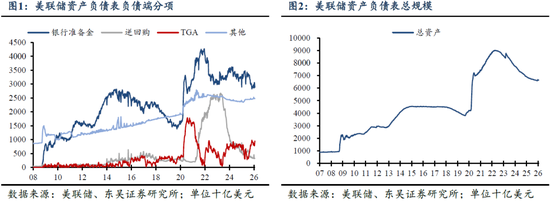
Core Viewpoint - The market's hawkish interpretation of Warsh's nomination is seen as a misconception, as he has shifted to a dovish stance on monetary policy. It is expected that he will implement more rate cuts than the market anticipates, with a forecast of 75-100 basis points of cuts throughout the year, starting in June [1][10]. Latest Perspective - Warsh's monetary policy stance has transitioned to dovish since 2025, believing that AI-driven productivity gains will not lead to inflation. He argues that the current large balance sheet of the Fed is outdated and can be significantly reduced, allowing for further rate cuts to support households and small businesses [3][12]. Nomination Reason - Trump's primary consideration in selecting a Fed chair is the ability to quickly lower interest rates. Warsh's close personal ties with Trump, including connections through significant financial support, suggest he will align closely with Trump's monetary policy goals [4][13]. Hawkish Feasibility - The current liquidity environment does not support the Fed's balance sheet reduction. Warsh's previous calls for balance sheet reduction are seen as opposition to past Fed policies. The recent implementation of a light balance sheet expansion indicates a need to avoid liquidity crises, making immediate balance sheet reduction risky [5][14]. Future Outlook - Warsh's nomination requires Senate approval, and there are concerns about Powell's potential influence post-tenure. Maintaining an image of independence will be crucial for Warsh to secure his position and ensure effective policy implementation. The market is expected to reassess Warsh's stance after his official appointment [6][15][16].


下任主席提名揭晓
Sou Hu Cai Jing· 2026-01-30 23:06
Core Viewpoint - President Trump has nominated Kevin Warsh, a former Federal Reserve Board member, to be the next Chairman of the Federal Reserve, potentially replacing Jerome Powell whose term ends in May [1] Group 1: Background of Kevin Warsh - Warsh, born in 1970, previously worked at Morgan Stanley focusing on mergers and acquisitions [1] - He was appointed to the Federal Reserve by former President George W. Bush in 2006 and served until 2011, becoming the youngest member of the Fed at that time [1] - Warsh has been a member of Trump's business advisory council and has familial ties to Trump through his father-in-law, a long-time friend of the President [1] Group 2: Economic Views and Policy Stance - Initially seen as a supporter of free trade and a hawkish figure on monetary policy, Warsh has recently aligned more closely with Trump's tariff policies and calls for rate cuts [1] - He has criticized the Fed's loose monetary policy since the financial crisis but later stated that the Fed's refusal to cut rates was a "major mistake" [1] - Warsh now advocates for lower interest rates and comprehensive reforms of the Fed, including reducing its balance sheet and easing bank regulations, which contrasts with typical rate-cutting cycles [1] Group 3: Market Reactions and Uncertainties - Analysts have mixed views on Warsh's nomination, with some suggesting he may not be as dovish as other candidates and could favor fewer rate cuts [2] - There is uncertainty regarding how the market will react to Warsh's nomination due to his recent alignment with Trump's administration [2] - The approval of Warsh's nomination by the Senate is uncertain, especially following the criminal investigation into Powell, with some Republican senators expressing opposition to any Fed-related nominations until the issue is resolved [2]
广发期货《有色》日报-20251226
Guang Fa Qi Huo· 2025-12-26 11:16
1. Report Industry Investment Ratings No information about industry investment ratings is provided in the reports. 2. Core Views Copper - Overseas inventory is structurally imbalanced, and terminal demand is significantly suppressed. The copper price continued to rise yesterday, with short - term price fluctuations intensifying. - The high copper price is mainly driven by supply and inventory structural imbalances and Fed's actions. Although the 2026 long - term TC is 0, smelters can maintain cash - flow profit if by - product profits are high enough. - SMM expects China's electrolytic copper production to rise in December, with sufficient spot supply. High prices have suppressed terminal demand, leading to a large discount in spot this week, inventory accumulation, and weakened downstream开工率 and order release. - The upward drivers are further deterioration of overseas inventory structure and improved interest - rate cut expectations; the downward driver is weak demand. The short - term price is volatile, and the main contract should focus on the 95,500 support level [1]. Aluminum - Alumina futures maintained a low - level oscillation. The fundamental pattern of oversupply has not improved. The supply is rigid, and the whole - industry chain inventory has reached a new high, forming a self - strengthening mechanism. The cost support level is moving down. Alumina prices are expected to oscillate around the cash - cost line, with the main contract reference range of 2,450 - 2,650 yuan/ton. - Electrolytic aluminum futures maintained a high - level oscillation. The macro environment is favorable, but the demand is in the off - season, and the inventory is accumulating. Aluminum prices are expected to oscillate widely in the short term, with the main contract reference range of 21,800 - 22,600 yuan/ton [3]. Aluminum Alloy - The casting aluminum alloy market showed a strong - oscillation trend. The core contradiction is the game between strong cost support and weakening demand. - The supply of scrap aluminum is tight, and the procurement cost is high. The high aluminum price has suppressed the purchasing willingness of downstream die - casting enterprises. - The social inventory has been decreasing slightly for several weeks. The ADC12 price is expected to oscillate in a high - level range, with the main contract reference range of 20,800 - 21,600 yuan/ton [5]. Zinc - The TC has stopped falling and stabilized, and the terminal demand is weak. The zinc price is oscillating weakly. - Domestic zinc ore production has decreased in November, and the import window has opened. The smelter has reduced production due to profit pressure. - The downstream processing industry's开工率 is stable. The social inventory has been decreasing, but the overall demand is general at the end of the year. The LME inventory has increased significantly, and the squeeze - out risk has eased. The main contract should focus on the 22,850 - 22,950 support level [9]. Tin - The supply of tin ore is expected to recover, and the export volume of Indonesia has increased significantly in November. - The tin - soldering enterprises in South China show certain resilience, while those in East China are more restricted. - The supply in Myanmar and Indonesia shows improvement signs. The previous long positions should be gradually closed, and subsequent macro and supply - side recovery should be monitored [11]. Nickel - The nickel futures price fell slightly. The market is trading around the expectation of tightened nickel ore supply. - The domestic spot nickel price has decreased, and the spot trading is average. The supply of Jinchuan electrolytic nickel is still tight. - The supply of nickel ore from the Philippines has decreased, and the Indonesian ore production target in 2026 has been significantly reduced. The price of nickel iron has strong bottom support. - The terminal demand is weak, and the overseas inventory accumulation has slowed down, while the domestic social inventory pressure has increased. The short - term price is expected to oscillate and recover, with the main contract reference range of 123,000 - 130,000 yuan/ton [12]. Stainless Steel - The stainless - steel futures price oscillated narrowly. The spot market's inquiry atmosphere has cooled, and the trading volume is average. - The Fed has cut interest rates, and the domestic central bank has injected liquidity. The market expects tightened nickel ore supply. - The supply is at a relatively high level, but some enterprises may conduct annual maintenance at the end of the year. The demand is in the off - season, and the social inventory is decreasing but still at a high level. - The short - term market sentiment has improved, but the supply - demand game continues. The price is expected to oscillate and adjust, with the main contract reference range of 12,500 - [missing in the report] [14]. Lithium Carbonate - The lithium carbonate futures price oscillated widely. The main contract LC2605 rose 0.44% to 123,520. - The recent news is abundant. Some production lines of Hunan Yueneng will be under maintenance in January, and Wanrun New Energy will reduce production for maintenance. - The current fundamentals show both supply and demand growth. The production is expected to increase in December, and the demand maintains certain resilience. The inventory has decreased significantly. The short - term price is supported by the tight - balance fundamentals, but there is limited new driving force [16]. Industrial Silicon - The industrial silicon spot price stabilized, and the futures price oscillated and recovered after a low opening. - The supply and demand are both decreasing steadily. The expectation of industrial silicon production reduction is rising. Multiple enterprises plan to shut down furnaces for maintenance. - The demand from polysilicon is expected to decrease significantly in January. The price is expected to oscillate at a low level, with the main price range of 8,000 - 9,000 yuan/ton [18]. Polysilicon - The polysilicon spot price stabilized, and the futures price rose significantly. - The exchange has introduced cooling measures. Upstream enterprises hope to drive up the whole - industry chain price, and downstream enterprises have raised their quotes, but profits are still under pressure. - The demand in the first quarter has no bright spots. The price is expected to oscillate at a high level, and the futures price is still at a large premium to the spot. Attention should be paid to production - reduction implementation and price - fall pressure [19]. 3. Summaries by Related Catalogs Price and Basis - **Copper**: SMM 1 electrolytic copper was at 94,760 yuan/ton, up 70 yuan/ton (0.07%); the SMM 1 electrolytic copper premium was - 330 yuan/ton, down 20 yuan/ton [1]. - **Aluminum**: SMM A00 aluminum was at 21,980 yuan/ton, down 50 yuan/ton ( - 0.23%); the SMM A00 aluminum premium was - 170 yuan/ton, unchanged [3]. - **Aluminum Alloy**: SMM ADC12 was at 21,950 yuan/ton, unchanged [5]. - **Zinc**: SMM 0 zinc ingot was at 23,080 yuan/ton, down 180 yuan/ton ( - 0.77%); the premium was 80 yuan/ton, down 10 yuan/ton [9]. - **Tin**: SMM 1 tin was at 332,750 yuan/ton, down 3,600 yuan/ton ( - 1.07%); the LME 0 - 3 premium was 130 US dollars/ton, up 65 US dollars/ton (100%) [11]. - **Nickel**: SMM 1 electrolytic nickel was at 127,400 yuan/ton, down 2,800 yuan/ton ( - 2.15%); the 1 Jinchuan nickel premium was 7,250 yuan/ton, up 500 yuan/ton (7.41%) [12]. - **Stainless Steel**: 304/2B (Wuxi Hongwang 2.0 roll) was at 13,000 yuan/ton, down 50 yuan/ton ( - 0.38%) [14]. - **Lithium Carbonate**: SMM battery - grade lithium carbonate was at 104,900 yuan/ton, up 3,400 yuan/ton (3.35%) [16]. - **Industrial Silicon**: Huale Tongyang SI5530 industrial silicon was at 9,250 yuan/ton, unchanged [18]. - **Polysilicon**: N - type polycrystalline silicon (average price) was at 52,350 yuan/ton, unchanged [19]. Fundamental Data - **Copper**: In November, electrolytic copper production was 110.31 million tons, up 1.15 million tons (1.05%); imports were 27.11 million tons, down 1.10 million tons ( - 3.90%) [1]. - **Aluminum**: In November, alumina production was 743.94 million tons, down 34.6 million tons ( - 4.44%); domestic electrolytic aluminum production was 363.66 million tons, down 10.6 million tons ( - 2.82%) [3]. - **Aluminum Alloy**: In November, the production of recycled aluminum alloy ingots was 68.20 million tons, up 3.7 million tons (5.74%); the production of primary aluminum alloy ingots was 30.27 million tons, up 1.7 million tons (5.84%) [5]. - **Zinc**: In November, refined zinc production was 59.52 million tons, down 2.20 million tons ( - 3.56%); imports were 1.82 million tons, down 0.06 million tons ( - 3.22%) [9]. - **Tin**: In October, tin ore imports were 11,632 tons, up 2,918 tons (33.49%); SMM refined tin production was 16,090 tons, up 5,580 tons (53.09%) [11]. - **Nickel**: China's refined nickel production in [month not clear] was 33,342 tons, down 3,453 tons ( - 9.38%); imports were 9,741 tons, down 18,626 tons ( - 65.66%) [12]. - **Stainless Steel**: China's 300 - series stainless - steel crude steel production (43 enterprises) in [month not clear] was 178.70 million tons, down 1.30 million tons ( - 0.72%); Indonesia's was 42.35 million tons, up 0.15 million tons (0.36%) [14]. - **Lithium Carbonate**: In November, lithium carbonate production was 95,350 tons, up 3,090 tons (3.35%); demand was 133,451 tons, up 6,490 tons (5.11%) [16]. - **Industrial Silicon**: National industrial silicon production in [month not clear] was 40.17 million tons, down 5.05 million tons ( - 11.17%); Xinjiang's was 23.76 million tons, up 0.20 million tons (0.83%) [18]. - **Polysilicon**: In [month not clear], polysilicon production was 11.46 million tons, down 1.94 million tons ( - 14.48%); imports were 0.11 million tons, down 0.04 million tons ( - 27.05%) [19].
广发早知道:汇总版-20251226
Guang Fa Qi Huo· 2025-12-26 01:12
Report Industry Investment Rating No relevant content provided. Core Viewpoints of the Report The report offers a comprehensive analysis of various futures markets, including financial derivatives, precious metals, shipping indices, non - ferrous metals, black metals, agricultural products, and energy chemicals. It details the current market situation, influencing factors, and future outlooks for each category, and provides corresponding trading strategies. Summary by Directory Daily Selections - **Copper**: High copper prices have suppressed terminal demand, leading to significant spot discounts and inventory accumulation. Upward drivers include further deterioration of overseas inventory structure and improved interest - rate cut expectations; downward drivers are weak demand. Suggest a light - position holding of a protective put option portfolio [2]. - **PP**: The basis weakens, and trading improves. Pay attention to the expansion of PDH profits [3]. - **Coking Coal**: Spot coal prices vary, and the upside of the futures price is limited. Switch to short - selling on rallies [3]. - **Soybean Meal**: South American harvest expectations suppress prices, but cost supports the downside. Concerns about customs policies affect domestic supply. Be cautious in short - term operations [4]. - **Silver**: Supply tightness and capital drive prices to maintain a strong - side oscillation. Hold long positions, and reduce or lock positions before the Spring Festival [5]. Financial Derivatives Stock Index Futures - **Market Performance**: A - share indices rise, and the basis of the four major stock index futures contracts is repaired. The short - term negative factors are exhausted, and the index rebounds [7][8][9]. - **News**: Beijing eases housing purchase restrictions, and the US raises IPO liquidity thresholds [8][9]. - **Funding**: A - share trading volume is stable, and the central bank conducts net injections [9]. - **Operation Suggestion**: Try a bull - spread strategy on the CSI 300 index [9]. Treasury Bond Futures - **Market Performance**: Treasury bond futures decline, and short - term bonds are relatively strong [10]. - **Funding**: The central bank's reverse - repurchase operations result in net injections, and the funding rate is seasonally up but controllable [10]. - **Operation Suggestion**: Consider going long on the T contract on pullbacks and participate in the 2603 contract cash - and - carry arbitrage and basis - widening strategies [12]. Precious Metals - **Market Review**: Overseas markets are closed for holidays. Some precious metals experience price adjustments, with platinum strengthening and palladium once hitting the daily limit down [13][15]. - **Outlook**: The medium - to - long - term price of precious metals has an upward trend, but short - term fluctuations exist. Adopt a long - position strategy on dips [16]. Shipping Index (European Line) - **Index**: SCFIS and SCFI indices show an upward trend [19]. - **Fundamentals**: Container capacity increases, and demand in the eurozone and the US is weak [19]. - **Logic**: The futures contract is in a consolidation phase, with limited drivers, and is expected to oscillate in the short term [19]. Non - Ferrous Metals - **Copper**: High prices suppress demand, and the price is expected to oscillate strongly in the short term. Hold protective put options [24]. - **Alumina**: The market is oversupplied, and the price is expected to oscillate around the cash - cost line [26]. - **Aluminum**: The market is in a state of macro - positive expectations versus fundamental pressure, and the price is expected to oscillate widely [29]. - **Aluminum Alloy**: High costs and weak demand limit price movements, and the price is expected to oscillate in a high - level range [31]. - **Zinc**: TC stabilizes, demand is weak, and the price is expected to oscillate weakly [36]. - **Tin**: Supply is improving, and the price is expected to oscillate at a high level. Adopt a wait - and - see approach [40]. - **Nickel**: The market is affected by expectations of tightened ore supply, and the price is expected to oscillate strongly [42]. - **Stainless Steel**: The market is in a state of strong expectations versus weak reality, and the price is expected to oscillate and adjust [46]. - **Lithium Carbonate**: The market is in a state of high - level oscillation, with strong capital sentiment. The price is expected to oscillate widely [50]. - **Polysilicon**: The price is in a high - level oscillation, with demand weakness. Adopt a wait - and - see approach [53]. - **Industrial Silicon**: The price is expected to oscillate at a low level. Pay attention to production - cut implementation [55]. Black Metals - **Steel**: Steel production is cut, and inventory is reduced. The price is expected to oscillate. Consider exiting the 1 - 5 positive spread and looking for opportunities to go long on the 5 - month iron - ore ratio [57][58]. - **Iron Ore**: Supply is at a high level, and demand is weak. The price is expected to oscillate. Adopt a short - term range - trading strategy on the 05 contract [60]. - **Coking Coal**: Supply may decrease, and demand is weak. Switch to short - selling on rallies [66]. - **Coke**: The third price cut is implemented, and the price is expected to decline. Switch to short - selling on rallies [70][71]. - **Silicon Iron**: Supply is reduced, and demand is stable. The price is expected to oscillate in a range [73]. - **Silicon Manganese**: High inventory suppresses price rebounds, and the price is expected to run weakly. Consider short - selling when the price rebounds above the Ningxia spot cost [76]. Agricultural Products - **Soybean Meal and Rapeseed Meal**: South American harvest expectations suppress prices, and customs policies affect domestic supply. Be cautious in short - term operations [79]. - **Pigs**: Seasonal demand supports the market, and the price is expected to oscillate strongly in the short term [81]. - **Corn**: Supply and demand are balanced, and the price is in a stalemate. Pay attention to selling sentiment and policy releases [84]. - **Sugar**: The international market is bearish, and the domestic market may have limited rebounds. Adopt a bearish - on - rebounds strategy [85]. - **Cotton**: US cotton oscillates at the bottom, and domestic cotton prices are expected to rise. The supply pressure is released, and the long - term outlook is optimistic [88]. - **Eggs**: Supply pressure is high but eases marginally. Near - month contracts are expected to oscillate at the bottom [92]. - **Oils**: Palm oil may continue to rise but also faces downward risks. Soybean oil and rapeseed oil have different market situations. Adopt corresponding strategies according to different varieties [93][95][96]. - **Jujubes**: The price rebounds. Pay attention to sales in the distribution areas. Consider selling call options [97]. - **Apples**: The price oscillates. Consider closing long positions [98]. Energy Chemicals - **PX**: Valuation increases, and downstream feedback is negative. The upside is limited. Reduce long positions on rallies and consider long - term low - buying [100]. - **PTA**: Follow PX trends, and the upside is limited. Reduce long positions on rallies and consider long - term low - buying [102]. - **Short - Fiber**: Supply is high, and demand is weak. Follow raw - material fluctuations [104]. - **Bottle Chips**: Supply is expected to increase, and processing fees may be compressed. Adopt the same strategy as PTA and short - sell processing fees on rallies [106]. - **Ethylene Glycol**: Supply is expected to decrease, but the cost support is limited. The price is expected to oscillate. Adopt a 5 - 9 reverse - arbitrage strategy [108]. - **Pure Benzene**: Supply is stable, and demand is weak. The price is expected to oscillate in a range [109]. - **Styrene**: Supply and demand both increase, and the price is expected to oscillate in a range [111]. - **LLDPE**: Supply and demand are weak. Go long on the 2605 contract in the short term [113]. - **PP**: Pay attention to the expansion of PDH profits [3]. - **Methanol**: The market is expected to balance in the first quarter of next year. Pay attention to the contraction of MTO05 [114]. - **Caustic Soda**: Supply and demand are under pressure, and the price is expected to decline [116]. - **PVC**: Supply is expected to increase, and demand is weak. The price is expected to decline after a rebound [117]. - **Soda Ash**: Supply is stable, and demand is weak. Short - sell on rallies [120]. - **Glass**: The price is under pressure. Adopt a wait - and - see approach [120]. - **Natural Rubber**: The price is driven by macro - sentiment, but the fundamentals are weak. Try short - selling around 15700 [122]. - **Synthetic Rubber**: The price is expected to oscillate strongly in the short term. Avoid short - selling the BR2602 contract [124][125].
贵金属的商品属性接棒驱动,转折点或出现在明年年中
Sou Hu Cai Jing· 2025-12-24 00:23
Core Viewpoint - The chief analyst of precious metals at Qisheng Futures, Liu Xufeng, believes that the commodity attributes of precious metals are likely to replace their financial and monetary attributes, becoming the main driving force behind price movements [1] Group 1: Market Trends - The widening supply-demand gap for silver may provide price support [1] - A key turning point in the precious metals market could occur around mid-2026 [1] Group 2: Macroeconomic Environment - The expected appointment of Kevin Hassett, who is perceived as dovish, to succeed Federal Reserve Chairman Jerome Powell in May 2026 may accelerate the pace of monetary policy easing [1] - The Federal Reserve has resumed balance sheet expansion in response to economic downturn pressures and the longest government shutdown in history, but there are potential risks of marginal tightening in liquidity [1]
【百利好黄金专题】QE再次开启 黄金上不言顶
Sou Hu Cai Jing· 2025-12-23 06:42
Group 1 - Gold prices have increased from $2,614 to $4,380 year-to-date, representing a rise of approximately 67%, making it one of the best-performing asset classes this year. The bullish trend in gold is expected to continue into 2026 due to the shift in the Federal Reserve's monetary policy [1] - The Federal Reserve has initiated a form of quantitative easing (QE) by announcing a $450 billion monthly purchase of short-term government bonds, with $200 billion aimed at meeting monetary demand and $250 billion for replenishing reserves. This move is seen as "invisible QE" despite the Fed's claims that it is merely a technical adjustment [3] - The liquidity gap in the U.S. is projected to reach $300 billion by 2026, indicating that merely halting the balance sheet reduction is insufficient to meet market liquidity needs. This could lead to inflationary pressures similar to those experienced during the pandemic, which previously triggered a bull market in gold [3] Group 2 - In 2025, the Federal Reserve, under Chairman Powell, executed three rate cuts totaling 75 basis points. However, the situation may change in 2026 with potential new leadership favoring lower interest rates [4] - Candidates for the new Federal Reserve chair, such as Kevin Hassett and Kevin Walsh, advocate for lowering rates below current levels, which could undermine the Fed's independence. This shift may align with President Trump's expansionary fiscal policies [4] - The Fed's dot plot indicates a potential rate cut in 2026, but weak employment and stable inflation may lead to two additional cuts, particularly in the first half of the year, with a lower bound around 3%. If the economy enters a recession, the Fed may tolerate inflation above 3% to support economic growth [4] Group 3 - Technically, gold is forming a bullish continuation pattern on the daily chart, approaching previous highs, but there are signs of overbought conditions. A potential pullback to around $4,230 is possible, while the overall outlook remains bullish with a target of $4,500 [5]

静待消费跟进,基本金属震荡整固
Zhong Xin Qi Huo· 2025-12-23 00:47
Group 1: Report Industry Investment Rating - Not provided in the content Group 2: Core Viewpoints of the Report - The macro - environment is generally positive. The lower - than - expected US CPI in November boosts the expectation of interest rate cuts, and the Central Economic Work Conference in December has a positive tone, which is expected to improve domestic consumption. The raw material supply is tight and may spread to the smelting end, with a risk of supply contraction. The current supply - demand of basic metals is relatively loose, but the future is expected to be tight. In the short - to - medium term, supply concerns support prices, while high prices restrain consumption. Long - term, potential domestic stimulus policies and supply disturbances are expected to drive up the prices of copper, aluminum, and tin [3]. Group 3: Summary by Variety Copper - **Viewpoint**: The long - term processing fee for copper ore is settled, and copper prices are oscillating at a high level. SMM reports that the 2026 copper concentrate long - term processing fee benchmark is set at $0/ton and $0/pound. The CSPT plans to reduce the copper ore production capacity load by over 10% in 2026. In November, China's electrolytic copper production increased both month - on - month and year - on - year. The spot price of 1 electrolytic copper on December 22 was at a discount to the contract. As of December 22, the copper inventory increased. The LME plans to set and implement position limits on key and related contracts from July 6, 2026. Macro factors and supply constraints support copper prices, but weak demand and inventory accumulation limit the upside. The outlook is for copper prices to be oscillatingly strong [9][10][11]. Alumina - **Viewpoint**: The over - supply situation has not improved significantly, and alumina prices continue to be under pressure. On December 22, the spot prices in various regions declined, and the alumina warehouse receipts decreased. High - cost production capacity has some fluctuations, but the supply reduction is insufficient. The cost support is weak, and the warehouse receipts digestion faces pressure. The price is expected to oscillate [11][12][13]. Aluminum - **Viewpoint**: The inventory has accumulated, and aluminum prices are oscillating at a high level. On December 22, the average price of SMM AOO increased, and the inventory of aluminum ingots and bars changed. In November, China's un - wrought aluminum and aluminum product exports decreased year - on - year. The "aluminum for copper" standard work has been launched, and the aluminum ingot premium for Japan in Q1 2026 has increased. The macro - environment is positive, the supply is tight in the long - term, and the short - term high prices suppress demand. Aluminum prices are expected to be oscillatingly strong in the short - term and may rise in the medium - term [14][15]. Aluminum Alloy - **Viewpoint**: Pay attention to demand changes, and the futures price is oscillating at a high level. On December 22, the prices of related products were stable or changed slightly. An Indonesian electrolytic aluminum project has started production, and the import of scrap aluminum in October increased. The cost support is strong, but the supply may be reduced due to policies, and the demand may weaken. The price is expected to be oscillatingly strong in the short - and medium - term [16]. Zinc - **Viewpoint**: The inventory trends at home and abroad are different, and zinc prices are oscillating at a high level. On December 22, the spot prices in different regions were at premiums to the contract. As of December 22, the zinc inventory increased. In November, China's zinc concentrate imports increased. The macro - environment is positive, the short - term zinc ore supply is tight, and the demand is in the off - season. Zinc prices may oscillate in the short - term and decline in the long - term [19][20]. Lead - **Viewpoint**: The operating rate of lead - acid battery enterprises has declined, and the rebound space of lead prices is limited. On December 22, the prices of related products changed slightly, and the inventory decreased. Since December, the implementation of the new national standard for electric bicycles has affected battery consumption, and the operating rate of some enterprises has weakened. The supply may increase as the maintenance of smelters ends, and the demand is weakening. Lead prices are expected to oscillate [21][22]. Nickel - **Viewpoint**: Indonesia plans to significantly reduce the nickel ore RKAB, and nickel prices have rebounded. On December 22, the LME and domestic nickel inventories changed. The price of high - nickel pig iron increased. Indonesia plans to revise the HPM formula and reduce the 2026 nickel ore production target. The current supply is still under pressure, and the demand is in the off - season. If the RKAB plan is implemented, the surplus expectation will decline. Nickel prices are expected to oscillate, and attention should be paid to policy implementation [23][24]. Stainless Steel - **Viewpoint**: Driven by the rebound of nickel prices, the stainless - steel futures price has recovered. On December 22, the price of high - nickel pig iron increased, and the stainless - steel futures warehouse receipts decreased. Indonesia plans to reduce the nickel ore production target. The cost has some support, the production may decline in December, and the inventory may accumulate. Stainless - steel prices are expected to oscillate within a range [26][27]. Tin - **Viewpoint**: Supply concerns and low inventory levels make tin prices oscillatingly strong. On December 22, the warehouse receipts and positions of tin increased, and the spot price rose. The supply from Myanmar has recovered, but the supply in Indonesia may be restricted in Q1 2026, and African supply is limited. The demand is expected to increase due to the economic environment and industry development. Tin prices are expected to be oscillatingly strong [27][28]. Group 4: Market Monitoring - On December 22, 2025, the comprehensive index, commodity 20 index, and industrial product index of the CITICS Futures commodity index increased by 1.10%, 1.34%, and 0.79% respectively. The PPI commodity index increased by 0.63%. The non - ferrous metal index increased by 0.85%. The daily, 5 - day, 1 - month, and year - to - date growth rates of the non - ferrous metal index were +0.85%, +2.42%, +5.61%, and +12.36% respectively [152][154].
2025年12月16日:期货市场交易指引-20251216
Chang Jiang Qi Huo· 2025-12-16 01:57
Report Industry Investment Ratings - **Macro Finance**: Stocks are expected to have a medium - to long - term upward trend, with a short - term outlook of volatile operation; bonds are expected to trade sideways [1][5]. - **Black Building Materials**: Coking coal is suitable for short - term trading; rebar is for range trading; glass is recommended to be shorted on rallies [1][7][8]. - **Non - ferrous Metals**: Copper should be reduced on rallies and replenished when the price stabilizes at a low level; aluminum requires more observation; nickel is recommended to be observed or shorted on rallies; tin is for range trading; silver should be held in long positions with caution in opening new positions; gold is for range trading; lithium carbonate is expected to be in a relatively strong sideways movement [1][10][12][17]. - **Energy and Chemicals**: PVC, caustic soda, and soda ash are recommended for temporary observation; styrene, rubber, urea, and methanol are for range trading; polyolefins are expected to be in a relatively weak sideways movement [1][21][22][23]. - **Cotton and Textile Industry Chain**: Cotton and cotton yarn are expected to be in a relatively strong sideways movement; PTA is expected to move upward in a volatile manner; apples and jujubes are expected to be in a relatively weak sideways movement [1][30][32][33]. - **Agriculture and Animal Husbandry**: Pigs are recommended to be shorted on rallies for near - term contracts and bullish cautiously for far - term contracts; eggs have limited upside potential; corn should be chased with caution in the short term and hedged on rallies; soybean meal is for range trading, with a stronger view for near - term contracts and a weaker view for far - term contracts; oils are recommended to be shorted with caution [1][34][37][40]. Core Views - The market is influenced by multiple factors such as macro - policies, supply - demand relationships, and international situations. Different varieties show different trends and investment opportunities due to their own fundamentals and external factors. For example, the macro - financial market is affected by central bank policies and economic data; the black building materials market is affected by supply - demand relationships in the industry; the non - ferrous metals market is affected by global economic trends and supply - demand in the mining industry; the energy and chemicals market is affected by raw material prices and downstream demand; the cotton and textile industry chain is affected by global supply - demand and domestic consumption; the agriculture and animal husbandry market is affected by breeding cycles and supply - demand in the food market [5][7][10]. Summary by Category Macro Finance - **Stocks**: Influenced by factors such as Fed policies, domestic economic data, and technological developments, the market is expected to be volatile in the short term, with a medium - to long - term upward trend. It is recommended to buy on dips [5]. - **Bonds**: Affected by central bank policies and regulatory measures, the market is expected to trade sideways. The key lies in the actual buying power of year - end allocation funds and the guidance from important meetings [5]. Black Building Materials - **Coking Coal**: In a game between bearish realities and marginal support, it is recommended for short - term trading [7]. - **Rebar**: With low valuation and weak drivers, it is expected to be in a relatively weak sideways movement and suitable for range trading [7]. - **Glass**: With high inventory, weak demand, and increasing supply expectations, it is expected to be in a low - level weak movement before the Spring Festival, and it is recommended to be shorted on rallies [8][9]. Non - ferrous Metals - **Copper**: Supported by macro - easing expectations and long - term ore shortages, but with short - term over - rise risks, it is recommended to reduce positions on rallies and replenish when the price stabilizes at a low level [10]. - **Aluminum**: With factors such as changes in ore prices, production capacity adjustments, and weakening demand, it is recommended to reduce long positions or observe [12]. - **Nickel**: With an expected increase in supply and an oversupply pattern, it is recommended to observe or short on rallies [15]. - **Tin**: With tight supply and weak downstream consumption, it is recommended for range trading, and attention should be paid to supply and demand changes [17]. - **Silver and Gold**: Affected by Fed policies and economic data, they are expected to be in a relatively strong sideways movement. Silver is recommended to hold long positions with caution in opening new positions, and gold is for range trading [17][19]. - **Lithium Carbonate**: With supply disruptions and strong demand, it is expected to be in a relatively strong sideways movement, and attention should be paid to mine developments [19]. Energy and Chemicals - **PVC**: With high supply, weak demand, and low valuation, it is expected to be in a low - level sideways movement and suitable for range trading [21]. - **Caustic Soda**: With high inventory and uncertain supply - demand changes, it is recommended for temporary observation [22]. - **Styrene**: Affected by factors such as oil blending and supply - demand relationships, it is expected to be in a sideways movement and suitable for range trading [23]. - **Rubber**: Affected by supply shortages and inventory changes, it is expected to be in a sideways movement and suitable for range trading [23]. - **Urea**: With sufficient supply and stable demand and supply, it is expected to be in a sideways movement and suitable for range trading [25]. - **Methanol**: With supply recovery, high - level but fluctuating downstream demand, and inventory reduction, it is expected to be in a sideways movement and suitable for range trading [26]. - **Polyolefins**: With strong supply and weak demand, it is expected to be in a relatively weak sideways movement. PE is expected to be in a range - bound movement, and PP is expected to be in a relatively weak movement [28]. - **Soda Ash**: With supply overcapacity and cost support, it is recommended for temporary observation [30]. Cotton and Textile Industry Chain - **Cotton and Cotton Yarn**: Affected by global supply - demand and domestic sales, they are expected to be in a relatively strong sideways movement [30]. - **PTA**: Affected by oil prices and supply - demand relationships, it is expected to move upward in a volatile manner [32]. - **Apples and Jujubes**: With weak demand and supply - demand relationships, they are expected to be in a relatively weak sideways movement [32][33]. Agriculture and Animal Husbandry - **Pigs**: With short - term supply pressure and long - term capacity adjustment, near - term contracts are recommended to be shorted on rallies, and far - term contracts are bullish cautiously [34]. - **Eggs**: With sufficient supply and short - term balanced supply - demand, the upside is limited. Attention should be paid to long - term capacity changes [37]. - **Corn**: With short - term selling pressure and long - term demand recovery, it should be chased with caution in the short term and hedged on rallies [40]. - **Soybean Meal**: With different trends for near - and far - term contracts, it is for range trading, and spot enterprises can fix prices for the December - January basis [40]. - **Oils**: Affected by reports and supply - demand relationships, they are expected to be in a relatively weak sideways movement. It is recommended to be shorted with caution for soybean and palm oils [47].