点阵图

Search documents
3月FOMC例会 | 相机抉择(申万宏观·赵伟团队)
申万宏源证券上海北京西路营业部· 2026-03-20 02:46
Core Viewpoint - The Federal Reserve maintained interest rates unchanged during the March FOMC meeting, signaling a hawkish stance with upward revisions in inflation and economic forecasts, while reducing expectations for rate cuts this year [1][2][6]. Group 1: Interest Rate Decisions - The FOMC decided to keep the Federal Funds Rate (FFR) target range at [3.50%-3.75%], with a dissenting vote from Governor Milan who favored a 25 basis point cut [2][7]. - The median dot plot indicates a potential for one rate cut in 2026 and 2027, with a current split of 12 to 7 in favor of maintaining rates versus cutting [10]. Group 2: Economic and Inflation Forecasts - The Fed revised its GDP growth forecasts for 2026, 2027, and 2028 upwards by 0.1, 0.3, and 0.2 percentage points to 2.4%, 2.3%, and 2.1% respectively, while also adjusting the unemployment rate forecast for 2027 to 4.3% [8][9]. - Core PCE inflation forecasts for 2026 and 2027 were raised by 0.2 and 0.1 percentage points to 2.7% and 2.2% respectively [8][9]. Group 3: Forward Guidance and Economic Risks - Chairman Powell emphasized a wait-and-see approach, stating that progress on inflation is a prerequisite for any rate cuts, and highlighted the uncertainty surrounding the economic impact of geopolitical tensions [3][12]. - The Fed's current interest rate level is deemed appropriate given the balance of risks between employment and inflation, with Powell noting the difficulty in determining which risk is more significant [12]. Group 4: Oil Price Impact and Future Projections - Under the assumption of rising oil prices for 1-2 months, the Fed may only cut rates once in 2026, as the conditions for a "stagflation" scenario are not sufficiently met [15]. - The U.S. economy's resilience, supported by non-farm employment growth primarily from the public sector, suggests limited impact from high oil prices [15].


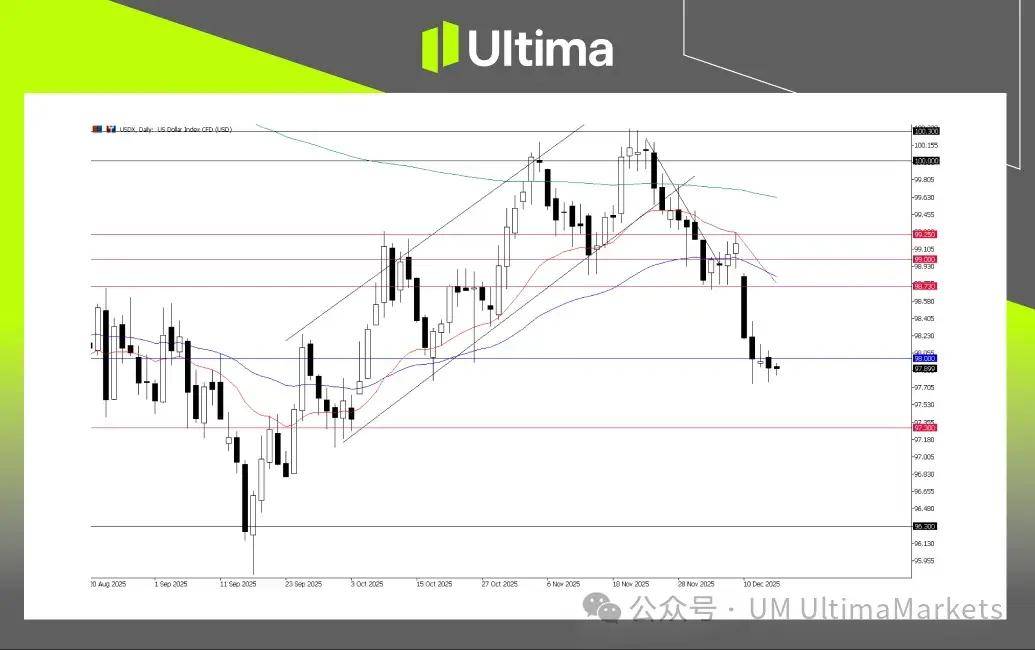
第一创业晨会纪要-20260319
First Capital Securities· 2026-03-19 06:25
Macro Economic Group - The Federal Reserve decided to maintain the federal funds rate at 3.5-3.75%, aligning with market expectations, marking the second consecutive pause in rate cuts for 2026 [3][5] - The median forecast for the federal funds rate in 2026 is 3.4%, unchanged from December, with a projection of 3.1% for 2027 [6] - The Fed raised its GDP growth forecast for 2026 by 0.1 percentage points to 2.4% and for 2027 by 0.3 percentage points to 2.3% [8] Consumer Group - Lin Qingxuan (2657.HK) is expected to achieve a revenue of 2.4 to 2.45 billion yuan in 2025, representing a year-on-year growth of 98.3% to 102.5%, with a net profit forecast of 356 to 361 million yuan, a growth of 90.6% to 93.3% [11] - The core drivers of this high growth include the continued explosion of online channels, particularly interest e-commerce represented by Douyin, and the solid advantage of the core product "Camellia Oil" [11] - The company maintains a high gross margin, with sales expense ratios decreasing as scale expands, indicating improved operational efficiency [11]
2026年3月FOMC例会点评与展望:相机抉择
Shenwan Hongyuan Securities· 2026-03-19 03:32
Monetary Policy Decisions - The Federal Reserve maintained the federal funds rate (FFR) target range at 3.50%-3.75% during the March meeting[2] - The tone of the statement was hawkish, with upward revisions to inflation and economic forecasts, and a contraction in rate cut expectations reflected in the dot plot[1] - Board member Milan voted against the decision, favoring a 25 basis point rate cut[1] Economic Forecasts - The Fed revised its GDP growth forecasts for 2026, 2027, and 2028 upwards by 0.1, 0.3, and 0.2 percentage points to 2.4%, 2.3%, and 2.1% respectively[2] - The unemployment rate forecast for 2027 was adjusted up by 0.1 percentage points to 4.3%[2] - Core PCE inflation forecasts for 2026 and 2027 were raised by 0.2 and 0.1 percentage points to 2.7% and 2.2% respectively[2] Rate Cut Expectations - The dot plot indicates a median expectation of one rate cut this year, with a split of 12 in favor and 7 against among participants[2] - The number of participants expecting no rate cut, one rate cut, and more than two rate cuts this year is 7, 7, and 5 respectively, compared to 4, 4, and 8 in December[2] Forward Guidance - Chairman Powell emphasized a wait-and-see approach, stating that progress on inflation is a prerequisite for any rate cuts[3] - Powell noted that the impact of energy price shocks would depend on inflation expectations and the timing of tariff-related inflation declines[3] Oil Price Impact - Under the assumption of rising oil prices for 1-2 months, the Fed may only cut rates once this year, as the economic impact of high oil prices is expected to be limited[4] - The U.S. is a net oil exporter, which reduces the economic shock from high oil prices[4]
韩国央行推出新的前瞻性指引,效仿美联储的点阵图。
Sou Hu Cai Jing· 2026-02-26 01:03
Group 1 - The Bank of Korea has introduced a new forward guidance framework, similar to the Federal Reserve's dot plot [1] - This new guidance aims to enhance transparency and predictability regarding future monetary policy decisions [1] - The move reflects a broader trend among central banks to adopt more communicative strategies in monetary policy [1]
贝森特暗示美联储未来方向:通胀“区间制”,取消“点阵图”,支持财政部,回归“幕后”
美股研究社· 2025-12-25 10:16
Core Viewpoint - The article discusses U.S. Treasury Secretary Becerra's suggestion for significant adjustments to the Federal Reserve's policy framework, including the introduction of an inflation "range" system and the potential elimination of the widely watched interest rate "dot plot" [3][4][7]. Group 1: Proposed Changes to Federal Reserve Policy - Becerra advocates for a shift from a fixed inflation target of 2% to a more flexible range system, such as 1.5% to 2.5% or 1% to 3%, once inflation is under control [4][7]. - He criticizes the current use of the "dot plot" as a communication tool, suggesting it may be abolished to reduce market dependence on short-term interest rate predictions [7][8]. Group 2: Critique of Quantitative Easing - Becerra harshly criticizes the Federal Reserve's quantitative easing (QE) policies, labeling them as an "engine of inequality" that has exacerbated wealth disparities by artificially inflating asset prices [8]. - He argues that large-scale asset purchases should be limited to emergency situations and not be a long-term strategy, highlighting that the Fed faces approximately $100 billion in annual losses from high-priced bond purchases [8]. Group 3: Coordination with Fiscal Policy - Becerra emphasizes the need for closer coordination between the Federal Reserve and the Treasury, suggesting that if the Treasury demonstrates a commitment to controlling deficits, the Fed should lower interest rates to facilitate fiscal tightening [10]. - He envisions a future economic landscape where fiscal and monetary policies work in tandem, aiming to reduce the budget deficit to 3% of GDP by 2026 [10].

招商期货-期货研究报告:商品期货早班车-20251225
Zhao Shang Qi Huo· 2025-12-25 01:15
1. Report Industry Investment Ratings No relevant content provided. 2. Core Views of the Report - In the precious metals market, the Fed's expected interest rate cut makes gold prices regain strength, and it is recommended to go long on gold; silver overseas market is tense, but the domestic market has accumulated inventory for many consecutive days, so it is recommended to wait and see [1]. - In the base metals market, aluminum prices are expected to fluctuate and consolidate; alumina prices are expected to fluctuate weakly; for lithium carbonate, if the downstream destocking is rigid, the short - term price is likely to rise, otherwise, there is a risk of correction [2]. - In the black industry, it is recommended to wait and see mainly, and try to short the rebar 2605 contract; for iron ore and coking coal, it is recommended to wait and see, and try to short the coking coal 09 contract [4]. - In the agricultural products market, soybeans are weak due to the suppression of South American bumper harvest; domestic soybeans are strong in the near - term and weak in the long - term, but the cost - side drive is downward; corn futures prices fluctuate, and the spot price is expected to be weak; for oils and fats, it may enter a shock phase with variety differentiation; for sugar, it is recommended to short in the futures market and sell call options; for cotton, it is recommended to buy on dips; for eggs, the futures price is expected to fluctuate weakly; for live pigs, the futures price is expected to fluctuate [5][7]. - In the energy and chemical market, for LLDPE and PP, the near - term is expected to be weakly volatile, and it is recommended to go long on the far - month contracts at low prices; for PVC and glass, it is recommended to do reverse arbitrage; for PTA, it is recommended to maintain a long - term long position and pay attention to the opportunity to go long on the processing fee in the 05 contract; for rubber, it is recommended to gradually close long positions around 16,000; for MEG, it is recommended to take profit, and pay attention to the supply clearance situation in the medium - term; for crude oil, it is recommended to short on rallies; for styrene, the short - term is expected to be weakly volatile, and in the medium - term, it is recommended to go long on styrene or do reverse arbitrage on pure benzene and go long on styrene profit; for soda ash, it is recommended to do reverse arbitrage [8][9][10]. 3. Summary by Relevant Catalogs Precious Metals - **Market Performance**: International precious metal prices fluctuated slightly before Christmas [1]. - **Fundamentals**: The Fed's future direction hints, the US employment market warmed up, Japan's intervention in the foreign exchange market was expected, domestic gold ETFs flowed in again, and the inventories of gold and silver in different markets changed [1]. - **Trading Strategy**: Go long on gold; wait and see for silver [1]. Base Metals Aluminum - **Market Performance**: The closing price of the electrolytic aluminum main contract increased by 0.61% compared with the previous trading day, and the domestic 0 - 3 month spread was - 270 yuan/ton, with the LME price at 2,965.5 US dollars/ton [2]. - **Fundamentals**: Electrolytic aluminum plants maintained high - load production, and the operating capacity increased slightly; the weekly aluminum product start - up rate decreased slightly [2]. - **Trading Strategy**: Aluminum prices are expected to fluctuate and consolidate [2]. Alumina - **Market Performance**: The closing price of the alumina main contract increased by 1.35% compared with the previous trading day, and the domestic 0 - 3 month spread was 78 yuan/ton [2]. - **Fundamentals**: The operating capacity of alumina plants remained stable, and electrolytic aluminum plants maintained high - load production [2]. - **Trading Strategy**: Alumina prices are expected to fluctuate weakly [2]. Lithium Carbonate - **Market Performance**: LC2605 closed at 124,720 yuan/ton, an increase of 3.6% [2]. - **Fundamentals**: The spot price of Australian lithium spodumene concentrate increased, the supply increased, the demand of some materials decreased, and the inventory decreased [2]. - **Trading Strategy**: If the downstream destocking is rigid, the short - term price is likely to rise; otherwise, there is a risk of correction [2][4]. Black Industry Rebar - **Market Performance**: The main 2605 contract of rebar closed at 3,128 yuan/ton, up 13 yuan/ton from the previous night's closing price [4]. - **Fundamentals**: The building material demand decreased, the supply increased, the futures discount was large, the valuation was low, and the steel mills continued to lose money [4]. - **Trading Strategy**: Wait and see mainly, and try to short the rebar 2605 contract [4]. Iron Ore - **Market Performance**: The main iron ore contract closed at 775.5 yuan/ton, up 4.5 yuan/ton from the previous night's closing price [4]. - **Fundamentals**: The arrival and shipment of iron ore decreased, the port inventory increased, the iron water production decreased, and the supply - demand relationship weakened [4]. - **Trading Strategy**: Wait and see mainly [4]. Coking Coal - **Market Performance**: The main 2605 contract of coking coal closed at 1,114 yuan/ton, up 1 yuan/ton from the previous night's closing price [4]. - **Fundamentals**: The supply - demand of coking coal was weak, the iron water production decreased, the coke price was lowered, the inventory was at a neutral level, and the futures valuation was high [4]. - **Trading Strategy**: Wait and see mainly, and try to short the coking coal 09 contract [4]. Agricultural Products Soybean and Soybean Meal - **Market Performance**: CBOT soybeans rebounded overnight [5]. - **Fundamentals**: The supply was loose in the near - term and expected to be large in the far - term in South America, the US soybean crushing was strong, and the export progress was slow [5]. - **Trading Strategy**: US soybeans are weak, and the domestic market is strong in the near - term and weak in the long - term, with the cost - side drive downward [5]. Corn - **Market Performance**: Corn futures prices fluctuated narrowly, and the spot price was mostly stable [7]. - **Fundamentals**: The grain sales progress slowed down, farmers were reluctant to sell, the downstream inventory increased, and the procurement enthusiasm decreased [7]. - **Trading Strategy**: The spot price is weak, the futures are at a discount, and the futures price fluctuates [7]. Oils and Fats - **Market Performance**: The Malaysian palm oil market was flat [7]. - **Fundamentals**: The production of Malaysian palm oil decreased seasonally in December, and the export increased [7]. - **Trading Strategy**: Oils and fats may enter a shock phase with variety differentiation [7]. Sugar - **Market Performance**: The Zhengzhou sugar 05 contract closed at 5,275 yuan/ton, an increase of 1.15% [7]. - **Fundamentals**: International sugar prices rebounded slightly, the northern hemisphere's production increase was partially realized, and the domestic market was driven by the international market with a smaller increase [7]. - **Trading Strategy**: Short in the futures market and sell call options [7]. Cotton - **Market Performance**: US cotton futures prices fluctuated and rose, and international crude oil prices fluctuated narrowly [7]. - **Fundamentals**: The US cotton export signing and shipment were progressing, and the domestic cotton industrial inventory increased [7]. - **Trading Strategy**: Buy on dips, with the price range of 13,900 - 14,300 yuan/ton [7]. Eggs - **Market Performance**: Egg futures prices rebounded, and the spot price slightly decreased [7]. - **Fundamentals**: The laying hen inventory decreased, the elimination enthusiasm decreased, the demand was affected by price changes, and the supply was sufficient [7]. - **Trading Strategy**: The futures price is expected to fluctuate weakly [7]. Live Pigs - **Market Performance**: Live pig futures prices fluctuated, and the spot price slightly increased [7]. - **Fundamentals**: The supply was still abundant, the demand increased seasonally, and the supply - demand contradiction was not significant [7]. - **Trading Strategy**: The futures price is expected to fluctuate [7]. Energy and Chemical LLDPE - **Market Performance**: The main LLDPE contract rebounded slightly, the domestic spot price was 6,250 yuan/ton, the 01 contract basis weakened, and the overseas price was stable with a slight decline [8]. - **Fundamentals**: The domestic supply pressure increased but slowed down, and the demand was weak in the off - season [8]. - **Trading Strategy**: The near - term is weakly volatile, and it is recommended to go long on the far - month contracts at low prices [8]. PVC - **Market Performance**: V05 closed at 4,751, an increase of 0.2% [8]. - **Fundamentals**: The supply increased, the demand decreased, the social inventory was high, and the market sentiment improved [8]. - **Trading Strategy**: Do reverse arbitrage [8]. PTA - **Market Performance**: PX CFR China price was 896 US dollars/ton, PTA East China spot price was 4,955 yuan/ton, and the spot basis was - 17 yuan/ton [8]. - **Fundamentals**: PX supply was high, PTA short - term supply decreased, and the polyester demand was weak [8]. - **Trading Strategy**: Maintain a long - term long position on PX, and pay attention to the opportunity to go long on the processing fee in the 05 contract for PTA [8]. Rubber - **Market Performance**: RU2605 closed at 15,650 yuan/ton, an increase of 2.42% [8]. - **Fundamentals**: The Thai rubber prices changed slightly, the futures price rose, the spot market was wait - and - see, and the inventory increased [8]. - **Trading Strategy**: Gradually close long positions around 16,000 [8]. Glass - **Market Performance**: fg05 closed at 1,050, an increase of 0.3% [9]. - **Fundamentals**: The glass market had general transactions, the supply decreased, the inventory was high, and the demand was weak [9]. - **Trading Strategy**: Do reverse arbitrage [9]. PP - **Market Performance**: The main PP contract rebounded slightly, the domestic spot price was 6,120 yuan/ton, the 01 contract basis was stable, the overseas price was stable with a slight decline, the import window was closed, and the export window was open [9]. - **Fundamentals**: The supply increased, the demand decreased, and the export window was open [9]. - **Trading Strategy**: The near - term is weakly volatile, and it is recommended to go long on the far - month contracts at low prices [9]. MEG - **Market Performance**: The East China spot price of MEG was 3,565 yuan/ton, and the spot basis was - 5 yuan/ton [9]. - **Fundamentals**: The supply was high, the inventory was high, the polyester demand was weak, and the medium - term supply - demand was in a state of inventory accumulation [9]. - **Trading Strategy**: Take profit in the near - term, and pay attention to the supply clearance situation in the medium - term [9]. Crude Oil - **Market Performance**: Oil prices fluctuated slightly before the double - holiday, and the geopolitical situation changed little [9]. - **Fundamentals**: The supply was under pressure, the demand was in the off - season, and the inventory was higher than the five - year average [9]. - **Trading Strategy**: Short on rallies [9]. Styrene - **Market Performance**: The main EB contract rebounded slightly, the domestic spot price was 6,550 yuan/ton, the overseas price was stable with a slight decline, and the import window was closed [10]. - **Fundamentals**: The supply of pure benzene and styrene was weak, the demand was in the off - season, and the downstream inventory was high [10]. - **Trading Strategy**: The short - term is weakly volatile, and in the medium - term, it is recommended to go long on styrene or do reverse arbitrage on pure benzene and go long on styrene profit [10]. Soda Ash - **Market Performance**: sa05 closed at 1,177, unchanged [10]. - **Fundamentals**: The supply was large, the inventory was high, and the downstream demand was weak [10]. - **Trading Strategy**: Do reverse arbitrage [10].
贝森特暗示美联储未来方向:通胀“区间制”,取消“点阵图”,支持财政部,回归“幕后”
美股IPO· 2025-12-24 04:13
Core Viewpoint - The U.S. Treasury Secretary, Bessent, supports a reevaluation of the Federal Reserve's inflation target once inflation stabilizes at 2%, suggesting a shift to a range-based target [1][4] Group 1: Proposed Changes to Federal Reserve Policy - Bessent criticizes the current fixed inflation target and advocates for a more flexible range, such as 1.5%-2.5% or 1%-3%, arguing that economic systems are complex and nonlinear [1][4] - He suggests the potential elimination of the "dot plot" tool used for guiding market expectations on interest rates, aiming to reduce market dependency on short-term predictions [3][4] - Bessent indicates that the new Federal Reserve chair may favor a reduction in the Fed's role, moving away from being the central focus of economic policy [3][4][6] Group 2: Critique of Quantitative Easing - Bessent labels quantitative easing as an "engine of inequality," asserting that it has artificially inflated asset prices and widened the wealth gap between asset holders and wage earners [5][6] - He argues that large-scale asset purchases should be limited to emergency situations, contrasting current practices with historical norms where central banks would remit profits to the Treasury [5][6] Group 3: Coordination Between Fiscal and Monetary Policy - Bessent emphasizes the need for closer collaboration between the Federal Reserve and the Treasury, suggesting that if the Treasury demonstrates commitment to controlling deficits, the Fed should lower interest rates to support fiscal tightening [7] - He envisions a future economic landscape where Wall Street and Main Street are integrated, proposing initiatives like providing investment funds for newborns to enhance financial literacy [7]

贝森特暗示美联储未来方向:通胀“区间制”,取消“点阵图”,支持财政部,回归“幕后”
华尔街见闻· 2025-12-24 04:01
Core Viewpoint - The article discusses U.S. Treasury Secretary Bessent's suggestions for significant adjustments to the Federal Reserve's policy framework, including the introduction of an inflation "range" instead of a fixed target and the potential elimination of the widely watched interest rate "dot plot" [1][6]. Group 1: Proposed Changes to Federal Reserve Policy - Bessent advocates for a reduction in the Federal Reserve's intervention in the economy, suggesting a return to a more traditional behind-the-scenes role and improved policy coordination with the Treasury [2][9]. - He emphasizes that while the inflation target of 2% should not be adjusted until inflation is under control, he supports the introduction of a flexible "range" concept for future targets [2][8]. - Bessent criticizes the current use of the "dot plot" as a tool for guiding market expectations on interest rates, indicating that it may be abolished under new leadership to reduce market dependency on short-term rate predictions [6][8]. Group 2: Critique of Quantitative Easing and Economic Inequality - Bessent harshly criticizes the Federal Reserve's quantitative easing (QE) policies, labeling them as an "engine of inequality" that has exacerbated wealth disparities by artificially inflating asset prices [10]. - He argues that large-scale asset purchases should be limited to emergency situations and not used as a long-term strategy, highlighting that the Fed currently faces approximately $100 billion in annual losses due to high-priced bond purchases [10]. Group 3: Coordination Between Fiscal and Monetary Policy - Bessent calls for closer cooperation between the Federal Reserve and the Treasury, suggesting that if the Treasury demonstrates a commitment to controlling deficits, the Fed should lower interest rates to facilitate fiscal tightening [12]. - He envisions a future economic landscape where Wall Street and Main Street are integrated, proposing initiatives like the "Trump accounts" to provide investment funds for newborns to enhance financial literacy and equity ownership [12].

百利好早盘分析:宽松预期升温 黄金历史新高
Sou Hu Cai Jing· 2025-12-24 01:43
Group 1: Gold Market - The U.S. Treasury Secretary, Bessent, indicated a potential reconsideration of the Federal Reserve's inflation framework, favoring an inflation range over a fixed target, which may lead to significant changes in Fed policy [2] - Geopolitical tensions are rising, particularly regarding U.S.-Venezuela relations and potential conflicts between Israel and Iran, which could impact market sentiment [2] - Analyst Chen Yu from Bailihau believes Bessent's comments have led the market to bet on Fed easing, combined with heightened risk aversion, resulting in strong gold price performance [2] - On the technical front, the daily chart shows multiple days of upward movement with bullish candles, indicating a strong bullish trend, with the 20-day and 62-day moving averages trending upward [2] - The market is currently watching for support around the $4455 level [2] Group 2: Copper Market - The copper market has shown a recent upward trend, with the overnight session closing positively, indicating short-term price strength [4] - The market is testing the 20-day moving average and is expected to continue its upward movement in the short term [4] - Attention is focused on the support level around $5.47 [4] Group 3: Nikkei 225 - The Nikkei 225 index has been primarily in a phase of consolidation over the past month, with a need for a breakout from this range to establish a clear trend [5] - The likelihood of continued range-bound trading in the short term is high [5] - The market is monitoring support around the 50320 level [5]

Ultima Markets非农就业报告前瞻:分裂美联储的“决胜票”
Sou Hu Cai Jing· 2025-12-16 10:58
Core Insights - The focus of the market is on the U.S. Non-Farm Payroll (NFP) report, which has become a decisive factor in the divergent policy paths of the Federal Reserve [1] - The recent FOMC meeting revealed deep divisions within the Federal Reserve, with a 25 basis point rate cut implemented but three formal dissenting votes, the highest since 2019, indicating differing priorities [2] - The NFP report is expected to significantly influence market narratives for early 2026, with potential for volatile reactions based on the data [4] Federal Reserve Dynamics - The Federal Reserve is currently adjusting its policies based on weekly economic data rather than following a predetermined path, making the dot plot for 2026 less reliable [3] - There are contrasting views within the Fed: hawkish members emphasize the need for moderate tightening due to high inflation, while dovish members advocate for larger rate cuts due to a weakening labor market [8] Market Reactions to NFP - A weak NFP report (less than 80,000 new jobs) would confirm a cooling labor market, supporting dovish views and potentially causing the dollar index (DXY) to drop below 98.00, while gold prices may rise [8] - Conversely, a strong NFP report (more than 180,000 new jobs with robust wage growth) would indicate economic resilience, supporting hawkish views and possibly pushing DXY up to 99.50, while gold could retreat to around $4,150 [8] Asset Outlook - The U.S. Dollar Index (USDX) is currently under pressure below 98.00, awaiting the NFP data to trigger directional movement; a weak report could accelerate the bearish trend [5] - Technical analysis indicates that 98.00 is a critical support level for USDX, with potential for further declines if the NFP data falls short of expectations [6] - Gold continues to benefit from a weaker dollar, although recent short-term pullbacks suggest caution among bulls ahead of the NFP report [7] Summary and Future Outlook - The Federal Reserve's internal divisions between inflation hawks and labor market doves mean that monetary policy for 2026 remains uncertain and will be dictated by upcoming economic data [12] - The NFP report is crucial for determining market direction: weak data would support dovish sentiment and suppress the dollar, while strong data would bolster hawkish sentiment and could trigger a dollar rebound [12] - Following the NFP volatility, attention will shift to the upcoming CPI release to assess inflation trends in relation to labor market dynamics [12]