
产业创新

Search documents
从“冠军之城”到“新质之城”—— 宁波发展新质生产力纪实
Zhong Guo Zheng Quan Bao· 2026-01-05 23:37
Core Insights - Ningbo has demonstrated robust economic growth, achieving a GDP of 1.35 trillion yuan in the first three quarters of 2025, with a year-on-year increase of 5.0% [1] - The city is home to 119 national manufacturing champions, maintaining its position as the leader in this category for eight consecutive years [3] - Emerging sectors such as artificial intelligence, robotics, and high-tech services have seen significant investment growth, with increases of 9.3%, 41.2%, and 56.7% respectively [1] Economic Structure and Innovation - Ningbo is a vital economic center in the Yangtze River Delta, with a diverse and vibrant economic structure, excelling in manufacturing, foreign trade, and logistics [2] - The city has a high concentration of innovative enterprises, with 90% of R&D activities and 80% of invention patents originating from businesses [2] - High-tech enterprises in Ningbo have reached a total of 8,855, with an average annual growth rate exceeding 30% over the past three years [2] Manufacturing and Global Presence - Ningbo's manufacturing sector has a strong global presence, with significant contributions to various industries, including optical lenses and sewing machines [3] - The city has seen a rise in the number of companies capable of producing humanoid robots, increasing from 3 to 8 since 2025 [6] - Notable companies like Long阳科技 have achieved a 55% market share in their field, showcasing Ningbo's competitive edge in global markets [3] Technological Advancements - Ningbo's innovation landscape is characterized by a focus on high-barrier hard technology, addressing critical challenges in various sectors [5] - The establishment of national key laboratories and high-energy innovation platforms has bolstered original innovation capabilities [7] - The city has made significant strides in developing advanced materials and technologies, such as the "极智G-X100" space computing chip [7] Financial Support and Capital Markets - The financial sector in Ningbo has shown strong growth, with a financial industry value added of 1,224.3 billion yuan, a 13.8% increase year-on-year [14] - The city has implemented various financial tools to support manufacturing and emerging industries, including specialized loans and insurance [14] - Ningbo's private equity fund management scale reached 6,982 billion yuan, with a significant portion directed towards cutting-edge sectors [22] Challenges and Strategic Responses - Ningbo faces challenges from global trade tensions and market fluctuations, yet it remains committed to high-quality development through technological innovation [9] - The city has adopted a collaborative approach between government and enterprises to enhance innovation and address industry challenges [11] - Efforts to strengthen partnerships with leading enterprises, such as 吉利控股, aim to foster technological advancements and industry integration [19]
从“冠军之城”到“新质之城” —— 宁波发展新质生产力纪实
Zhong Guo Zheng Quan Bao· 2026-01-05 23:16
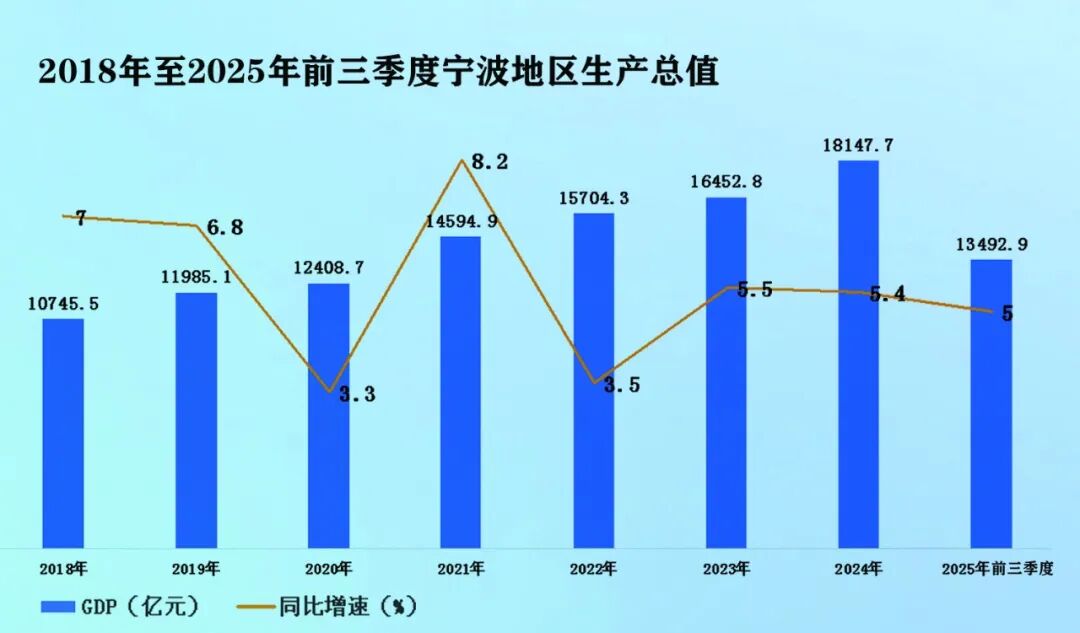
Core Viewpoint - Ningbo is emerging as a significant economic powerhouse in China, showcasing robust growth in its GDP and a strong focus on innovation and high-tech industries, particularly in the manufacturing sector. Economic Growth - Since joining the "trillion GDP club" in 2018, Ningbo's GDP has steadily increased, reaching 1.35 trillion yuan in the first three quarters of 2025, with a year-on-year growth of 5.0% [1] - Investments in emerging sectors such as artificial intelligence and robotics, high-tech services, and technology services have seen significant growth rates of 9.3%, 41.2%, and 56.7% respectively [1] Manufacturing and Innovation - Ningbo is home to 119 national manufacturing champions, maintaining the top position in China for eight consecutive years [3] - The city is recognized for its strong manufacturing base, vibrant private economy, and active foreign trade, which collectively foster an environment conducive to innovation [6] - Approximately 90% of R&D institutions, personnel, and investments, along with over 80% of invention patents, originate from enterprises in Ningbo [8] Global Market Presence - Ningbo's manufacturing sector has gained significant global influence, with notable companies like Sunny Optical Technology supplying one-third of the world's Android phone optical lenses [9] - Long阳科技, listed on the STAR Market, has dominated the global market for optical reflection films with a 55% market share, breaking the long-standing monopoly of Japanese and Korean firms [9] Emerging Industries - The humanoid robot industry in Ningbo is rapidly developing, with the number of companies capable of producing humanoid robots increasing from 3 to 8 since 2025 [10] - The city has established a strong presence in the new energy vehicle supply chain, housing 22 manufacturing champions and 97 specialized "little giant" enterprises [10] Financial Support and Innovation - Ningbo's financial sector has seen a significant increase, with a financial industry value added of 1.224 trillion yuan in the first three quarters of 2025, marking a 13.8% year-on-year growth [16] - The city has implemented various financial tools to support innovation, including specialized loans and risk-sharing mechanisms, which have facilitated the growth of high-tech enterprises [18] Policy and Strategic Initiatives - Ningbo has introduced several policies to enhance its innovation ecosystem, including the "Ningbo City Science and Technology Innovation Regulations" and the establishment of high-level innovation platforms [14] - The government is actively promoting collaboration between enterprises and research institutions to foster innovation and address industry challenges [22] Trade and Export Growth - Ningbo has organized over 300 enterprises to participate in international exhibitions, achieving an intended transaction amount exceeding 5 billion USD [15] - The city has seen a 7% increase in trade with Central and Eastern European countries, with exports reaching 45.45 billion yuan in the first three quarters of 2025 [15] Capital Market Engagement - Ningbo has a robust capital market, with 125 listed companies, including 46 national champions, leveraging capital for technological development and capacity expansion [24] - The city has established a nurturing environment for startups and innovative enterprises, with a focus on attracting long-term capital to support technological advancements [27]




北京进一步提升中试服务能力
Ren Min Ri Bao· 2026-01-05 22:32
Core Viewpoint - Beijing's Development and Reform Commission, in collaboration with other municipal agencies, has issued measures to enhance the city's pilot testing service capabilities, promoting the integration of technological and industrial innovation [1] Group 1: Policy Measures - The measures include 14 policy initiatives focusing on the layout of pilot testing platforms, continuous improvement of service capabilities, optimization of the service ecosystem, and strengthening of support measures [1] - A number of pilot testing platforms will be established in leading industries such as artificial intelligence, healthcare, green and low-carbon technologies, new materials, integrated circuits, aerospace technology, and new safety emergency technologies [1] - For new projects, a subsidy of 35% of total investment, capped at 100 million yuan, will be provided [1] - For industries such as new generation information technology and intelligent connected vehicles, clusters of pilot testing platforms will be built, with a subsidy of 25% of total investment, capped at 50 million yuan for new projects [1]
从“冠军之城”到“新质之城”——宁波发展新质生产力纪实
Zhong Guo Zheng Quan Bao· 2026-01-05 22:19
Core Insights - Ningbo has steadily increased its GDP since joining the "trillion yuan club" in 2018, achieving a GDP of 1.35 trillion yuan in the first three quarters of 2025, with a year-on-year growth of 5.0% [2] - The city is recognized as a cradle for national manufacturing champions, boasting 119 national-level manufacturing champions, maintaining the top position in China for eight consecutive years [2][4] - Ningbo's economy is characterized by a diverse structure, with significant advancements in emerging sectors such as artificial intelligence, robotics, and high-tech services, which saw investment growth rates of 9.3%, 41.2%, and 56.7% respectively [2][3] Economic Structure and Innovation - Ningbo is a vital economic center in the Yangtze River Delta, with a robust manufacturing, foreign trade, and logistics industry [3] - The city has implemented an innovation-driven development strategy, with 90% of R&D activities and over 80% of invention patents originating from enterprises [3] - High-tech enterprises in Ningbo have reached a total of 8,855, with an average annual growth rate exceeding 30% over the past three years [3] Manufacturing and Global Presence - Ningbo's manufacturing sector is recognized globally, with significant contributions from companies like Sunny Optical Technology, which supplies one in three Android smartphones with optical lenses [4] - The city has seen a rise in the number of enterprises capable of producing humanoid robots, increasing from 3 to 8 since 2025, supported by a growing supply chain [6] - The global market share of Ningbo's manufacturing products continues to expand, with companies like Longyan Technology leading in the optical film market with a 55% share [5] Financial Support and Innovation Ecosystem - Ningbo's financial sector has shown robust growth, with a financial industry value added of 1,224.3 billion yuan in the first three quarters of 2025, marking a 13.8% increase [13] - The city has established a multi-layered risk mitigation system to support small and micro enterprises, facilitating access to financing [14] - Financial tools such as specialized loans and transformation insurance are being utilized to support the transition of manufacturing and emerging industries [13][14] Policy and Strategic Development - Ningbo has introduced various policies to enhance its innovation ecosystem, including the establishment of national-level innovation platforms and support for high-tech enterprises [8][10] - The city aims to build 10 national-level innovation platforms and over 1,000 provincial-level R&D institutions by 2030 [8] - Collaborative efforts between government and enterprises are emphasized to foster innovation and address industry challenges [10] Market Expansion and Trade - Ningbo has accelerated its international trade efforts, with over 300 companies participating in exhibitions abroad, achieving an intended transaction amount exceeding 5 billion USD [11] - The city has seen a 7% increase in imports and exports to Central and Eastern European countries, with specific companies reporting significant growth in this market [12] - Cross-border e-commerce has also flourished, with Ningbo's special area for cross-border e-commerce exports reaching 47.99 billion yuan, a 16.9% increase year-on-year [12] Conclusion - Ningbo is positioned as a "Champion City" with a strong manufacturing base and a commitment to innovation, aiming to transform into a "New Quality City" through strategic initiatives and financial empowerment [24]
北京:力争到2030年落地10家国家级制造业中试平台
Zhong Guo Jing Ji Wang· 2026-01-05 13:59
Core Viewpoint - Beijing aims to enhance its pilot testing service capabilities to promote the integration of technological and industrial innovation, targeting the establishment of 10 national-level and 50 municipal-level pilot testing platforms by 2030 [1][2]. Group 1: Pilot Testing Platforms - Pilot testing is a critical phase in the industrialization of technological achievements, facilitating the transition of new products from trial production to mass production [1]. - The newly defined pilot testing platforms in Beijing include 146 entities, primarily concentrated in the pharmaceutical health, new materials, and intelligent equipment sectors, accounting for nearly 70% of the total [1]. - The platforms are mainly located in districts such as Haidian, Daxing, and the Economic Development Zone [1]. Group 2: Financial Support and Incentives - The measures propose financial support for new pilot testing projects, offering subsidies of up to 35% of total investment, with a maximum of 100 million yuan for key industries like AI, healthcare, and green technology [2]. - For emerging industries such as new-generation information technology and intelligent connected vehicles, the subsidy is set at 25% of total investment, capped at 50 million yuan [2]. - The support for independent pilot testing platforms' fixed asset investments has been increased to 45% and 35% for different categories [2]. Group 3: Collaborative Development - The measures emphasize the need for spatial, informational, financial, talent, and standard support for the development of pilot testing platforms [2]. - There is a focus on building a collaborative industrial pilot testing transformation base in the Beijing-Tianjin-Hebei region, promoting the establishment of a regional pilot testing industry alliance [2]. - The initiative aims to facilitate the demonstration of application scenarios and the transformation of technological achievements within the Beijing-Tianjin-Hebei area [2]. Group 4: Support for SMEs - To reduce R&D costs for small and medium-sized enterprises, Beijing is exploring the inclusion of pilot testing platform services in the "Capital Science and Technology Innovation Voucher" program, allowing eligible companies to receive up to 500,000 yuan annually [3].
让扎根一线的工程师有奔头有舞台
Bei Jing Ri Bao Ke Hu Duan· 2026-01-05 04:52
Core Viewpoint - The Beijing High-Level Innovation and Entrepreneurship Talent Symposium aims to promote the integration of education, technology, and talent development, aligning with the spirit of the 20th National Congress of the Communist Party of China [1][3]. Group 1: High-Level Talent Support Plan - The 2025 Beijing High-Level Innovation and Entrepreneurship Talent Support Plan (referred to as "High Talent Plan") was introduced, focusing on the implementation of measures to support high-level talent [1][2]. - The plan includes a video release of "Several Measures to Strengthen the Construction of an Excellent Engineer Team," which outlines 18 specific initiatives to provide comprehensive support for the development of engineers [3][4]. Group 2: Education and Industry Integration - The "Several Measures" emphasize the establishment of industry-education integration platforms in key sectors such as integrated circuits, artificial intelligence, biomedicine, and new energy, creating a collaborative mechanism among enterprises, universities, and research institutions [4][6]. - A "project-based" training model is promoted to align engineering education with industry needs, enhancing the practical skills of students through real-world projects [5][6]. Group 3: Evaluation and Career Development - The plan aims to break away from traditional evaluation methods that focus solely on papers, titles, and degrees, establishing a performance-based evaluation system to facilitate career development for engineers [6][7]. - A green channel for title evaluation will be created for high-level talents with unique skills and contributions, ensuring a smoother career progression [7]. Group 4: Talent Attraction and Retention - The "Several Measures" propose to enhance the political guidance and service connection for engineers, fostering a culture that values and respects talent through various initiatives [8]. - The plan includes a dedicated section for excellent engineers in the municipal talent program, innovating a "full-time + flexible" talent recruitment mechanism to attract high-level professionals to Beijing [8].
国家发改委:长江经济带涌现DeepSeek、宇树科技等企业
2 1 Shi Ji Jing Ji Bao Dao· 2026-01-05 04:50
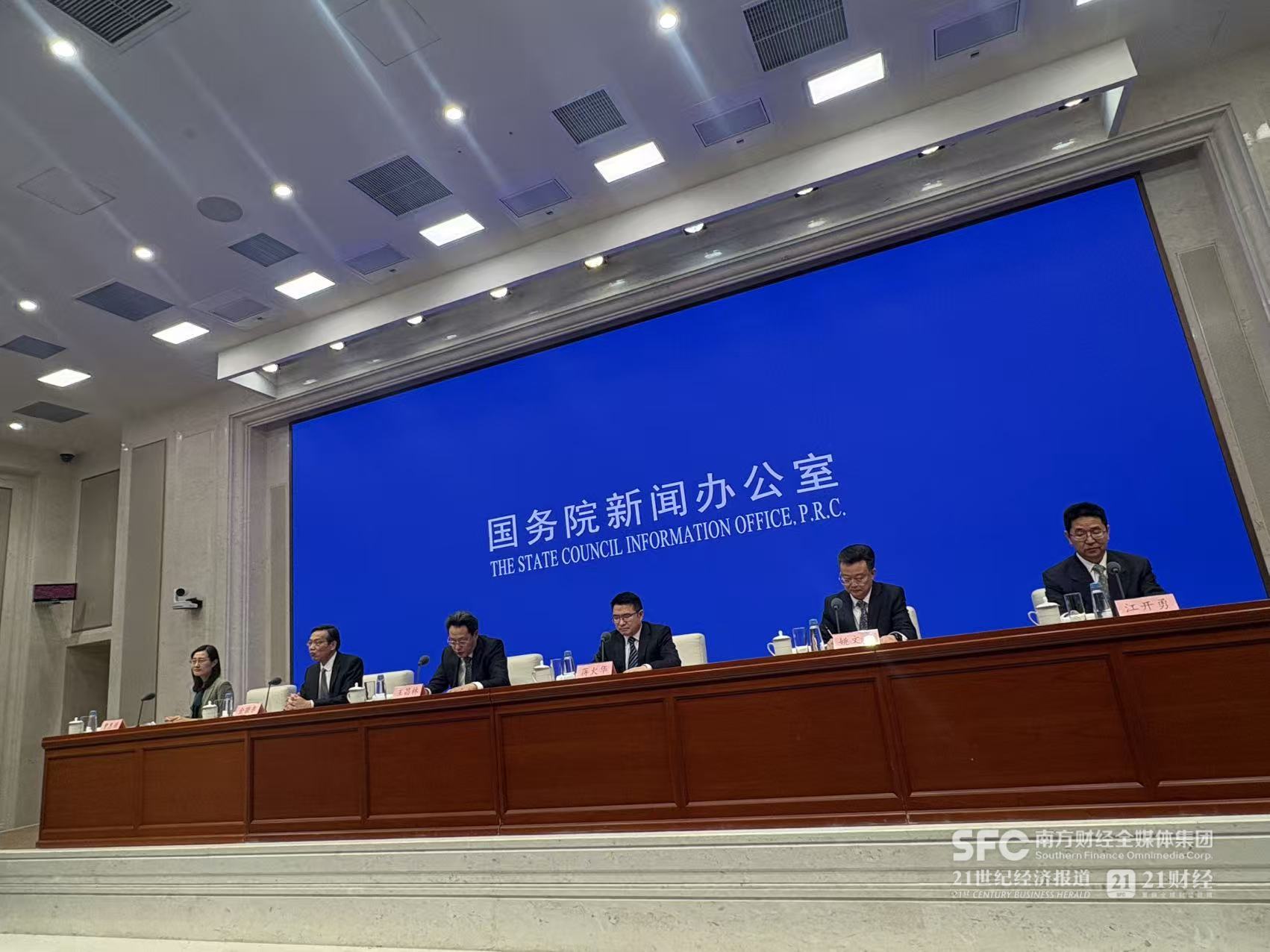
21世纪经济报道记者周慧 北京报道 "十年来,长江经济带优良水质比例从67%提升到96.5%,地区生产总值翻了一番多、占全国比重从42.2%提升到47.3%,实现了保护和发展的相互促进、相 得益彰。"王昌林表示。 图:发布会现场 拍摄:周慧 王昌林还表示,十年来,横贯东西、承接南北、通江达海的优势在长江经济带持续释放,开放长江活力更加澎湃。长江水系高等级航道由0.8万公里增加到 1.1万公里,干线港口货物吞吐量增长71%、达到42亿吨、稳居世界内河第一。推进高水平对外开放,中欧(亚)班列、西部陆海新通道高质量建设,沿江9 个自贸试验区联动发展。 1月5日,国新办举行新闻发布会介绍长江经济带发展十年工作进展和成效,国家发展改革委副主任王昌林表示,十年来,科技创新和产业创新在长江经济带 加快融合,创新长江动能更加强劲。 "我们坚持把科技创新作为主动力,持续推进上海(长三角)国际科技创新中心和武汉、成渝地区区域科技创新中心建设,积极培育壮大新兴产业和未来产 业。"王昌林表示,长江经济带创造出"人造太阳"亿度千秒运行、靶向抗癌药等一批处于世界先进水平的科技成果,涌现出DeepSeek、宇树科技等一批具有 国际竞争力的 ...

强化创新策源打造世界级产业集群 陈吉宁在浦东张江调研 要求推进科技创新和产业创新深度融合 更好服务国家战略
Jie Fang Ri Bao· 2026-01-05 01:35
Group 1 - The core focus is on enhancing the role of technology innovation and industrial development in Shanghai, particularly in the context of the "14th Five-Year Plan" and the city's modernization efforts [1][3] - Zhangjiang Science City is identified as a key area for building an international science and technology innovation center, with initiatives aimed at optimizing innovation layout and nurturing strategic technological capabilities [2][3] - The establishment of the Zhangjiang Artificial Intelligence Innovation Town has attracted nearly 500 AI companies, emphasizing the importance of aligning high-tech enterprises with the city's industrial positioning and development direction [2][3] Group 2 - The "14th Five-Year Plan" emphasizes the need for Zhangjiang to strengthen its role in technology innovation and to foster world-class enterprises and industry clusters [3] - There is a focus on enhancing the innovation ecosystem and providing support for startups, particularly in the fields of cell and gene therapy, to boost their core competitiveness [3][4] - The city aims to improve regulatory frameworks and service efficiency to better support enterprises in their innovation and growth efforts [4]

试看将来的市场,必立大A的旗杆
Zhong Guo Zheng Quan Bao· 2026-01-04 20:07
我们无法精准预测未来,但可锚定趋势躬身蓄力。 当2025年的钟声渐远,市场已然完成一场静水深流的磅礴转向——从短期估值的起伏颠簸,回归至更为 沉静坚实的基本面。这一年,主线并非纷繁的喧嚣,而是凝聚于决定未来的关键少数。产业的抉择与资 本的流向,共同指向那片孕育着创新与变革的沃土。这不仅是年度复盘的沉淀,更是一个伟大时代序曲 的定调。 宏大的国家蓝图,为这片沃土划定了前行坐标:到2035年,人均GDP达到中等发达国家水平,基本实现 社会主义现代化。这绝非单纯的经济增长量化目标,更是发展范式迭代的宣言。我们迎来的,是一个从 体量增长到质量跃升的时代,一个由新质生产力驱动的未来。科技创新与产业创新,从来不是选择题, 而是通向目标的必由之路。这片深耕厚植的热土,注定要孕育出不一样的硕果! 向内审视,一场历史性的财富迁移正在上演:房地产投资属性弱化,百万亿级居民可投资资产如江河奔 涌,亟需新的价值入海口。资本市场,因其承载着创新的梦想与未来的价值,成为这片汪洋最开阔的港 湾。这既是资产配置的结构性换轨,更是一代人财富观念的深刻觉醒! 时代的浪潮,塑造着全新的气候。 放眼全球,秩序在重构,逻辑在改写。大国博弈与产业链的深 ...
上海杨浦:新年落地签约50项,持续建设“杨数浦”新质秀带创新区
Xin Hua Cai Jing· 2026-01-04 08:09
Core Viewpoint - Shanghai Yangpu District is focusing on cultivating new productive forces and promoting deep integration of technological and industrial innovation, with a significant investment in key projects totaling over 20 billion yuan [1]. Group 1: Key Industry Projects - A total of 50 key industrial projects have been signed, with a total investment exceeding 20 billion yuan, covering sectors such as online new economy, artificial intelligence, smart manufacturing, green low-carbon, life health, technology finance, and professional services [1]. - In 2026, Yangpu plans to advance 9 urban industrial projects and 9 technology innovation projects, with a total investment of approximately 4.5 billion yuan [1]. Group 2: Major Engineering Initiatives - Yangpu District has arranged 104 major engineering projects for 2026, with 7 projects starting construction, covering a total building area of 291,600 square meters and a total investment of 13.085 billion yuan [2]. - The projects include significant developments such as the Shanghai Quantum City Time-Space Innovation Base (Phase I), Fudan University Jiangwan Campus Mathematics Science Building, Tongji University Siping Road Campus Sports Complex, and new road construction on Guojing Road [2].