
人工智能大模型

Search documents
调研速递|科大讯飞接受[X]家机构调研,上半年业绩与技术亮点纷呈
Xin Lang Cai Jing· 2025-08-22 15:00
Financial Performance - In the first half of 2025, the company's operating revenue reached 10.911 billion yuan, a 17.01% increase from 9.325 billion yuan in the same period last year [1] - Gross profit was 4.389 billion yuan, reflecting a year-on-year growth of 17.12% [1] - The net profit attributable to shareholders was -239 million yuan, an improvement of 40.37% compared to -401 million yuan in the previous year [1] - The net profit after deducting non-recurring gains and losses was -364 million yuan, showing a year-on-year increase of 24.62% [1] - The net cash flow from operating activities was -772 million yuan, narrowing by 49.73% from -1.536 billion yuan in the same period last year [1] Sales and Collection - The company achieved sales collections of 10.361 billion yuan in the first half of 2025, a year-on-year increase of 14.99%, marking the first time collections exceeded 10 billion yuan in a half-year period [1] - The collection rate has improved for three consecutive years, rising from 93.75% in 2022 to 97.20% in 2024 [1] Business Structure and R&D Investment - The revenue structure of the GBC segment continues to optimize, with C-end business revenue becoming the main growth driver. G-end accounts for 26%, C-end for 32%, and B-end for 42% [1] - R&D investment in the first half of 2025 grew by 9.2%, accounting for 21.92% of revenue, maintaining stable investment intensity [1] - R&D expenses increased by 610 million yuan, focusing on three main areas: core technology related to the Spark large model, industry application product development and market promotion, and C-end hardware product channel marketing [1] Technological Advancements - The company has achieved a breakthrough in deep reasoning models, being the only one to train a large model based on domestic computing power, with the 70B parameter Spark-X1-0420 model surpassing several international benchmarks [2] - The model supports over 130 languages, providing a fully autonomous and controllable large model base as an alternative for the global market [2] Industry Applications - In the education sector, the Spark X1 has been implemented in over 270 regions, with more than 200,000 teachers participating in teaching practices, achieving an 88.4% activity rate [2] - In the healthcare sector, the medical large model has shown superior performance in tasks such as general consultation and report interpretation, with a 52% year-on-year revenue growth in grassroots consultation [2] - The company collaborates with leading financial institutions and state-owned enterprises to develop large models for various industries [2] C-end Product Performance - Revenue from learning machines increased by 104% year-on-year, with a strong presence in high-end shopping malls and rapid expansion into lower-tier markets [3] - Other products, including translation machines and recording pens, continue to see iterative improvements, with significant user engagement in applications like the iFlytek input method [3]

IPhone 17的增量来了! | 0821 张博划重点
Hu Xiu· 2025-08-21 14:06
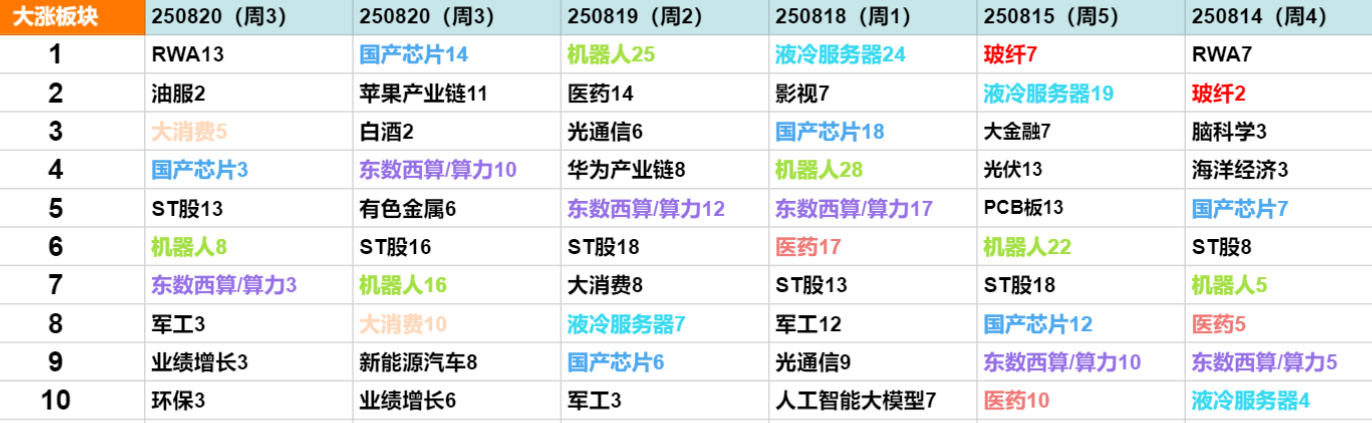
Market Overview - On August 21, the market experienced fluctuations with mixed performance across the three major indices. The Shanghai Composite Index rose by 0.13%, while the Shenzhen Component Index fell by 0.06%, and the ChiNext Index decreased by 0.47% [1] - The total trading volume in the Shanghai and Shenzhen markets reached 2.42 trillion yuan, an increase of 15.8 billion yuan compared to the previous trading day, marking the seventh consecutive day with trading volume exceeding 2 trillion yuan [1] - High-performing stocks saw significant declines, with multiple stocks, including Feilong Co., hitting the daily limit down [1] Sector Performance - The top-performing sectors included domestic mesh panels, robots, and liquid-cooled servers, with respective increases of 14, 25, and 24 [2] - The chip sector reached a new high with an increase of 19, while the robot concept sector also saw a rise of 14 [2] - Other notable sectors included the medical industry and the automotive parts sector, which also showed positive growth [2]

《财富》中国科技50强榜单出炉 华为、宁德时代、DeepSeek等企业上榜
Zhi Tong Cai Jing· 2025-08-21 11:00
Group 1 - Huawei is recognized as one of the most globally competitive companies in China, holding 15% of the world's essential patents for 5G standards, ranking first globally and providing technical support for global 5G network construction [1] - DeepSeek, a leading AI large model product in China, ranks among the top 10 in global open-source large model downloads, with monthly active users reaching 163 million by June 2025, making it the top application for AI-generated content globally [1] - CATL (Contemporary Amperex Technology Co., Limited) shows significant technological advantages in battery technology, with R&D investment reaching 18.6 billion yuan in 2024 and a cumulative investment exceeding 70 billion yuan over the past decade [1] Group 2 - The 2025 Fortune China Technology 50 list includes Huawei, CATL, China Seed Group, and Alibaba, highlighting their positions among the top 50 companies [2] - DeepSeek, along with Yushu Technology and Yundongchu Technology, is part of the "Hangzhou Six Little Dragons" that made it to the list [2]

DeepSeek、宇树科技上榜2025年《财富》中国科技50强榜单
Feng Huang Wang· 2025-08-21 05:21
Core Insights - The "Fortune China Top 50 Technology Companies" list was released, featuring companies like Huawei, DeepSeek, and Yushu Technology [1] Group 1: DeepSeek - DeepSeek is recognized as a leading AI large model product in China, with its DeepSeek-R1 model scoring 88.5 on the MMLU benchmark test, which is lower than OpenAI's GPT-4 (92.0) and Google's Gemini Pro (90.0), but higher than Meta's Llama 3 (82.0) and Anthropic's Claude 2 (85.1) [1] - DeepSeek ranks among the top 10 globally in terms of open-source large model downloads, indicating strong market presence [1] - As of June 2025, DeepSeek is projected to have 163 million monthly active users, making it the leading application in AI-generated content globally [1] Group 2: Yushu Technology - In 2024, Yushu Technology achieved global sales of 18,000 quadruped robots, capturing a 23% market share, ranking second only to Boston Dynamics [1] - Yushu Technology was awarded the WIPO 2025 Global Award, distinguishing it as the only representative from China among 780 applicants from 95 countries and regions [1] - The company's success is attributed to innovations in robotic motion control, high-performance joint motors, and real-time systems, along with a comprehensive global intellectual property strategy [1]

同类规模第一的科创AIETF(588790)涨超2%冲击5连涨,盘中价格创上市以来新高,智谱推出全球首个手机Agent
Xin Lang Cai Jing· 2025-08-21 02:20
Core Viewpoint - The AI sector, particularly the AI-focused ETFs, is experiencing significant growth, driven by advancements in AI technology and increasing user adoption, with notable performance in the market as of August 2025 [1][2][3]. Group 1: Market Performance - The Shanghai Stock Exchange Sci-Tech Innovation Board AI Index (950180) rose by 1.32% as of August 21, 2025, with key stocks like Amlogic (688099) and Cambricon (688256) showing strong gains of 4.67% and 4.54% respectively [1]. - The Sci-Tech AI ETF (588790) reached a new high since its launch, with a weekly increase of 10.09% as of August 20, 2025, and a trading volume of 1.61 billion yuan [1]. - The ETF's trading turnover was 2.35% during the session, with an average daily trading volume of 694 million yuan over the past week, ranking first among comparable funds [1]. Group 2: Fund Growth and Investment - The Sci-Tech AI ETF saw a significant increase in scale, growing by 726 million yuan this month, placing it in the top 1/8 of comparable funds [3]. - The fund's share count increased by 11.40 million shares in the past month, also ranking in the top 1/8 among peers [3]. - Despite a recent net outflow of 512 million yuan, the fund has seen net inflows on 14 out of the last 23 trading days, totaling 673 million yuan [3]. Group 3: Performance Metrics - The Sci-Tech AI ETF achieved a net value increase of 17.77% over the past six months, ranking first among comparable funds [3]. - The fund's highest single-month return since inception was 15.59%, with an average monthly return of 9.25% and a 61.03% probability of profit in any given month [3]. - The fund's Sharpe ratio for the past month was reported at 1.31, indicating strong risk-adjusted returns [4]. Group 4: Fee Structure and Tracking Accuracy - The management fee for the Sci-Tech AI ETF is 0.50%, and the custody fee is 0.10%, which are relatively low compared to similar funds [6]. - The tracking error for the ETF was 0.008% over the past month, indicating the highest tracking precision among comparable funds [6]. Group 5: Index Composition - The Sci-Tech AI Index comprises 30 large-cap stocks that provide foundational resources, technology, and application support for the AI industry, with the top ten stocks accounting for 67.36% of the index [6].
易鑫金融科技业务再报喜 上半年相关收入增长超124%
Zhi Tong Cai Jing· 2025-08-19 10:43
金融科技业务的高增,验证了易鑫以"科技驱动运营,创新赋能产业"理念的成功。作为AI驱动的金融科 技平台,未来易鑫还将加快人工智能大模型的迭代升级和应用层面的技术创新,持续深化科技与业务的 融合,构建强大的"智能护城河",推动行业迈向全自动智能时代。 从业务模式来看,易鑫通过"纯技术"和"流量+科技"两种模式持续推进金融科技业务发展。"纯技术"模 式提供技术解决方案,报告期内促成融资金额达5亿元,同比增加27%;"流量+科技"模式则凭借渠道及 数据优势,提供从客户获取到资产运营的端到端支持,促成融资金额达148亿元,同比增长59.5%。 在合作网络布局上,易鑫金融科技业务的多样性和市场渗透力持续提升。截至2025年6月30日,其金融 科技平台已与逾60家机构建立了合作关系,覆盖银行、融资租赁公司、主机厂等多元主体,并在报告期 内新增6个合作项目,服务的广度与深度得到进一步拓展。 8月19日,易鑫集团(02858,以下简称"易鑫")发布2025年中期财报,作为核心战略重点的金融科技(SaaS 服务)今年上半年延续高速增长态势,成为公司业绩的主要驱动力。数据显示,易鑫金融科技业务报告 期内实现收入约19亿元(人民币 ...
跨界进入机器人丝杠,墨西哥工程配套特斯拉,这家公司看点多!| 0818 张博划重点
Hu Xiu· 2025-08-18 14:21
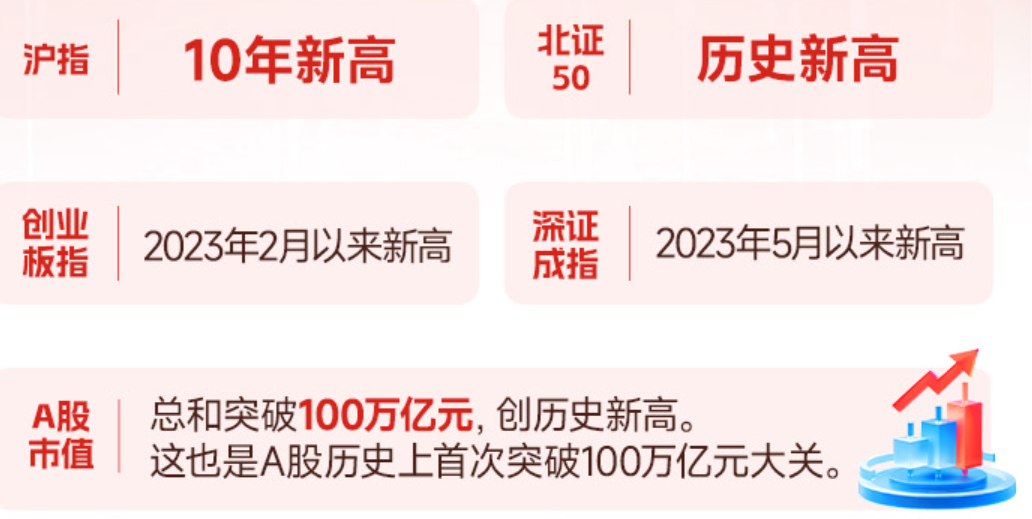
Market Performance - The Shanghai Composite Index has surpassed the previous high of 3731.69 points reached on February 18, 2021, marking a nearly 10-year high since August 20, 2015 [1] - The Shenzhen Component Index and the ChiNext Index have also exceeded their respective highs from October 8, 2024, achieving new highs in the last two years [1] - The North Star 50 Index has broken through 1500 points, setting a historical high [1] Fundraising and Investment Trends - The recent profitability in the A-share market has attracted various funds, including public funds, private equity, and northbound capital, contributing to the market's upward trend [3] - Public fund issuance has rebounded, providing additional liquidity to the market, with 979 funds issued this year, totaling 6474.70 billion units [3] - Private equity statistics show that as of August 15, 2025, there have been 7443 registered private equity securities products this year, a 76.12% increase compared to 4226 products in the same period last year [3] Margin Trading Data - The margin trading balance reached 2062.6 billion yuan as of August 15, 2025, compared to historical peaks of 2273 billion yuan on June 18, 2015, and 1664.8 billion yuan on February 18, 2021 [4] - The margin trading balance as a percentage of A-share circulating market value is currently at 2.3%, which is significantly lower than over 10 years ago when it frequently exceeded 4% [4] Sector Performance - The top-performing sectors include liquid-cooled servers, robotics, and pharmaceuticals, with significant increases in their respective indices [5] - The semiconductor and computing power sectors have also shown strong performance, with notable increases in their market values [5]

下半年我国经济走势如何?国家统计局作答
Xin Hua Cai Jing· 2025-08-15 06:34
Economic Overview - China's economic indicators showed fluctuations in July, but the overall growth rate remains stable, with employment and prices generally stable, indicating a steady economic operation [1] - The foundation for long-term economic growth remains strong, with significant potential and resilience, despite facing risks and challenges [1] Market Demand - Consumer demand is supported by ongoing initiatives to boost consumption, with retail sales of consumer goods increasing by 4.8% year-on-year from January to July, and service retail sales growing by 5.2% [1] - Exports have also shown resilience, with a 7.3% increase in goods exports during the same period, and a notable 9.3% growth in electromechanical product exports [1] New Productive Forces - The development of new productive forces is actively promoted through technological and industrial innovation, with high-tech industries growing rapidly [2] - From January to July, the added value of high-tech manufacturing increased by 9.5%, with specific sectors like electronic and communication equipment manufacturing growing by 12.8% [2] Reform and Opening Up - Continuous deepening of reforms and high-level opening up has improved economic circulation and enhanced the resilience of foreign trade [2] - The contribution rate of final consumption expenditure to economic growth reached 52% in the first half of the year, an increase of 7.5 percentage points compared to the previous year [2] Macroeconomic Policies - Proactive macroeconomic policies have been implemented to expand production demand and stabilize economic growth [3] - Retail sales of home appliances and communication equipment supported by consumption upgrade policies saw significant year-on-year growth of 30.4% and 22.9%, respectively [3] - The International Monetary Fund has raised its forecast for China's economic growth by 0.8 percentage points, reflecting increased confidence in China's economic development [3]
信息量巨大!重要发布会,刚刚公布
Sou Hu Cai Jing· 2025-08-15 05:42
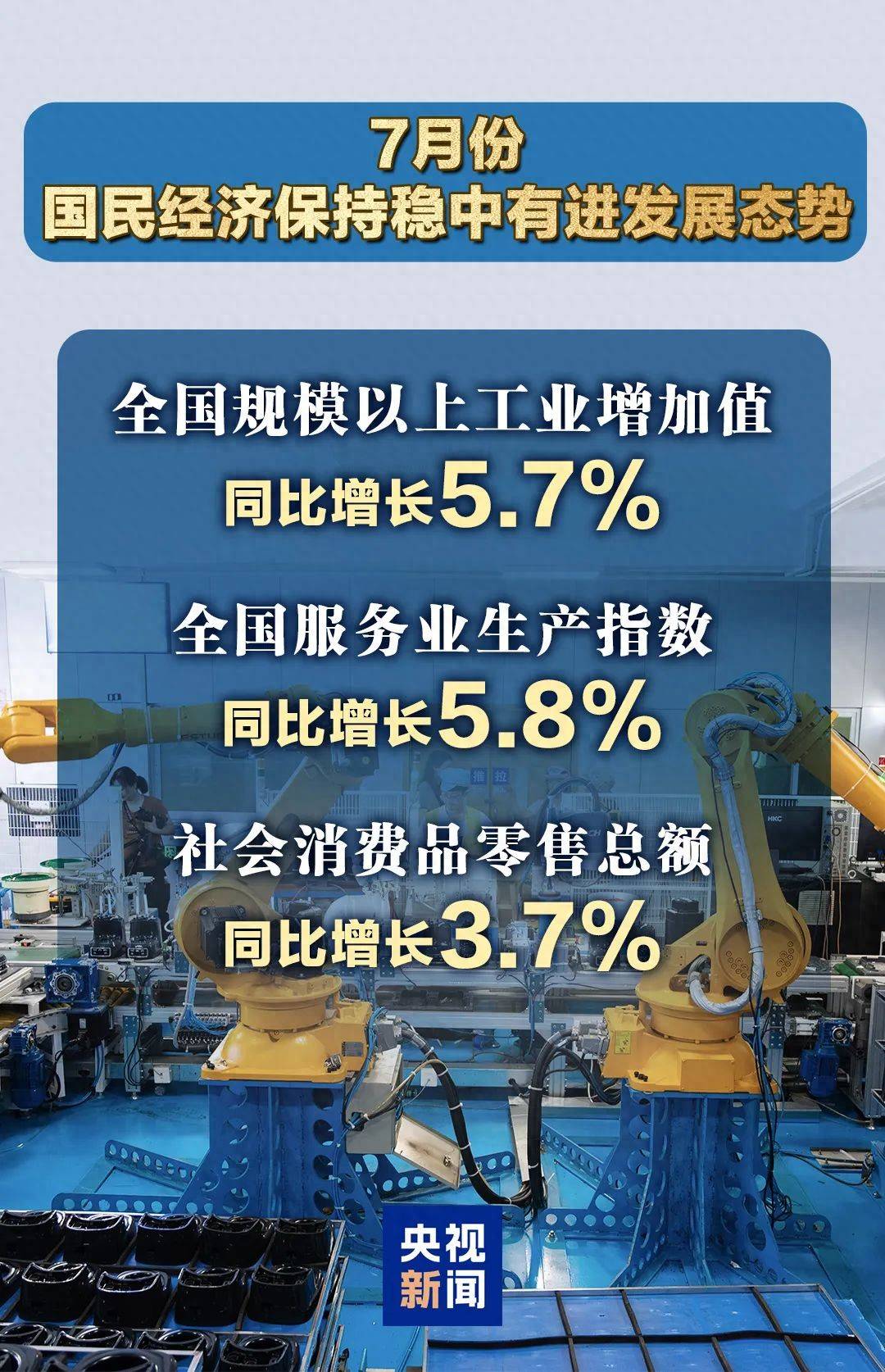
Economic Overview - In July, China's national economy maintained a steady and progressive development trend, with industrial production and service sectors showing significant growth [2][4] - The industrial added value for large-scale enterprises increased by 5.7% year-on-year and 0.38% month-on-month, with equipment manufacturing and high-tech manufacturing growing by 8.4% and 9.3% respectively [2] - The service sector's production index rose by 5.8% year-on-year, indicating robust growth in modern services [2] Consumer Market - The total retail sales of consumer goods reached 38,780 billion yuan in July, reflecting a year-on-year growth of 3.7% [3] - From January to July, the retail sales of consumer goods increased by 4.8%, with service retail sales growing by 5.2%, demonstrating overall stability in consumption [8] Supportive Factors for Economic Growth - Market demand is expanding, supported by consumption-boosting initiatives, with a notable increase in household appliance and communication equipment retail sales by 30.4% and 22.9% respectively from January to July [9] - High-tech manufacturing added value grew by 9.5% year-on-year, with significant contributions from electronic and communication equipment manufacturing, as well as aerospace manufacturing [8] - The contribution rate of final consumption expenditure to economic growth reached 52% in the first half of the year, an increase of 7.5 percentage points compared to the previous year [9] Policy Impact - The implementation of more proactive macroeconomic policies has effectively stimulated production demand and supported stable economic growth [9] - The International Monetary Fund has raised its forecast for China's economic growth by 0.8 percentage points, reflecting increased confidence from the international community [10]
奥比中光:上半年净利润同比扭亏为盈 全面布局六大3D视觉感知技术
Zhong Zheng Wang· 2025-08-12 08:06
Core Insights - The company achieved a revenue of 435 million yuan in the first half of 2025, representing a year-on-year growth of 104.14% [1] - The net profit reached 60.19 million yuan, marking a turnaround from loss to profit, with an increase of 114 million yuan compared to the same period last year [1] - The company has over 20 years of self-developed technology and nearly 10 years of application in robotics, holding a market share of over 70% in China's 3D vision field for service robots [1] Financial Performance - Revenue for the first half of 2025 was 435 million yuan, up 104.14% year-on-year [1] - Net profit was 60.19 million yuan, a significant increase of 114 million yuan compared to the previous year [1] - The non-recurring net profit was 30.19 million yuan, an increase of 111 million yuan year-on-year [1] Product and Market Development - The company is actively promoting 3D vision technology across various industries and applications, optimizing product performance and launching differentiated, cost-effective new products [1] - Collaborations with domestic and international service robot companies cover various applications, including lawn mowing, hotel delivery, and commercial cleaning [2] - In the field of industrial robots, the company partnered with a leading Korean manufacturer to launch the NarGo order picking robot, enhancing logistics capabilities [2] Research and Development - The company invested 91.18 million yuan in R&D in the first half of 2025, accounting for 20.94% of its revenue [3] - A total of 1,903 patents have been applied for, including 990 invention patents, with 1,112 patents granted [3] - The company has established a comprehensive 3D vision technology system that integrates multiple complex disciplines, covering six major fields [3][4] Strategic Positioning - The company's full-stack R&D capabilities and comprehensive technology layout provide a strong foundation for continuous innovation and competitive advantages in various AI and robotics sectors [4] - The rapid development of AI models has led to significant progress in downstream applications, indicating a turning point in the company's operations [4]
