
企业数字化转型

Search documents
当县城职场,来了大厂高管
36氪· 2025-06-01 14:17
以下文章来源于每日人物 ,作者每人作者 每日人物 . 轻商业,懂生活。 县城职场困境背后是更深的企业转型难题。 文 | 康提 编辑 | 张轻松 来源| 每日人物(ID:meirirenwu) 封面来源 | 视觉中国 县城来了大厂专家后,打工人被卡在OA里,每次提财务申请都相当于渡劫,报销7毛钱折腾半个月……从深圳回老家,在县城豪华酒店工作的康提,在过去 一年多,遭遇了最复杂的职场体验:刚适应了县城的人情江湖,又迎来势要把一线先进经验播撒到基层盐碱地的大厂高管。 每任高管都不掩饰自己的雄心,先是系统化、流程化作业,设置各类审批流程,所有节点可追踪可溯源;又是改造人才晋升培养体系,有管理职级一路向上 的M级和专业能力不断资深的P级,要化绩效考核为生产力;互联网黑话,文山会海,搅弄职场风云…… 流水的外聘专家,铁打的打工人。人一走,留下烂摊子一堆。老板仍坚信"科技赋能,企业正经历数字化转型",而打工人叫苦不迭:"为什么高管们来了以 后,咱们公司挣的钱没有变多,我们反而更累了?" 以下是康提的讲述: 县城职场越来越卷了 四年前我刚从深圳回来时,还是我们厂后台唯二的两个本科生之一,那时公司正和市里某二本学院合作"在职学 ...


盘点企业数字化转型:业务部门的“扎心语录”
3 6 Ke· 2025-05-30 00:43
Core Viewpoint - The digital transformation of traditional enterprises is a challenging and lengthy process, often leading to conflicts between IT and business departments, characterized by misunderstandings and unmet expectations regarding system usability and requirements [1][12]. Group 1: System Usability Issues - Business departments frequently express dissatisfaction with new systems, often stating "the system is not usable," which reflects both genuine usability issues and resistance to change [1][2]. - Factors contributing to system usability problems include outdated software architecture, inadequate implementation capabilities, and a lack of willingness from business departments to adopt new systems due to fears of oversight and job security [1][2][3]. - Companies need to enhance their system selection processes and improve the implementation capabilities of IT departments to better align with the dynamic needs of business departments [2][4]. Group 2: Demand Gathering Challenges - During the digital demand survey, business departments often provide vague requirements, leading to a disconnect between what is needed and what is developed [3][4]. - The lack of digital literacy within business departments hampers their ability to articulate needs effectively, resulting in a reliance on IT to interpret requirements [4][5]. - Successful digital transformation requires a collaborative approach where IT, business departments, and software companies reach a consensus on requirements and implementation paths [5][6]. Group 3: Development and Implementation Issues - Internal development teams often face criticism for delivering subpar software, primarily due to a failure to fully understand and capture business needs [6][7]. - There is a tendency for business departments to assume that IT will inherently understand their needs, leading to misaligned expectations and dissatisfaction with the final product [6][7]. - IT departments must prioritize understanding business requirements and fostering empathy to create software that genuinely meets user needs [7][8]. Group 4: Increased Workload Post-Implementation - After the launch of digital systems, business departments often experience an increase in workload rather than the expected efficiency gains, which can lead to frustration [8][9]. - The initial increase in workload is attributed to the learning curve associated with new systems, data migration, and the need to adjust traditional workflows [8][9]. - Effective change management and support during the transition period are crucial for realizing the long-term benefits of digital systems [9][10]. Group 5: Autonomy of Business Departments - Business departments sometimes choose to bypass IT in digital initiatives due to perceived inefficiencies, leading to fragmented systems and increased risks [9][10]. - This autonomy can result in data silos, increased operational risks, and potential project failures due to a lack of technical expertise [10][11]. - A collaborative approach that integrates IT and business departments is essential to avoid pitfalls associated with isolated digital initiatives [10][11]. Group 6: System Management and Governance - The desire for business departments to take over system management stems from issues related to unclear responsibilities and the need for timely operations [11][12]. - Despite initial intentions, system management often reverts to IT due to the necessity of a cohesive governance structure [11][12]. - Engaging business departments in the entire process from demand gathering to system maintenance can foster a sense of ownership and improve overall system effectiveness [11][12].
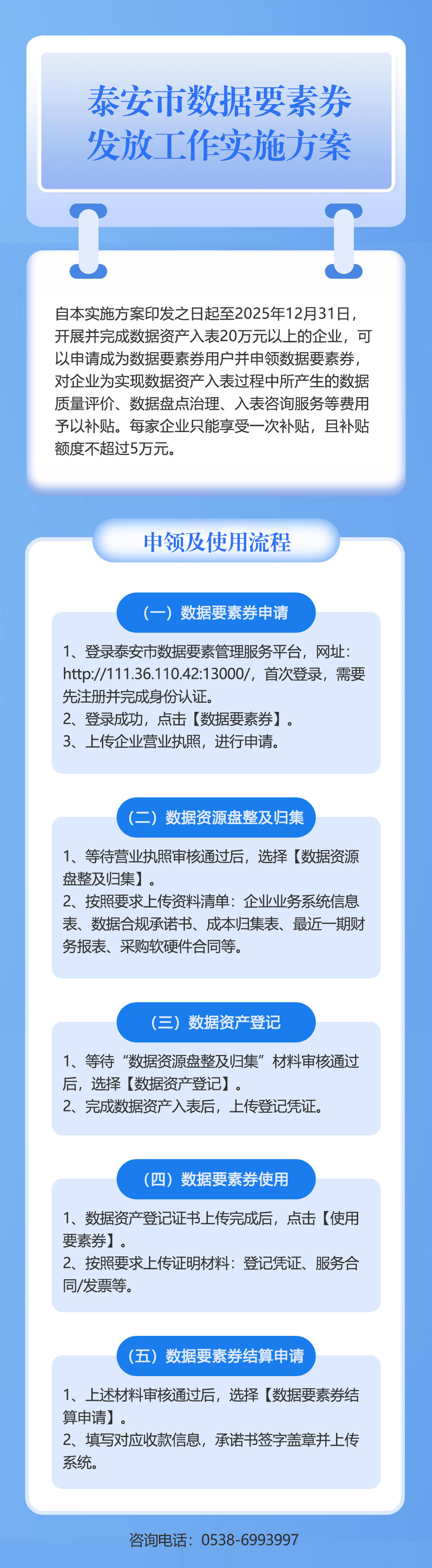
泰安市发放500万元数据要素券,企业数字化转型最高享5万元补贴
Qi Lu Wan Bao Wang· 2025-05-26 09:53
Core Viewpoint - The implementation plan for the issuance of data element vouchers in Tai'an aims to support enterprises in digital transformation and the realization of data asset value through a total of 5 million yuan in financial subsidies [1][10]. Group 1: Data Element Voucher Application - Enterprises must register and complete identity verification on the Tai'an Data Element Management Service Platform to apply for data element vouchers [3]. - After successful login, enterprises need to upload their business license to initiate the application process [3]. Group 2: Data Resource Consolidation and Collection - Following the approval of the business license, enterprises must upload required documentation, including business system information, compliance commitments, cost collection forms, and the latest financial statements [4]. Group 3: Data Asset Registration - After the data resource consolidation materials are approved, enterprises can proceed to register their data assets and upload the registration certificate [6]. Group 4: Data Element Voucher Usage - From now until December 31, 2025, enterprises that complete data asset registration with a minimum amount of 200,000 yuan can apply for data element vouchers, with a subsidy covering 50% of costs incurred during the registration process, capped at 50,000 yuan per enterprise [9]. - The application process requires enterprises to submit service contracts and invoices for review by the relevant authorities before funds can be disbursed [9]. Group 5: Supervision and Compliance - The issuance of data element vouchers will be supervised by the Tai'an Big Data Bureau and the Finance Bureau, with strict penalties for any fraudulent activities [10]. - Enterprises are responsible for the authenticity of their submitted materials and must comply with relevant laws and regulations [10].
企业级B2B平台开发首选数商云:为B端企业打造数字化商业新引擎
Sou Hu Cai Jing· 2025-05-26 05:01
一、企业级B2B平台的重要性与挑战 1.1 重要性 随着市场竞争的日益激烈和消费者需求的多样化,企业间的交易模式也在不断变化。传统的线下交易方式因信息不对称、交易成本高、效率低 等问题,已难以满足现代企业快速响应市场、高效协同的需求。企业级B2B平台的出现,通过数字化手段整合行业资源,优化供应链流程,提 供一站式交易服务,极大地提升了企业间的交易效率,降低了交易成本,为企业带来了更多的商机和利润。 1.2 挑战 然而,企业级B2B平台的发展并非一帆风顺。一方面,不同行业、不同规模的企业在数字化转型过程中面临着各自独特的挑战,如数据孤岛、 系统兼容性问题、业务流程复杂等;另一方面,随着平台用户的不断增多和交易量的不断增加,如何保证平台的安全性、稳定性以及高效性, 也成为了平台开发者必须面对的重要课题。此外,如何在激烈的市场竞争中脱颖而出,提供差异化、个性化的服务,也是企业级B2B平台需要 思考的问题。 二、数商云:企业级B2B平台开发的领军者 在当今数字化经济高速发展的时代,企业级B2B(Business-to-Business)平台作为连接供应商与采购商、优化供应链流程、提升交易效率的关 键工具,正逐渐成为企 ...

聚水潭更新招股书:中国最大的电商SaaS ERP提供商,2024年实现全面盈利
IPO早知道· 2025-05-26 01:58
Core Viewpoint - JuShuiTan has achieved profitability four years ahead of the average SaaS industry timeline, which typically takes 15 years to reach profitability, marking a significant milestone for the company [7]. Group 1: Company Overview - JuShuiTan Group Co., Ltd. was established in 2014 and is advancing its IPO process on the Hong Kong Stock Exchange with CICC and JPMorgan as joint sponsors [2]. - The company offers a comprehensive suite of SaaS products and services aimed at enhancing business capabilities and performance for clients while significantly reducing deployment and operational costs [2]. Group 2: Product and Market Position - JuShuiTan's core SaaS product is its ERP system, which addresses key e-commerce order management needs for merchants on major platforms, including OMS, WMS, PMS, and DMS [4]. - The ERP has become the most popular e-commerce SaaS ERP brand among Chinese merchants, with a growing range of additional e-commerce operational SaaS products launched [4]. - From 2022 to 2024, customers purchasing two or more JuShuiTan products contributed 30.6%, 33.0%, and 37.7% to total SaaS revenue, respectively [4]. Group 3: Market Strategy and Growth - JuShuiTan is strategically positioned to support small and medium-sized enterprises (SMEs) in navigating the complexities of digital transformation amidst a challenging foreign trade environment [5]. - The company is actively exploring cross-border business opportunities while contributing to domestic market stability, which is expected to expand its market space [5]. Group 4: Financial Performance - JuShuiTan is projected to be the largest e-commerce SaaS ERP provider in China by 2024, holding a market share of 24.4%, surpassing the combined share of the next five competitors [5][6]. - The company reported revenues of 523 million yuan, 697 million yuan, and 910 million yuan from 2022 to 2024, with a compound annual growth rate (CAGR) of 31.9% [6]. - The gross margin has shown a consistent upward trend, increasing from 52.3% in 2022 to 68.5% in 2024 [6]. - By 2024, JuShuiTan achieved an adjusted net profit of 48.99 million yuan and a net customer revenue retention rate of 115% [6][7]. Group 5: Future Plans - The funds raised from the IPO will primarily be used to enhance research and development capabilities, strengthen sales and marketing efforts, seek strategic investments, and support general corporate purposes [7].

AI应用加速企业数字化转型,配合信创双通道加速
Sou Hu Cai Jing· 2025-05-22 12:25
Market Space and Transformation Demand - The demand for digital transformation in enterprises has significantly increased post-pandemic, with the core ERP market space exceeding 50 billion yuan and the broader ERP market space exceeding 100 billion yuan [1][10] - Large enterprises continue to release information technology needs in areas such as group finance, marketing, and supply chain, while medium-sized enterprises are upgrading from basic information technology to intelligent management [1][10] - There are nearly 400,000 industrial enterprises above a designated size in China, providing a substantial customer base for ERP software, with significant differences in customer unit prices across different enterprise sizes [1][10] Breakthroughs and Competitive Landscape of Domestic Vendors - The dual-channel drive of digital transformation and the "Xinchuang" policy has created significant opportunities for domestic vendors, particularly in state-owned enterprises [2][10] - Leading vendors such as Kingdee, Yonyou, and Inspur have established dominant market positions through cloud transformation and product line enhancements, with Kingdee's cloud business revenue accounting for 76% of total revenue, and Yonyou's cloud business revenue nearing 70% [2][10] - Market share is dominated by Yonyou and Kingdee, which together account for approximately 26%, while foreign vendors like SAP hold an 18% share [2][10] Technological Evolution and Application Scenario Innovation - AI technology is reshaping the application model of enterprise management software, with international vendors like Microsoft and Salesforce implementing low-code platforms combined with AI capabilities [3][10] - Domestic vendors are also leveraging AI, with Kingdee's cloud services implementing chatbots and visual recognition, while Yonyou's intelligent platform automates processes in finance, human resources, and procurement [3][10] - The combination of cloud computing and AI is lowering the barriers to software usage, with Kingdee's public cloud renewal rate reaching 90% [3][10] Xinchuang and Domestic Process - The Xinchuang policy is driving the localization of software from office applications to core business systems, with significant progress in the financial and telecommunications sectors [4][10] - State-owned enterprises have set clear digital transformation goals during the 14th Five-Year Plan, with notable increases in Xinchuang investment proportions [4][10] - Domestic vendors like Kingdee and Yonyou are gradually replacing foreign systems like SAP and Oracle in core systems of large enterprises [4][10] Future Trends - The enterprise management software market is expected to exhibit a threefold trend of "cloudification, localization, and intelligence," with cloud business revenue continuing to rise [5][10] - Driven by Xinchuang, domestic vendors are likely to increase their market share in large enterprises from the current 50% [5][10] - AI technology is anticipated to evolve from being an auxiliary tool to becoming a core productivity driver, ultimately achieving full-scenario coverage as "personal AI assistants" [5][10]


2025年中国人工智能与商业智能发展白皮书:AI驱动商业智能决策,企业数
Sou Hu Cai Jing· 2025-05-22 06:00
Group 1 - The core viewpoint of the article emphasizes the integration of AI with Business Intelligence (BI), termed as AI-enabled BI (ABI), which transforms traditional decision-making processes into proactive, predictive models, addressing the limitations of conventional BI systems [1][14][18]. - The ABI market in China is experiencing explosive growth, with a projected increase from 300 million yuan in 2023 to 800 million yuan in 2024, reflecting a compound annual growth rate of 42% from 2024 to 2028 [3][22][23]. - ABI is being applied across various industries, including finance, retail, manufacturing, government, and energy, showcasing its versatility and effectiveness in enhancing operational efficiency and decision-making [4][5][6][7]. Group 2 - The article outlines four key breakthroughs of AI-enabled BI: natural language interaction, multimodal data integration, complex reasoning and collaboration, and data insight narrative generation, which collectively enhance user experience and analytical capabilities [2][49][52]. - Challenges facing ABI include data governance issues, algorithm opacity, and industry adaptation gaps, which need to be addressed for further advancement [7][9]. - The differentiation between domestic and international vendors is highlighted, with international companies focusing on technical depth and ecosystem integration, while domestic firms prioritize lightweight deployment and localized innovation [8][9].
软件不受关税影响!Snowflake季度营收首超10亿美元,重点关注AI工具
Hua Er Jie Jian Wen· 2025-05-22 00:37
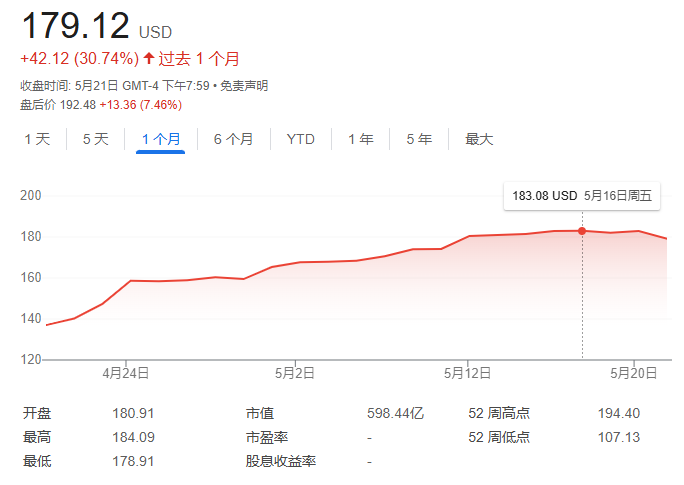
Core Viewpoint - Snowflake reported strong financial results despite concerns over increased tariffs in the U.S., indicating resilience in its business operations [1][3] Financial Performance - For the quarter ending in July, Snowflake's product revenue is expected to grow approximately 25% to $1.04 billion, surpassing analyst expectations of $1.03 billion, marking the first time quarterly revenue exceeds $1 billion [1] - The company raised its full-year product revenue forecast from $4.28 billion to $4.33 billion [1] - Following the earnings report, Snowflake's stock price rose about 7% in after-hours trading, closing at $179.12, reflecting a 37% rebound from its low on April 4, 2025 [1] AI Strategy - Snowflake's optimistic outlook is closely tied to its investments in AI, with the CEO emphasizing efforts to lower barriers for customers using large language models on its platform [3] - Analysts suggest that these AI tools could significantly contribute to performance later this year, representing a new growth avenue for the company [3] Competitive Landscape - Analysts note that Snowflake's upward guidance amidst economic fluctuations confirms the sustainability of short-term demand [5] - The company faces intense competition from Databricks and major cloud infrastructure providers like Microsoft and Google, with Microsoft recently announcing increased adoption of its Fabric data product suite, adding pressure on Snowflake [5]
国家数据局负责同志主持召开“十五五”数字中国建设规划座谈会
news flash· 2025-05-21 10:19
Group 1 - The National Data Bureau held a seminar on the "14th Five-Year Plan" for digital China construction, focusing on various aspects of digital technology development and enterprise digital transformation [1] - Experts and representatives from organizations such as Shanghai Artificial Intelligence Laboratory, Shanghai Jiao Tong University, and Pinduoduo provided suggestions on data element market construction, platform economy, and data security [1] - The National Data Bureau aims to enhance communication with enterprises to better coordinate data development and security, responding to actual concerns of businesses to create a favorable policy environment for innovation [1]

三鑫医疗:东盟市场是全球血液透析最具增长潜力的市场之一
Cai Jing Wang· 2025-05-21 10:07
Core Insights - The company is a key player in the blood dialysis equipment industry, having established a complete product chain through independent research and development, and has provided over 300 million dialysis services to more than 5,000 hospitals and dialysis centers domestically and internationally [1] - The company anticipates a sales revenue growth of over 100% for blood dialysis equipment in 2024, indicating an increase in market share and enhanced competitiveness within the industry [1] - The company is actively pursuing digital transformation and the construction of smart factories, which are expected to improve operational efficiency and management effectiveness [1] Industry Positioning - The company has expanded its footprint by investing in or acquiring subsidiaries across various regions, achieving a comprehensive layout of the blood dialysis product supply chain and enhancing its industry position and core competitiveness [2] - The company views overseas markets as a significant growth opportunity, with successful registrations in countries like Indonesia, Peru, and Mexico, and is accelerating certification processes in Russia and Turkey [2] - The ASEAN market is identified as one of the most promising growth areas for blood dialysis, with the company already achieving sales in most ASEAN countries, particularly in Indonesia, Malaysia, Thailand, and Vietnam [2]
