合规管理

Search documents
监管新规加速落地!多家保险机构首席合规官登场
Nan Fang Du Shi Bao· 2025-06-20 11:42
Core Viewpoint - The recent appointment of chief compliance officers in various insurance companies indicates a significant shift in the industry, likely driven by the upcoming implementation of the "Compliance Management Measures for Financial Institutions" on March 1, 2025 [2][5][6] Group 1: Appointments of Chief Compliance Officers - Hu Yuxiao has been approved as the Chief Compliance Officer of Fosun Bode Insurance, marking another company to complete this leadership transition [2][3] - Huang Jun has been appointed as the Chief Compliance Officer of Zhongying Life, following the recent trend of compliance officer appointments in the insurance sector [4] - Xu Jing has taken on the role of Chief Compliance Officer at China Ping An, with a background in legal compliance and risk management [4] - Zhang Haibo has been appointed as the Chief Compliance Officer of Renbao Pension, having held various leadership roles within the company since 2017 [5] Group 2: Regulatory Context - The "Compliance Management Measures for Financial Institutions" requires financial institutions to establish chief compliance officer positions at their headquarters and, ideally, at provincial or primary branches [5][6] - The insurance industry has faced increased regulatory scrutiny, with a total of 2,292 fines issued by the National Financial Supervision Administration in 2024, amounting to approximately 337 million yuan [5] - As of June 20, 2025, insurance companies have received 601 fines totaling over 10 million yuan, with common violations including false documentation and operational misconduct [6] Group 3: Industry Implications - The establishment of chief compliance officer roles is seen as a critical step for insurance companies to enhance their compliance management and risk prevention capabilities [6] - The recent trend of appointing compliance officers reflects the industry's response to heightened regulatory demands and the need for robust compliance frameworks [5][6]


贵州百灵企业集团制药股份有限公司关于第六届董事会第十七次会议决议的公告
Shang Hai Zheng Quan Bao· 2025-06-18 20:53
Meeting Details - The sixth board meeting of Guizhou Bailing Pharmaceutical Group Co., Ltd. was convened by Chairman Jiang Wei on June 18, 2025 [2][3] - The meeting was held at the company's conference room with all 9 board members present, including independent directors participating via communication [3][4] Resolutions Passed - The board approved the proposal to apply for the removal of other risk warnings, with a unanimous vote of 9 in favor [6][9] - The board also approved a proposal for the company to provide a guarantee for its subsidiary, Anshun Dajiankang Pharmaceutical Industry Operation Co., Ltd., for a loan of 148 million yuan, with the company guaranteeing 81.4 million yuan [7][9] - A proposal to convene the second extraordinary general meeting of shareholders in 2025 was also approved unanimously [10][11] Guarantee Details - The subsidiary intends to apply for a loan of 148 million yuan from Guizhou Bank for a term of 2 years, with the company providing a guarantee based on its 55% ownership [15][21] - The total amount of guarantees provided by the company and its subsidiaries will reach 213.4 million yuan, accounting for 6.71% of the company's latest audited net assets [23] Risk Warning Removal - The company was previously under risk warning due to a negative internal control audit report for 2023, which has since been rectified [25][26] - The company has implemented various measures to improve internal controls and has received a qualified audit report for 2024, indicating compliance with the requirements for removing the risk warning [28][29] Upcoming Shareholder Meeting - The second extraordinary general meeting of shareholders is scheduled for July 4, 2025, with provisions for both on-site and online voting [31][32] - Shareholders must register by June 27, 2025, to participate in the meeting [35]

人民同泰: 2024年年度股东大会会议资料
Zheng Quan Zhi Xing· 2025-06-17 11:11
哈药集团人民同泰医药股份有限公司 2024 年年度股东大会会议资料 哈药集团人民同泰医药股份有限公司 会议资料 (股票代码:600829) -1- 哈药集团人民同泰医药股份有限公司 2024 年年度股东大会会议资料 目 录 -2- 哈药集团人民同泰医药股份有限公司 2024 年年度股东大会会议资料 为确保股东大会的正常秩序和议事效率,维护投资者合法权益, 根据《中华人民共和国公司法》《上市公司股东会规则》等法律法规 及《哈药集团人民同泰医药股份有限公司章程》的有关规定,特制定 如下会议须知,请出席股东大会的全体人员遵照执行。 一、为保证股东大会的严肃性和正常秩序,切实维护与会股东(或 股东授权代表)的合法权益,本次股东大会设秘书处,具体负责股东 大会的程序安排和相关会务工作。 二、除出席会议的股东或股东授权代表、公司董事、监事、高级 管理人员、公司聘请的见证律师、董事会邀请的人员及相关工作人员 外,公司有权依法拒绝其他不相关人员进入会场。 三、参会股东及股东授权代表须携带身份证明(股东身份证及/ 或公司营业执照,(法人)授权书等)于2025年6月25日办理会议登 记手续。 四、会议期间,请遵守会场秩序,谢绝个 ...

招商南油: 招商局南京油运股份有限公司章程(2025年修订)
Zheng Quan Zhi Xing· 2025-06-16 11:28
招商局南京油运股份有限公司 章 程 第 1页 第 2页 目 录 第 3页 第一章 总则 第一条 为维护公司、股东、职工和债权人的合法权益,规范公 司的组织和行为,根据《中华人民共和国公司法》(以下简称《公司 法》)、《中华人民共和国证券法》(以下简称《证券法》)、《中 国共产党章程》(以下简称《党章》)和其他有关规定,制定本章程。 第二条 公司系依照《公司法》和其他有关规定成立的股份有 限公司(以下简称公司)。公司经国家体改委体改生1993120 号文 批准,以定向募集方式设立;在南京市市场监督管理局注册登记,取 得营业执照,统一社会信用代码 913201921349556628。 公司按照《国务院关于原有有限责任公司和股份有限公司依照 〈中华人民共和国公司法〉进行规范的通知》(国发199517 号)、 《关于做好原有股份有限公司规范工作的通知》(体改生1995117 号)的有关规定,对照《公司法》进行了规范,并依法履行了重新登 记手续。 第三条 公司于 1997 年 5 月 15 日经中国证券监督管理委员会 (以下简称中国证监会)批准,首次向社会公众发行人民币普通股 为 3150 万股,于 1997 年 6 ...

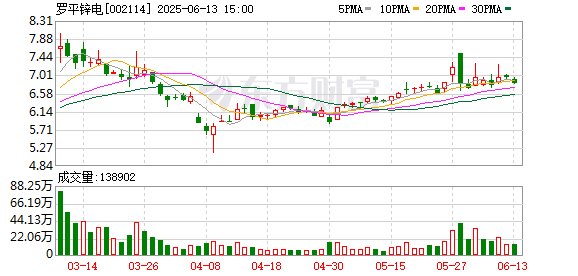
公司快评|2244万元罚单砸出合规漏洞:罗平锌电子公司越界开采暴露管理三重失守
Mei Ri Jing Ji Xin Wen· 2025-06-13 08:27
Core Viewpoint - The announcement from Luoping Zinc & Electricity reveals significant compliance failures and financial impacts due to administrative penalties for illegal mining activities, which are expected to reduce the company's net profit by approximately 22.84 million yuan in 2025 [2][3]. Financial Impact - The penalties imposed on the three subsidiaries are severe, with a total fine initially set at 77.51 million yuan, later reduced to 22.44 million yuan after hearings and recalculations [2]. - The expected reduction in net profit will directly affect the company's short-term financial performance [3]. Compliance and Management Issues - The illegal mining activities indicate serious deficiencies in the company's compliance management, internal controls, and risk prevention measures [2]. - The company failed to effectively address historical issues and adhere to legal regulations after taking over the mines, leading to ongoing violations [2]. Reputation and Investor Confidence - The incident has negatively impacted the company's reputation and could lead to diminished market confidence and investor trust if not resolved properly [3]. - Potential legal actions and further regulatory penalties pose additional risks to the company's standing [3]. Recommendations for Improvement - The company needs to strengthen internal management and enhance its compliance system to prevent future violations [3]. - A comprehensive review of potential compliance risks and the establishment of robust internal control mechanisms are essential [3]. - Engaging with regulatory authorities to mitigate penalties and expedite corrective actions is crucial for restoring compliant operations [3].

合规护航:中国企业在全球化浪潮中的安全航标- 从本土合规到全球治理的进阶挑战
Sou Hu Cai Jing· 2025-06-12 05:11
Group 1 - Compliance management is essential for modern enterprises as it serves as a self-diagnostic and defense system to identify and analyze applicable laws and regulations, ensuring adherence and continuous monitoring [2][3] - A robust compliance management system can effectively prevent negative impacts from violations, such as hefty fines and reputational damage, thereby safeguarding long-term interests [2][3] - The importance of compliance management is heightened for Chinese enterprises due to increasing anti-corruption efforts and a complex global regulatory environment [2][8] Group 2 - The compliance management system is a continuous improvement process rather than a one-time task, requiring ongoing monitoring and adjustments to adapt to new risks [4][6] - Effective compliance management typically includes eight core components, such as leadership commitment, risk assessment, operational controls, and training [5][6] - ISO 37301 is a globally recognized standard for compliance management, providing clear requirements for enterprises to enhance their credibility and competitiveness in international markets [7][6] Group 3 - Chinese enterprises must understand the unique political and legal environment to effectively manage compliance, as recent policies have led to stricter regulations and enforcement [8][9] - The enterprise social credit system in China integrates compliance management with market behavior, imposing penalties on non-compliant firms, which can affect both the company and its executives [10][9] - Industry-specific regulations require tailored compliance strategies, as a one-size-fits-all approach may not effectively mitigate regulatory risks [11][9] Group 4 - As Chinese enterprises globalize, they face legal compliance challenges that necessitate adherence to international regulatory frameworks and understanding local laws in target markets [12][15] - Key areas of concern include international tax compliance, data security, anti-bribery measures, intellectual property protection, labor laws, and management of business partners [15][17][18][19][20] - Cultural differences can significantly impact compliance practices, necessitating adjustments in corporate behavior and communication strategies to mitigate legal risks [21][20] Group 5 - A comprehensive and flexible compliance framework is crucial for Chinese enterprises to navigate the evolving regulatory landscape effectively [23][24] - Cultivating a strong compliance culture that starts from leadership and permeates the organization is vital for building trust and credibility in international markets [24][25] - Utilizing technology to enhance compliance management efficiency through automation and real-time monitoring is increasingly important [25][26] Group 6 - Regular risk assessments and audits are essential for identifying and addressing potential compliance issues before they escalate [26][27] - Continuous improvement of the compliance management system is necessary to adapt to changing regulations and emerging risks [27][28] - Future compliance management trends include a shift from passive adherence to compliance culture as a core competitive advantage [32][33] Group 7 - The integration of compliance management with business strategy is becoming increasingly important, as it can drive business development and mitigate risks [34][35] - Chinese enterprises must establish a dynamic compliance management mechanism to respond swiftly to regulatory changes and maintain compliance [33][34] - The evolution of compliance management from a regulatory burden to a strategic asset is essential for sustainable growth in the global market [35]

再现抄作业式“老鼠仓” 中信、华泰罚单各异
2 1 Shi Ji Jing Ji Bao Dao· 2025-06-05 18:35
Core Viewpoint - Recent administrative penalties against two senior IT staff from securities firms highlight significant compliance management failures within the industry, particularly regarding insider trading practices known as "mouse warehouses" [1][2][8]. Group 1: Administrative Penalties - The Anhui Securities Regulatory Bureau imposed a total fine of 4.2628 million yuan on Li Haipeng, a senior manager at CITIC Securities, for insider trading using non-public information [1][3]. - The Jilin Securities Regulatory Bureau fined Shao for similar violations, totaling 1.0757 million yuan, including a fine of 581,800 yuan for insider trading and an additional 300,000 yuan for unauthorized stock trading as a securities professional [1][7]. Group 2: Details of Violations - Li Haipeng accessed non-public information about a private fund's holdings and executed trades through his wife's account, resulting in profits of 2.1314 million yuan from trading 128 stocks with a total transaction amount of 64.838 million yuan [3][5]. - Shao utilized his access to the trading system to conduct "shadow trading," where his account mirrored trades from the proprietary accounts of his firm, leading to profits of 193,900 yuan from 58 stocks [6][7]. Group 3: Regulatory Response and Industry Implications - The frequency of "mouse warehouse" cases has prompted regulators to adopt stricter penalties and enhanced monitoring through big data technologies to prevent insider trading [2][9]. - The China Securities Regulatory Commission reported 59 cases of violations by industry professionals last year, indicating a growing concern over compliance and the need for improved oversight mechanisms [8][9]. Group 4: Recommendations for Improvement - Experts suggest implementing stricter controls, such as physical separation of IT and trading systems, real-time monitoring of unusual activities using AI, and enhancing compliance measures through dual review processes [9][10].

合规管理是券商高质量发展“必答题”
Zheng Quan Ri Bao· 2025-06-04 17:23
Core Viewpoint - The article highlights the increasing compliance risks within the brokerage industry, emphasizing the need for a shift towards prioritizing compliance over short-term performance metrics in order to ensure sustainable growth and protect investor interests [1][2][3][4] Group 1: Compliance Issues - Multiple regulatory fines issued to brokerage branches reveal a lax compliance culture, with violations including "operating without a license," improper profit promises, and unauthorized trading [1] - The rise in trading activity in the A-share market has led to increased revenue for brokerage firms, but some employees, under pressure to meet KPIs, resort to non-compliant practices to quickly acquire clients [1][2] - The current compliance management practices are often superficial, lacking effective training and supervision for employees, which exacerbates compliance risks [2][3] Group 2: Recommendations for Improvement - Strengthening compliance management is essential, transitioning from "formal compliance" to "substantive risk control," utilizing technology such as AI to monitor transactions and ensure traceability [2] - The assessment system for brokerage employees should be optimized to separate performance metrics from compliance, reducing the emphasis on sales targets while introducing compliance quality indicators [3] - Brokerages must take responsibility for their intermediary roles, enhancing the quality of their practices to maintain market order and protect investor interests [3][4] Group 3: Long-term Sustainability - As brokerage business structures become more complex, effective risk management and compliance will be critical for business expansion and long-term sustainability [4] - Compliance management is not optional but a necessary component of high-quality development in the brokerage industry [4]
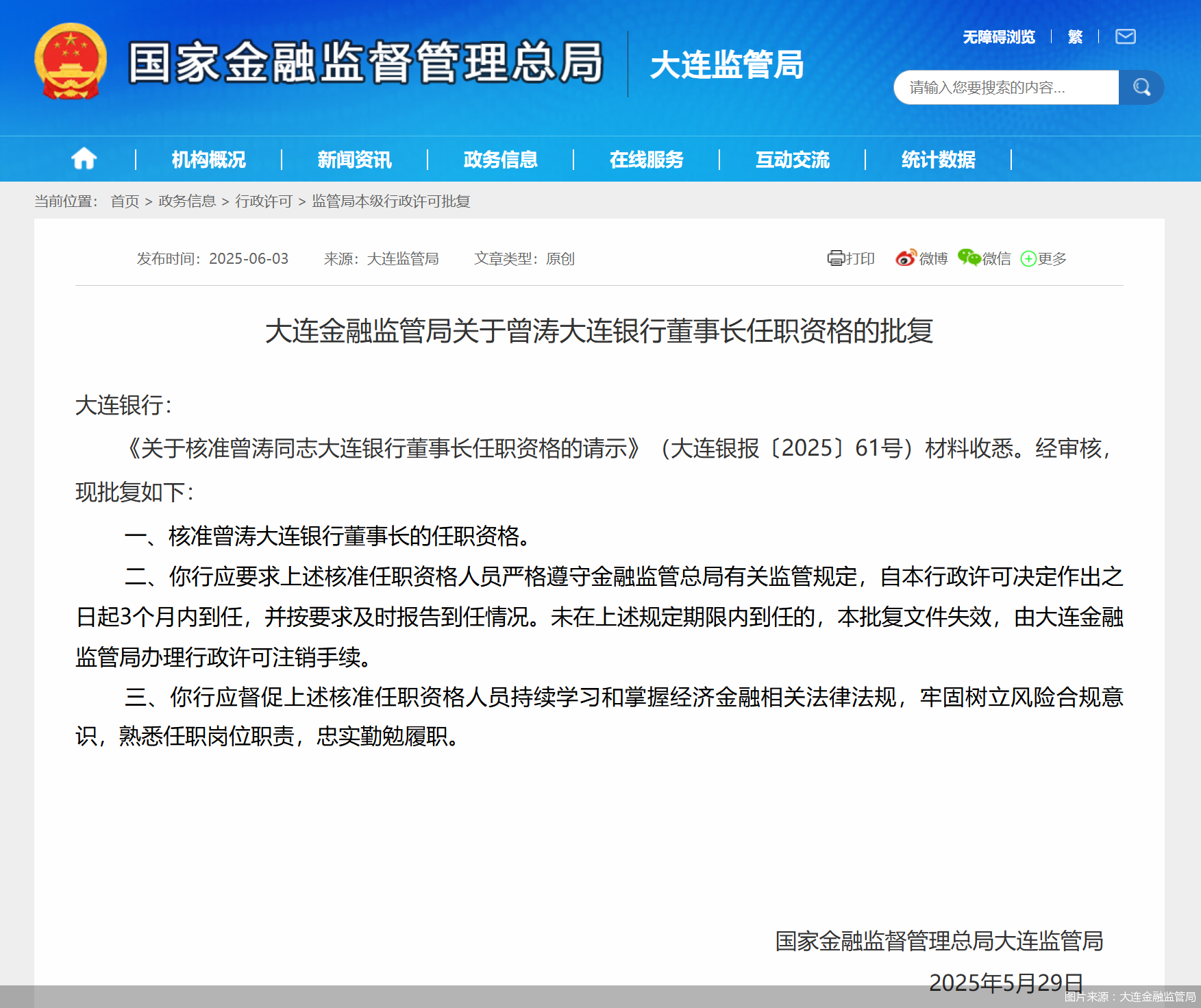
大连银行迎新“掌舵人”!东方系基因再续,资产质量困局待解
Bei Jing Shang Bao· 2025-06-04 15:05
时隔两年,大连银行董事长职位空缺终于画上句号。6月3日,监管机构核准大连银行董事长曾涛的任职资格,这位拥有"东方系"背景的金融老将,正式掌舵 这家城商行。曾涛堪称金融领域的"多面手",早年从中国银行海南省分行起步,后深耕东方资产多年,也曾在保险等领域积累经验。 事实上,自2015年中国东方资产管理股份有限公司(以下简称"东方资产")进场重组大连银行后,该行董事长人选便与"东方系"深度绑定,从此前的崔磊再 到如今的曾涛,"东方基因"的延续被视为推动稳增长的关键,尤其在大连银行面临资产质量及盈利增长承压的当下,这家东北地区的城商行能否在新"掌舵 人"的带领下走出经营发展困局,成为行业关注的焦点。 新"掌舵人"任职资格获批 空缺两年的大连银行"掌舵人"终于迎来"补位"。近日,大连金融监管局公布了一则行政许可,核准曾涛大连银行董事长的任职资格。 博通咨询金融行业资深分析师王蓬博指出,曾涛丰富的"东方系"履历,有望为大连银行的公司治理带来更为成熟的风险管理体系与规范流程,东方资产在不 良资产处置领域经验丰富,在战略方向上,可能推动大连银行与东方系其他金融机构深化协同合作,整合资源,拓展业务领域,如在投行业务、金融科技等 ...
再现抄作业式“老鼠仓”:有人赚210万,有人亏260万!中信、华泰两案例罚单不同
2 1 Shi Ji Jing Ji Bao Dao· 2025-06-03 15:04
Core Viewpoint - Recent administrative penalties imposed by the Anhui and Jilin Securities Regulatory Bureaus highlight severe violations of insider trading regulations by senior IT staff at brokerage firms, revealing significant compliance management flaws within these institutions [2][3][4]. Group 1: Administrative Penalties - Li Haipeng, a senior manager at CITIC Securities, was fined a total of 4.26 million yuan for insider trading, including a fine of 2.13 million yuan for profits gained from trading based on undisclosed information [3][6]. - Shao, a former head of research system construction at Huatai Securities, was penalized with a total of 1.08 million yuan for similar violations, including a fine of 583,000 yuan for insider trading [3][12]. Group 2: Details of Violations - Li Haipeng accessed confidential trading information of a well-known private equity fund, resulting in profits of 2.13 million yuan through coordinated trading activities [5][8]. - Shao utilized his access to Huatai Securities' internal systems to conduct shadow trading, resulting in profits of 193,900 yuan while incurring overall losses of 2.63 million yuan over 14 years of trading [11][12]. Group 3: Compliance Management Issues - The cases expose critical vulnerabilities in compliance management within brokerage firms, such as inadequate monitoring of employee access to sensitive information and failure to detect unusual trading activities [3][14]. - Regulatory authorities are increasingly adopting stringent measures, including significant penalties and enhanced monitoring technologies, to combat insider trading and improve compliance among securities personnel [3][17]. Group 4: Regulatory Response and Future Measures - The China Securities Regulatory Commission has initiated actions to address the frequent occurrence of insider trading cases, emphasizing the need for improved oversight and compliance mechanisms within the industry [16][17]. - Recommendations for preventing insider trading include establishing physical barriers between IT and trading systems, implementing AI for real-time monitoring of unusual activities, and enhancing compliance measures through regular audits and dual-review processes [18].