
新型能源体系

Search documents
锚定能源强国建设目标 提升天然气在新型能源体系中的价值
Zhong Guo Neng Yuan Wang· 2026-01-15 01:35
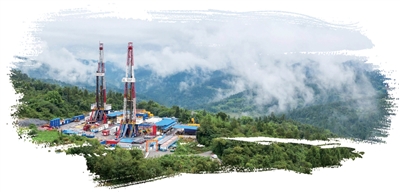
Core Viewpoint - The 20th Central Committee's Fourth Plenary Session emphasizes the construction of a new energy system aligned with the "dual carbon" goals and energy security strategy, highlighting natural gas as a key player in this transition, serving dual roles in supporting transformation and ensuring security [2][4]. Group 1: Natural Gas as a Key Player in Energy Transition - Natural gas is positioned as a major force in replacing high-carbon energy sources, with significant advantages in carbon emission intensity and minimal pollution compared to coal and oil [3]. - In industrial sectors such as metallurgy and chemicals, natural gas has substantial potential to replace coal, with current coal consumption in China's industrial sector at approximately 790 million tons per year, leading to over 1.4 billion tons of CO2 emissions [4]. - The "coal-to-gas" initiative in residential heating has shown significant results, with Beijing's coal consumption dropping from 20.19 million tons in 2013 to less than 600,000 tons by 2024, while natural gas consumption doubled to 19.5 billion cubic meters, accounting for one-third of the city's total energy consumption [4]. Group 2: Enhancing System Resilience with Natural Gas - Natural gas power generation's flexibility addresses the intermittency and volatility of renewable energy sources, making it an essential partner for the development of renewables [5][6]. - In regions with high renewable energy installations, gas power plants have been observed to start and stop over 300 times a year, showcasing their superior adjustment capabilities compared to coal [5]. - By 2025, China's installed capacity for wind and solar is expected to exceed 1.8 billion kilowatts, necessitating increased reliance on gas for peak load support during periods of low renewable output [6]. Group 3: Natural Gas as a Pillar of Energy Security - Natural gas is crucial for energy security, with China's resources being relatively abundant, including the addition of 19 new large gas fields during the 14th Five-Year Plan, expected to yield 260 billion cubic meters by 2025 [7][8]. - The construction of pipelines and LNG facilities enhances import capacity and supply resilience, with the East Route pipeline projected to transport over 120 billion cubic meters by 2030 [8]. - A comprehensive storage system, including 40 operational gas storage facilities, is expected to reach a capacity of 80 billion cubic meters by 2030, ensuring rapid response during supply fluctuations [8]. Group 4: Driving Strategic Implementation through Innovation and Cooperation - The industry must focus on technological innovation to enhance domestic production and competitiveness, with an emphasis on optimizing traditional oil and gas operations alongside accelerating the transition to renewables [9]. - A rational pricing mechanism is essential to stimulate market demand, with projections indicating that domestic natural gas prices will remain high, potentially limiting growth if not addressed [10]. - Strengthening international cooperation, particularly in resource-rich countries along the Belt and Road Initiative, will expand development opportunities and enhance China's influence in the global natural gas market [11].

金智科技(002090) - 2026年1月14日投资者关系活动记录表
2026-01-14 09:08
Group 1: Company Development and Strategy - The company focuses on "dual carbon" and "digital economy" strategies to strengthen its smart energy and smart city businesses, enhancing operational efficiency and profitability [3] - The overall development is stable with a good order situation, indicating a positive outlook for the smart energy business due to increasing demand for flexible transmission, smart distribution equipment, and energy digitalization [3] - The company aims to become a leading enterprise in the energy automation industry by combining products and services, while also enhancing digital solutions in key sectors like energy and transportation [3] Group 2: Shareholder Changes and Organizational Adjustments - Following the change in control, the new major shareholder, Nanjing Zhidi, holds 16.01% of the shares, and the company will focus on stable growth and high-quality development through both organic growth and mergers [4] - In December 2025, the company completed a board re-election and senior management appointments, optimizing its organizational structure to improve management and operational efficiency [4] - The restructuring includes the establishment of a financing center and a Shanghai center to enhance resource allocation in investment and market expansion [4]

甘肃酒泉探新能源和六大装备制造业“串珠成链”
Zhong Guo Xin Wen Wang· 2026-01-14 08:13
Core Insights - The city of Jiuquan, a major hub for land-based wind power equipment manufacturing in China, is rapidly developing six key new energy equipment manufacturing industrial chains: wind power, photovoltaics, solar thermal, energy storage, hydrogen energy, and smart grids [1][2] - Jiuquan has achieved significant advancements in its new energy and equipment manufacturing sectors, with a total installed capacity of 33.51 million kilowatts, accounting for over 50% of Gansu province's total installed capacity [1] Group 1 - Jiuquan has successfully built and put into operation key components for wind and solar power, leading to a qualitative and quantitative improvement in its industrial projects [1] - The city is recognized for its rich wind and solar resources, classified as a Class II wind energy resource and a Class I solar energy resource area in China [1] - In the past year, Jiuquan added 6.18 million kilowatts of new grid-connected capacity and 3.03 million kilowatt-hours of energy storage, with solar thermal installed capacity doubling, ranking first among prefecture-level cities in China [1] Group 2 - The local supply capacity for wind power equipment exceeds 80%, and the photovoltaic equipment industry has achieved full industrial chain integration [2] - Jiuquan faces challenges such as a shortage of skilled talent, particularly in international cooperation and new energy technology fields [2] - The city is enhancing collaboration with universities and research institutions to establish talent training bases and has introduced favorable policies to attract skilled professionals [2]
如何持续优化调整能源结构
Ren Min Ri Bao· 2026-01-14 08:13
Group 1 - The central economic work conference emphasizes the coordinated advancement of carbon reduction, pollution control, and green growth, accelerating the comprehensive green transformation of economic and social development [1] - The government work report for this year highlights the active and steady promotion of carbon peak and carbon neutrality [1] - By the end of 2024, China's renewable energy generation capacity is expected to reach 1.889 billion kilowatts, a year-on-year increase of 24.6%, with installed capacity accounting for over half for two consecutive years [1] Group 2 - The National Energy Administration plans to significantly advance wind and solar power development, with an expected addition of around 200 million kilowatts of wind and solar capacity in the year [2] - By the end of 2025, the operational nuclear power capacity is projected to reach approximately 65 million kilowatts, with a focus on ensuring the safe and stable operation of existing nuclear power units [2] - The construction of a new type of power system will be promoted, including the approval of key power interconnection projects and the implementation of new technologies and models in the energy sector [2]
每3度就有1度是绿电,山东新型能源体系建设取得重大进展
Qi Lu Wan Bao· 2026-01-14 08:08
Core Insights - The article highlights the significant growth of renewable energy in Shandong, with an average annual increase of nearly 25% in installed capacity since the 14th Five-Year Plan, marking a historic shift from coal-dominated energy production to a more diversified energy structure [1][3] Group 1: Renewable Energy Development - Shandong has surpassed 100 million kilowatts in non-fossil energy generation capacity, historically exceeding coal power for the first time, contributing to high-quality economic development [1] - The HG14 project, the world's largest open-sea photovoltaic project, is set to be fully connected to the grid by the end of 2025, with the capacity to generate 1.78 billion kilowatt-hours annually, sufficient for 2.67 million urban residents [1][3] - As of November 2025, Shandong's non-fossil energy generation capacity is expected to reach 135 million kilowatts, accounting for 53.6% of the total power generation capacity, with solar power alone reaching 91.728 million kilowatts, maintaining the top position in the country for eight consecutive years [3] Group 2: Project Implementation Challenges - The HG14 project faced initial challenges in obtaining sea area usage rights due to existing aquaculture claims in the area, complicating the construction process [2] - A breakthrough occurred in November 2023 when the Ministry of Natural Resources issued a notice allowing for layered rights management of marine areas, enabling the coexistence of aquaculture and photovoltaic projects [2] - The project successfully obtained property rights for water surface and seabed space by July 2024, becoming the first in the country to implement layered marine rights [2] Group 3: Technological Innovations - The HG14 project employs innovative construction techniques, including a four-pile stable guiding frame to ensure the accurate positioning and leveling of solar panels, preventing shading and maximizing energy efficiency [3] - The project was completed and connected to the grid within 18 months, showcasing the effectiveness of these innovative methods in expediting renewable energy deployment [3]
浙江:全省用电最高负荷从2025年的1.3亿千瓦到2030年将达1.8亿千瓦
Zhong Guo Dian Li Bao· 2026-01-14 01:24
Core Insights - The article discusses the transformation of the energy sector in Zhejiang, emphasizing the shift from traditional power systems to new energy systems, highlighting the concept of a "second curve" for sustainable growth [2][4] Group 1: Energy Transformation - Zhejiang is making significant strides in energy transformation, with a focus on achieving a "second curve" of growth in the energy sector [2] - The traditional power system, reliant on fossil fuels, is reaching its peak and facing challenges such as efficiency limits and carbon emission pressures [2][4] - The new energy system is characterized by a high proportion of renewable energy integration, driven by technological innovation and system restructuring [3][4] Group 2: Growth Metrics - By the end of 2024, Zhejiang's installed capacity for wind and solar energy is expected to grow fourfold, with electric vehicle loads increasing by 68 times and registered electricity market users by 163 times compared to the end of the 13th Five-Year Plan [4] - The peak electricity load in the province is projected to rise from 130 million kilowatts in 2025 to 180 million kilowatts by 2030, with non-fossil energy sources providing over 60% of the new electricity demand [4] Group 3: Infrastructure Development - During the 14th Five-Year Plan, the cross-regional ultra-high voltage direct current channels for clean energy are expected to increase by 70% compared to the end of the 13th Five-Year Plan [5] - The Gansu-Zhejiang ultra-high voltage project has achieved breakthroughs in flexible direct current technology, leading global advancements in this area [5]
百万千瓦级高原山地光伏项目投产
Zhong Guo Hua Gong Bao· 2026-01-14 00:20
中化新网讯 2025年12月30日,金沙江上游清洁能源基地新能源先导工程华电巴塘光伏发电项目正式投 产发电。作为我国首个实现"当年开工、当年投产"的百万千瓦级高原山地光伏标杆工程,该项目不仅为 新型能源体系构建筑牢绿色根基,更成为能源强国战略在高原落地的生动实践。 "抬头是雪山,脚下是悬崖,在这里建光伏电站堪比在'世界屋脊'上绣花。"华电金上(甘孜)电力开发有 限公司工程建设部主任李怀宝这样描述极端艰苦的建设环境。该项目位于青藏高原东南缘,平均海拔超 4000米,空气稀薄、年均气温低、有效施工期短且生态脆弱。 面对挑战,建设团队将常规2年的建设周期压缩至7个月,完成217万块光伏组件安装。这些组件在高原 连绵铺展,形成占地约2.5万亩的蓝色矩阵,还创下日装光伏组件近2.5万千瓦、成桩1.58万根的行业施 工纪录。 这一"速度奇迹"的背后,是攻坚智慧的支撑。项目122公里电力送出线路需翻越海拔4900米的藏巴拉雪 山,面对绝壁深壑与无人区阻隔,建设方创新采用"马帮+车辆+无人机+索道+直升机"五维立体运输方 案,在生命禁区开辟出"能源天路"。同时,项目突破高海拔抗冰防震、冻土基础稳定等多项核心技术瓶 颈,为高原 ...
“双碳”引领全面绿色转型
Jing Ji Ri Bao· 2026-01-13 22:09
Core Viewpoint - The 2025 Central Economic Work Conference emphasizes "adhering to 'dual carbon' leadership and promoting comprehensive green transformation" as one of the eight key tasks for economic work in 2026, signaling a consistent and strong policy direction for green and low-carbon development in China [1] Group 1: Systemic Transformation - The "dual carbon" initiative is seen as a profound systemic change, focusing on an energy revolution, industrial upgrades, and rule-making to achieve high-quality economic development and strategic advantages for the future [1][2] - The urgent need for a comprehensive green transformation in economic and social development is highlighted, with the "dual carbon" work being the core driver for this transition [1] Group 2: New Energy System Construction - The conference calls for the formulation of a national energy strategy and the acceleration of new energy system construction, emphasizing the expansion of green electricity applications [3] - The new energy system aims to integrate various energy sources and enhance resilience and intelligence in energy systems, transitioning from reliance on fossil fuels to renewable energy sources like wind and solar [3][4] Group 3: Carbon Emission Trading Market - The national carbon emission trading market is identified as a key policy tool for achieving "dual carbon" goals, with plans to deepen operations and expand its scope [5] - Future efforts will focus on including more high-energy-consuming and high-emission industries in the market and enhancing market liquidity through diverse trading products [5] Group 4: Overall Green Transition - Experts believe that with the implementation of the conference's directives, China will steadily advance on the path of green transformation, laying a solid foundation for building a beautiful China and achieving harmony between humanity and nature [6]
安阳追光逐风 绿能涌动
He Nan Ri Bao· 2026-01-13 05:34
Core Viewpoint - The article highlights the rapid development of wind and solar energy projects in Anyang, particularly focusing on the Huaren Neihuang wind power projects, which are part of a broader initiative to promote green energy in the region [3][4][5]. Group 1: Wind Power Development - The Huaren Neihuang 850 MW wind power demonstration project has been successfully commissioned, with additional projects planned for 2025, including a 200 MW wind project and a 100 MW/200 MWh energy storage project [3]. - Anyang's Neihuang County aims to reach a total wind power installed capacity of 1,087 MW by 2025, establishing a significant wind power base in the region [3][4]. - The local government emphasizes ecological protection while promoting wind power, ensuring minimal disruption to agricultural land during project development [3]. Group 2: Solar Energy Initiatives - The article describes various solar energy projects in Anyang, such as a 120 kW photovoltaic power station that allows for agricultural activities beneath the solar panels, generating over 100,000 yuan annually [4]. - The use of idle spaces for distributed solar power generation along highways has resulted in an annual electricity generation of approximately 16.5 million kWh, equivalent to saving over 5,000 tons of standard coal each year [4]. Group 3: Policy and Resource Support - Anyang benefits from favorable natural conditions, with an annual effective sunlight utilization time of 1,200 hours and stable wind resources, which are crucial for the development of renewable energy [5]. - The local government has implemented policies to support low-carbon industries, including the "Anyang Carbon Peak Implementation Plan," which aims to promote energy efficiency and reduce coal dependency [5][6]. Group 4: Comprehensive Energy Strategy - Anyang is actively exploring integrated energy solutions, such as "wind power + energy storage" and "wind power + hydrogen production," to create a complete green energy industry system [6]. - By the end of 2025, Anyang is projected to add 1.27 million kW of wind and solar capacity, exceeding annual targets and achieving a total installed capacity of 7.63 million kW, which constitutes 69% of the city's total power generation capacity [6].
抽蓄电站 “扎堆” 投产!1000 兆帕高强钢打破进口依赖
Zhong Guo Neng Yuan Wang· 2026-01-11 03:22
Core Viewpoint - The recent advancements in pumped storage hydropower stations in China signify a transition to a new phase characterized by high quality, technology, and efficiency, driven by the urgent need for flexible regulation in the energy structure transformation [1][2]. Group 1: Industry Records and Technological Advancements - The Zhejiang Tiantai pumped storage station has set multiple industry records, including the highest single-unit capacity in China at 425,000 kilowatts and the highest rated head in the world at 724 meters, marking a significant leap in China's pumped storage technology from "catching up" to "leading" [2][3]. - The successful domestic production of 1000 MPa high-strength steel and welding materials at the Tiantai station eliminates reliance on imports and enhances the domestic supply chain for critical materials [3][4]. - The innovative design of the turbine blades at the Tiantai station, which includes a unique configuration of 12 blades, optimizes water flow and significantly improves the stability and efficiency of the unit under high head conditions [4]. Group 2: Industry Growth and Capacity Expansion - As of September 2025, China's total installed capacity of pumped storage stations reached 62.365 million kilowatts, surpassing the 62 million kilowatt target set for the 14th Five-Year Plan, maintaining the world's leading position for nine consecutive years [6]. - The construction of pumped storage stations is expanding from the eastern coastal regions to the central and western areas, creating a balanced development pattern across the country [6][7]. Group 3: Future Directions and Challenges - The industry is evolving from a focus on single engineering projects to a more integrated approach that includes technological innovation, industrial integration, and digital transformation, aiming to create new competitive advantages [9]. - The development of variable-speed pumped storage units is anticipated to become a trend, offering broader adjustment ranges and faster response times to accommodate the fluctuations of renewable energy sources [9]. - Challenges such as lengthy project development cycles, the need for improved reliability of core components, and the necessity for enhanced cross-regional coordination mechanisms are identified as areas requiring attention [10].