新能源产业

Search documents
一汽解放9月新能源为何“反超” 登顶国内榜首?
Zheng Quan Ri Bao Wang· 2025-10-17 12:17
Core Insights - The article highlights the significant growth in China's commercial vehicle market, particularly in the new energy vehicle (NEV) segment, with a penetration rate exceeding 30% in September, indicating a rapid market transformation [1][2] - The strategic foresight of FAW Jiefang, which has implemented the "15333" new energy strategy since 2021, is credited for its leading position in the NEV market, achieving substantial sales growth [2][3] - FAW Jiefang's commitment to technology and product development, alongside a robust service ecosystem, positions it as a leader in the new energy commercial vehicle sector [4][5][6] Industry Performance - In September, China's commercial vehicle production and sales reached 376,000 and 368,000 units respectively, with month-on-month increases of 19.3% and 16.3% [1] - The sales of new energy commercial vehicles surged by 70% year-on-year, with nearly 31,200 units sold in September, marking a significant recovery in the overall automotive industry [1][3] Company Performance - FAW Jiefang maintained a 21.3% market share in the domestic medium and heavy truck segment, leading the industry [1] - The company achieved a remarkable increase in new energy vehicle sales, with over 4,500 units sold in September, capturing a 16.2% market share in the NEV medium and heavy truck category [1][2] - FAW Jiefang's new energy product sales have shown exponential growth, with cumulative sales reaching over 29,700 units from January to September 2025, reflecting a year-on-year increase of 313.3% [2][3] Strategic Initiatives - FAW Jiefang's "15333" strategy focuses on maximizing its advantages in the new energy sector, emphasizing early market entry and user recognition [2] - The company has invested over 20 billion yuan in building a global innovation base for new energy vehicles and has achieved full control over key technologies in the industry [4] - FAW Jiefang is addressing common barriers to NEV adoption, such as high purchase costs and charging difficulties, by innovating business models and establishing a comprehensive service network [6][7] Product Development - The company is developing a diverse range of new energy products tailored to various applications, including electric, hybrid, and fuel cell technologies [5] - Upcoming product launches, including the Jiefang 7 series and Eagle series, are expected to emphasize low energy consumption, lightweight design, and high quality [5] Ecosystem and Services - FAW Jiefang is creating an integrated ecosystem that encompasses vehicle development, charging infrastructure, and after-sales services, enhancing user trust and satisfaction [6] - The company has established a comprehensive service network across county and township levels, ensuring efficient service delivery and support for its customers [6][7]

万家基金贺方舟:新能源产业的高速发展将大幅增加对铜的需求
Zhong Zheng Wang· 2025-10-16 13:26
Core Viewpoint - The rapid development of the new energy industry is expected to significantly increase the demand for copper, which is a long-term benefit for companies primarily engaged in copper-related businesses [1] Group 1: Copper Demand from Electric Vehicles - A traditional fuel vehicle uses approximately 20 kilograms of copper, while a pure electric vehicle can use up to 80 kilograms or more due to the need for copper windings in motors and copper foils in battery packs [1] - The connection of charging stations and the power grid also heavily relies on copper cables [1] Group 2: Copper Demand from Renewable Energy - The growth of wind and solar energy is injecting new vitality into the copper market, with onshore wind turbines using about 3 tons of copper and offshore wind turbines using up to 8 tons due to longer cable lengths [1] - Solar power plants require approximately 5 tons of copper per megawatt, which is three times that of traditional thermal power plants [1] Group 3: Copper Demand from Data Centers - The booming development of data centers is creating new growth points for copper, as AI servers require higher power stability, prompting companies to use better conductive copper bars instead of some aluminum wires [1] - For instance, Amazon AWS's new data center in Oregon uses over 150 tons of copper in a single building, equivalent to the total copper used in 3,000 electric vehicles [1]
雪天盐业科研突破与产业协同:全固态电池迈向新阶段
Quan Jing Wang· 2025-10-16 08:25
Group 1 - A significant technological breakthrough in all-solid-state lithium batteries has been achieved by Chinese research teams, overcoming long-standing industrialization challenges and leading to a leap in battery performance [1][2] - The new all-solid-state battery technology has an energy density exceeding 600 Wh/kg, allowing for a potential range of over 1000 kilometers, effectively addressing range anxiety in electric vehicles and providing adaptable energy storage solutions for emerging fields like low-altitude economy and humanoid robots [2][3] - The development of high-voltage cathode materials by Xue Tian Salt Industry, which has completed R&D and is entering mass production, is crucial for the solid-state battery's energy density and cycle stability [2][3] Group 2 - The collaboration between Tsinghua University's electrolyte innovations and Xue Tian Salt Industry's cathode material production creates a complementary ecosystem for solid-state battery development, ensuring performance breakthroughs and stable supply chains [3] - With dual support from policy and market demand, the solid-state battery industry is expected to accelerate its industrialization process, with predictions indicating a global market size exceeding $120 billion by 2030, with China capturing 40% of the market share [3] - The dual breakthroughs in research and industry signify China's mastery of core technologies in the solid-state battery field, transitioning the new energy industry from a follower to a leader, and paving the way for large-scale applications in electric vehicles and energy storage [3]

贵州5万吨磷酸铁锂项目投产!规划全球最大基地
起点锂电· 2025-10-14 10:24
Core Viewpoint - The article highlights the successful launch of the first batch of qualified products from Guizhou Phosphate Group's 50,000 tons lithium iron phosphate project, marking a significant step in the company's transition from construction to market delivery in the new energy materials sector [2][3]. Group 1: Project Overview - The project is operated by Guizhou Phosphate Kaiwei Technology Co., Ltd., a subsidiary of Guizhou Phosphate Group, and is located in Xifeng County, Guiyang [2]. - Guizhou Phosphate Group has established a production capacity of over 2.4 million tons of new energy battery materials, including 2 million tons of wet-process purified phosphoric acid and 60,000 tons of lithium iron phosphate [3][4]. Group 2: Market Position and Strategy - Guizhou Phosphate Group is a leading enterprise in the phosphate industry, ranking first in China's fertilizer industry for five consecutive years and among the top three globally in phosphate mining and production [2][3]. - The company aims to create a competitive new energy battery materials industry cluster by increasing R&D investments and focusing on key areas such as cathode materials and electrolytes [4]. Group 3: Future Projects and Investments - A significant investment of 33.1 billion yuan is allocated for a new integrated project in Kaiyang, Guizhou, which will produce various materials, including 600,000 tons of lithium iron phosphate [5][6]. - The project is expected to meet 15% of the national demand for lithium battery cathode materials and enhance the supply chain for lithium and iron resources [5][6]. Group 4: Competitive Advantages - The new project will utilize innovative technologies and a circular economy model to reduce production costs by 15% compared to industry averages, while improving product performance and quality [6]. - Guizhou Phosphate Group is positioned to become the largest producer of phosphate-based cathode materials globally, capturing over 30% of the domestic market share [6].

江苏海鸥冷却塔股份有限公司关于2025年半年度业绩说明会召开情况的公告
Shang Hai Zheng Quan Bao· 2025-10-13 19:59
Group 1 - The company held a half-year performance briefing on October 13, 2025, to discuss its operational results and financial status with investors [1] - The briefing was conducted online, with key executives including the Vice Chairman and President, Secretary of the Board, and independent directors participating [1] Group 2 - Investors inquired about the establishment of a joint venture in Malaysia, JT Green Tech Sdn Bhd, aimed at entering the renewable energy sector, but the company did not have information on this [2][12] - The company’s subsidiary, Suzhou Green Meng Hydrogen Energy Technology Co., Ltd., has moved to a new 80,000 square meter factory, indicating a significant expansion in hydrogen energy equipment manufacturing [2] - The company is focusing on enhancing its talent pool to improve competitiveness as part of its strategic development plan [2] Group 3 - The company reported strong performance from its Thailand subsidiary, with revenue of 16.68 million in 2023 and projected revenue of 180 million in 2024, despite facing global economic uncertainties [3] - The company is actively expanding its overseas market presence, particularly in Malaysia, Singapore, Vietnam, Indonesia, Australia, and Dubai [3] Group 4 - The company has participated in nuclear power cooling tower projects, including the Xu Xu Nuclear Power Station, and is progressing according to contractual agreements [4] - The company’s cooling tower brand TRUWATER has secured projects with local data centers, although revenue from this sector remains relatively small [3][4] Group 5 - The company’s cooling towers have received FM certification, which enhances their international competitiveness, particularly for data center tenders [4] - The company is planning to strengthen its public relations and marketing efforts to promote its cooling tower products and achievements [4]

供需格局持续催化 稀有金属ETF(159608)单日涨超6.5%
Zhong Zheng Wang· 2025-10-13 09:16
Core Viewpoint - The recent surge in the rare metals sector is driven by news of rare earth regulations, leading to increased investment interest and significant price movements in related ETFs [1][2] Group 1: Market Performance - The rare metals ETF (159608) saw a daily increase of over 6.5% on October 13, ranking among the top ten ETFs in the market [1] - The ETF tracks the CSI Rare Metals Theme Index, with the top five industries being rare earths, lithium, copper, other minor metals, and cobalt [1] - As of October 12, the index had a price-to-earnings ratio of approximately 46 times [1] Group 2: Investment Drivers - The performance of the rare metals ETF is attributed to both supply constraints and expanding global demand [1] - Key investment values in rare metals include their resource scarcity due to limited reserves, high extraction difficulty, and long capital expenditure cycles [1] - China holds a significant global share in rare earths, making policy changes impactful on global prices [1] Group 3: Future Outlook - The rare metals sector is expected to maintain its upward trend, with supply likely to exhibit rigid constraints [2] - Continuous expansion in green energy, artificial intelligence, and high-end manufacturing is anticipated to support price increases [2] - Increased global recognition of the strategic value of rare metals may lead to tighter supply, providing ongoing support for valuation increases in the sector [2]
杉杉股份易主,后妈与长子内斗两年,双双出局
凤凰网财经· 2025-10-11 12:37
Core Viewpoint - The article discusses the restructuring of Shanshan Co., Ltd. and the potential change in control to a consortium of investors, which may revitalize the company amid its financial challenges and shift towards the new energy sector [2][3]. Group 1: Restructuring and Control Change - Shanshan Co., Ltd. announced a restructuring agreement with a consortium of investors, aiming to acquire 23.36% of the company's shares for approximately 3.284 billion yuan [2]. - The new controlling shareholder will be Ren Yuanlin, founder of Yangtze River Shipbuilding, known as the "King of Private Shipbuilding" in China [3][9]. - The restructuring is seen as a potential turning point for Shanshan Co., Ltd., which has faced significant financial difficulties and internal conflicts [6][9]. Group 2: Historical Context and Business Evolution - Founded by Zheng Yonggang, Shanshan initially focused on the clothing industry before diversifying into lithium battery materials and photovoltaic sectors [3][4]. - By 2013, revenue from lithium battery materials surpassed that from traditional clothing, indicating a strategic shift in business focus [4]. - In 2021, Shanshan's revenue reached 20.699 billion yuan, with significant contributions from lithium battery materials and LCD polarizer businesses [5]. Group 3: Financial Performance and Challenges - Despite a revenue increase in 2021, Shanshan faced negative cash flow and rising short-term debts, indicating underlying financial stress [5]. - In 2024, the company reported its first loss since going public, with a revenue decline of 2.05% and a net loss of 367 million yuan [7]. - As of mid-2025, Shanshan's revenue showed signs of recovery, but the company still faced substantial debt pressures, with short-term borrowings exceeding cash reserves [8]. Group 4: Future Prospects and Strategic Partnerships - The restructuring investors, including TCL Technology, are interested in Shanshan's position in the new energy sector, particularly its role as a supplier for semiconductor display materials [8][9]. - Ren Yuanlin's investment plans include significant funding for clean energy projects, aligning with Shanshan's business direction [9]. - The collaboration with restructuring investors is expected to enhance Shanshan's operational capabilities and market competitiveness in the rapidly evolving new energy landscape [9].

锂电隔膜9大上市公司对比分析
起点锂电· 2025-10-10 10:30
Group 1 - The solid-state battery industry is set to hold a significant event, the CINE2025 Solid-State Battery Exhibition and Industry Annual Conference, from November 6-8, 2025, in Guangzhou, with over 200 exhibitors and 20,000 professional attendees expected [2] - The lithium battery separator industry shows a positive trend in revenue growth, with over 50% of companies reporting year-on-year revenue increases in the first half of 2025, particularly notable is the 26.48% revenue growth of China National Materials [3][30] - The highest gross margin in the lithium battery separator sector is reported by Purtai at 32.10%, while Dongfeng shares the lowest at 4.08% [3][4] Group 2 - The net profit of the lithium battery separator industry has generally decreased due to ongoing price reductions, with only China National Materials, Purtai, and Dongfeng reporting increases in net profit and net margin [5][20] - Purtai achieved a revenue of 13.19 billion yuan in the first half of 2025, reflecting a 6.88% increase, while net profit decreased by 6.15% [24][36] - China National Materials reported a significant revenue increase of 26.48% to 133.3 billion yuan, with net profit rising by 114.92% to 9.99 billion yuan [30][31] Group 3 - The shipment volume of lithium battery separators showed positive growth in the first half of 2025, with Purtai and China National Materials reporting increases of 63.85% and 60% respectively [8][9] - The company Star Source Materials, a leader in lithium-ion battery separator production, reported a revenue of 18.98 billion yuan, a 14.78% increase, but a net profit decline of 58.53% [13][14] - Enjie Co., as a leading enterprise in the lithium battery separator industry, reported a revenue of 57.63 billion yuan, a 20.48% increase, but a significant net profit decline of 131.99% [20][21] Group 4 - The company Cangzhou Mingzhu, which has developed both dry and wet separator technologies, reported a revenue of 344.64 million yuan, a 19.88% increase, while maintaining stable gross margins [22][23] - Longyang Technology experienced a revenue decline of 18.81% to 52.53 million yuan, with a net profit of -0.09 million yuan, reflecting a significant drop [52][53] - Hengli Petrochemical reported a revenue of 1,039 billion yuan, a decrease of 7.68%, with a net profit of 30.5 billion yuan, down 24.08% [42][43]


新一轮涨价潮来袭!新能源金属孕育的重大投资机会!
格隆汇APP· 2025-10-08 12:52
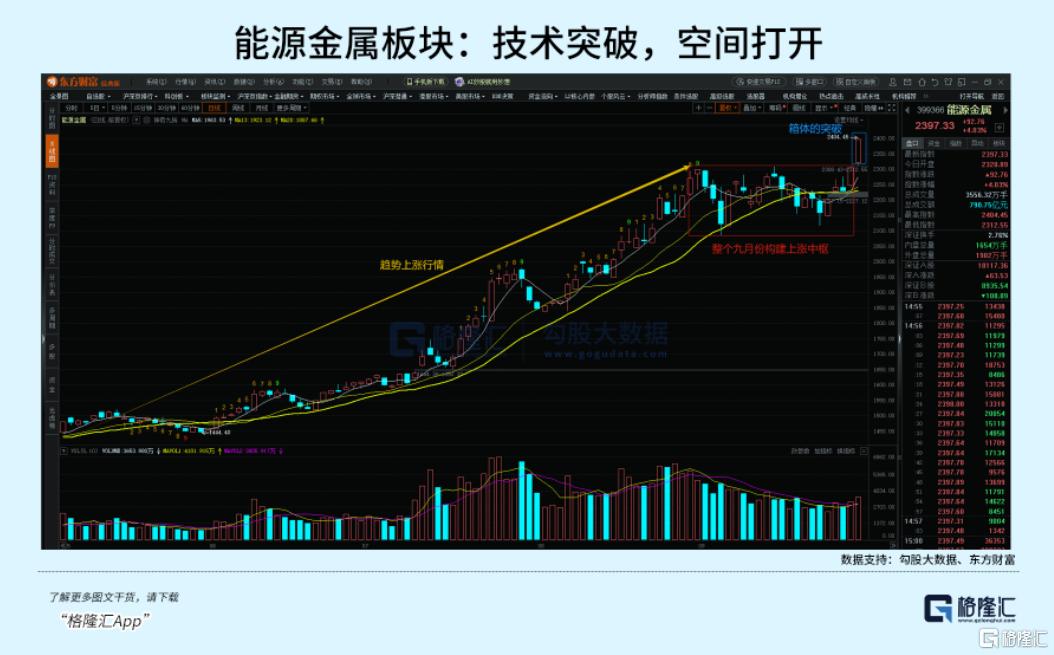
Core Viewpoint - A resource revolution is underway as the world strives for carbon neutrality, with energy metals like lithium, cobalt, and nickel becoming essential for the clean energy era, replacing traditional fossil fuels [2]. Group 1: Energy Metals Market Trends - The energy metals sector index has shown a consistent upward trend since April, with a significant breakout on September 30, indicating potential for further gains [4]. - Energy metals, including lithium, cobalt, nickel, and rare earths, are crucial raw materials for new energy devices like lithium batteries and fuel cells, making them attractive in the capital market [4]. Group 2: Lithium Demand and Supply - The explosive demand for lithium is driven by the rise of the new energy industry, with the automotive sector expected to contribute significantly to this growth. By 2025, global electric vehicle sales are projected to reach 19.2 million, with China accounting for over 15 million [6]. - The energy storage sector is emerging as a new growth driver, with global demand for storage batteries expected to grow over 40%, contributing 13% to total lithium demand [7]. - By 2025, domestic demand for lithium carbonate is anticipated to increase by 52% year-on-year, supported by diverse applications in power batteries, energy storage, and consumer electronics [7][9]. Group 3: Cobalt Market Dynamics - The Democratic Republic of the Congo (DRC) has extended its cobalt export ban to stabilize prices, with future policies likely to shift towards a quota system, potentially tightening supply and increasing prices [10][11]. - Global cobalt supply is projected to rise from 20.7 thousand tons in 2022 to 32.9 thousand tons by 2026, while demand will increase from 18.7 thousand tons to 28.0 thousand tons, indicating a potential shift towards a balanced market due to policy interventions [12]. Group 4: Nickel Market Outlook - Nickel prices are supported by strong demand from the stainless steel and battery sectors, with the latter expected to grow rapidly. The stainless steel industry accounts for 70% of nickel demand [13][16]. - Indonesia's nickel mining policies will significantly impact future supply dynamics, with the country being a major producer [13][16]. Group 5: Investment Opportunities - The energy metals sector is positioned to benefit from the global energy transition and carbon neutrality efforts, with strong demand growth for lithium, cobalt, and nickel amid supply constraints [17]. - Investors are encouraged to focus on companies with resource advantages in lithium, cobalt, and nickel production, as well as those leading in battery material technology and benefiting from the rapid growth of the new energy vehicle and storage sectors [17].
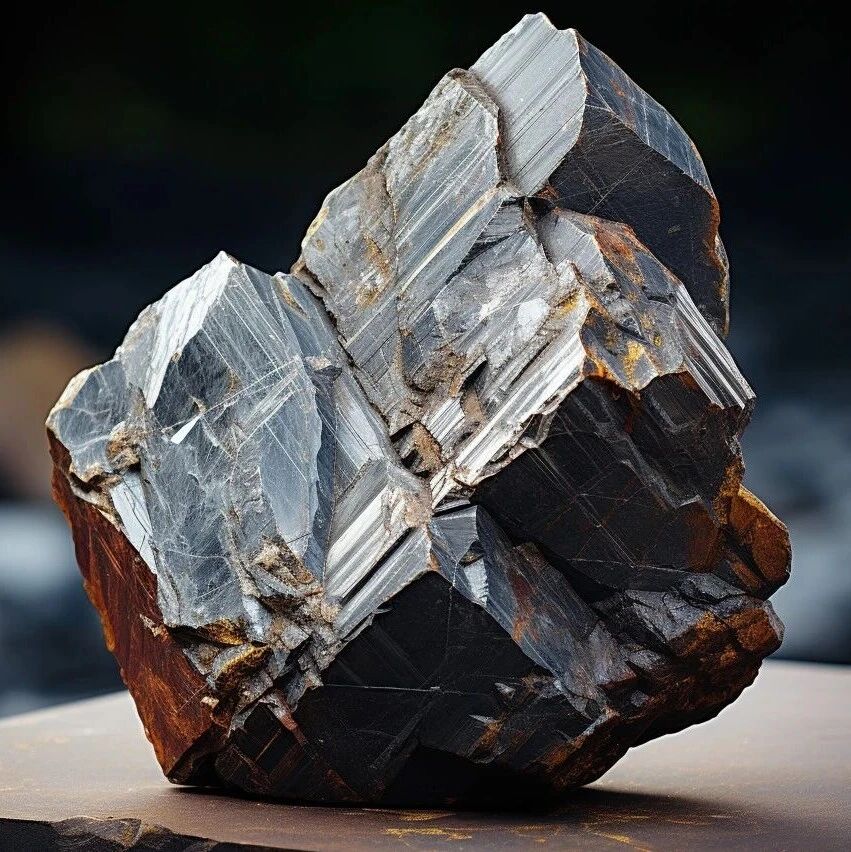
新一轮涨价潮来袭!新能源金属孕育的重大投资机会!
Ge Long Hui· 2025-10-07 03:45
Core Viewpoint - A resource revolution is underway as the world strives for carbon neutrality, with energy metals like lithium, cobalt, and nickel becoming essential for the clean energy transition [1] Group 1: Energy Metals Market Trends - The energy metals sector index has shown a consistent upward trend since April, with a significant breakout on September 30, where the index rose by 4.03%, indicating potential for further gains [3] - Energy metals, including lithium, cobalt, nickel, and rare earths, are critical raw materials for new energy devices such as lithium batteries and fuel cells [3] Group 2: Lithium Demand and Supply - Lithium demand is expected to surge due to the rise of the new energy industry, with global sales of electric vehicles projected to reach 19.2 million by 2025, contributing over 15 million from China [4][6] - The demand structure for lithium is characterized by a dominant role of power batteries, with a projected 52% year-on-year growth in domestic lithium carbonate demand by 2025 [4] Group 3: Cobalt Market Dynamics - The Democratic Republic of the Congo (DRC) has extended its cobalt export ban to stabilize prices, with a shift towards an annual export quota management system expected to tighten supply [7] - Global cobalt supply is projected to increase from 20.7 thousand tons in 2022 to 32.9 thousand tons by 2026, while demand is expected to rise from 18.7 thousand tons to 28.0 thousand tons in the same period [8] Group 4: Nickel Supply and Demand - Nickel prices are supported by rising costs across the supply chain, with the stainless steel sector accounting for 70% of nickel demand, while the battery sector is growing rapidly [9][11] - The global stainless steel production is expected to grow at a compound annual growth rate of 3.85% from 2017 to 2024, indicating a stable demand for nickel [9] Group 5: Investment Outlook - The current global interest rate cut cycle enhances the investment value of the non-ferrous metals sector, particularly energy metals, which are poised to benefit from the energy transition and carbon neutrality efforts [12] - Investors are encouraged to focus on companies with resource advantages in lithium, cobalt, and nickel production, as well as those leading in battery material technology [12]