
光伏反内卷

Search documents
交银国际:看好内地光伏行业“反内卷”推进 首选协鑫科技(03800)
智通财经网· 2025-09-19 03:26
Group 1 - The core viewpoint of the article highlights the tightening of energy consumption standards for polysilicon, reflecting the government's strong commitment to "anti-involution" in the photovoltaic industry, with an emphasis on improving technical standards to eliminate outdated production capacity [1] - The new energy consumption limits for polysilicon products were released on September 16, specifying energy consumption for rod silicon at 5/5.5/6.4 kgce/kg for grades 1/2/3, which is a significant tightening compared to the previously indicated limits of 5/6/7.5 kgce/kg from a July 24 industry meeting [1] - Following the implementation of these standards, companies that do not meet the grade 3 standard will be required to rectify their operations within a specified period, and those failing to comply or meet the grade 2 standard after rectification will be shut down [1] Group 2 - According to preliminary statistics from the Silicon Industry Association, the effective domestic polysilicon production capacity is expected to decrease to approximately 2.4 million tons, representing a substantial reduction of 31.4% compared to the existing capacity of 3.5 million tons [1] - The report indicates that the company with the lowest energy consumption, GCL-Poly Energy Holdings Limited (03800), is favored as a leading player in the polysilicon sector amid the ongoing "anti-involution" efforts in the photovoltaic industry [1]

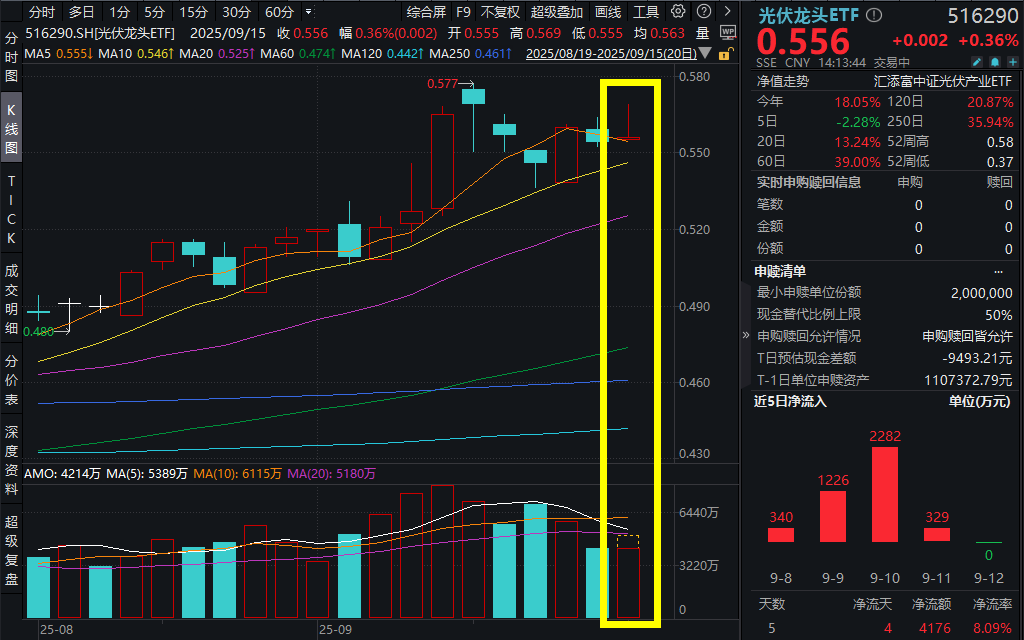
再提光伏反内卷,光伏龙头ETF(516290)冲高回落微涨,近5日吸金超4000万元!阳光电源大涨超3%,储能需求超预期!
Xin Lang Cai Jing· 2025-09-15 06:53
Core Insights - The A-share market showed a mixed performance on September 15, with the new energy sector leading the gains, particularly the photovoltaic (PV) sector, as evidenced by the slight increase of 0.36% in the leading photovoltaic ETF (516290) [1] - The photovoltaic ETF (516290) experienced a net inflow of over 40 million yuan in the past five days, with four consecutive days of inflows [1] - The Ministry of Industry and Information Technology (MIIT) has emphasized the need for self-discipline in the photovoltaic industry to address supply-demand imbalances, indicating a potential policy-driven recovery for the sector [4] Market Performance - The component stocks of the photovoltaic ETF (516290) exhibited mixed performance, with notable gains from Yangguang Electric (over 3%) and slight increases from TCL Technology and TBEA, while stocks like Robotech and Kehua Data saw minor declines [3] - The recent government initiatives aim to stabilize the photovoltaic industry and promote healthy development, which may lead to a reversal in the sector's fortunes [4] Price Trends - The price of polysilicon has rebounded significantly, rising from 34,400 yuan/ton at the end of June to 47,100 yuan/ton by the end of July, marking a 36.9% increase [4] - The price index for polysilicon used in silicon ingots increased from 46 yuan/kg to 48 yuan/kg, translating to approximately 5.95 USD/kg [4] Future Outlook - Analysts suggest that the ongoing efforts to curb irrational competition in the photovoltaic sector may lead to a recovery in polysilicon prices and overall market conditions [6] - The core drivers for potential price increases in Q4 include policy support, stabilization of industrial silicon prices, and the implementation of production limits, which may enhance cost recovery across the supply chain [6] - The photovoltaic sector is expected to experience a fundamental recovery, with positive sentiment anticipated as the industry navigates through current challenges [6]


晶科能源大股东方拟询价转让或套现20亿 遇行业低谷中期亏29亿有望借反内卷突围
Chang Jiang Shang Bao· 2025-09-14 23:21
Core Viewpoint - JinkoSolar's major shareholders plan to reduce their holdings through a block trade, selling approximately 400 million shares, which represents 4% of the company's total equity, due to personal funding needs [1][8]. Group 1: Shareholder Actions - JinkoSolar's major shareholder, JinkoSolar Investment Co., along with its concerted parties, intends to transfer a total of about 400 million shares via a block trade, representing 4% of the company's total shares [1][5]. - This is the first time since its IPO that JinkoSolar's major shareholders have planned to reduce their holdings [7]. - The shareholders involved hold a combined 58.59%, 3.16%, 2.17%, and 0.87% of the company's shares, with JinkoSolar Investment being the controlling shareholder [5]. Group 2: Financial Performance - JinkoSolar reported a significant decline in revenue, with approximately 318 billion yuan in the first half of 2025, a year-on-year decrease of 32.63%, and a net loss of about 29 billion yuan [3][11]. - The company's gross margin for its core product, solar modules, turned negative for the first time, with a gross margin of -0.98% in the first half of 2025, down from 8.67% in the same period last year [12][13]. - The company's asset-liability ratio stood at approximately 74% as of June 30, 2025, indicating financial pressure [3][13]. Group 3: Market Conditions - The solar market is experiencing intensified competition and a general decline in product prices, which has adversely affected JinkoSolar's operations [3][10]. - Despite the current challenges, there are expectations that the supply-demand imbalance in the solar market will improve, potentially leading to a recovery in JinkoSolar's performance [4][14]. - JinkoSolar's stock price has seen a significant decline, with a drop of about 68% over the past three years, resulting in a market capitalization reduction from over 190 billion yuan to approximately 56.93 billion yuan [9].

光伏产业链多环节产品价格明显上涨
Zheng Quan Ri Bao Zhi Sheng· 2025-09-12 16:07
Core Viewpoint - The photovoltaic industry is experiencing a price increase across multiple segments, indicating the initial success of the "anti-involution" policy aimed at promoting healthy competition and improving product quality [1][2][3]. Price Trends - As of September 12, 2023, the price of silicon wafers (P-type M10) in Yunnan remained stable at 1.2 yuan per piece, while the price of polysilicon (P-type dense material) in Inner Mongolia was 36 yuan per kilogram, both showing increases compared to previous days [1]. - In August, the average prices of N-type polysilicon materials increased by 2.13% to 4.65%, while N-type silicon wafers saw price increases ranging from 1.45% to 4% [2]. - The price of photovoltaic glass also saw significant increases, with 2.0mm double-layer coated glass rising by 6.12% [2]. Market Demand and Supply Dynamics - Recent improvements in terminal demand due to the initiation of domestic projects and overseas orders have stabilized the operating rates of component manufacturers, providing some support for essential procurement [3]. - The market is closely monitoring the potential supply reduction due to the upcoming dry season in October, which is expected to significantly lower production in Sichuan and Yunnan, thereby alleviating supply surplus [3]. Component Market Outlook - The prices of photovoltaic components have remained relatively stable, with 182mm TOPCon and 210mm HIT double-sided double-glass components priced at 0.68 yuan and 0.72 yuan per watt, respectively [4]. - Despite the pressure from rising upstream prices, the acceptance of price increases by downstream buyers remains limited due to low returns in the terminal market [4]. - The consensus in the market is leaning towards optimism for the short-term price trajectory of photovoltaic components, especially with the traditional peak season approaching in the fourth quarter [5].
隆基绿能副总裁张海濛:光伏产能退出阻力大,规则尚未特别清晰
Hua Xia Shi Bao· 2025-09-11 05:30
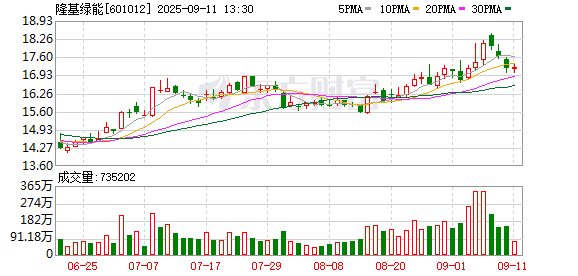
Core Viewpoint - The photovoltaic industry is currently facing significant challenges due to "involution," characterized by overcapacity, declining prices, and severe technological homogenization, prompting discussions on capacity exit and industry regulation [2][3][4]. Group 1: Industry Challenges - The photovoltaic industry has experienced "involution" driven by three key factors: capacity mismatch, continuous price declines, and severe technological homogenization [2]. - The initial expectation for capacity exit was around one year, but current trends indicate a downward adjustment in industry expectations [2]. - The exit of capacity is hindered by the interests of various stakeholders, including companies, capital markets, and local governments, making the process challenging [2]. Group 2: Regulatory Interventions - Recent changes indicate a shift from self-regulation to active government intervention, with multiple government departments convening to address competition order in the photovoltaic industry [3]. - A meeting on August 19 outlined four key requirements: strengthening industry regulation, curbing low-price competition, standardizing product quality, and supporting industry self-regulation [3]. - The Ministry of Industry and Information Technology (MIIT) is working with relevant departments to address irrational competition in key industries, including photovoltaics [3]. Group 3: Market Recovery - The photovoltaic market is showing signs of recovery, with significant price rebounds, particularly in silicon materials, which are now around 50,000 RMB per ton [4]. - The Wind photovoltaic index has risen significantly, from a low of 2210.32 points last August to over 3400 points, indicating strong market performance [4]. - Despite the recovery, the industry still faces the common challenge of effectively exiting excess capacity across various segments [4]. Group 4: Capacity Exit Standards - There is currently no clear standard for capacity exit, leading to discussions on whether to adopt a "leading enterprise" approach or a more uniform method [4][6]. - The industry is calling for stricter standards to ensure that only efficient producers remain in the market, which is crucial for the overall health of the sector [5][6]. - The "leading enterprise" plan, which was previously implemented, is being revisited as a potential solution to promote high-efficiency products and technologies [6][7]. Group 5: Quality Concerns - Recent issues regarding the quality of photovoltaic products, including power mislabeling and safety concerns, have emerged, potentially impacting efficiency and returns [8]. - The industry is urged to establish quality thresholds and mechanisms to guide resources towards higher quality production [8]. - A long-term imbalance in supply and demand could stifle innovation and investment in the sector, threatening its competitive edge [8][9]. Group 6: International Implications - The challenges faced by the photovoltaic industry are not limited to domestic markets but are also affecting international customers, leading to hesitance in order placements [9]. - Price pressures have resulted in significant drops, with some customers experiencing price reductions of up to 20% shortly after stocking [9]. - The extended shipping times due to geopolitical issues have further complicated supply chain planning for international clients [9].

协鑫科技(3800.HK):颗粒硅成本优势显著 盈利反转可期
Ge Long Hui· 2025-09-05 20:21
Core Viewpoint - GCL-Poly is a leading global producer of granular silicon with significant cost advantages, recently recognized for its green and low-carbon innovations. The company faced short-term performance pressure due to supply-demand mismatches in the industry, resulting in a revenue decline of 35.3% year-on-year to 5.73 billion yuan and a net loss of 1.78 billion yuan, an increase of 20.0% year-on-year [1]. Group 1: Company Performance - In H1 2025, GCL-Poly's cash cost for granular silicon was 26.22 yuan/kg, maintaining industry leadership, with a Q2 cost of 25.31 yuan/kg, a decrease of 6.5% quarter-on-quarter [1]. - The company achieved a market share of 24.3% in H1 2025, an increase of 7.2 percentage points from H2 2024, with the top five customers accounting for 71% of shipments [1]. - The average transaction price for N-type granular silicon increased significantly to 48.0 yuan/kg, up 43.3% since early July 2025, indicating a potential return to profitability in August-September [1]. Group 2: Technological Advancements - GCL-Poly's GW-level perovskite production line commenced operations in June 2025, marking a significant step towards commercial-scale production, with a C-round financing of nearly 200 million yuan completed in July [2]. - The company achieved a single-junction module efficiency of 19.04% and a tandem module efficiency of 26.36%, with plans to complete the first product by November 2025 and projected shipments of 100 MW, GW, and 3-5 GW in the following years [2]. Group 3: Industry Trends - The Chinese government is actively promoting the "anti-involution" initiative in the photovoltaic sector, with multiple ministries holding meetings to drive this agenda, which is expected to boost downstream demand and support price transmission in the photovoltaic industry chain [2]. - The Ministry of Industry and Information Technology and the State Administration for Market Regulation issued a plan to address low-price competition in the photovoltaic sector, which is anticipated to facilitate orderly adjustments in industry scale and promote supply-side reforms [2]. Group 4: Profit Forecast and Valuation - Due to a decline in demand following Q2's rush for installations, GCL-Poly has adjusted its sales assumptions for silicon materials and wafers, projecting net profits of -2.30 billion, 1.28 billion, and 2.14 billion yuan for 2025-2027 [3]. - The company is expected to return to normal profitability by 2026, with a target price of 2.22 HKD based on a 45x PE ratio for 2026, reflecting the anticipated recovery in industry pricing driven by the "anti-involution" measures [3].
大爆发,光储龙头股价创新高
Zheng Quan Shi Bao· 2025-09-05 11:36
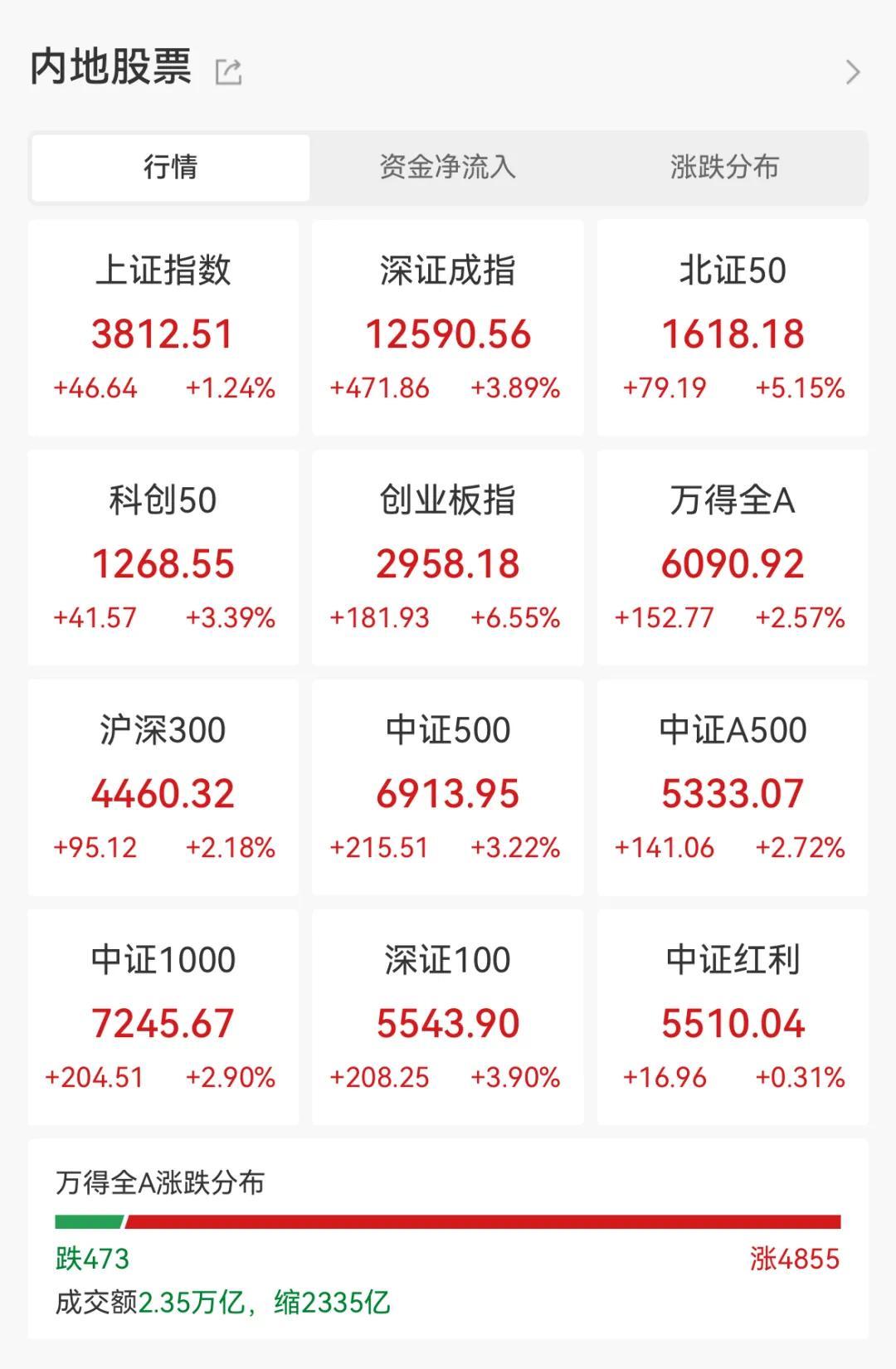
Market Overview - The A-share market experienced fluctuations in the morning but rose significantly in the afternoon, with the Shanghai Composite Index increasing by 1.24% to close at 3812.51 points, while the Shenzhen Component Index rose by 3.89% and the ChiNext Index surged by 6.55% [1][2] - A total of 4855 stocks rose, while only 473 stocks declined, with a market turnover of 23,483.59 billion yuan, a decrease of approximately 233.5 billion yuan from the previous day [1] Sector Performance - The lithium battery and solid-state battery sectors saw a surge, with over 20 stocks hitting the daily limit, including Tianhua New Energy and Xian Dao Intelligent [3] - The photovoltaic and energy storage sectors also performed well, with stocks like Jinlang Technology and De Ye Shares reaching their daily limit [3] - Conversely, sectors such as banking, dairy, and insurance experienced declines [3] Company Highlights - Sunshine Power's stock surged by 16.67% to 135.34 yuan per share, reaching a market capitalization of 280.59 billion yuan, with an intraday high of 137.66 yuan, marking a historical peak [4][5] - Sunshine Power reported a revenue of 43.53 billion yuan for the first half of 2025, a year-on-year increase of 40.34%, and a net profit of 7.735 billion yuan, up 55.97% [6] - The company's profitability is primarily driven by its photovoltaic inverter, energy storage business, and new energy investment development [6] Industry Trends - The Ministry of Industry and Information Technology and the State Administration for Market Regulation released an action plan for the electronic information manufacturing industry, emphasizing high-quality development in the photovoltaic sector and addressing low-price competition [5] - The photovoltaic industry is expected to see improvements in supply-demand structure due to ongoing support from higher authorities and the gradual implementation of price transmission mechanisms [7] - In the first half of 2025, several photovoltaic equipment companies reported net profits exceeding 1 billion yuan, with Sunshine Power leading at 7.735 billion yuan [7][8]
协鑫科技(03800):颗粒硅成本优势显著,盈利反转可期
HTSC· 2025-09-05 07:44
Investment Rating - The report maintains a "Buy" rating for the company with a target price of HKD 2.22, up from a previous target of HKD 1.30 [7][5]. Core Views - The company, GCL-Poly Energy Holdings Limited, is recognized as a global leader in granular silicon with significant cost advantages. Despite facing short-term performance pressures due to supply-demand mismatches and declining silicon prices, the company is expected to see a recovery in profitability driven by its leading cash cost position and advancements in perovskite technology [1][2]. - The ongoing "anti-involution" efforts in the photovoltaic industry are anticipated to stabilize silicon prices, which are expected to align with production costs, thus supporting the company's recovery [2][4]. Summary by Sections Financial Performance - In the first half of 2025, the company reported revenues of RMB 5.73 billion, a year-on-year decline of 35.3%, and a net loss attributable to shareholders of RMB 1.78 billion, an increase in loss of 20% year-on-year [1][2]. - The cash cost of granular silicon in H1 2025 was RMB 26.22 per kg, maintaining an industry-leading position, with a market share of 24.3%, up 7.2 percentage points from the second half of 2024 [2][5]. Production and Technology - The company has successfully launched its GW-scale perovskite production line, achieving significant efficiency improvements in its solar cells, with single-junction module efficiency reaching 19.04% and tandem module efficiency at 26.36% [3]. - The perovskite technology is expected to contribute to revenue growth, with projected shipments of 100 MW, GW, and 3-5 GW in the years 2026 to 2028 [3]. Market Dynamics - The report highlights the government's initiatives to promote the photovoltaic sector, which are expected to enhance downstream demand and stabilize pricing across the industry [4]. - The company is responding to the "anti-involution" call by maintaining low inventory levels and adjusting its sales forecasts for silicon materials and wafers, leading to revised profit expectations for 2025-2027 [5][24]. Profitability Forecast - The revised profit forecasts for 2025-2027 indicate net losses of RMB 2.30 billion, a profit of RMB 1.28 billion, and RMB 2.14 billion, respectively, reflecting a significant downward adjustment due to anticipated lower sales volumes [5][24]. - The report projects a recovery in profitability as the industry stabilizes, with a shift to a 2026 valuation based on a price-to-earnings ratio of 45x, reflecting the company's cost advantages and market position [5][26].
“反内卷”持续发力,光伏板块集体反攻!阳光电源狂拉超12%
Ge Long Hui A P P· 2025-09-05 06:28
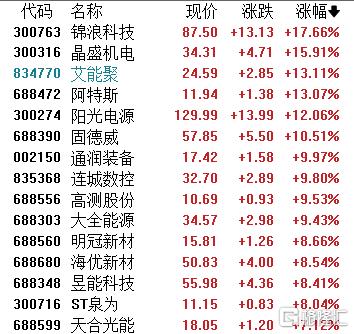
Core Viewpoint - The photovoltaic sector is experiencing a strong upward trend, driven by positive policy signals and a recovery in industry chain prices, with significant gains observed in various companies [1][2][4]. Group 1: Market Performance - As of September 5, photovoltaic stocks have shown strong performance, with notable increases such as Jinlang Technology rising over 17% and Sunshine Power increasing over 12% [1][2]. - The photovoltaic equipment sector has seen a cumulative increase of over 44% since its low point on April 9 [3]. Group 2: Policy Impact - The "anti-involution" initiative has been emphasized since the July meeting of the Central Financial Committee, aiming to eliminate low-price disorderly competition in the photovoltaic industry [4]. - The Ministry of Industry and Information Technology and the State Administration for Market Regulation have jointly issued a plan to promote high-quality development in the photovoltaic and lithium battery sectors [4]. Group 3: Price Recovery - The prices of photovoltaic materials, particularly silicon wafers, have shown significant recovery since July, with N-type G10L single crystal silicon wafers reaching an average price of 1.28 yuan per piece, a week-on-week increase of 2.40% [5]. - The price of 2.0mm single-layer coated glass has been raised by 2 yuan per square meter in September, indicating a positive trend for leading photovoltaic glass companies [5]. Group 4: Financial Performance - Sunshine Power reported a revenue of 43.533 billion yuan for the first half of 2025, a year-on-year increase of 40.34%, with a net profit of 7.735 billion yuan, up 55.97% [7]. - Longi Green Energy's revenue for the first half of 2025 was 32.813 billion yuan, a decrease of 14.83%, but it managed to reduce its net loss by 50.88% to 2.569 billion yuan [7]. - Trina Solar faced significant losses, with a net profit loss of 2.918 billion yuan, a year-on-year decline of 654.47% [7]. Group 5: Future Outlook - Analysts expect the photovoltaic industry to gradually recover due to ongoing policy support and continuous optimization of production capacity [6][8]. - The second quarter performance of the photovoltaic sector showed signs of marginal improvement, with expectations for further positive developments in the second half of the year [8].




光伏ETF基金(159863)涨超4.4%,工信部发文升级“反内卷”力度
Xin Lang Cai Jing· 2025-09-05 03:14
Core Viewpoint - The photovoltaic industry is experiencing a significant upward trend, driven by government initiatives aimed at stabilizing growth and addressing low-price competition, which is expected to lead to price recovery and a shift towards a more concentrated market dominated by technological and cost advantages [1][2]. Industry Summary - The China Photovoltaic Industry Index (931151) has seen strong gains, with key stocks such as Jinlang Technology (300763) up by 14.41%, Meichang Co. (300861) up by 13.52%, and Sunshine Power (300274) up by 12.50% [1]. - The Ministry of Industry and Information Technology (MIIT) and the State Administration for Market Regulation (SAMR) have launched a joint action plan to combat low-price competition in the photovoltaic sector, setting revenue growth targets that necessitate price increases for components [1][2]. - The market has shown positive signals, particularly in the polysilicon segment, where prices have been rising since July, with rod silicon reaching 55 yuan/kg and granular silicon at 49 yuan/kg as of September 1 [2]. Company Summary - The top ten weighted stocks in the China Photovoltaic Industry Index account for 56.14% of the index, with leading companies including Sunshine Power (300274), Longi Green Energy (601012), and TCL Technology (000100) [3]. - The photovoltaic ETF fund (159863) closely tracks the China Photovoltaic Industry Index, which includes up to 50 representative listed companies from the photovoltaic industry chain [2].