
大模型

Search documents
AI玩具如何有效陪伴
Jing Ji Ri Bao· 2026-02-25 22:28
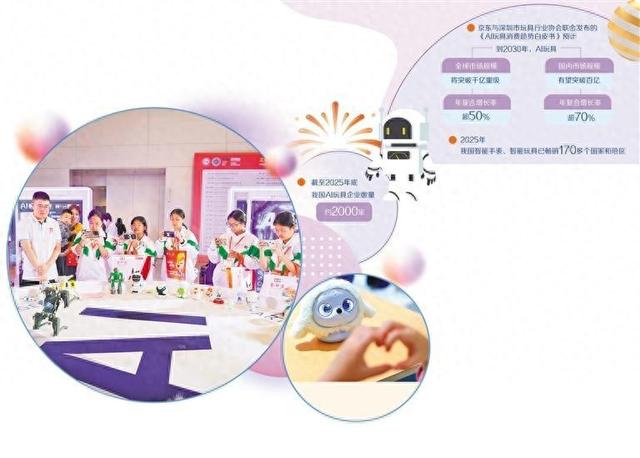
Core Insights - The popularity of AI toys has surged during the Spring Festival, becoming a favored gift among parents for their children, with concerns about content safety and psychological impacts emerging alongside this trend [2][3] Market Potential - The AI toy market is projected to exceed a global scale of 100 billion by 2030, with a compound annual growth rate (CAGR) of over 50%, while the domestic market is expected to surpass 10 billion with a CAGR exceeding 70% [3] Industry Dynamics - Numerous companies are rapidly entering the AI toy market, launching unique products such as Huawei's "Smart Hanhan" and JD's AI toys with social features, indicating a competitive landscape [4] - The number of AI toy companies in China is expected to reach around 2000 by the end of 2025, reflecting the industry's growth [6] Challenges and Concerns - Issues such as the disparity between marketing claims and actual product performance, along with a lack of core technological support among smaller brands, are contributing to a perception of "hype" in the industry [5] - Concerns regarding content safety and data security are prevalent among parents, with fears about inappropriate content and the potential for over-dependence on AI toys by children [7] Regulatory and Development Needs - Industry experts emphasize the need for collaboration among regulatory bodies, companies, and families to ensure the healthy development of AI toys, addressing pain points and enhancing their supportive role [8] - Companies are encouraged to focus on original product development, improve content review mechanisms, and ensure user data security to mitigate risks associated with AI toys [8] Parental Guidance - Families play a crucial role in the usage of AI toys, with recommendations for parents to limit usage time and educate children on digital literacy and privacy protection [9]

阿里Qwen3.5马年首开源!35B性能逆袭235B,给开发者送省钱绝招
Sou Hu Cai Jing· 2026-02-25 16:07
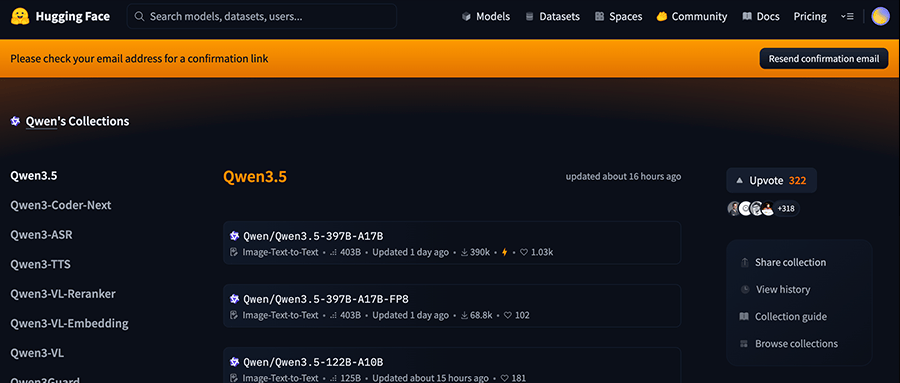
Core Insights - Alibaba has launched the Qwen3.5 series of medium models, including Qwen3.5-122B-A10B, Qwen3.5-35B-A3B, and Qwen3.5-27B, which are open-source and designed for various applications in AI [2] - The new models demonstrate competitive performance in instruction following, reasoning, mathematics, multilingual knowledge, and agent tool usage, comparable to leading international models like GPT-5 mini and Claude Sonnet 4.5 [2] Model Performance - Qwen3.5-35B-A3B has outperformed larger models such as Qwen3-235B-A22B-2507, showcasing that smaller models can achieve superior performance on less expensive hardware [12][74] - The Qwen3.5-122B-A10B model excels in multi-modal, video, and multi-language scenarios, while Qwen3.5-35B-A3B focuses on deep reasoning and task scheduling capabilities [78] - Qwen3.5-27B is optimized for lightweight deployment, demonstrating high practical utility in programming and long-text processing [78] Cost Efficiency - Developers have reported significant cost savings, with potential monthly expenses dropping from €2000 for Gemini services to €50 using Qwen3.5-35B-A3B [12][74] - The Qwen3.5-Flash version offers a low cost of 0.2 yuan per million tokens, making it accessible for complex tasks and long documents [14] Market Position - The Qwen series has increased its market share in the enterprise-level model sector, with daily usage rising from 17.7% to 32.1%, solidifying its leading position [18][97] - The rapid release of the Qwen3.5 series models within a week of the Qwen3.5-397B-A17B launch indicates a strategic move to enhance product offerings and meet developer demands [97] Technical Advancements - Qwen3.5 models incorporate a unified visual language foundation and an efficient mixed architecture, enhancing throughput and reducing latency [96] - The models support 201 languages and dialects, ensuring global deployment and cultural understanding [96]

A股晚间热点 | 豪掷百亿美元!存储巨头大动作
智通财经网· 2026-02-25 15:28
Group 1: China-Germany Relations - President Xi Jinping met with German Chancellor Merz, emphasizing three points for future China-Germany relations: mutual support, open and beneficial innovation partnership, and cultural understanding [1] Group 2: SK Hynix Investment - SK Hynix plans to invest 21.6 trillion KRW (approximately 150.7 billion USD) in a new chip production line in Yongin, South Korea, by 2030 to meet the growing semiconductor demand [2] Group 3: RMB Appreciation - Both onshore and offshore RMB have risen above 6.87 against the USD, driven by improved China-US trade relations, a weaker USD, and accelerated demand for currency conversion due to high export growth [3] - The appreciation of RMB is expected to attract foreign investment, particularly benefiting sectors like food and beverage, home appliances, and construction materials [3] - The RMB's rise may also positively impact sectors with high USD debt exposure, such as aviation and industrial metals [3] Group 4: Zimbabwe Lithium Export Suspension - Zimbabwe's Ministry of Mines announced an immediate suspension of all raw and lithium concentrate exports to enhance mineral regulation, allowing only companies with valid mining rights to export [4] - The expected lithium production in Zimbabwe for 2025 is projected at 28,000 tons, ranking fourth globally [4] Group 5: US-China Trade Relations - The Chinese Ministry of Commerce responded to the US Trade Representative's comments on continuing the 301 investigation into China's compliance with the Phase One trade agreement, urging the US to adopt a rational perspective [5] Group 6: UK Sanctions on Russia - The Chinese Foreign Ministry expressed strong dissatisfaction with the UK's expansion of sanctions against Russia, which includes Chinese entities, emphasizing the need for normal Sino-Russian cooperation [6] Group 7: Chinese Film Industry - China's film box office for 2026 is projected to exceed 9 billion USD, making it the largest single market globally, with the Spring Festival box office reaching 5.752 billion CNY [7] Group 8: Hong Kong IPO Market - The Hong Kong IPO market has seen a significant increase, with 24 companies completing IPOs in 2026, raising a total of 892.26 billion HKD, marking a year-on-year growth of 1013.59% [8] Group 9: Nvidia Earnings Report - Nvidia is set to release its quarterly earnings, with analysts predicting a 64.4% revenue growth for Q1 FY2027, highlighting the scrutiny on its performance amid previous high expectations [10] Group 10: Energy Storage Sector - The energy storage sector is experiencing significant developments, with Google adopting innovative "iron-air battery" technology, indicating a potential breakthrough in the battery industry [12] - The demand for large-scale energy storage is expected to grow by over 60% in 2026, driven by various factors including the US Inflation Reduction Act and increasing needs in emerging markets [12]

上市43天的独角兽,市值超越京东
财富FORTUNE· 2026-02-25 13:04
Core Viewpoint - The article discusses the rapid rise and subsequent fall of the market value of Zhipu AI, highlighting the volatility in the tech sector and the contrasting valuation logic between traditional companies like JD.com and emerging AI firms [1][12][14]. Group 1: Market Performance - On February 20, Zhipu AI's market capitalization reached 323.2 billion HKD, surpassing JD.com's 302.4 billion HKD, raising questions about market exuberance [1]. - Following a significant drop on February 23, Zhipu's market value fell to approximately 250 billion HKD, trailing JD.com by over 80 billion HKD [3]. - The stock price of Zhipu AI experienced extreme fluctuations, with a peak increase of 43% after the launch of its flagship model GLM-5, followed by a sharp decline due to operational issues [5][6]. Group 2: Product Launch and Market Reaction - Zhipu AI launched its GLM-5 model on February 12, which was designed for complex system engineering and long-range tasks, and subsequently raised prices for its services by 30% in China and over 100% internationally [4]. - The launch led to a significant increase in usage, with a reported 460% week-over-week growth in calls to the GLM-5 model, indicating strong demand [5]. - However, operational challenges arose, leading to a public apology from Zhipu AI for service delays and user limitations, which contributed to a loss of over 70 billion HKD in market value [6][9]. Group 3: Valuation Dynamics - Zhipu AI's market valuation reached a price-to-sales ratio of over 750 times, indicating a speculative pricing model based on future growth expectations rather than current profitability [10]. - In contrast, JD.com had a price-to-earnings ratio of 9.10 and a price-to-sales ratio of 0.22, reflecting a more traditional valuation based on historical performance and cash flow [12]. - The article suggests that the valuation disparity between Zhipu AI and JD.com represents a clash between "new money" focused on future potential and "old money" grounded in established financial metrics [13][14]. Group 4: Industry Context - The article notes that while Zhipu AI's valuation appears excessive when compared to JD.com, it may still be justified when considering valuations of AI companies like Anthropic, which is valued at 380 billion USD [16]. - The narrative surrounding Zhipu AI's rapid rise and fall mirrors previous market behaviors, indicating that any deviation from industry fundamentals could lead to a swift correction in valuations [15].

全球主流大模型进展跟踪
CAITONG SECURITIES· 2026-02-25 12:59
Investment Rating - The report maintains a "Positive" investment rating for the industry [2] Core Insights - The industry is witnessing a threefold evolution in overseas large models, focusing on reasoning foundation, action implementation, and ecological reconstruction, with major players like Anthropic, OpenAI, Google, and OpenClaw leading the charge [7] - Domestic large model companies are breaking through through open-source foundations, efficiency optimization, and collaborative agent ecosystems, with firms like Z.ai, MiniMax, Kimi, Alibaba, and ByteDance showcasing diverse strategies [7] - The industry trend indicates a shift from generation to action, with competition centering on supply efficiency and ecological reconstruction, emphasizing task complexity and ROI as key growth drivers [7] Summary by Sections Overseas Large Model Evolution - Anthropic has completed a dual-version model iteration, focusing on enterprise workflows and enhancing coding and long-range agent capabilities [11] - OpenAI is concentrating on long-range task closure and tool execution, evolving its models to become collaborative productivity assistants [25] - Google has released Gemini 3.1 Pro to enhance reasoning capabilities and Lyria 3 to expand into audio creation, reinforcing its competitive edge [32][40] - OpenClaw is positioned as a self-hosted gateway, integrating multiple communication channels and supporting tool-based agents [43] Domestic Large Model Breakthroughs - Z.ai's GLM-5 aims to extend open-source model capabilities to complex systems and long-range agent tasks, with a focus on engineering deployment [48] - MiniMax's M2.5 emphasizes real-world productivity, optimizing costs and throughput to facilitate agent scalability [53] - Kimi's K2.5 leverages a multi-modal MoE architecture to enhance visual understanding and parallel agent execution [65] - Alibaba's Qwen3.5-Plus focuses on open-source upgrades and multi-modal transitions to drive agent scalability [73] - ByteDance's recent model releases aim to transition AI capabilities from dialogue to actual task execution [81] Industry Trends - The industry is transitioning from generation to action, with a focus on supply efficiency and ecological reconstruction, as evidenced by the increase in token processing volumes and the emergence of efficiency-friendly models [89]

阿里云集齐四大顶尖开源模型 进一步推动AI应用爆发
Zheng Quan Ri Bao Wang· 2026-02-25 11:59
Core Insights - Alibaba Cloud has launched a new Coding Plan that includes four top open-source model APIs: Qwen3.5, GLM-5, MiniMax M2.5, and Kimi K2.5, allowing users to switch between models freely and enjoy higher token limits and stability [1][2][3] - The AI Agent market in China is projected to exceed 3.3 trillion yuan by 2028, indicating a significant growth potential for AI applications [2] - Alibaba Cloud's unique model commercial strategy, which aggregates top open-source AI models, enhances its competitive edge in the cloud and AI sectors [2][4] Model Features - Qwen3.5 boasts a total of 397 billion parameters with only 17 billion activated, achieving high efficiency and cost-effectiveness [1] - GLM-5 is the flagship model from Zhiyu, experiencing high demand for its API services [1] - MiniMax M2.5 is designed specifically for agent scenarios, excelling in advanced Excel processing and deep research tasks [1] - Kimi K2.5 shows significant improvements in programming and agent capabilities [1] Market Position - As of 2025, Alibaba Cloud is expected to capture 36% of the Chinese cloud market, significantly outpacing its competitors [4] - The integration of multiple models into a single platform simplifies the development process for developers and small startups, enhancing research and development efficiency [4] Cost Efficiency - The Coding Plan Lite offers up to 18,000 requests per month for new users at a cost of only 7.9 yuan, while the Pro plan allows for 90,000 requests at 39.9 yuan, significantly reducing costs for high-frequency coding scenarios [3] - This pricing strategy addresses the rising computational costs associated with AI agents, making it easier for developers to innovate and deploy applications [3]
豆神教育:公司与字节跳动未有直接合作
Zheng Quan Ri Bao Wang· 2026-02-25 10:49
Core Viewpoint - Dou Shen Education (300010) clarified that there is no direct collaboration with ByteDance, but its learning companion robot utilizes RTC technology from ByteDance's Volcano Engine platform and the Doubao large model, which enhances the voice interaction capabilities and user experience of the robot, though it does not significantly impact the company's fundamental operations [1]. Group 1 - The company confirmed no direct partnership with ByteDance [1] - The learning companion robot incorporates RTC technology and Doubao large model from ByteDance [1] - The integration of these technologies improves voice interaction and user experience [1] - The impact on the company's fundamental operations is not significant [1]

大模型股,集体大跌
Zhong Guo Ji Jin Bao· 2026-02-25 10:43
Market Overview - On February 25, Hong Kong's major indices showed mixed performance, with the Hang Seng Index rising by 0.66% to close at 26,765.72 points, while the Hang Seng Tech Index fell by 0.19% to 5,260.50 points. The total market turnover was HKD 236.8 billion, with net selling from southbound funds amounting to HKD 4.057 billion [1][2]. Real Estate Sector - The real estate stocks experienced a collective surge, with Country Garden rising by 6.45%, CIFI Holdings increasing by 6.02%, and Longfor Group up by 4.60% [3]. - A new policy from the Shanghai Municipal Housing and Urban-Rural Development Administration aims to optimize real estate regulations, including reducing housing purchase restrictions and improving housing loan policies, effective from February 26, 2026 [5]. Large Model Stocks - Large model concept stocks faced a significant decline, with MINIMAX-WP dropping by 14.37% to HKD 753.50 per share, and Haizhi Technology Group falling by 11.63% to HKD 107.90 per share [6]. - Some analysts believe that after a brief speculative surge, large model stocks are returning to rational pricing, while others suggest that major Chinese tech companies are undervalued, presenting a potential opportunity for bottom-fishing [8]. Pharmaceutical Sector - Federated Pharmaceuticals saw a notable increase, with its stock price rising by 5.75% after reporting mid-term clinical trial data for its weight loss drug UBT251, which showed an average weight loss of 19.7% in the treatment group [9][11]. Snack Industry - The snack company "Mingming Hen Mang" experienced a rise of 8.16%, closing at HKD 435 per share. The company operates under two main brands and is projected to achieve significant revenue growth, with expected revenues of RMB 63.164 billion, RMB 79.883 billion, and RMB 92.482 billion for 2025 to 2027, reflecting year-on-year growth rates of 60.5%, 26.5%, and 15.8% respectively [12].

网传阶跃星辰计划在港股IPO,公司暂无回应
Xin Lang Cai Jing· 2026-02-25 09:48
Core Viewpoint - The company Jieyue Xingchen is reportedly planning an IPO in the Hong Kong stock market, although it has not yet responded to these claims [1] Group 1: Financing and Investment - Jieyue Xingchen recently completed a B+ round of financing, raising 5 billion yuan, which sets a record for the largest single financing in the large model sector over the past 12 months [1] Group 2: Management Changes - Following the financing announcement, there have been significant personnel changes within the company, including the appointment of Yin Qi, the chairman of A-share listed company Chongqing Qianli Technology Co., Ltd., as the chairman of Jieyue Xingchen [1] - Zhao Ming, the former CEO of Honor, has also joined the board of Qianli Technology and will serve as co-chairman [1]
众信旅游:公司现已成功将阿里通义千问大模型与公司U护航等AI智能服务平台相互融合
Zheng Quan Ri Bao Wang· 2026-02-25 09:44
Core Viewpoint - The company has successfully integrated Alibaba's Tongyi Qianwen large model with its AI service platform U HuHuang, enhancing service capabilities and user experience [1] Group 1: Company Developments - The integration has led to an upgrade in service efficiency for stores and added new value to core business segments [1] - The company aims to build a new industry ecosystem by focusing on "resources + channels + technology" in collaboration with Alibaba [1] Group 2: Industry Impact - The partnership is expected to strengthen the online and offline integrated business model and service system [1] - This initiative is anticipated to release new growth momentum for the industry [1]
