供应链金融

Search documents
金融服务制造业举措频频 白名单、绿色通道、个性方案相继亮相
Xin Hua Wang· 2025-08-12 06:20
Core Viewpoint - The manufacturing industry is a crucial pillar of the national economy, and there is a strong emphasis on enhancing financial support for its high-quality development in 2023 [1][2]. Financial Support for Manufacturing - As of the end of June, the balance of medium- and long-term loans to the manufacturing sector increased by 29.7% year-on-year, outpacing the overall loan growth by 18.5 percentage points [1]. - The China Banking and Insurance Regulatory Commission has issued a notice to encourage banks to expand medium- and long-term loans and credit loans for the manufacturing sector, particularly focusing on high-tech manufacturing and strategic emerging industries [2][3]. - The manufacturing sector's loan demand index was reported at 59.7% in Q2 2022, indicating a higher demand compared to infrastructure, wholesale and retail, and real estate sectors [3]. Regional Initiatives - Local regulatory bodies are actively guiding financial institutions to increase funding for manufacturing, with specific initiatives in regions like Hunan, which has a diverse manufacturing base [4]. - Hunan's regulatory body has set a target for new medium- and long-term loans to manufacturing of over 35 billion yuan this year [4]. Bank Strategies - Major banks, such as China Construction Bank, are implementing specialized policies to support the manufacturing sector, including establishing a "white list" of key clients and providing differentiated credit management [5]. - In the first half of the year, the growth rate of medium- and long-term loans and credit loans for manufacturing at China Construction Bank was around 25% [5]. Addressing Financing Challenges - A specific case highlighted a company in the power equipment manufacturing sector facing cash flow issues, which was alleviated through factoring financing services [6]. - The regulatory body is conducting surveys to identify financial service challenges faced by manufacturing enterprises since the pandemic, aiming to implement targeted measures [7]. Future Directions - Recommendations include enhancing the quality of financial services for manufacturing, integrating financial support into various business areas, and developing diversified green financial products to support low-carbon transitions [7]. - Banks are encouraged to avoid blind withdrawal of loans and establish a sustainable lending mechanism to support small and medium-sized enterprises [7][8].
“数”通上下、“链”润实体, 浙商银行供应链金融新模式助力产业能级提升
Xin Hua Wang· 2025-08-12 06:14
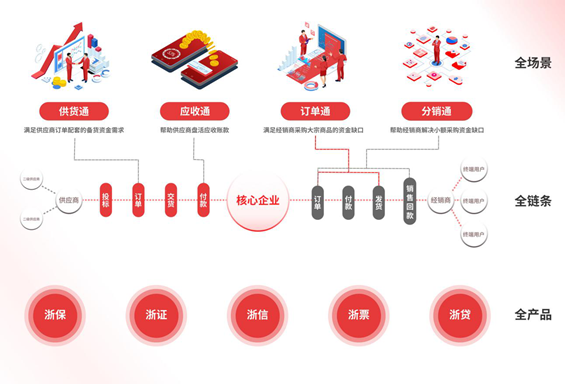
衢州市开化县音坑乡的农户叶友录只要跟人闲聊就极力推荐屋顶光伏电站和光伏贷,笑称"平均每 年增收8000元,相当于多了一笔养老钱"。老叶这一致富小能手的实现,正是得益于浙商银行的供应链 金融服务。 浙商银行在不断升级供应链金融服务模式的过程中发现,不同行业供应链融资存在差异化需求,须 从行业需求出发,分析行业在生产、采购、订单、支付、销售全场景的典型性特征,通过数字化应用, 分类施策提供行业供应链金融服务解决方案。 中央金融工作会议指出,要坚持把金融服务实体经济作为根本宗旨,要优化资金供给结构,把更多 金融资源用于促进科技创新、先进制造、绿色发展和中小微企业。浙商银行供应链金融新模式,就是在 服务实体、优化金融资源配置方面的一项成功探索。 近年来,浙商银行抓住数字化供应链金融发展机遇,主动投入数字化改革大潮,全力助推数字经济 创新提质"一号发展工程",围绕链上中小企业融资需求,坚持创新深化、高效联动,建设数字化供应链 金融平台,提升数据治理能力,释放数据要素价值,构建数智金融服务能力,全力保障中小微企业融资 畅通,助推浙江产业链供应链高质量发展。 创新应用 升级全链条、全场景、全产品的数智化供应链金融服务 "降 ...

六部门公开征求意见 规范供应链金融业务
Xin Hua Wang· 2025-08-12 06:11
规范商业银行供应链金融管理、有效防范业务风险。《通知》要求,商业银行一要完善供应链金融 信用风险管理,严格控制核心企业风险敞口,严防对核心企业多头授信、过度授信以及利用供应链金融 业务加剧上下游账款拖欠;二要严格履行贷款调查、风险评估、授信管理、贷款资金监测等主体责任, 不得将关键管理环节外包;三要规范供应链金融业务合作管理,定期评估合作供应链信息服务机构情况 等,对于存在违法违规归集资金、提供虚假客户资料或数据信息等情况的,应限制或拒绝合作;四要强 化供应链金融信息数据管理,完整获取身份验证、贷前调查、风险评估和贷后管理所需信息数据,加强 对借款人信息的保护。 明确应收账款电子凭证规范管理基本框架。例如,强化贸易背景真实性管理。《通知》要求,应收 账款电子凭证的开立、转让应具备真实贸易背景。商业银行开展相关融资业务应严格审核贸易背景材 料,有效识别和防范套取银行资金和无贸易背景的资金交易行为。供应链信息服务机构应对凭证转让层 级、笔数进行合理管控,对异常的拆分转让行为及时进行风险核查和提示报告。 【纠错】 【责任编辑:杨萌】 《通知》起草说明表示,为落实2023年10月中央金融工作会议关于全面加强金融监管, ...
民生银行发布2024年年报:业务结构持续优化 客户基础不断夯实
Xin Hua Wang· 2025-08-12 06:10
Core Insights - Minsheng Bank reported total assets of 78,149.69 billion yuan as of the end of 2024, an increase of 1,400.04 billion yuan, or 1.82% year-on-year [1] - The bank's net interest margin for 2024 was 1.39%, a decrease of 7 basis points from the previous year, but the decline has narrowed [1] - The bank focused on supporting key areas of the real economy, optimizing its asset-liability structure, and stabilizing net interest margins [1] Asset Side - The total amount of loans and advances reached 44,504.80 billion yuan, increasing by 656.03 billion yuan, or 1.50% year-on-year [1] - Growth rates for green credit, manufacturing loans, and inclusive small and micro enterprise loans were 22.41%, 9.38%, and 8.24%, respectively, all exceeding the average loan growth rate [1] - Loans in key regions such as Beijing-Tianjin-Hebei, Yangtze River Delta, and Guangdong-Hong Kong-Macao Greater Bay Area accounted for 65.57% of total loans, up 0.69 percentage points from the previous year [1] Liability Side - The bank actively reduced high-cost liabilities and expanded demand deposit sources, achieving a 4.54% increase in total deposits to 42,490.95 billion yuan [2] - The proportion of demand deposits in total deposits rose to 34.08%, an increase of 2.61 percentage points from the previous half-year [2] - The bank emphasized customer management, resulting in a steady increase in customer numbers and enhanced sustainable development capabilities [2] Small and Medium Enterprises (SMEs) - The bank aims to become the primary bank for small and medium-sized enterprises by optimizing its service model and enhancing customer acquisition channels [3] - As of the end of 2024, the loan balance for small and medium enterprises was 9,720.41 billion yuan [3] - The number of institutional clients increased by 15.96% year-on-year, reaching 39,637 [3] Inclusive Finance - The bank has enhanced its differentiated advantages in small and micro finance, with small micro loans totaling 8,551.02 billion yuan, an increase of 638.86 billion yuan [4] - The average interest rate for inclusive small micro enterprise loans was 4.27%, down 38 basis points from the previous year [4] - Retail customer numbers grew by 5.99% to 134.29 million, with private banking clients increasing by 12.48% [4]

海上也能放牧!青岛金融活水滋养蓝色经济新图景
2 1 Shi Ji Jing Ji Bao Dao· 2025-08-11 04:22
Core Viewpoint - The article highlights the development of a modern "marine ranching" industry in Qingdao, showcasing how financial support is driving the growth of the blue economy through innovative practices in marine aquaculture and logistics [1][3]. Group 1: Marine Ranching and Technology - The establishment of marine ranching requires significant environmental restoration efforts, including the introduction of artificial reefs and seaweed to revive marine ecosystems [2]. - Advanced technologies, such as smart deep-sea cages that mimic natural habitats, have increased aquaculture yields, with abalone production reaching 60,000 kilograms annually [2]. - The preservation of deep-sea delicacies like king crabs relies on stringent temporary holding conditions, necessitating substantial investment in cold chain logistics [2]. Group 2: Financial Support and Infrastructure - Financial institutions play a crucial role in supporting the construction of cold storage facilities and logistics infrastructure, enabling companies like Luhai Feng to expand their operations [3]. - The collaboration between banks and private enterprises has facilitated the development of a comprehensive supply chain, allowing for efficient financing and resource allocation [3][4]. - Qingdao's financial sector has introduced 177 marine-related financial products to address the financing challenges faced by small and medium-sized enterprises in the marine industry [3][6]. Group 3: Innovation in Financial Services - Supply chain finance has emerged as a key innovation, allowing core enterprises to back smaller firms, thus enabling banks to provide financing based on real trade and collateral [4]. - The introduction of electronic warehouse receipt financing has led to significant transactions, with over 25 billion yuan in financing processed [5]. - Comprehensive insurance solutions have been developed for deep-sea research and equipment, providing substantial risk coverage for critical marine projects [5]. Group 4: Financial Performance Metrics - As of June 2025, the marine-related loan balance in Qingdao reached 144.9 billion yuan, reflecting a robust growth of 15.47% since the beginning of the year [6]. - Marine insurance premium income also saw a year-on-year increase of 15.75%, indicating a growing market for blue finance [6]. - The Qingdao financial regulatory authority is actively promoting the development of blue bonds and credit products to further enhance financial support for the marine economy [6].
央企供应链金融平台要守住赋能中小企业的初心与边界
Qi Huo Ri Bao Wang· 2025-08-11 00:42
Core Viewpoint - The State-owned Assets Supervision and Administration Commission (SASAC) has recognized the role of central enterprises in providing liquidity support to market entities through low-interest loans and deferred payments in the current economic environment [1] Group 1: Central Enterprises' Initiatives - Ansteel Group and Bank of Communications launched the "Ansteel Rongxin" supply chain financial product, which is seen as a significant step towards high-quality development and fulfilling social responsibilities [1] - The "Ansteel Rongxin" product utilizes digital technology for online order financing, providing low-cost funding support to small and medium-sized steel mills [1] - Ansteel Group Capital Holding Co., Ltd. has established an industrial financial service platform that includes products like Ansteel Huixin and Ansteel Rongxin, aiding small enterprises in expanding their financing channels [1] Group 2: Policy Guidance and Responsibilities - The SASAC issued a notice in May 2022, directing central enterprises to leverage their creditworthiness and technological advancements to support small and medium enterprises [2] - The notice emphasizes that central enterprises must actively engage in supply chain financing and transmit their credit to smaller enterprises, prohibiting high-interest arbitrage practices [2] - The core mission of the supply chain financial platform is to alleviate the difficulties faced by small enterprises and ensure payment rights, rather than serving as a tool for profit maximization [2] Group 3: Regulatory Developments - The Financial Regulatory Bureau has indicated that the restoration of "one head outside" financial services by financial companies is unlikely in the short term due to severe regulatory scrutiny [3] - Investigations revealed that some enterprises engaged in improper practices, such as using financial company bills to replace cash settlements, leading to dual profit models that harm small enterprises [3] - The new management measures for corporate financial companies, effective from November 2022, restrict their operations to serving internal group members and emphasize the need for focused management [3] Group 4: Historical Context and Future Directions - The "one head outside" business model for financial companies began in 2014 but was ultimately terminated due to misalignment with its intended purpose [4] - The Financial Regulatory Bureau's guidance in April 2024 reiterated the importance of financial companies serving their groups and preventing them from becoming mere financing channels [4] - Central enterprise supply chain financial platforms must prioritize genuine service to small enterprises and adhere to the principles of empowering the real economy to maintain their foundational role [4]
金融支持农产品冷链物流建设要精准发力
Zheng Quan Ri Bao· 2025-08-09 14:42
Core Viewpoint - The Ministry of Agriculture and Rural Affairs has signaled a strong push to enhance agricultural product consumption, emphasizing the importance of financial innovation to support cold chain logistics development [1][2]. Group 1: Financial Support for Cold Chain Logistics - Financial institutions are encouraged to create tailored credit products and service models that address the specific needs of cold chain logistics, focusing on key areas such as pre-cooling warehouses, refrigerated vehicles, and cold storage information systems [1]. - Loan terms may be extended, interest rates could be reduced, and flexible collateral options like "future revenue rights" pledges should be explored to lower financing barriers [1]. - For qualifying cold chain logistics companies, policies such as relending and interest subsidies can further reduce financing costs [1]. Group 2: Insurance and Risk Management - Financial institutions can pilot a combination of "insurance + credit" by developing new insurance products like cold chain logistics liability insurance and agricultural product price index insurance to mitigate operational risks and enhance credit lending willingness [1]. - The use of blockchain technology to create "supply chain finance" products can provide financing support to core enterprises and their upstream and downstream small and micro enterprises, addressing the "financing difficulty" issue [1]. Group 3: Technological Empowerment - Financial institutions can leverage big data, artificial intelligence, and the Internet of Things to monitor key data such as storage temperature, transportation routes, and product quality in real-time, thereby constructing precise risk control models [1]. - This technological approach aims to provide cold chain logistics companies with more reasonable credit limits and safer financial services [1]. Group 4: Collaborative Ecosystem - Financial institutions are encouraged to collaborate with local governments, leading agricultural enterprises, and industry associations to build a multi-party cooperation ecosystem of "finance + industry" [2]. - The continuous empowerment of finance is essential for addressing challenges such as "disconnection" and "high loss rates" in cold chain logistics, ultimately ensuring that more quality agricultural products reach consumers efficiently and safely [2].

全力支持临沂打造供应链票据生态建设示范市
Jin Rong Shi Bao· 2025-08-08 07:55
Group 1 - The "Yilian Tong" supply chain bill public service platform successfully completed a system connection with Qilu Bank, marking the first supply chain bill discount business in China on June 26, 2025, which supports the establishment of a supply chain bill ecosystem in Linyi City [1] - The first supply chain bill of 500,000 yuan was issued on the "Yilian Tong" platform and successfully discounted by Qilu Bank within 20 minutes, showcasing the efficiency of the system connection and deepening cooperation in supply chain finance [1] - This initiative opens a new green channel for inclusive bill services for small and micro enterprises, enhancing their financing opportunities [1] Group 2 - The "Yilian Tong" platform is the 25th supply chain bill service platform approved for direct connection to the Shanghai Bill Exchange, providing comprehensive online processing services for bill issuance, acceptance, transfer, discount, and pledge [2] - The collaboration between "Yilian Tong" and Qilu Bank aims to create more demonstration scenarios for supply chain bills, focusing on local industries and innovating business models to better serve small and micro enterprises [2] - Both parties will share successful experiences and explore new paths and models for the development of supply chain finance, contributing to the stability of industrial and supply chains and promoting high-quality economic development [2]
互金协会发布《应收账款电子凭证业务自律管理规范》等七项自律规则
Jin Rong Shi Bao· 2025-08-08 07:54
5月12日,中国互联网金融协会发布《应收账款电子凭证业务自律管理规范》等七项自律规则。互 金协会表示,为落实《关于规范供应链金融业务引导供应链信息服务机构更好服务中小企业融资有关事 宜的通知》有关要求,做好对供应链信息服务机构和应收账款电子凭证业务的自律管理,中国互联网金 融协会组织制定了《应收账款电子凭证业务自律管理规范》等七项自律规则,经协会第二届理事会第三 次会议审议通过,并经中国人民银行同意,自2025年6月15日起实施。 责任编辑:杨喜亭 ...
财务公司供应链金融不断进阶 从“资金平台”到“链上枢纽”
Jin Rong Shi Bao· 2025-08-08 07:52
Core Insights - Supply chain finance is becoming a crucial force for enhancing the quality and efficiency of financial services to the real economy, supported by digital technology and industry collaboration [1][4] - Recent regulations emphasize the importance of optimizing and upgrading supply chains, particularly in key industries like manufacturing, to enhance resilience and competitiveness [1][2] Group 1: Industry Trends - Financial companies are increasingly focusing on supply chain finance, not only in traditional areas like bill acceptance and discounting but also in innovative models and technology empowerment [1][2] - The financial company sector is expected to issue approximately 2.3774 million loans, amounting to 5.42 trillion yuan in 2024, with short-term loans at 1.85 trillion yuan and medium to long-term loans at 1.96 trillion yuan [2] - Financial companies are expanding their workforce to include financial technology talents, indicating a shift towards digitalization in supply chain finance [1][2] Group 2: Product Innovation - China Railway Construction Finance Co. has introduced innovative supply chain finance products such as "Supply Payment Loan," "Battle Procurement Loan," and "Payment Guarantee Loan (2025)," which address various financing needs across the supply chain [3] - These products aim to enhance the efficiency of fund circulation within the supply chain, providing targeted financial support to upstream and downstream enterprises [3][4] Group 3: Digital Transformation - The financial industry is undergoing rapid digital transformation, with companies like Hubei Jiaotong Finance establishing platforms like "Chudao Cloud Chain" to provide inclusive financial solutions across the entire supply chain [6] - Hubei Jiaotong Finance reported an asset on-chain scale of 15 billion yuan and a financing scale of 12.8 billion yuan, with a financing conversion rate of 85% by the end of 2024 [6] Group 4: Customization and Collaboration - Financial companies are focusing on creating customized service systems that align with industry needs and address supply chain pain points, leveraging technology such as big data and blockchain [7] - The integration of internal banking, supply chain finance, and treasury management is becoming a common practice among financial companies to enhance service efficiency [5][7]