
区域协调发展

Search documents
东南沿海,迎来“超级通道”!
Xin Lang Cai Jing· 2025-12-19 11:15
Core Viewpoint - The opening of two high-speed rail lines in Guangdong, the Guangzhou-Zhanjiang High-Speed Railway and the Shantou-Shanwei High-Speed Railway, marks a significant advancement in regional connectivity and infrastructure development in China, enhancing economic integration across the province and beyond [2][10][18]. Group 1: High-Speed Rail Details - The Guangzhou-Zhanjiang High-Speed Railway (Guangzhan Railway) will officially open on December 22, 2023, with a total length of 401 kilometers and a design speed of 350 km/h [2][5]. - The Shantou-Shanwei High-Speed Railway (Shanshan Railway) will also commence operations on the same day, covering 162 kilometers and connecting Shantou to Shantou South [5][7]. - Both railways will create a "super corridor" that connects multiple cities, including Shantou, Zhanjiang, Guangzhou, and others, facilitating travel times of approximately 1.5 hours to Guangzhou [18]. Group 2: Economic and Regional Development - The construction of these railways addresses regional development disparities in Guangdong, where the Pearl River Delta (PRD) region accounts for 81.5% of the province's GDP, while the eastern and western regions lag behind [13][14]. - The development aims to enhance the economic capabilities of Shantou and Zhanjiang, which are designated as provincial sub-center cities, and to promote overall growth in the eastern Guangdong region [16][18]. - The railways are part of a broader strategy outlined in the "14th Five-Year Plan" to create new growth poles in the eastern and western regions, linking them with the PRD [16][19]. Group 3: Engineering and Technical Achievements - The Shantou Bay Undersea Tunnel, part of the Shanshan Railway, is noted for its engineering challenges, including high water pressure and complex geological conditions, marking significant technical achievements in railway construction [11][12]. - The tunnel is recognized as the world's first high-speed railway undersea tunnel with a single bore and dual tracks designed for speeds of 350 km/h, showcasing advancements in railway engineering [12][10]. Group 4: Future Developments - The completion of these railways is expected to enhance connectivity with other regions, including the construction of additional high-speed rail lines such as the YQG Railway and the Hainan Railway, further integrating Guangdong with neighboring provinces [21][22][25]. - Future projects aim to extend the "super corridor" to connect with key economic areas, enhancing the overall transportation network in southern China [27][19].


以电力高质量发展促进区域协调发展
Xin Hua Cai Jing· 2025-12-19 09:20
Core Viewpoint - The 20th Central Committee's Fourth Plenary Session emphasizes optimizing regional economic layout and promoting coordinated regional development, particularly through the enhancement of the power industry as a key component of modern infrastructure and new energy systems [1] Group 1: Development Strategies - The power industry should focus on high-quality development, ensuring safety and stability in power supply while promoting the unified optimization of resources across regions [2] - In major urban growth areas, supportive and flexible power sources should be established to facilitate high-quality economic development, including the orderly development of nuclear power and the strategic use of coal power [2] - The development of renewable energy should be optimized in terms of scale, structure, and layout, with a focus on increasing effective capacity, particularly for wind and solar energy [3] Group 2: Technological Integration - The emergence of new market entities driven by technological advancements necessitates a collaborative development of centralized and distributed energy systems, enhancing local energy supply and grid efficiency [4] - The development of autonomous distributed energy systems, particularly in industrial parks and urban areas, should be promoted to support zero-carbon initiatives and integrate renewable energy technologies [5] Group 3: Regional Coordination - The transition of the power structure towards non-fossil energy sources is increasingly focused on resource-rich areas in the west and north, with coastal regions playing a crucial role in energy consumption [7] - The development of offshore wind energy bases should shift from mere power generation to multifunctional facilities that integrate various energy resources, enhancing overall efficiency [8] - The promotion of "West Electricity to the East" and the relocation of industries to the west are critical for achieving coordinated development between energy and industry [8]
首都航空今日开通海口往返珠海航线
Ren Min Wang· 2025-12-19 08:49
Core Viewpoint - Capital Airlines is launching a new route between Haikou and Zhuhai on December 19, 2025, to enhance connectivity between Hainan Free Trade Port and the Guangdong-Hong Kong-Macao Greater Bay Area, promoting winter tourism and regional cooperation [1] Group 1: Route Development - The new route will create an efficient air passage for winter tourism, linking tropical retreats with coastal leisure in the Greater Bay Area [1] - This initiative aligns with national strategies for regional coordinated development and the construction of a strong civil aviation sector [1] Group 2: Tourism and Economic Impact - The route aims to facilitate deep cooperation in trade, industry collaboration, and cultural tourism between Hainan and the Greater Bay Area [1] - It is expected to inject transportation momentum into the full closure operation of Hainan Free Trade Port [1] Group 3: Customer Experience and Services - Capital Airlines is developing personalized products to cater to diverse ticket purchasing needs, including discounts for seniors, worry-free round trips, group bookings, and enhanced baggage services [1] - The airline emphasizes improving passenger travel experiences and contributing to the development of a strong civil aviation sector [1]
中棉集团落子宁夏银川 织就现代纺织业新篇章
Xin Hua Wang· 2025-12-19 02:58
Core Viewpoint - China Cotton Group's recent establishment in Yinchuan, Ningxia, represents a strategic move to optimize its national layout and strengthen the industrial chain, showcasing collaboration between central enterprises and local governments to drive high-quality development [1][2]. Group 1: Strategic Development - The entry into Yinchuan aligns with national strategies for regional coordinated development and aims to promote industrial revitalization in the western region [2]. - Ningxia's advantages in policy support, industrial foundation, and cost factors are key considerations for China Cotton Group's investment [2]. - The partnership involves a modern factory with approximately 530,000 spindles, reflecting the industrial development in Ningxia and facilitating efficient asset utilization [2]. Group 2: Collaborative Innovation - The collaboration aims to create a new industrial development model that integrates national strategy, central enterprise leadership, local empowerment, and overall industrial chain enhancement [3]. - Local government entities have demonstrated effective service and execution, providing comprehensive support in policy, approval, and resource allocation [3]. - The partnership signifies a shift for China Cotton Group from a cotton trading service provider to an organizer of the industrial chain and high-end manufacturer [3]. Group 3: High-Quality Development - The project emphasizes the transformation of traditional industries towards high-end, intelligent, and green production, accelerating the development of new productive forces in the textile sector [5]. - The collaboration involves the introduction of advanced management concepts, production technologies, quality standards, and market channels to systematically upgrade the existing manufacturing system [5]. - This partnership exemplifies a new productive force by integrating the vision and resource capabilities of central enterprises with local governance and the foundational strength of local industries [5].
以协调发展促进城乡融合和区域联动
Xin Hua She· 2025-12-19 00:44
"千钧将一羽,轻重在平衡。""协调"是新发展理念的重要内容,区域协调发展是中国式现代化的内在要 求,是高质量发展的战略支撑。新时代以来,以习近平同志为核心的党中央在全局上谋势、在关键处落 子,不断丰富完善协调发展的理念、战略和政策体系。在习近平经济思想科学指引下,我国城乡融合、 区域协调发展扎实推进,经济发展空间格局持续向纵深拓展,逐步构建优势互补、高质量发展的区域经 济布局,积蓄推动高质量发展的强大势能。 当前,我国正坚定不移以高质量发展推进中国式现代化,但发展不平衡不充分问题仍然突出。破解发展 难题,拓展发展空间,要求纵深推进区域协调发展,让城乡之间、区域和区域之间进一步协同融通,畅 通国内大循环,进一步发挥中国特色社会主义制度优势、超大规模市场优势、完整产业体系优势、丰富 人才资源优势,进一步形成高质量发展合力。必须坚持系统思维,统筹经济社会发展全局,采取务实有 力举措进一步增强发展的协调性和平衡性,更好地稳中求进、提质增效,为高质量发展持续赋能,推动 中国式现代化行稳致远。 中央经济工作会议着眼经济社会发展全局,强调坚持协调发展,促进城乡融合和区域联动。会议聚焦推 动协调发展作出的一系列决策部署、提出 ...
住陕全国政协委员在咸阳开展集中视察
Shan Xi Ri Bao· 2025-12-18 22:59
Group 1 - The National Committee members conducted a concentrated inspection in Xi'an to optimize regional economic layout and promote technological innovation for industrial upgrading [1] - Members visited companies such as Rainbow Display Device Co., Ltd. and Shaanxi Tiancai Aviation Materials Co., Ltd. to understand key core technology breakthroughs and major technological achievements [1] - The inspection included a visit to the East Zhuang Reservoir to assess construction progress and hear about flood control, water resource optimization, and ecological improvement [1] Group 2 - The committee emphasized the importance of learning and implementing the spirit of the 20th Central Committee and the Central Economic Work Conference, focusing on optimizing regional economic layout and strengthening technological innovation [2] - There is a call for continuous grassroots engagement to gather real insights and propose effective strategies for rural revitalization and industrial upgrading [2] - The committee aims to promote the new achievements and opportunities in Shaanxi's development, contributing to a strong start for the "15th Five-Year Plan" [2]
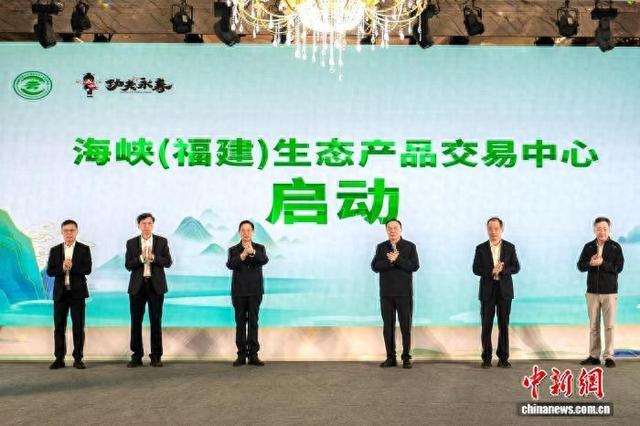
聚焦“环戴云山”绿色经济产业 海峡(福建)生态产品交易中心启动
Zhong Guo Xin Wen Wang· 2025-12-18 15:13
Core Viewpoint - The third annual "Ring Daiyun Mountain" Green Economy Industry Regional Alliance conference was held in Yongchun County, focusing on promoting high-quality development of the green economy in the region through the establishment of the Straits (Fujian) Ecological Product Trading Center [1][3]. Group 1: Regional Development and Collaboration - The "Ring Daiyun Mountain" area, known for its ecological richness and as an important ecological barrier, has unique advantages for developing a green economy [3]. - The Fujian "Ring Daiyun Mountain" Green Economy Industry Regional Alliance, established in 2023, includes six counties: Yongchun, Dehua, Youxi, Datian, Xianyou, and Yongtai, and aims to transition from "single resource output" to "full-chain collaboration" [3]. - The alliance has begun to form a green economy industry belt valued at over 100 billion [3]. Group 2: Strategic Initiatives and Innovations - The conference saw the unveiling of the "Rural Talent Station Alliance" and the appointment of an expert advisory group to inject intellectual resources into regional development [5]. - Three strategic cooperation agreements were reached, focusing on bamboo-based new materials, co-construction of bamboo product bases, and collective entry of ecological products from the six counties into provincial highway service areas [5]. - Future efforts will concentrate on three main directions: promoting green industrial development, nurturing strategic talent, and facilitating ecological value transformation [5]. Group 3: Standards and Practices - The release of the "Technical Regulations for the Construction of Standard Land for Under-Forest Economy" and the "Practice Report on Realizing the Value of Ecological Products in Yongchun County" provides a framework for refined management and value development of ecological resources [5]. - The conference theme emphasized ecological value transformation as a means to lead regional collaborative development [5].
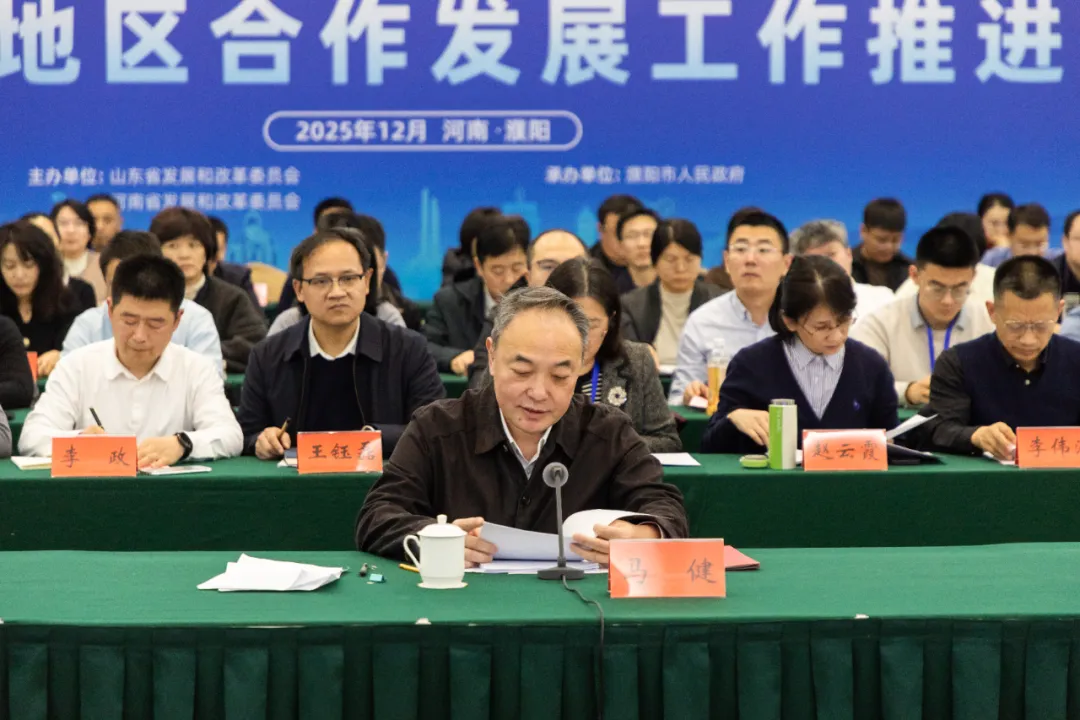
山河有约谱新篇!鲁豫共绘黄河协同发展新画卷
He Nan Ri Bao· 2025-12-18 10:28
Core Viewpoint - The meeting held on December 16 focused on advancing cooperation between Henan and Shandong provinces, emphasizing ecological protection and high-quality development in the Yellow River basin [1][8]. Group 1: Cooperation Progress - The cooperation between Henan and Shandong has made significant strides since the first joint meeting in December last year, with advancements in infrastructure connectivity, technological innovation, industrial collaboration, cultural tourism integration, ecological environment governance, and public service sharing [3][6]. - Key infrastructure projects such as the Xiongshan High-Speed Railway and several highways and bridges across the Yellow River are progressing rapidly [3]. - Collaborative efforts in technology and innovation have led to strategic partnerships, talent development, and research cooperation [3]. Group 2: Agreements and Frameworks - The meeting approved the "Key Work Arrangement for Deepening Cooperation in the Henan-Shandong Border Areas by 2026" and revised the cooperation meeting system [4]. - Several cooperation agreements were signed, including a framework agreement between credit companies and a collaborative mechanism for credit repair and data resource utilization [4]. Group 3: Future Plans and Goals - The meeting highlighted 2026 as a pivotal year for cooperation, focusing on ecological protection, infrastructure connectivity, and industrial development [6][8]. - The provinces aim to implement 30 key tasks and 19 important initiatives to establish the border area as a model for ecological protection and high-quality development [6]. - Emphasis was placed on enhancing public services, ensuring safety, and promoting high-quality development as primary objectives [8].
湖南:锚定“三高四新”绘蓝图 以改革创新谱写现代化新篇
Zhong Guo Fa Zhan Wang· 2025-12-18 09:04
记者注意到,《建议》明确了高质量发展成效更加彰显、"三个高地"建设成果更加丰硕、"一带一部"区 位优势更加凸显等七大主要目标,提出"到2035年实现全省经济实力、科技实力和综合实力大幅跃升, 人均地区生产总值达到中等发达国家水平"的远景目标。 筑强"三个高地" 激活高质量发展新动能 中国发展网讯 曾盼明 记者邢成敏报道 近日,《中共湖南省委关于制定湖南省国民经济和社会发展第十 五个五年规划的建议》(以下简称《建议》)正式发布。立足党的二十届四中全会精神实践要求,《建 议》紧扣"三高四新"美好蓝图,明确了未来五年湖南基本实现社会主义现代化的"路线图"与"任务书", 勾勒出三湘大地高质量发展的奋进图景。 根据《建议》,湖南将持续用力打造国家重要先进制造业高地、具有核心竞争力的科技创新高地、内陆 地区改革开放高地。"三个高地"建设这一部署既是对湖南产业基础的精准把握,更是落实党的二十届四 中全会"构建高水平社会主义市场经济体制"要求的生动实践。 区域协调发展是高质量发展的内在要求。《建议》立足"一带一部"区位优势,以"一核两副三带四区"为 骨架,构建优势互补、高质量发展的区域经济布局。 在先进制造业领域,《建议》明 ...
张掖与深圳前海深化协作结出务实成果
Nan Fang Du Shi Bao· 2025-12-18 08:52
而作为习近平总书记亲自谋划、亲自部署、亲自推动的国家改革开放重大举措落实之地,前海合作区始 终坚持"依托香港、服务内地、面向世界"的核心定位,构建起市场化、法治化、国际化的营商环境,形 成了涵盖信息、金融、现代物流、科技服务等领域的现代服务业体系,2024年GDP达3008.8亿元,跨境 电商进出口额突破1200亿元,在助力企业出海、产品出境、资源整合等方面具有得天独厚的优势。 "良品"寻"良配"。为开拓市场,延伸链条,张掖市主动出击,于千里之外寻求合作伙伴,搭建"共赢桥 梁"。张掖市政府主要领导亲自对接,市政府考察组赴深圳前海管理局拜访,与前海管理局围绕农特产 品出海、现代服务业合作、招商引资、人才交流等领域深入洽谈,形成广泛共识。张掖市招商局多次与 前海管理局对接沟通,并与其综合服务平台——深圳前海e站通就助力张掖市农产品出海达成初步合作 意向。深圳前海e站通向大湾区供应链企业推送了张掖市概况、优势产业、特色农特产品等,还为张掖 市推荐了深圳乘乘控股集团有限公司、深圳市铧宇实业有限公司、深圳眸迪智慧科技有限公司、华奥农 科玉有限公司、深圳市进出口食品商会等一批企业和机构,初步达成蛋品贸易云仓建设、鲜食玉米 ...