
循环经济

Search documents
如何提升纤维制品质量监测效能?
Xin Lang Cai Jing· 2026-01-13 18:49
Core Viewpoint - The article discusses the efforts of the Market Regulation Administration to enhance the quality monitoring of fiber products, which directly impacts public health and interests, particularly in the context of infant clothing and school uniforms [1][2]. Group 1: Quality Monitoring Mechanism - The administration plans to construct a quality monitoring mechanism for fiber products by integrating data from production, circulation, consumption, and public opinion to establish a dynamic risk assessment and early warning model [1]. - Big data analysis will be utilized for targeted monitoring of key products, high-risk areas, and new materials, especially in the recycling of used textiles and potential risks associated with new functional fiber materials [1]. Group 2: Online and Offline Monitoring - There will be a strengthened integrated monitoring mechanism for both online and offline channels to address the complexities arising from the rapid development of new sales channels such as e-commerce platforms, live marketing, and social e-commerce [2]. - The aim is to timely assess the quality and safety risks of fiber products and ensure that e-commerce platforms fulfill their responsibilities regarding quality safety [2]. Group 3: Standards and Technology Upgrades - The administration will accelerate the updating of standards and the upgrading of testing technologies to keep pace with the development trends of new materials and processes [2]. - This includes revising safety and performance standards for fiber products, supplementing safety indicators and testing methods, and providing technical support for the improvement of the fiber product standard system [2].
国家发展改革委:今年将牵头制定循环经济发展“十五五”规划
Zheng Quan Ri Bao· 2026-01-13 17:10
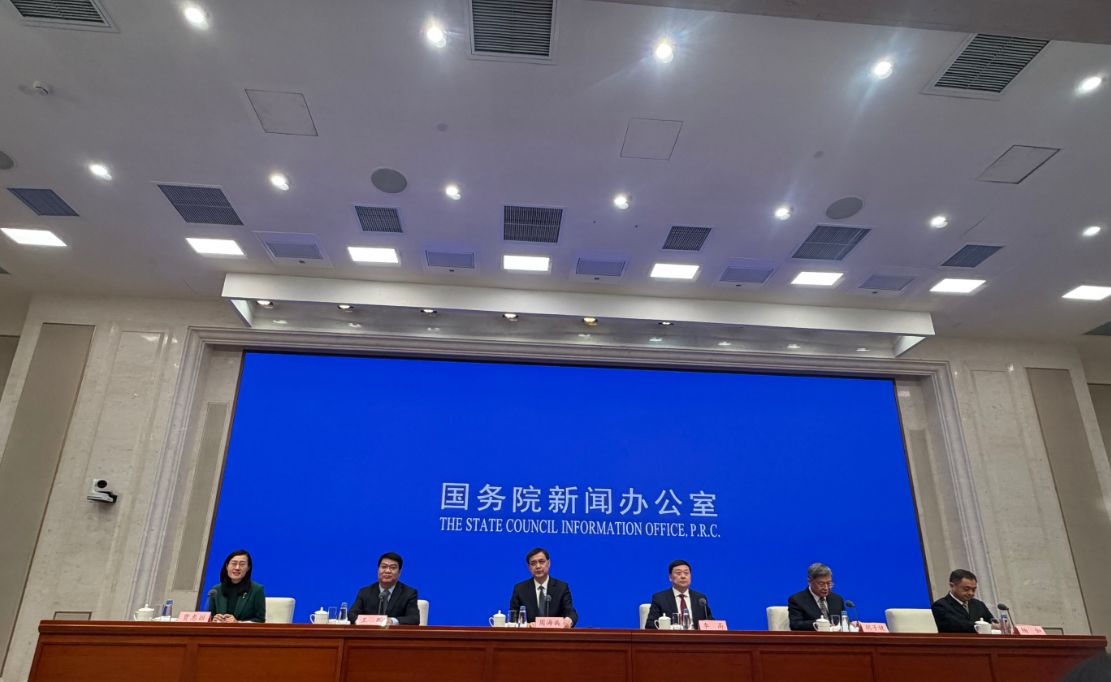
"今年,国家发展改革委将牵头制定循环经济发展'十五五'规划,明确重点领域循环经济发展目标任 务,部署传统再生资源、稀贵金属、'新三样'固体废物等回收利用重点举措,完善保障体系,进一步提 高资源利用效率,强化资源安全保障,支撑绿色低碳转型,推动循环经济高质量发展取得新的成效。"1 月13日,国家发展改革委副主任周海兵在国新办举行的国务院政策例行吹风会上说。 加强固体废物综合治理,是推进美丽中国建设、加快经济社会发展全面绿色转型的重要举措。伴随工业 化、城市化进程,工业废物、建筑垃圾、农林业废物等固体废物快速增加。不过,从资源属性看,固体 废物也并非无用之物,而是放错位置的宝贵资源,具有显著的资源属性。 以工业固体废物为例,据工业和信息化部节能与综合利用司司长王鹏介绍,"十四五"期间,工业和信息 化部积极推动工业固废的综合利用工作,推动政策标准不断完善,持续提升技术装备水平,同时促进产 业链上下游更加协同紧密,赤泥、磷石膏等复杂难用固废的综合利用取得了积极进展。据相关行业协会 的统计数据,我国大宗工业固废综合利用率达到了57%。 王鹏表示,下一步,工业和信息化部将会同有关部门,认真落实国务院《固体废物综合治理行动 ...
从637台再生电脑到204台净水器,中国基金行业公益实践触角伸向远方
Hua Xia Shi Bao· 2026-01-13 14:11
Group 1 - The article highlights the increasing involvement of Chinese public fund companies in social welfare projects, focusing on education and health initiatives in underprivileged areas [2][3][4] - Shanghai Fuguo Environmental Public Welfare Foundation's "Love Transmission: Recycled Computer Classroom" project has established 17 computer classrooms and donated 637 recycled computers by 2025, benefiting rural schools across various provinces [3][4] - Other fund companies, such as Bosera Fund and ICBC Credit Suisse Fund, are also engaging in similar initiatives, including donating refurbished computers and improving basic educational facilities in impoverished regions [4][5] Group 2 - The article discusses the importance of education in breaking the cycle of poverty, with multiple fund companies targeting resource-poor areas for their philanthropic efforts [3][5] - The "Love Health: Clean Water Warm Heart Action" by Shanghai Fuguo Foundation has installed 204 water purification machines in 63 schools, providing clean drinking water to over 27,000 students [4] - The article emphasizes the systemic support provided by funds like Nuon Fund, which not only offers financial assistance to students but also addresses mental health and early childhood education training [5][6] Group 3 - The article addresses the growing concern of elderly care in rural areas, particularly in regions with high elderly populations, with funds like Nuon Fund donating 1.2 million yuan to support rural elderly care services [6][7] - Initiatives include improving basic facilities and organizing cultural activities to enhance the quality of life for the elderly [6][7] - The article also highlights the importance of sustainable support mechanisms, moving from one-time donations to fostering self-sustaining systems in rural communities [9][10] Group 4 - The article showcases the long-term partnership between Huashang Fund and the Qinhai Keba Art Troupe, which has transformed impoverished Tibetan children into talented artists through continuous support since 2010 [8][9] - The art troupe has achieved significant success, including a 100% college admission rate for its members in 2020, demonstrating the transformative power of arts education [9] - The article concludes by noting the shift in the Chinese fund industry's philanthropic actions from sporadic donations to systematic, professional, and sustainable engagement in social welfare [10]


中国全力开展固体废物综合治理行动
Zhong Guo Xin Wen Wang· 2026-01-13 12:08
Core Viewpoint - China is launching a comprehensive solid waste management action plan to address the increasing volume of solid waste, which exceeds 11 billion tons annually, with over 4 billion tons being industrial solid waste [1][2]. Group 1: Action Plan Overview - The State Council has issued the "Solid Waste Comprehensive Management Action Plan," prioritizing the management of solid waste closely related to public life and safety [1]. - The action plan aims to establish a long-term comprehensive management mechanism to curb the growth of solid waste [1][2]. - The plan is a systematic deployment specifically targeting solid waste management, complementing existing pollution prevention policies for water, soil, and air [1][2]. Group 2: Pollution Characteristics and Challenges - Solid waste pollution differs from air and water pollution, characterized by its widespread and localized nature, particularly due to illegal dumping of construction and industrial waste [2]. - The challenge of effectively managing solid waste pollution is recognized as a global issue, exacerbated by rapid industrialization and urbanization [1][2]. Group 3: Goals and Targets - By 2030, the action plan aims for significant improvements in solid waste management, including controlling historical stockpiles and reducing illegal dumping [2][3]. - The annual comprehensive utilization of major solid waste is targeted to reach 4.5 billion tons, with the recycling of major renewable resources expected to hit 510 million tons [2]. Group 4: Principles and Strategies - The action plan emphasizes the principles of reduction, resource utilization, and harmlessness in solid waste management [3]. - It encourages the development of a circular economy, focusing on the direct utilization of solid waste from industrial, construction, and agricultural sectors without altering their properties [3]. - The plan promotes the extraction of valuable components from solid waste and the development of remanufacturing industries, alongside enhancing the efficiency of resource utilization [3].
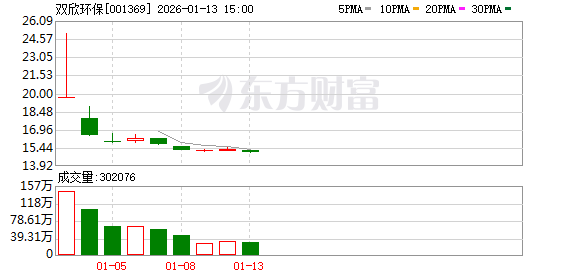
双欣环保:未来将持续加大技术创新力度
Zheng Quan Ri Bao· 2026-01-13 11:13
Group 1 - The company has established a circular economy industrial chain centered around polyvinyl alcohol, which includes downstream products such as limestone, calcium carbide, vinyl acetate, polyvinyl alcohol, specialty fibers, PVB resin, functional films, and PVA optical films [2] - The company plans to continuously increase its technological innovation efforts to promote its main business towards high-quality, diverse, differentiated, and high value-added directions [2] - The goal is to enhance the company's global competitiveness [2]
市场监管总局修订出台《纤维制品质量监督管理办法》
Zheng Quan Ri Bao Wang· 2026-01-13 11:09
Core Viewpoint - The National Market Supervision Administration emphasizes the importance of quality safety regulation in the fiber products industry to promote high-quality development of the circular economy [1][2] Group 1: Industry Overview - Fiber products are essential consumer goods in daily life, including textiles, clothing, bedding, and curtains, directly impacting public health and interests [1] - There is heightened social concern regarding the quality of products for children and adolescents, such as infant clothing and school uniforms [1] Group 2: Regulatory Developments - The National Market Supervision Administration has revised the "Quality Supervision and Management Measures for Fiber Products" and the mandatory national standard GB18383-2025, effective from July 1, 2026 [2] - The revised measures aim to establish a comprehensive and precise modern quality safety regulatory system for fiber products [2] Group 3: Key Focus Areas - The revised regulations focus on three main areas: comprehensive coverage for effective regulation, strict control at the source with traceability for safety assurance, and innovative regulation with rigid accountability for collaborative oversight [2]
国家发改委:将牵头制定循环经济发展“十五五”规划,部署“新三样”固体废物等回收利用重点举措
Mei Ri Jing Ji Xin Wen· 2026-01-13 09:32
Core Viewpoint - Strengthening comprehensive solid waste management is crucial for promoting the construction of a beautiful China and accelerating the green transformation of economic and social development [1] Group 1: Action Plan Overview - The Action Plan outlines the overall approach, work objectives, key tasks, and support measures for solid waste management in the coming period, addressing prominent issues with systematic and integrated policy measures [1][2] Group 2: Circular Economy Development - The Action Plan emphasizes enhancing the resource utilization level of solid waste and leveraging market forces to promote circular economy development, adhering to the principles of reduction, resource utilization, and harmlessness [2] - Solid waste is viewed as a valuable resource rather than waste, with examples such as smelting slag containing precious metals and construction waste that can replace natural aggregates in building materials [2] Group 3: Specific Measures for Solid Waste Management - Four main areas of focus include: 1. Strengthening comprehensive utilization of solid waste from industrial, construction, and agricultural sectors, enhancing the extraction and overall utilization of valuable components [3] 2. Exploring the potential of recycled resources through detailed disassembly of waste products to extract materials like plastics, metals, and glass [3] 3. Promoting the use of recycled materials by incentivizing production enterprises to increase the application ratio of recycled metals, plastics, and paper [3] 4. Improving support measures through investment, technology, land use, and tax incentives to create sustainable business models [3] Group 4: Future Planning - The National Development and Reform Commission will lead the formulation of the 14th Five-Year Plan for circular economy development, setting goals and tasks for key areas and enhancing resource utilization efficiency [4] Group 5: Industrial Solid Waste Utilization - The focus will be on reducing the generation intensity of industrial solid waste through green design and manufacturing processes, thereby enhancing the green level of industrial products [5][6] - The initiative aims to lower the generation of solid waste while increasing the comprehensive utilization level of industrial solid waste, particularly in sectors like steel, non-ferrous metals, and petrochemicals [8]
突出问题导向 推动末端治理向全过程防控转变——国务院政策例行吹风会解读《固体废物综合治理行动计划》
Xin Hua She· 2026-01-13 09:29
Core Viewpoint - The State Council has issued the "Solid Waste Comprehensive Governance Action Plan," emphasizing the importance of solid waste management in promoting a beautiful China and accelerating the green transformation of economic and social development [1] Group 1: Action Plan Overview - The action plan outlines the overall approach, work objectives, key tasks, and support measures for solid waste governance, addressing prominent issues in solid waste management with systematic and integrated policy measures [1][2] - It marks the first comprehensive deployment document for solid waste governance in China, complementing previous pollution prevention documents related to water, soil, and air [1] Group 2: Key Principles and Goals - The governance approach follows the principles of "reduction, resource utilization, and harmlessness," with a focus on enhancing resource utilization efficiency [2] - China generates over 11 billion tons of industrial solid waste and construction waste annually, necessitating a three-year special rectification action against illegal dumping [2] Group 3: Specific Initiatives - The "Zero Waste City" initiative will be expanded to around 200 cities during the 14th Five-Year Plan period, promoting collaborative efforts in key urban regions [3] - The Ministry of Agriculture will focus on solid waste management in agriculture, emphasizing the recycling of agricultural waste and the promotion of biodegradable materials [4] Group 4: Construction Waste Management - The Ministry of Housing and Urban-Rural Development will enhance construction waste management through source management, green construction practices, and the establishment of temporary storage facilities [5] - A comprehensive electronic management system will be implemented to ensure effective construction waste disposal [5] Group 5: Industrial Solid Waste Utilization - The comprehensive utilization rate of major industrial solid waste in China is reported to be 57%, with ongoing efforts to reduce waste generation and promote green manufacturing [5] - The Ministry of Industry and Information Technology will focus on advancing comprehensive utilization technologies and managing key waste categories [5]
金属多飘绿 碳酸锂涨逾7% 沪金银续刷新高 钯主连跌超5%
Sou Hu Cai Jing· 2026-01-13 08:23
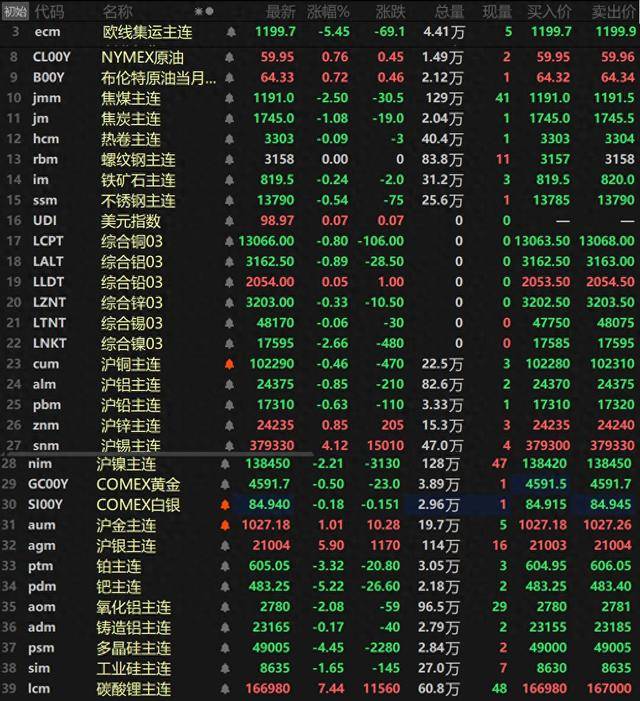
Metal Market - Domestic base metals experienced a general decline, with only Shanghai zinc and tin showing gains, increasing by 0.85% and 4.12% respectively. Nickel fell by 2.21%, while other metals saw declines of less than 1% [1] - Lithium carbonate surged by 7.44%, reaching a peak of 174,060 yuan/ton, marking a new high since October 2023, before closing at 166,980 yuan/ton. Industrial silicon and polysilicon fell by 1.65% and 4.45% respectively [1] - In the black metal sector, stainless steel dropped by 0.54%, while coking coal and coke fell by 2.5% and 1.08% respectively [1] - On the international front, base metals generally declined, with London nickel leading the drop at 2.66% [1] - Precious metals saw COMEX gold and silver decrease by 0.5% and 0.18% respectively, while domestic gold rose by 1.01%, reaching a historical high of 1,035.34 yuan/gram, and silver increased by 5.9%, also hitting a historical high of 21,518 yuan/kilogram [1][2] Macroeconomic Developments - The National Development and Reform Commission (NDRC) will lead the formulation of the "14th Five-Year" plan for circular economy development, focusing on resource recycling and efficiency improvements [5] - The Ministry of Industry and Information Technology (MIIT) emphasized the promotion of humanoid robots and health monitoring devices in various settings, aiming to enhance elderly care services through technology [6][7] - The People's Bank of China conducted a net injection of 342.4 billion yuan through reverse repos, maintaining the operation rate at 1.40% [7] Oil Market - Oil prices rose, with West Texas Intermediate increasing by 0.76% and Brent crude by 0.72%, amid concerns over potential declines in Iranian oil exports due to heightened U.S. sanctions [10] - Experts warned that further U.S. actions against Iran could lead to the closure of the Strait of Hormuz, potentially disrupting a significant portion of global oil transport and causing prices to spike by several dollars per barrel [10]
纤维制品监管新规发布!重点监管婴幼儿服装、学生服等
智通财经网· 2026-01-13 07:58
Core Viewpoint - The State Administration for Market Regulation (SAMR) has revised the "Quality Supervision and Management Measures for Fiber Products" to enhance quality safety regulation and promote high-quality development of the circular economy, with new regulations set to take effect on July 1, 2026 [4][5]. Summary by Sections Regulatory Changes - The revised measures expand the scope of regulation from three categories to all life-use fiber products and non-life-use fiber products, excluding certain special-purpose fiber products [8]. - New regulations explicitly prohibit the use of medical fiber waste and used funeral fiber products in the production of fiber products [8]. - The regulations also ban the use of recycled fibers for making underwear and infant fiber products, with exceptions for recycled polyester fibers [8]. Quality Safety Measures - The new measures implement a comprehensive regulatory system covering the entire supply chain, including raw material use, production, distribution, and sales [5]. - Special emphasis is placed on the quality safety of infant clothing, student uniforms, underwear, and bedding fiber products, which will undergo focused regulation [5][10]. - Stringent requirements for raw materials are established, particularly for products aimed at vulnerable groups like infants [10]. Standards and Monitoring - The revised mandatory national standard for "General Technical Requirements for Bedding Fiber Products" has been updated to enhance key technical indicators and safety requirements [6][13]. - The new standard allows the use of recycled chemical fibers in bedding products while maintaining strict controls on their use in infant products [13][15]. - A robust quality monitoring mechanism will be established, integrating data from production, circulation, and consumer feedback to assess risks dynamically [16]. Enforcement and Accountability - The SAMR will adopt a "zero tolerance" approach towards violations, implementing strict penalties for non-compliance, especially regarding the use of prohibited materials [12]. - A credit supervision system will be established to penalize companies that violate regulations, ensuring that they face consequences across multiple sectors [12]. - The regulatory framework aims to create a closed-loop system of prevention, management, risk control, and punishment to enhance the effectiveness of fiber product quality safety regulation [12].