消费提振

Search documents
申请消费贷财政贴息需要哪些操作?财政部,最新回应!
天天基金网· 2025-08-13 02:47
Core Viewpoint - The article discusses the implementation of the "Personal Consumption Loan Financial Subsidy Policy" aimed at boosting consumer spending and expanding domestic demand, which is crucial for economic growth and improving people's livelihoods [2][3]. Group 1: Background and Importance - Consumption is a key driver of economic growth and is essential for enhancing people's well-being and meeting their growing needs [2]. - The central government has emphasized the importance of boosting consumption in recent economic meetings and reports, highlighting it as a vital measure for economic stability and growth [3]. Group 2: Policy Features - The policy directly benefits individual consumers by reducing the cost of personal consumption loans, contrasting with previous policies that focused on investment and supply [4]. - It addresses actual consumer needs by covering a wide range of daily expenses and significant investments in areas such as automobiles, education, and healthcare [4]. - The policy operates under market-oriented and legal principles, ensuring responsible lending practices and preventing misuse of funds [5]. Group 3: Key Policy Details - The subsidy applies to personal consumption loans used for actual consumption, including amounts below and above 50,000 yuan for specific categories [6]. - The subsidy rate is set at an annualized 1%, significantly lower than current commercial loan rates, making it more accessible for consumers [7]. - The policy will be in effect for one year, from September 1, 2025, to August 31, 2026, with potential for extension based on its effectiveness [7]. Group 4: Implementation Process - Borrowers will have minimal operational burdens, as the loan institutions and government will handle most processes related to subsidy calculation and application [8]. - The policy includes a comprehensive review mechanism to ensure that funds are used appropriately for consumer support [10]. - Coordination among various government departments is emphasized to ensure effective implementation and monitoring of the policy [11].


从供需两端提振消费
Ren Min Ri Bao· 2025-08-12 21:56
Core Viewpoint - The article discusses the implementation of interest subsidies for service industry loans and personal consumption loans to stimulate consumption and reduce financing costs for service providers [1] Group 1: Service Industry Loan Subsidies - Interest subsidies are targeted at the supply side, specifically for eight categories of service industry operators [1] - The initiative aims to lower financing costs for service industry operators, thereby enhancing the vitality of the consumption market [1] - The goal is to create effective demand through high-quality supply [1] Group 2: Personal Consumption Loan Subsidies - Personal consumption loan subsidies are aimed at the demand side, providing financial support for eligible personal consumption loans [1] - This measure is intended to better utilize fiscal funds to boost consumption and guide spending [1] - The initiative seeks to lower the cost of consumer credit for residents, helping to unlock their consumption potential [1]
“真金白银”支持消费 两项贷款贴息政策出台
Shang Hai Zheng Quan Bao· 2025-08-12 19:14
Core Viewpoint - The introduction of personal consumption loan interest subsidies and service industry loan interest subsidies aims to stimulate domestic demand and enhance consumer spending, as part of the government's broader economic strategy [1][2]. Group 1: Personal Consumption Loan Subsidy Policy - The personal consumption loan subsidy policy will be effective from September 1, 2025, to August 31, 2026, allowing residents to receive interest subsidies on personal consumption loans used for specific consumption purposes [1][2]. - The subsidy covers loans for both small purchases (below 50,000 yuan) and larger expenditures such as home appliances, automobiles, education, and healthcare, with a maximum subsidy limit of 3,000 yuan per borrower [2][3]. - The annual subsidy rate is set at 1%, with the central and provincial governments covering 90% and 10% of the subsidy costs, respectively [2][3]. Group 2: Service Industry Loan Subsidy Policy - The service industry loan subsidy policy targets loans issued to service sector businesses in areas such as hospitality, healthcare, and entertainment, with a maximum loan amount of 1 million yuan eligible for subsidies [1][3]. - The policy stipulates that loans must be signed between March 16, 2025, and December 31, 2025, and funds must be used to improve consumer infrastructure and service capabilities [3][4]. - A total of 21 national banks are designated as the lending institutions for these service industry loans, and strict compliance measures are in place to prevent misuse of funds [4].
个人消费贷款财政贴息方案出炉!覆盖家用汽车、家装家居等领域
Bei Jing Shang Bao· 2025-08-12 08:23
二是12家全国性股份制商业银行,包括中信银行股份有限公司、中国光大银行股份有限公司、华夏银行 股份有限公司、中国民生银行股份有限公司、招商银行股份有限公司、兴业银行股份有限公司、广发银 行股份有限公司、平安银行股份有限公司、上海浦东发展银行股份有限公司、恒丰银行股份有限公司、 浙商银行股份有限公司、渤海银行股份有限公司。 三是5家其他个人消费贷款发放机构,包括深圳前海微众银行股份有限公司、重庆蚂蚁消费金融有限公 司、招联消费金融股份有限公司、兴业消费金融股份有限公司、中银消费金融有限公司。 《实施方案》指出,鼓励地方财政部门结合实际情况对其他经营个人消费贷款业务的金融机构给予财政 贴息支持,扩大政策覆盖面。 贴息标准方面,《实施方案》明确,年贴息比例为1个百分点(按符合条件的实际用于消费的个人消费 贷款本金计算),且最高不超过贷款合同利率的50%,中央财政、省级财政分别承担贴息资金的90%、 10%。贷款合同利率需要符合相应利率自律约定。政策执行期内,每名借款人在一家贷款经办机构可享 受的全部个人消费贷款累计贴息上限为3000元(对应符合条件的累计消费金额30万元),其中在一家贷 款经办机构可享受单笔5万元以 ...






重磅!贷款消费享补贴
Wind万得· 2025-08-12 08:21
Core Viewpoint - The article discusses the implementation of a fiscal subsidy policy for personal consumption loans in China, aimed at boosting consumer spending and stimulating domestic demand from September 1, 2025, to August 31, 2026 [2][4][5]. Policy Content - The subsidy applies to personal consumption loans issued by financial institutions, excluding credit card transactions, that are used for consumption and can be verified through loan accounts [6][7]. - Eligible consumption areas include purchases under 50,000 yuan and significant expenditures such as home appliances, automobiles, education, and healthcare [6][7]. - The annual subsidy rate is set at 1% of the loan principal, capped at 50% of the loan contract interest rate, with the central and provincial governments covering 90% and 10% of the subsidy, respectively [7][8]. Loan Processing Institutions - The policy includes six major state-owned banks and twelve national joint-stock commercial banks, as well as five other financial institutions that provide personal consumption loans [8]. Implementation Organization - Financial institutions must estimate their loan issuance and subsidy needs within 30 days of the policy's announcement and submit applications for pre-allocated subsidy funds [9]. - Institutions are responsible for calculating the subsidy amount based on the policy's stipulations and informing borrowers of the subsidy details [9][10]. Supervision and Management - The Ministry of Finance is tasked with formulating the subsidy policy and overseeing the allocation of funds, while the People's Bank of China will ensure compliance with interest rate policies [13][15]. - Local financial departments are responsible for auditing and disbursing subsidy funds, ensuring that the funds are used specifically for consumer loans [15].

“五一”消费热力十足 广发信用卡以优惠福利促消费
Xin Hua Wang· 2025-08-12 06:07
Core Insights - The Ministry of Culture and Tourism reported that during the 2025 "May Day" holiday, domestic travel reached 314 million trips, a year-on-year increase of 6.4%, with total spending of 180.27 billion yuan, up 8.0% [1] Group 1: Domestic Travel and Consumer Spending - Domestic travel during the holiday period saw 314 million trips, reflecting a 6.4% increase compared to the previous year [1] - Total spending by domestic tourists reached 180.27 billion yuan, marking an 8.0% year-on-year growth [1] Group 2: Credit Card Promotions and Consumer Support - Guangfa Credit Card launched various promotional activities to boost consumption, including discounts on fuel and charging for both traditional and new energy vehicles [1] - The credit card issuer has over 10 million cards in its car owner series, providing a comprehensive service ecosystem for vehicle owners, which can save up to 1,200 yuan annually on fuel and charging [1] Group 3: International Travel Trends - International travel also surged, with the highest passenger transport and flight volumes since the second quarter, primarily to Japan, South Korea, and Southeast Asia [2] - Guangfa Credit Card partnered with major payment networks to offer up to 30% cashback on overseas spending and waived foreign transaction fees [2] Group 4: Marketing Initiatives - The "Super Guangfa Day" event coincided with the holiday, featuring promotions from popular merchants, allowing cardholders to participate in "buy one get one free" offers [2] - The company has strategically deployed activities across key holiday periods to stimulate consumer spending in travel, hospitality, and dining sectors [3]
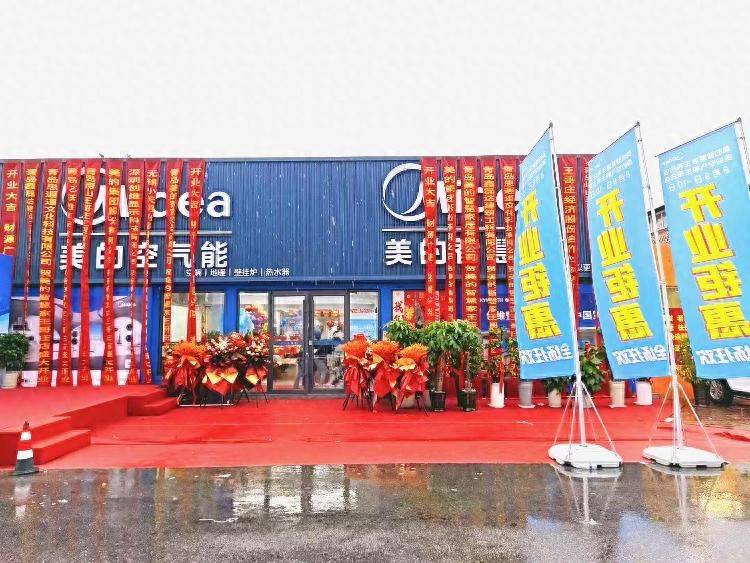
以旧换新政策激活消费动能 崂山区首家美的智慧家旗舰店落户王哥庄
Sou Hu Cai Jing· 2025-08-12 03:19
Group 1 - The core theme of the initiative in Laoshan District is "Leisurely Shopping in Laoshan, Enjoying Life," with a plan to launch "Ten Actions to Boost Consumption" in 2025, covering various sectors including goods, culture, tourism, housing, and rural areas [1] - The policy employs a "government subsidy + enterprise discount" dual strategy to ensure benefits reach consumers directly [1] - A total of 150 consumption promotion activities are planned for the year [1] Group 2 - The grand opening of Midea's Smart Home flagship store in Wanggezhuang Street, Laoshan District, took place on August 9, with a store area of 460 square meters [3] - The store attracted consumers with a combination of "government old-for-new subsidies + significant enterprise discounts" on its opening day [3] - Over 100 customers participated in the old-for-new program within the first two days, with energy-efficient products like smart air conditioners and washer-dryer combos accounting for 75% of sales [5] Group 3 - The Qingdao government is expanding the categories eligible for the old-for-new subsidy from 8 to 12, adding items such as microwaves, water purifiers, dishwashers, and rice cookers [9] - The initiative includes 15 categories of smart home products and 7 categories of air purifiers, making it the first in Shandong Province to do so [9] - The old-for-new program is a key measure in the "Ten Actions to Boost Consumption," with over 20 community events already conducted, benefiting many families in Laoshan District [9]

王子公主请留步!江苏银行邀你共赴迪士尼等乐园之约
Zhong Jin Zai Xian· 2025-08-11 08:00
Core Viewpoint - Jiangsu Bank is actively promoting consumer engagement through its "Follow Su Chao to Carnival" campaign, offering various entertainment options and discounts to stimulate spending during the summer season [1] Group 1: Campaign Details - The campaign features a variety of attractions including Shanghai Disneyland, Lego Land, Beijing Universal Studios, and amusement parks across Jiangsu province [1] - Jiangsu Bank is providing access to tickets for these attractions as part of its promotional efforts to enhance consumer experience [1] Group 2: Consumer Engagement - The bank encourages customers to participate in the campaign by logging into the Jiangsu Bank App and accessing the "Follow Su Chao to Carnival" section to unlock benefits and draw for millions in consumer vouchers [1] - The initiative aims to create a magical experience for customers, allowing them to enjoy various activities and attractions, thereby enhancing their summer experience [1]

扩需促消稳大盘 创新赋能提质效——市中区2025年上半年消费促进工作成果显著
Sou Hu Cai Jing· 2025-08-09 01:27
Group 1 - The core viewpoint of the news is the effective measures taken by the Shizhong District to stimulate consumption and enhance economic growth through various initiatives and activities [3][4][5] - In the first half of 2025, the total retail sales of consumer goods in the district reached 9.95 billion yuan, representing a year-on-year increase of 6.7% [3] - The district has implemented a consumption promotion plan that includes collaboration across multiple sectors such as commerce, education, and tourism to enhance market vitality [4][5] Group 2 - A series of diverse promotional activities have been organized, including shopping discounts and live-streaming sales, to maximize consumer engagement and spending [5][7] - The e-commerce sector has shown significant growth, with online retail sales reaching 1.26 billion yuan, a year-on-year increase of 6.5% [7] - The district has established a food industry association to promote the local specialty "Spicy Chicken," aiming for brand standardization and cluster development [8] Group 3 - The district is focusing on developing a circular economy, with the establishment of an international idle goods circulation digital economy industrial park to enhance the second-hand goods market [9] - The district has successfully attracted 85 quality enterprises to the park, which has been recognized as a provincial-level live-streaming base [9] - The district plans to continue enhancing the consumption environment and creating new growth points to support high-quality economic development [9] Group 4 - The county commercial system has been strengthened with the establishment of multiple commercial service centers and logistics facilities to enhance local consumption [11][12] - The district has implemented a dynamic management approach to ensure the effectiveness of commercial projects, with a focus on quality and timely completion [12] - Community initiatives have been launched to improve the consumer experience, including the creation of a "15-minute" convenience living circle [13][14]
钱塘区上半年社零增速领跑全市
Hang Zhou Ri Bao· 2025-08-08 02:33
数据显示,钱塘区汽车类消费上半年实现50.5亿元,以106.9%的同比增幅强势崛起,贡献了全区限 上社零的三分之一,拉动整体增速约28个百分点。 在钱塘区华东汽车城,帅车销售总监赵磊正忙着接待络绎不绝的顾客。"得益于区里推出的购车补 贴以及'以旧换新'补贴政策,我们上半年销量同比增长了200%,特别是新能源车型,同比增长了 272%。"赵磊介绍,该店6月单月销量突破4500台。 作为浙江省汽车产业的重要集聚区之一,钱塘区整车制造实力突出,集聚吉利、长安福特、广汽3 家整车企业,以及优科豪马、中策、麦格纳等100多家产业链相关企业,产值达千亿规模,整车产量占 全市95%以上。今年随着帅车二手车全国运营总部项目的落地,汽车销售到后市场服务的完整生态正加 速形成,有望带动全年汽车社零首破百亿大关。 "五一钱塘欢乐购" 近日,杭州市2025年上半年经济运行"成绩单"揭晓,钱塘区社会消费品零售总额(社零)表现尤为 亮眼,以14.5%的同比增速高居全市首位,并在全省名列第四,展现出区域消费市场的澎湃活力与强大 韧性。 2025年1月至6月,钱塘区实现全口径社零总额244.5亿元,累计增幅不仅大幅领先全省平均增速, 更以绝 ...